Showing posts with label Galloping Major. Show all posts

Wednesday, 11 January 2017

Colonel Frederick Visscher

Frederick Visscher commanded the Third Regiment of Tryon's County's militia, and fought at Oriskany in the rearguard of the American column.  Visscher was born in 1740 and, like many settlers in the Albany area, was of Dutch descent.  He served in the F&IW and joined the patriot cause with his two brothers, John and Harman.  Visscher's friends and neighbours Colonel John Butler and Sir John Johnson both chose loyalty to the Crown.  As a veteran of the F&IW, Visscher was given a colonelcy in the local militia.  His brothers were also commissioned into the Third Regiment.  Visscher and his men were at the back of Herkimer's column, guarding the baggage wagons.  After the ambush was sprung, Visscher found himself cut off from the rest of the force.  His men fought their way back through the Indians who had encircled them and retreated back the way they had come to Fort Dayton.  They were pursued by the Iroquois and bodies were found some miles away (records rather chillingly mention "Major Blauvelt and Lieutenant Groat, taken prisoner and never heard of afterward").   In May 1778 charges of cowardice were brought against Visscher and certain others who were accused of running away and abandoning the rest of Herkimer's column.  However, nothing seems to have come of those charges, at least as far as Visscher was concerned.  He continued to serve in the militia and seems to have been held in high regard.  It appears that in May 1780 the home of Visscher's parents was attacked by a band of Tories and Indians led by Sir John Johnson while Visscher and his two brothers were visiting whilst on leave.  A vicious fight in the house saw his brothers killed and Visscher himself scalped and left for dead after he had been hit in the back by a tomahawk.  The house was set on fire but Visscher managed to help his wounded mother to safety.  Apparently Visscher had a silver plate made to conceal his scalping scar during public occasions.  After the end of the war, Visscher became a judge and a member of the state legislature.  He died in June 1809.

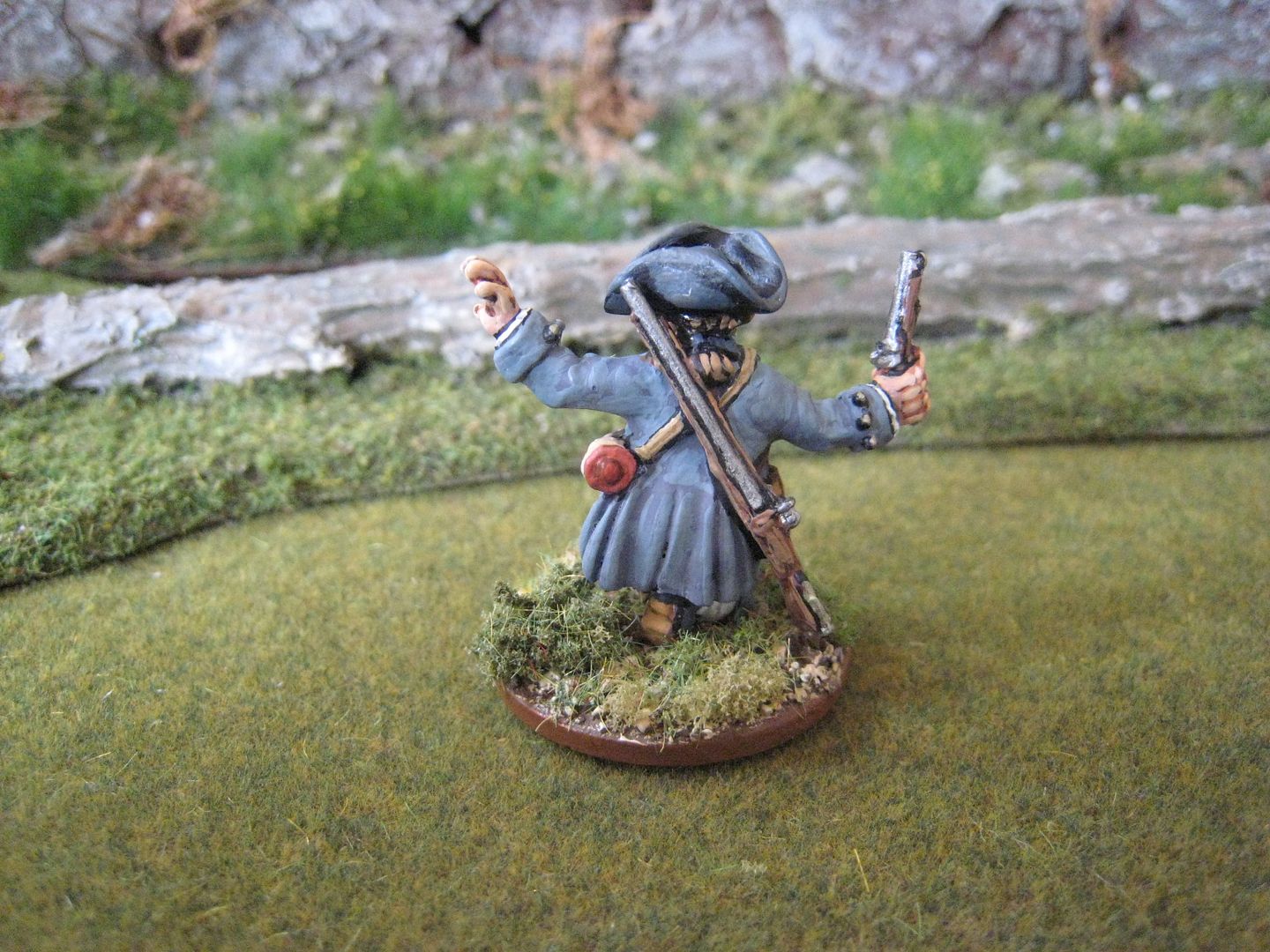
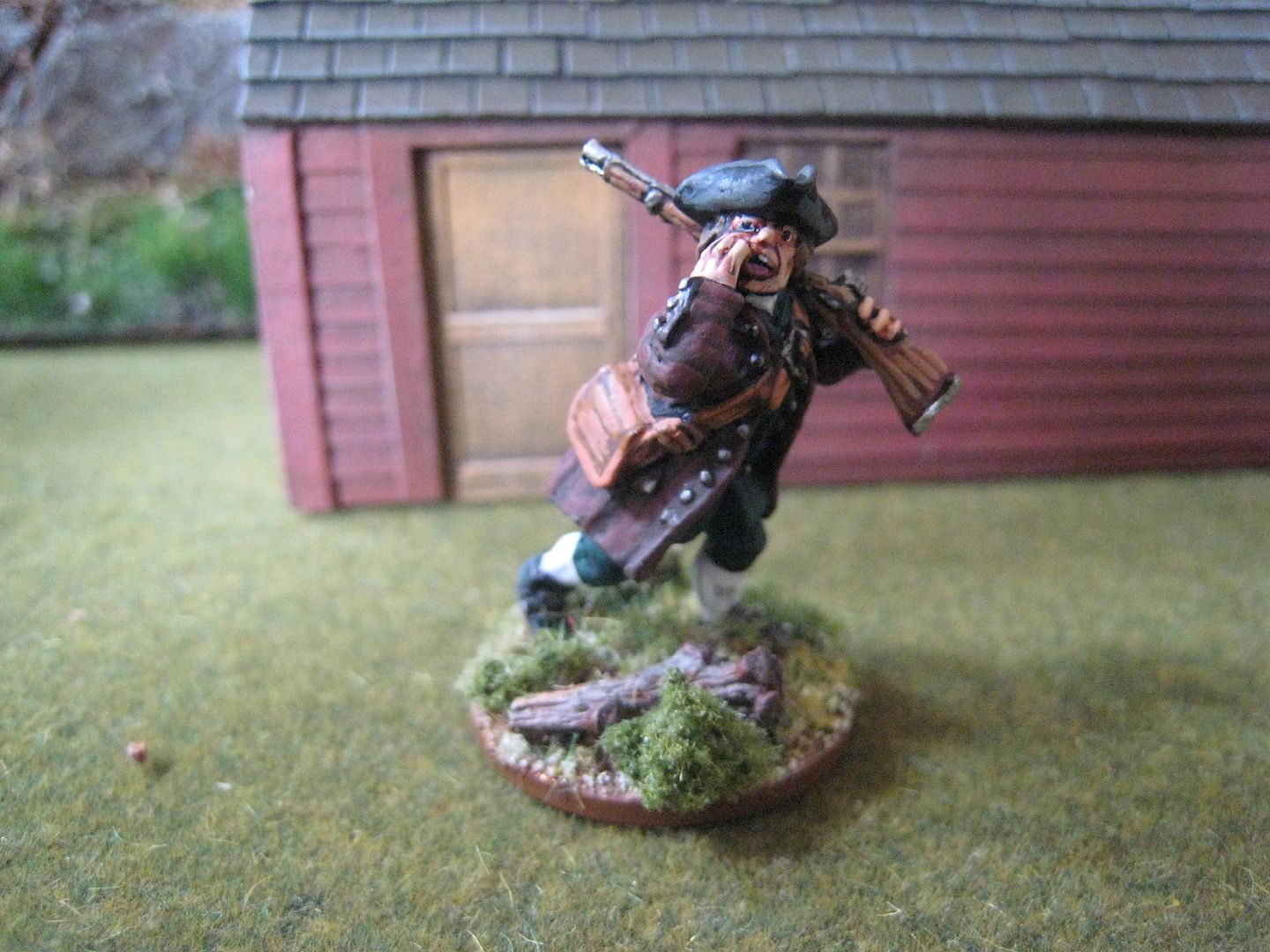
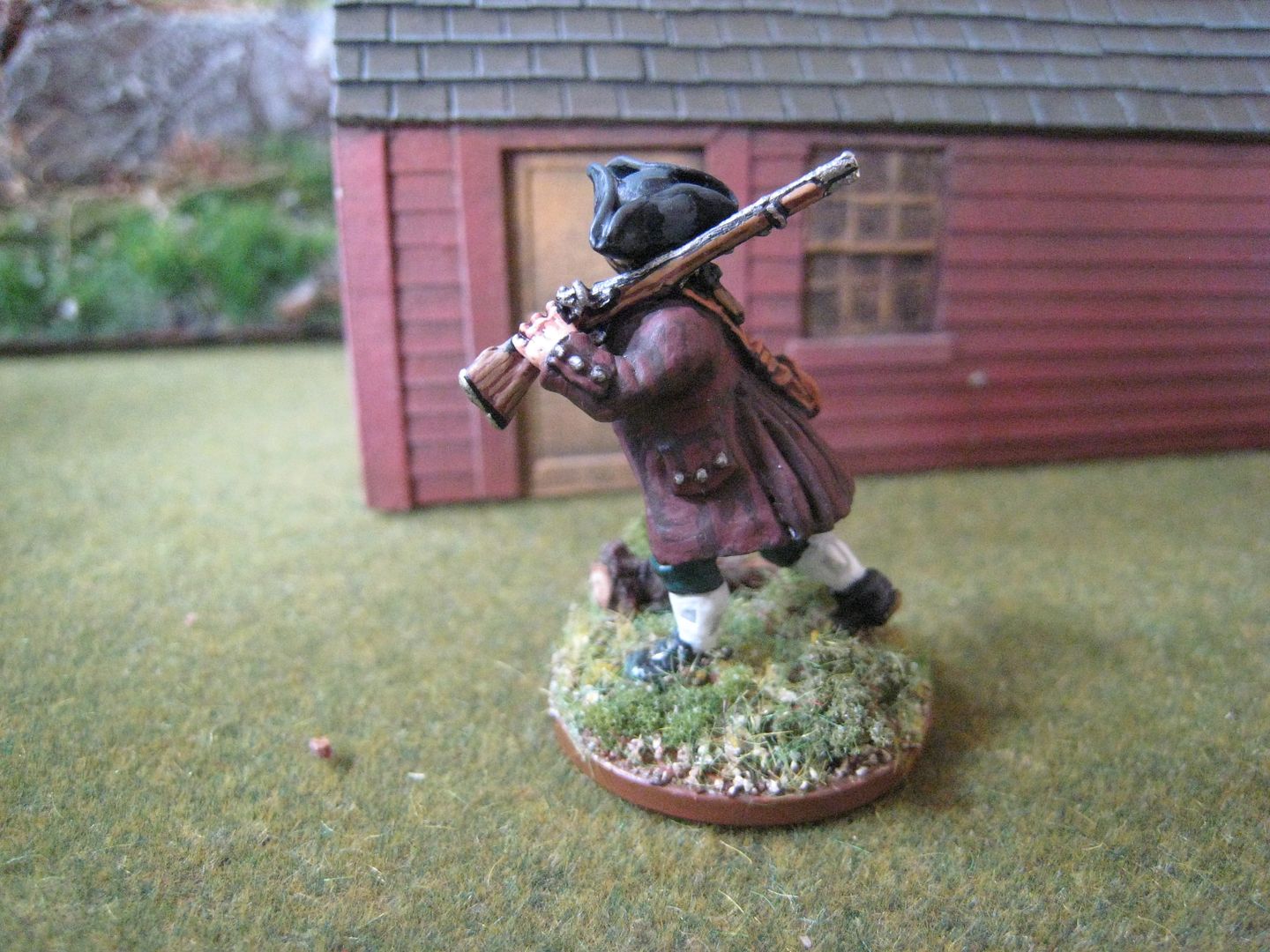
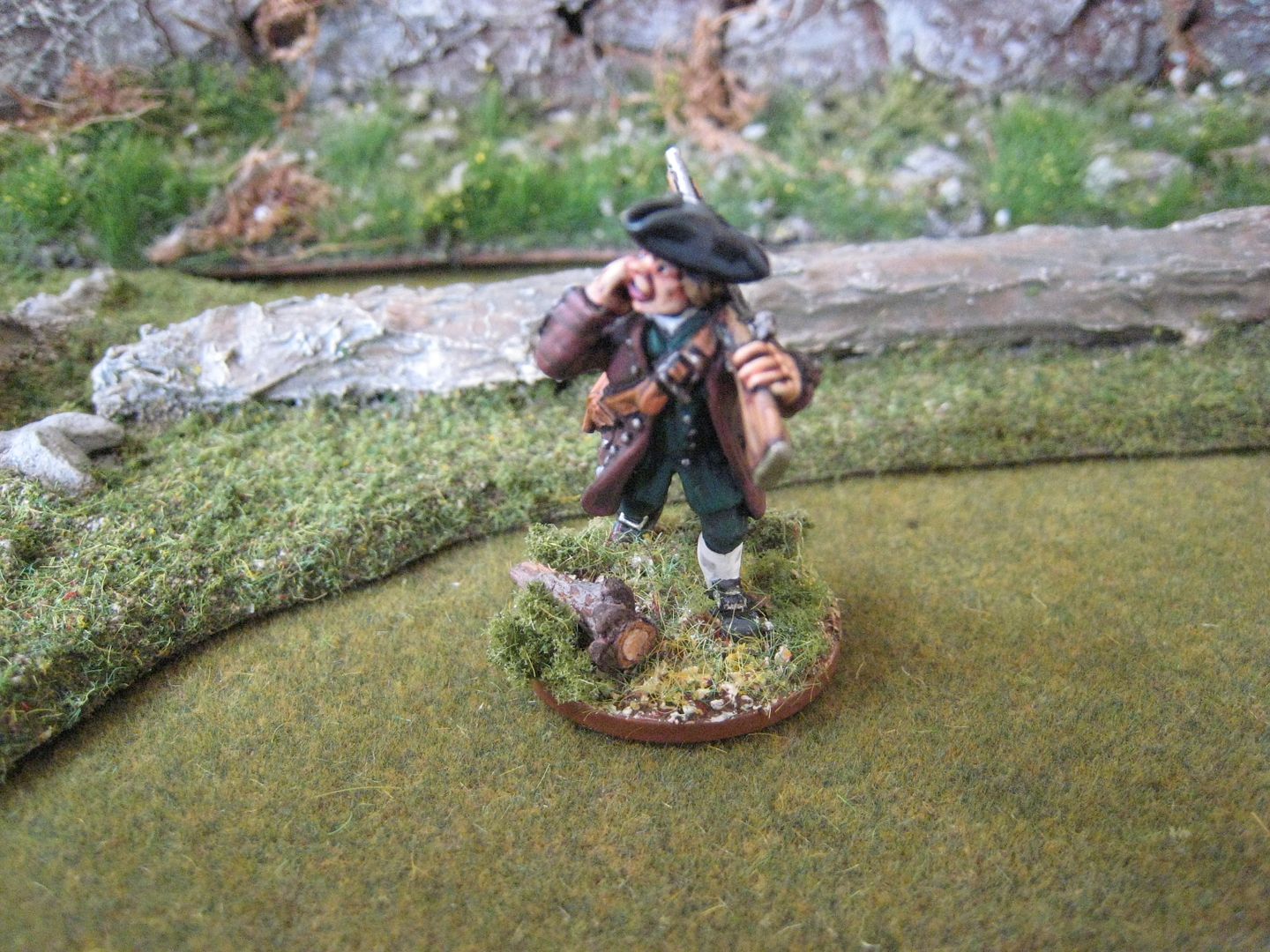
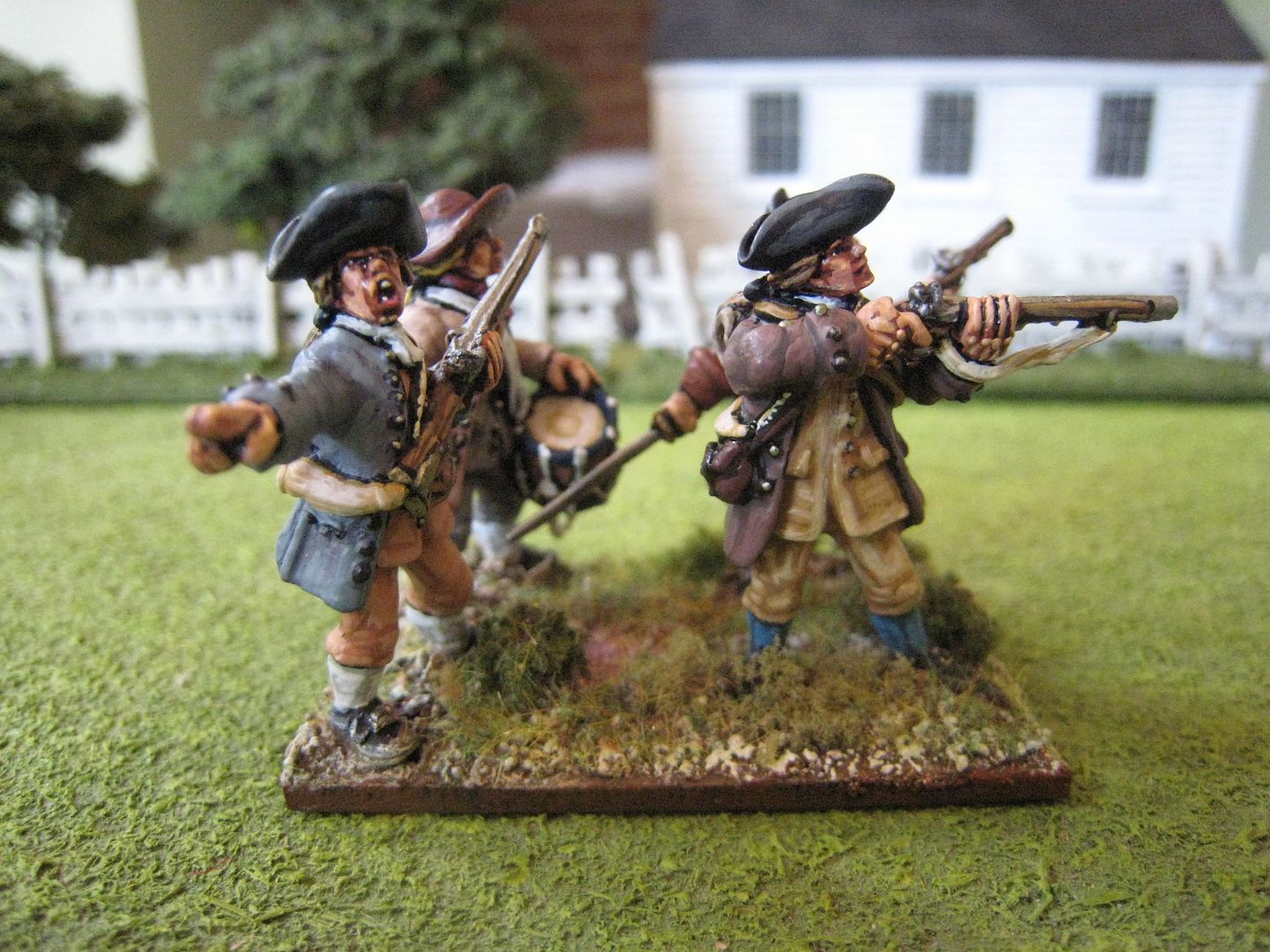
Visscher appears in the "British Grenadier!" Oriskany scenario as a brigade commander and this figure is of course a companion to those of Lieutenant-Colonel Ebenezer CoxBrigadier-General Herkimer and Hanyery Tewahangarahken.  It is another one of the figures from Galloping Major's "Anglo-American Militia Command" pack in their F&IW range.  As I said in my post on Ebenezer Cox, Visscher should be mounted but (again) I like this pose, which suggests he can hear the ambush has started.  Given that he was a prominent, senior officer, I wanted to give Visscher some decent clothes and so he appears in a more colourful suit than I suspect he wore on the day.  

1 figure.  Painted December 2016.

Monday, 9 January 2017

Lieutenant-Colonel Ebenezer Cox

I'm going to kick off the new year with some more personalities.  Colonel Ebenezer Cox was one of the commanders of the vanguard of the American column that was ambushed at the battle of Oriskany on 6 August 1777 while on its way to relieve Fort Stanwix.  He was born in June 1741 and was killed at the battle.  His official position at the time of the battles appears to have been second-in-command of a unit of Tryon Country militia (Brigadier Nicholas Herkimer being the commanding officer of this unit).  Apparently Tryon County's militia was formed into five regiments, each with distinct recruiting districts - Cox led the First Regiment, with men drawn from the Canajoharie area.  In my post on Herkimer, I noted that on the morning of 6 August Herkimer had misgivings about pushing on to Fort Stanwix before reinforcements had arrived, but was cajoled into continuing his advance by his other officers.  Cox is named in histories of the battle as being one of those officers who accused Herkimer of being a coward and a Tory.  Cox must have been with Herkimer at the front of the column when the Crown forces attacked - he and several other officers were killed in one of the first vollies, whilst Herkimer was hit in the leg shortly thereafter.  The First Regiment appears to have lost five of its captains and one lieutenant in the battle and so must have been pretty cut up in the battle. 

So unfortunately, the real Ebenezer Cox (who was the father of four young children at the time) had didn't live beyond the battle's opening stages.  However, he is listed as the vanguard's commanding officer in the "British Grenadier!" Oriskany scenario and so I wanted to have a figure to represent him (and act as another militia commander more generally).  This is another Galloping Major sculpt, from the "Anglo-American Militia Command" pack in their F&IW range.  The look and pose of this figure is perfect, I think - running for cover just after the ambush has been sprung.  Also, unlike a lot of command figures who just stand around, this chap is actually shouting orders.  I suppose militia commanders should be mounted, but to be honest I think they look better on foot - I expect they jumped off their horses pretty quickly at Oriskany.   

1 figure.  Painted December 2016.


Wednesday, 9 November 2016

Hanyery Tewahangarahken


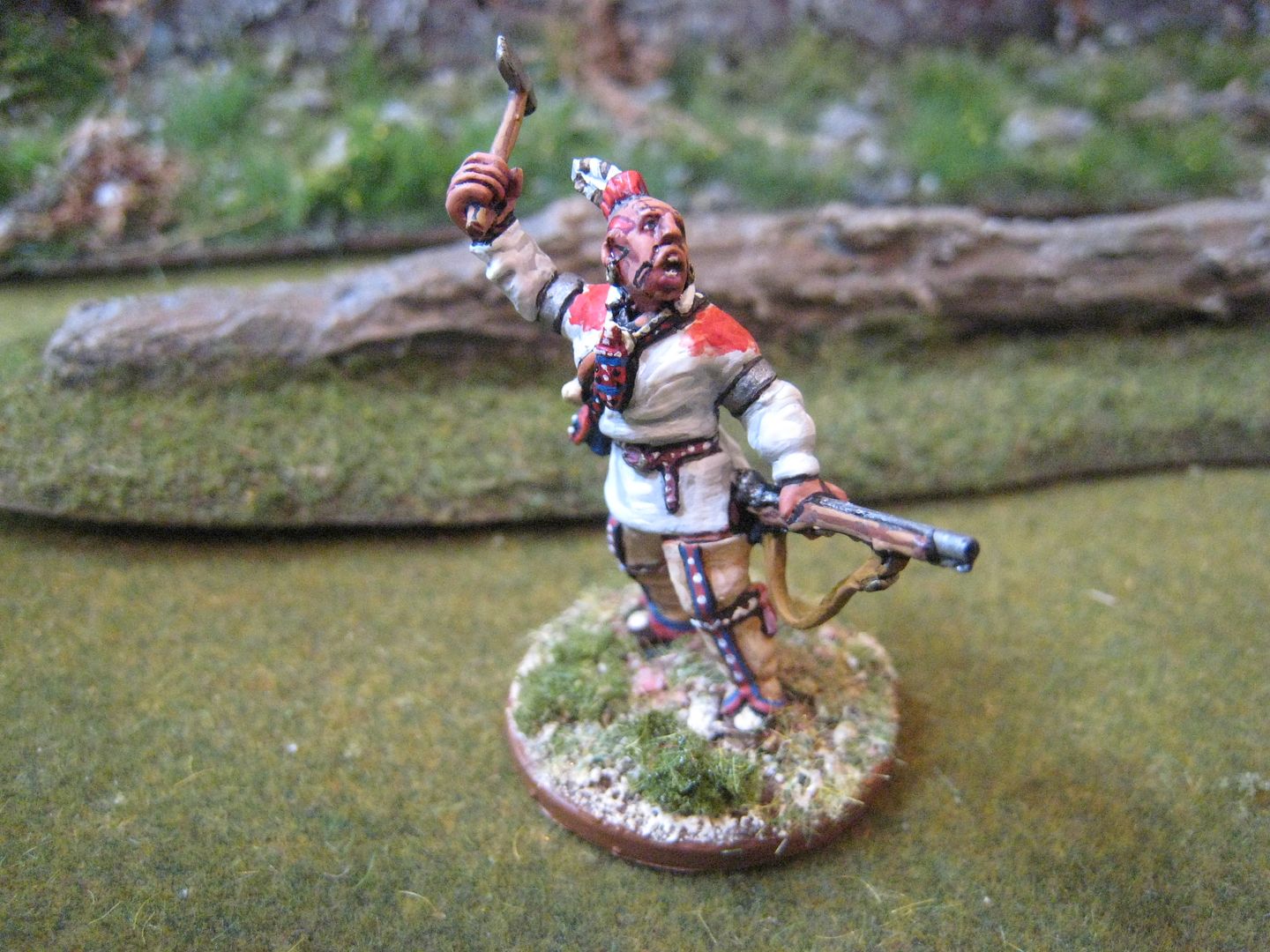
Hanyery (or Han Yerry) Tewahangarahken (c. 1724-1794) was a warrior of the Oneida tribe who fought on the Patriot side at the battle of Oriskany in August 1777.  I gather his name means "He Who Takes Up the Snow Shoe" and he was the son of a German father and a Mohawk mother.  The Oneidas were one of the founding tribes of the Iroquois Confederacy and lived in what is now central New York state.  When war broke out in 1775 the Iroquois were initially neutral but the tribes eventually had to choose sides and whilst most remained loyal to the Crown the Oneida sided with the Patriots.  The Oneida acted as scouts and around 50-60 warriors, including Hanyery, fought with Brigadier-General Herkimer's militia force at Oriskany.  By this time Hanyery was a prominent member of his local community and a prosperous farmer.  At the battle Hanyery was accompanied by his wife Tyonajanegen (meaning "Two Kettles Together") and his son Cornelius.  The story goes that Hanyery was hit in the wrist by a musket ball and Tyonajanegen helped him reload his rifle.  In a contemporary article about the battle in the "Pennsylvania Journal and Weekly Advertiser", Hanyery is reported as having killed nine of the enemy (being a mixed force of Loyalists and other Iroquois) and Cornelius two.  Tyonajanegen survived the battle as well and rode off to tell local people the outcome of the battle.   Hanyery and Tyonajanegen continued to serve with Patriot forces during the Saratoga campaign.  General Gates apparently arranged for three gallons of rum to be sent to them and their family as a reward for their services.  It seems that at some time during or after the campaign Hanyery's house and farm were destroyed by pro-British forces.

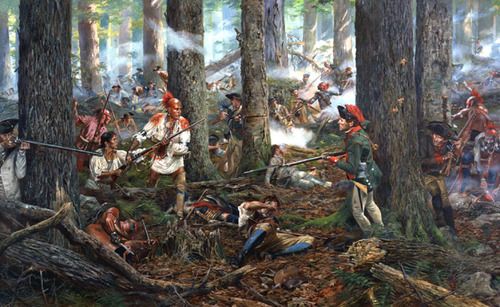
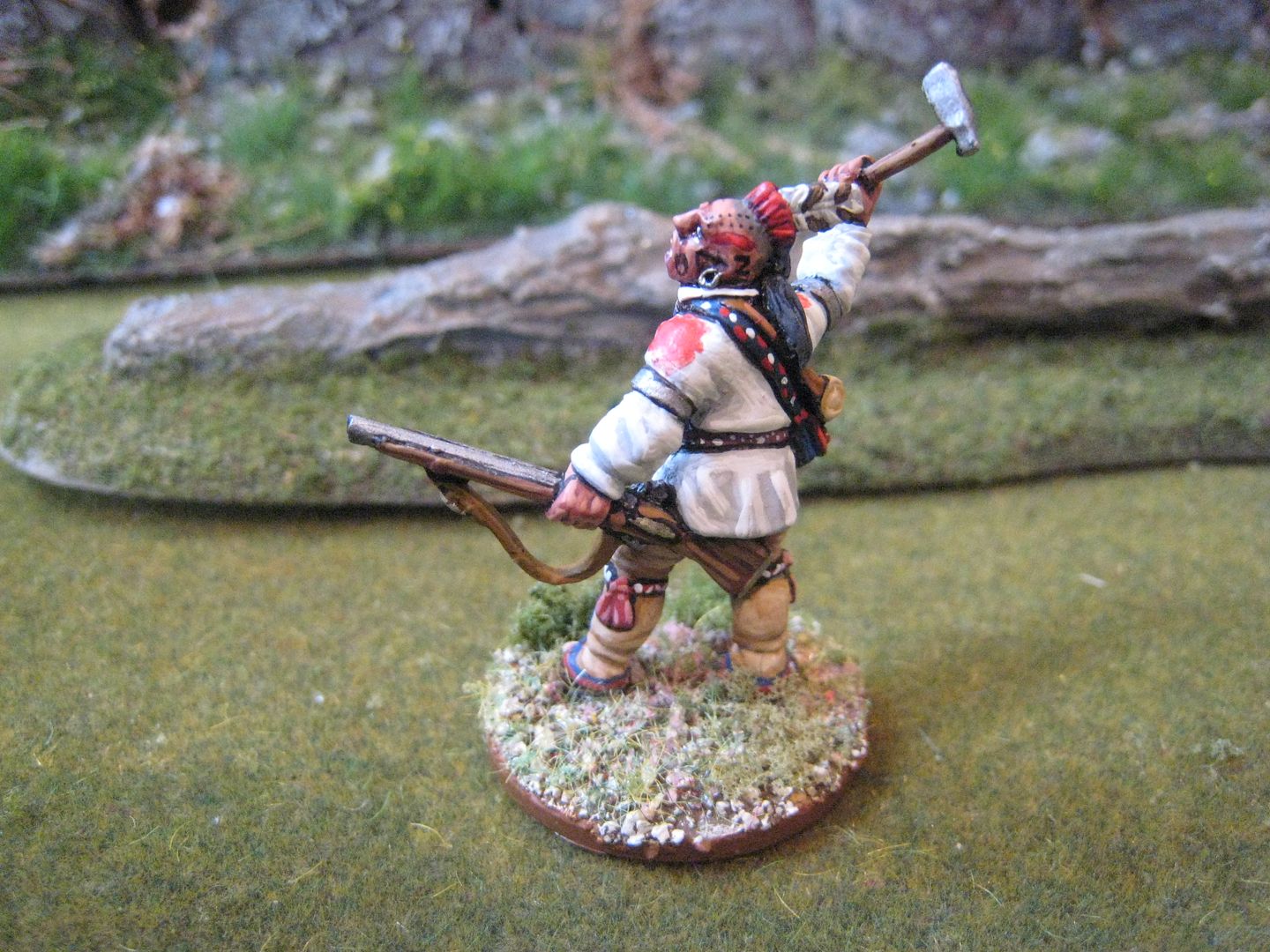
This figure is from Galloping Major that I acquired when I bought all their F&IW militia packs (which I turned into a unit of Loyalists).  The figure is sold separately as a "heroic Mohawk warrior".  I painted it at the same time as some Conquest Miniatures Iroquois.  The GM figure is noticeably taller and stockier than these other figures and so I thought about how I might use the figure by itself, perhaps as a personality.  I had been looking at Don Troiani's wonderfully atmospheric painting of the battle of Oriskany (see right) and I realised that the GM figure looked just like Hanyery in that painting (prior to his injury).  The "British Grenadier!" orbat for Oriskany lists 6 Oneidas as part of one of the Patriot brigades.  No leader of this band is mentioned, but I thought it would nice to paint up a figure of Hanyery, base him as a chief (so on a 2p piece) and have him as the leader of 5 other figures.  Based separately, the extra heft of this figure won't be so noticeable.  Incidentally, while I've admired this painting for years, I hadn't noticed that Troiani has painted Herkimer sitting propped up against a tree directing the battle.  I'm on a bit of an Oriskany roll at the moment, with more Iroquois and the KRRNY (as depicted in the Troiani painting) in the works.  I have a couple of GM militia characters left which I'm now minded to paint as other personalities from Oriskany and the Saratoga campaign more generally.

I tried to follow the colour scheme of Hanyery as he appears in the Troiani painting.  The clothing and equipment are not identical, so a bit of improvisation was required, especially on the leggings.  I tried to replicate the facial paint as closely as possible, but I had to leave out some of the detail around the ears.  I'm not sure that the figure in the painting looks like someone in his early fifties, but I suppose Hanyery would have been very fit for his age.  It was only when I finished the figure that I realised the colour scheme is very "red, white and blue".  But I'm pleased with the way the figure came out and I enjoyed reading up about Hanyery and his family for this post.  I'll have to look for a suitable Tyonajanegen now; or perhaps try to hassle Lance at Galloping Major into making one.

1 figure.  Painted October 2016.

 
Hanyery with Conquest Miniatures Iroquois

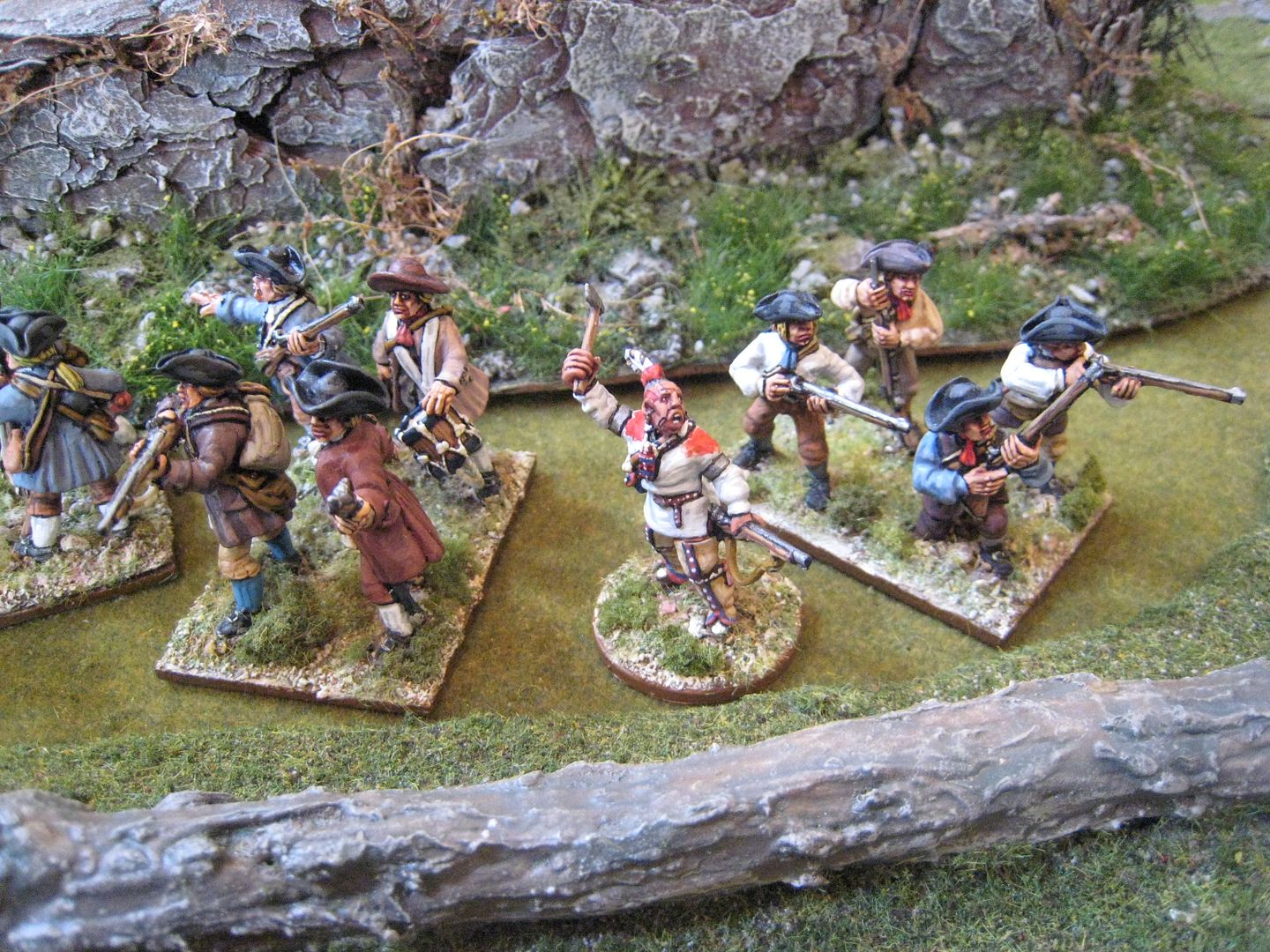
Hanyery with Galloping Major militia

A comparison pic, as a request for such often appears on TMP.  From left to right: Perry, Galloping Major, Conquest.  The Conquest figures are slighter, and the GM ones quite chunky.  But these are fully compatible, in my opinion.


Saturday, 30 August 2014

American Militia (8)

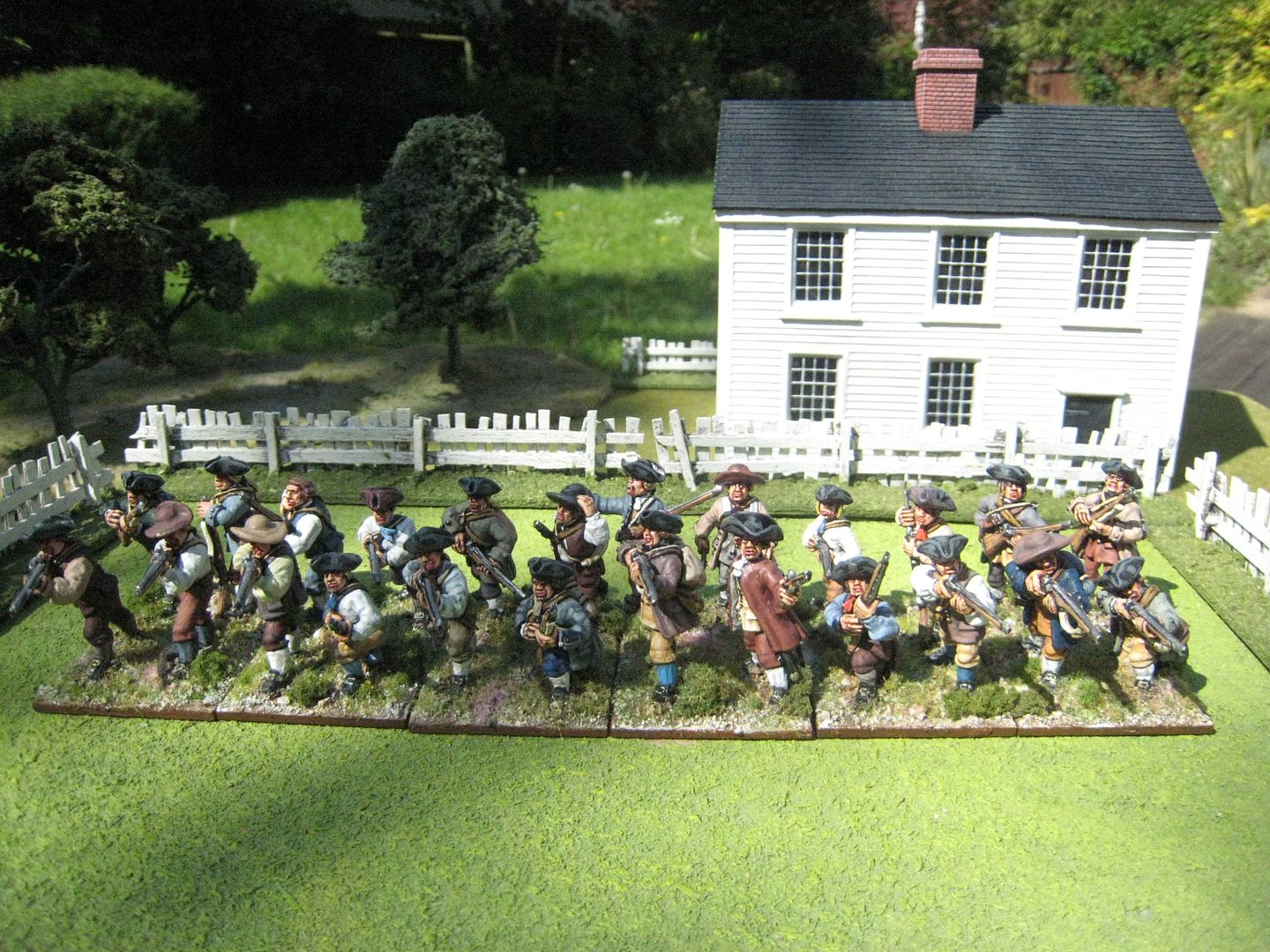
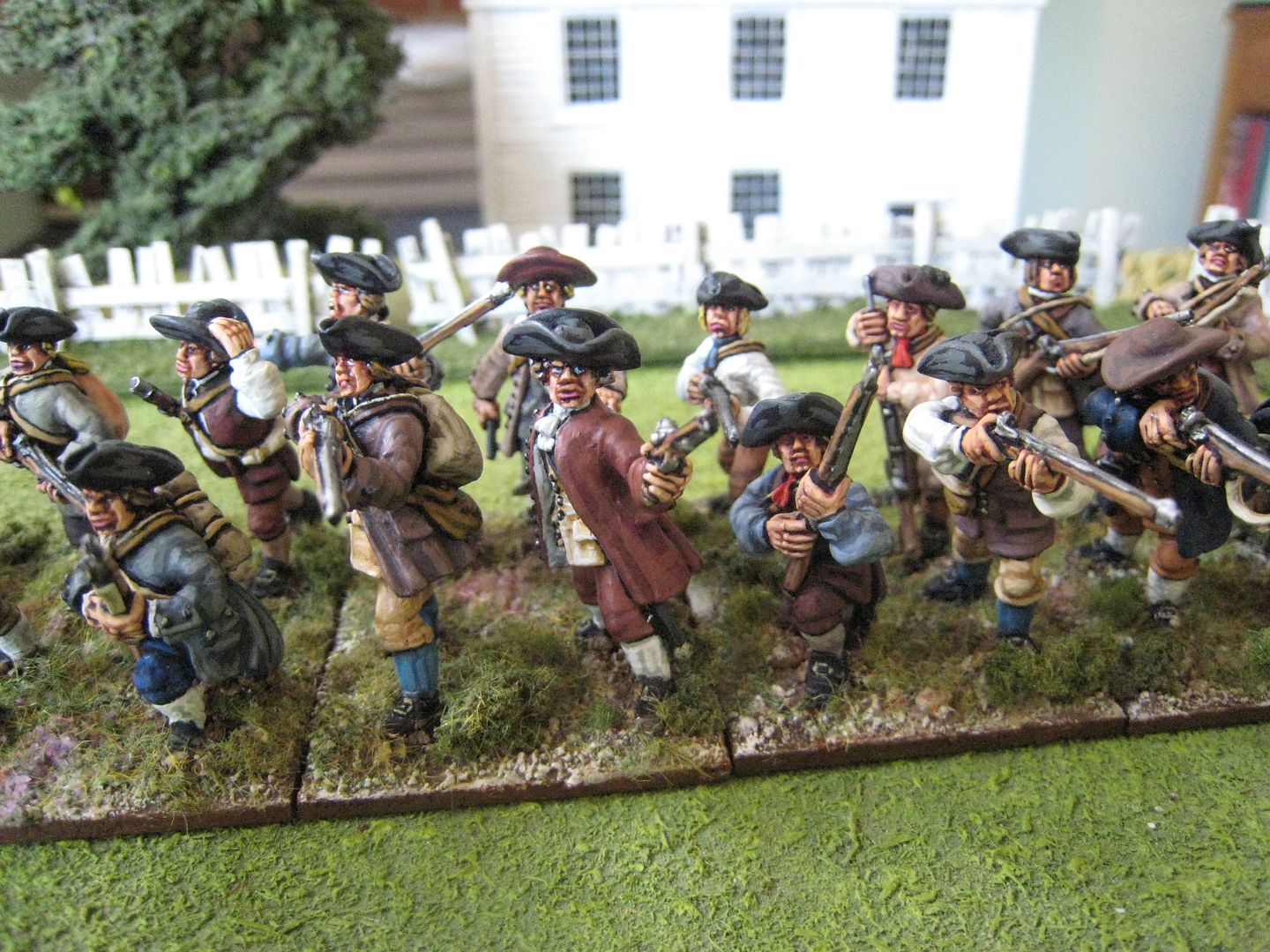
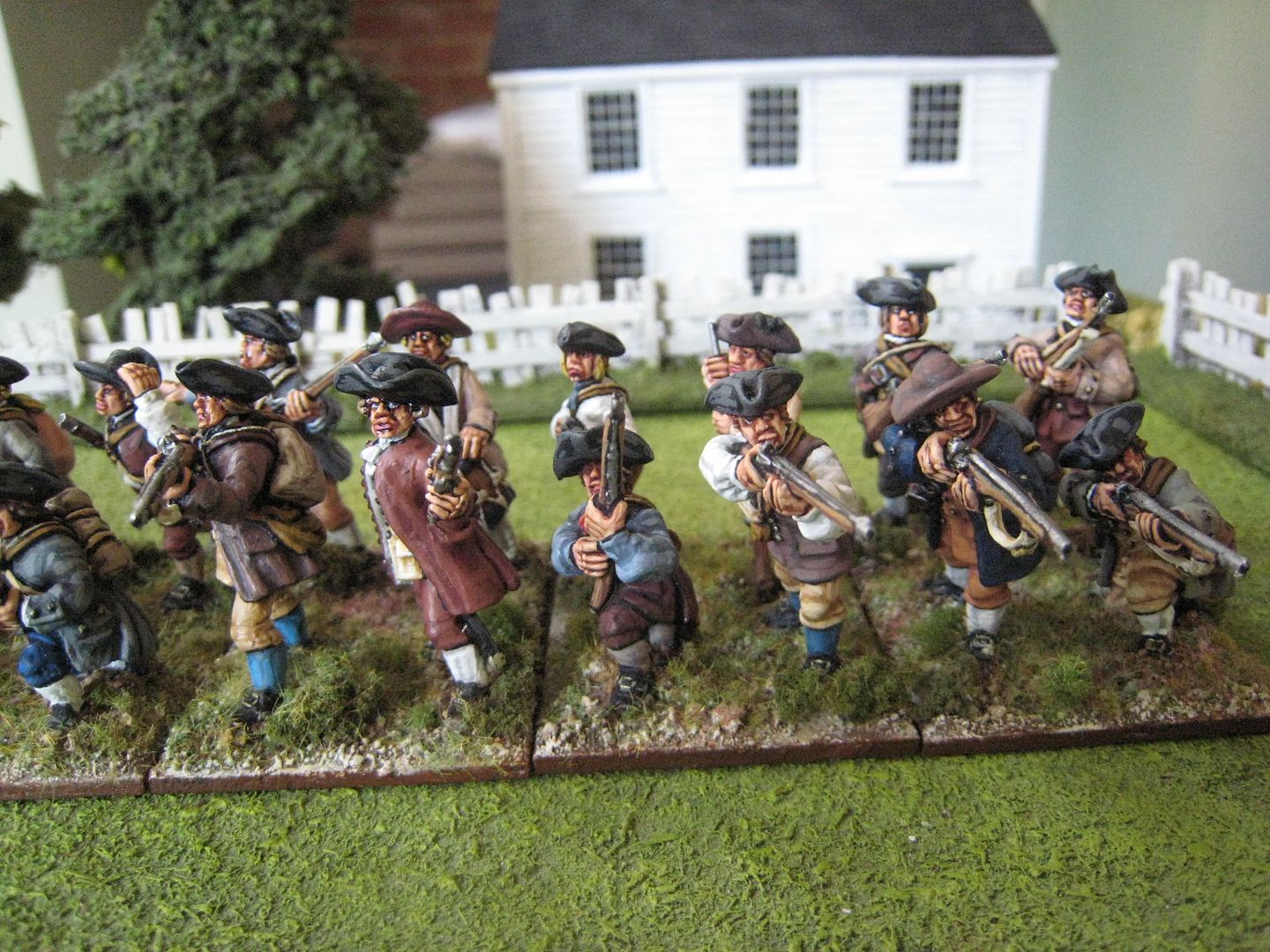
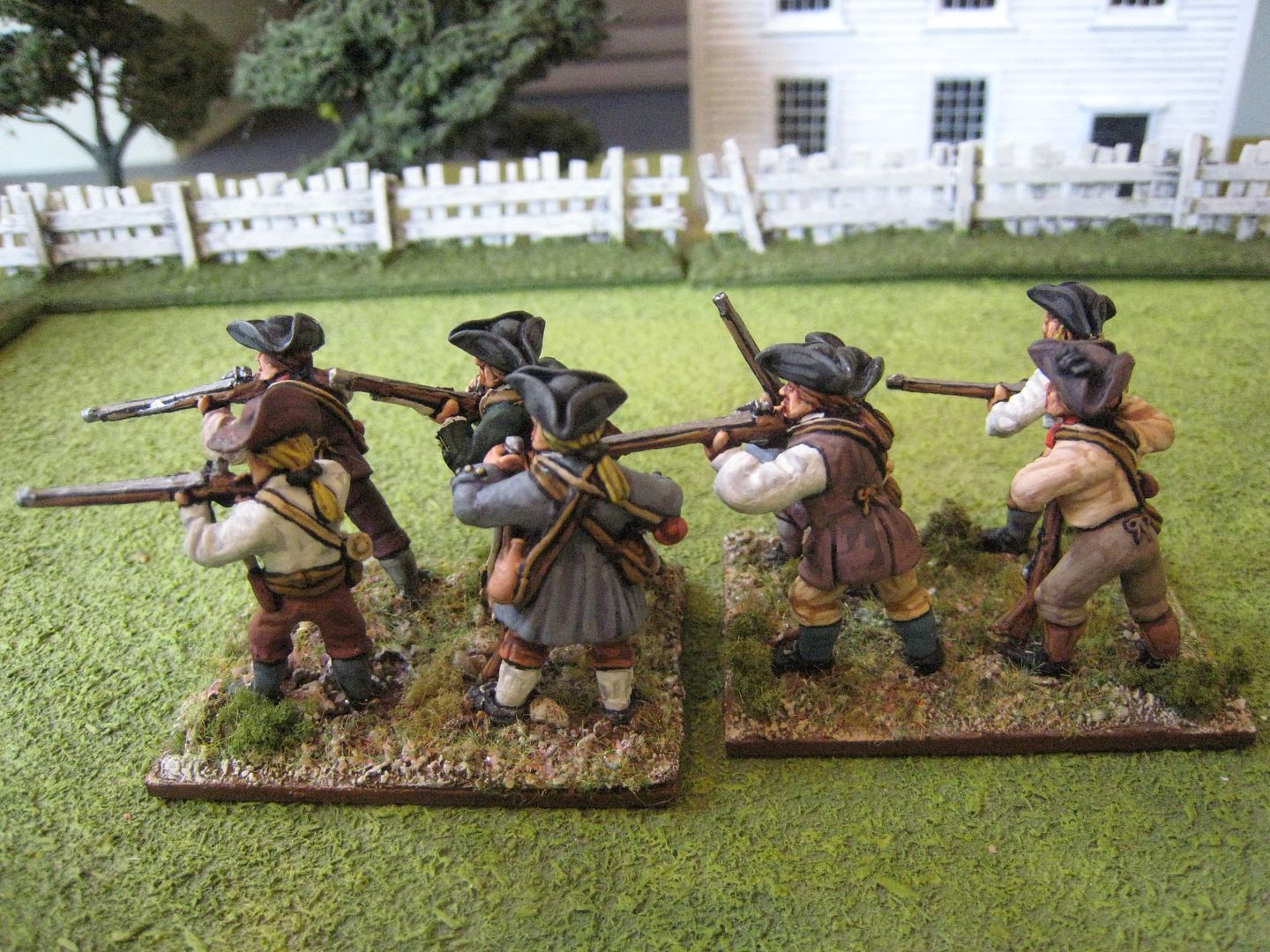
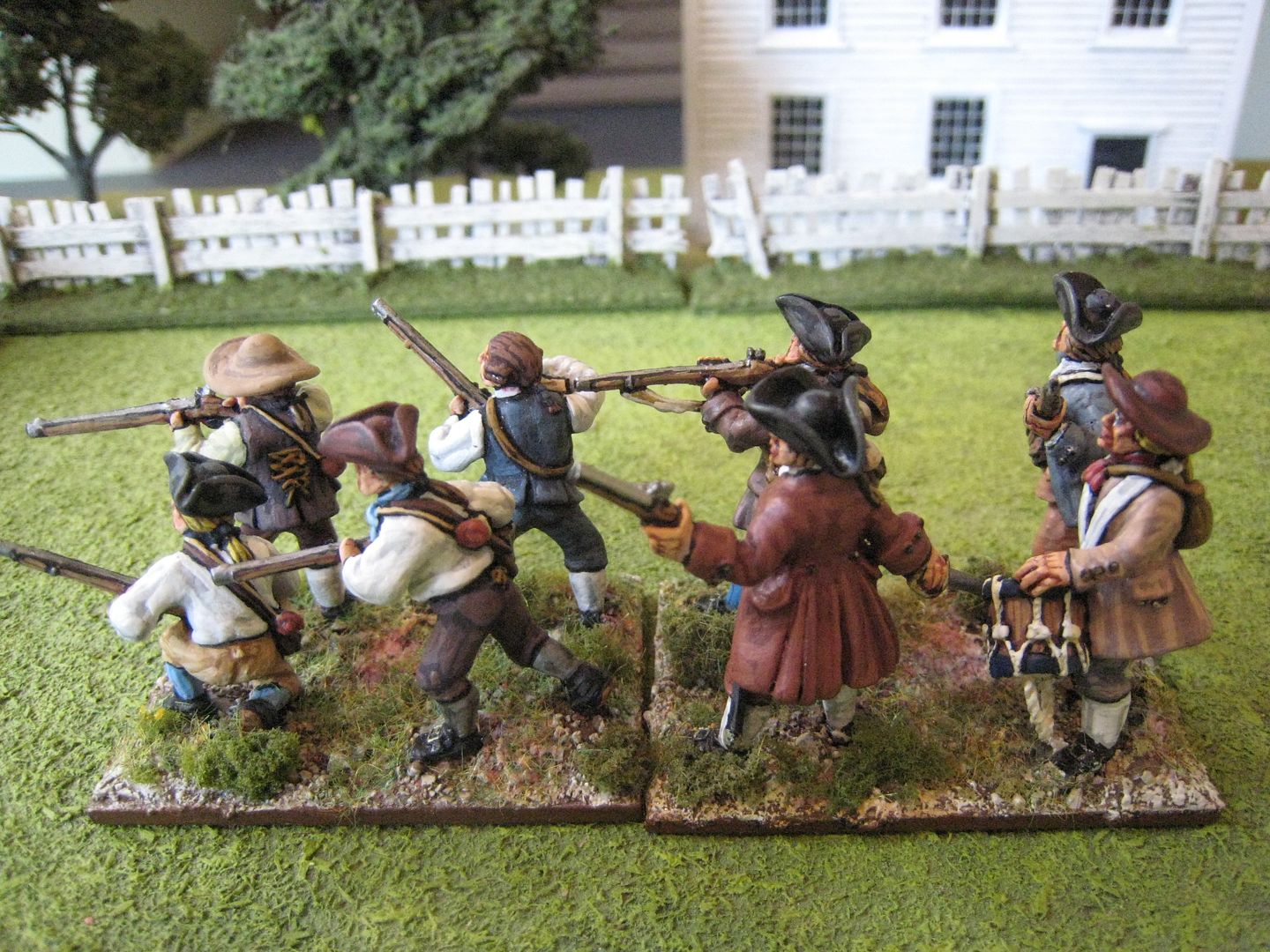
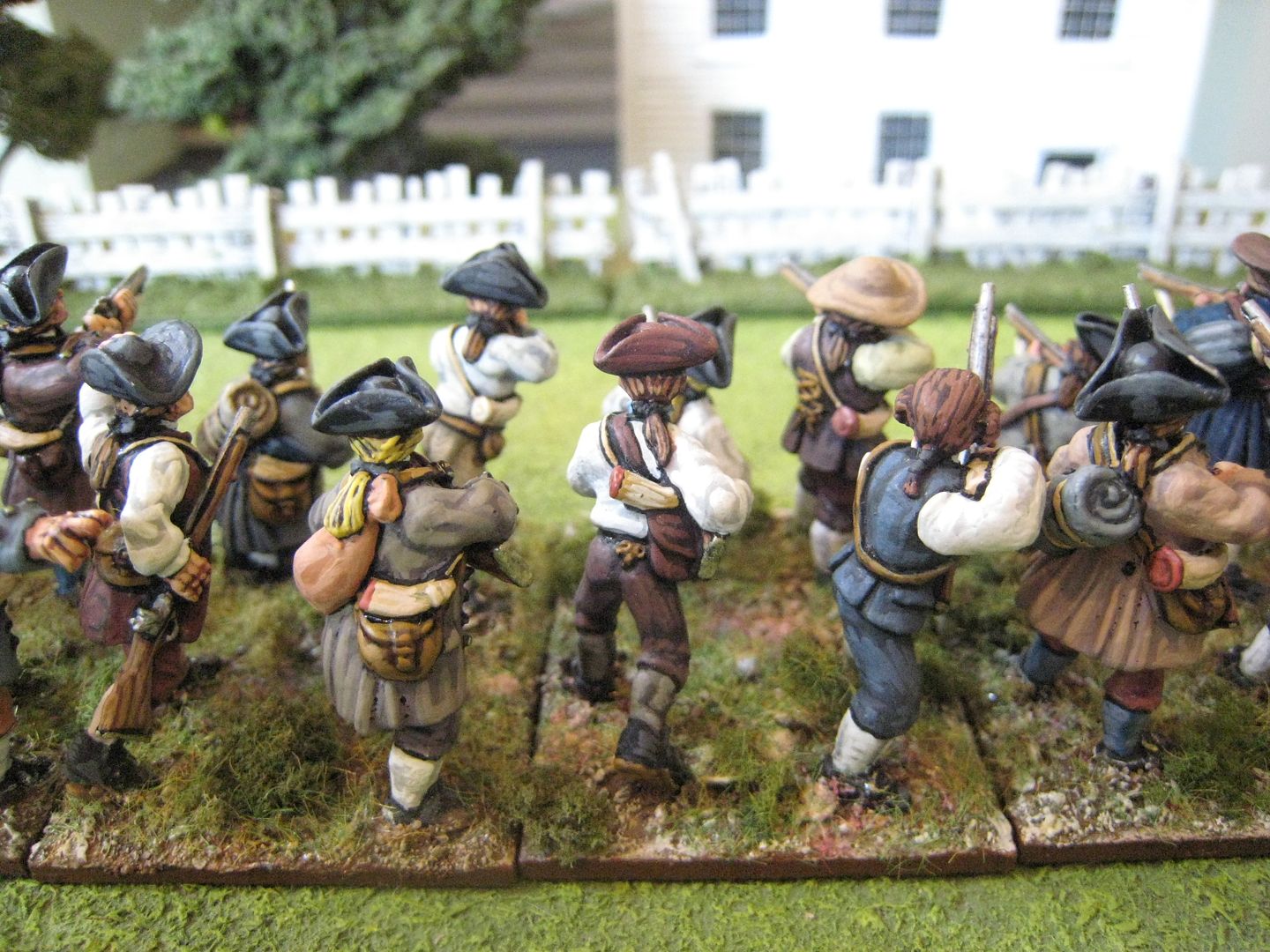
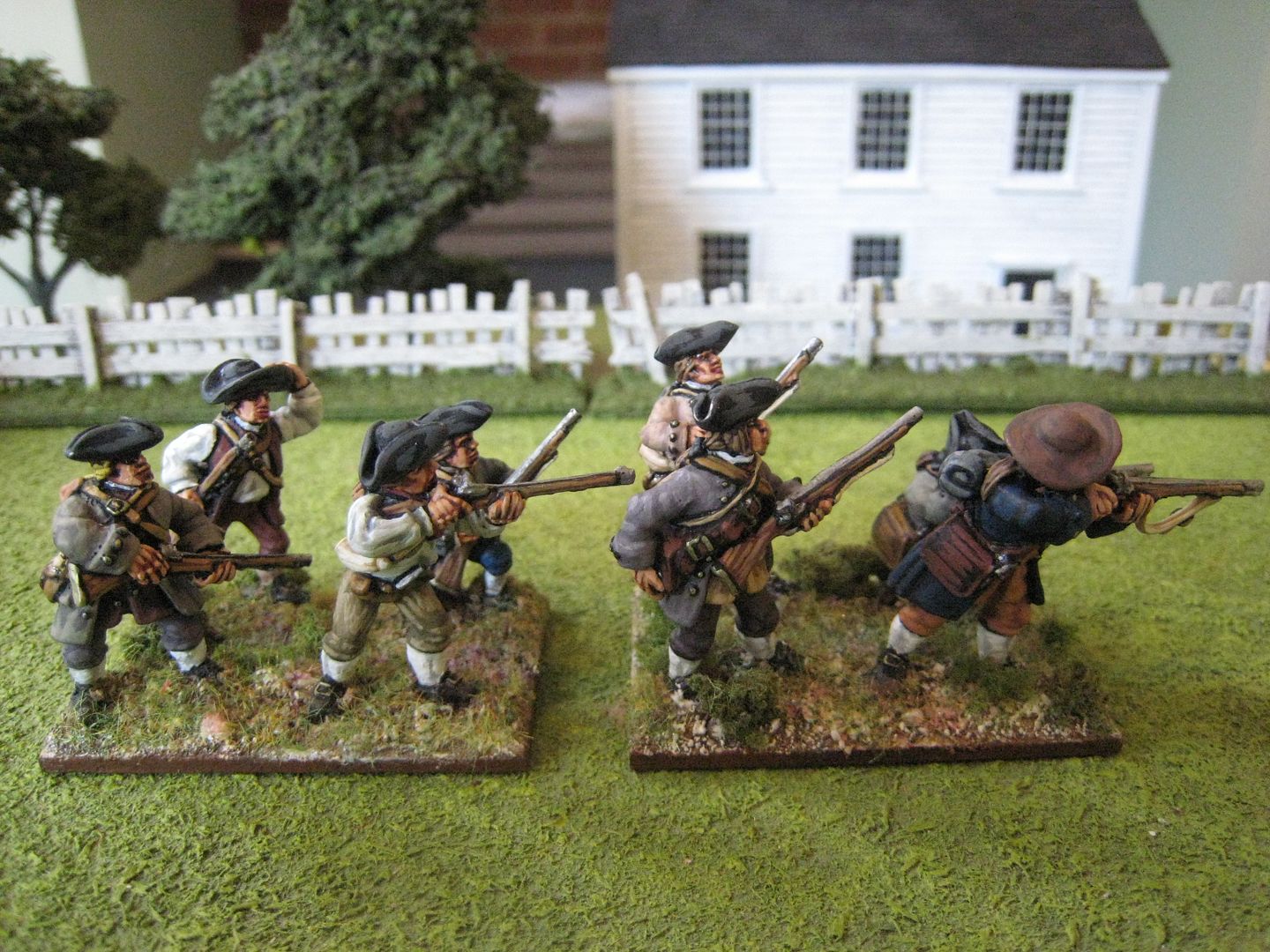
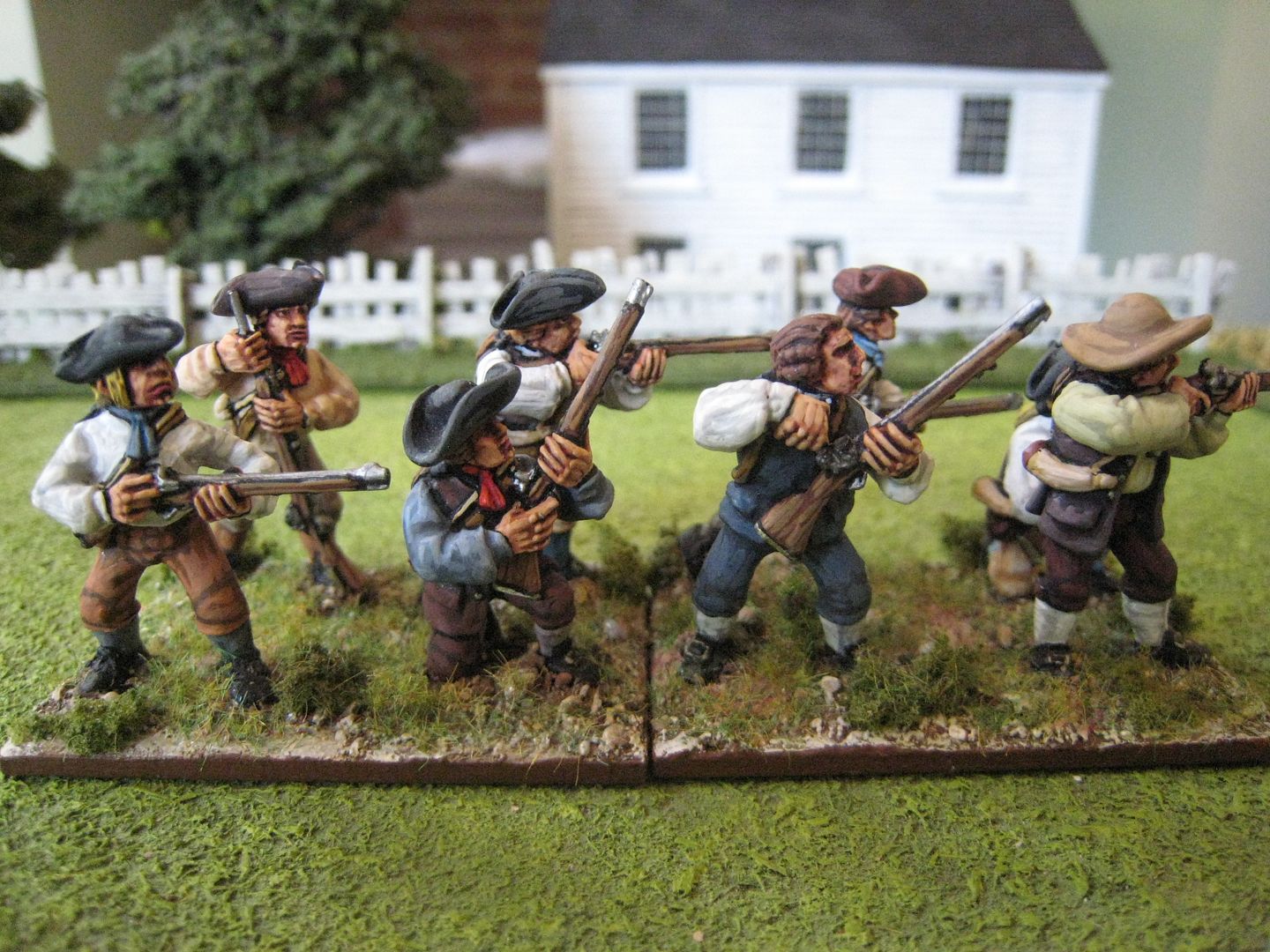
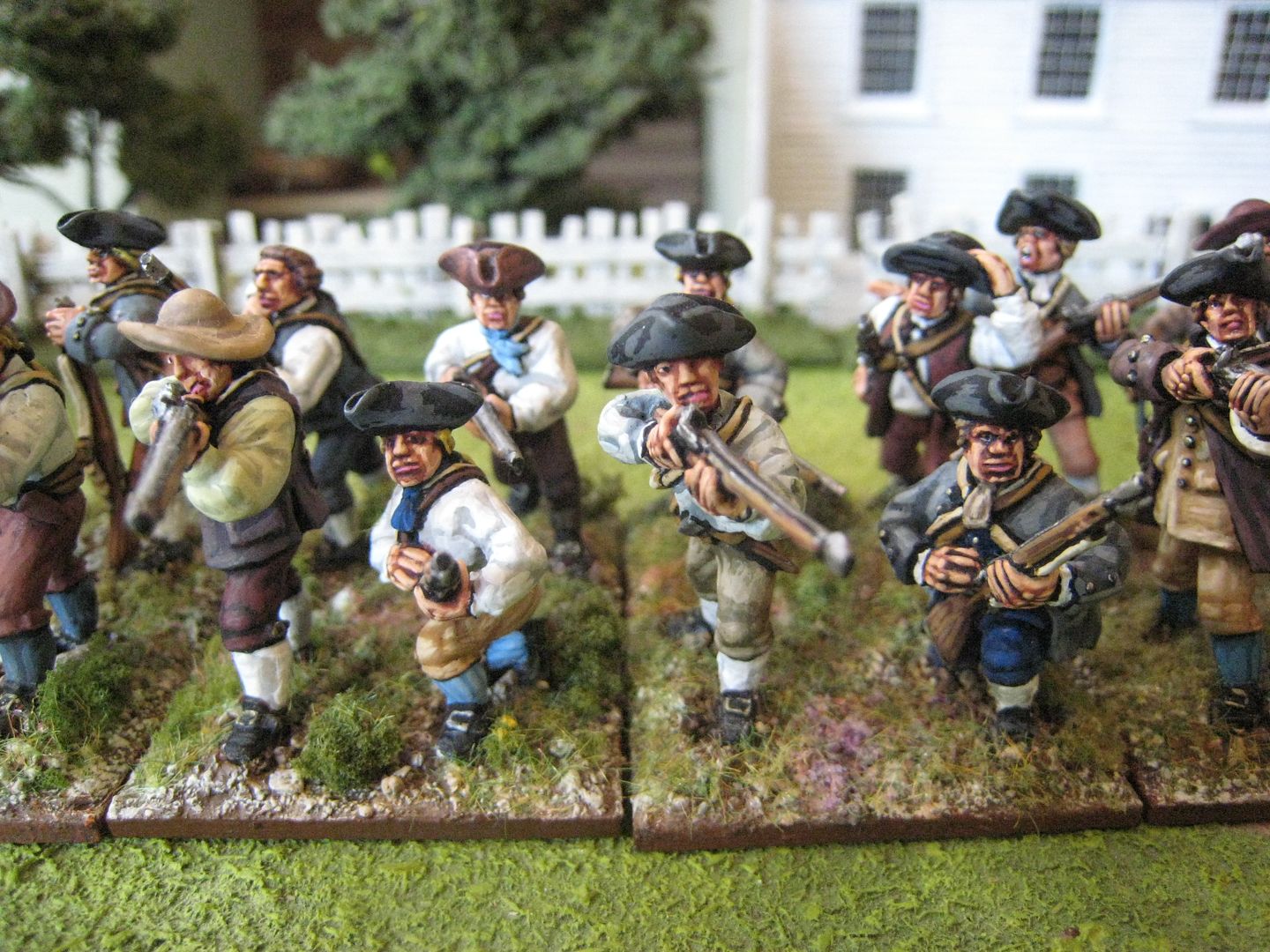
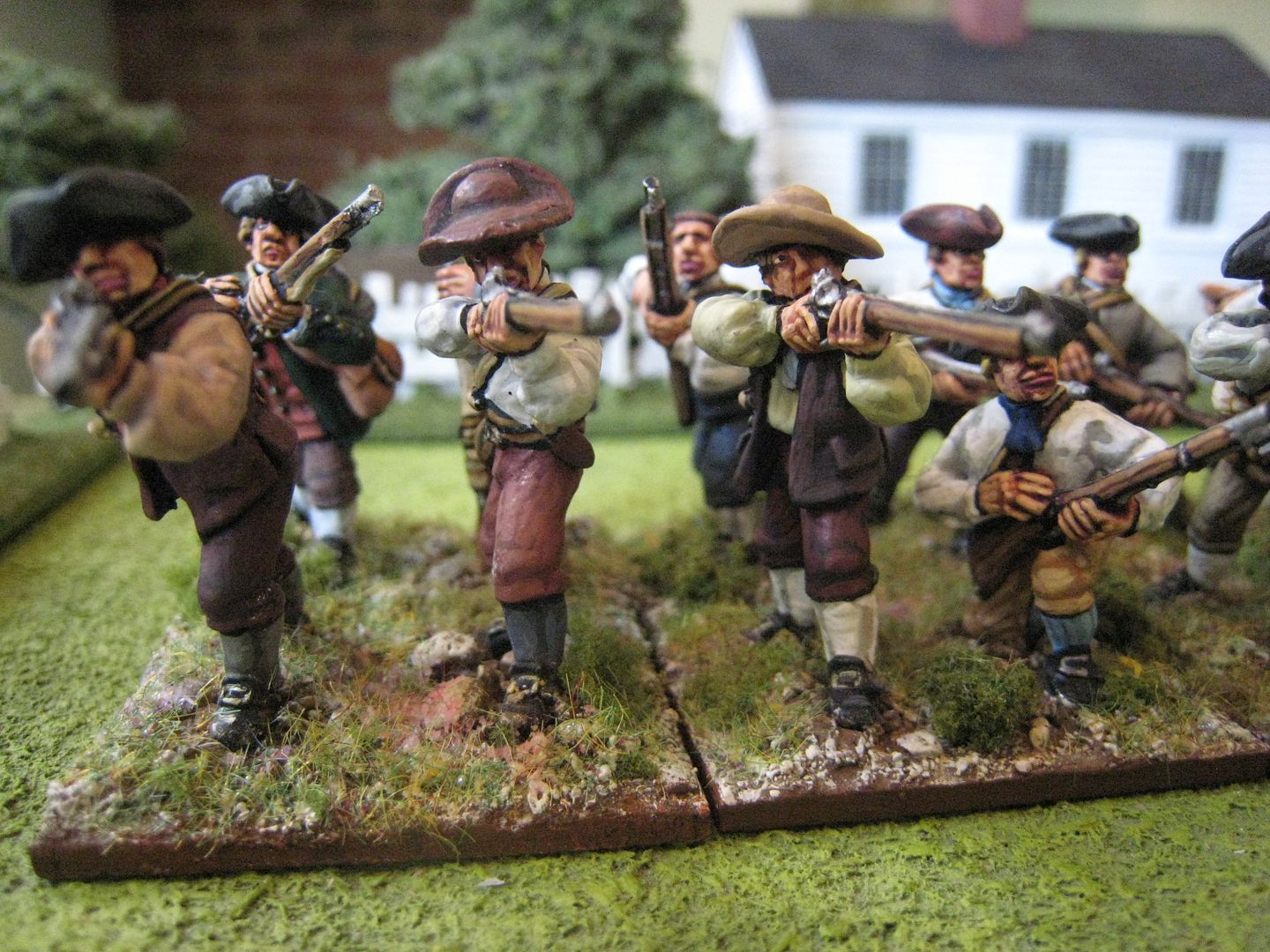
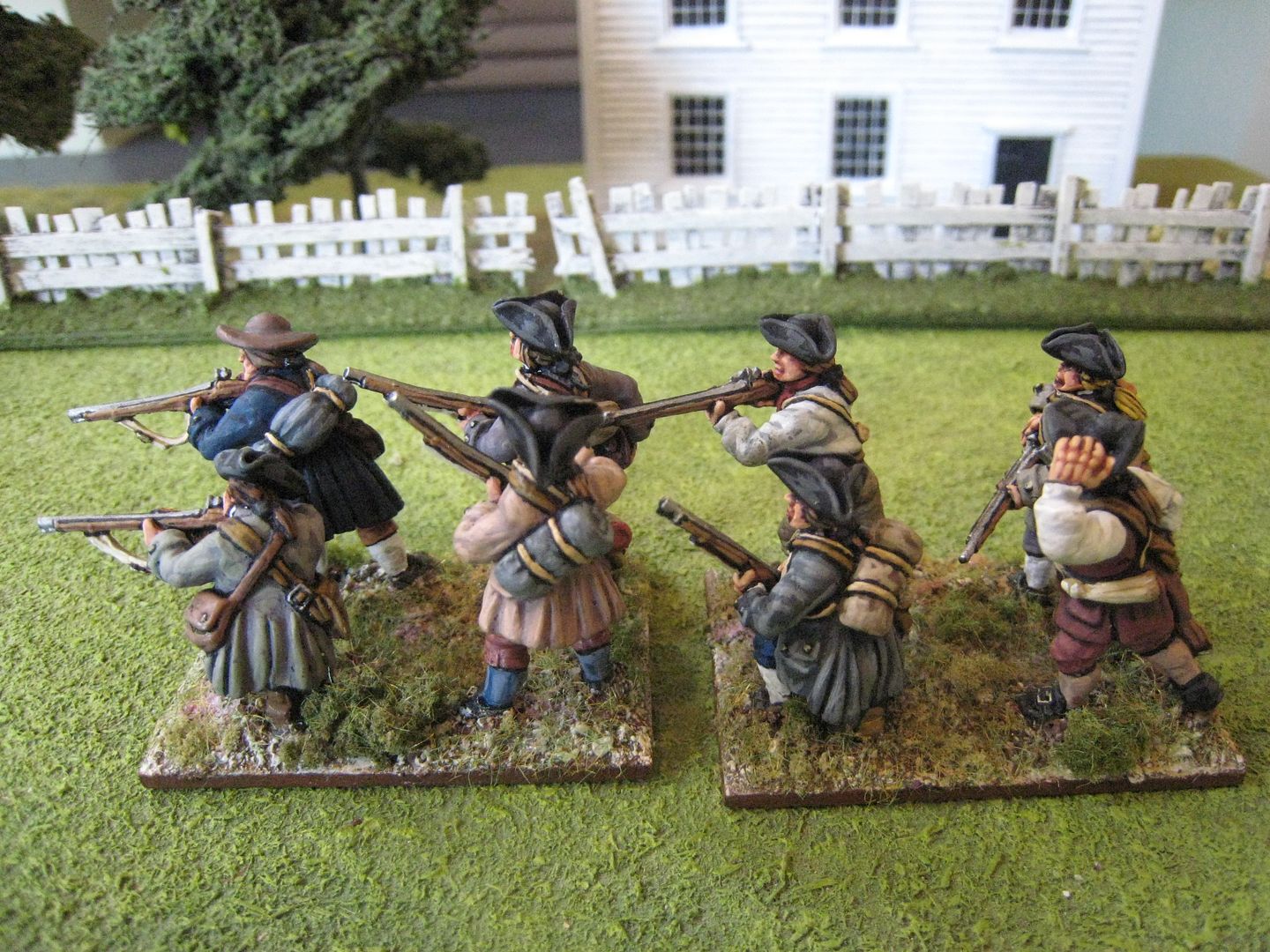
This is a unit of militia that consists of Galloping Major F&IW figures.  I first started working on it in June last year, having picked up a couple of packs of "skirmishing settlers" at Salute.  GM announced shortly afterwards that they were working on more militia figures so I waited for those to be released to complete the unit.  Those figures came out earlier this year and so this unit contains a mix of lightly-armed settler types and more heavily equipped militia.  I thik the mix works well, although some might quibble whether you'd find men in shirtsleeves and coats at the same time - it would be either too cold to be in shirtsleeves or too warm to need a coat!  The GM packs don't contain a standard bearer figure.  I suppose it might be possible to convert one, but I don't mind and I'm quite happy to have one militia unit that doesn't carry a flag as it can be used as Loyalists or Rebels.  

In fact, when painting these figures I had them in mind as being used primarily for Loyalists - rightly or not, the more old-fashioned nature of the clothing (bearing in mind that these figures are designed for used in the 1750s) suggested to me men of a more conservative nature.  I also had an eye on the Savannah scenario, which I've been working at on-and-off over the past couple of years - this requires a 20-figure unit of Tory militia.  Other scenarios which feature units of loyalist militia are Camden (20 figures) and Hobkirk's Hill (16 figures).  The poses of some figures would be good for smirmishers.  If I'd started work on this unit once all the figures had been released I'd probably have saved some of the kneeling and running figures back and put those on some special skirmish bases.  Perhaps I should have reversed the chap who is holding onto his hat and running so that it looked like he'd lost his bottle and was making a run for it.  There is no standard bearer in the command packs, but that's not a problem unless you feel you really must have a standard in every unit - most militia didn't carry standard or flags, I suspect.


The figures are on the large side of 25/28mm.  Being F&IW figures their reference point in terms of size is more Redoubt Miniatures than Conquest; the latter would look rather puny in comparison.  So I'd suggest keeping these figures in their own units and not mix them with other standard AWI ranges.  They are, however, a very good fit for the new(ish) King's Mountain Miniatures over mountain men, which Bill Nevins tells me were designed with more than one eye on the F&IW.  The figures are easy to paint - the surface detail is crisp and accessible and the various straps are clearly set out.

You can't have too many militiamen for the AIW, so I recommend these figures, which come from a mixture of "settlers" and "un-uniformed militia" packs.  Galloping Major have some sailors n the pipeline which will also be very useful for the AWI - the Savannah scenario, for example, requires a unit of 8 sailors.  So it's worth putting this company on your AWI radar.

24 figures.  Painted June 2013-June 2014.