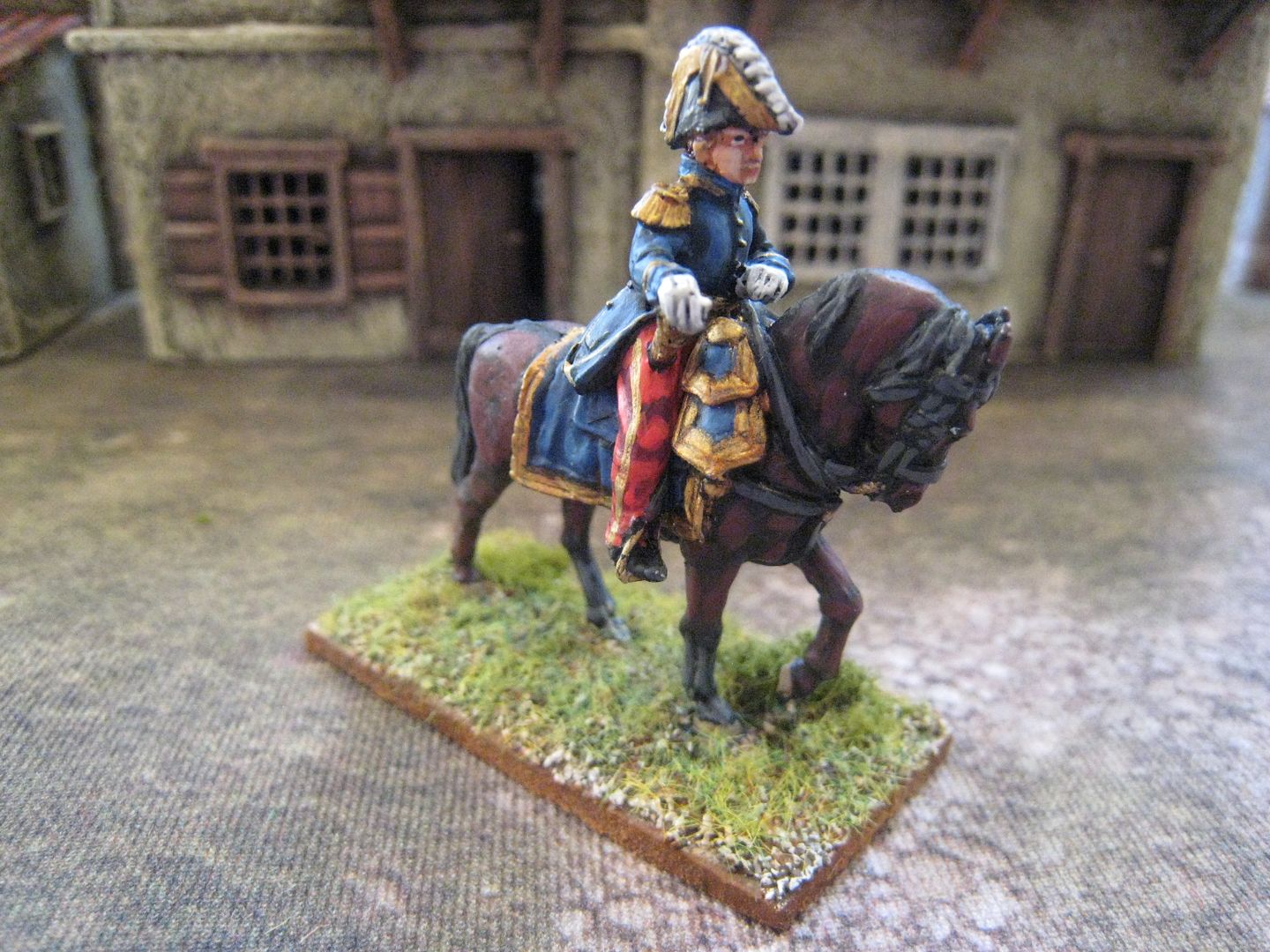
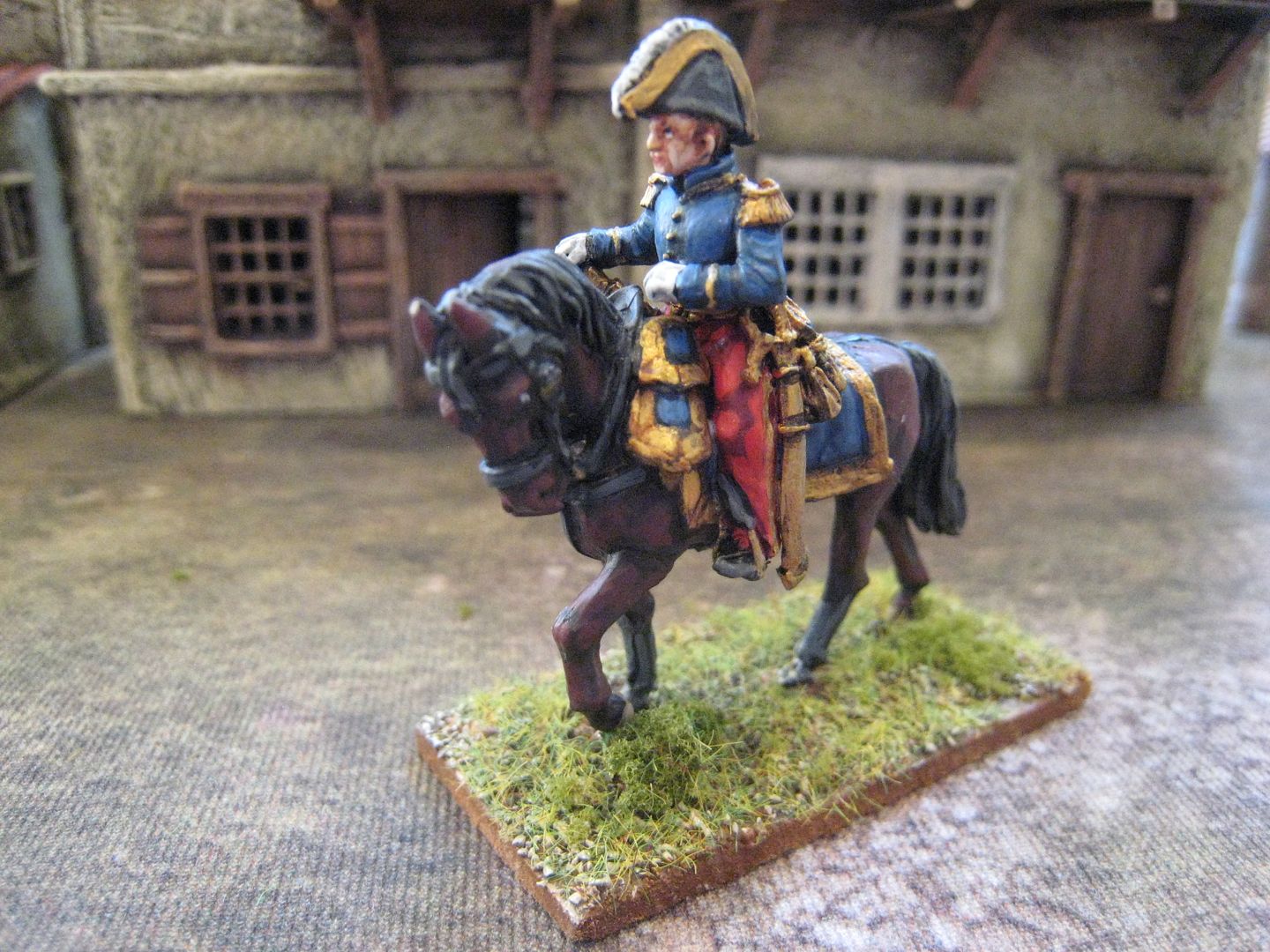
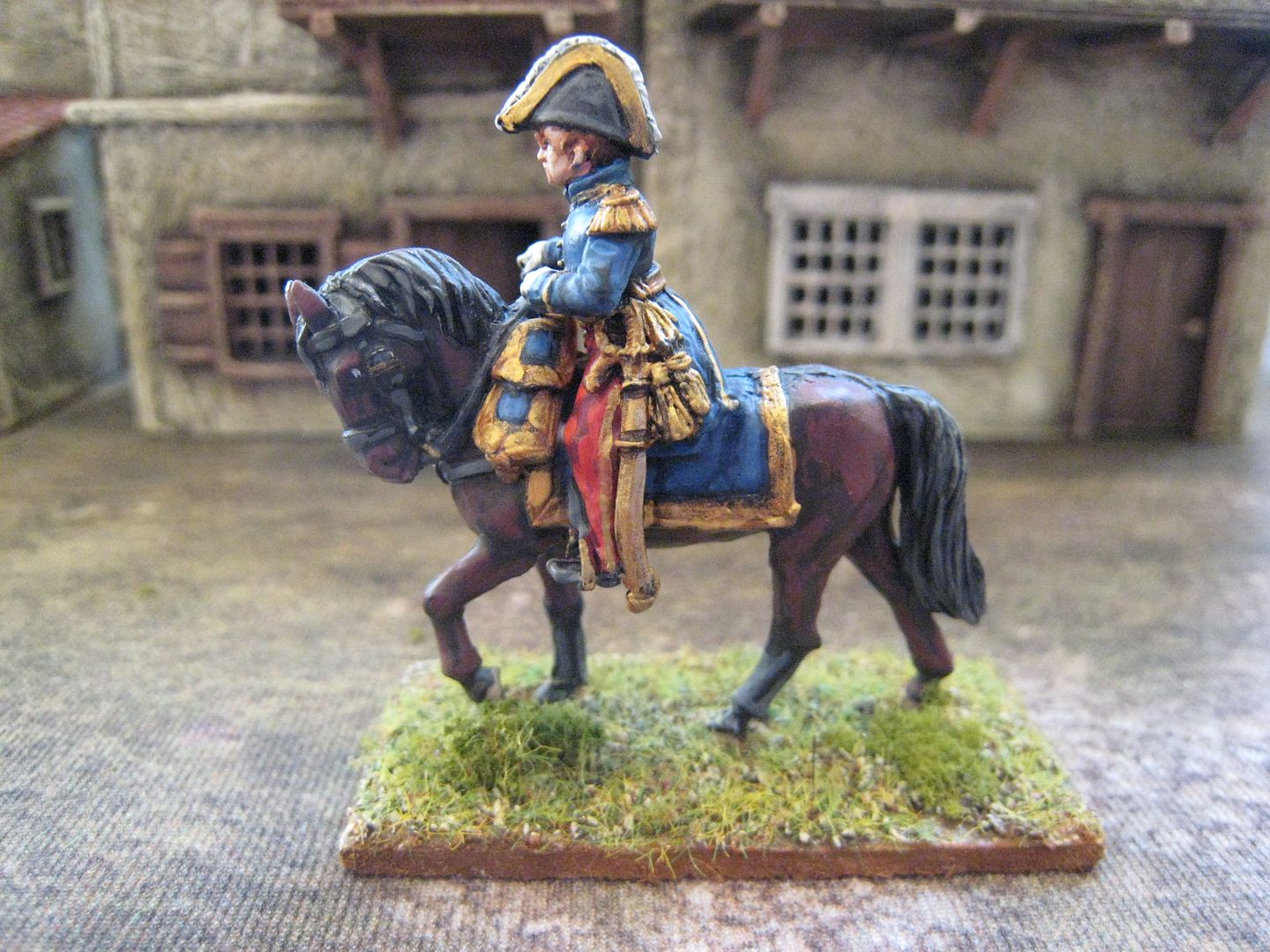
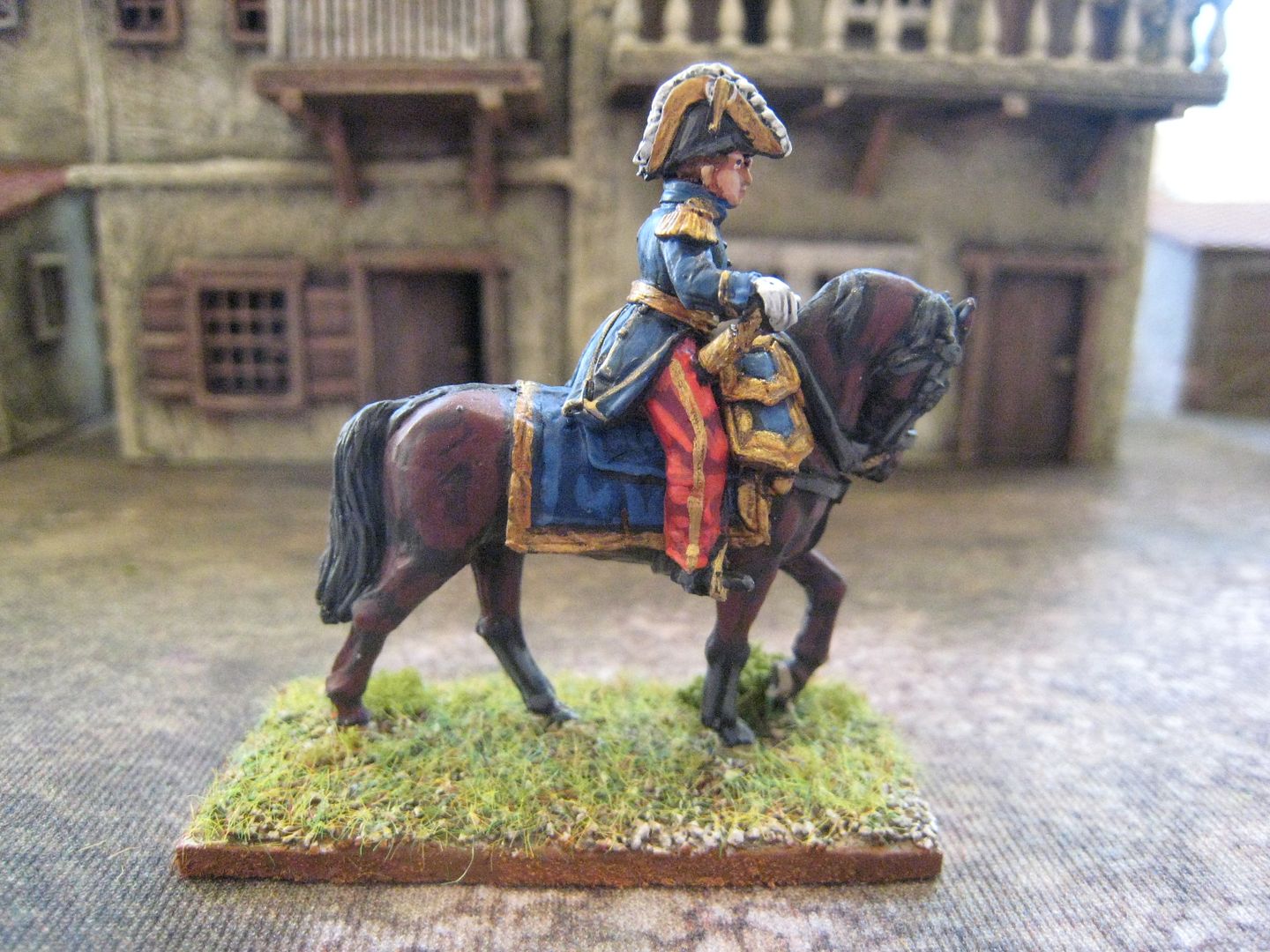
Joseph Bernelle (1785-1871) was the commander of the French Foreign Legion in the First Carlist War. He was commissioned as a sous-lieutenant in 1803. Details of his war record are sketchy, but he seems to have ended up as Aide de Camp to General Philibert Jean-Baptiste Curial (no, me neither...) and it is thought that he was present at Waterloo.
The Legion was formed in March 1831 using men from the various regiments of Swiss and German troops in French service. France had invaded Algeria the previous year and the Legion was sent to Algiers shortly after its formation, where it promptly saw action. The Legion's battalions were originally organised according to nationalities, and in 1834 the Spanish government asked if the 4th Battalion could be disbanded, as its troops were largely Spaniards who it was assumed would then be able to serve the Isabelino forces. The following year, France decided to send the rest of the Legion off to Spain as well. The Legion was formally disbanded and then formally transferred to the Spanish Army, with the Spanish government re-naming it the French Auxiliary Division. Colonel Bernelle was given the local rank of General. 123 officers and approximately 4,000 men were transferred to the Spanish Army. One of Bernelle's first actions after arriving in Spain was to break up the national battalions and mix all the men together into 5 new battalions, insisting that they all learn and speak French. He also raised a unit of cavalry and some artillery from the existing ranks, so turning the Legion into a more self-sufficient "all arms" force.
I provided a short summary of the Legion's combat record here. Bernelle was replaced in 1836. The Legion had been badly under-supplied and the men received their pay in irregular fits and bursts. Morale declined and desertion became a problem. Bernelle repeatedly raised these points with both the Spanish and French governments. At some stage one or both governments decided it was time for Bernelle to head back to Algeria. There are also some suggestions that Bernelle was unwell and was not opposed to relinquishing command anyway. There was clearly some friction between him and another senior officer, Lieutenant Colonel Joseph Conrad (who eventually took command of the Legion but was killed at Barbastro in 1837). Also, it seems that Bernelle's wife may have been making too much of a name for herself with the Legion's junior officers, and there is an inference that Bernelle prioritised his own family (2 sons and a cousin) for promotion within the Legion. So, whilst the Legion had some successes in battle over the previous year, it sounds as if it was time for Bernelle to leave.
I painted this figure when I did my British Auxiliary Legion command figures. This was when I was having some eye-sight issues again and I can see the eyes are not as they should be - the pupils are too high up, basically where the eyebrows should be. Oh well - maybe he's following the trajectory of a cannon ball. But he's a fine-looking chap; you can't really beat French high command uniforms from the mid-19th century. He probably deserves a larger command base, and if I'd put more thought into things I maybe could have found some suitable ADC types from a Crimean War range.
I should have the Don Carlos command stand finished this week, so there will be two more FCW posts and then onto Frostgrave: Ghost Archipelago. After that will be some more AWI and then I'll probably go for Napoleon's Egyptian campaign as my next "catch-up" period.
1 figure. Painted August 2021.