Showing posts with label Isabelinos. Show all posts

Friday, 23 October 2026

Aragon Volunteers

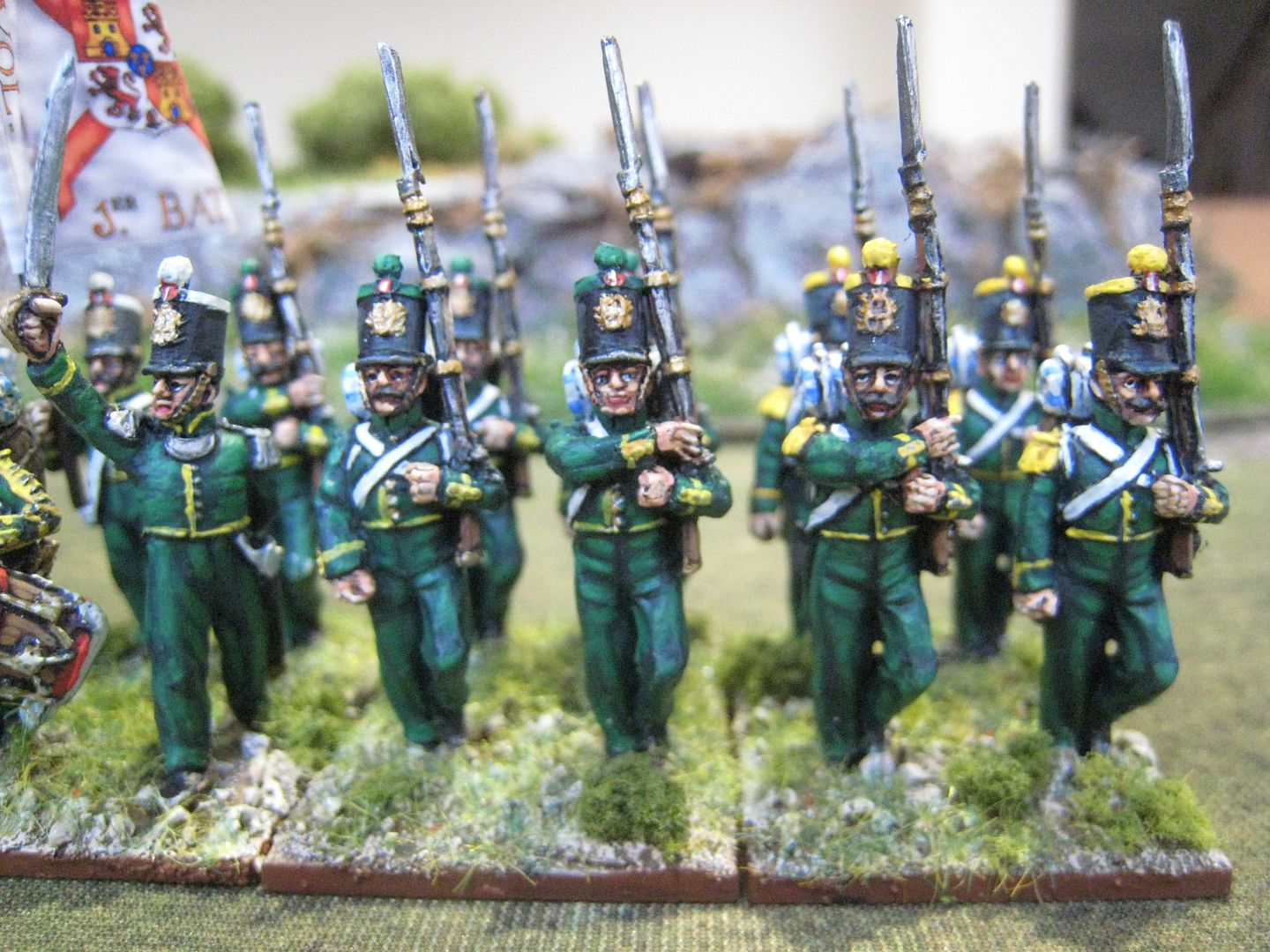
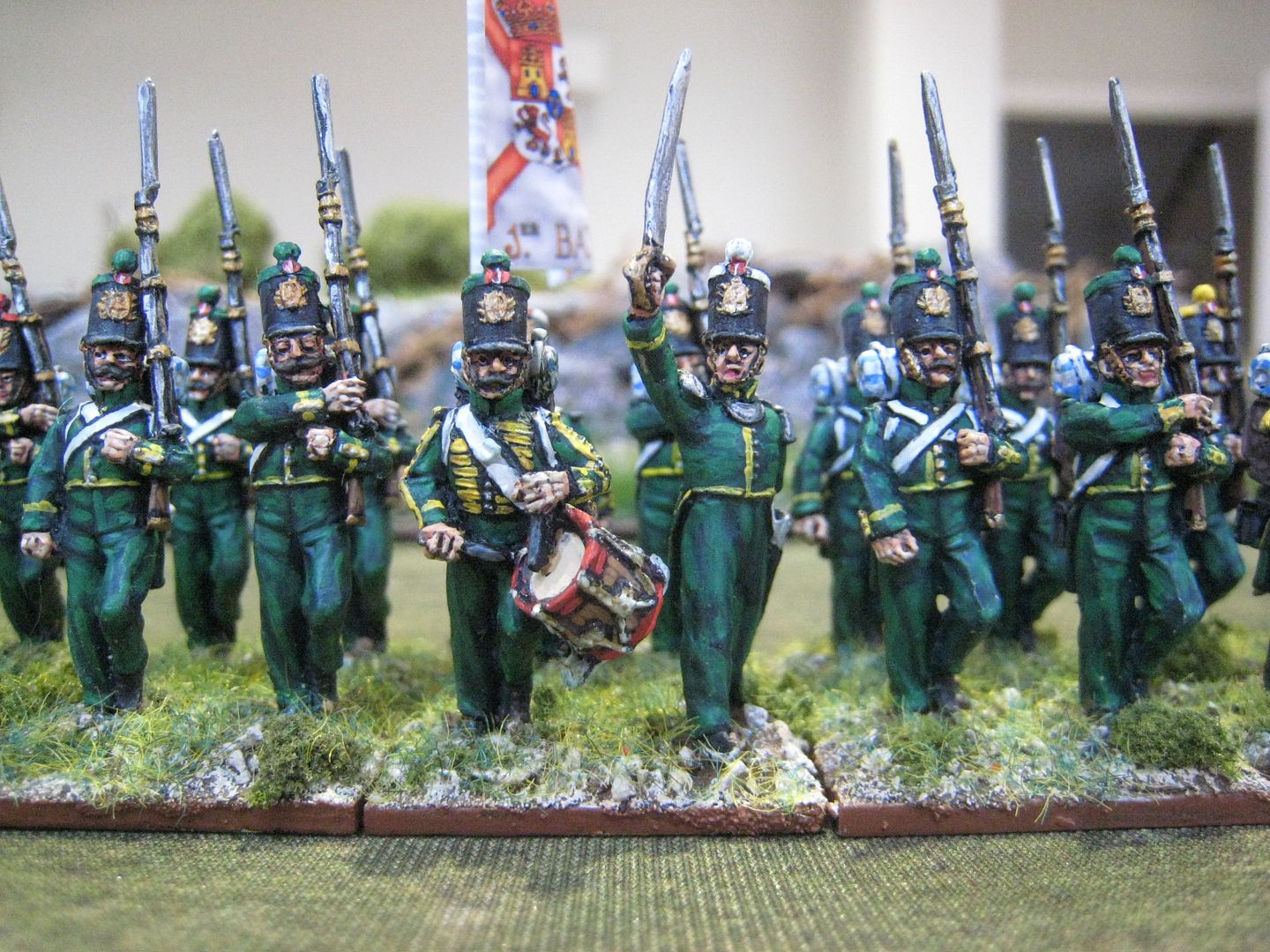
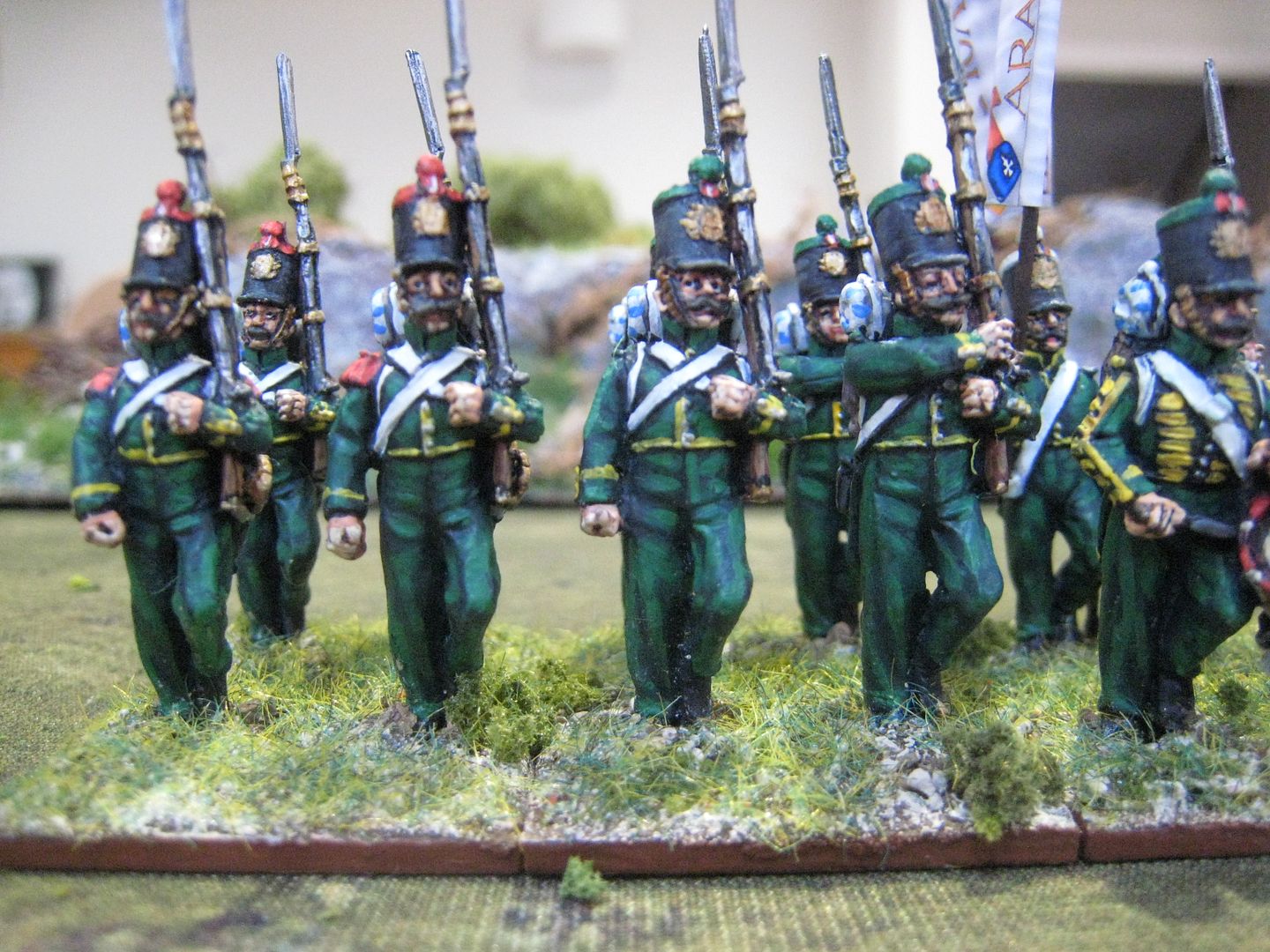
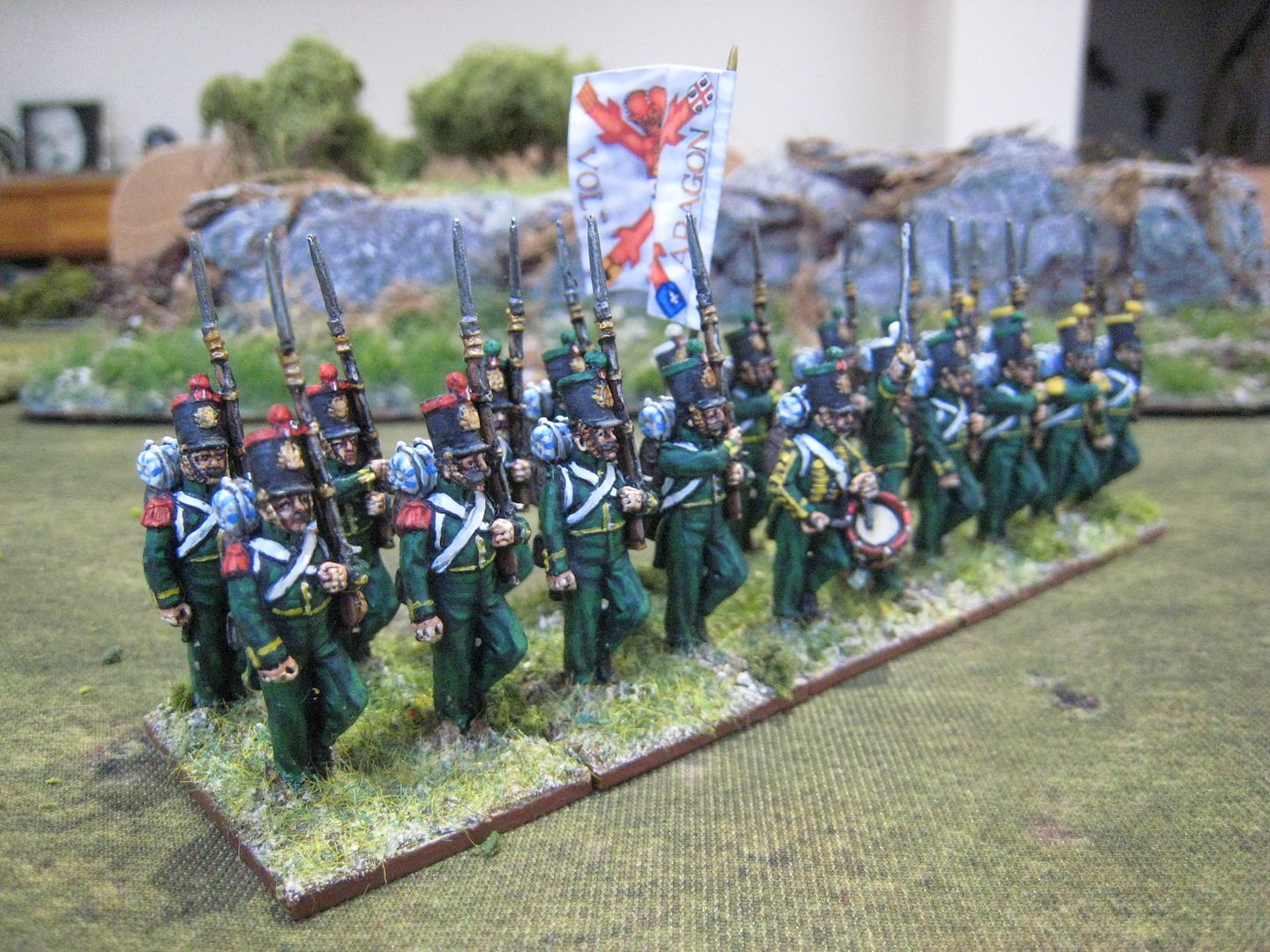
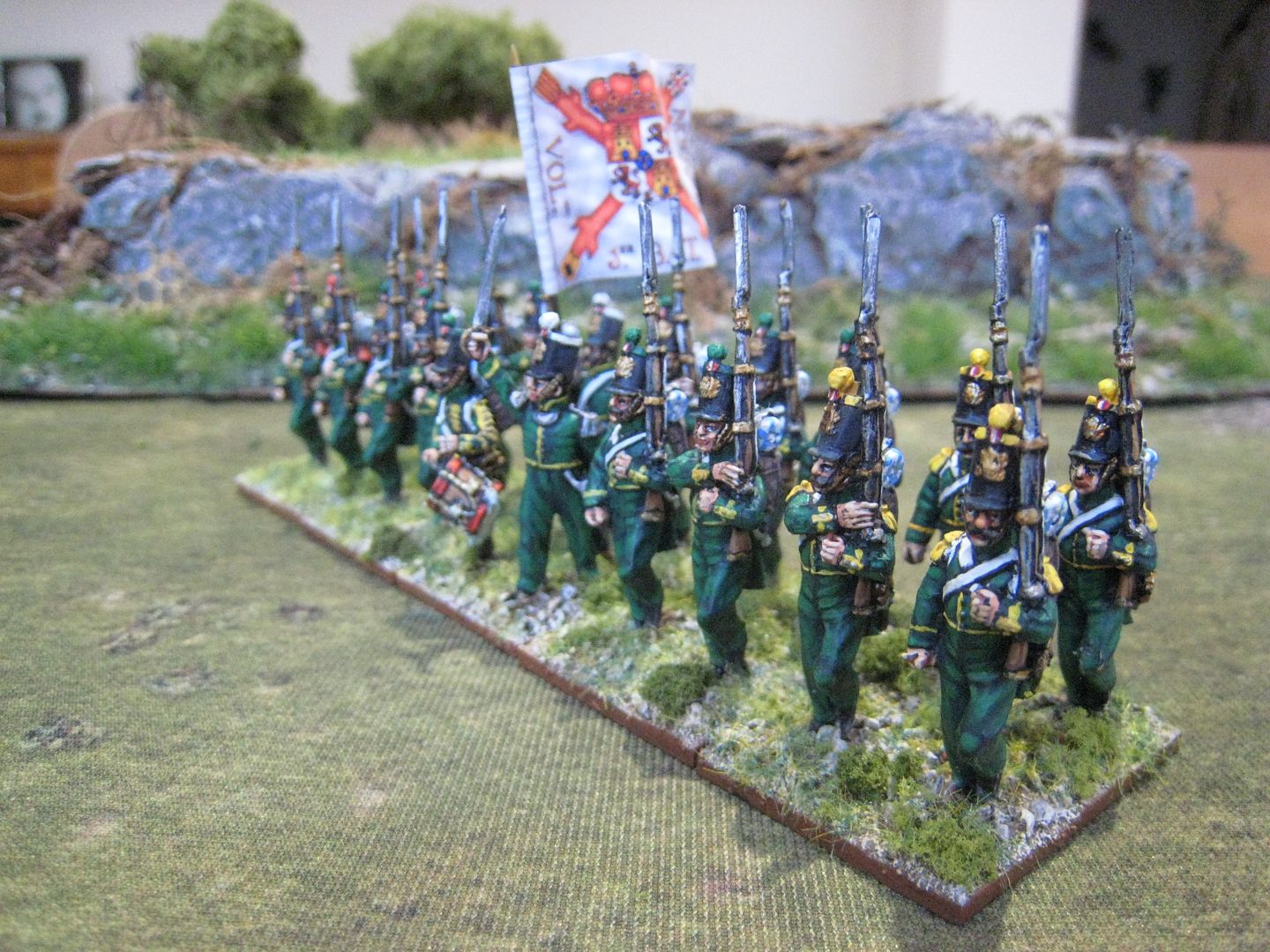
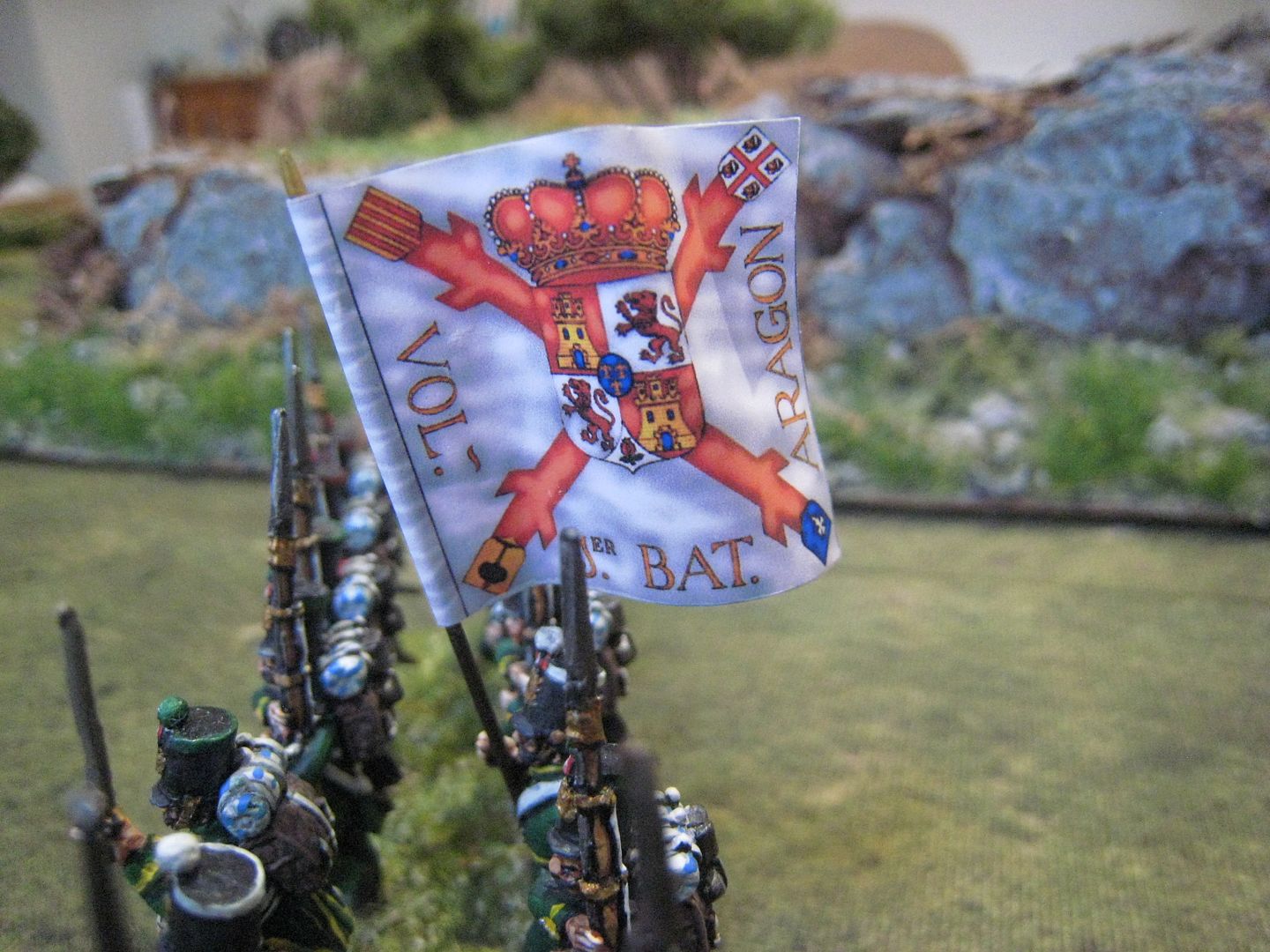
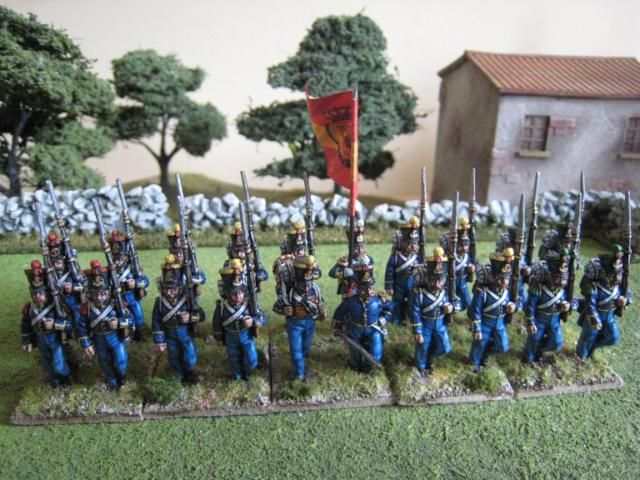
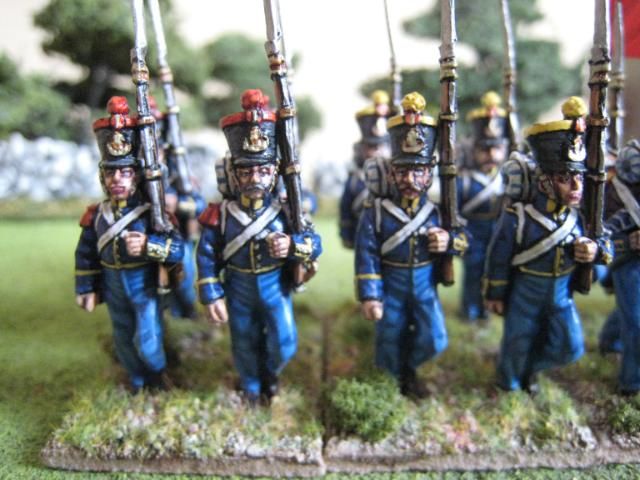
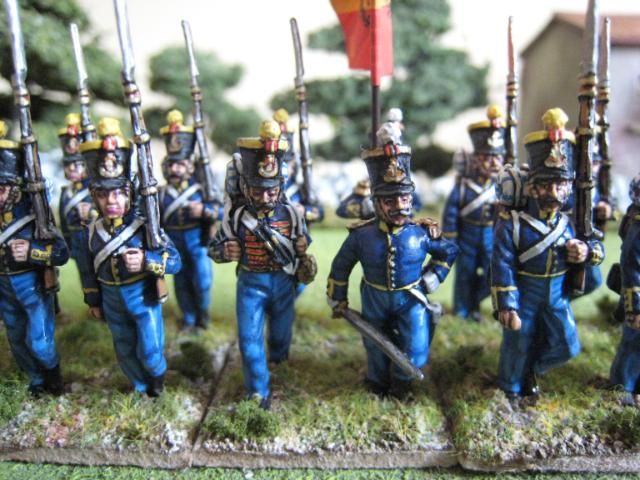
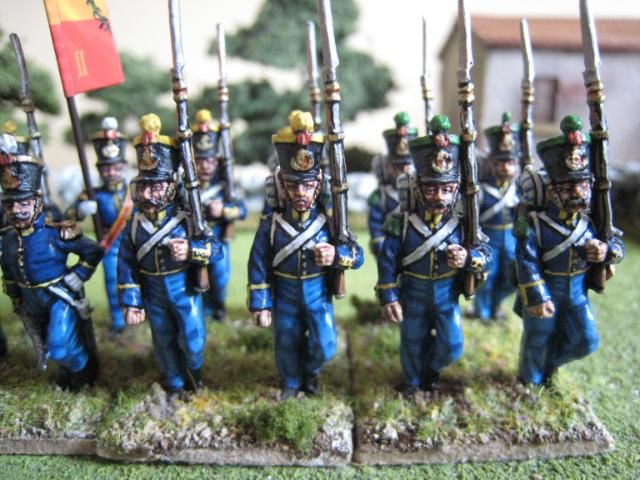
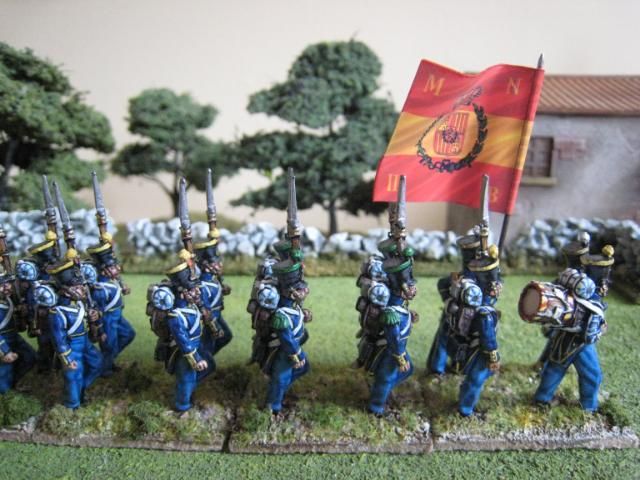
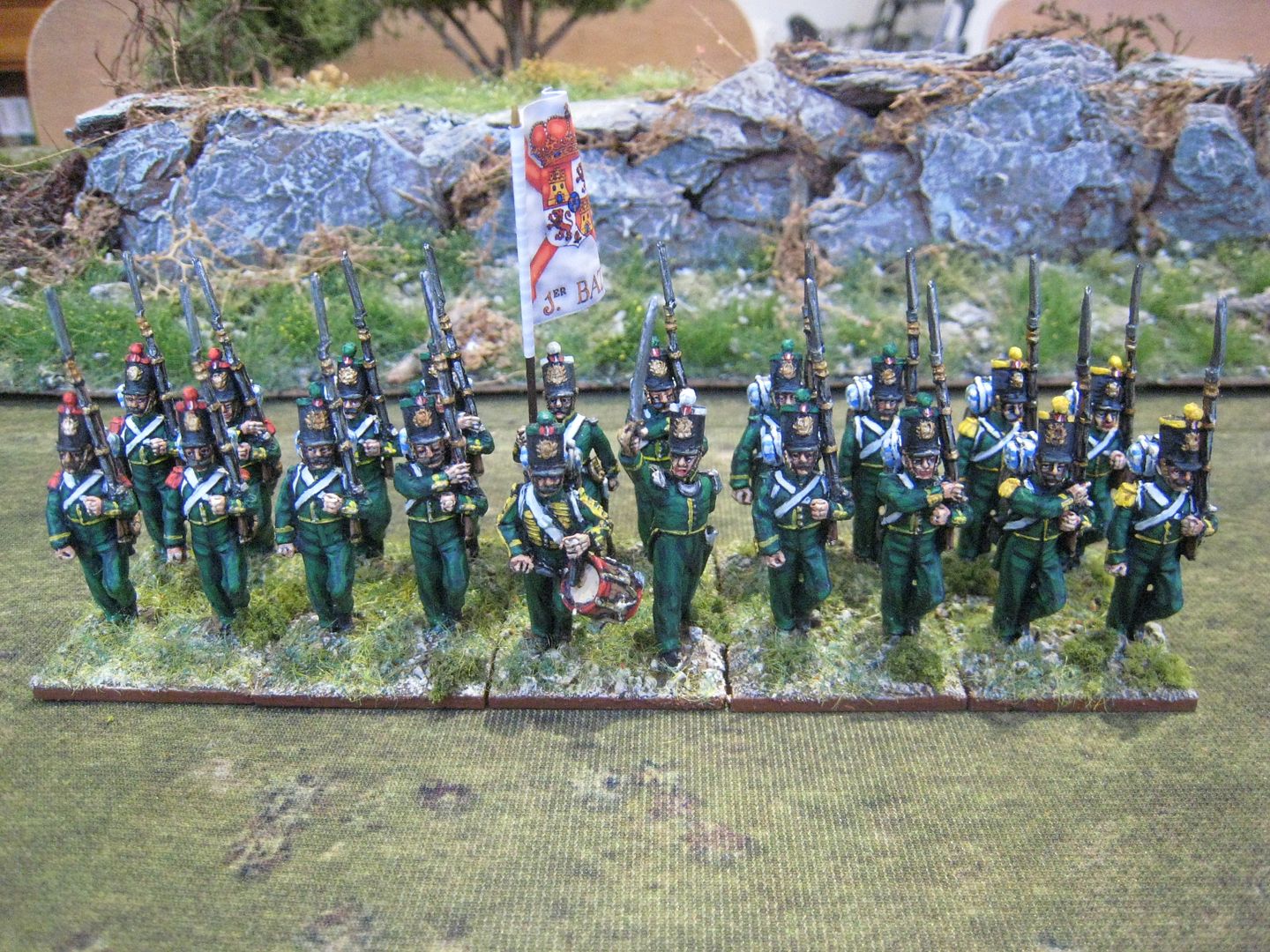
This is my first Isabelino infantry unit for over 10 years! Where does the time go...These figures were in the large box of Perry stuff that my family gave me for my 50th birthday and painting up some light infantry was the obvious thing to do as I didn't have any in my Carlist War collection.  This is the first of two such regiments, although the second won't be finished for a good while yet (as always when you don't buy figures yourself, you end up with either too many figures or too few). I don't think there was much difference between the line and light infantry. Cairns says that when the war began there were 6 light infantry regiments, each of two battalions. He also notes that the Voluntarios de Aragon was originally raised in 1762. I might do the second battalion at some stage, but I'd need to buy more figures and another flag.

I went for 20 figures - 3 centre companies and then one each of "carabineros" (in red) and "tiradores" (in yellow). I probably ought to do some skirmishers at some stage. I love the uniform of the light infantry, although my colour choices may be a bit too "emerald". I painted these figures in two batches, and I think I used slightly different paint recipes for the green uniforms. I used paints from the Army Painter Warpaints Fanatic range, the slight difference being the first layer. I think initially I used "Angel Green", then "Guardian Green" and a final highlight of "Greenskin". For the second batch, I started off with "Blighted Green" and then continued with the aforementioned paints. These paints are in the "Deep Green" set, although I think "Blighted Green" was one of those additional colours that come in the John Blanche "Grimdark" Masterclass sets.

20 figures. Painted December 2025 and October 2026. Flag by Alberto Ramos. 


Wednesday, 16 April 2025

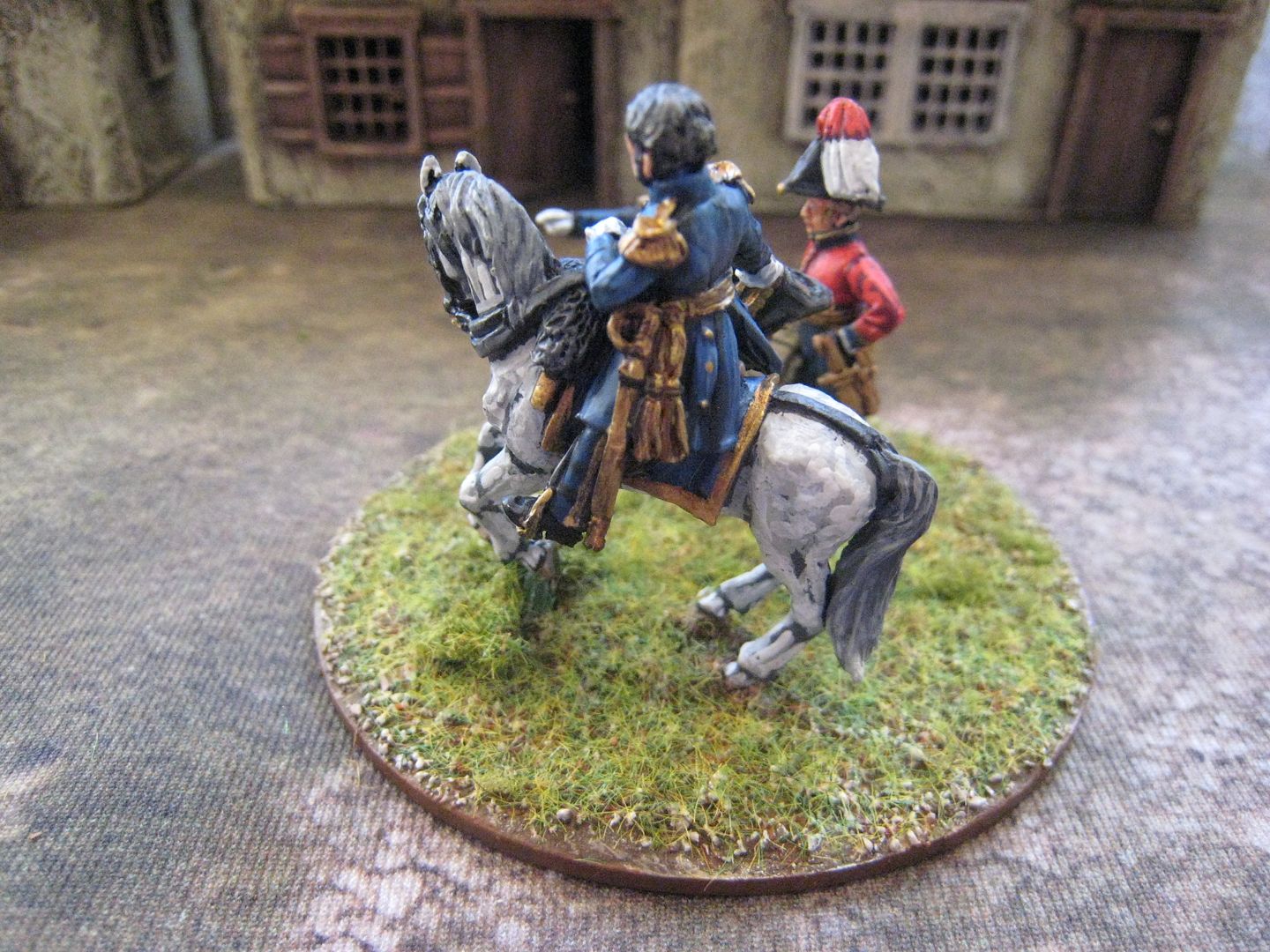
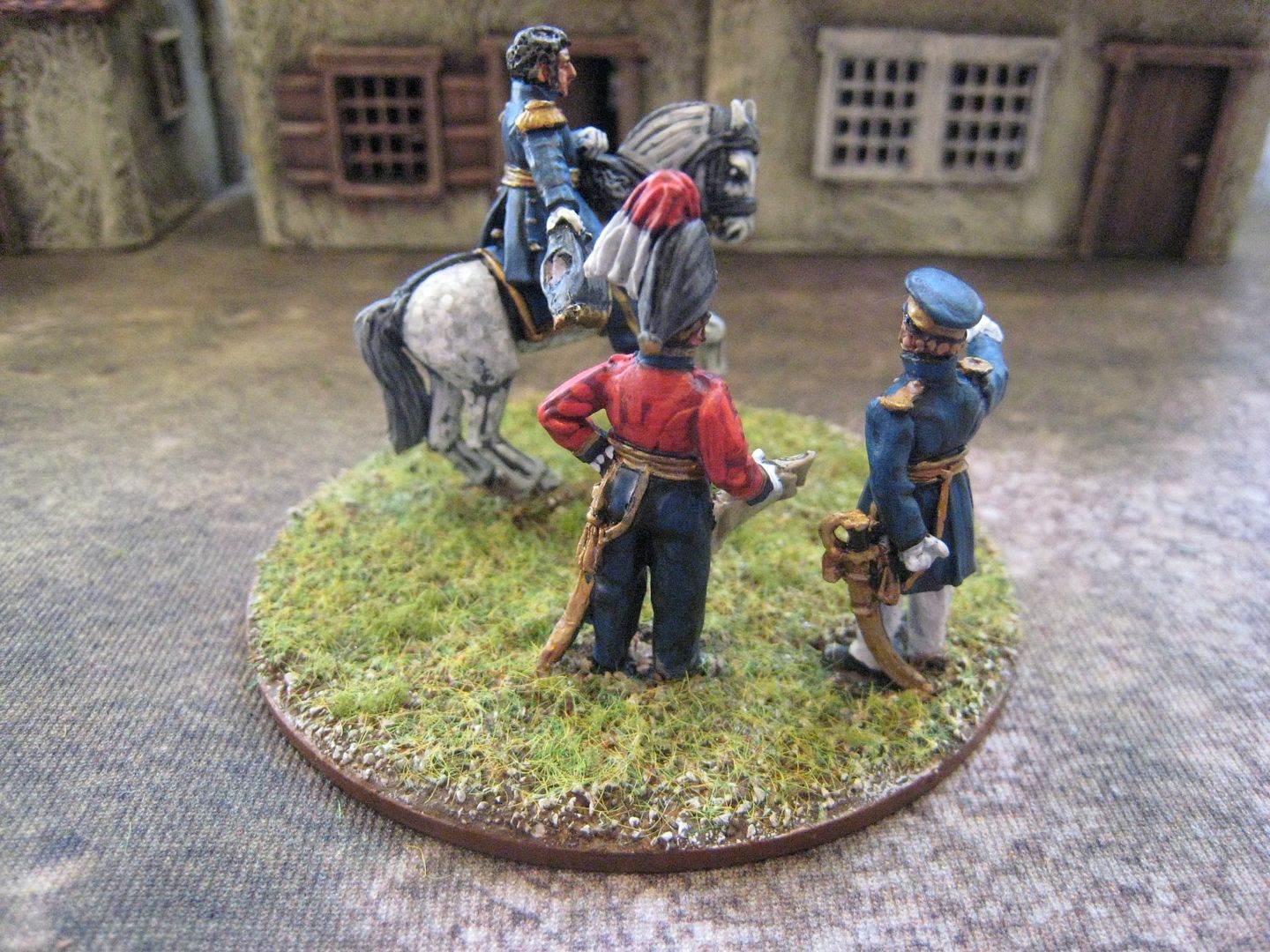
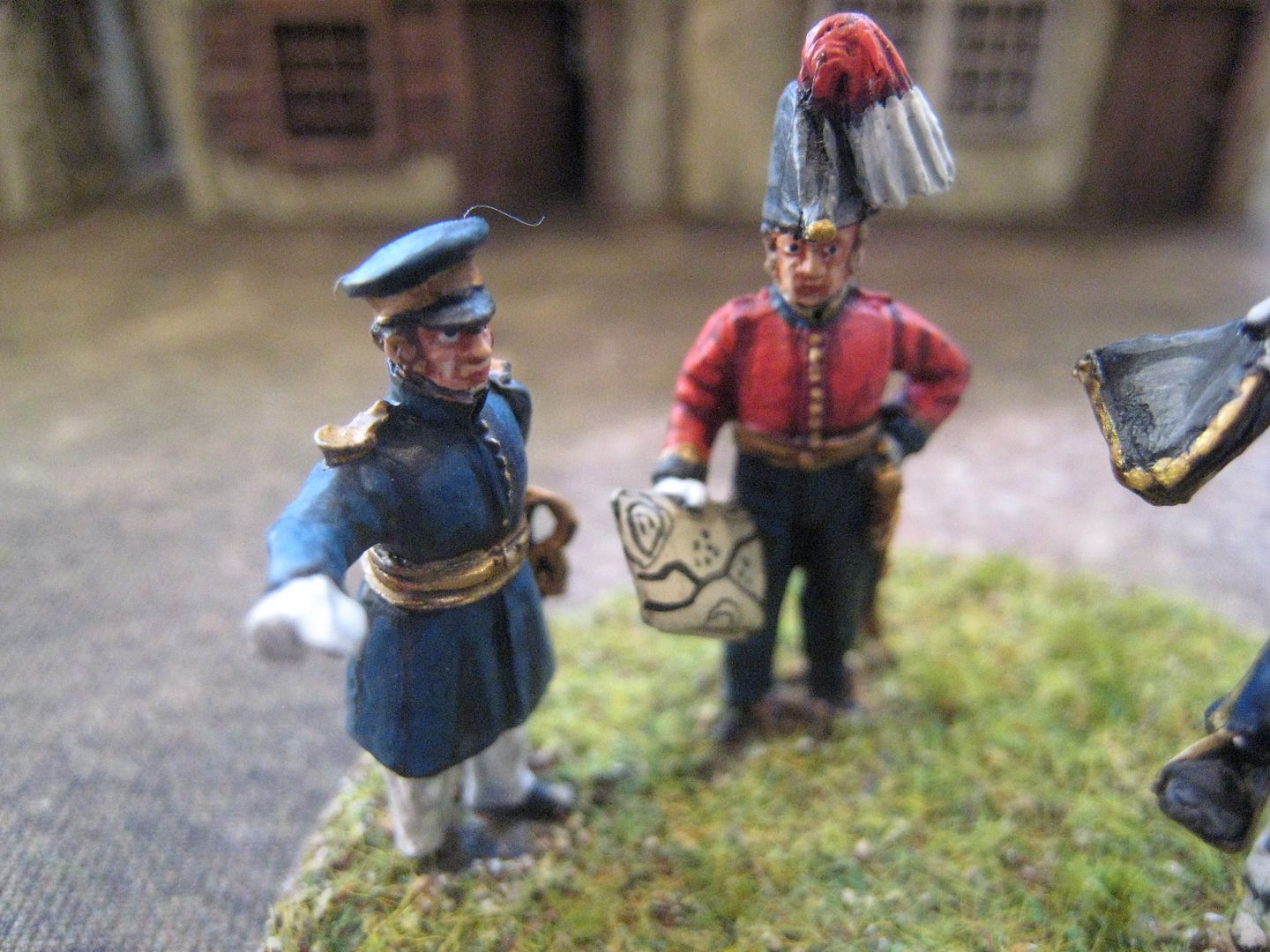
Sir George de Lacy Evans


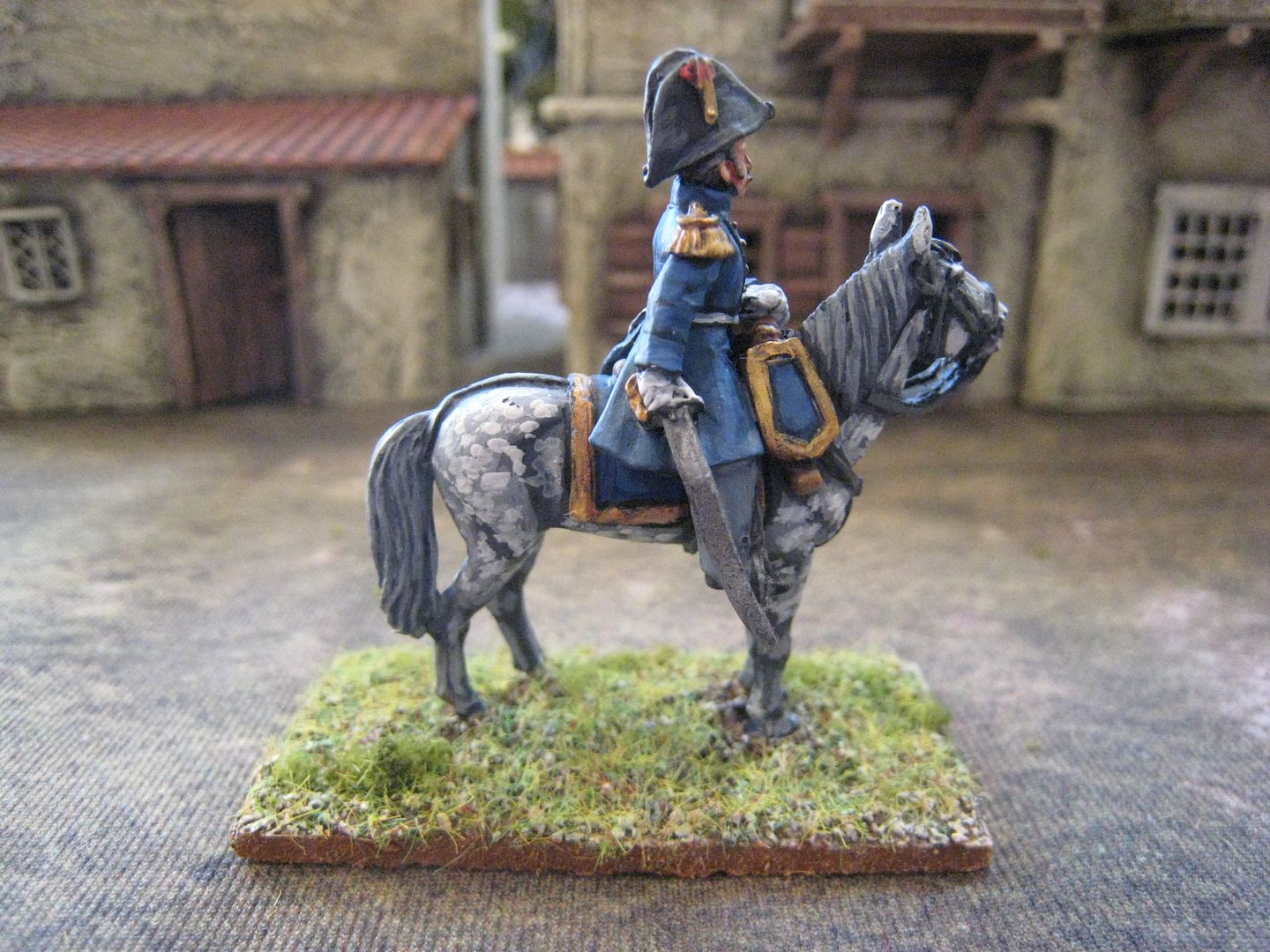
George de Lacy Evans (1787-1870) was born in Ireland and was educated at the Royal Military Academy at Woolwich (i.e. the training school for the Royal Artillery, the Royal Engineers and other technical corps) before heading off to India to join the army of the East India Company.  In 1806 he transferred to the British Army and secured a position in the 3rd Light Dragoons which enables him to serve in the Peninsular War.  Like a lot of British Auxiliary Legion officers, he was then transferred to America, where he served as quartermaster-general to General Robert Ross, who commanded the British troops in the US until his death in September 1814.  He appears to have been a staff officer at Waterloo, supposedly being the person who relayed to order to the Union Brigade to charge.

He then entered politics, and was a sitting MP for Rye when he was given command of the BAL.  His political career was resumed after the war ended, but he seems to have lost and regained his seat on numerous occasions.  In 1846 he was promoted to Major-General and then Lieutenant-General in 1854.  In that latter rank he participated in the Crimean War as the initial commander of the 2nd Division; however, he fell sick and had to relinquish command.  His political career continued - he was MP for Westminster from 1846-65 (Evans was a Radical) and consistently argued for reform of the Army, in particular the abolition of the purchase system.

His political career, especially as a Radical, no doubt contributed to the hostile treatment he and the BAL received in certain sections of the British press.  As I've noted elsewhere, the BAL fought under difficult conditions, often badly supplied and ignored by the British government. Evans seems to have been a thoughtful, competent officer, always fighting the authorities on behalf of his men; one sense the BAL could have done a lot worse in their commander.     

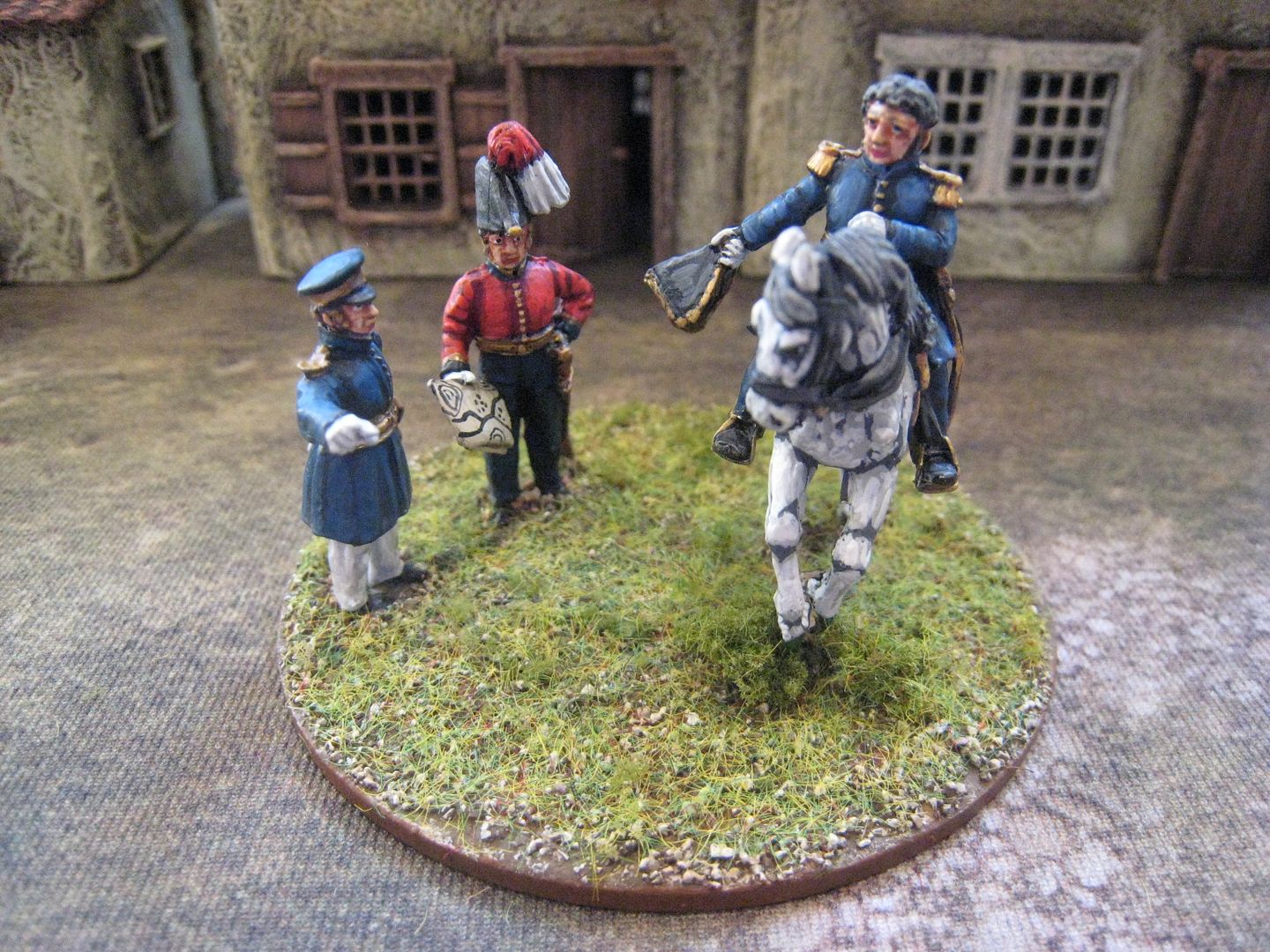
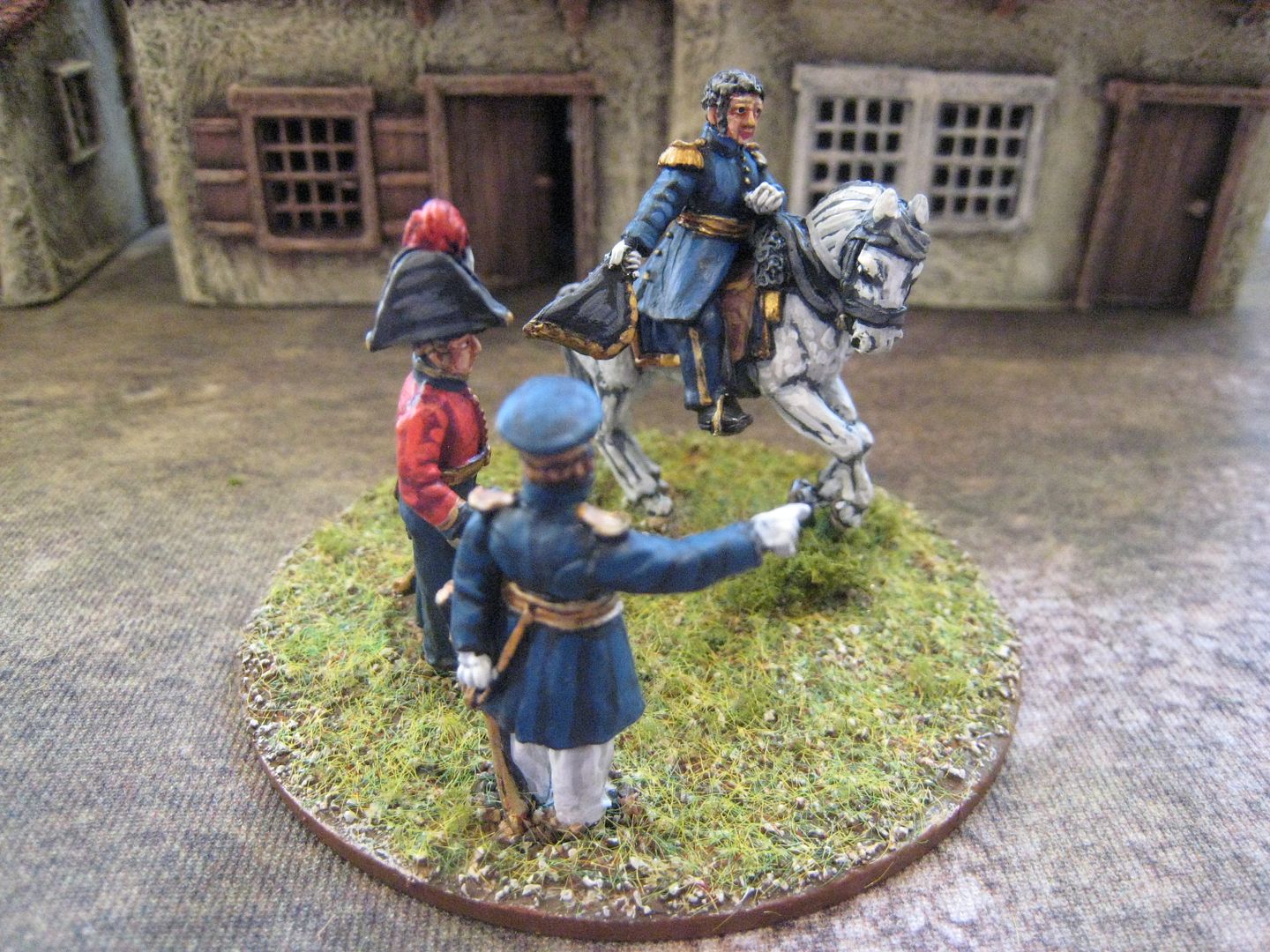
These figures are from two Perry packs - the Evans personality figure is from ISA2 and the foot figures are the rest of ISA37 (the mounted elements of which are here).  This command stand finishes off my most recent Carlist War stuff, save for a regiment of Isabelino cavalry, for which I need to get the correct lance pennants.     

3 figures. Painted August 2021.


Monday, 10 February 2025

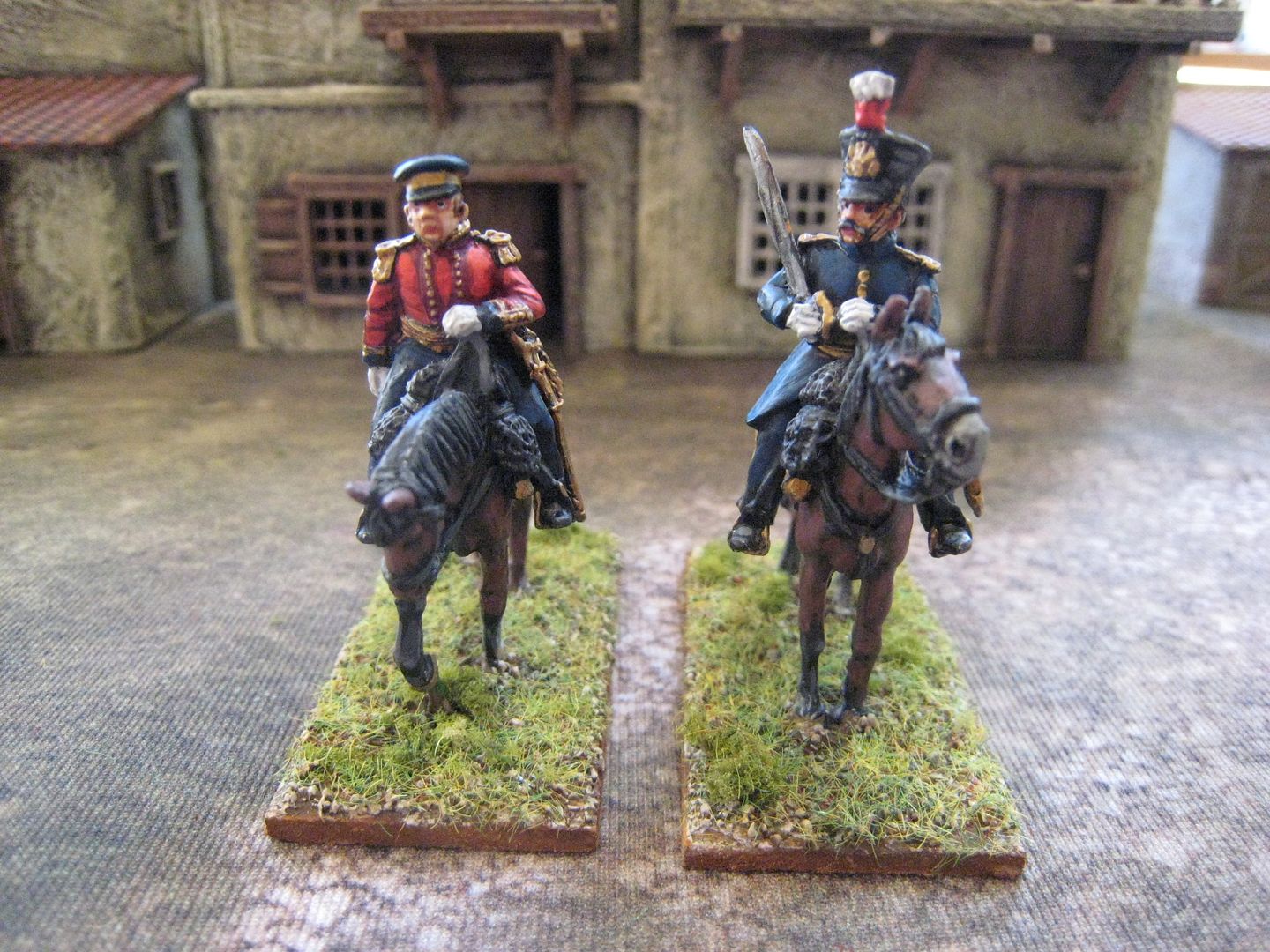
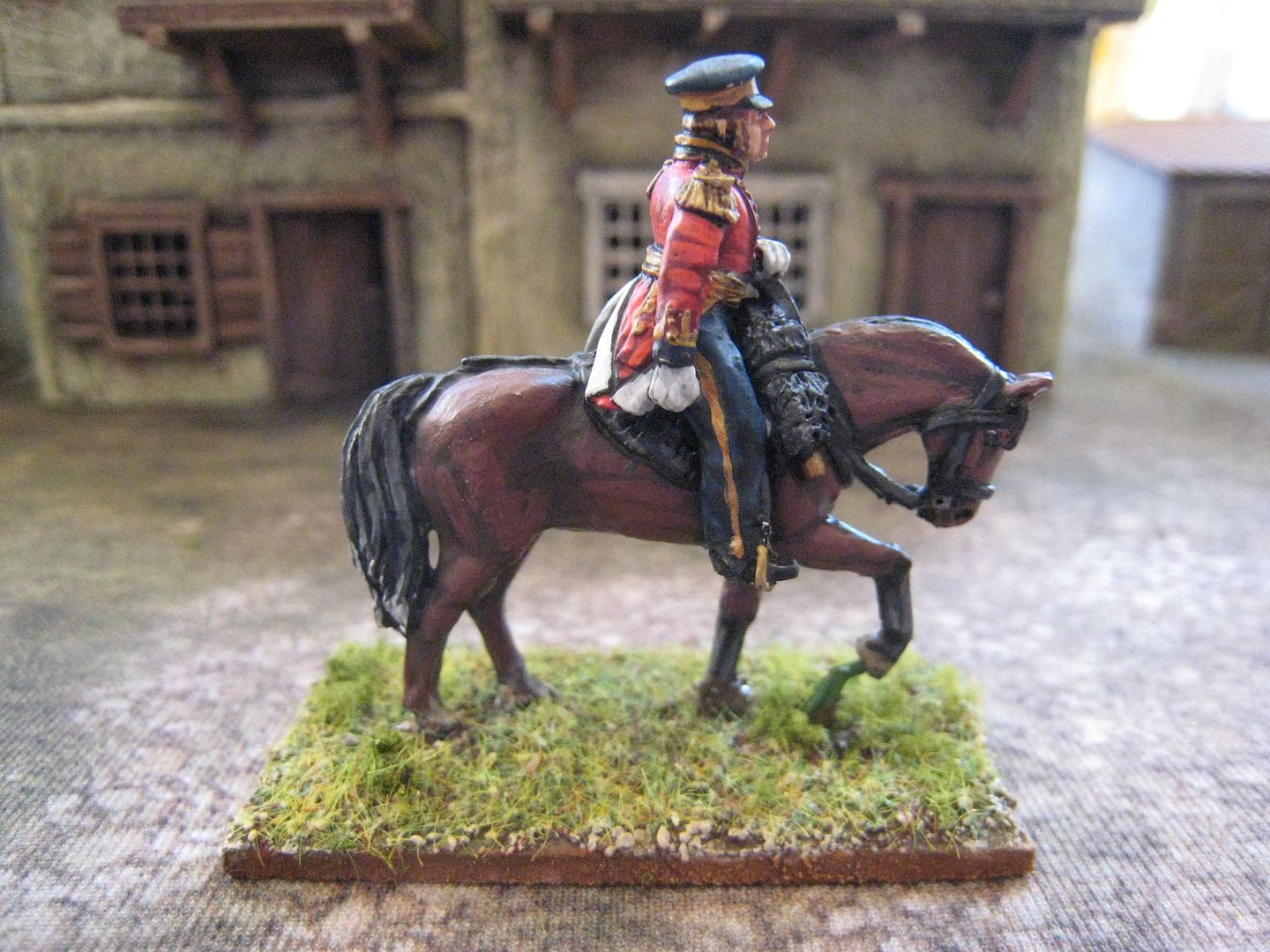
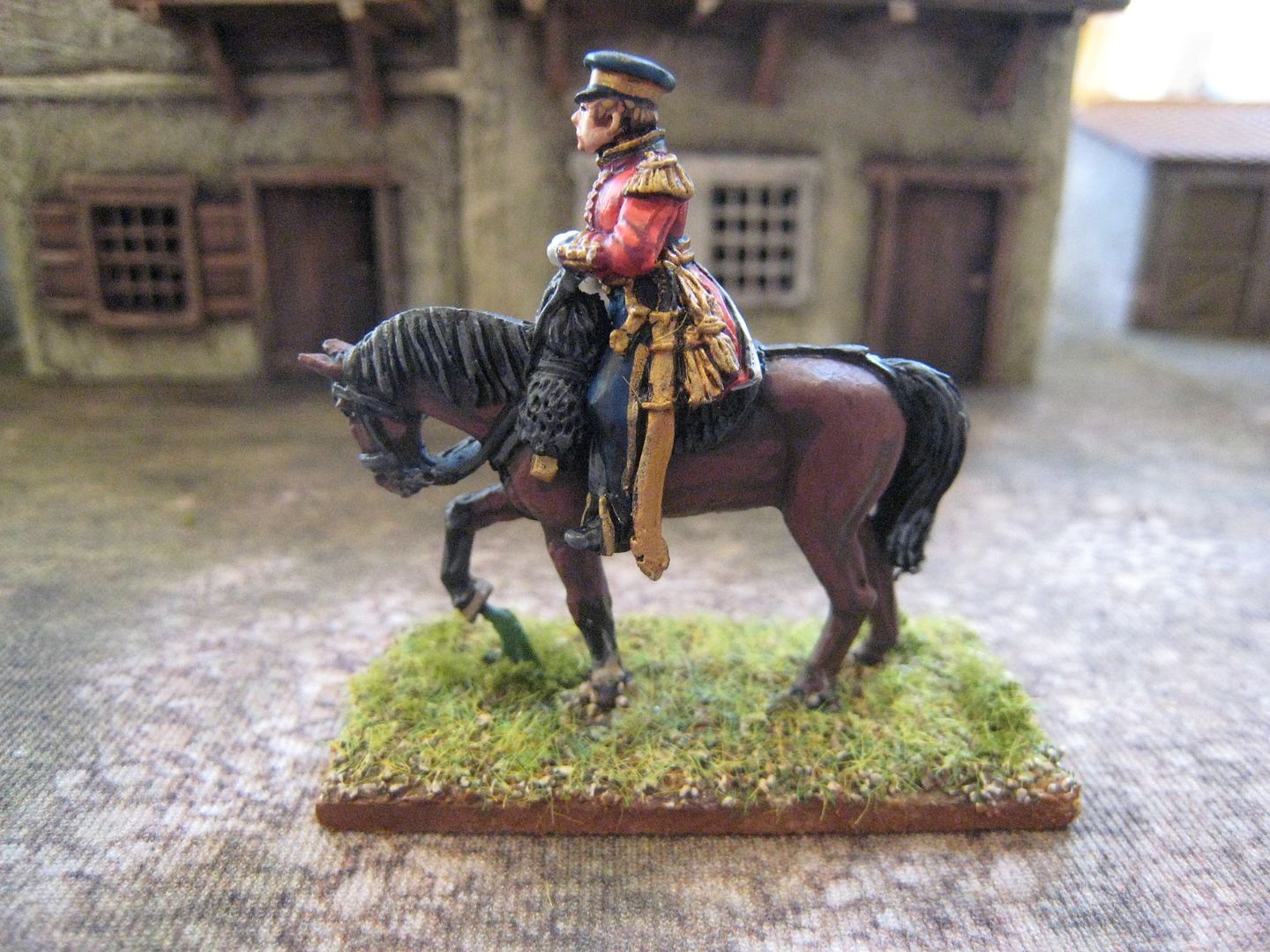
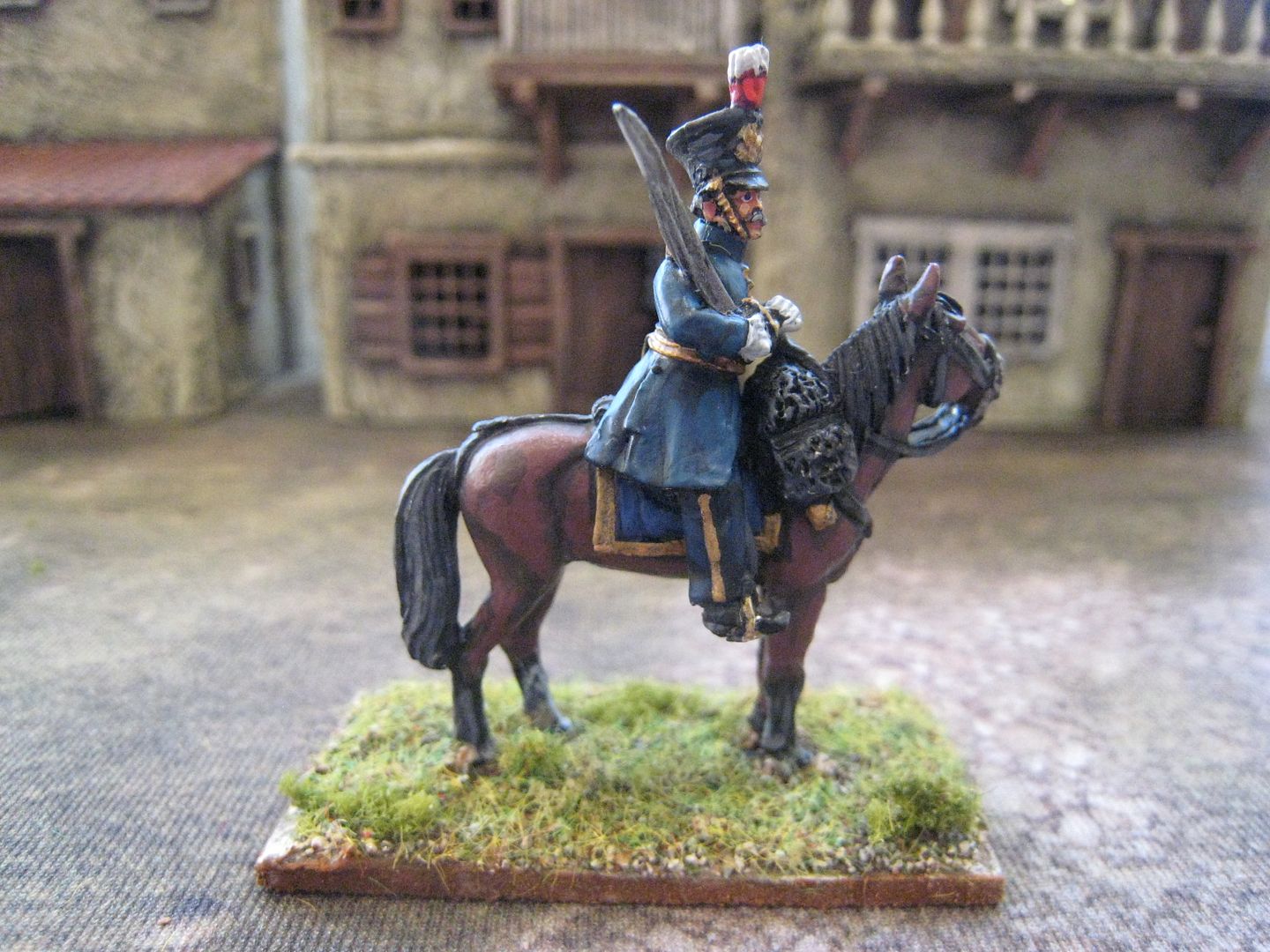
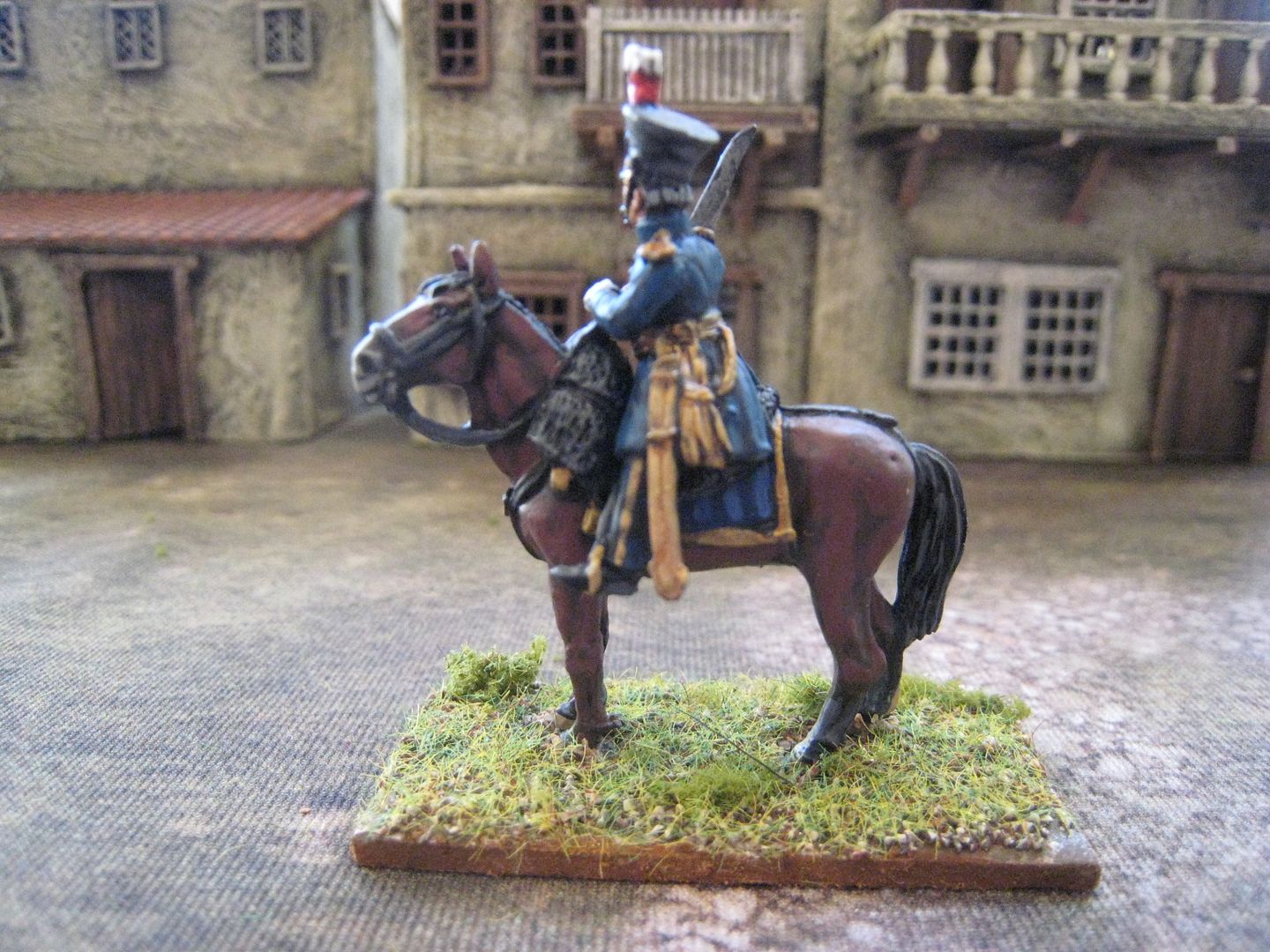
British Auxiliary Legion / Isabelino mounted officers

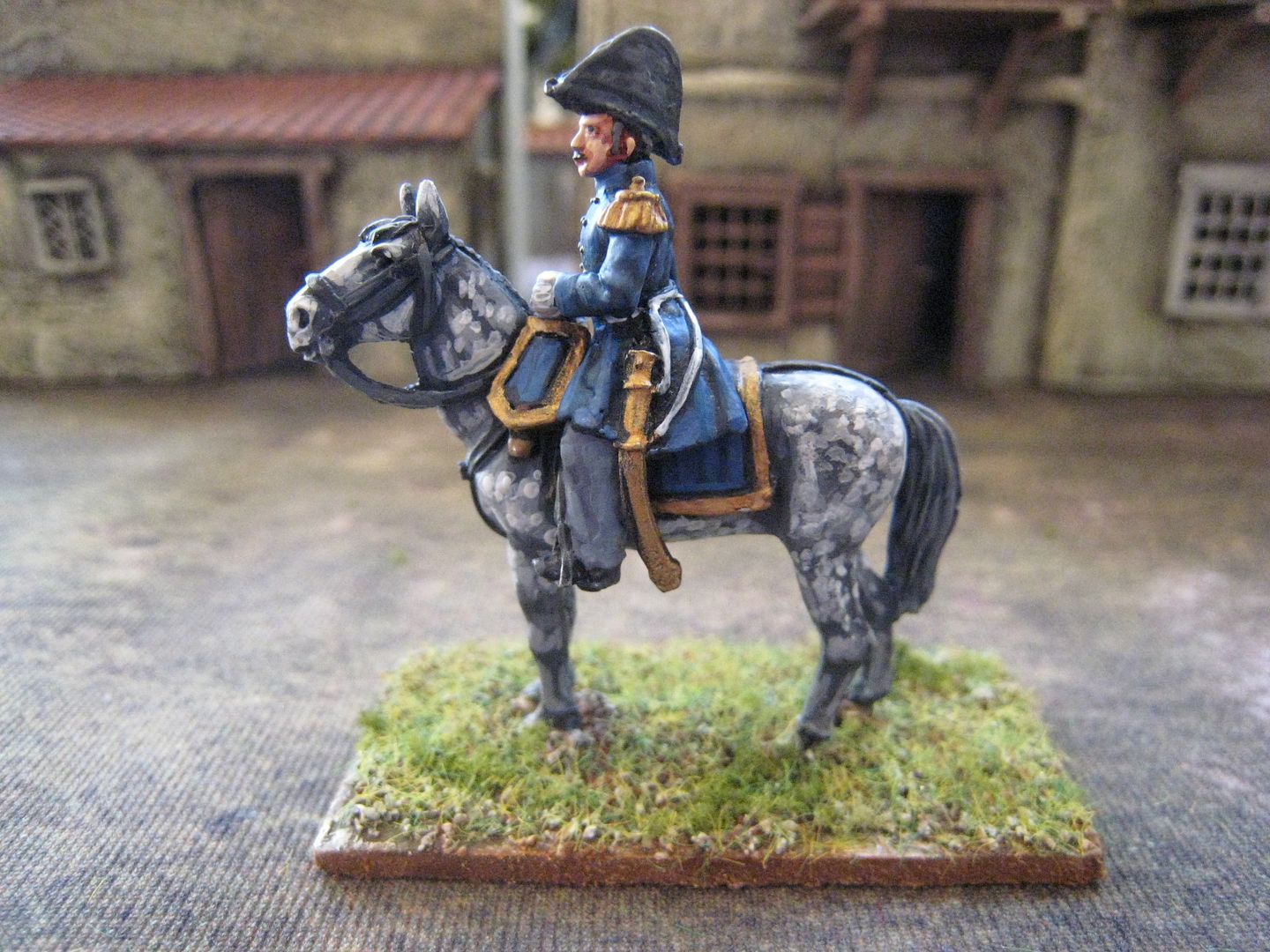
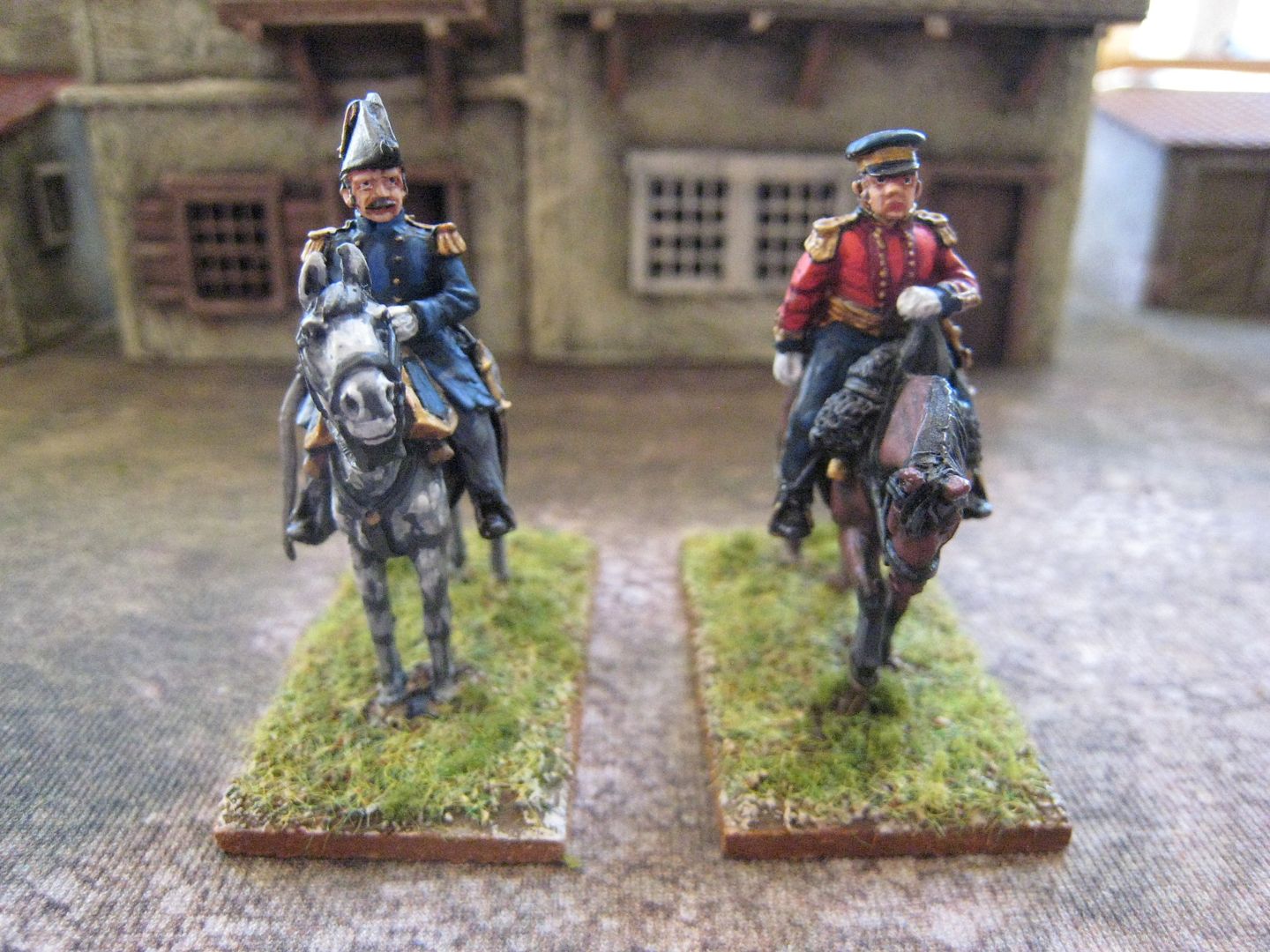
These are mounted officer figures from two Perry First Carlist War packs - two are from pack ISA37 (British Auxiliary Legion staff) and the third, on the grey, is a Spanish colonel from ISA2.  These aren't supposed to represent any particular people; they are just generic figures to use as brigade commanders.  The Duke of Wellington and the army command in general were opposed to officers on half-pay heading off, in effect, to act as mercenaries in a Spanish war.  So the commander of the British Legion, George de Lacy Evans, had to look to his army friends and soldiers in India to fill his senior appointments.  

Two of de Lacy Evans' friends who were given brigadier-general rank were Charles Chichester and William Reid, who otherwise had very little to do.  Chichester went on to command the 81st Foot in 1839 and died in 1847, apparently with a reputation as the best regimental commanding officer in the British army.  Reid became governor of Bermuda 1839 and of Malta in 1851.  Another brigadier was Duncan MacDougall, who had fought in most of the major battles of the Peninsular War and then in the War of 1812, in which he served as an ADC to Major-General Robert Ross and then Sir Edward Packenham after Ross was killed (Packenham was himself killed trying to rally his troops at the Battle of New Orleans in January 1815).  He was colonel of the 79th Highlanders when he resigned in March 1835 to join the BAL as its quarter-master general.  However, disagreements with de Lacy Evans over strategy led to MacDougall leaving the BAL a year later and resigning from the British army at the same time.  When the UK's national militia was revived in 1852, MacDougall formed the Royal Lancashire Militia Artillery, which eventually became part of the Royal Garrison Artillery.  I thought these thumbnail biographies are useful in showing that despite the original reservations of the likes of Wellington, service in the BAL does not seem to have had a particularly negative effect on the careers of its officers. 

3 figures. Painted August 2021.


Sunday, 21 June 2015

Espana Regiment - 1st battalion

It's been over 2 years since I last posted about the First Carlist War and over 4 years since I last painted Isabelino infantry (and this post has itself been gestating for a couple of weeks while I take and re-take photos; hence the gap in posts).  For the past few months I've been making an effort to deal with the leadpile - as a result I have barely bought any new figures during the past year or so, save some boxes of Perry plastic AWI infantry when they were released, the Ewart vignette and a couple of metal AWI packs and some Maori from Empress Miniatures.  Oh, and some Napoleonics from Gringo 40s that I'm currently getting to grips with.  That's certainly saved some money, and as wargaming chum Timmo says "hoarding unpainted figures isn't much of a hobby".  One aim of this year is to become "lead neutral" on a couple of periods, by which I mean having no unpainted units left to paint and a rule that anything new is painted as soon as it is purchased. My First Carlist War leadpile consists of some Valencian troops for the Carlists and some regular cavalry for the Isabelinos, so not a huge amount to get through.  (The other period I'm focussing on is the New Zealand Wars, with about 40-odd figures and a massive 24-pounder to get through.)  The FCW leadpile also contained enough figures for another Isabelino infantry battalion, and this is it.

The regular army battalions I chose to paint are determined solely by the flags that are available from Adolfo Ramos.  Information on the precise orders of battle for Carlist War battles is hard to come by and, in any event, are there are no distinctions between the regiments that I can discern it doesn't really matter which units one fields on the table.  A scenario needs three battalions from the Princesa Regiment?  Well, I have two already and I'll field the la Constitution Regt as the third; no one's going to complain.  I do try to make each regiment look a bit different.  The standard winter uniform for regular infantry was dark grey overcoats and trousers - I painted the La Constitution regiment like that.  But to make the Espana look different I gave the figures white summer trousers instead of grey ones and didn't add any mud splatter (which I gave to the Borbon Regiment which is otherwise similarly dressed).  If I ever get around to painting second battalions for these regiments I will continue the colour schemes of their first battalions.    

I don't as yet have any light infantry battalions for the Isabelinos, but with 6 regular line battalions and 4 other units, together with the British and French allied forces, I have enough loyalist troops for the moment.  In time I'd like to add second battalions to the Espana and La Constitution regiments and a third battalion to the Princessa.  However, in the meantime my Carlist forces need building up, as I only have 3 battalions and some skirmishers.  Next up on the blog are 4 new American infantry battalions for the AWI; then more 1815.   

24 figures.  Painted December 2014-February 2015.  Flag by Adolfo Ramos and barn by Touching History.


Thursday, 13 December 2012

French Foreign Legion Artillery (1)

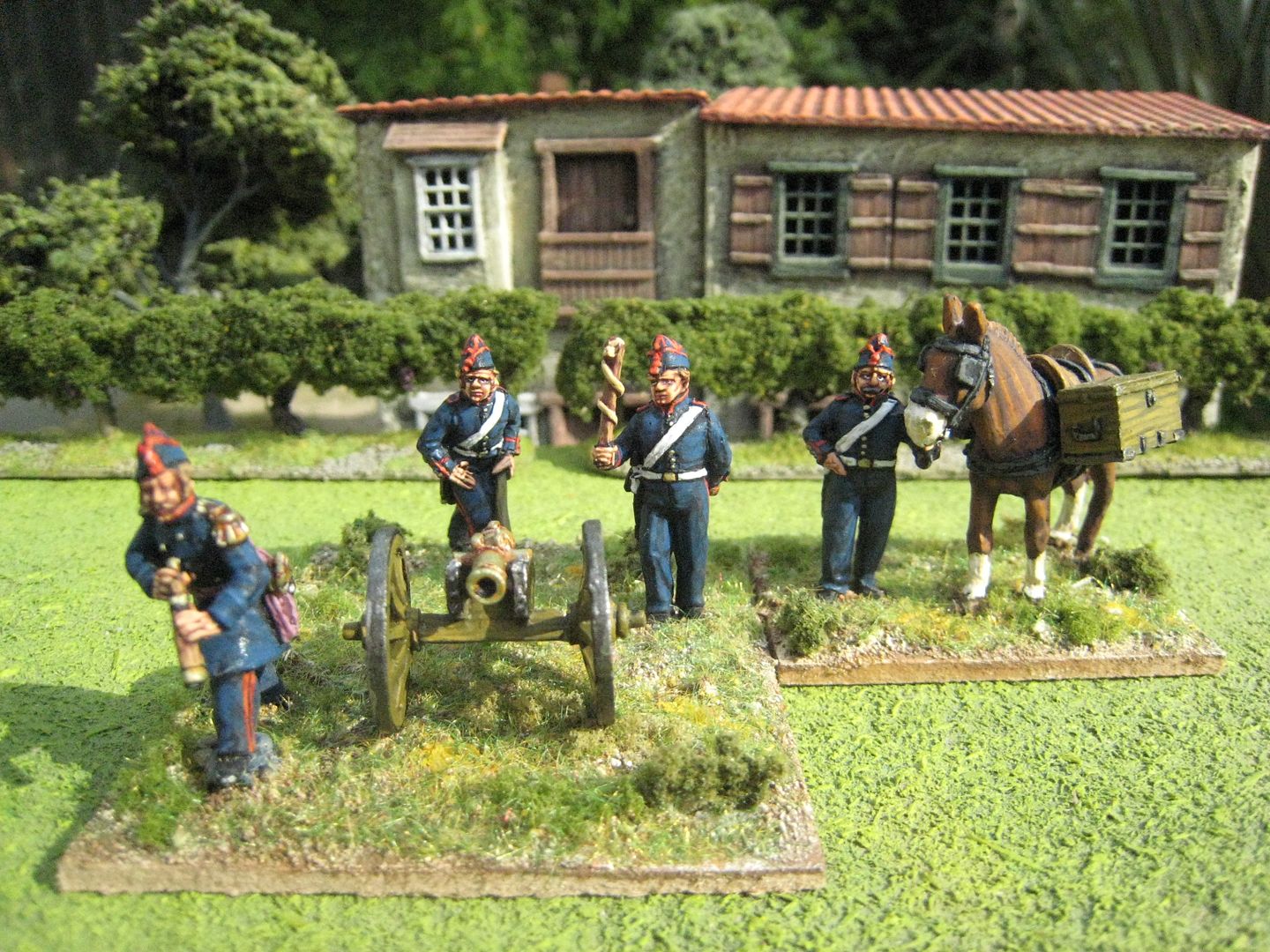
A few months after the FFL arrived in Spain, its commander, Colonel Joseph Bernelle, decided to form an artillery battery and a unit of lancer cavalry.  These appear to have been staffed from existing legionnaires, so presumably were trained from scratched.  The artillery battery was equipped with small calibre mountain guns.

I used this pack to try out some new Vallejo paints for the colour of French artillery woodwork.  When I last painted a French cannon (a Foundry Napoleonic set) I wasn't really happy with the colour, despite the use of the Foundry Napoleonic French artillery palette.  "French Artillery Green" is one of those colours that seems to change all the time.  Apparently the opriginal mix was 1 part black to 100 parts ochre, but I've seen many model French guns on the internet which are far more "green" than "ochre" (on the Perry Miniatures site, for example).  I just don't know how accurate this is, although there are guns at the Tower of London that look pretty similar and I now lots of wargamers have gone for a more apple-green colour.  I looked at the paintings in the (admittedly older) Ospreys and decided I wanted to have a more olive colour that captured my traditional idea of French artillery green.  As I say, I may well be behind the times a bit here. 

I decided on Vellejo paints, which I usually don't use on account of their pipette delivery system (which to me seems rather wasteful).  For the gun here I used "Yellow Green", "Dark Yellow" and "Japan Uniform WW2", variously mixeed together and with black added for the original undercoat.

4 figures and a mule. Painted May 2012.


Tuesday, 27 March 2012

Isabelino Foot Artillery (2)


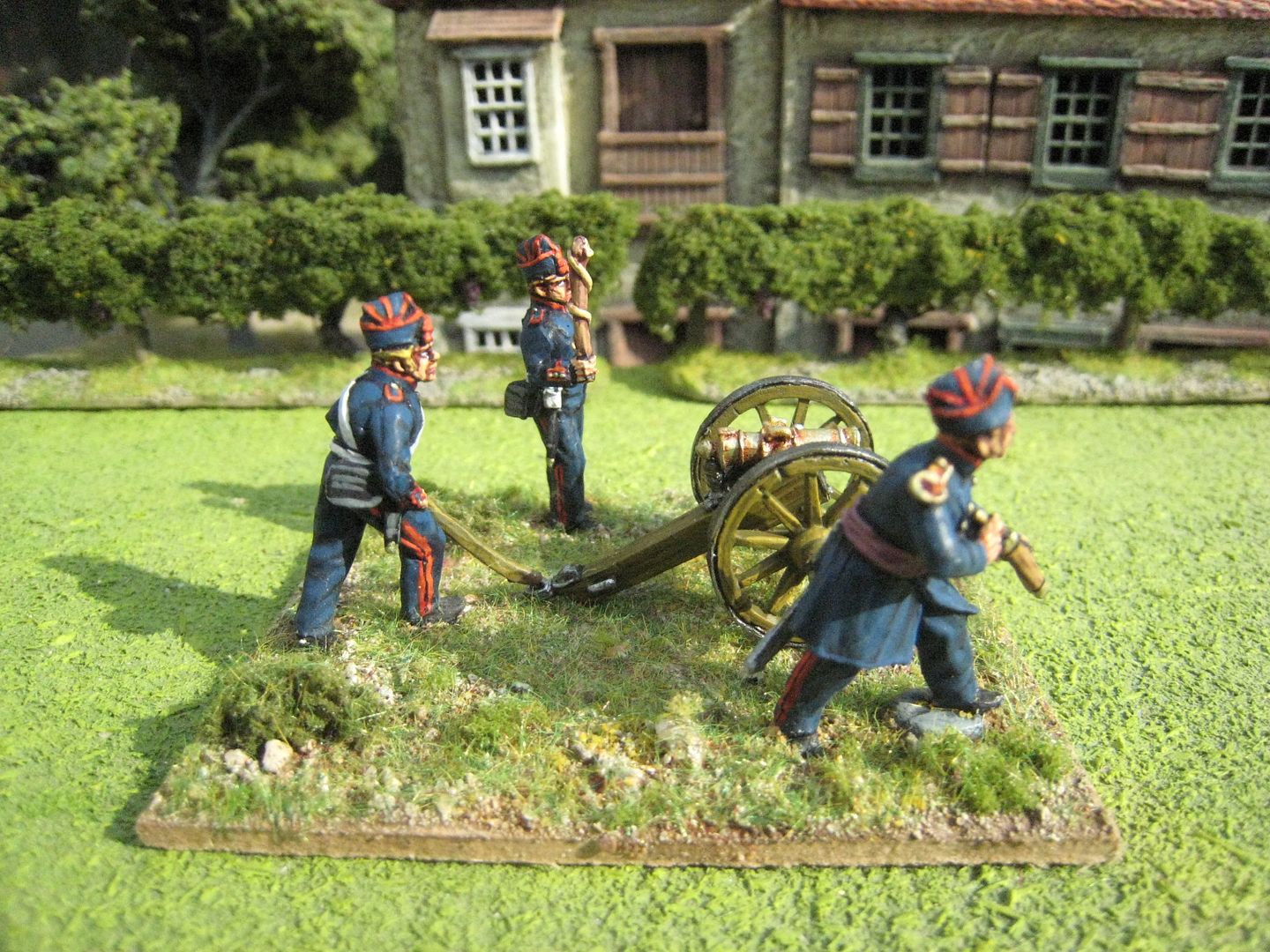
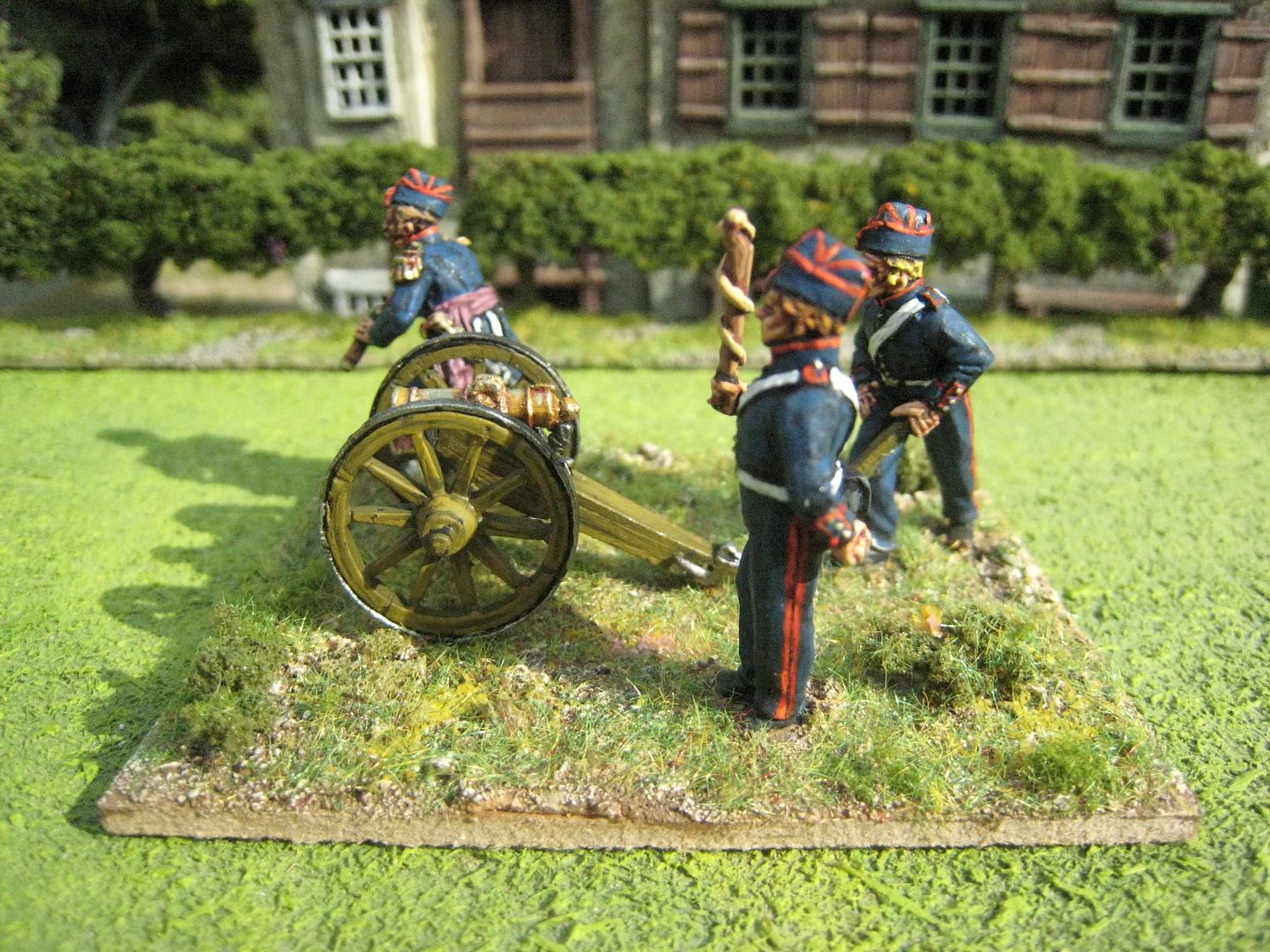
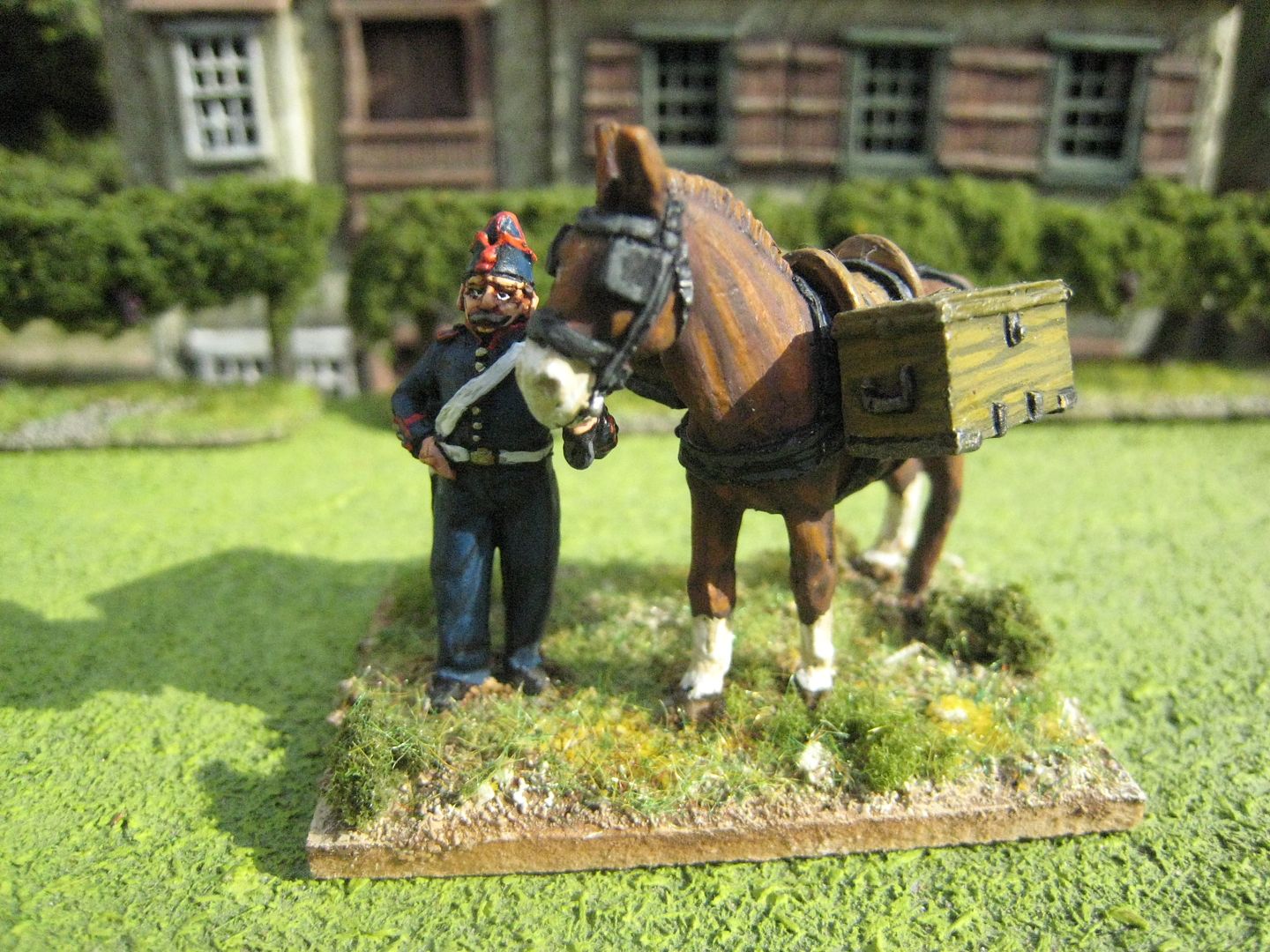
This is the Perry Miniatures Isabelino foot artillery pack. The Isabelino side in the First Carlist War had the benefit of the army's regular artillery units. The Carlists had to build their artillery capability from scratch. Neither side seems to have deployed artillery in large numbers, at least outside of sieges. I expect I'll add to this pack by painting a couple of others, but that's probably all I will need given the mountain gun packs and BAL artillery I have already completed. The uniform is the standard "turqui" blue tunic and white summer trousers. The Cairns/Perry book has artillerymen in turqui trousers but I decided to follow El Mercenario on the Perry website by putting the men in white trousers. The gun was painted with the Foundry "British Blue Grey 75" palette.

PS My problems with photobucket and vanishing photos are now hopefully at an end, and my "Pro" subscription will run for another 2 years. In summary, I couldn't renew my subscription until my existing automatic renewal was cancelled, and that was something photobucket had to action themselves. Anyway, all seems resolved so I'm looking forward to lots of blogging in the next few weeks.

4 figures. Painted December 2011.

Thursday, 14 April 2011

la Constitution Regiment - 1st Battalion

This is another battalion for the Isabelino side in the First Carlist War. They are all wearing caps and dressed in the standard winter uniform of greatcoats and grey trousers. I wanted this unit to look reasonably fresh and so there is none of the muddying that I applied to the Borbon regiment battalions. Line battalions had 6 centre companies and 2 flank companies, so the grenadiers and cazadores in this battalion are rather overstrength. There is no reason for this other than a need to use up flank company figures. I plan on doing a couple of battalions of light infantry in greatcoats and will then go back to the non-greatcoat/tunic look. I now have an Isabelino force of 6 army battalions and 3 militia ones, plus 4 units of BAL.

A couple of weeks ago someone asked about the colours I use for the Isabelinos. For turqui tunics and the caps I use the Foundry "Deep Blue" palette. For the figures in this post I used Foundry "Slate Grey" for the greatcoats and "Stone" for the trousers. As I think I've said before, I use a "blend as you go" method on the greatcoats, as the contrasts between the 3 "Slate Grey" colours are quite wide and I prefer a smoother look. It takes more time to paint them this way but I hope the end result justifies the extra time. I have finished my unit Armand's Legion cavalry and will aim to post pictures early next week. Nic Robson has now circulated his email with full pictures of both ragged and non-ragged dragoons to 100 Club members, so I can now finalise my plans for the cavalry units I intend to do. On the workbench at the moment are the final 8 figures for the 4th Chasseurs of the Guard and Count Pulaski (another Eureka sculpt). After those are finished I will probably paint up some of the new Empress Miniatures New Zealand Wars figures which I will be collecting at Salute tomorrow and then some more AWI dragoons.

18 figures. Painted February 2011. Flag by Adolfo Ramos.

Monday, 10 January 2011

Isabelino skirmishers (1)


I thought I'd jump ahead in my painting chronology to give the blog a short rest from AWI artillery. This is one of the two Perry Miniatures packs of skimishing Isabelino flank company infantry. I have painted all these as grenadiers, rather than a mix of grenadiers and cazadores. I haven't really given much thought to how my First Carlist War battalions will operate under whichever rules I end up using (current thoughts are the General de Brigade variant "There are your guns"), but I'm assuming plenty of skirmishers will be needed. It is clear from my reading on the war that both sides made extensive use of troops in skirmish and open order, partly as a result of the difficult terrain in the north of Spain. So I'll probably be painting quite a few more skirmishers in the fullness of time. I admit to finding the faces on these figures quite difficult to paint, particularly the eyes (hence the lack of close-ups!), but I like the figures and their sense of movement.


The building is a fortified Spanish house from Touching History. I picked this up from Paul Darnell last year and it is a very nice model indeed - it's quite large and the ground floor has boarded-up windows and a reinforced door, while the walls have a couple of firing steps, as shown in the photo below. I think Paul made it with the Peninsular War in mind, but I see no reason why an 1830s Basque villager aware of marauding troops in the area would not take precautions to protect his house. I reckon I now have enough Spanish-style buildings for a couple of villages, one made from Touching History models and the other from Tablescape ones. I just need some decent terrain board now...


6 figures. Painted January 2011.

Thursday, 7 January 2010

Zaragoza National Militia


In addition to the regular army and provincial militia, the Isabelino cause could call upon units of urban militia, or "urbanos", which from 1835 were called the "National Guard" and then from 1838 the "National Militia". These units were raised in towns and cities and were mainly used locally to defend their home areas from Carlist incursions. At the beginning of the war some units were used in the field to make up for a lack of regualr army units. National militia also acted as a sort of political police, preventing Carlist support from fermenting and dealing with local trouble-makers.

I chose the Zaragoza Militia simply because an Adolfo Ramos flagis available for this unit. The province of Zaragoza (or Saragossa in English) is in north-eastern Spain, part of the old Kingdom of Aragon. Its capital, the city of the same name, is known to modern military history as the victim of a brutal siege by French forces in the Napoleonic wars. The national militia's uniform seems to have been pretty similar to that of regular army line infantry, but with yellow piping and facings and sky-blue trousers. It is also possible that there were local variations. The organisation of companies also seems to have followed the regular army - so with flank and centre companies (unlike the provincial militia, the national militia's flank companies were not detached). I followed the illustration of the Madrid militia in the Perry/Cairns book and used figures in the older uniform. The blue trousers were painted with the Foundry "Bavarian Cornflower Blue 73" palette. The National militia were the first armed units to carry the red and yellow flag, which was adopted by the army generally and Spain itself in the 1840s. This reflects the militia's status as armed liberal paramilitaries rather than troops descended from the old Bourbon army.

As stated above, the national militia tended to see action in the field at times when sufficient regular army units were not available. For that reason I think I only need one national militia unit in my Isabelino army. It can double up as provincial militia if required. This now gives me 8 Isabelino infantry regiments, plus 3 units of BAL. I need to do some light infantry and skirmishers and then turn to the cavalry. Immediate next FCW plans are to finish a BAL infantry battalion and then either some BAL lancers or more greatcoated infantry.

20 figures. Painted December 2009. Flag by Adolfo Ramos.


Monday, 7 December 2009

Borbon Regiment - 2nd Battalion


This is the counterpart to the first battalion I did a while ago. I painted the troops in much the same way although I added a couple of battalion-specific touches, such as giving them all white trousers to diffentiate these figures from their sister battalion. The dirt on the trousers was applied using a burnt sienna soft (i.e. non-oil) pastel and then drybrushing with Foundry "Dusky Flesh 6B". I now have 4 regular line battalions for the Isabelinos, and 3 others. I've just finished some national militia and will then call time on the Isabelino side of things for the moment. That said, I have sufficient leftovers of these greatcoated figures to form another battalion, if I buy another command pack, but have no immediate plans on what to use those for. I could do a third battalion for the Borbon Regiment or a single battalion for another line regiment. These are fairly simple figures to paint so I might see if I can whizz them through over Christmas. Otherwise it's on to Carlists now (via the AWI), with their greatcoats and hairy faces.


I've said it before and I'll say it again - these figures are among the very finest 25mm sculpts I've painted. The facial detail is a joy to work with and the poses are terrific - these really are mini-humans marching against wind and rain. The greatcoats and minimal kit make them quick and easy to paint. Collectors of Napoleonic French units might consider adding some of these figures, particularly the ones in the Isabelino caps. The buildings in the background are again by "Tablescape" (they are not on their website but are available at shows and I'm sure an email will produce a response telling you how to buy them).


20 figures. Painted November 2009. Flag by Adolfo Ramos.