Showing posts with label Vignettes. Show all posts

Sunday, 31 May 2026

British camp

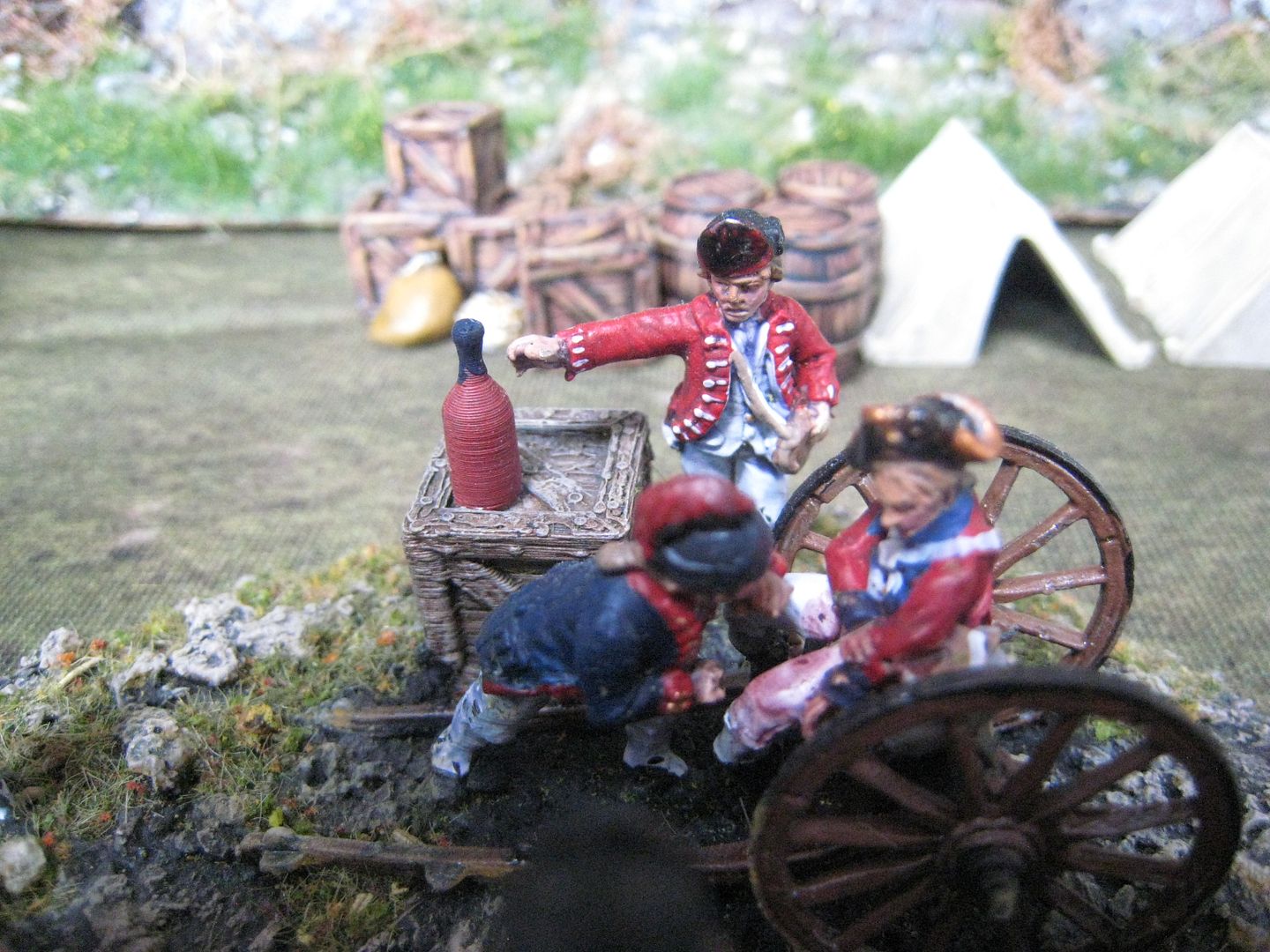
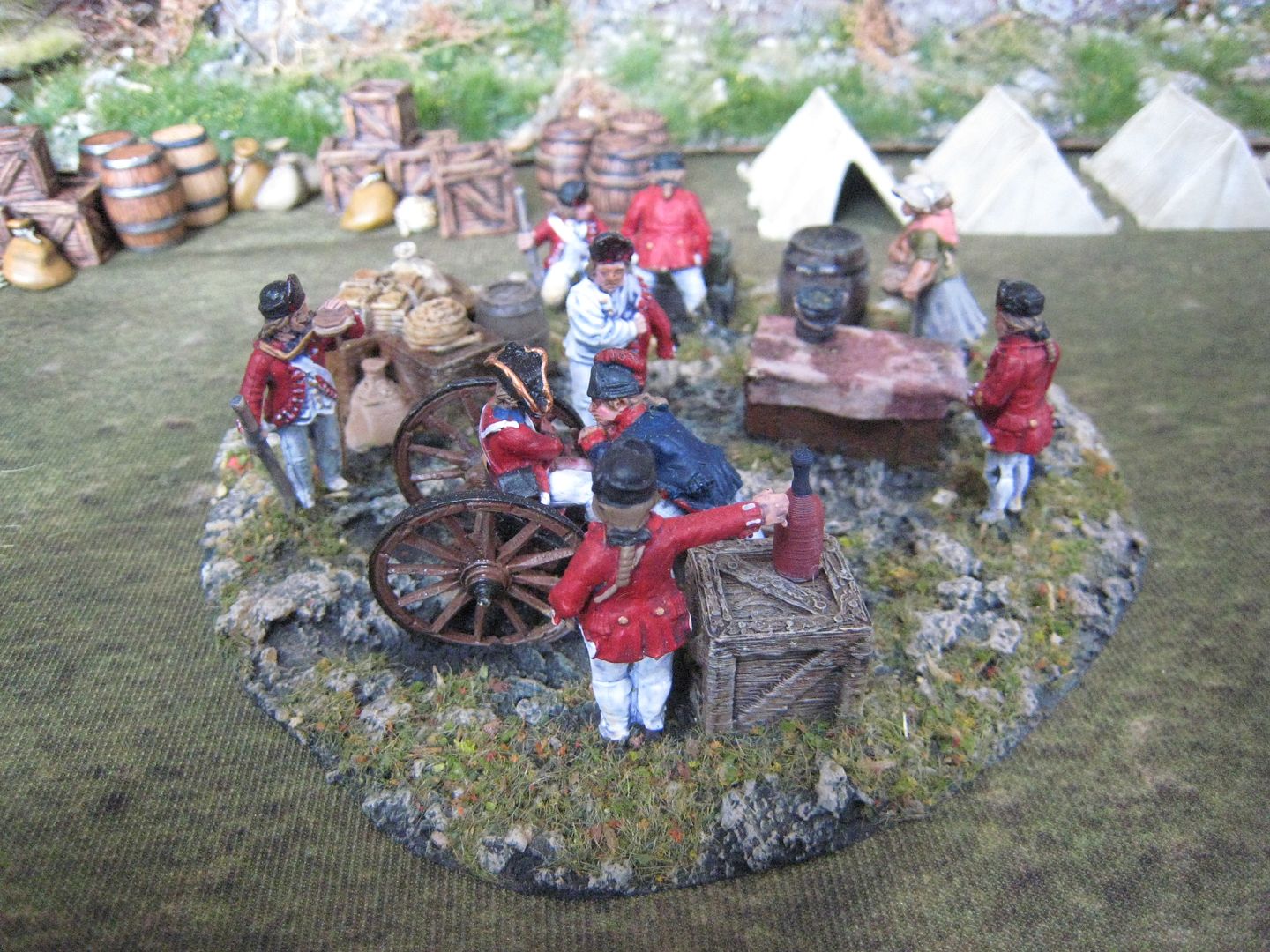
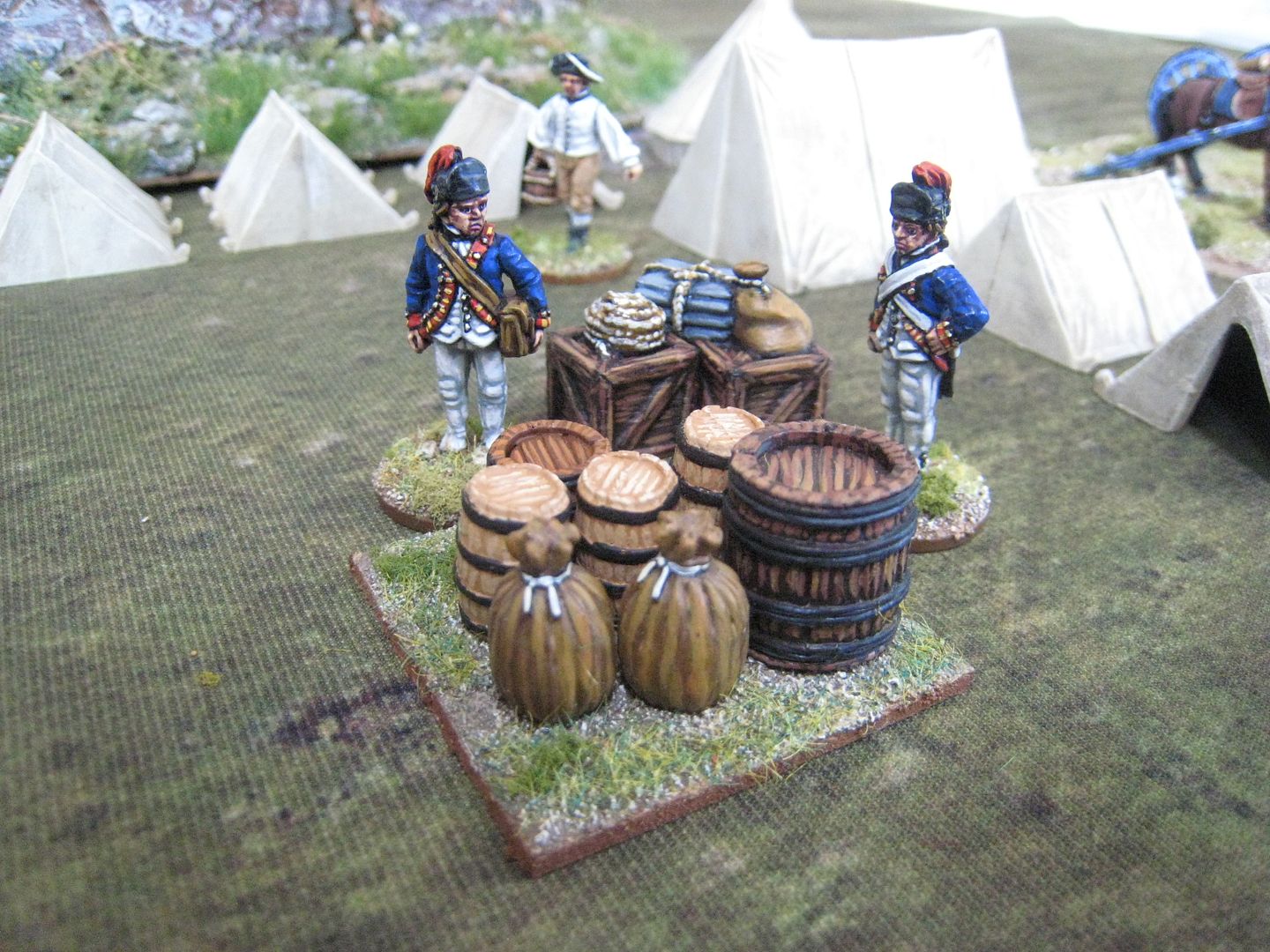
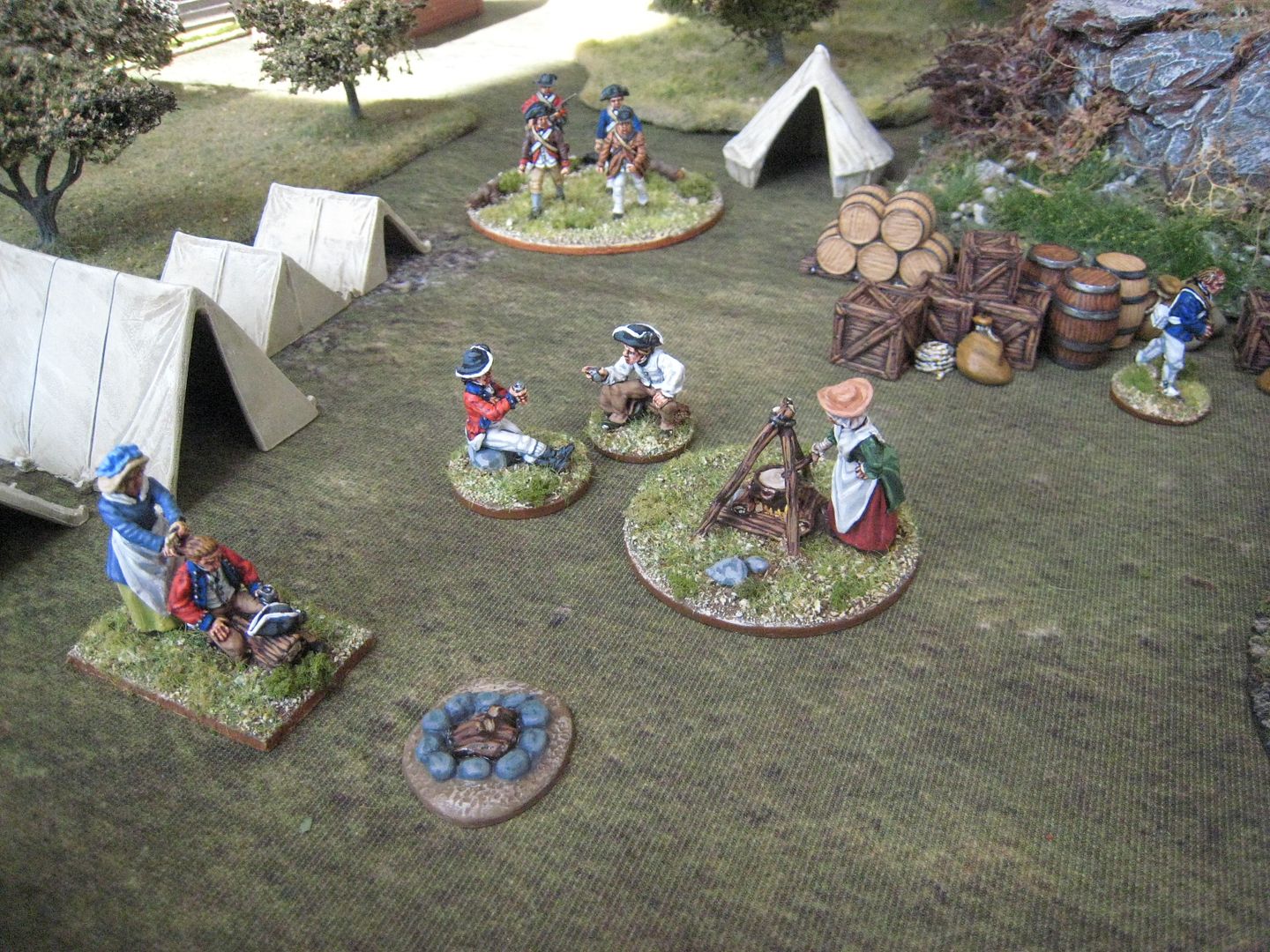
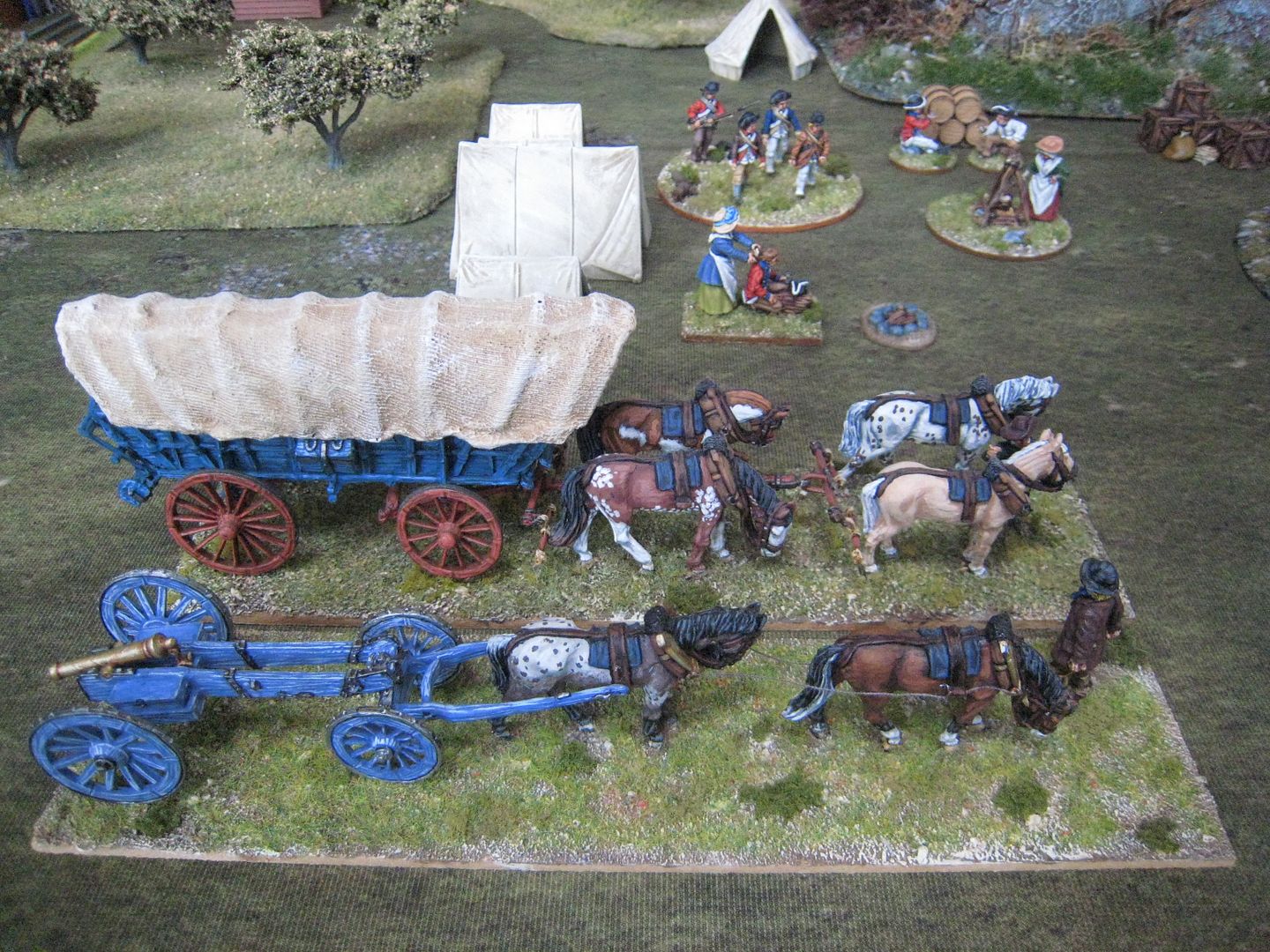
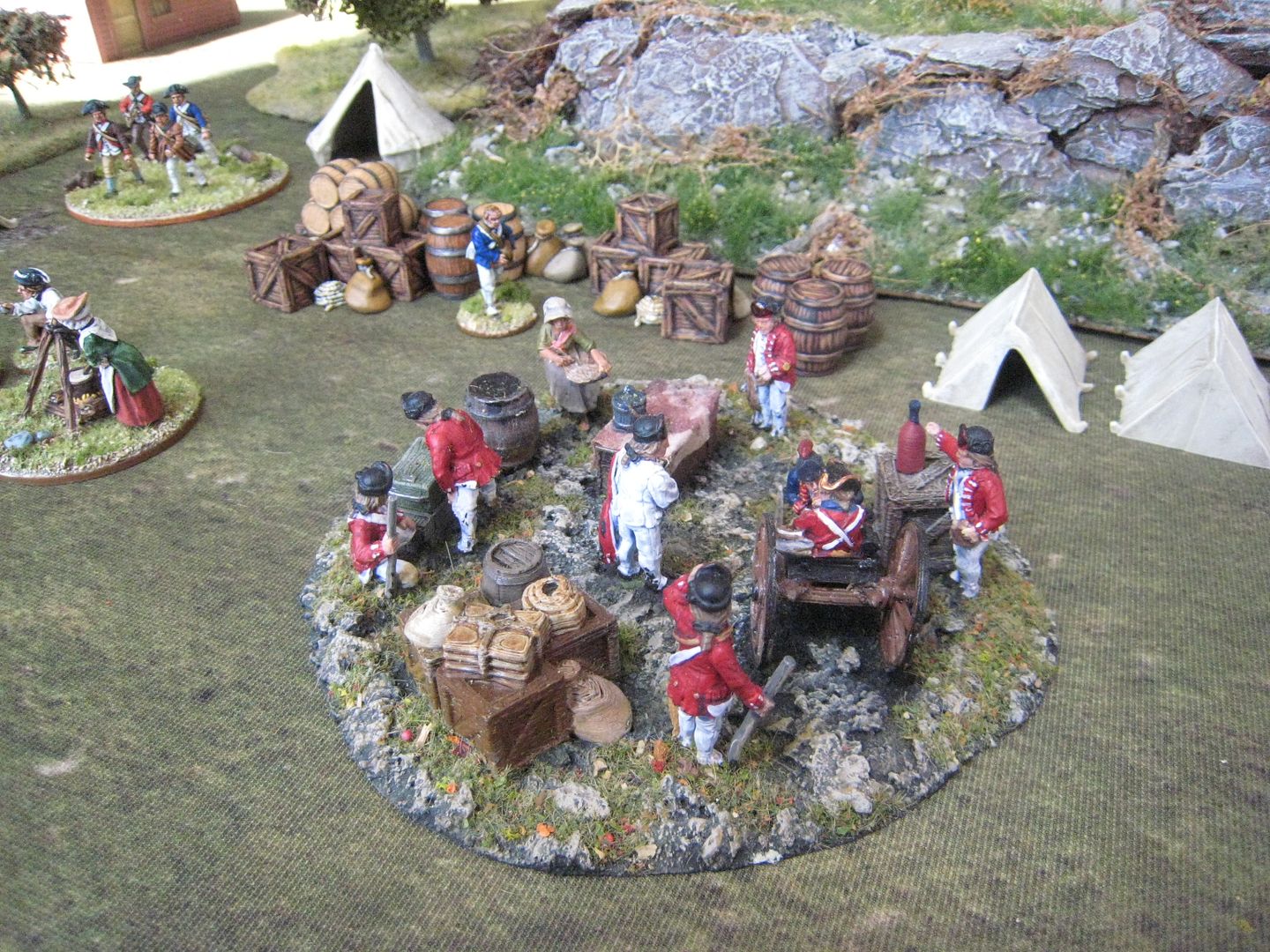
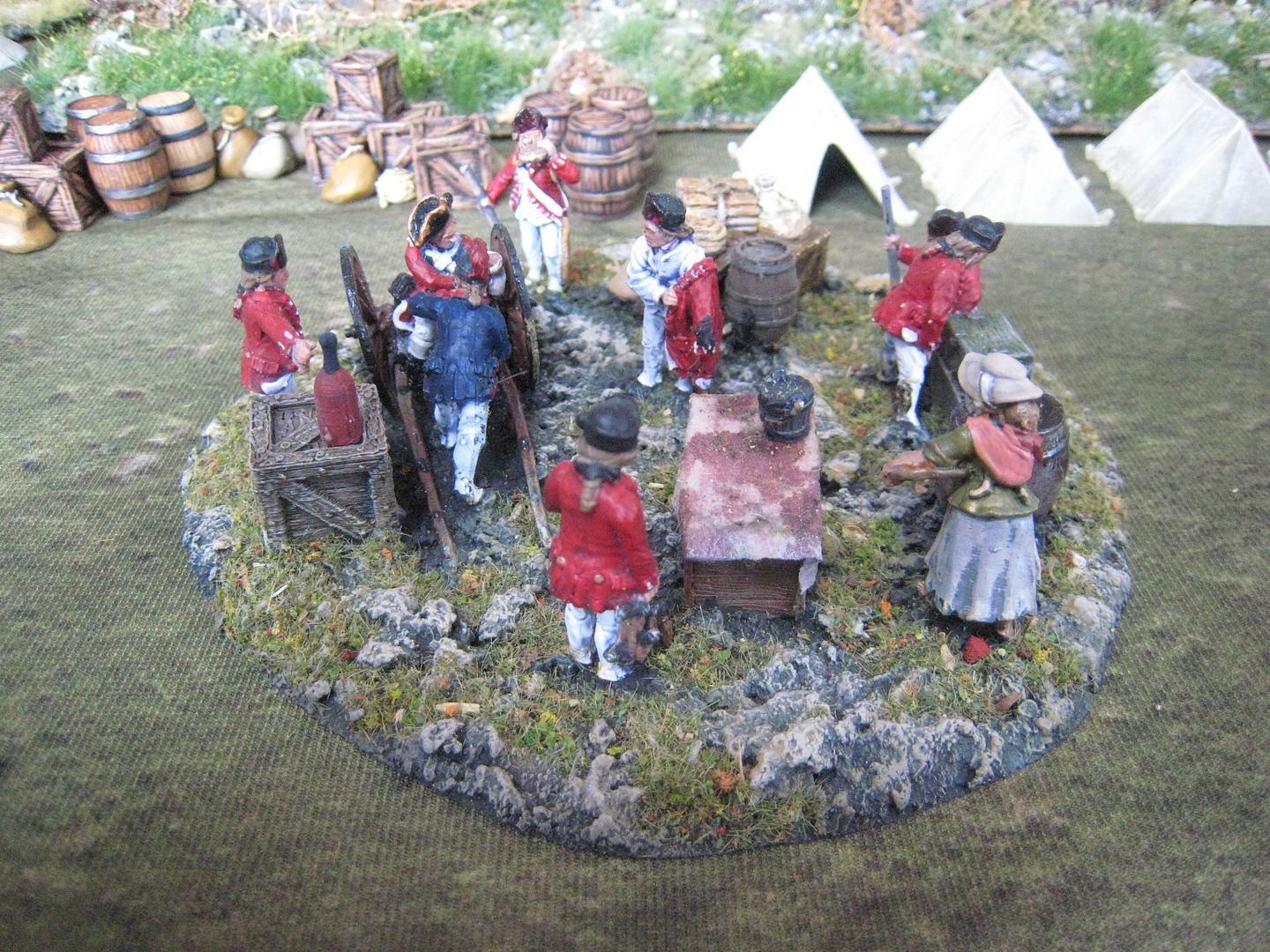
The primary purpose of this post is to showcase the amazing vignette that my New Jersey friend Bill Nevins kindly sent to me earlier in the year. This was totally unexpected. Bill had made a number of these vignettes and I had expressed admiration for them and, as always, how he attended to the basing. The next thing I knew, this piece appeared on my doorstep - such is the generosity of a man I've communicated with for several years but, in the manner of internet friendships, never actually met! The second purpose is to show some other terrain bits I've been working on to give Bill's piece some company - I didn't want to blog about it until I had enough other bits to create a proper camp scene. And, of course, once I set up these bits, I kept adding others, until I had an artillery park and prisoners as well. All these other bits and pieces have been blogged about before, but I don't get my stuff out that often and it was nice to see what sort of scene I could create.     

I painted the Perry Miniatures AWI camp set almost ten years ago - see here. Of course there's nothing stopping you having a few extras on any table, but when I painted my Old Glory Continental command stand, I noted that camps play a a part in the following scenarios:

  • Long Island - American
  • Germantown - British/Hessian
  • Whitemarsh - American
  • Stono Ferry - British/Loyalists
  • Brier Creek - American (militia)
  • Savannah - American and British
  • Eutaw Springs - British/Loyalist
  • Yorktown/Gloucester Point - American 


Bill's piece takes figures from various Perry sets, but mainly the British "dragrope men" pack that I discussed here (wow, was it really 19 years ago they came out?!), and turns them into a lovely vignette of troops resting and having their wounds looked at. I think it's fantastic - such an inventive ande clever use of the figures and "props", which will be centrepiece of any British camp scene (it actually featured in a made-up game I did with Monty a few weeks ago, but I forgot to take photos). I particularly like the bloke who looks as if he's filing his water bottle with wine (or is it medicinal brandy)? If you're on Facebook, then go the various American Revolution groups and you can see more of Bill's stuff under his pen-name "Dan Morgan". He specialises in creating very accurate terrain, based on consideration of (i) the precise location and (ii) the time of year; Bill's provided me with much advice on this over the years.  

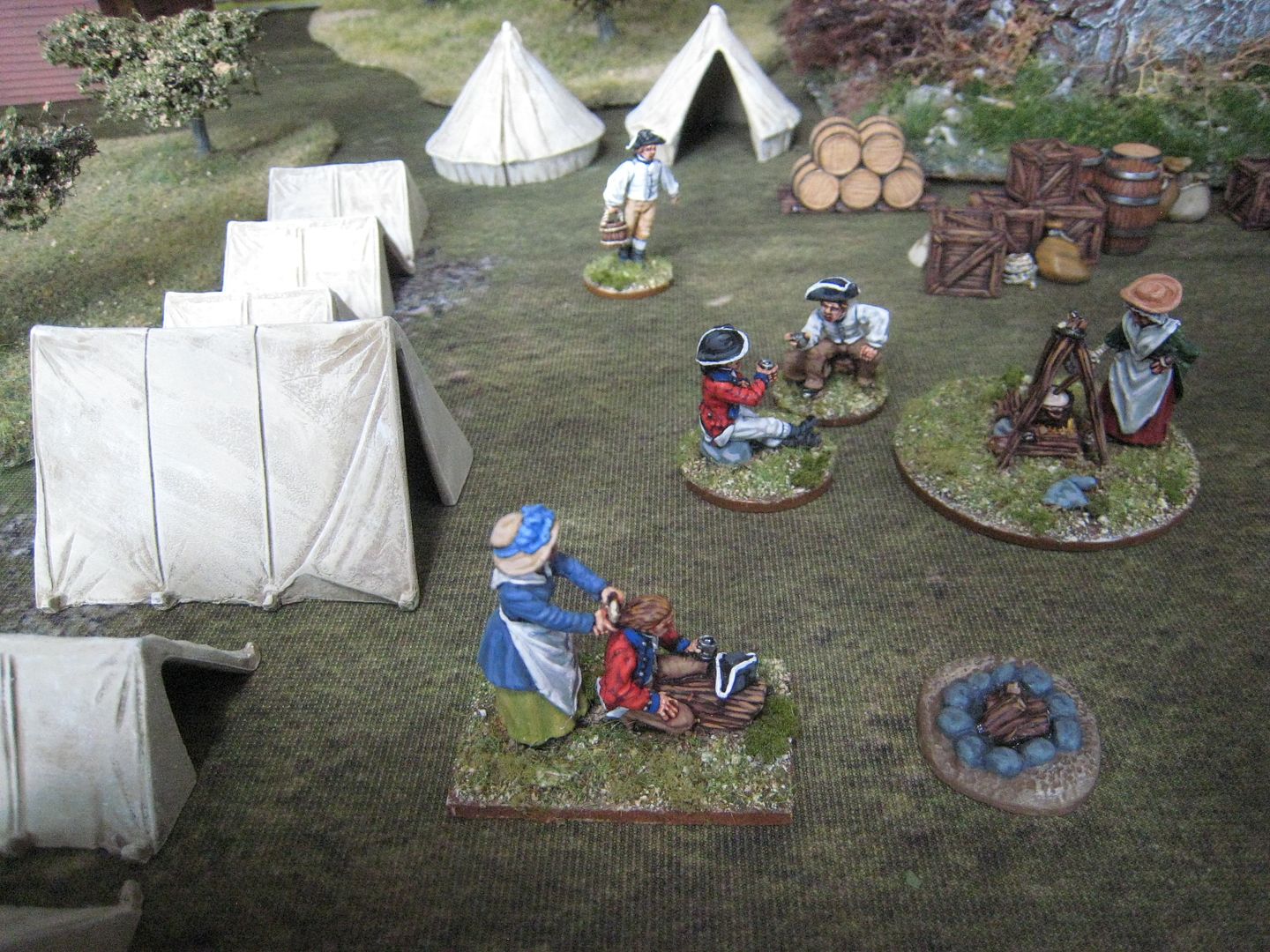
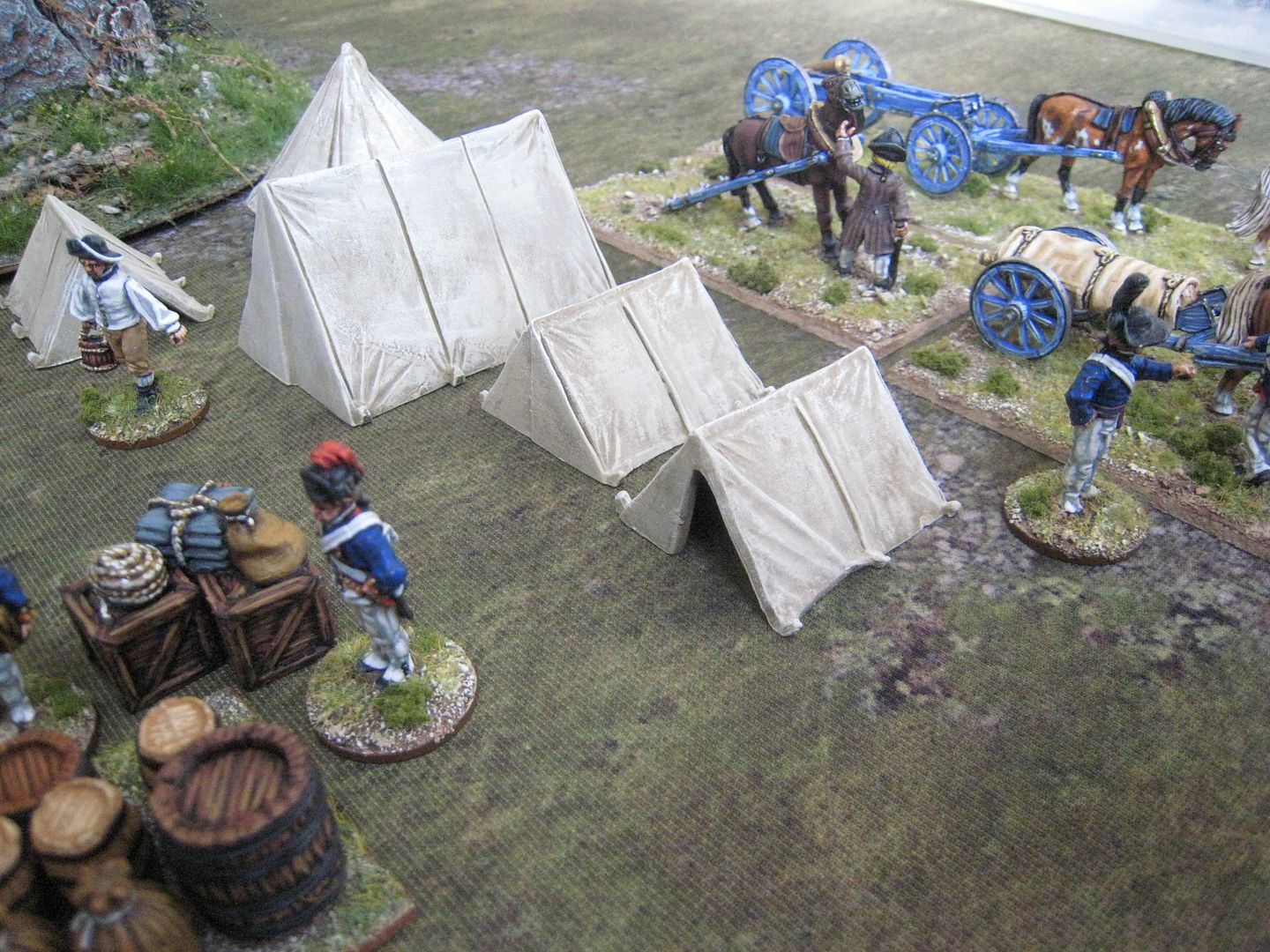
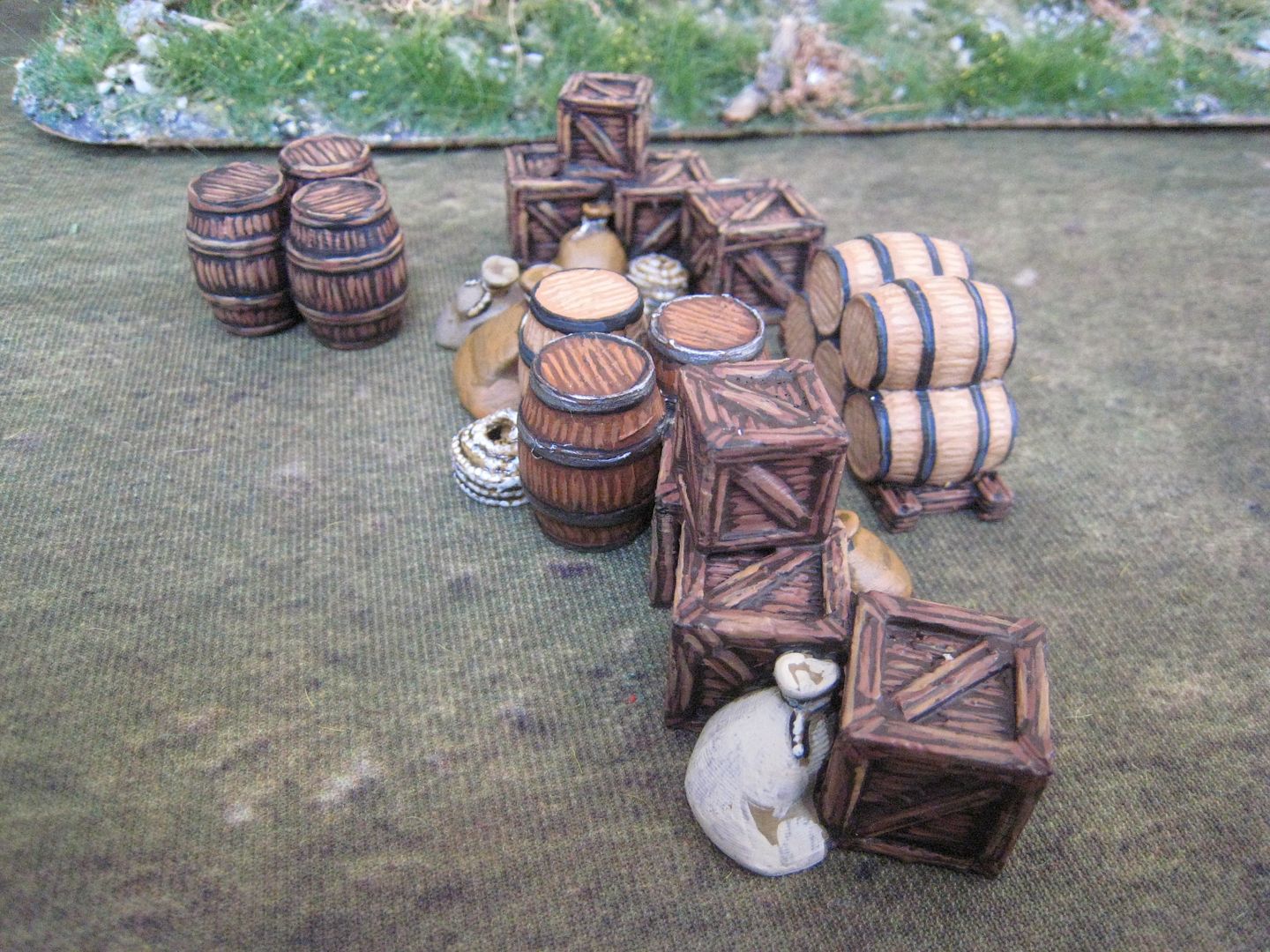
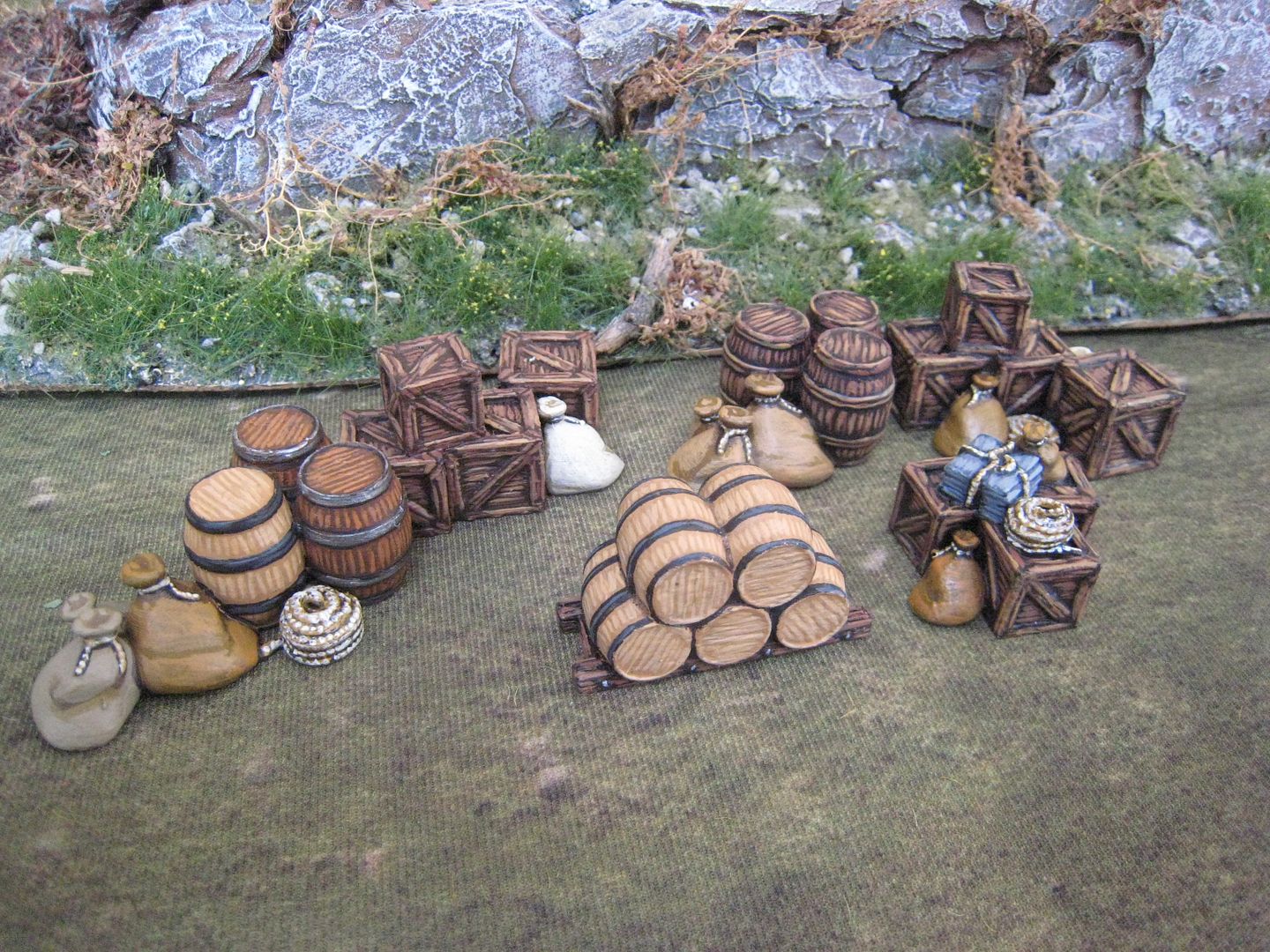
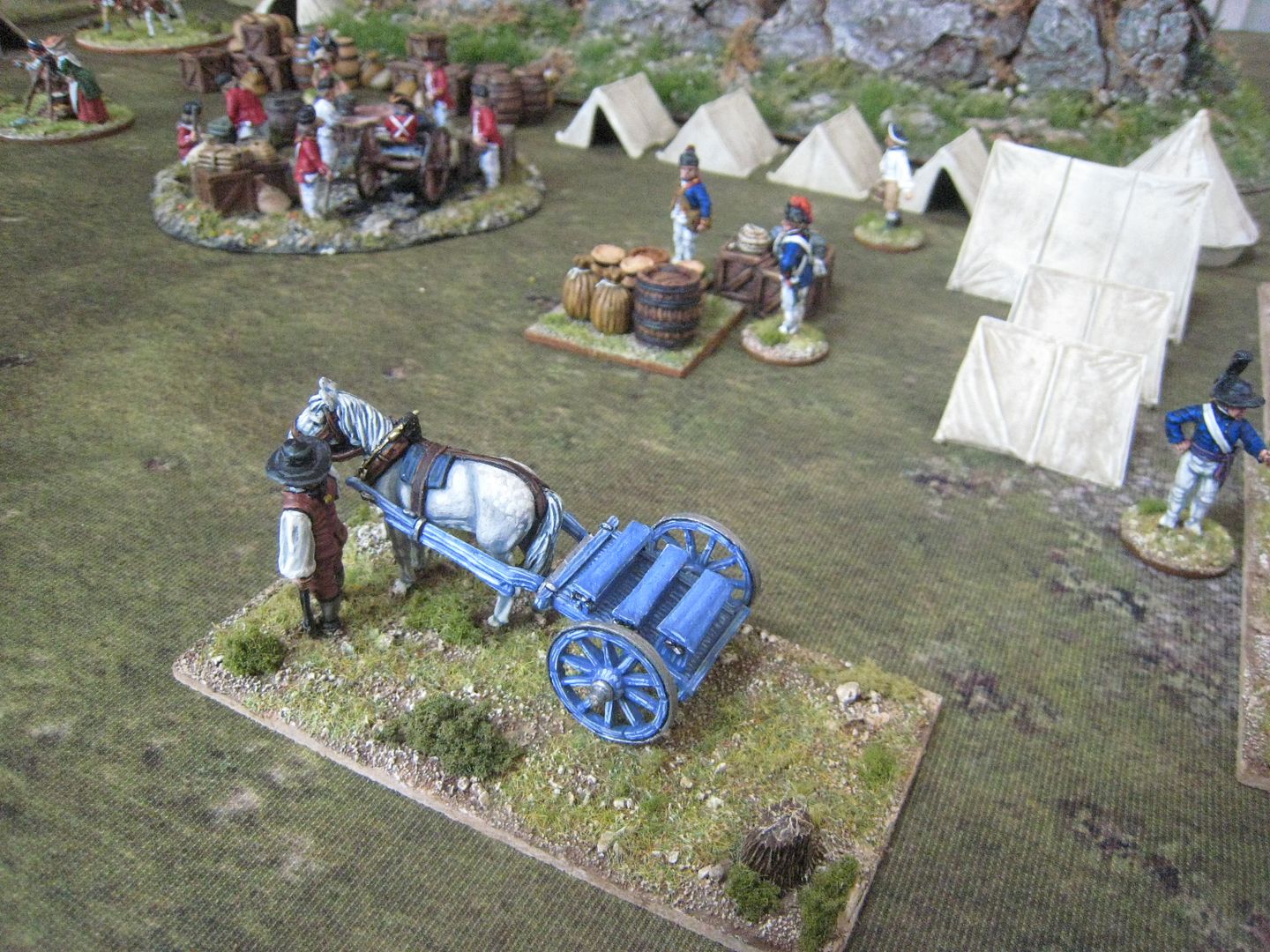
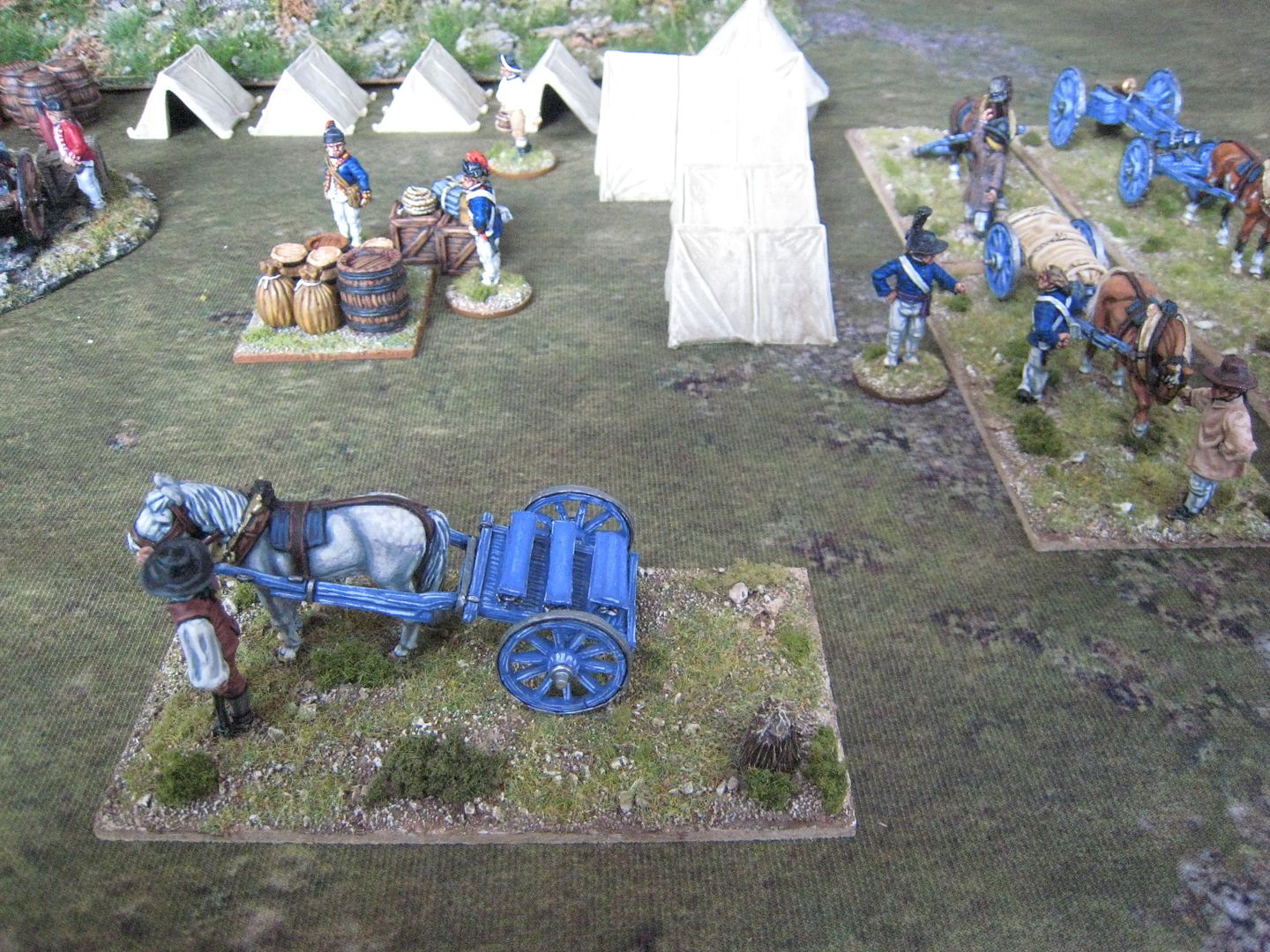
Before posting about Bill's vignette, I wanted to paint more bits to create a proper camp scene. The tents are from Renedra - £3 will buy you 4 dog tents and £9 gets you a collection of 6 different tents and a few other things. The free standing crates and barrels etc are off Ebay, from a seller called Highlands 3D Prints (whose service was excellent - I also bought some Egyptian ruins that I'll post about shortly). I like that these aren't based, so can be used in a variety of settings. Also, I see Bill's vignette features one of the crate pieces, so these 3D "sculpts" must be widely available. The based items are a mix of metal sacks and barrels from (I think) Front Rank and more plastic stuff from Renedra. I've had those knocking around for years, so it was good to finally paint them up.   

There's a helpful essay on 18th century barrel-making by the Revolutionary War Journal here. This explains how the design and size of barrels, together with the type of wood used, often depended on what was going to be stored in them. Larger barrels usually contained dry good like tobacco leaf or flour. White pine was often used for barrels carry wine or other liquids. I wanted a mix of barrel types and followed the pictures in this article - so I included a bunch of wine barrels made from white pine and some others using a "redder" type of wood. So for those interested in such things, the painting schemes used were:

  • tents: undercoated in GW "Zandri Dust", and then dry-brushed with GW "Ushabi Bone", "Screaming Skull" and with a final light dry-bush of Foundry "Canvas Light 8C";
  • sacks: mainly Foundry's "Deep Brown Leather 45" palette;
  • crates: mainly base of GW "Rhinox Hide", then wood-grain effect highlights with Foundry's "Spearshaft 13" palette;
  • wine barrels: undercoated in GW "Wraithbone", then wood-grain highlights with Foundry's "Buff leather 7" palette.  
I wanted to kick-start this blog again with Bill's piece. I still have a large backlog to post about and hope to keep that moving over the next few months. I fly to Australia and NZ in 7 weeks, so I'll do my best to squeeze in as much as I can before then. Next up will be more First Carlist War stuff and 1920s 7TV!  
Various bits and bobs. Painted May 2026.

Bill's piece:


Crates and tents:


General camp scenes:


Monday, 30 September 2024

American staff (3)

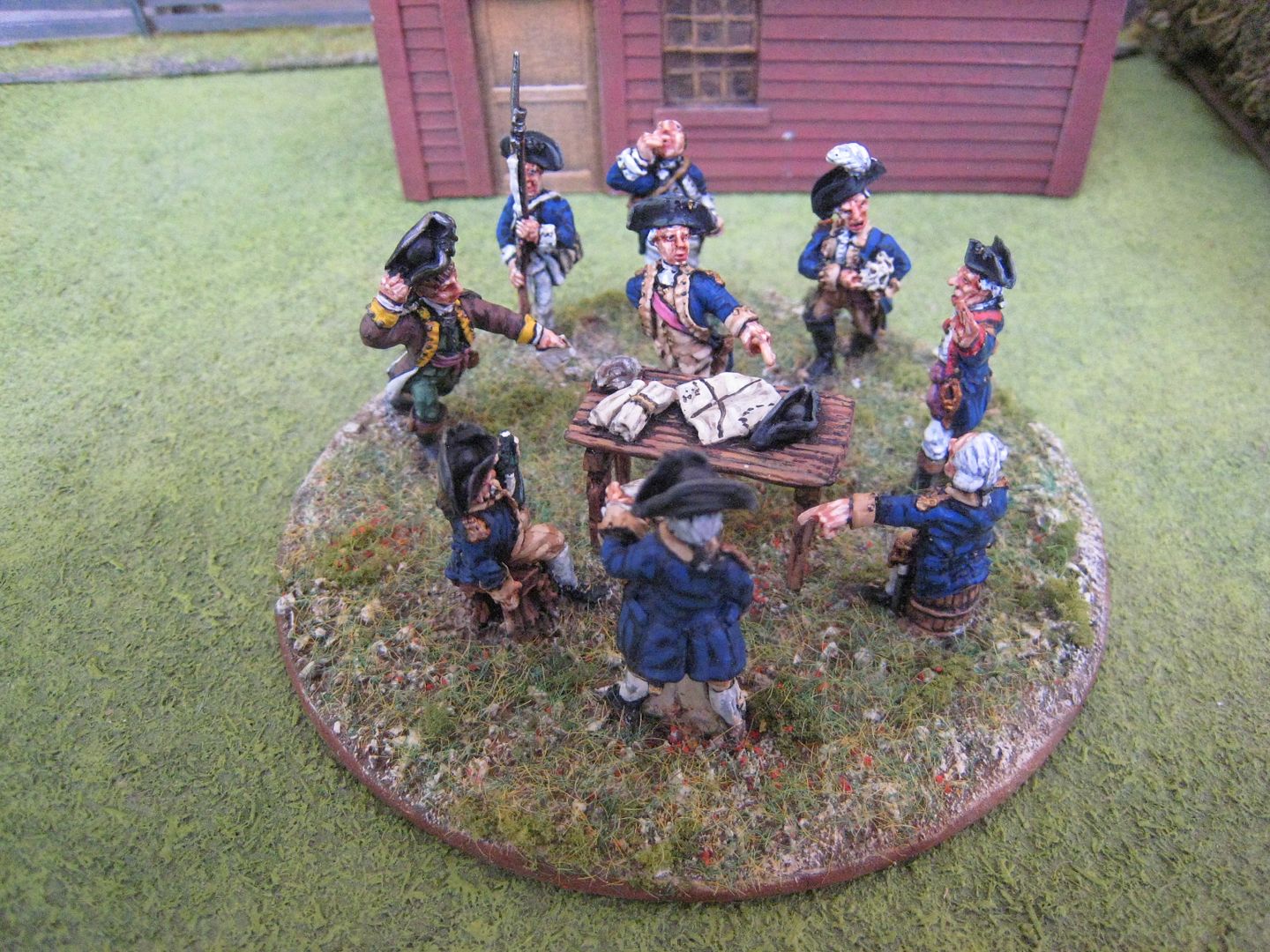
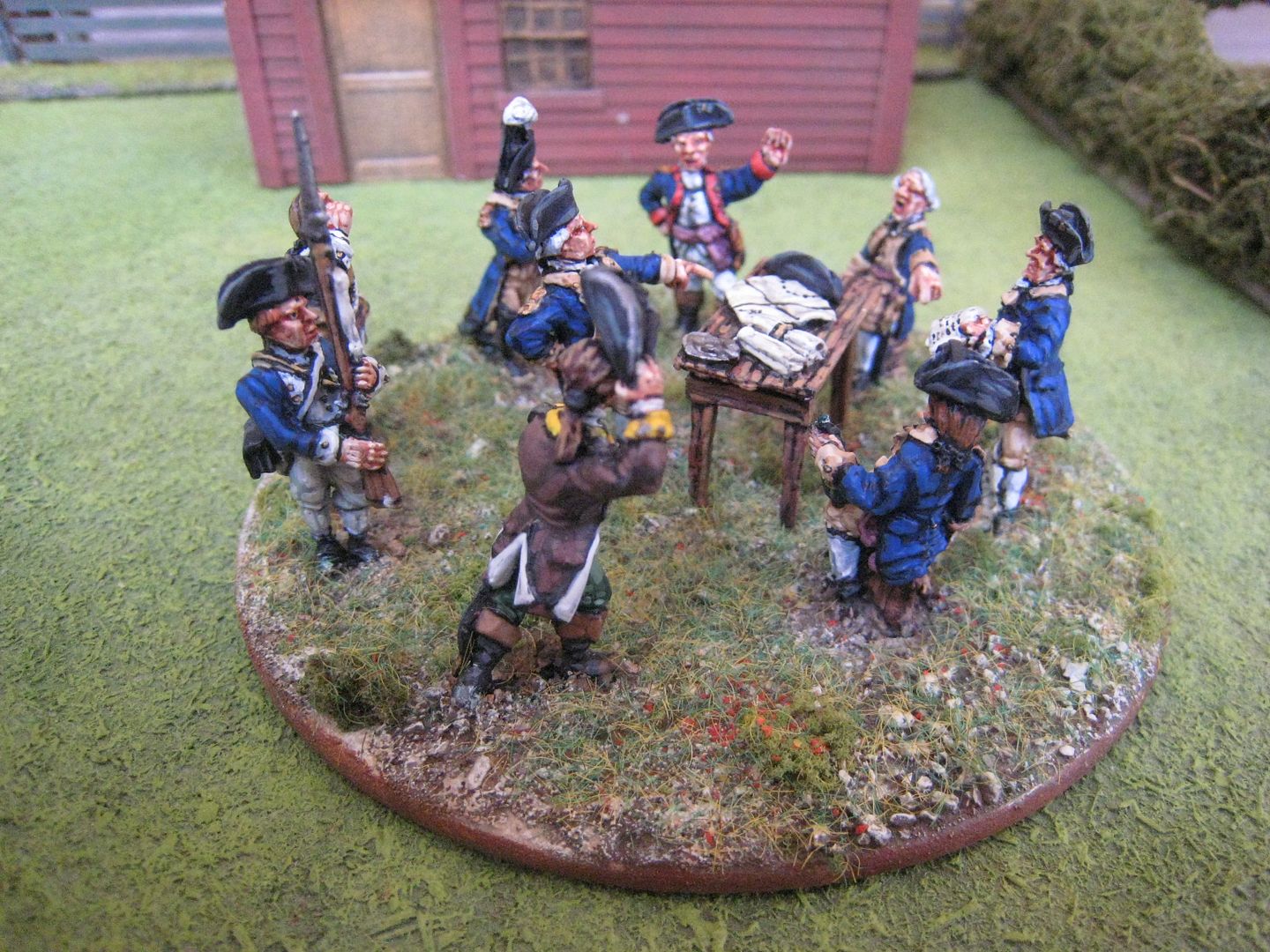
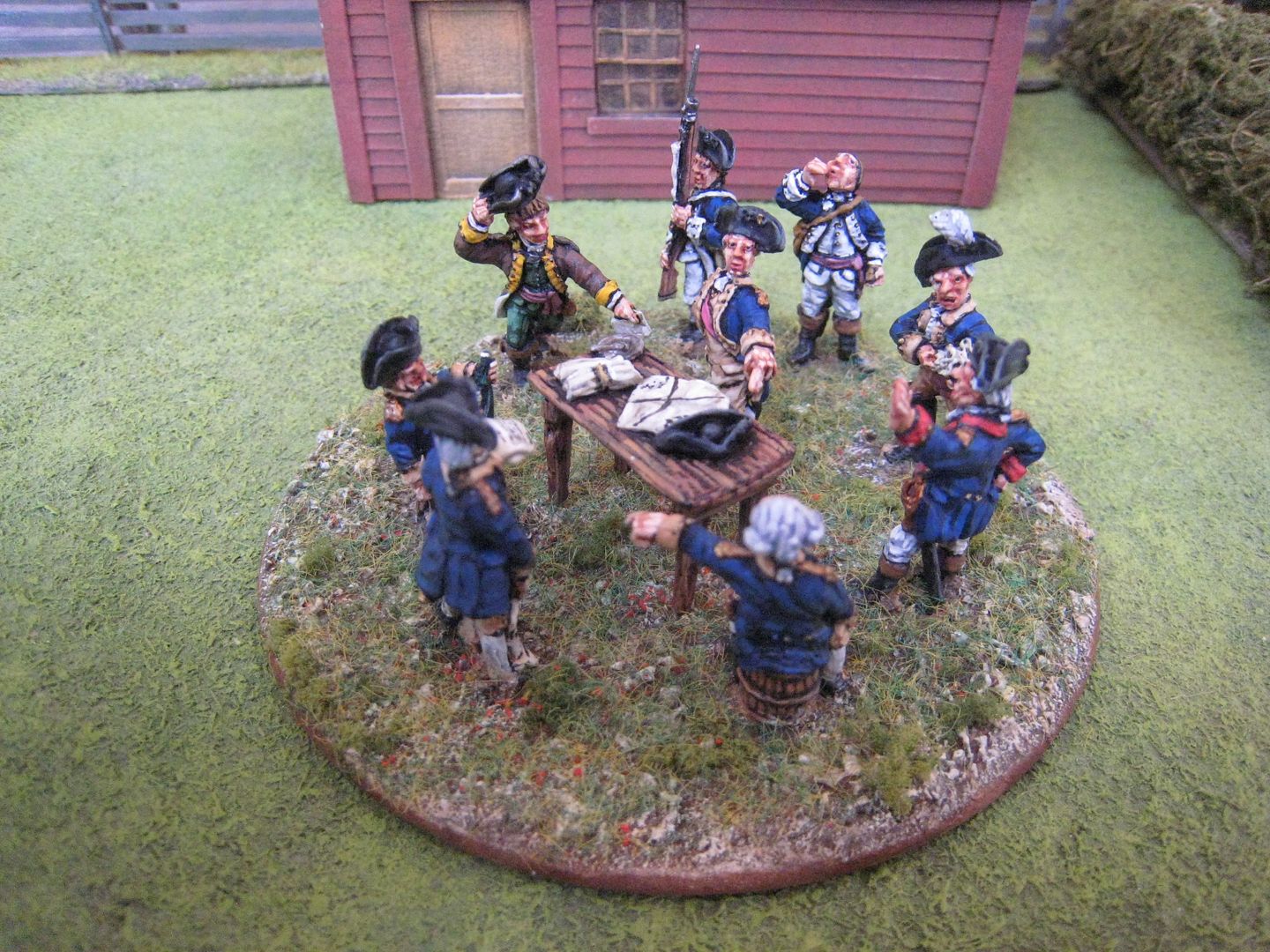
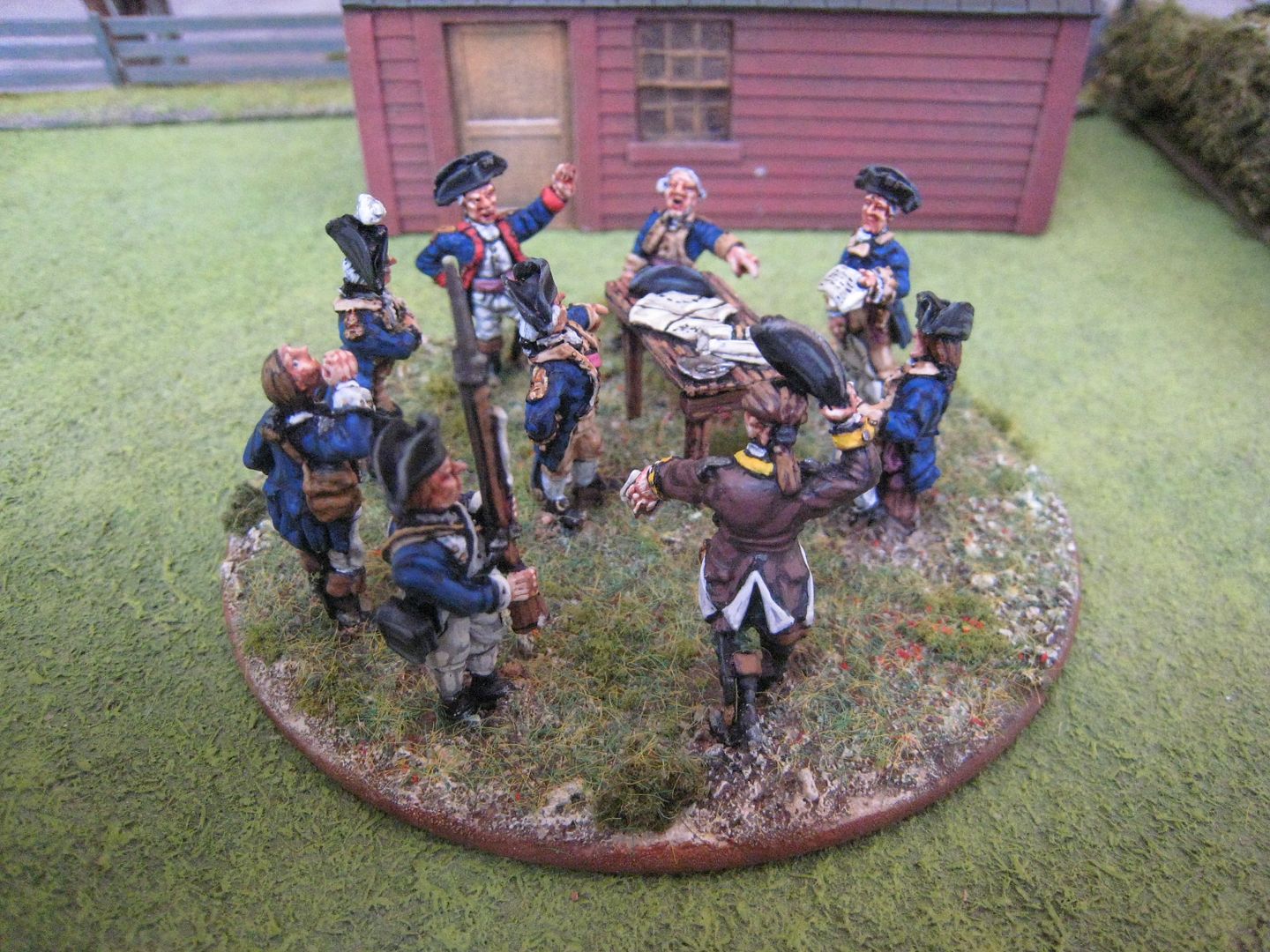
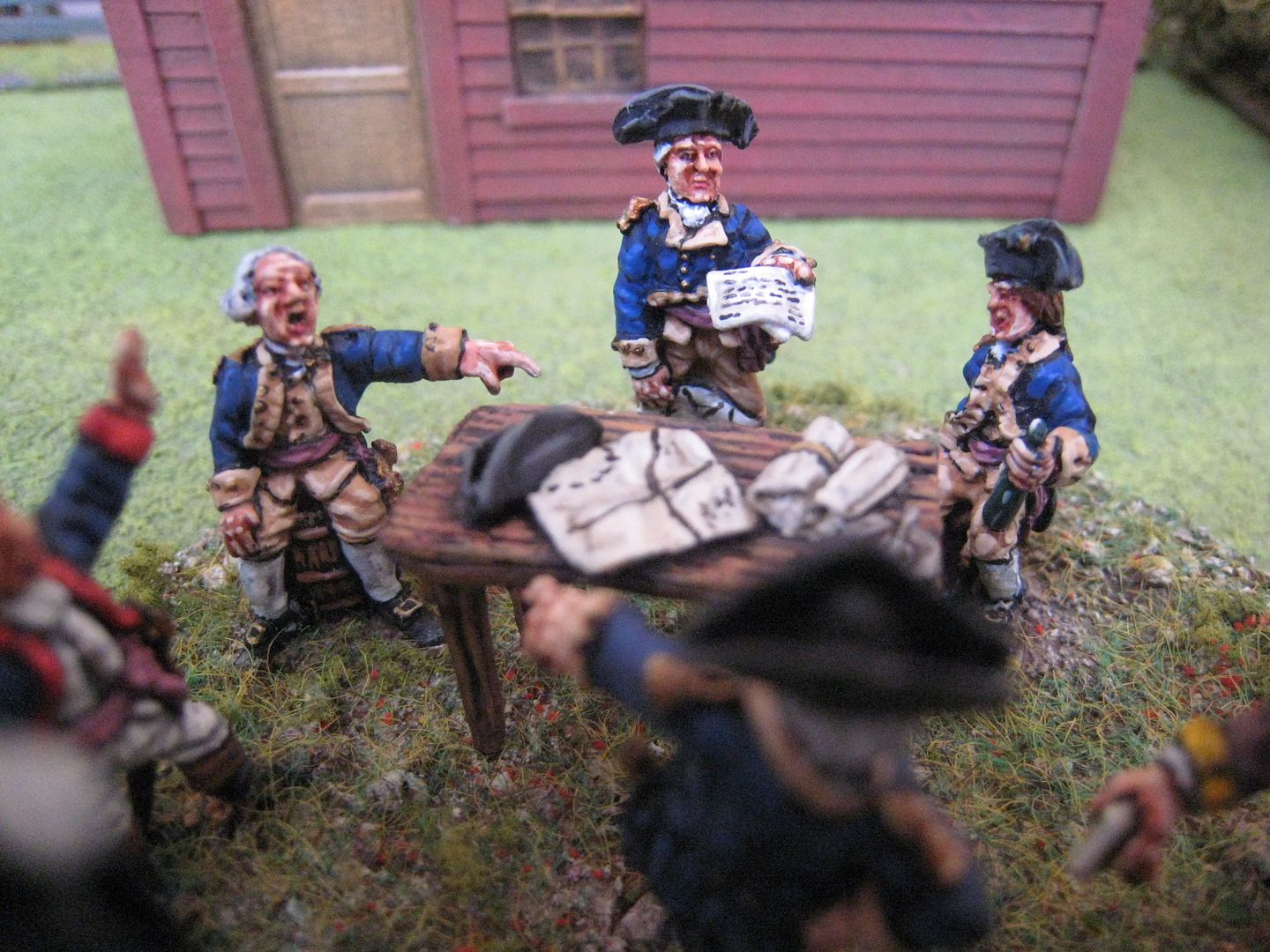
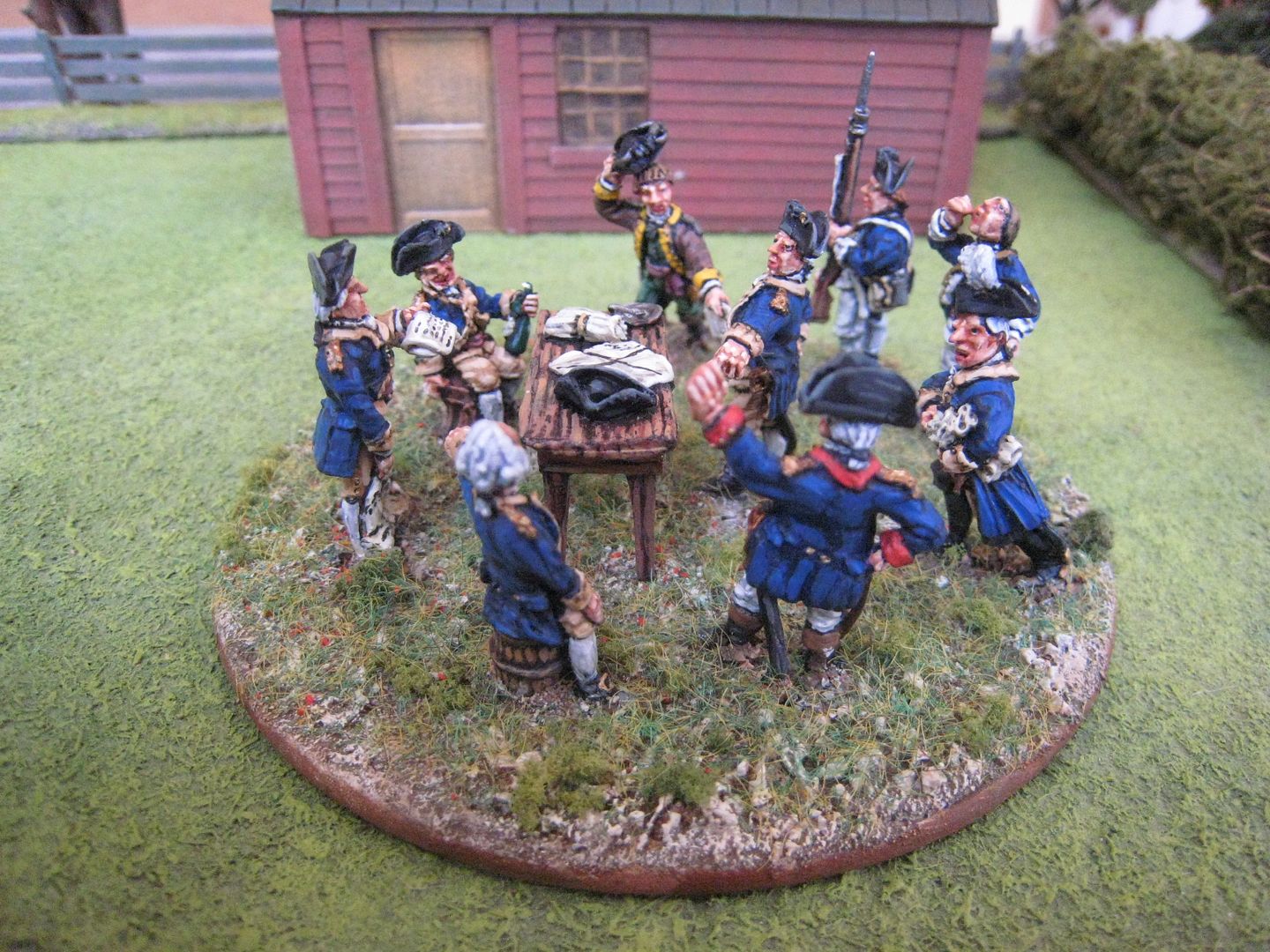
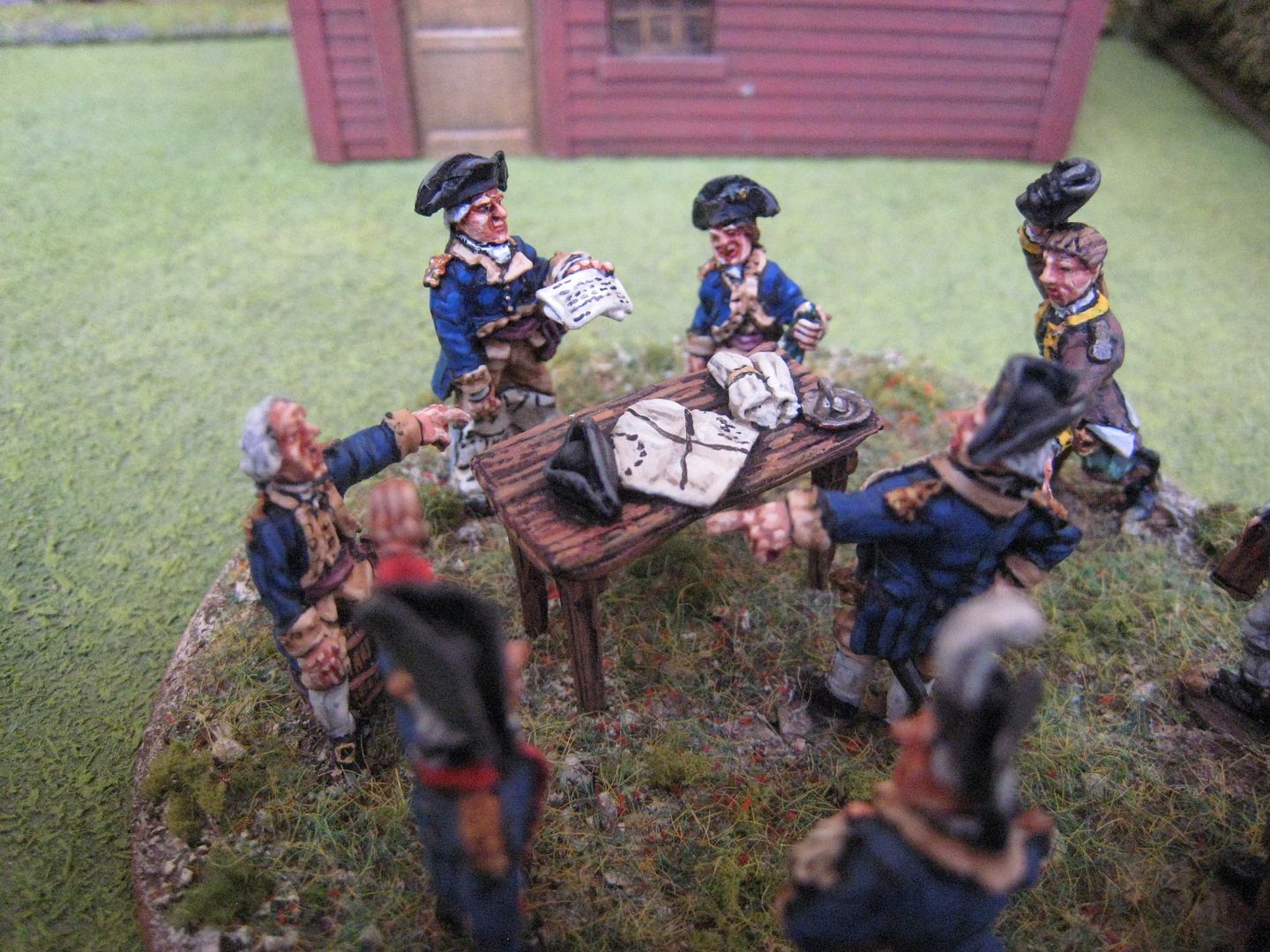
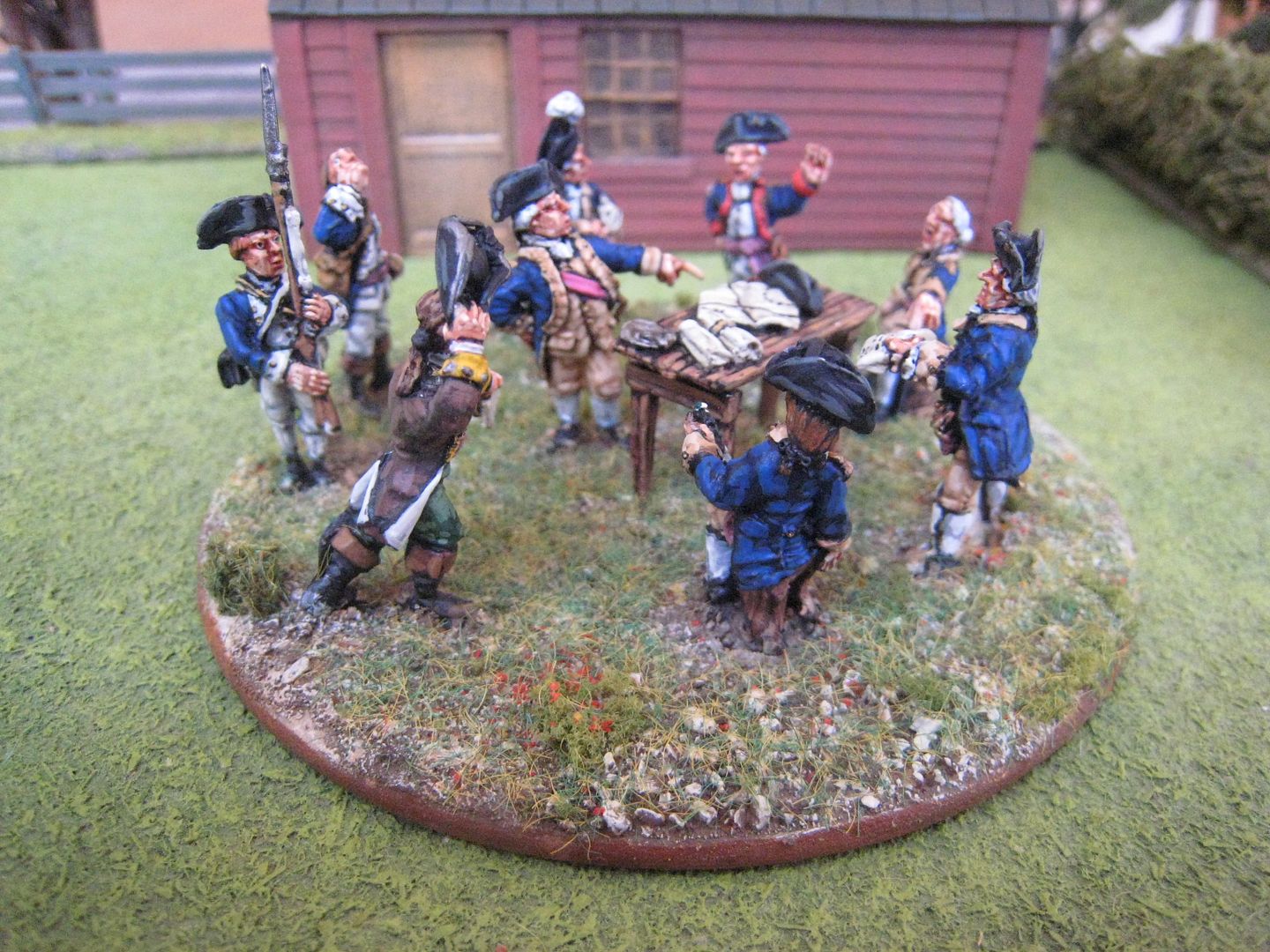
This is my rendition of the Old Glory Miniatures pack "Dismounted Continental High Command".  I've used a few of these figures before, in a command stand for British artillery.  However, this is the first time I've collected a large number of the figures together for the purpose for which they are advertised.  This base isn't supposed to represent any particular commander.  I just wanted to use the figures to create a vignette that could be used in a Continental camp.  Perry Miniatures have a "camp vignette" scene, which I painted for the British/loyalist side (see here).   

So I looked trough the Caliver/"British Grenadier!" scenario books to see where a base like this might be useful.  Camps appear on the table in the following scenarios:  

·     Long Island - American

·   Germantown – British/Hessian

·   Whitemarsh – American

·   Stono Ferry – British (71st Foot)/Loyalists

·   Brier Creek – American (militia)

·   Savannah – American

·   Eutaw Springs – British/Loyalist

·   Yorktown/Gloucester Point - American

I decided to create a vignette for later(ish) war scenarios, basically Savannah and Yorktown.  The Old Glory set is supposed to give you 2 of each type of sculpt.  My pack had 3 of some figures and only 1 of others. Also, there's only one table; despite there being at least two tables-worth of figures - that's a bit mean.  Anyway, here are a good number of the figures in the pack, a mix of senior officers, ADCs and others. Further figures will appear in another command stand I've been working on.  I'm intending on turning the remainder into Loyalists.  Old Glory figures can be a bit hit and miss.  I find they can be tricky to paint, not least because it can be difficult to work out what they are actually doing and the uniforms sometimes lack precise definition - and sometimes you realise that a lump of extra metal which doesn't seem to have a purpose is simply a lump of extra metal.        

I painted these figures as best as I could.  There's no particular rhyme or reason to the uniforms.  I guess that the senior guy in the sash pointing is probably meant to be Washington; but I gave the figure a major-general's sash to anonymise him.  The officer delivering the despatch is painted in the brown faced yellow coat of Sherborne's Additional Regiment simply because I wanted some colour to break up the dark blue and buff.  The most difficult figure to paint was the chap who (I think) is taking snuff - his head was simply a blob, with no discernable features; so I did my best to paint those in.  I based the large map on this map of the fortifications of Yorktown.  With 9 figures, it's quite a busy stand, but I think it does the job ok.

9 figures and 1 table.  Painted August-September 2024.


Monday, 3 October 2016

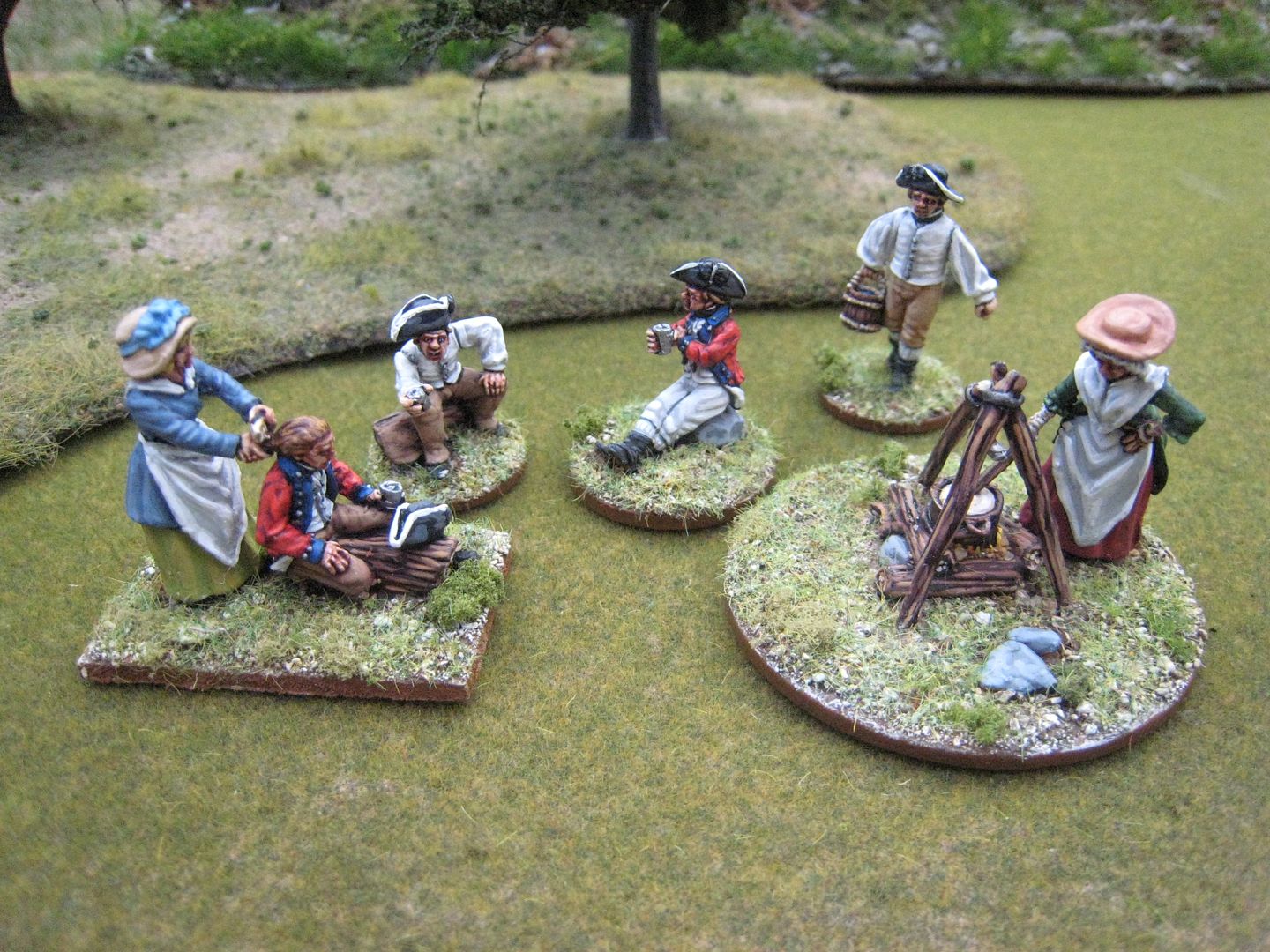
Loyalist camp

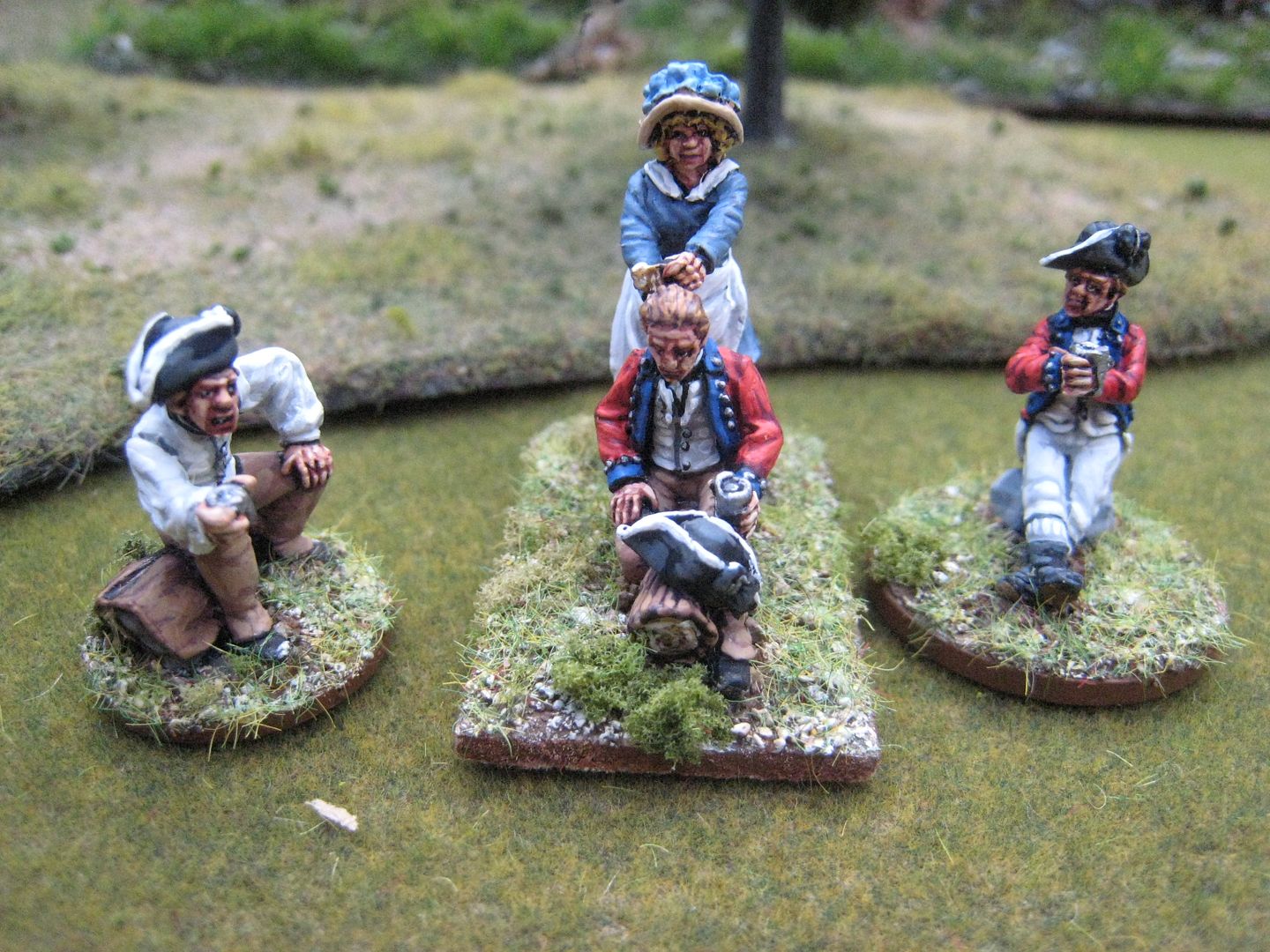
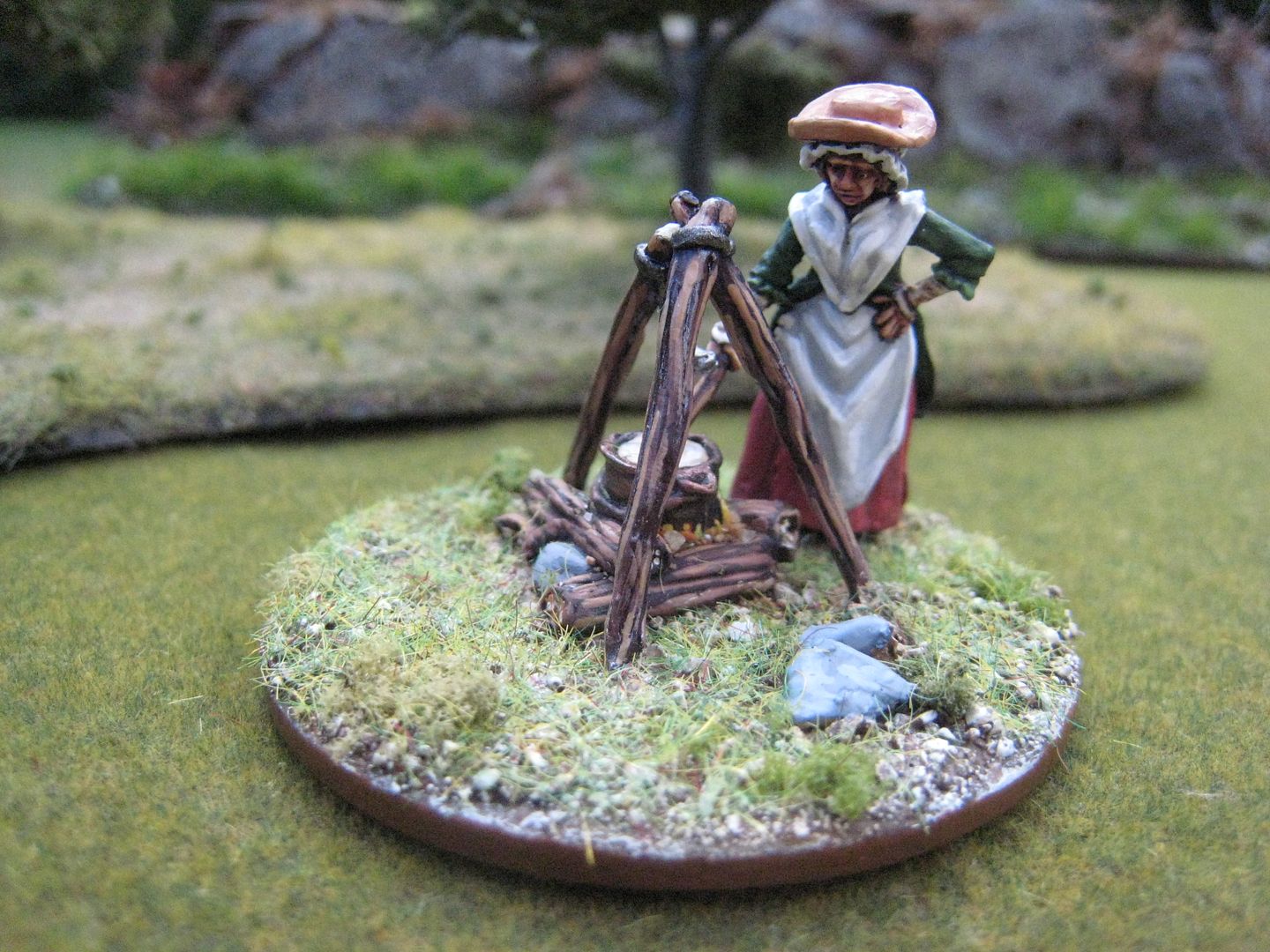
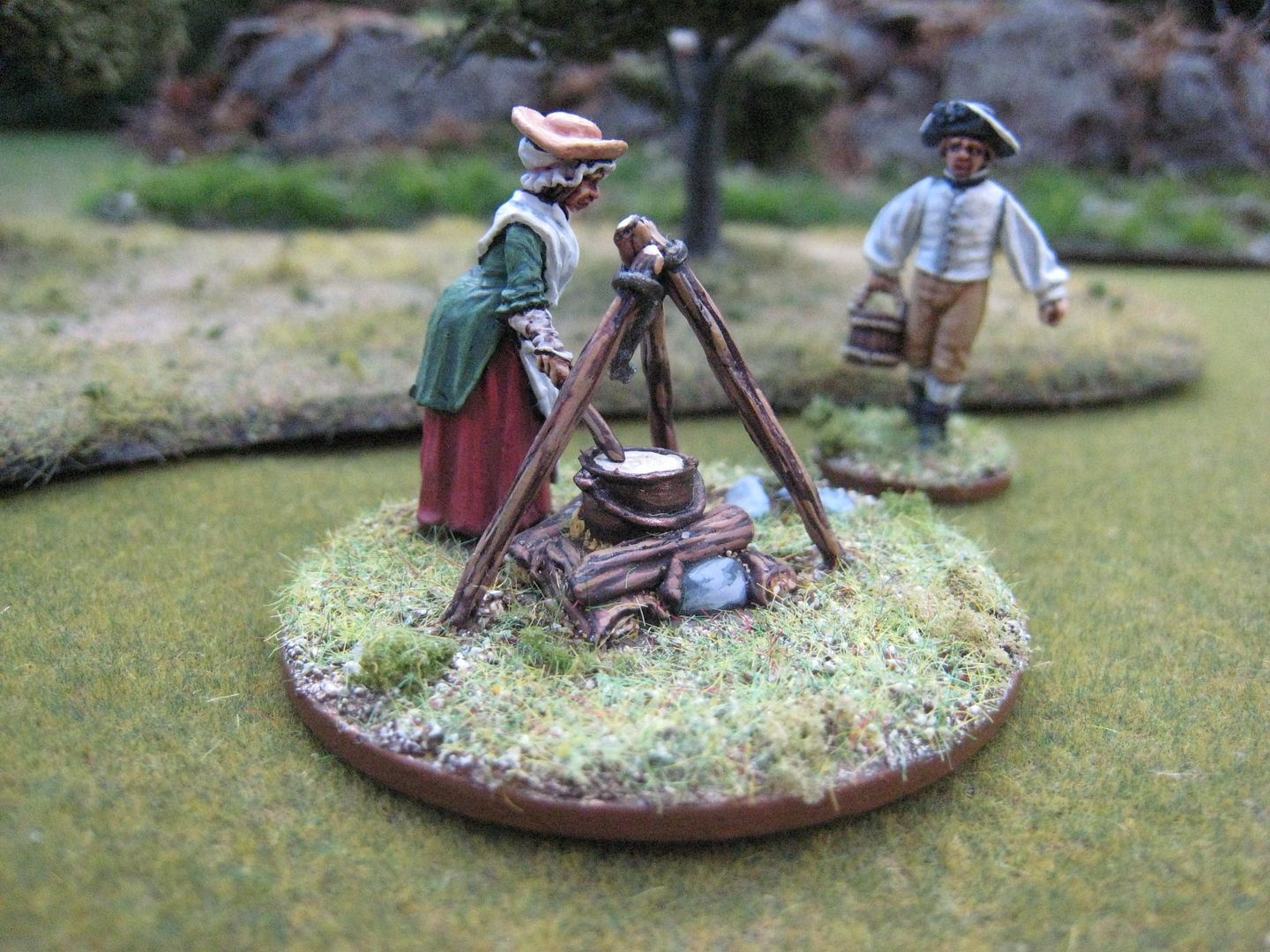
I regret that posts have been thin on the ground over the past couple of months.  However, that can be remedied as a result of a good session in the garden with my camera yesterday.  Highlanders, loyalist rangers and some personalities are to come, but to start with here's the Perry Miniatures AWI camp set.  The website states that the set can be used for either side.  You have two soldiers in shirtsleeves and waistcoats, and two wearing uniform coats; so the latter figures require a decision on what "side" they are going to be.  To my eyes this set lends itself more to the British side than the Continental, and I decided to paint the uniformed figures as later-war loyalists.  I was thinking in particular of the New York Volunteers that I painted at the end of last year.  That's because the only scenarios I can think of which feature Crown troops fighting inside or near their camp are Stono Ferry, Savannah and Eutaw Springs; and all those feature loyalist units clothed in red faced dark blue coats.  The colour of whatever's in the pot gave me pause - I've assumed that it's some sort of soup using vegetables, potatoes, chicken and stuff, and that the overall colour of the watery result would be a pale brown.

This is a nice little set, one of the small number of packs I bought at Salute this year.  On the workbench at the moment are a large Pennsylvania regiment, the Volunteers of Ireland and some Conquest Miniatures "frontiersmen" which I intend to use for generic Patriot scouts/rangers.  I have a couple of packs of Conquest Indians, which I'll turn to next alongside more loyalist infantry.

6 figures.  Painted September 2016.


Friday, 1 April 2016

George Washington (2)

The title of this post is perhaps a bit naughty, but it does set the scene for a fascinating little episode from the very end of the war.  While working on my loyalist East Florida Rangers and King's Carolina Rangers I researched the life of those units' commander, Thomas Brown.  As I explained in those earlier posts, Brown became a staunch supporter of the royalist cause in Georgia and raised troops to fight for the King.  At the end of the war, in late 1782, Brown and several thousand other loyalist refugees found themselves in St Augustine in Florida.  St Augustine had been founded by the Spanish in the 1560s but was ceded to the British in 1763 under the Treaty of Paris that concluded the Seven Years' War (the Spanish received Havana in return).  Another Treaty of Paris, the one of September 1783 that finally settled American independence, returned St Augustine to Spanish rule (Florida remained a Spanish possession until it was, in effect, conquered by Andrew Jackson's US forces in 1821).

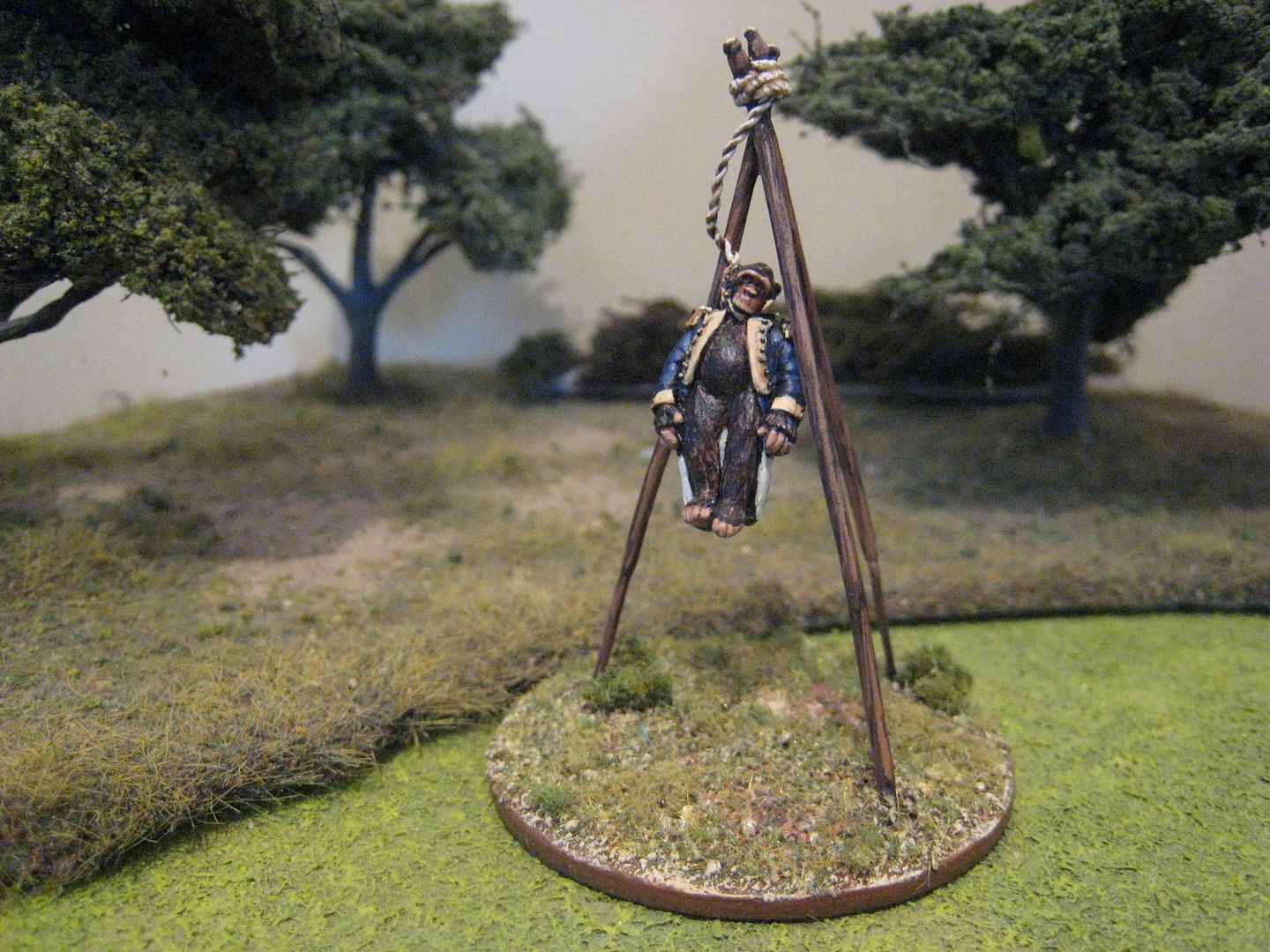
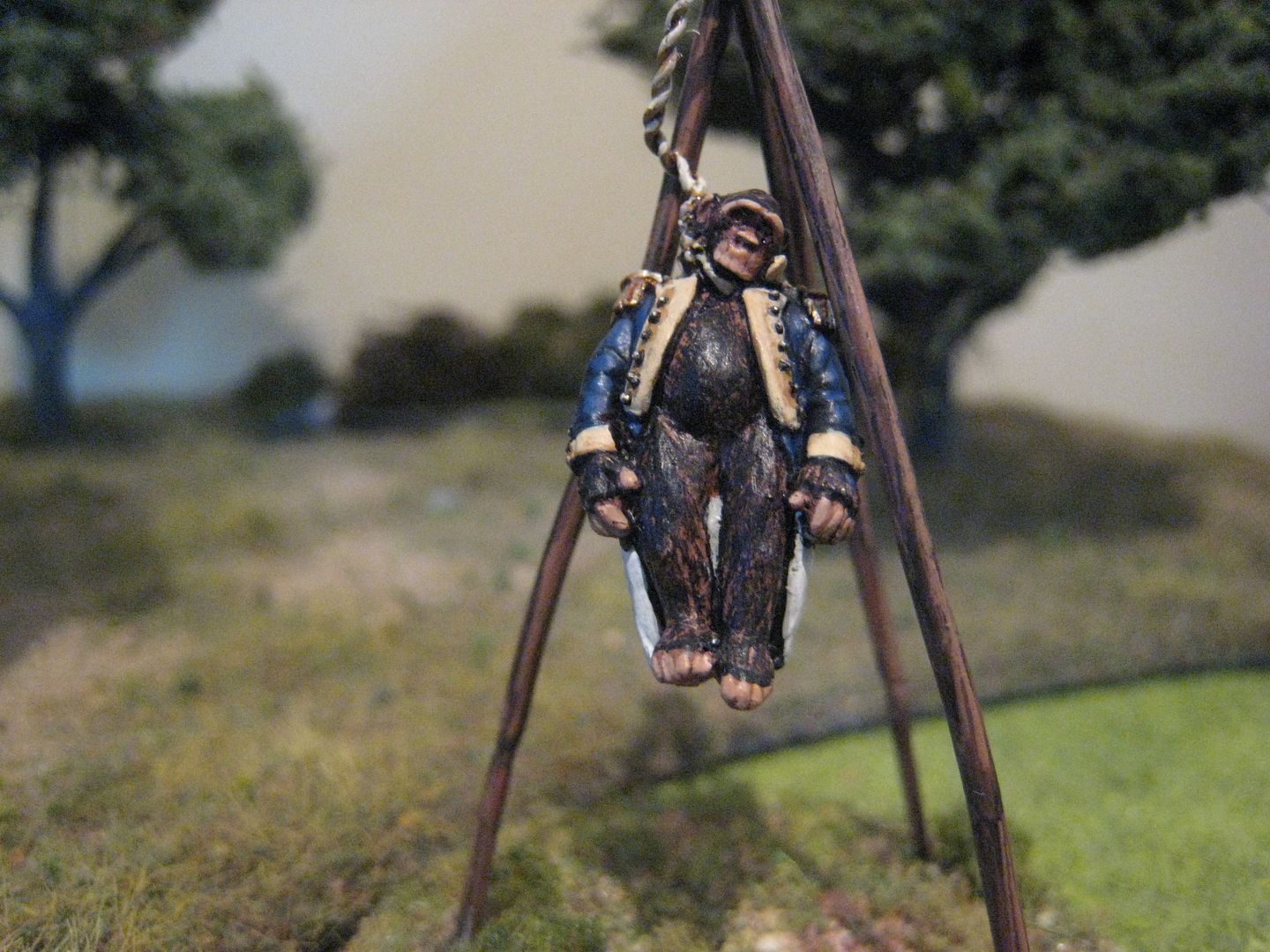
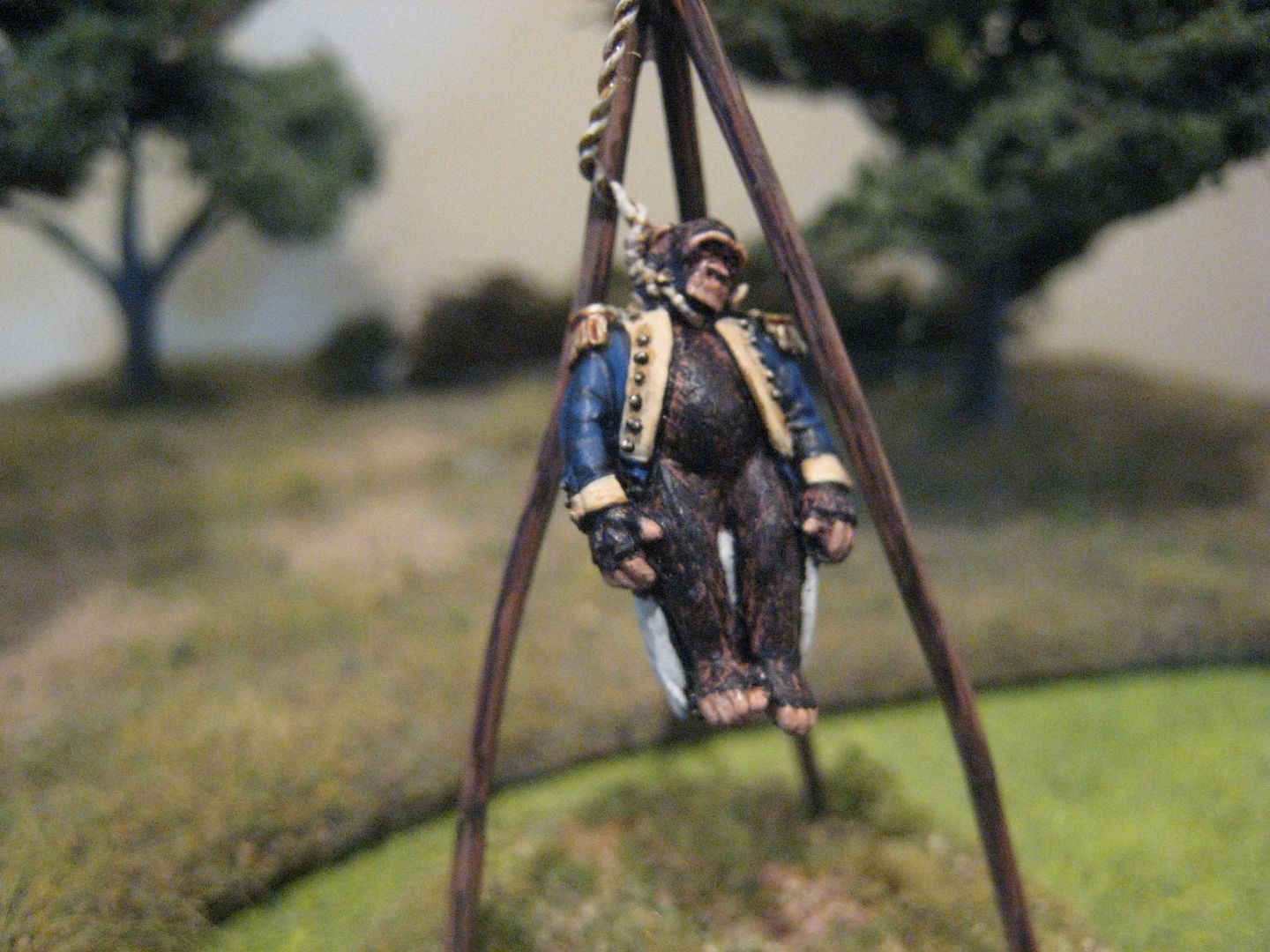
The second Treaty of Paris was a disaster for those loyalists who had sought sanctuary within the British Empire but now found themselves on Spanish territory.  In time, most were transported to other areas, principally England, Canada and the Caribbean, but it's not difficult to imagine their consternation in the meantime.  And that is the background to how a bunch of loyalists in St Augustine vented their frustration at events by dressing up a monkey as George Washington and stringing it up from an improvised gallows just outside the town.  This bizarre incident is referred to in a letter from General Patrick Tonyn, who was the last British governor of East Florida and had commissioned Brown to raise his Rangers, to the Home Office in London.

The set here is from Eureka Miniatures.  Tonyn simply referred to "a large ape dressed as if Mister Washington" (clearly even at the end of the war some British generals continued to refuse to acknowledge George Washington as being of similar rank).  Monkeys are not indigenous to north America but they had arrived in the Caribbean at least by the early 18th century, and probably earlier, by hitching rides in slaver ships from West Africa.  Presumably the unfortunate monkey appropriated by St Augustine's irate loyalists in 1783 was similarly from a slaver ship (the initial Spanish rulers of Florida had been reasonably liberal in their attitude towards slavery, but the number of slaves soared once the British took control after 1763).  I did try to find out what particular species of monkeys may have been around the east coast of America in the 1780s, but Eureka's figure lends itself well to the common chimpanzee and so that's how I painted it.  I had planned to paint it black and then dry-brush it grey to highlight the fur; but looking at some photos I realised that you can see the pink skin quite clearly underneath the monkey's fur, and of course the hands, feet and face are pink-ish as well.  So I painted the whole body using Foundry "South American Flesh 119B", then carefully dry-brushed it with black paint to suggest the fur, and finally highlighted the relevant areas with "South American Flesh 119C".  Who knows whether the ape was supposed to represent Washington himself or the Continental army and America's new masters in general.  I thought it probably unlikely that the residents of St Augustine would have access to a proper Continental general's uniform, so I painted an approximation with the deliberate mistake of having the lining and turn-backs white instead of buff.    

This was a fun little set to do, if a tad gruesome.  I can see its use in games as a bit of decoration at the edge of the table (like my duellists, who always make an appearance somewhere on the table).  Incidentally, my original George Washington command stand is here.  Painted over 10 years ago, it's not my best work, to be honest, and the great man deserves better.  I have at least 3 other George Washingtons is my leadpile (the Perry freebie, the Wargames Illustrated subscription freebie and Eureka's "young George Washington" in his F&IW uniform.  On my list of things to do at some stage is re-visit all my command figures (for both sides) and do some more personalities.  I've made a start on the British side; I've compiled a list of all the brigade, division and army commanders required in the "British Grenadier!" scenarios and have begun to allocate figures to personalities.  I hadn't realised, until I'd finished this list, that so many of the "commanders" in the scenarios are lieutenant-colonels and majors as opposed to brigadiers and major-generals; the traditional general in a red-faced-dark blue coat figure doesn't work for those offices.

Painted March 2016.

Sunday, 3 August 2014

Prisoners

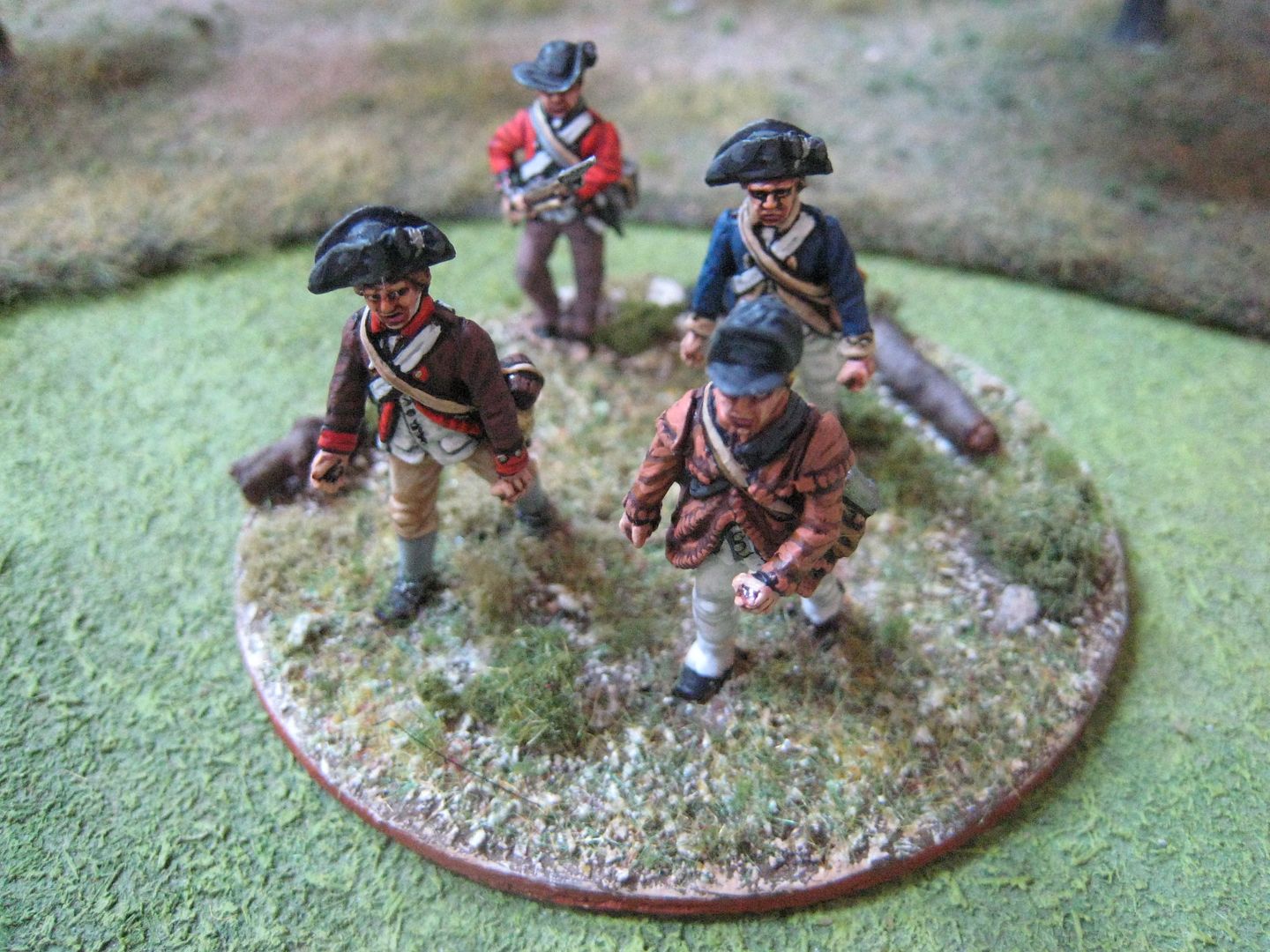
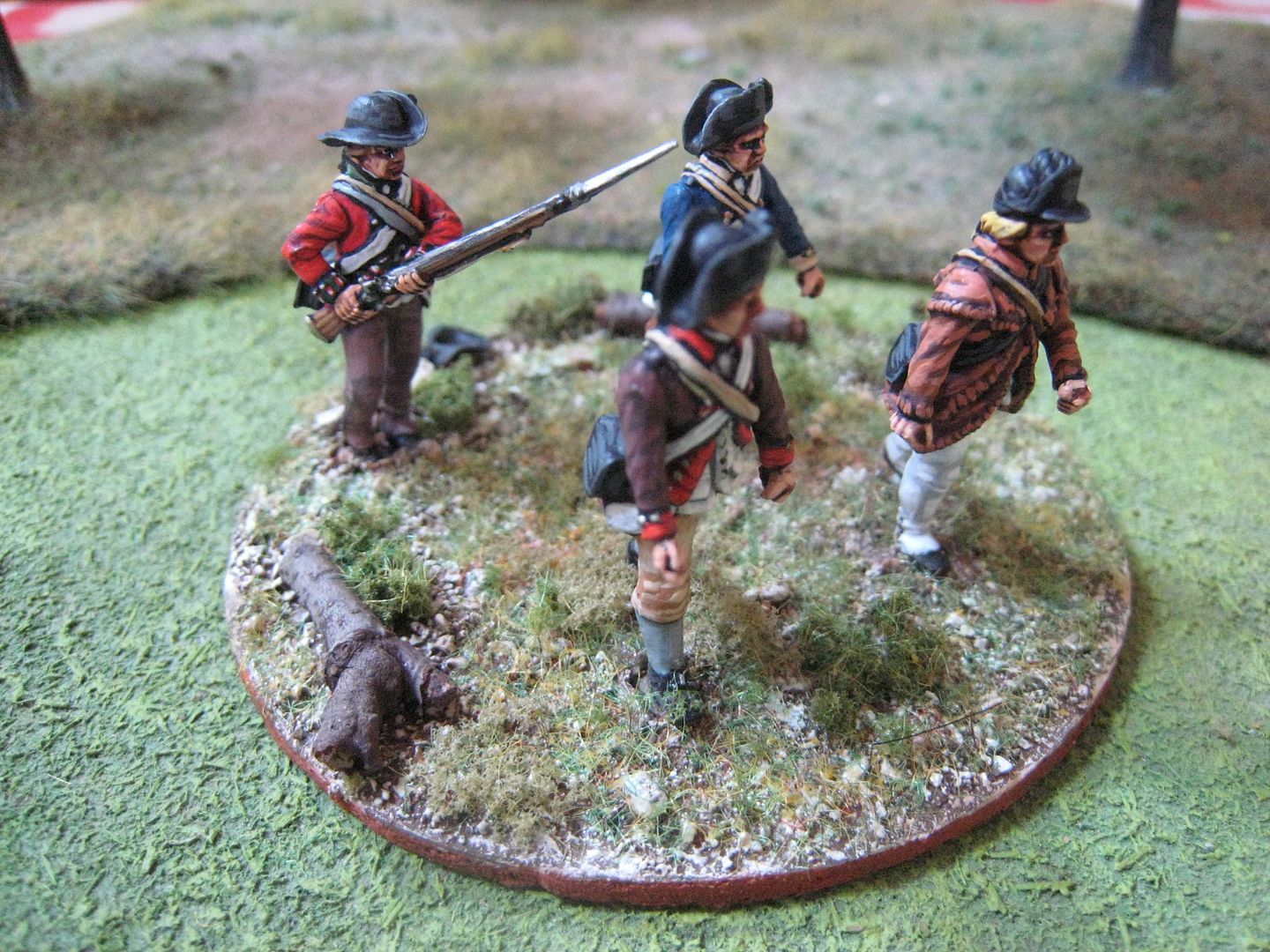
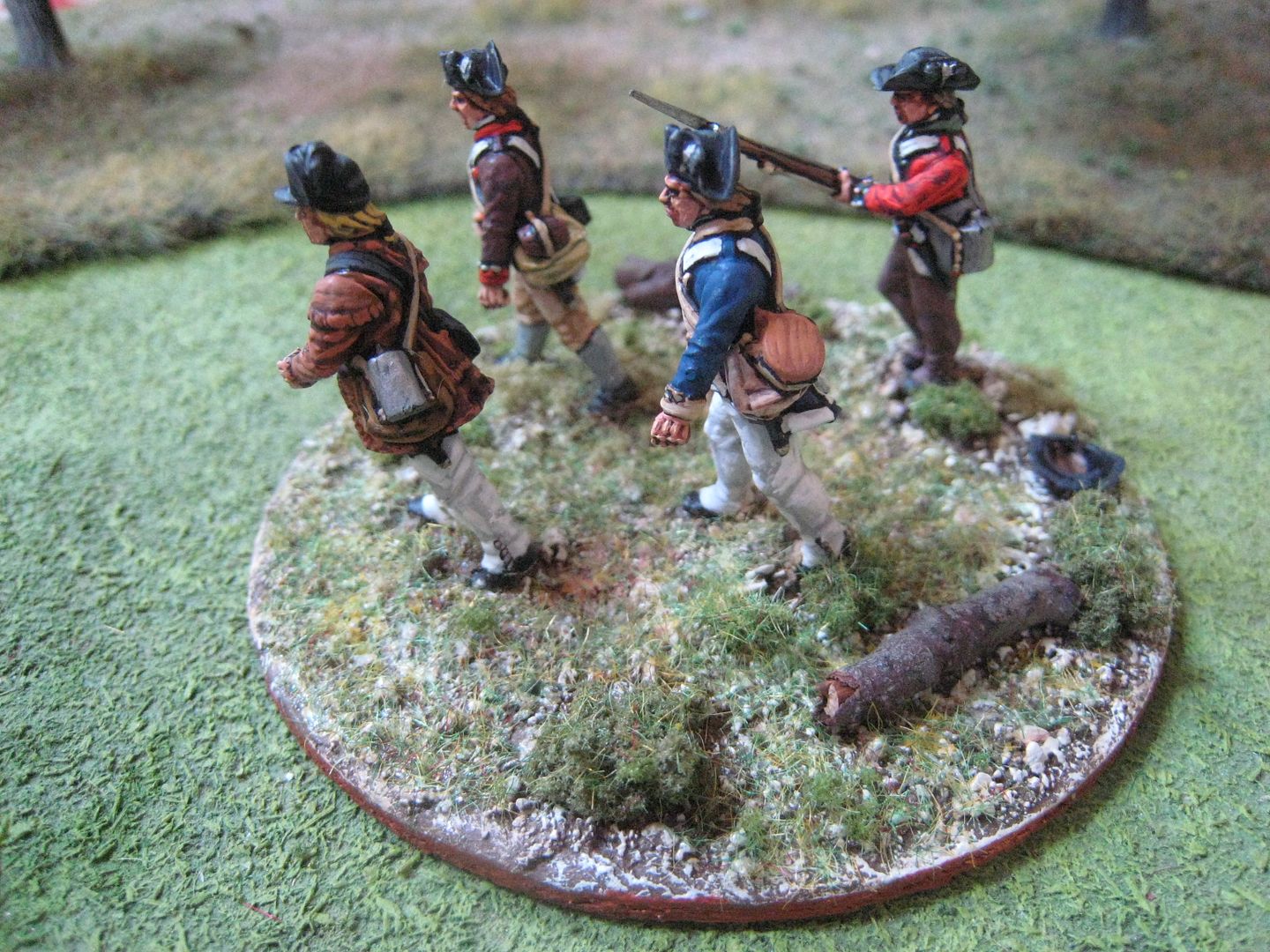
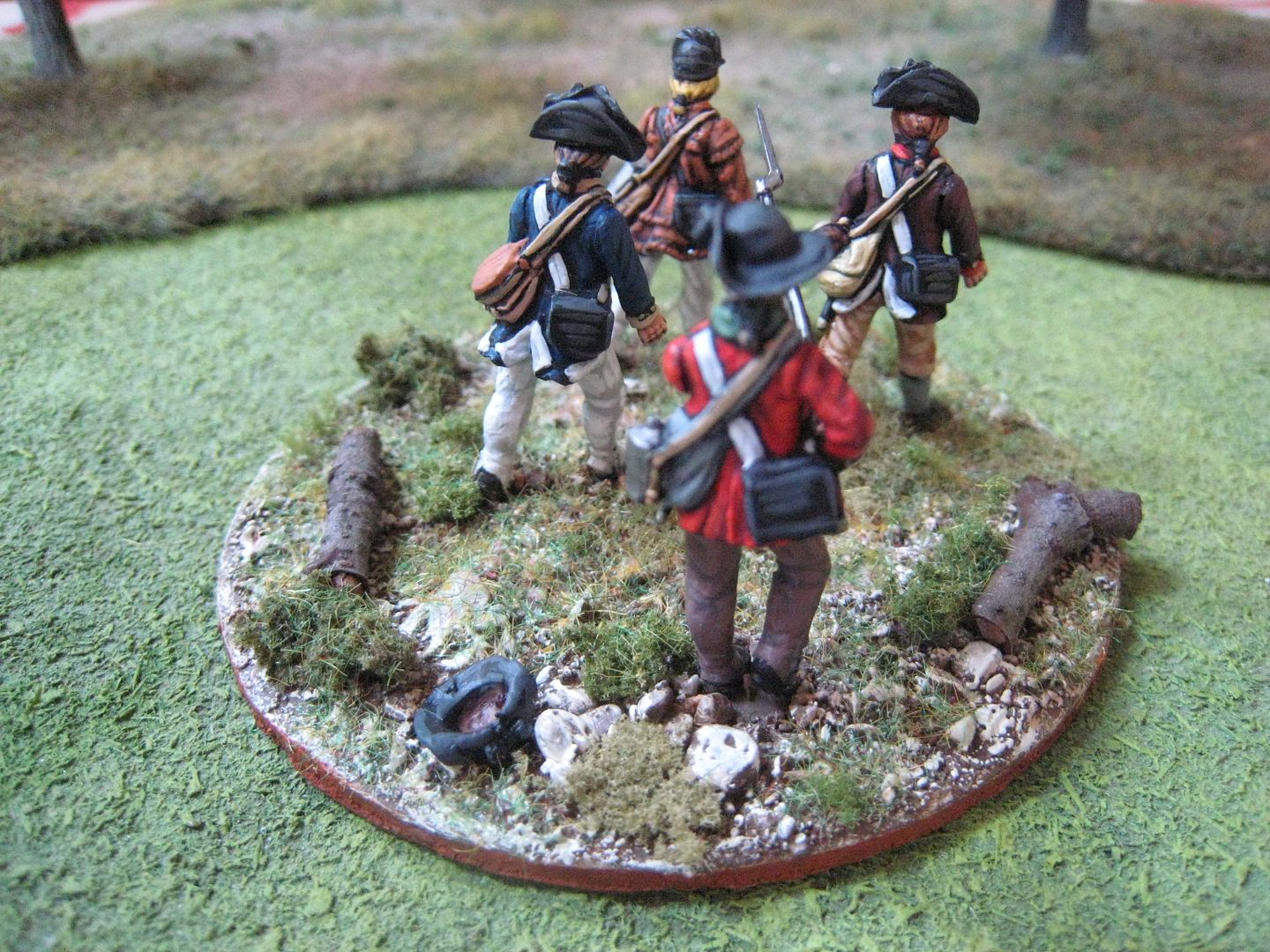
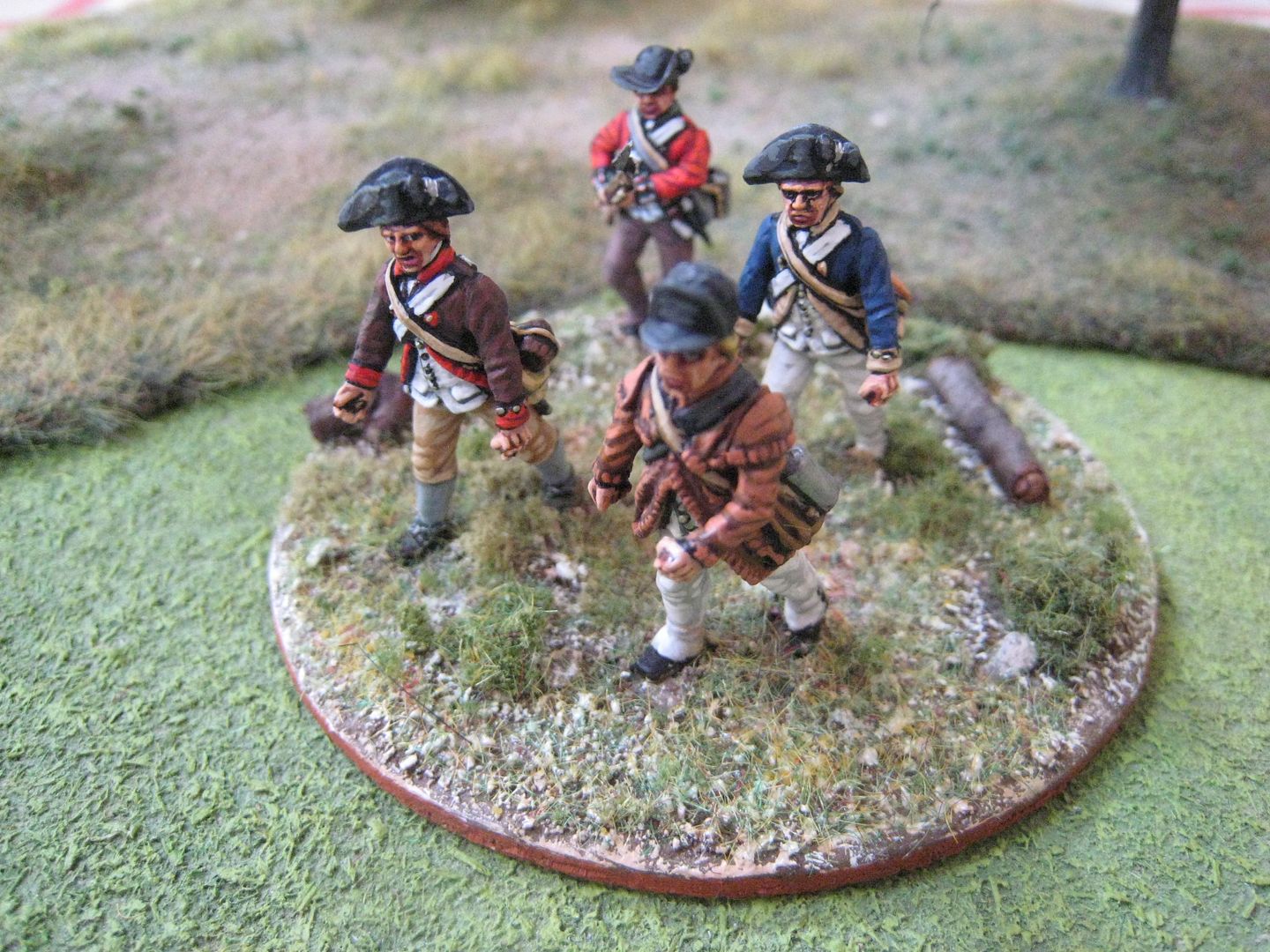
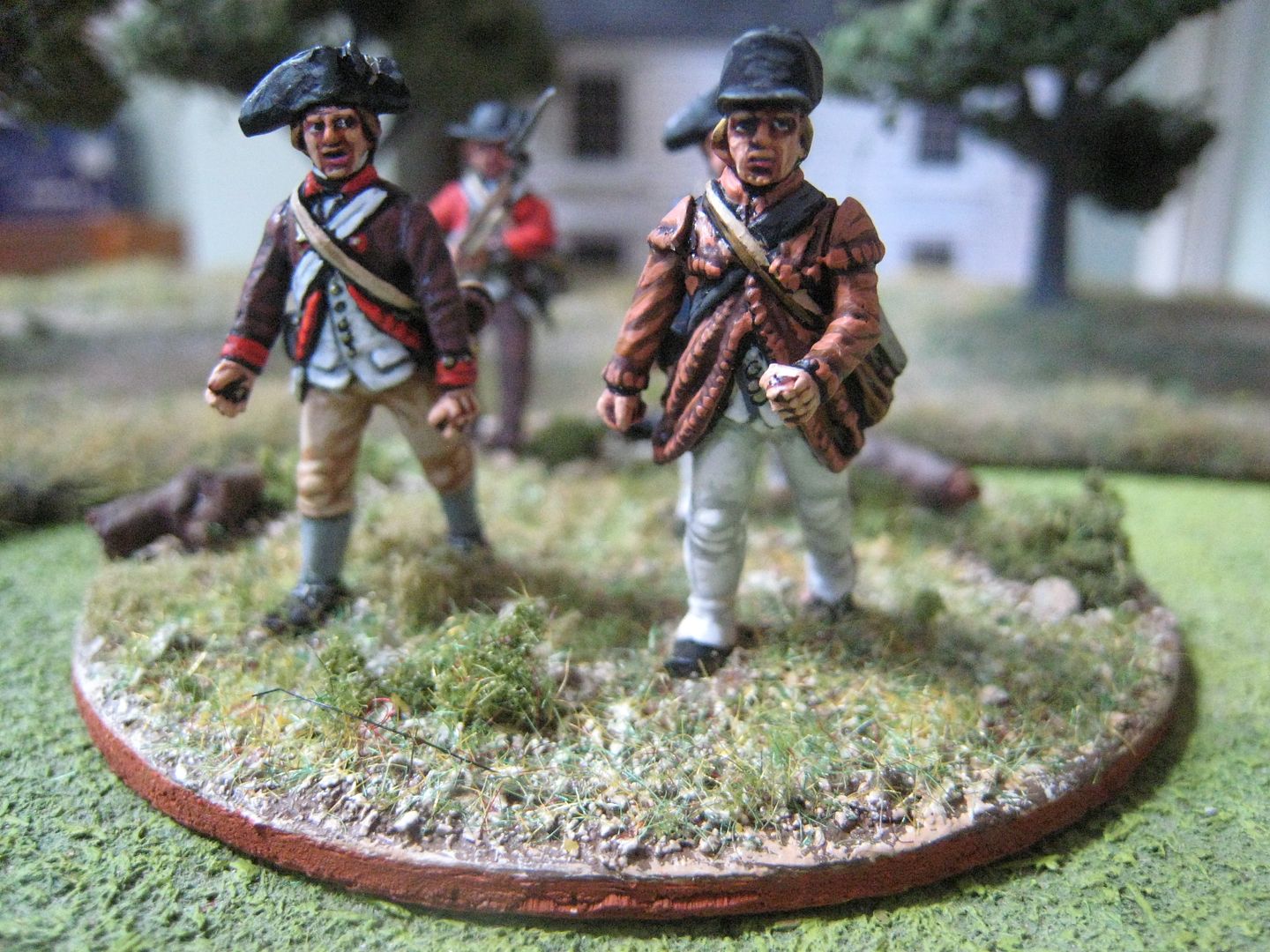
I'm afraid real life has taken over of late, so please excuse the blog silence.  This vignette consists of plastic figures from the Perry Miniatures Continental and British infantry boxes.  I remember seeing some early photos on the Perry website of figures from the Continental Infantry set before it was released which had an unarmed walking figure.  I thought then that a vignette of American prisoners would be worth doing, and here it is.  I will post some thoughts on the plastic Continental infantry box set in due course (I'm currently working on the 10th Massachusetts using these figures), so this is more in the way of a taster.  The marching American figures are possible because the Continental set has separate arms and the various options allow you to create figures that aren't carrying anything.

I wanted to create a generic scene that could be used for northern and southern battles.  The American with the blue coat has buff facings because I thought there was enough red in the vignette already.  The British soldier has been painted as being from the 5th Foot - not for any special reason, but I wanted a regiment that had a different colour in its facings to buff, blue or red, and the 5th got around a bit during the war.  I had originally intended to add some more "battlefield debris" to the scene, but after playing around a bit I decided that less is more and settled for just one loose hat.  Originally I was going to have a discarded pistol or musket lying in front of the figures, so that the American chap on the left was suggesting that they make a dash to pick it up.  But I couldn't really make that work from a compositional perspective.  Nonetheless, I'm quite pleased with the way this has turned out, although I'm not really sure how often it will appear on the table.

I have a couple of longer posts in the drafting stage, specifically two militia units and my 71st Foot firing line (this vignette is posted out of painting sequence - I only finished it this morning).  As I may have mentioned before, I intend to re-organise the existing post on the 71st  to give each battalion its own post and then a third for my new unit.  I'm hoping to do all that this week (I'm theoretically on holiday now, although I'm likely to be called into work for at least one or two days...)


Monday, 1 April 2013

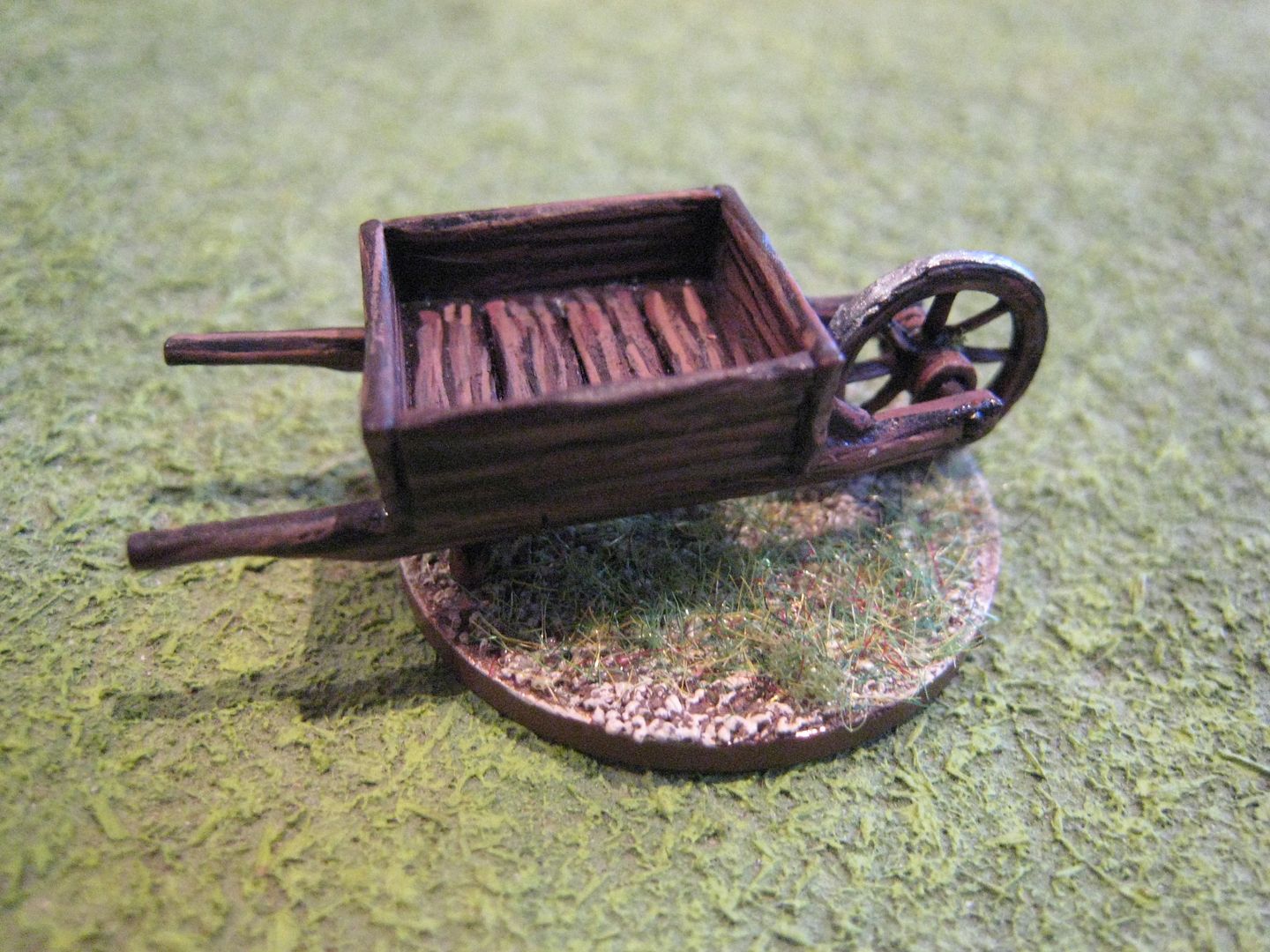
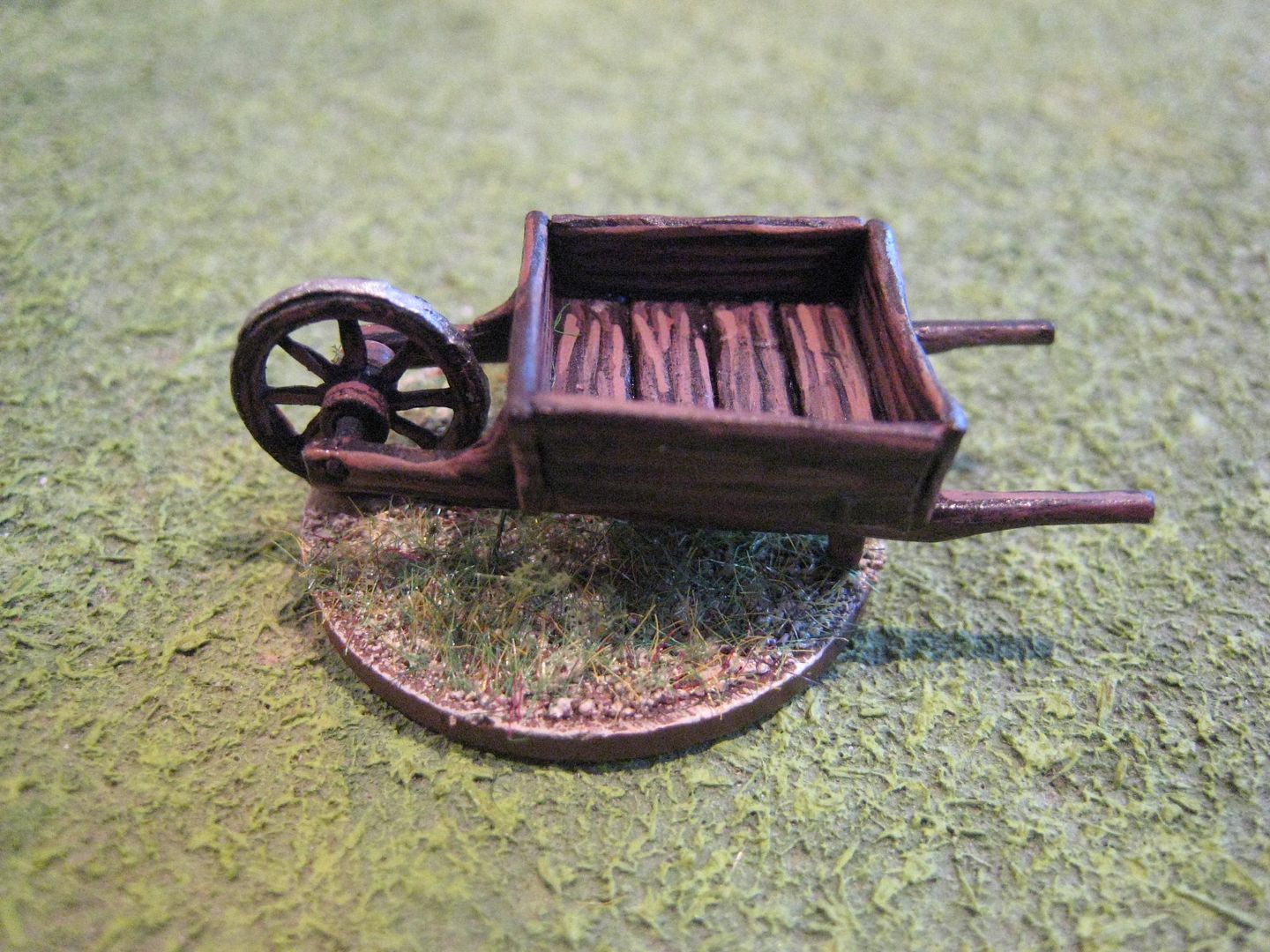
George Washington's wheelbarrow

This is something I've wanted to paint for a while.  During my trip to Boston in April 2007 the Kiwi and I visited Christ Church in Cambridge, Massachusetts.  There was a small display inside which recounted the history of the church and it stated that George Washington and his wife Martha prayed there.  The display also referred to Washington leaving his famous wheelbarrow outside the church while he prayed.  I had hoped to paint this up but couldn't find a suitable model.  However, the Westphalia Miniatures wounded Frenchman set that I bought recently came with an extra wheelbarrow.  Thinking about how to use it, I recalled Washington's wheelbarrow and so tried to find out more.

Much is written about Washington's horses, Nelson and Blueskin, but not so much about his
wheelbarrow. Washington's wheelbarrow accompanied him throughout his campaigns.  It reminded him of his Virginia plantation home and became a symbol of the independent society that he hoped his armed struggle would bring about.  He used it to transport personal items that he didn't carry on his person, such as a spare telescope, extra pistols and ammunition and fodder for his horses.  The wheelbarrow often found itself in the think of battle.  At Long Island in 1776 is was almost left behind in the American fortifications as Washington retreated across and the sergeant in charge of the wheelbarrow's safety, Ebenezer Crouch of the 2nd New York regiment, was demoted to the ranks for his negligence.  On 9 October 1781, as Washington prepared to fire the first cannon shots against the besieged British inside Yorktown, in was in his wheelbarrow that the relevant shot was brought to him.  The wheelbarrow could also turn into an impromptu soapbox.  In May 1782, Washington's army was encamped along the Hudson River and the men, bored, underfed and with pay heavily in arrears, started thinking of mutiny.  A plot developed in the 1st Connecticut regiment, whereby the men would march to the nearest arsenal, seize the cannon and then descend on the Connecticut legislature to demand their pay.  The soldier in charge of the wheelbarrow at this time was a certain Ambrose Gaylord, of the 1st Connecticut.  He tipped off Washington about his unit's intentions. Washington calmly walked to the regiment's lines, upended his wheelbarrow to create a speaking platform and gave an inspirational speech that stopped the mutiny in its tracks. 

I wanted the wheelbarrow to look like it was made from Virginian wood and also as if it had seen action.  I quickly realised I had no idea how to do either of those things, and so painted it to my standard "wood" recipe. Still, I'm glad to be able to add this old campaigner to my American forces.  I might allow it to add a +1 on morale throws when attached to an American unit.

1 wheelbarrow. Painted 1 April 2013.

Wednesday, 9 February 2011

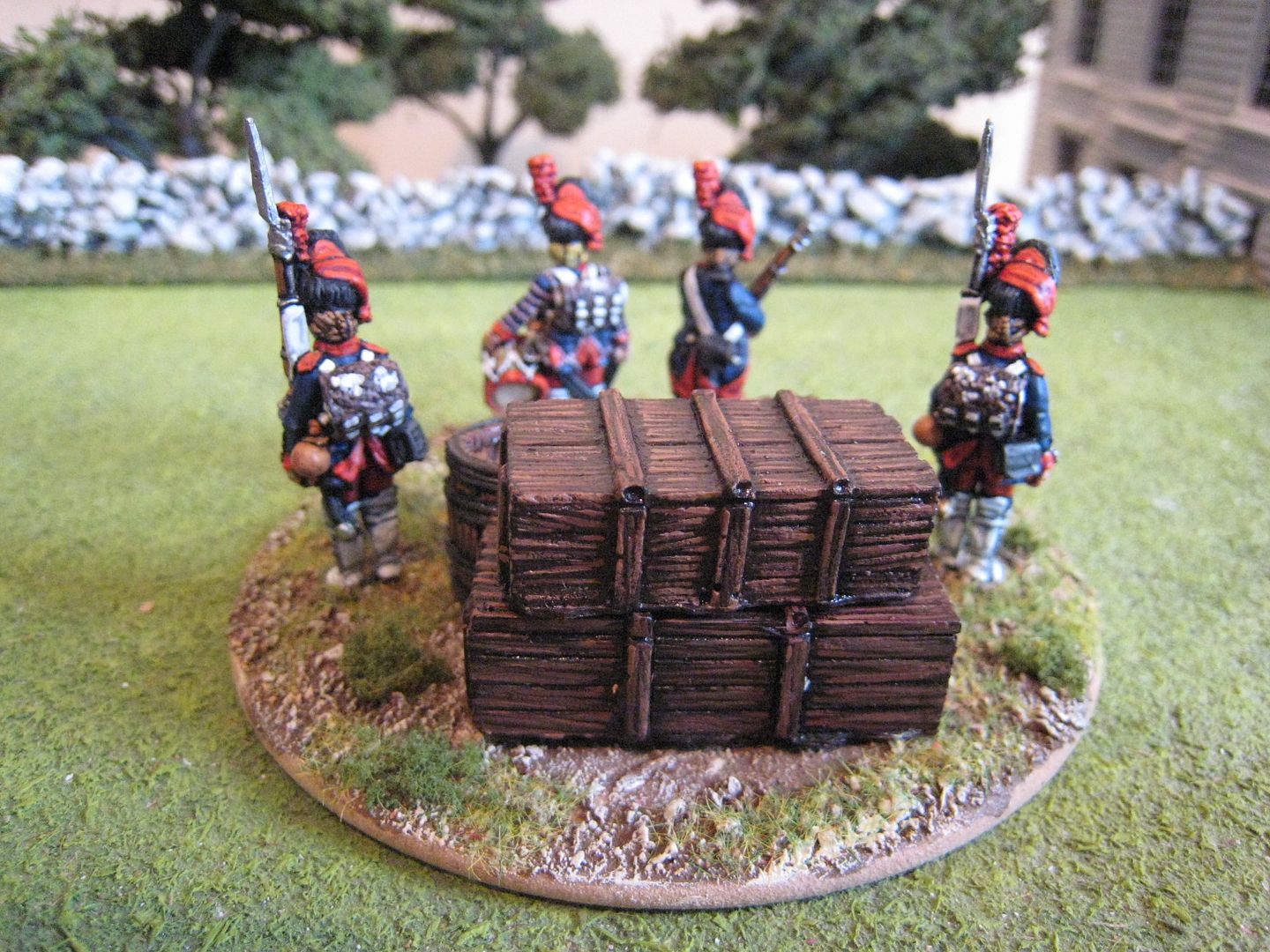
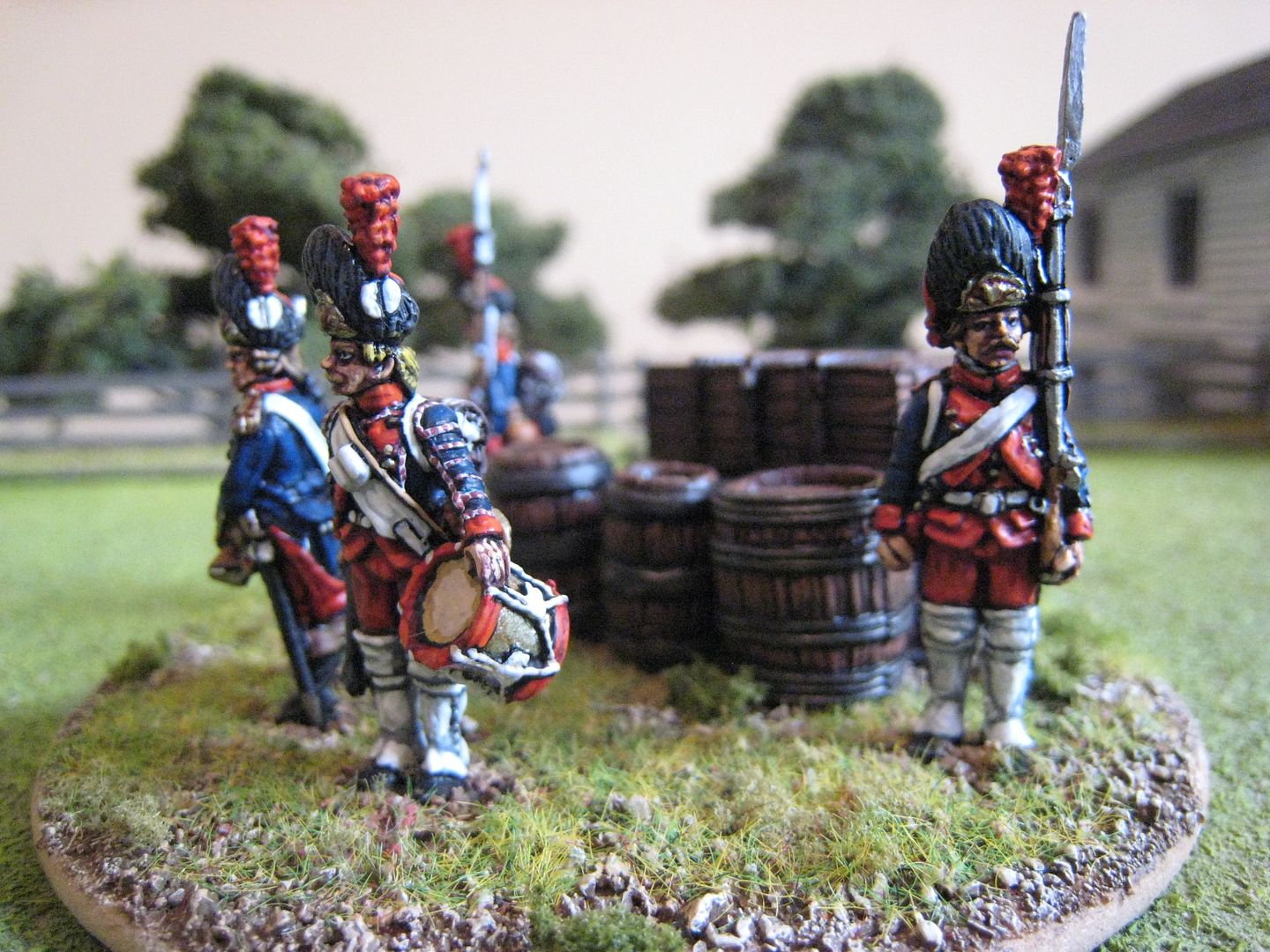
Bombardiers de la marine


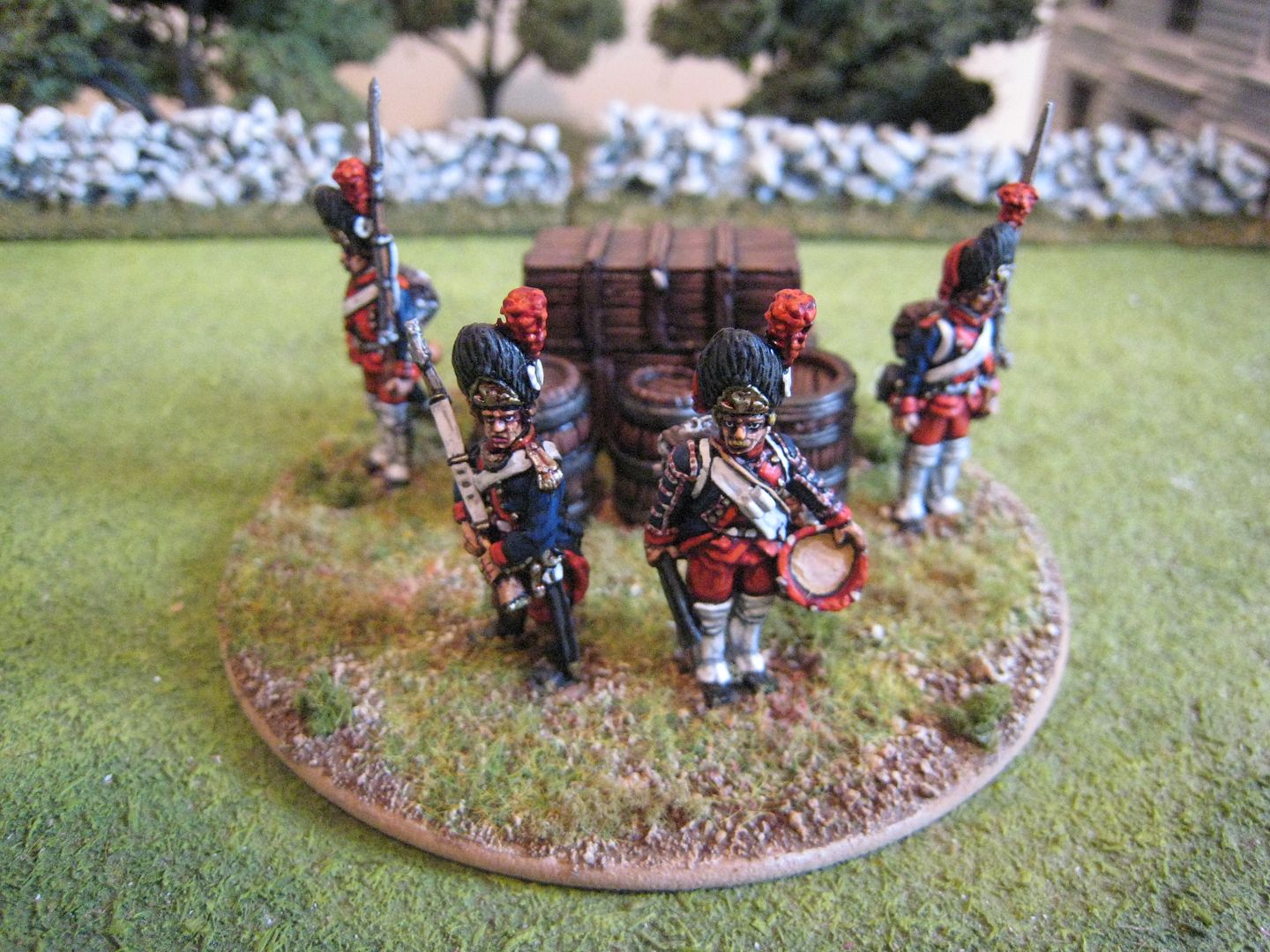
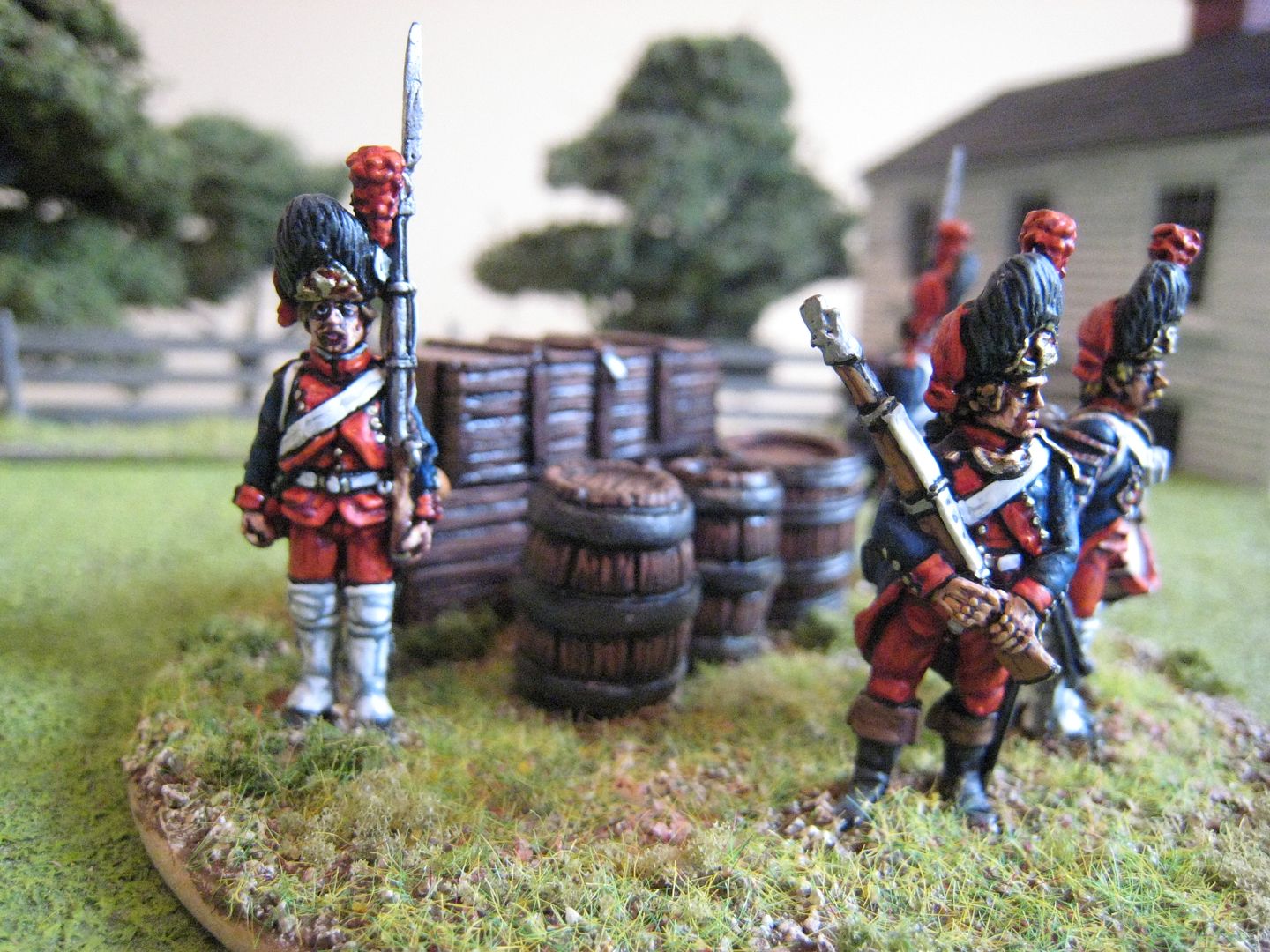
With two French infantry battalions completed it was time for a vignette! The bombardiers de la marine formed a navy unit created in the early 1680s to provide experienced sailors who could also handle the mortars in the bomb ketches that the French had developed to bombard port towns on the Barbary coast. In 1692 two companies were officially formed, situated in Brest and Toulon and comprising 50 men each. A few years later a third company was raised to be stationed in Rochefort. The three companies were part of the Artillerie de Mer and so remained under navy rather than army control, although there was a short period where the two branches of artillery were combined. In 1764 the companies were reorganised into two brigades, of around 100 men each; however the old 3 company organisation seems to have been reinstated 10 years later. I have not been able to find detailed information about the campaigns that the bombardiers participated in, but assume that they were deployed wherever the French navy operated and they certainly arrived in America at some stage.

Followers of the Perry Miniatures range may recall that the French grenadier figures that were in the first release of French troops were sculpted with bags hanging off their bearskins. Alan Perry then said that this was a mistake and he was remastering the figures so they didn't have the bags. By this time I had already bought some of these figures and decided I wouldn't send them back to be replaced if I could find a use for them. The Osprey MAA has an illustration of the bombadiers which clearly shows a bag on the bearkin. So I decided to make a small vignette of the bombadiers guarding some stores or ammunition. This was also a way of using up the 2 grenadier figures from the standing infantry command pack that also had bags on their bearskins. The only part of the uniform that I suspect may be wrong for the bombadiers is the plume on the bearskin - this isn't present in the Osprey illustration. But, frankly, who cares and I quickly decided I couldn't be bothered to carve the plumes off. Out of the possible colours I thought red would look best, and to be honest I think the red plumes give the figures a bit of a "lift" anyway. I had no sources of information for the drummer, but thought it best to keep him in the dark blue coat and add the standard drummer's lace. The blue paints used were Foundry's "Napoleonic French Blue 65" palette, with an final subtle highlight of Foundry "Deep Blue 20 C". The woodwork on the barrels was painted with a base coat of GW "Scorched Brown" given a wash of Winsor & Newton dark brown ink, then highlights of Foundry "Spearshaft 13 A and B".

The crates and barrels are from Warlord, save for the larger barrel which is Renedra. The Renedra barrel looks ok now it's painted, but I found the two plastic halves didn't fit together properly. The Warlord crates are resin - you get a variety of sizes in the pack. Only one of the crates seems to have anything resembling a lock (the silver bit on the topmost crate), although I suppose that may just be a bit of surplus resin. The round base is a drinks coaster that I bought with Peter Haldezos in Wellington! I have 4 of the standing grenadiers left over - if anyone can think of another use for them then please let me know, otherwise I'll just paint them up as more bombardiers!

4 figures. Painted January 2011.


Sunday, 18 April 2010

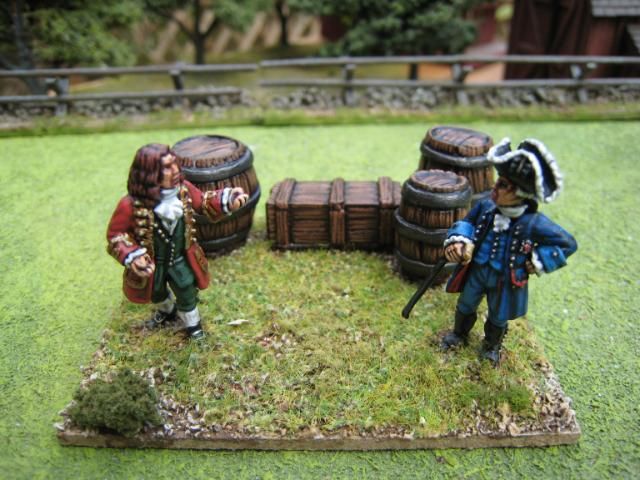
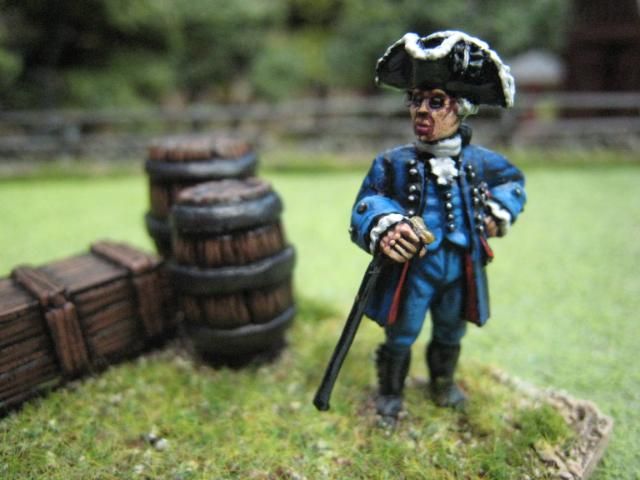
Hessian Commissary


You can imagine the scene...

Commissary von Dumkopf: "Zis is very disappointing. You said you could supply ze Burgunder wine from Baden-Baden and now you say zis is not possible and I must do with some French rubbish instead?"

Mr Berry, purveyor of fine wines to the nobility and gentry: "Come on guv, don't you know there's a war on? You're lucky I managed to get anything past the Frenchies on blockade. Now my good friend Mr Gallo has managed to find me some excellent pinot noir from the south of France, the spiritual home of your Burgunder I believe. This is top notch stuff and as a gesture of goodwill I'll throw in a case of Louisiana Claret for no extra charge. Frankly, I'm robbing meself."

Von Dumkopf: "Vell, I suppose it will have to do. I am in need of supplies for winter and, to be honest, Colonel Rall will drink anything. I am sure he will enjoy Herr Gallo's wines at the Trenton garrison's Christmas Eve dinner."

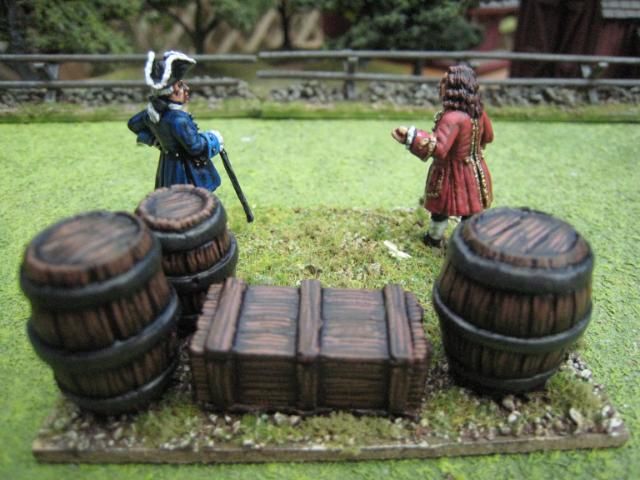
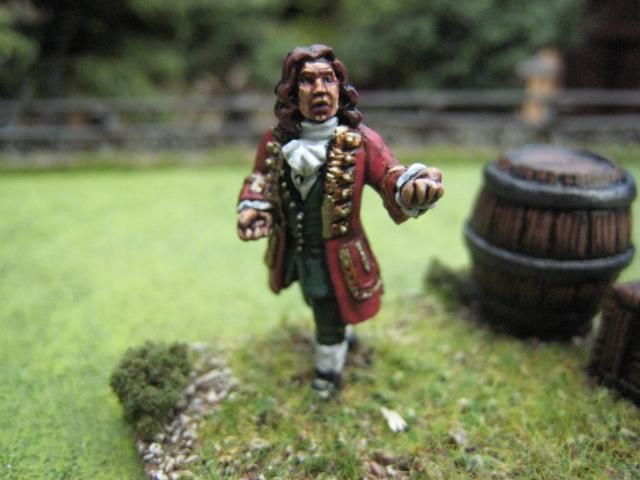
These are the Voltaire and Frederick the Great figures from Eureka's latest 18th century civilians release. The story, linked above, of how US giant E&J Gallo had been duped into selling cheap French merlot as pinot noir provided the inspiration as to how to incorporate these figures into my AWI collection. The Frederick figure is painted as a commissary from the Hesse-Cassel corps. I could not find any information on the uniform of Hessian commissaries, so followed the Prussian uniform in the SYW, on the basis that the Hessians often followed Prussian practices and styles - it seemed a decent default option. A certain amount of artistic licence was necessary on the Frederick figure - this is clearly a very senior commissary. "Mr Berry" is named after the well-known and long-established wine merchants Berry Bros.& Rudd of St James Street, London.  The company that became Berry Bros. was started in 1698.  At the time of the AWI it was owned and managed by William Pickering and John Clarke, and by 1810 the business was in the hands of Mr Clarke's grandson, George Berry.  It has remained family owned ever since.  The company has a long history of supplying wine to the British Royal Family, starting with its first consignment to George III in 1760.  So it's not inconceivable that a representative of company might have been selling wines to the Crown armies' quartermasters during the AWI.  When the Kiwi and I got engaged, we agreed to place our Wedding Gift List with Berries and spent a happy afternoon choosing all manner of vinous goodies.  Unfortunately, unknown to me, the Kiwi then decided to set up a rival list at the department store John Lewis and told all her friends and family to buy from that one.  But the generosity of my family and friends resulted in some lovely wedding presents from Berries, which will keep going for another decade or so.  The barrels and crates are resin items from Warlord Games.

2 figures. Painted March 2010.

Wednesday, 5 March 2008

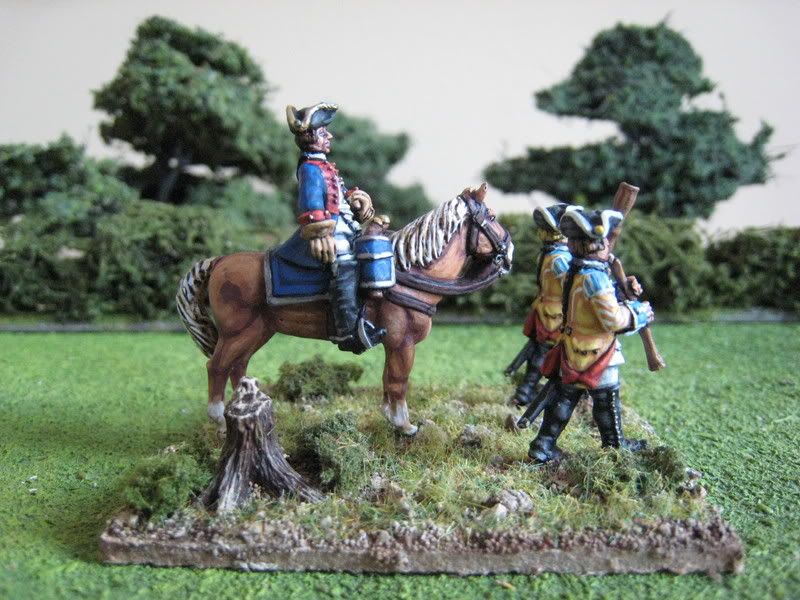
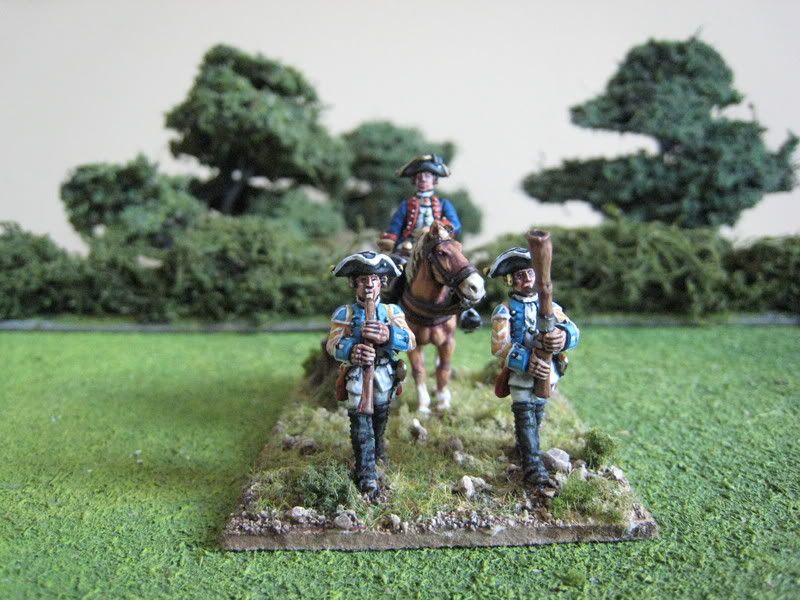
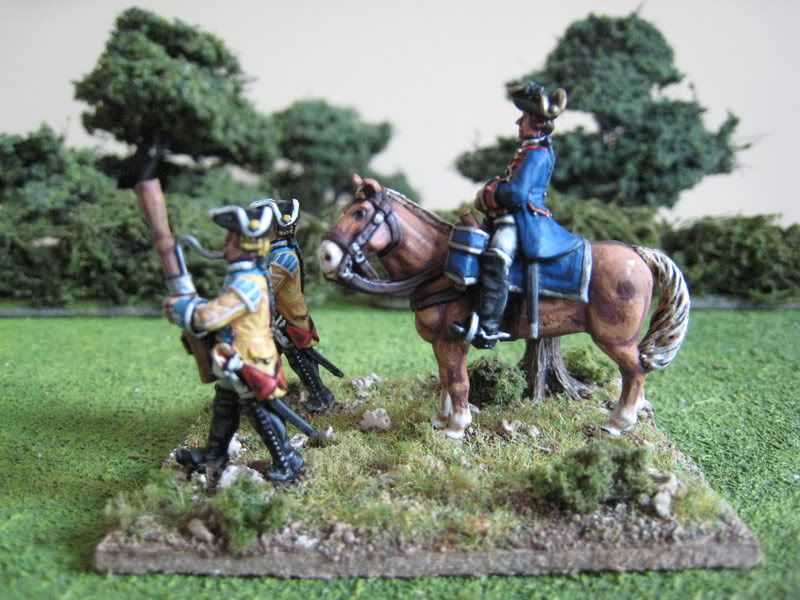
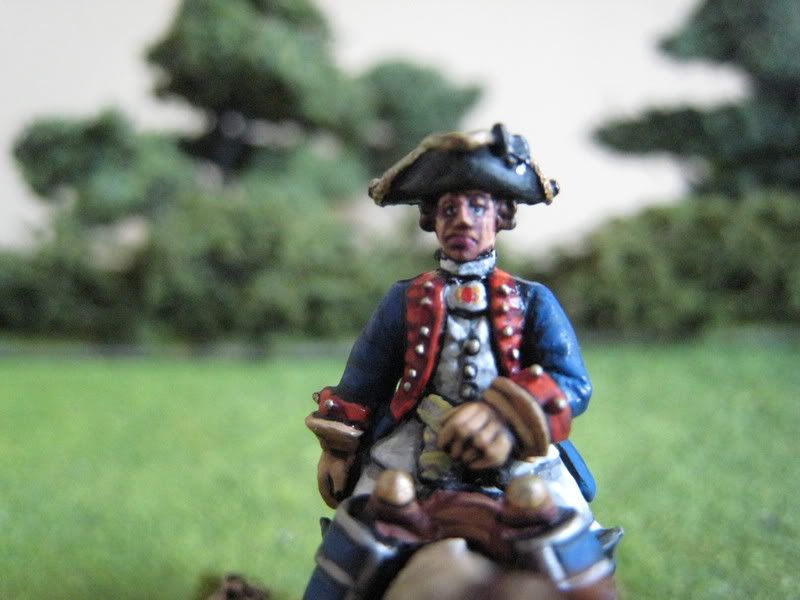
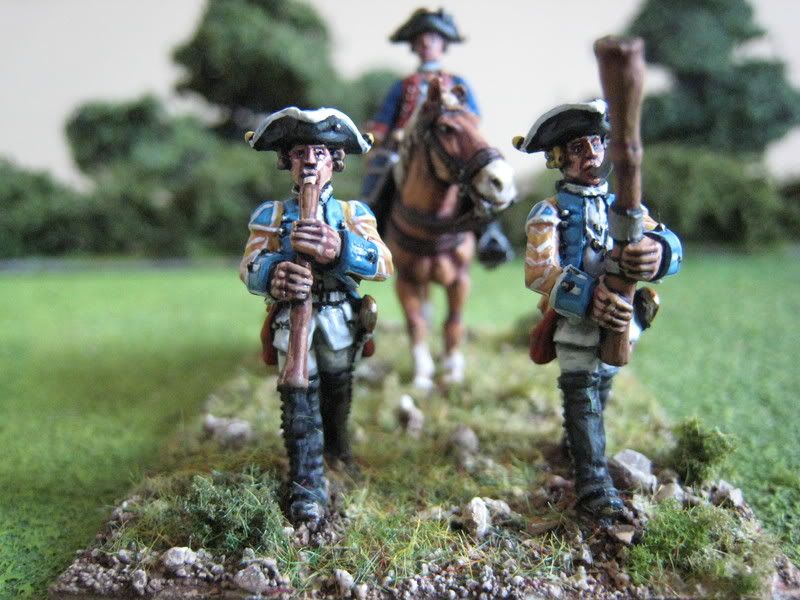
Lieutenant Colonel Heinrich von Breymann


Von Breymann was one of the Brunswick officers who was employed in Burgoyne's Saratoga campaign. He was the colonel of a Brunswicker combined grenadier battalion and commanded the Advance Corps, which consisted of a detachment of Hesse-Hanau artillery, Barner's light battalion, a company of jaegers and Breymann's own grenadiers. Brunswick was in fact the first German state to sign a treaty with Britain for the supply of troops (4,300 men in total). Breymann didn't fare well in the campaign. He was wounded at Bennington, where in command of the relief force Breymann failed to arrive in time to save a foraging expedition (and was criticised by Burgoyne for contributing to that disaster by marching too slowly). Breymann was then killed at Bemis Heights in the redoubt that was named after him, possibly shot by "friendly fire".


These figures are from Eureka's Seven Years War Saxons range. This range is more suitable as Brunswickers than Perry Hessian figures (for example) because of the larger cuffs and the arrangement of the buttons on those cuffs. Mollo also has the Brunswick toops in black gaiters, which most Perry figures do not wear. These Eureka sculpts are a bit smaller than Perry/Foundry figures but not excessively so; grouped together they look fine. Although I have no doubt that in real life Burgoyne's army would not have ferried bassoons and oboes around the Hudson Valley, I reckoned that a colonel who had been criticised for taking his time on the march would be the kind of person who would enjoy having his own band. We know next to nothing about Breymann and this vignette probably does him a great disservice, but it looks neat and these Eureka musicians are really quite diverting sculpts. The yellow and sky-blue uniforms were particular to Brunswick musicians and deserve plenty of tabletop exposure. Modern oboes and bassoons come in all kinds of shades of brown and black, but I painted these in standard natural wood on the basis that this is probably authentic for the late 18th century.


Painted February 2008. Tree stump from Front Rank.