Wednesday, 14 September 2011

10th "1st Silesian" Infantry Regiment (1)


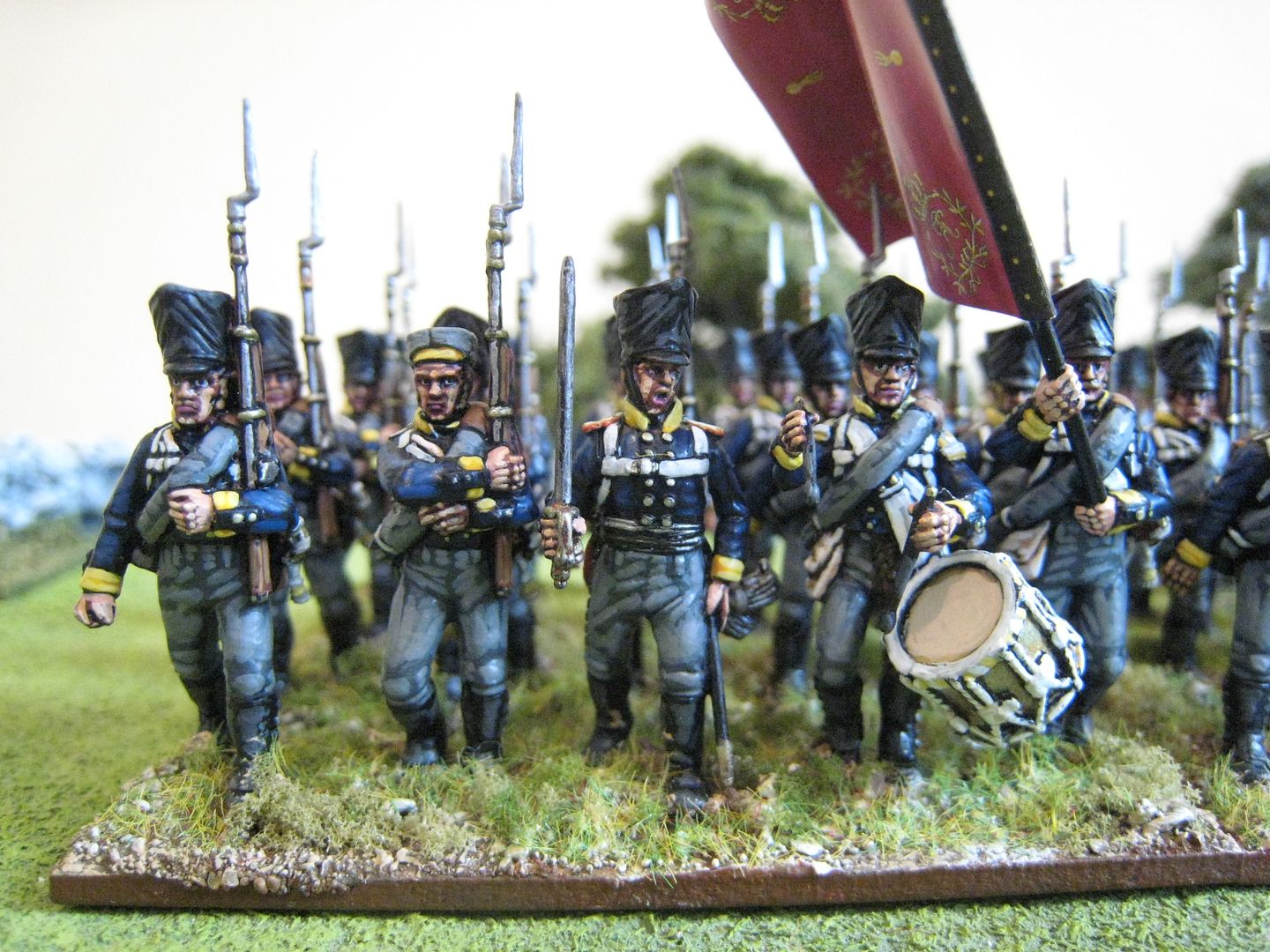
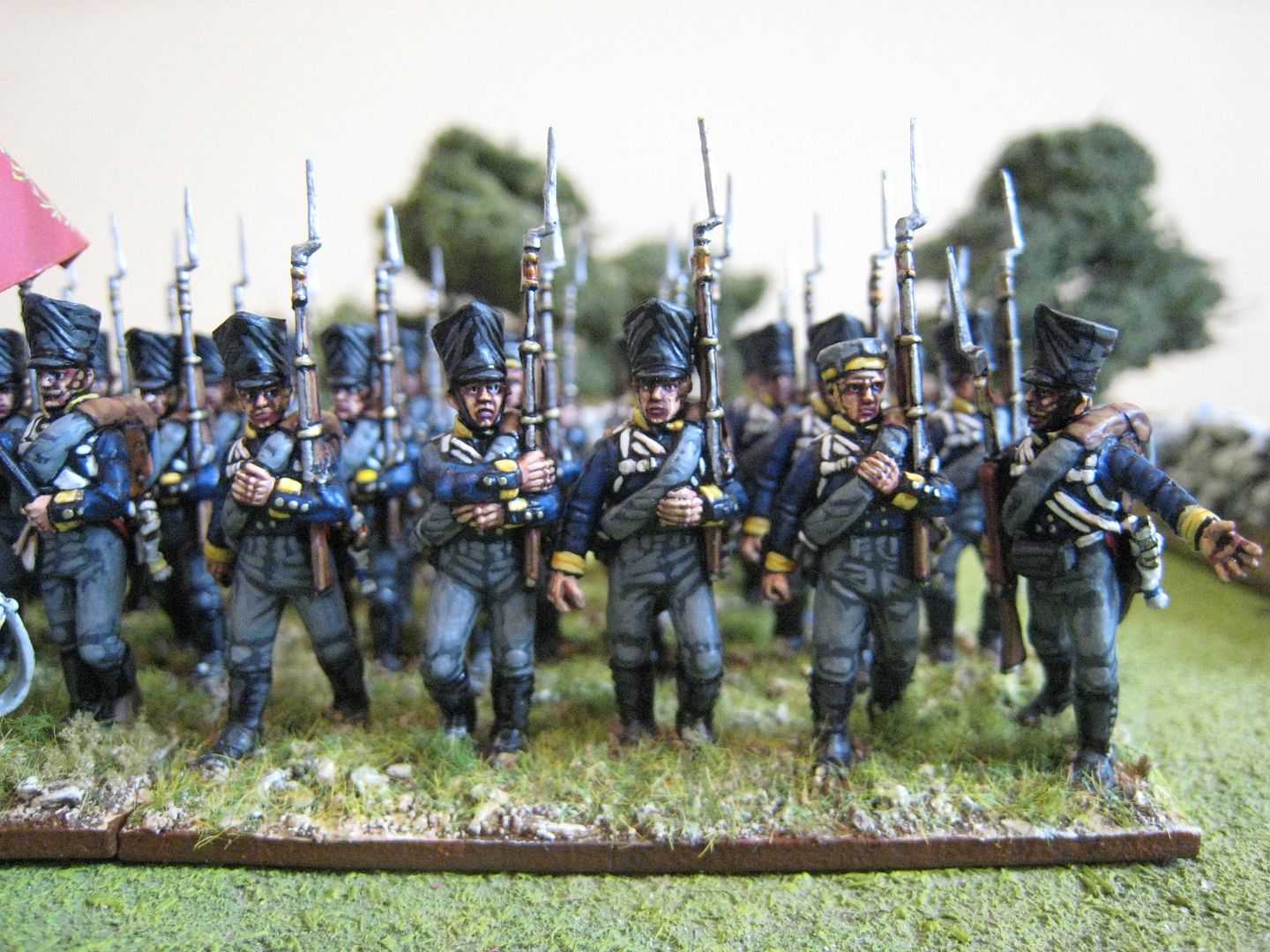
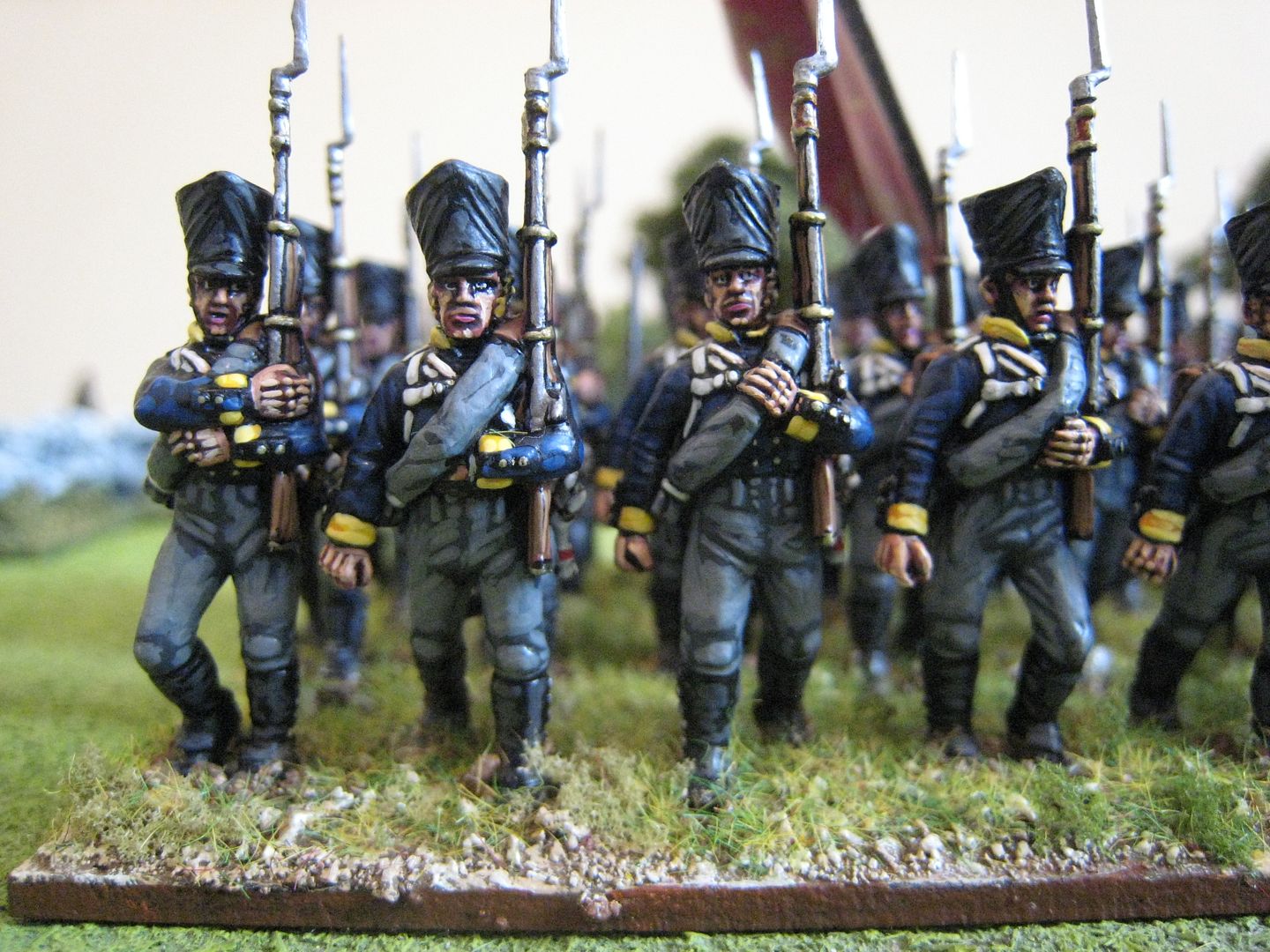
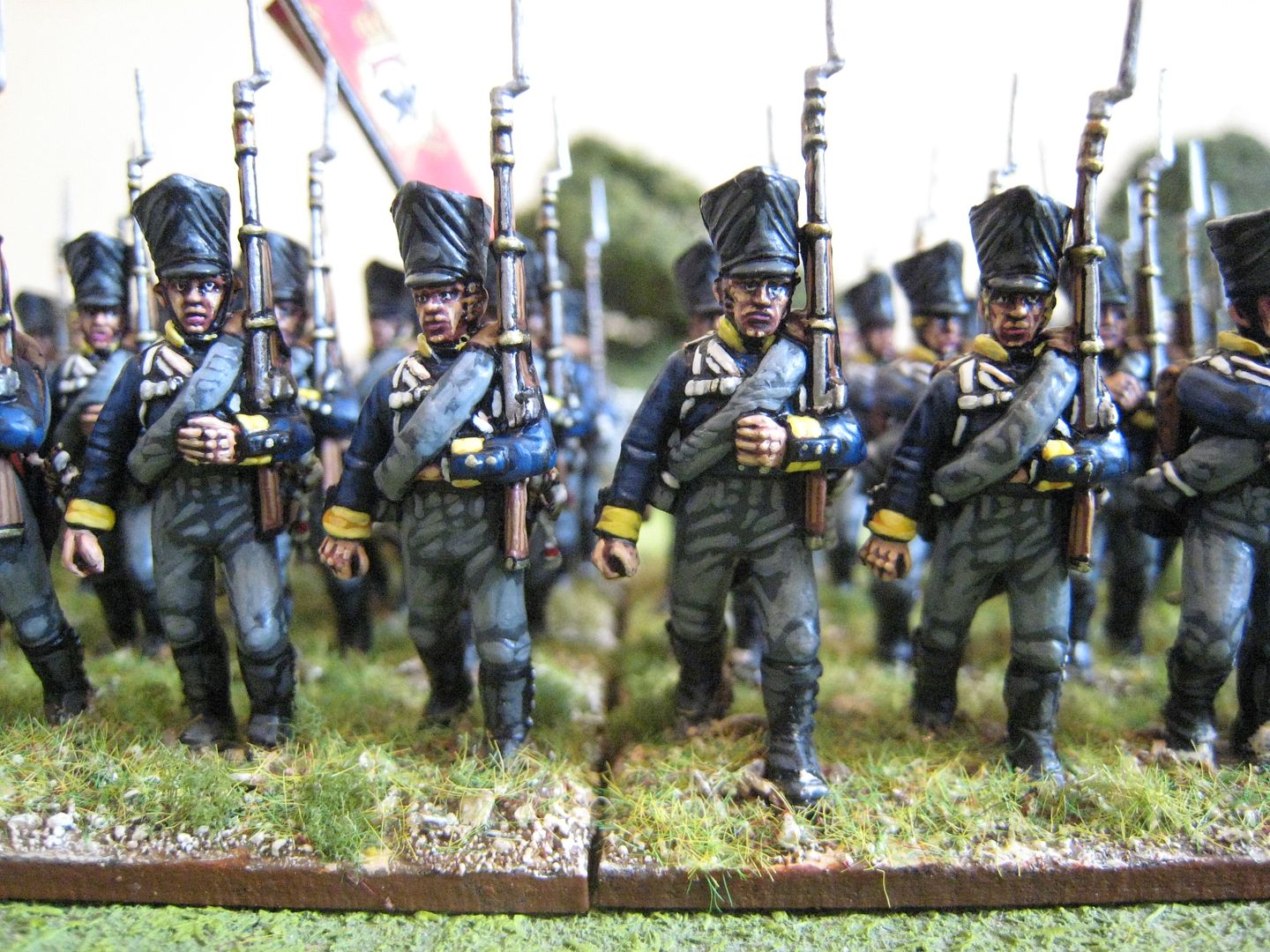
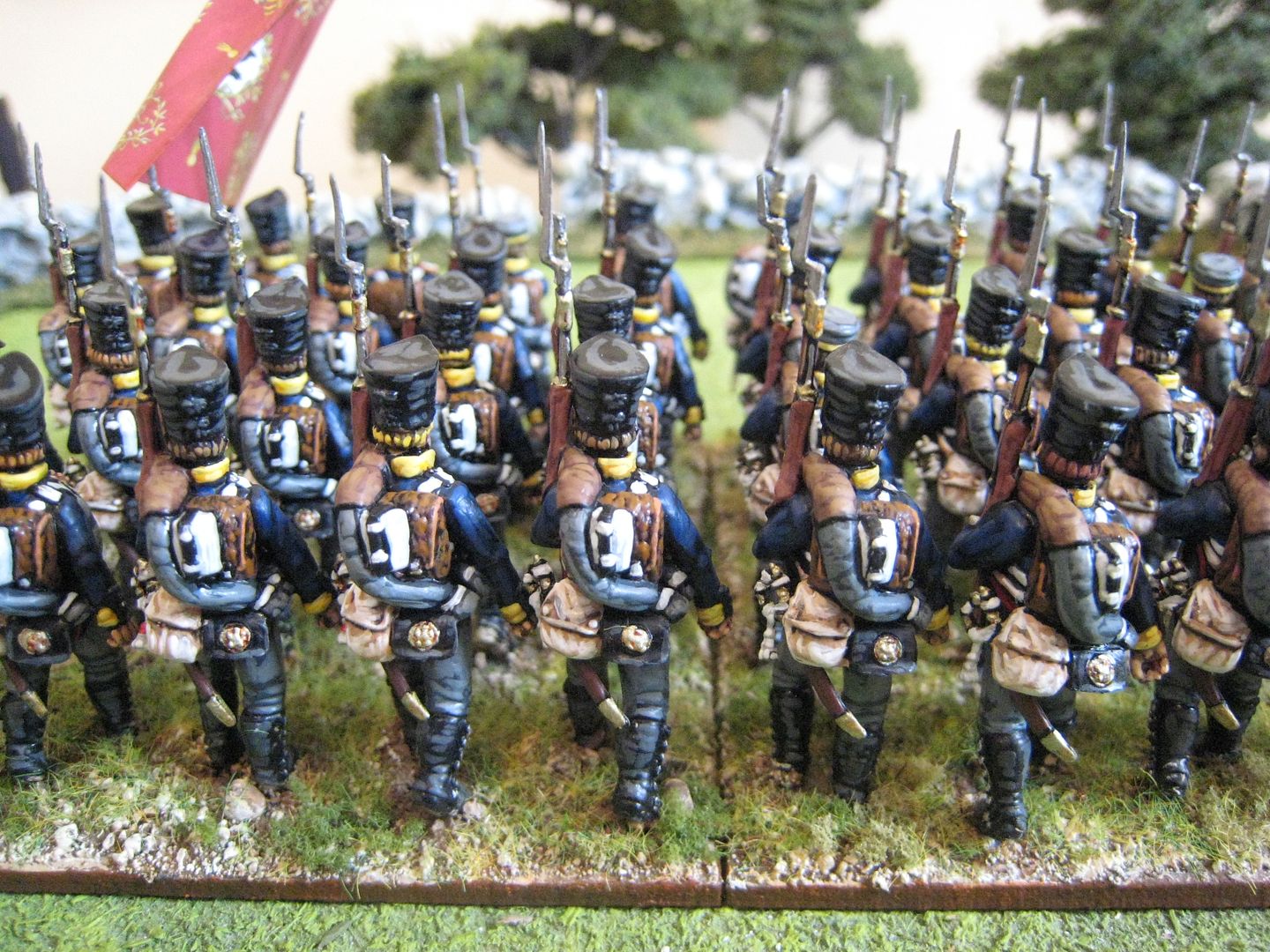
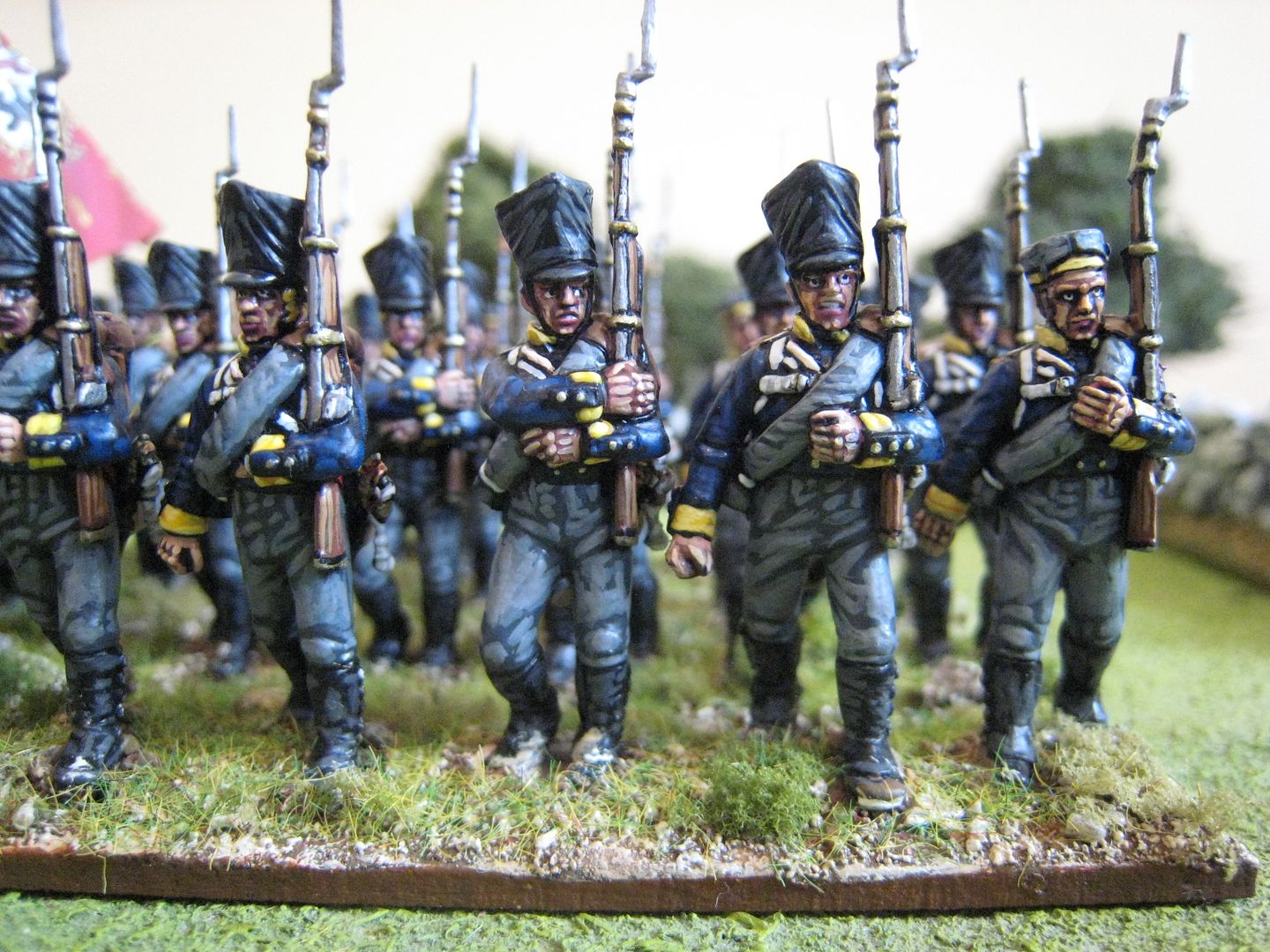
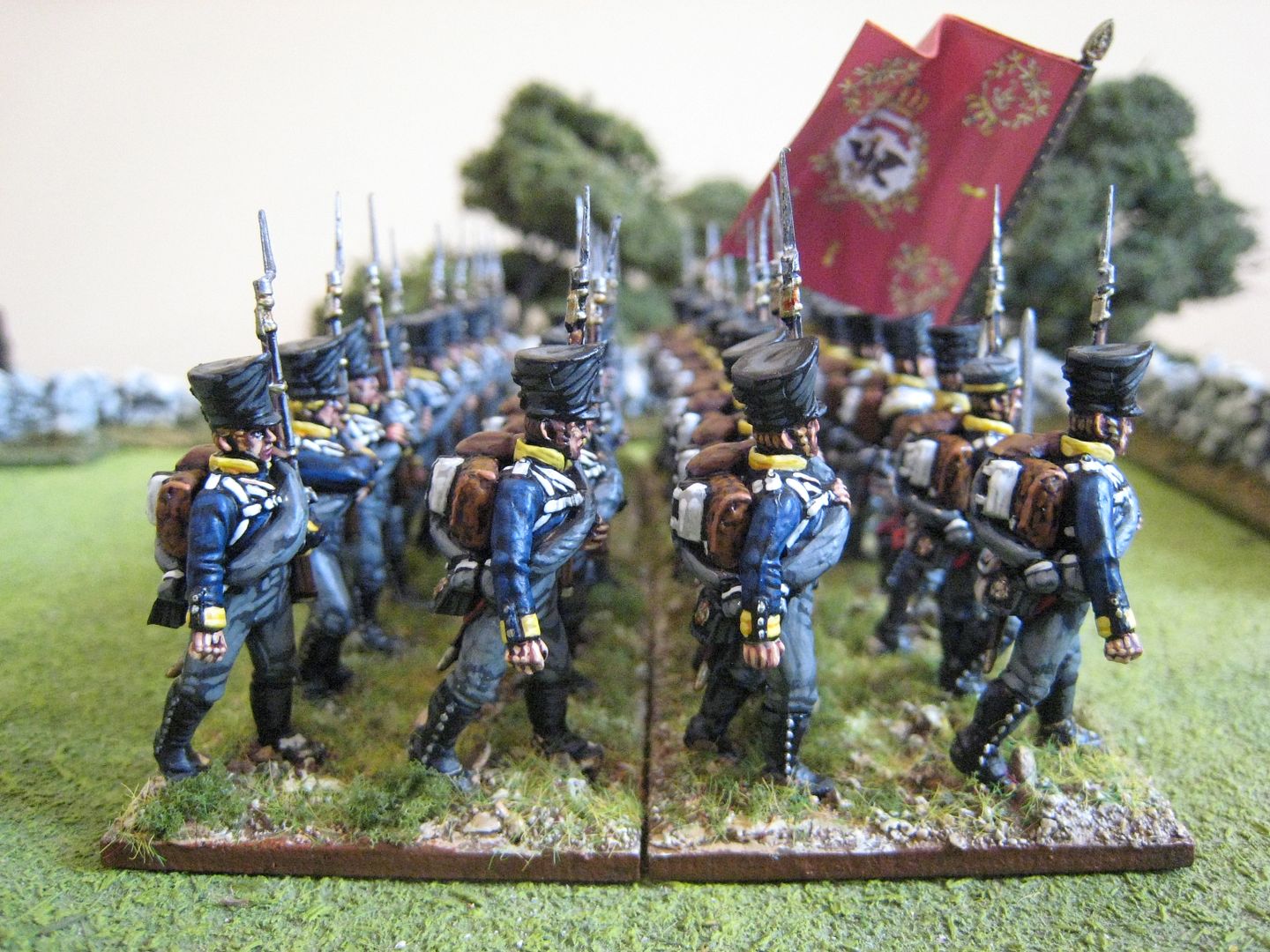
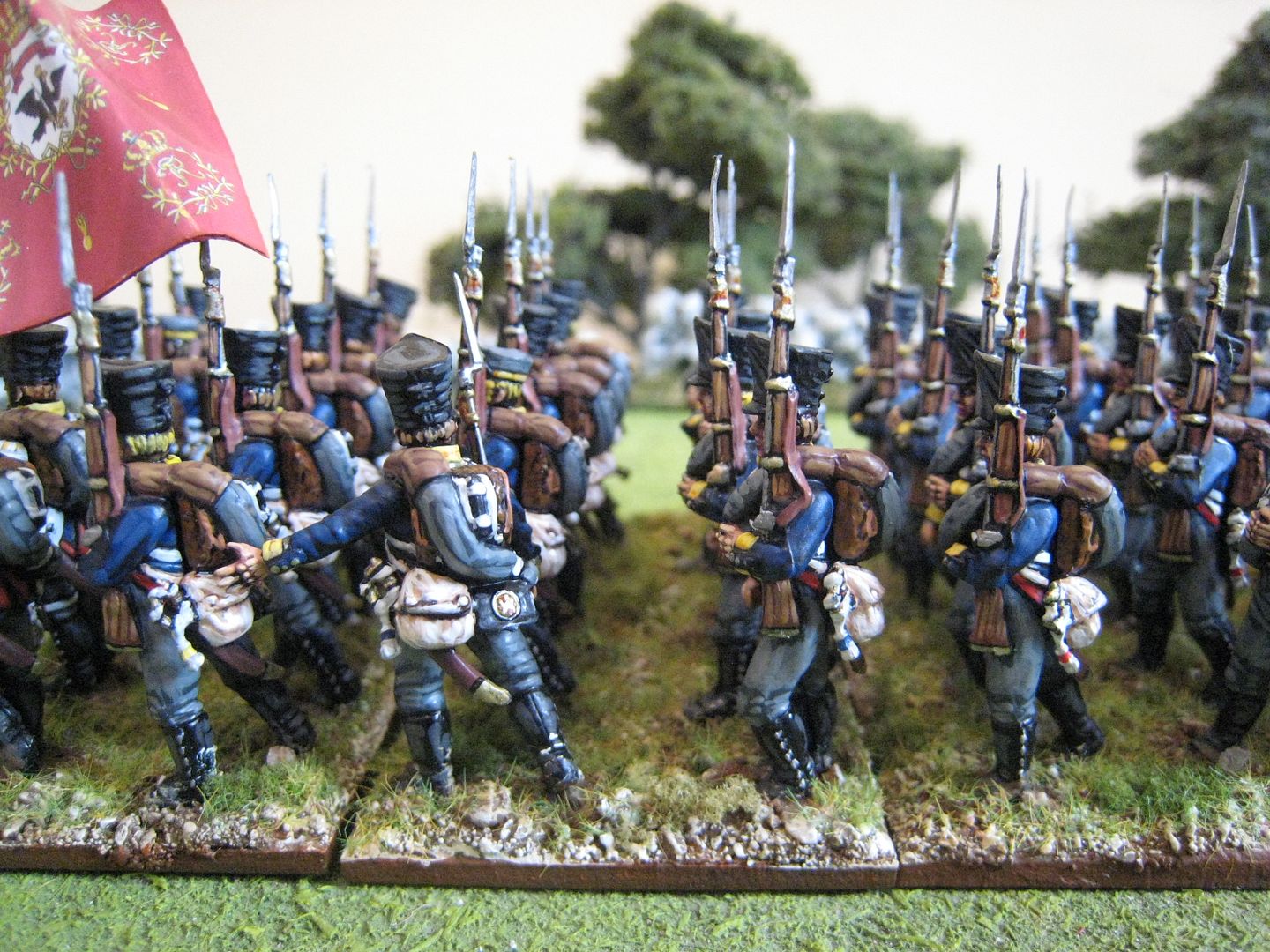
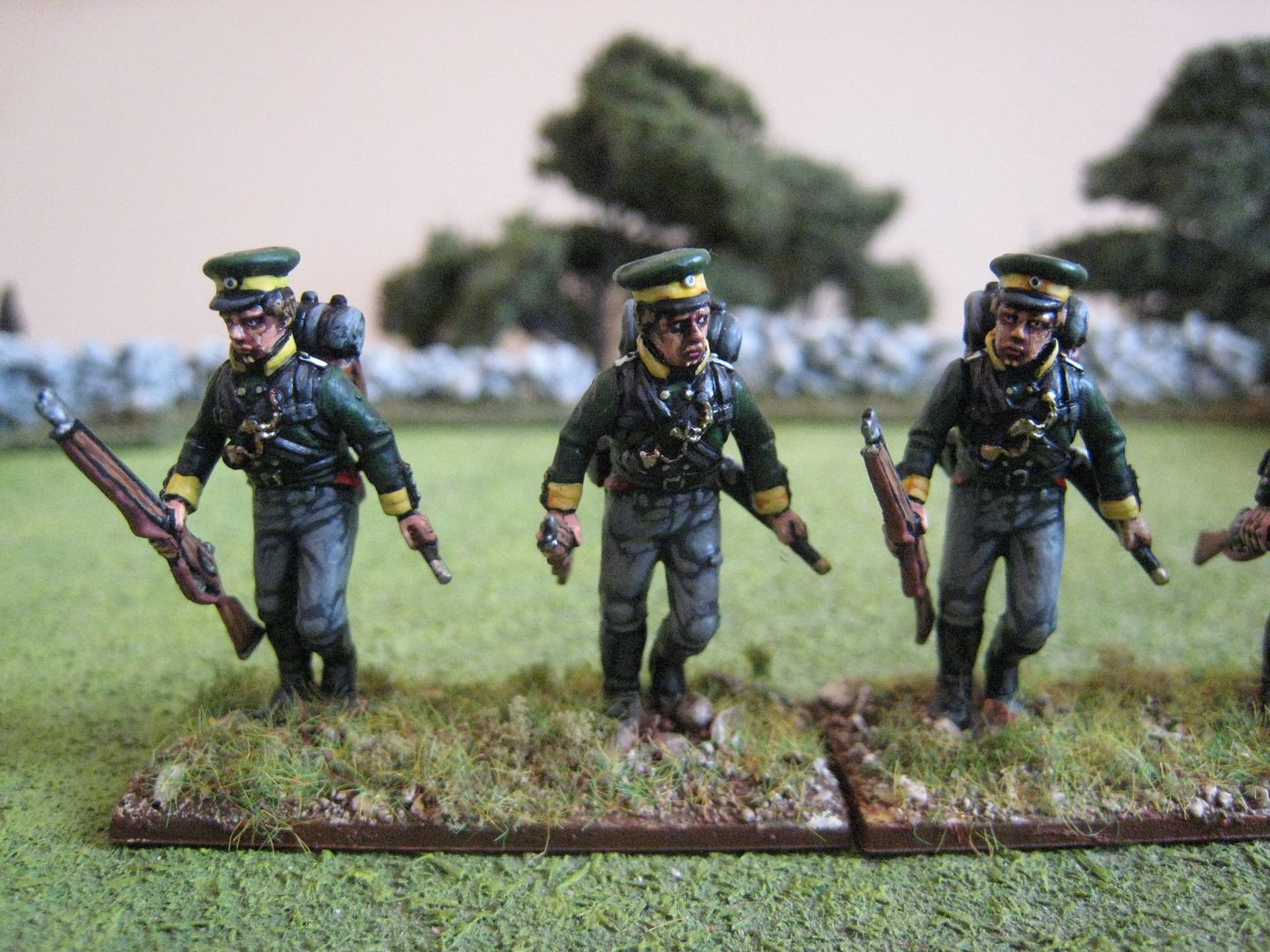
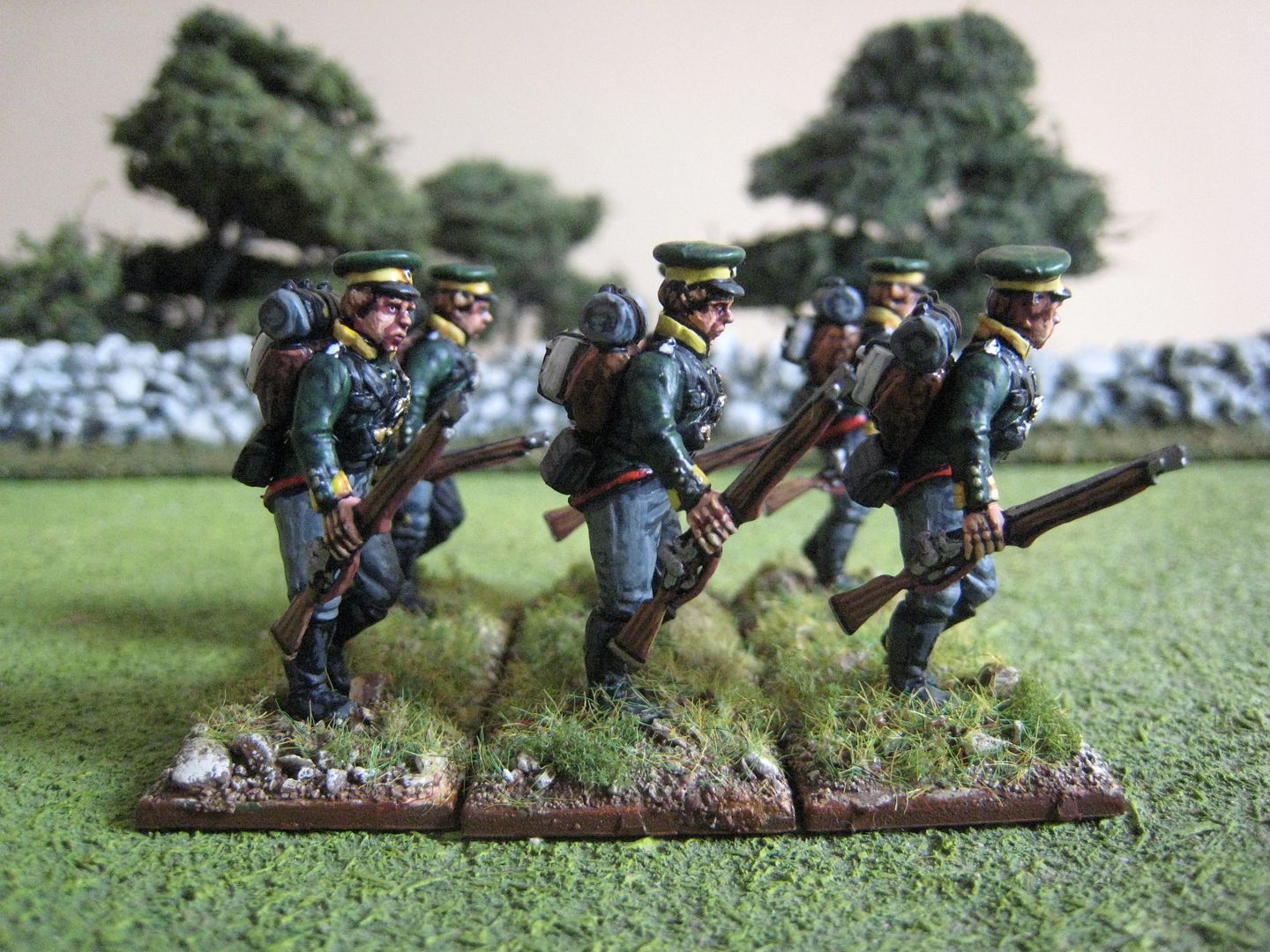
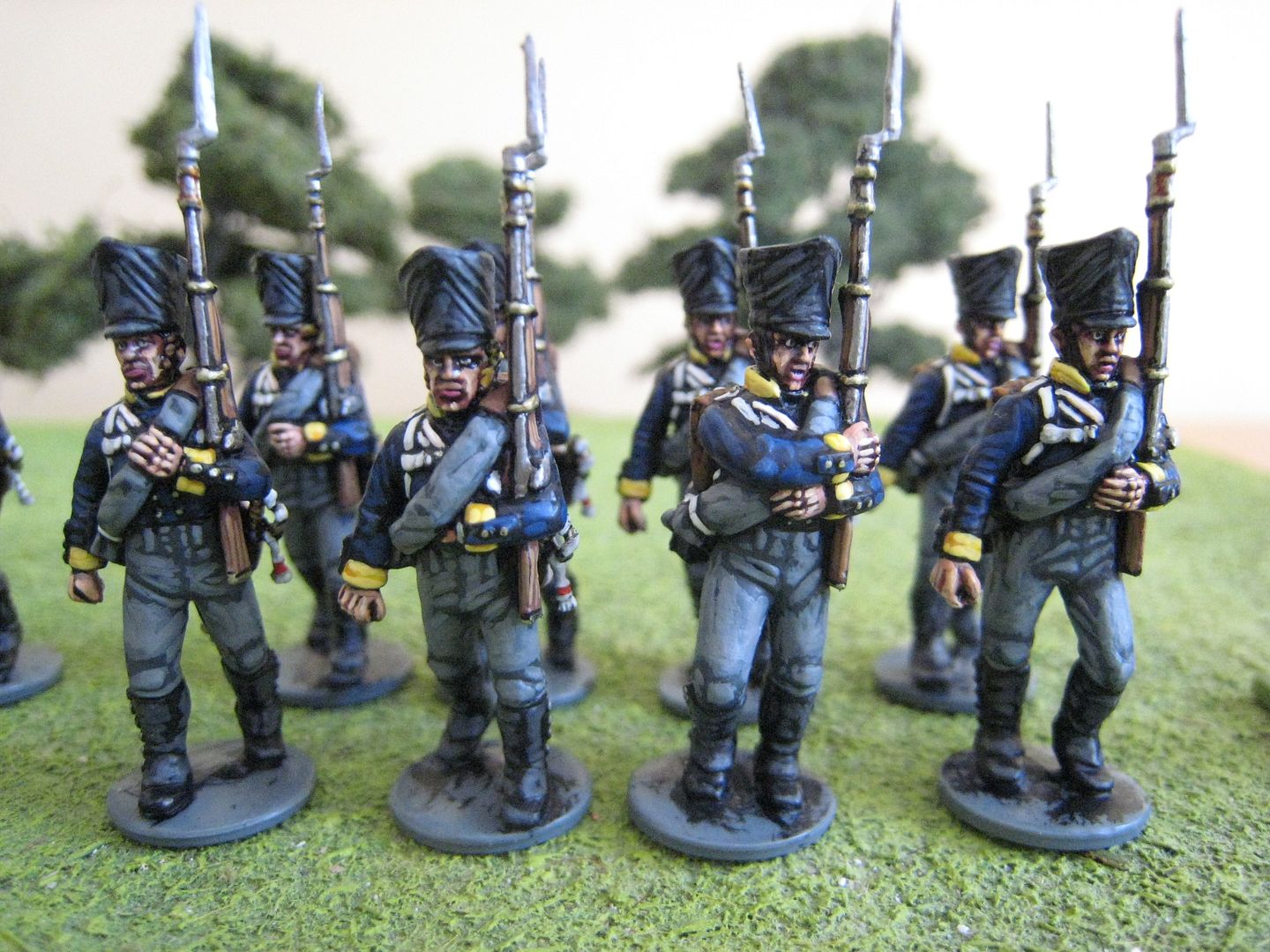
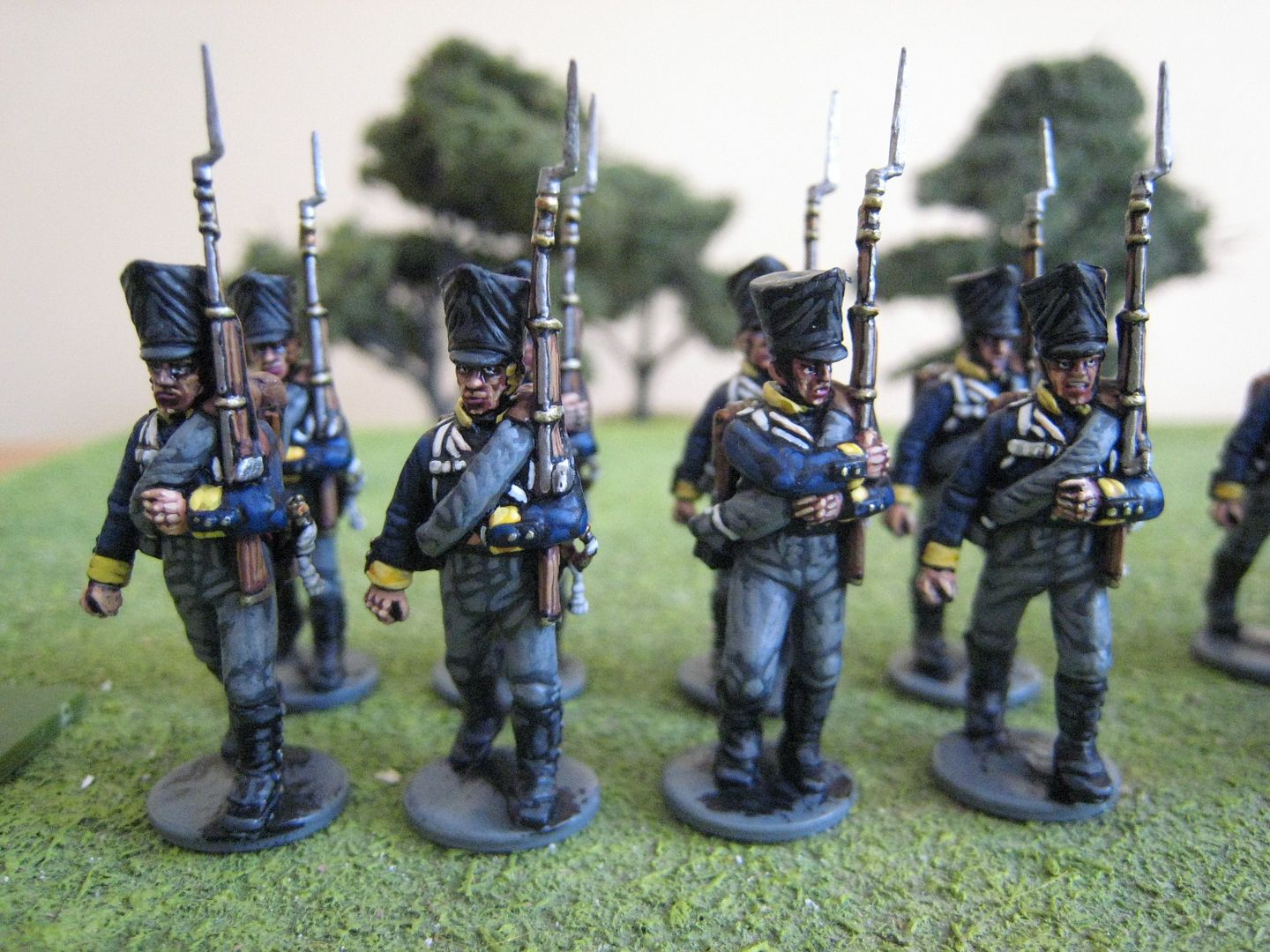
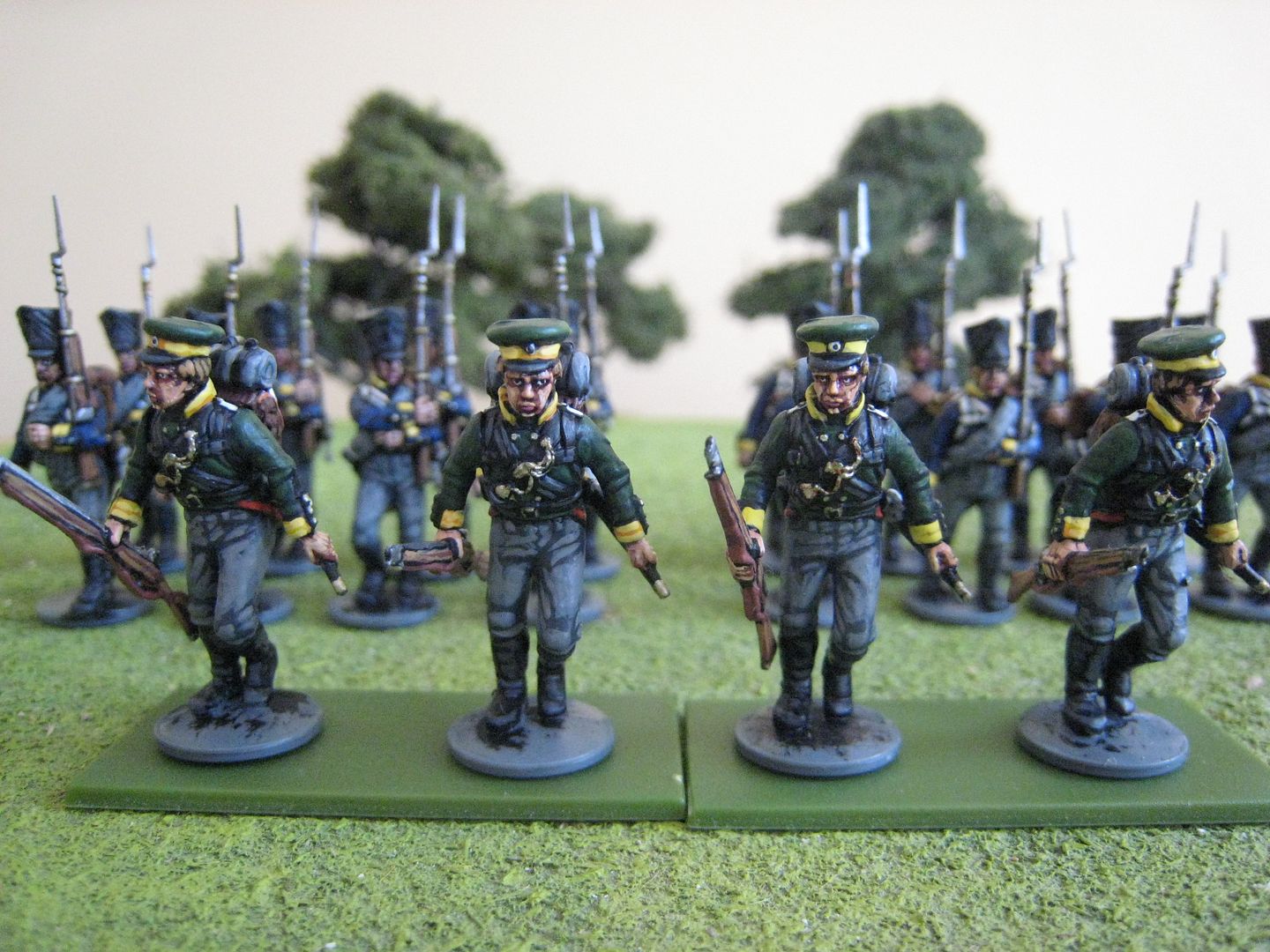
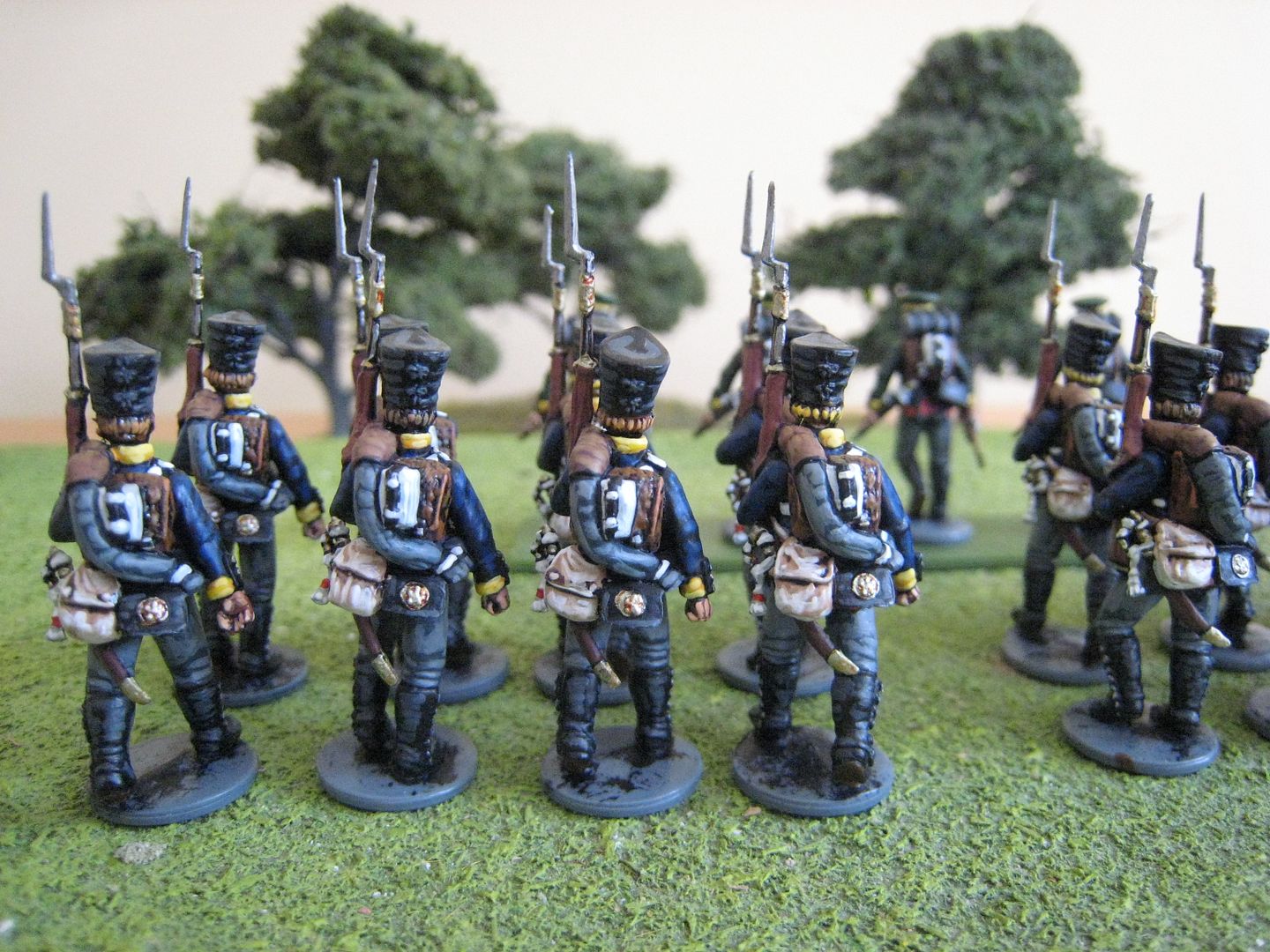
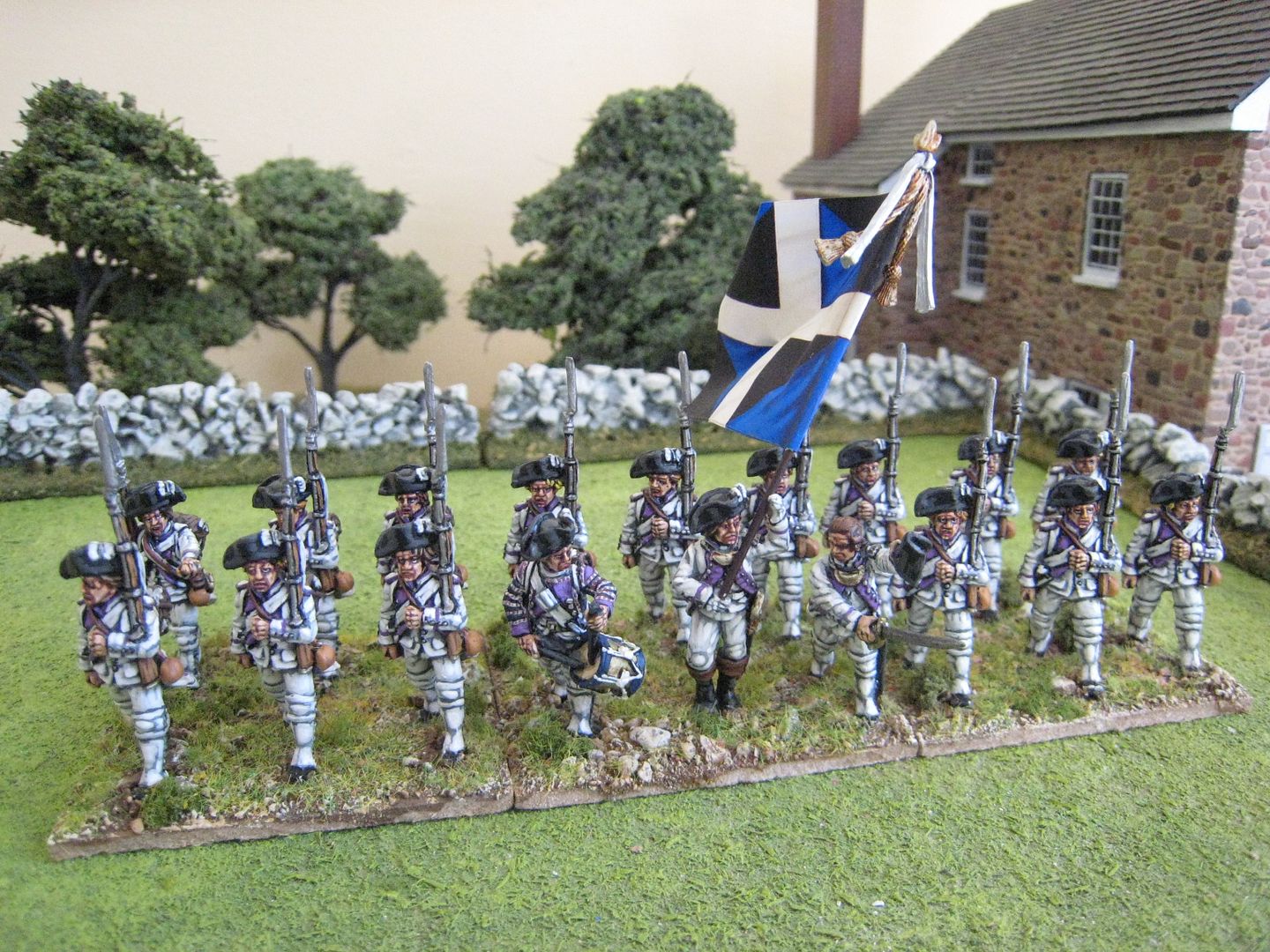
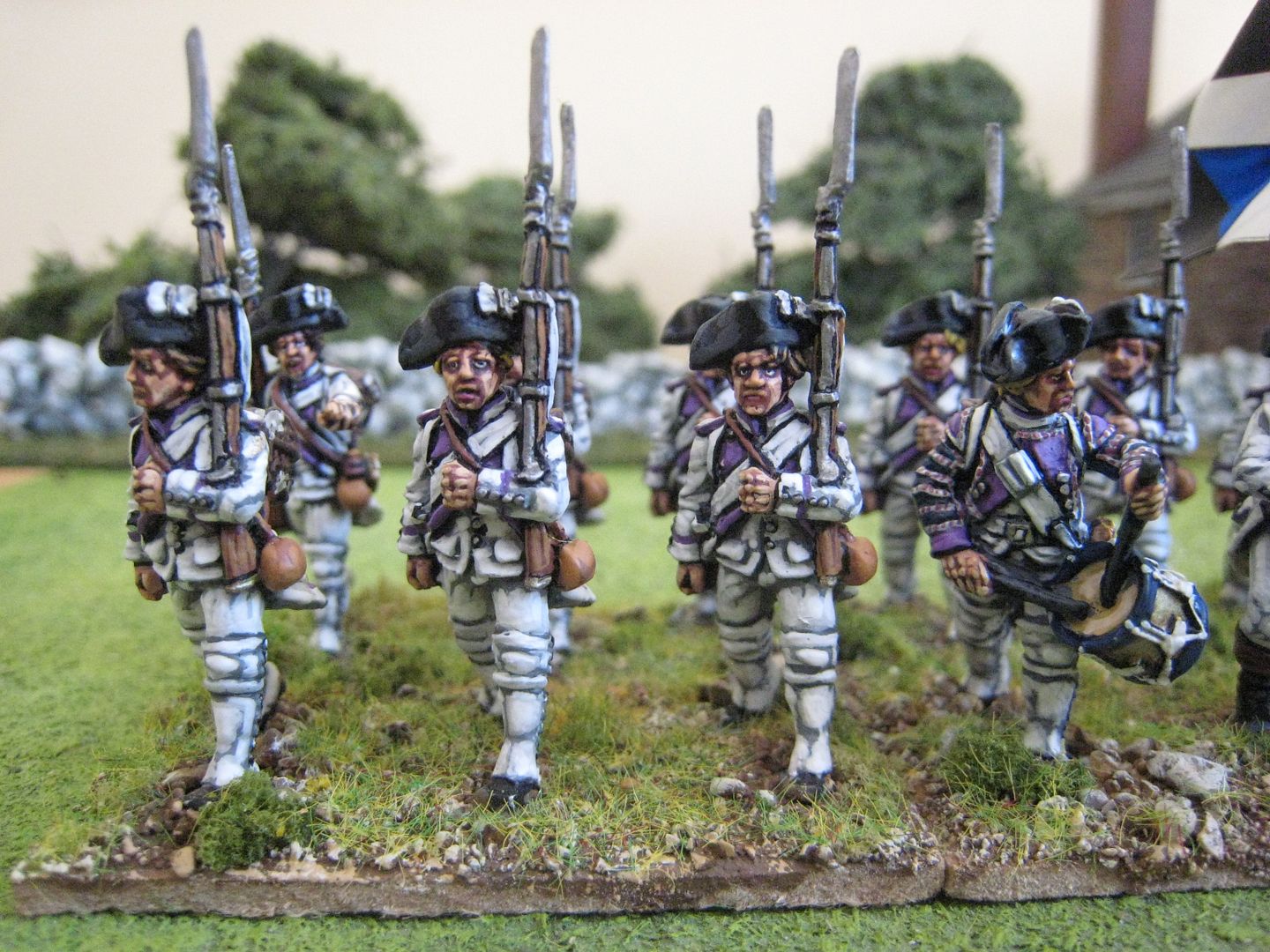
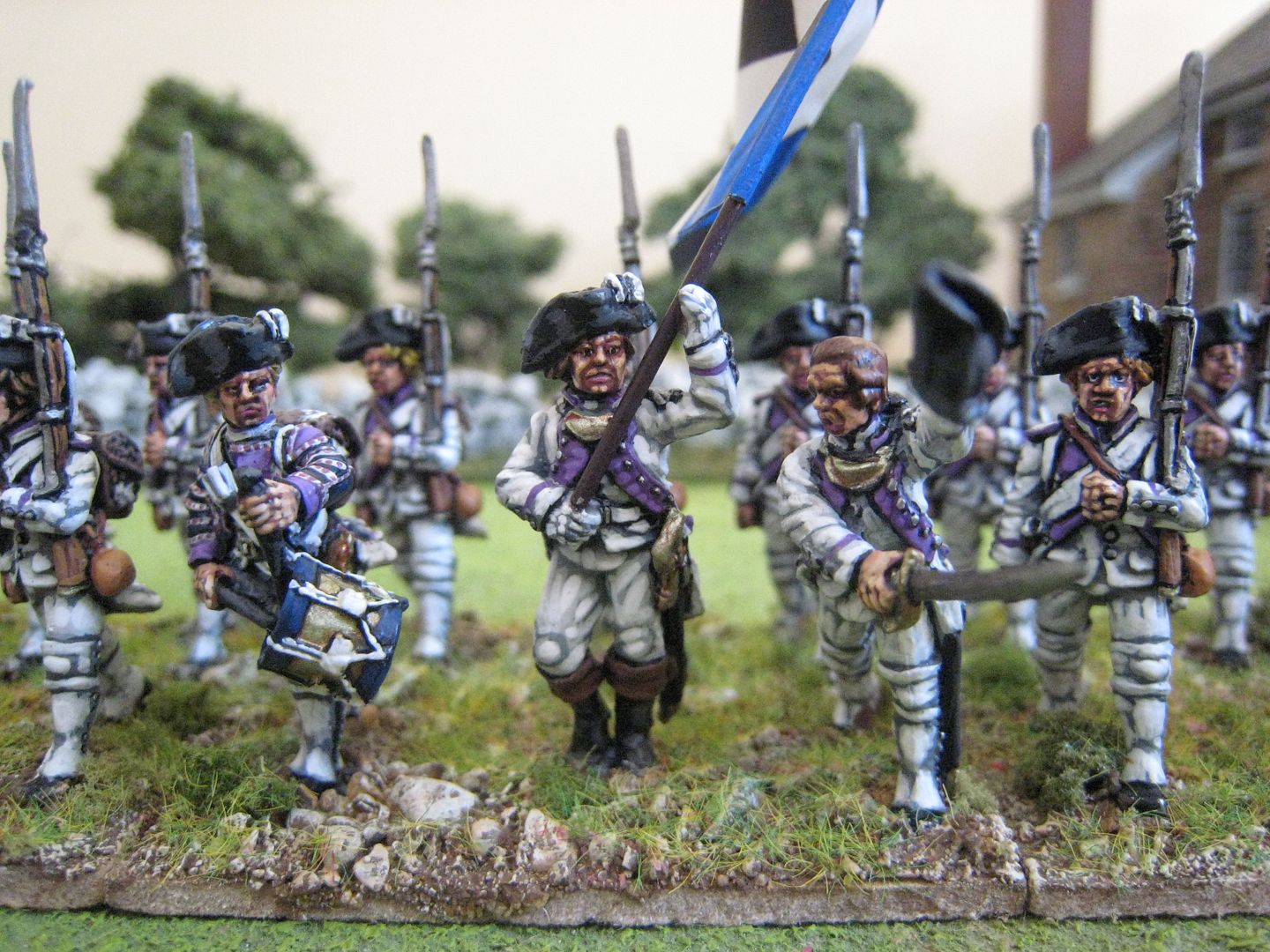
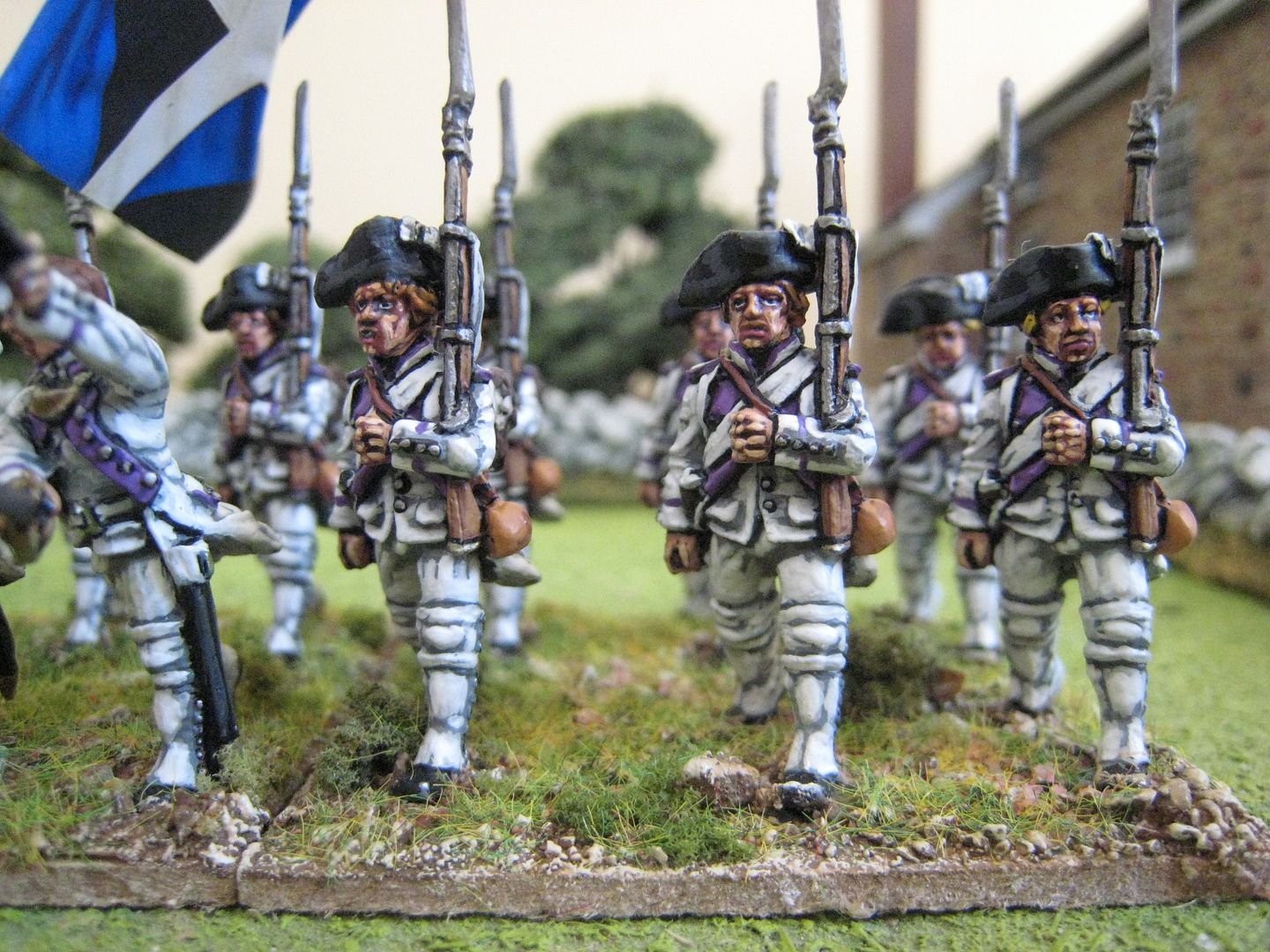
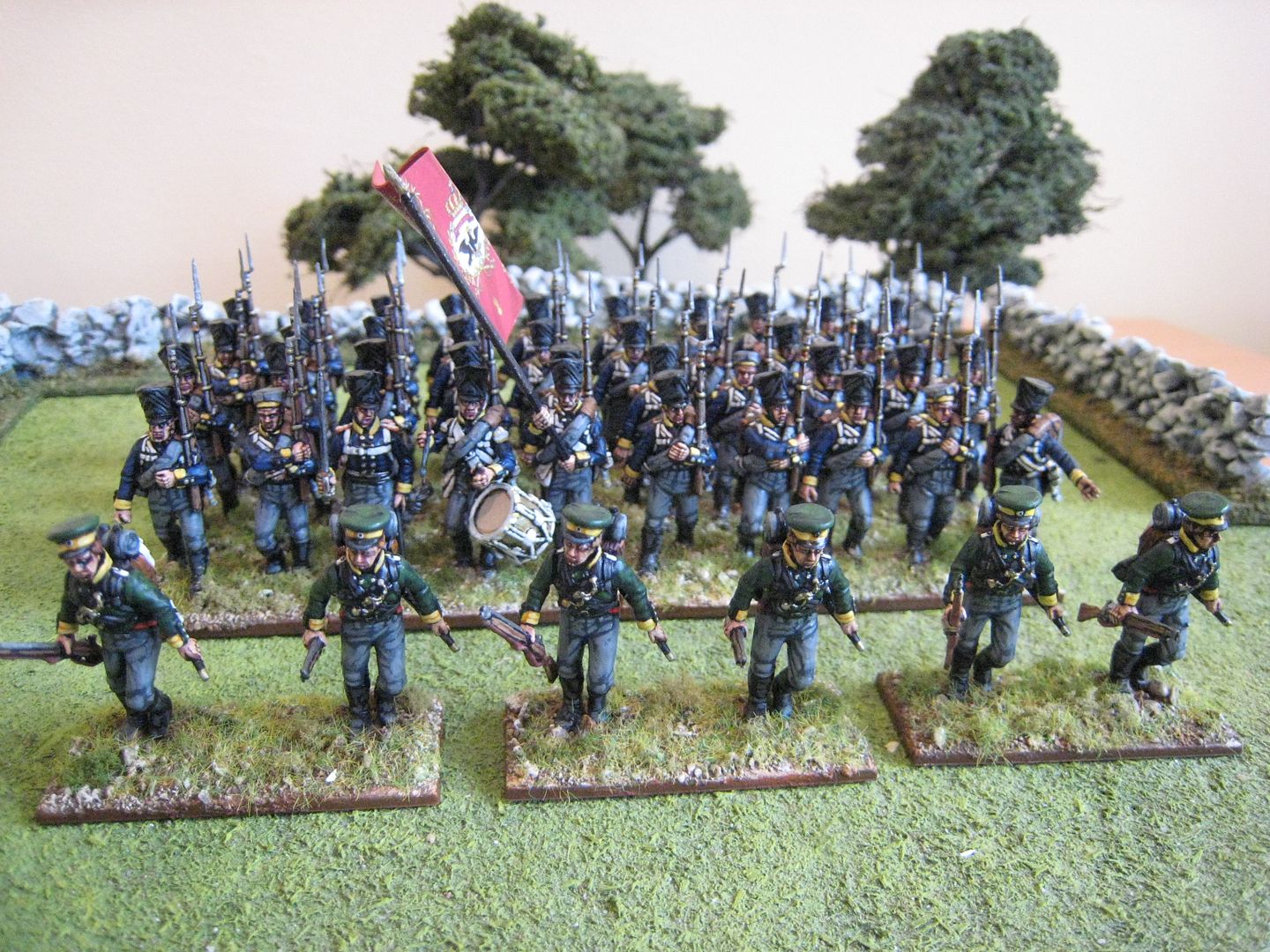
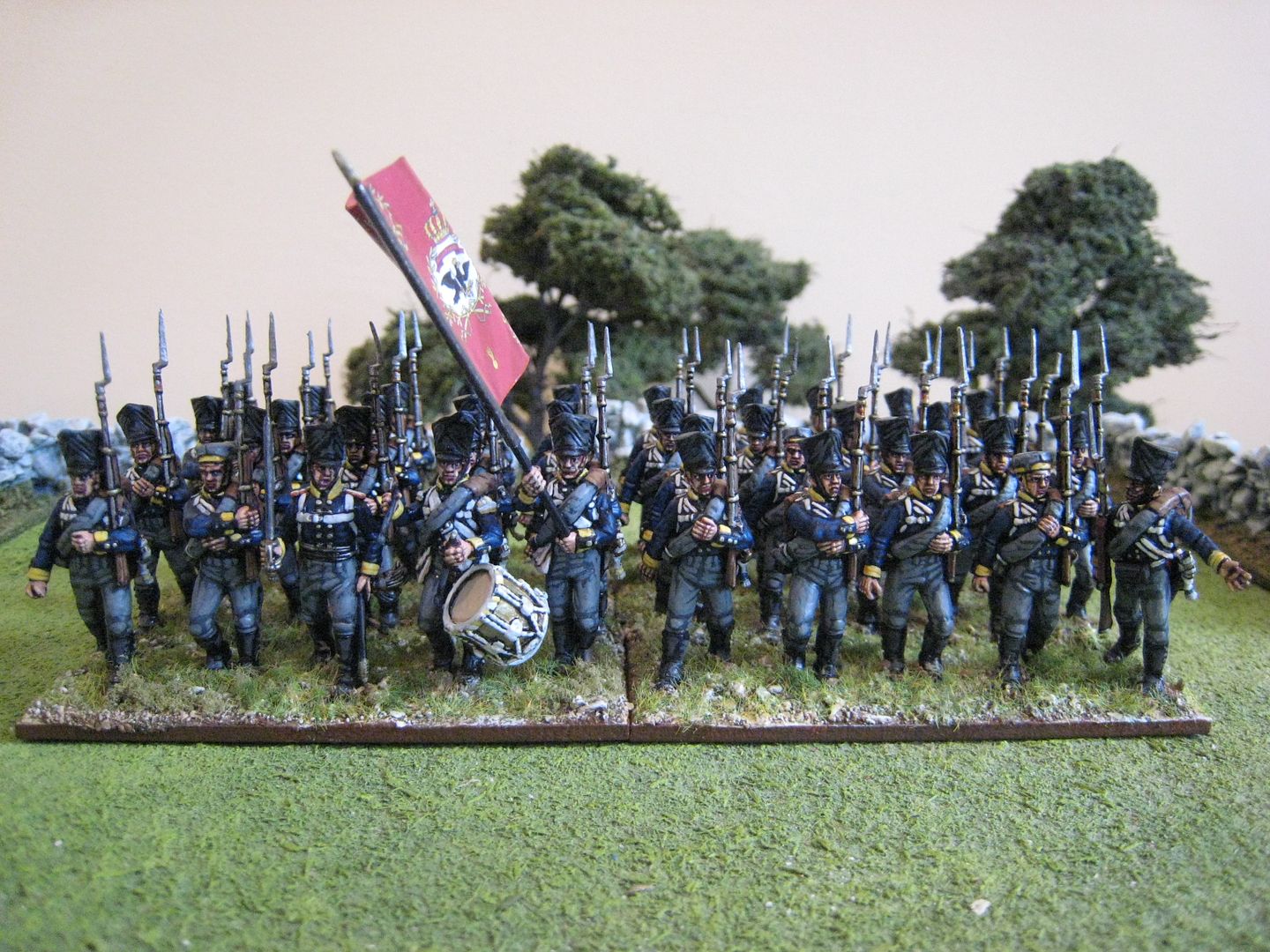
This is the completed first battalion of musketeers of the Prussian 10th Infantry Regiment for 1815. As I understand it, the regular line regiments each had 3 battalions, of which 2 comprised musketeers and the third fusiliers. A detahments of volunteers jaegers is also attached to the battalion. The 10th formed part of von Hacke's 13th Brigade in Bulow's IV Corps. Bulow's troops did not fight at Ligny as they didn't arrive in time, but they were the first substantuial body of Prussians to arrive on the field of Waterloo and were heavily engaged in the battle for Plancenoit.


The General de Brigade order of battle that I use for my 1815 units lists most Prussian infantry units at 32 figures. Full strength would be 40 figures, but allowance is made for the loss of numbers as the Waterloo campaign progressed. However, on the GdB forum Eclaireur suggested that the 32-figure Prussian battalion may be a bit of a myth and that most infantry units at the start of the 1815 campaign would most likely be close to full strength, albeit then deserving of a reduction as a result of battle casualties at Ligny. However, since the 13th Brigade was not at Ligny I decided that it made sense to keep the 10th Infantry at and full strength and 40 figures. With 4 companies of 10 figures each I had to order some extra-large bases from ERM, which Tony delivered with his customary efficiency. The flag is the one that came with the box. It's a bit thicker than GMB flags and I would suggest using PVA rather than Pritt Stick when gluing it together.


The musketeer figures come in 3 parts: the main body, the backpack with half of the greatcoat roll, and the head. I still have the reservations about assembly that I mentioned a while ago when I first started painting these figures. Unless I am doing something wrong, it seems to me that backpack section doesn't quite join the body properly, so that there is a clear gap between the figure's back and the pack. The separate heads are a good idea though, as there are a decent number in the box and you can pose them at different angles to create a lot of variety (which you need in a unit of 40 similarly-posed figures). The jaegers for 10th Infantry require green caps, of which there is 1 head in the box. This is rather limiting for 6 figures, but with different positioning of the heads and eyes looking in different directions you can create a bit of variety; although ultimately they do look rather the same. The only other problem worth mentioning is that the unit bases provided are the usual mix of sizes which don't really meet the requirements of the box. The complete box envisages 4 companies of 10 figures, as I have done; but my origami skills were insufficient to work out how the bases might combine together to support 40 figures in close order.


I found these figures very quick and easy to paint. The Prussian musketeer's uniform is fairly "minimalist" compared to many other Napoleonic uniforms - no long coat tails, lace or fancy braid, for example. As with the Perries' plastic French infantry, I found that these figures took paint very well and, indeed, they Almost Paint Themselves. The trickiest parts for me were painting the breeches and the faces. For the musketeers I used the Foundry "Prussian Blue 66" palette with an additionan highlight of "Deep Blue 20 B". The jaegers' coats were painted with the "French Dragoon Green 70" palette (I think) and for the grey breeches/trousers and blanket rolls I used "Stone 57". I know next to nothing about the Prussian army of 1815 so I'm sure there plenty of minor mistakes, for which I apologise.


All together I am very pleased with these figures. They are cheap and quick to finish, which is exactly what is needed for Napoleonic infantry. Strongly recommended.


46 figures. Painted July and August 2011.


Thursday, 1 September 2011

Liberators!


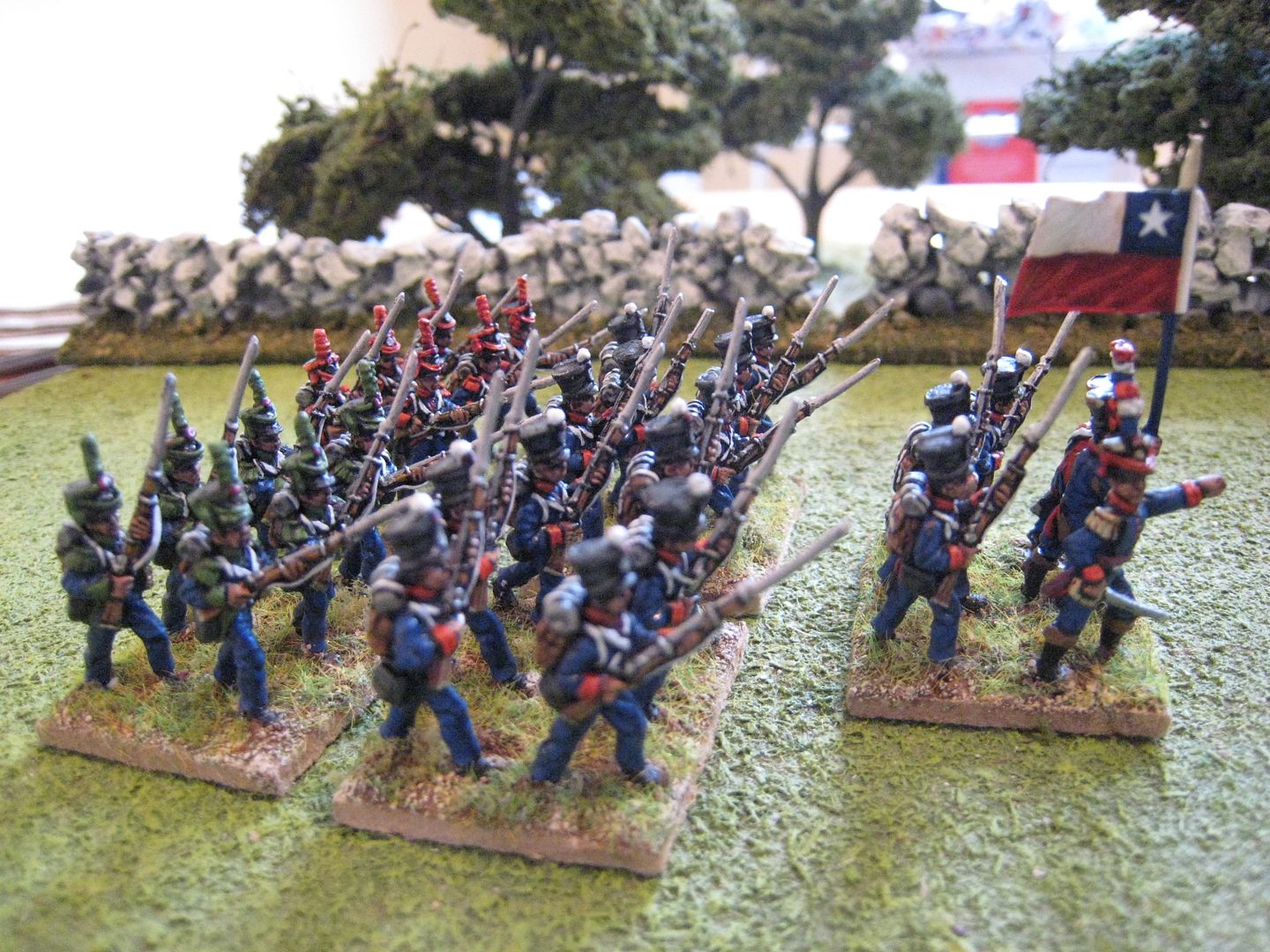
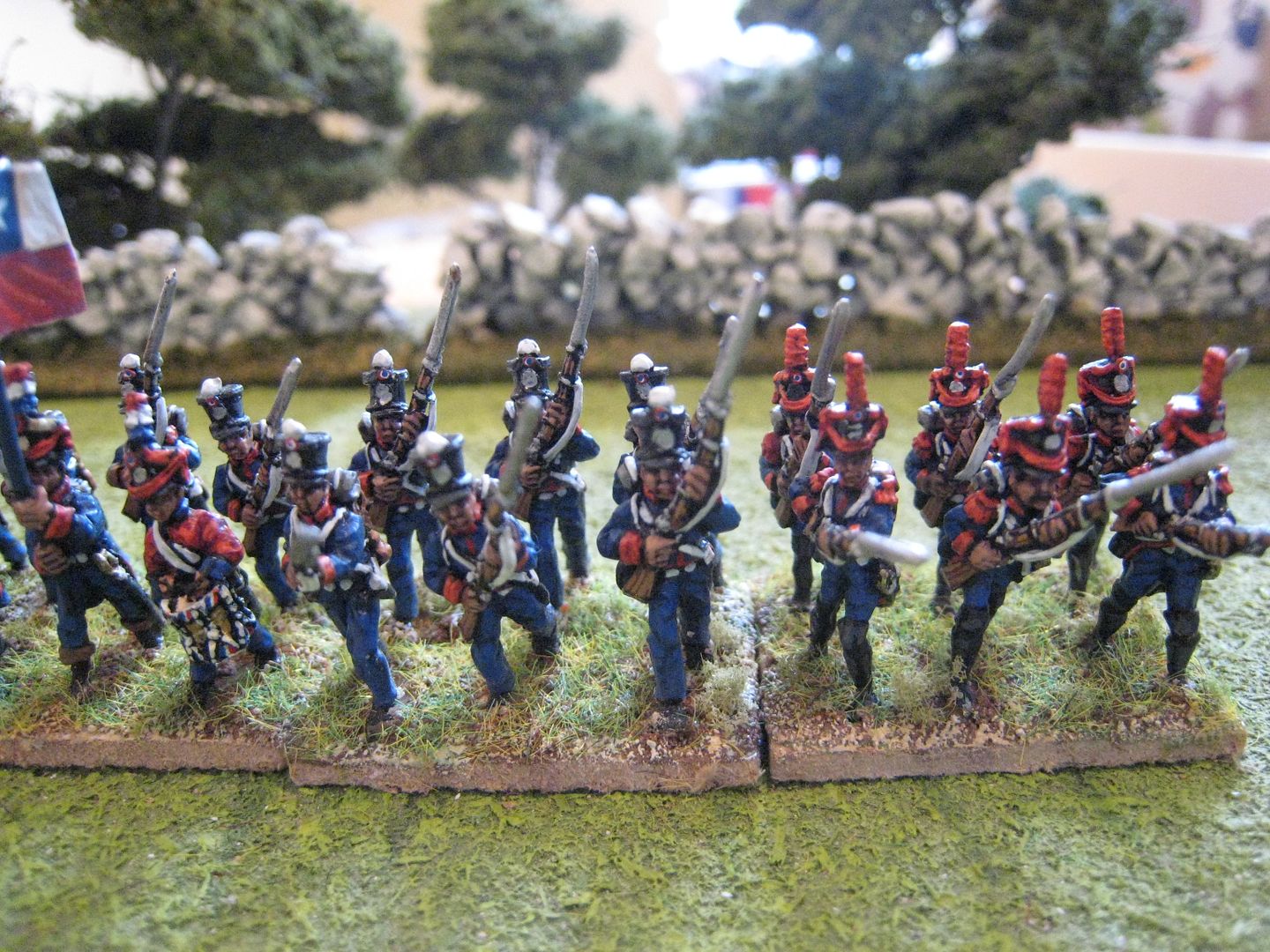
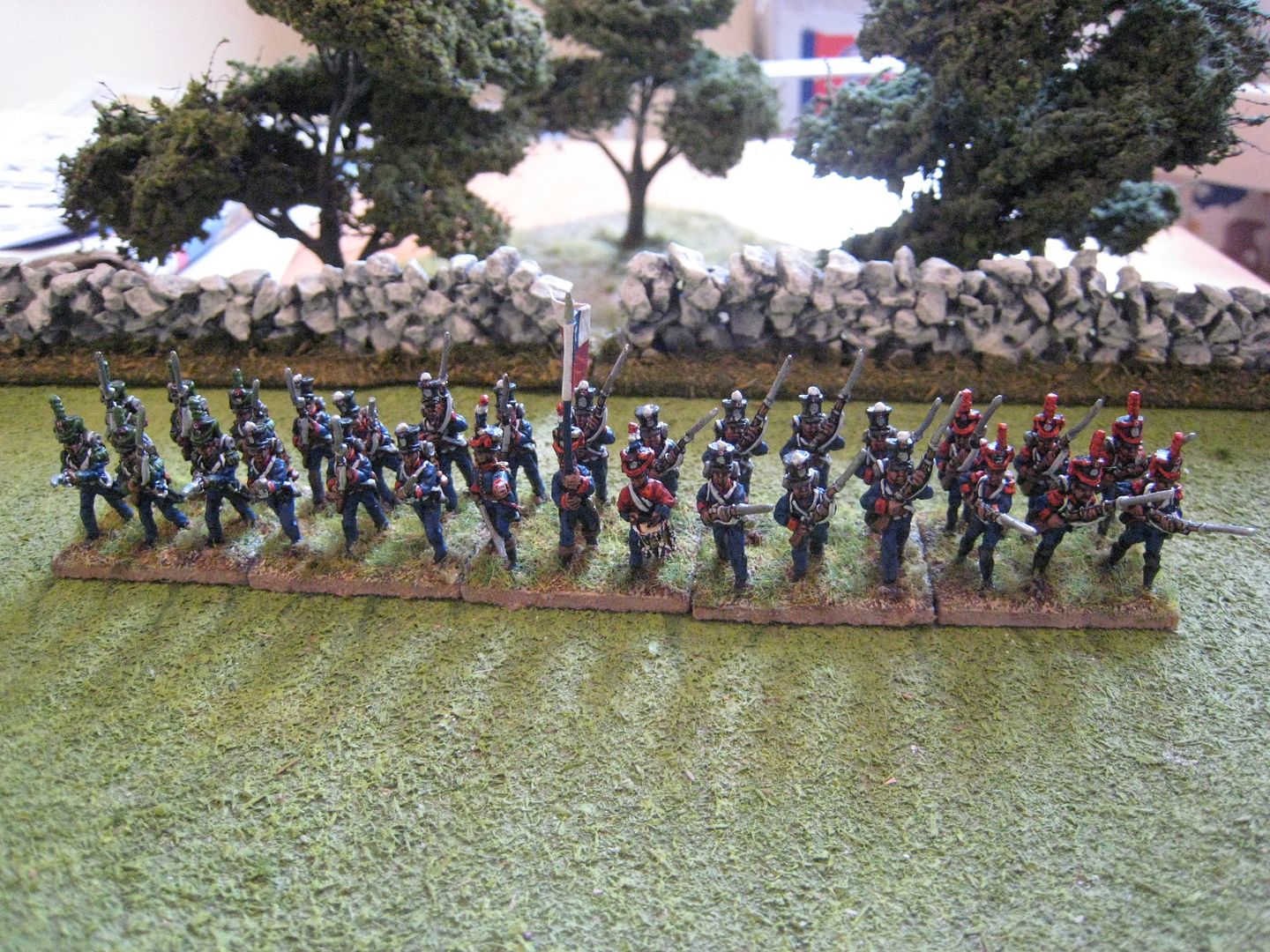
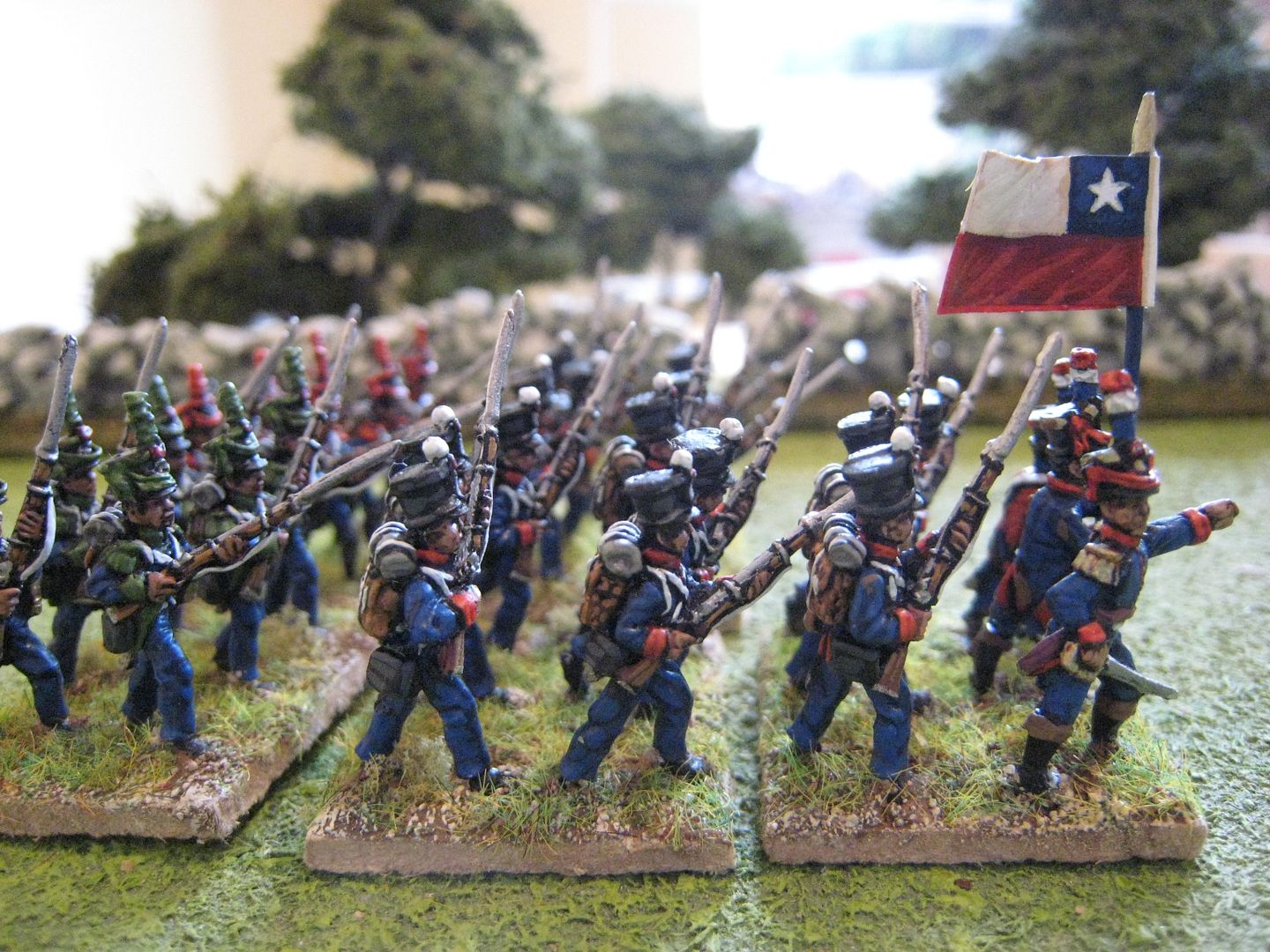
I mentioned a while back that I had been painting some 15mm figures, but then didn't post about them. That was because I was trying to think of the best way to do so, and in fact I may yet start a separate blog about this project. For those who don't know, "Liberators!" is the name of a series of sourcebooks and associated figures designed for wargaming the wars of liberation fought by the Spanish colonies in Latin America between 1810 and 1830. This drive to increase wargamers' awareness of a rather obscure period of history is almost entirely the work of John Fletcher (I say "almost entirely" because the figures are sculpted by Alan Marsh). John runs a blog and a yahoo group as well as the Grenadier Productions website that sell "Liberators!" products. The reason for this post is that John is running a 25% sale over the next few days, so now is a perfect time to jump into this period.


My first serious wargaming began with 15mm Napoleonics, first Essex and Tabletop Games figures and then Battle Honours when they came out in the late 1980s. Whilst I painted a fair few 15mm Napoleonics over the years I realised that I much preferred 25mm figures and my 15mm collection never progressed much beyond a handful of painted figures and a reasonably large lead-pile. John's original "Liberators!" sourcebook came out a few years ago and since then I have periodically thought about investigating further as the period is exactly the sort of thing I look for: colourful uniforms, foreign auxiliary forces, small numbers of troops, exotic locations, larger-than-life personalities (e.g. Bolivar and San Martin) and something that's a little bit different. Most important of all, there is the Grenadier range of figures and excellent support on the blog and yahoo group, the latter of which receives contributions from a large number of enthusiasts (such as the chaps who put on the rather cool Maipo demo game at Salute a few years back: see here).


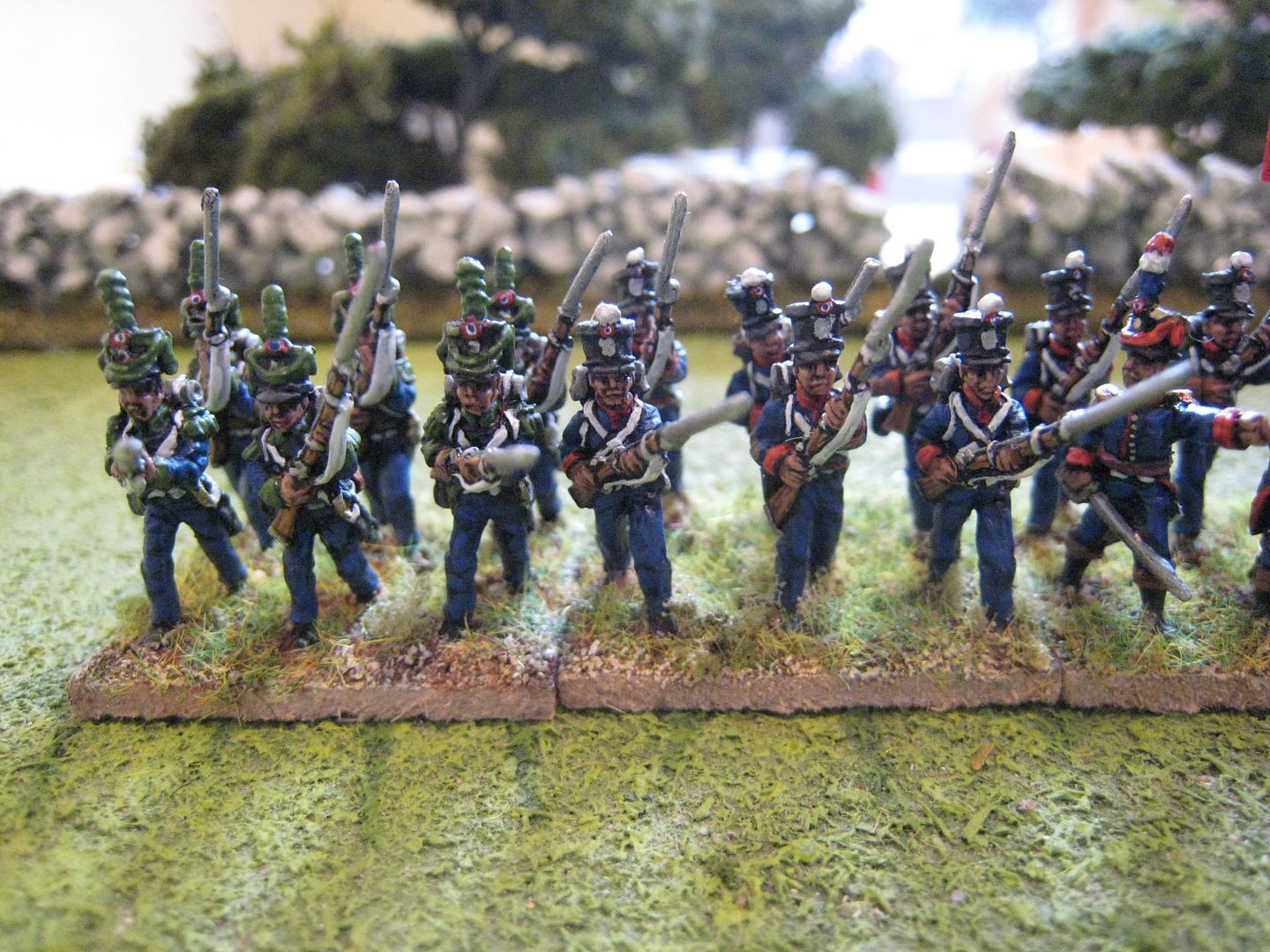
I won't go into any historical background now; as I say, I'm trying to think of the best way to take this project forward. But here are some photos of the first unit I painted up, the First Chilean Infantry Regiment, circa 1818 (a patriot regiment). I'll post better photos in due course. These are based for the "General de Brigade" Napoleonic rules. It's worth also mentioning that Simon at Parkfield Miniatures is sculpting a 25mm line that is shaping up very nicely.


Tuesday, 30 August 2011

More wip


Apologies again - I've hit one of those occasional basing back-logs. I currently have 54 finished figures going through the basing process, including the completed first musketeer battalion of the Prussian 10th Infantry Regiment, more AWI French chasseurs and the Dutch 2nd Line Infantry for 1815. All these are rather large units and that has created a squeeze on basing and finishing the units off. I had intended to blog about the 6 volunteer jaeger figures that come in the Perry Prussian infantry box, but the pictures I took the other day are pretty rubbish (see left) so I need to take some more. I decided in the end to paint all the Prussian figures and so the battalion is 40-figures strong. As that means 10 figures for each company I have had to buy larger bases, which haven't arrived yet. The Dutch infantry battalion is something I have been meaning to do for ages. I painted 6 figures a few years ago and then moved on without painting any more. Whilst sorting stuff out in advance of my impending house move I found the rest of the unit and thought it was high time I finished it off. As it happens, I have now decided not to use the original 6 figures and so I am building the 24-figure unit from scratch; I'll explain why in due course. Hopefully the Dutch will be finished in a week or so and then the French chasseurs will be finished. After that I suspect there will be more Eureka AWI dragoons, as it's high time I returned to those.

Now I've finished the Perry Prussians box I don't intend to paint any more Prussians any time soon. I think my 1815 cravings will be met by concentration on Bachelu's division, the Middle Guard, the Dutch-Belgians and (as yet a mere twinkle) the KGL.

Monday, 15 August 2011

French chasseurs (2)


Here are the further Eureka Miniatures figures that I mentioned a short while back. These are from the Revolutionary French range. I am not sure what codes they are exactly, as I picked them out at Eureka HQ in Melbourne (with help from John Baxter and Mark Spackman - hi guys!), but they are all actually "grenadiers" rather than "chasseurs". I have no idea how the 1790's uniforms of the two flank companies differed, but the uniform on these figures is certainly very close to that of the Perry Miniatures chasseurs. Leaving aside the headgear for a moment, these Eureka figures have the standard flank company accoutrements of moustaches, epaulettes and swords. The coat tails are long, but that is in keeping with the 1779 regulations and the Chartrand Osprey refers to some units having tails that were even longer than the regulations required. So it's only really the hats that are a problem, in that they are clearly proper bicornes and much larger than their Perry equivalents. I decided not to remove the pompoms, because some of the illustrations in the Chartrand and Mollo books show these on flank company soldiers. I did, however, file off the grenade emblems on the catridge boxes.


I like these Eureka figures. They have style and when painted up in white I think they do pass muster as AWI figures. As I said before, I think it is unlikely that the Perry French range will include skirmishers (but you never know). The Eureka figures are larger than the Perry ones, about 30mm from toe to top of head; the hats then add anything up to another 4mm in height. The two regiments represented here are the Soissonnais (in the crimson facings) and Touraine (in pink). I chose these regiments simply because I liked the facing colours! The way I paint the white coats is as follows. I undercoat with Army Painter "Uniform Grey" spray, an almost exact match with Coat d'arms "Uniform Grey 525" which I use for touching up. This undercoat acts as the base coat. The highlights are then Foundry "Arctic Grey 33A", Coat d'arms "Light Grey 211", Coat d'arms "Tank Light Grey 526" and then finally pure white (any brand will do).


I would also like to mention that Christopher "Axebreaker" has posted a review of the new edition of the "British Grenadier!" rules that I use on his superb blog. He kindly mentions the large number of photos of my AWI collection that illustrate the book (which is why I haven't blogged on it myself!) and then comments on the book and the mechanics of the rules. The new edition is pricey, and follows the current trend of new rules being glossy, highly-polished hardback books. Personally I didn't hesitate in buying this new edition because "British Grenadier!" are the only AWI rules I will ever use. Those who find the game slow or frustrating for an attacking player will find new rules in this edition that speed up movement and make charges a tad more likely to succeed - so anyone who has dropped the rules on either count may like to give them another try. And with Perry Miniatures releasing plastic AWI infantry at some stage (perhaps in time for Salute next year?) and a remake of "The Patriot" in the works it's a great time to get into the period!


(Ok, I made up that bit about "The Patriot"...)


8 figures. Painted June 2011.


Monday, 8 August 2011

Current wip


I have some AWI French skirmishers to post about in a couple of days, but in the meantime I thought I'd post a couple of photos of the other large unit I am currently working on (i.e. in addition to the 24-figure AWI French chasseur unit, which is now three quarters finished). I bought a box of Perry plastic Napoleonic Prussian infantry at Salute and, having painted a couple of test figures back in April, decided last month to push on with the rest of the box. I will provide a proper review when I have the regiment finished, but my overall reaction is very favourably - the figures are dead easy to paint (like the plastic French infantry) and easy to put together. My only concern is how the backpack fits onto the figures, which doesn't quite seem to work as neatly as on the plastic French infantry.

The unit I am building is the 1st musketeer battalion of the 10th Regiment ("1st Silesian"), in Hacke's 13th Brigade. I chose this regiment simply because I liked the yellow facings and the 1st battalion's flag comes with the box. I think the regiment was involved in the fight at Plancenoit, but my research is ingoing. However, one issue I need to consider now is the number of figures. The Waterloo orbat on the "General de Brigade" website has Prussian infantry battalions at 32 figures mostly, with a few at 24 figures. I know that at full strength a battalion would be close to 800 men, or 40 figures at 1:20 (which is what you get in the Perry box, plus 6 jaeger). I'm assuming that the GdB orbat takes account of casualties incurred in the various battles preceding 18th June itself. However, I don't think Hack's 13th Brigade was present at Ligny and therefore I wonder whether the units in this force should not be closer to 40 figures rather than 32. I note comments on the GdB forum that whilst the 32-figure Prussian battalion is pretty standard in wargaming it may also be something of a "received wisdom", and that units at the beginning of a campaign or which have not yet seen action (like the 10th) would probably be close to full strength.

Like any sensible wargamer, I prefer smaller units (and so less painting) whenever possible and when tackling something like Waterloo a certain amount of "shrinkage" is required for space reasons anyway; but any thoughts from readers more versed than I in the Prussian army of 1815 would be welcome!


Tuesday, 2 August 2011

Regiment Gatinais


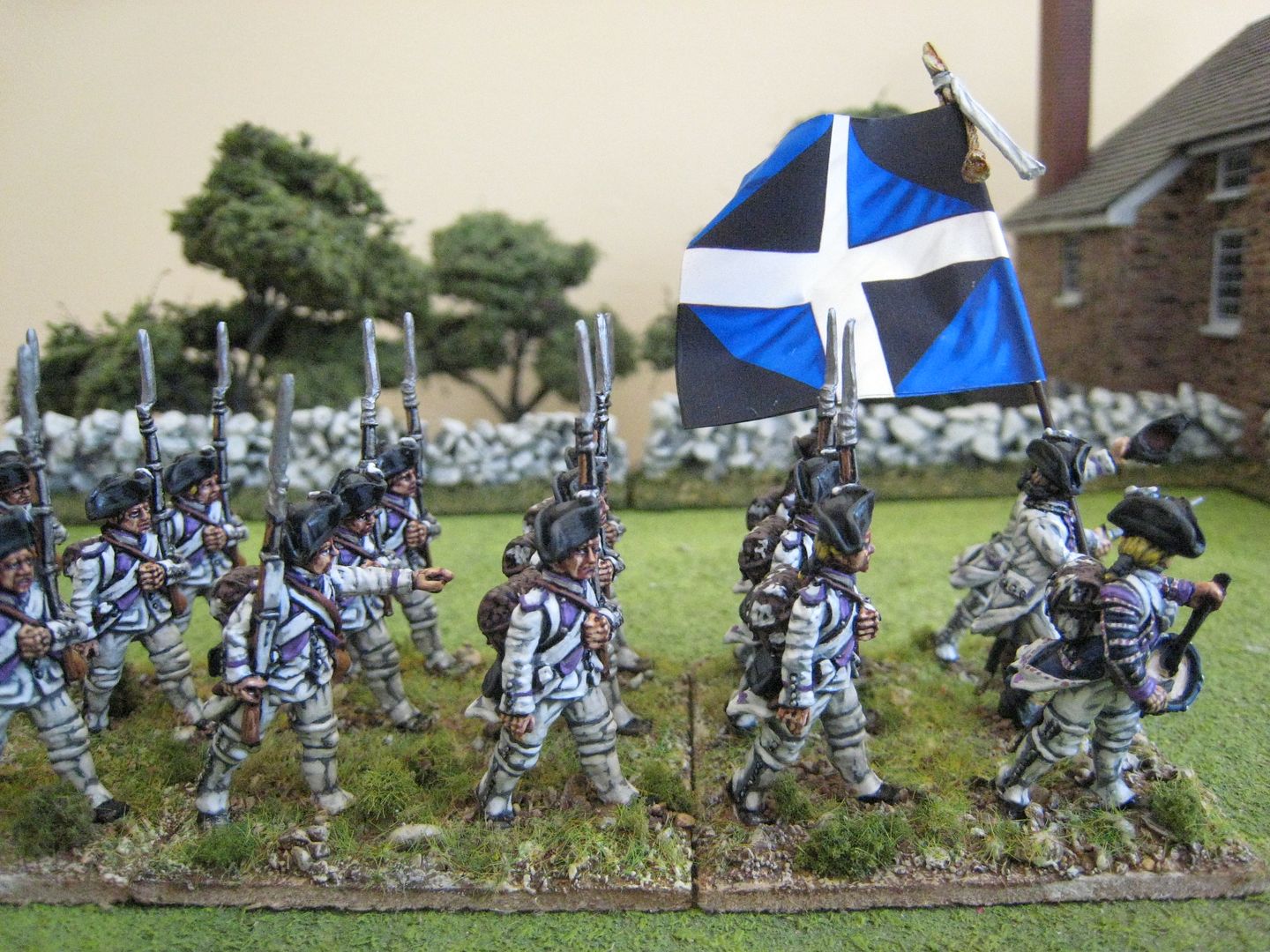
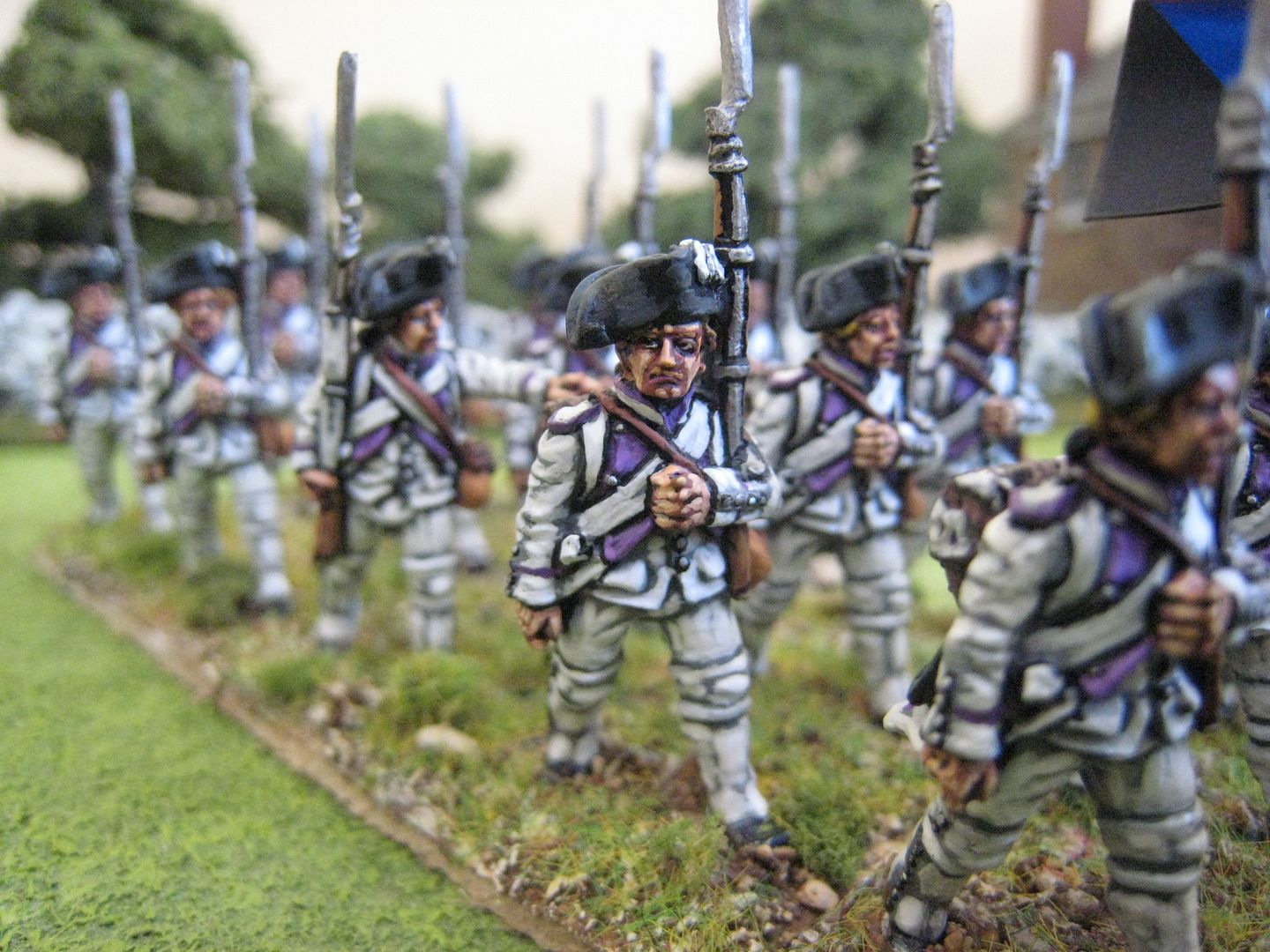
In addition to the Regiment Dillon, the Savannah scenario (in the second "British Grenadier!" scenario book) requires composite fusilier battalions of 16 and 18 figures respectively. This reflects the way in which elements from various regiments were formed together into ad hoc detachments. The notes to the Savannah scenario state that these detachments contained troops from the Cambresis, Champagne, Agenois, Gatinais and Auxerrois regiments. Therefore, when modelling these units you could paint up 1 or more stands from each of these regiments to recreate what happened in practice, or ignore that and field units of identically uniformed figures. I decided that for various reasons I wanted my collection to have several full regiments of French fusiliers, essentially to keep a large degree of flexibility in how I could field them. I intend to paint up 3-4 of the regiments mentioned above and then use various bases from those to form the composite untis required for Savannah (and other scenarios). I can then use the full regiments for "what if" games or larger scenarios.


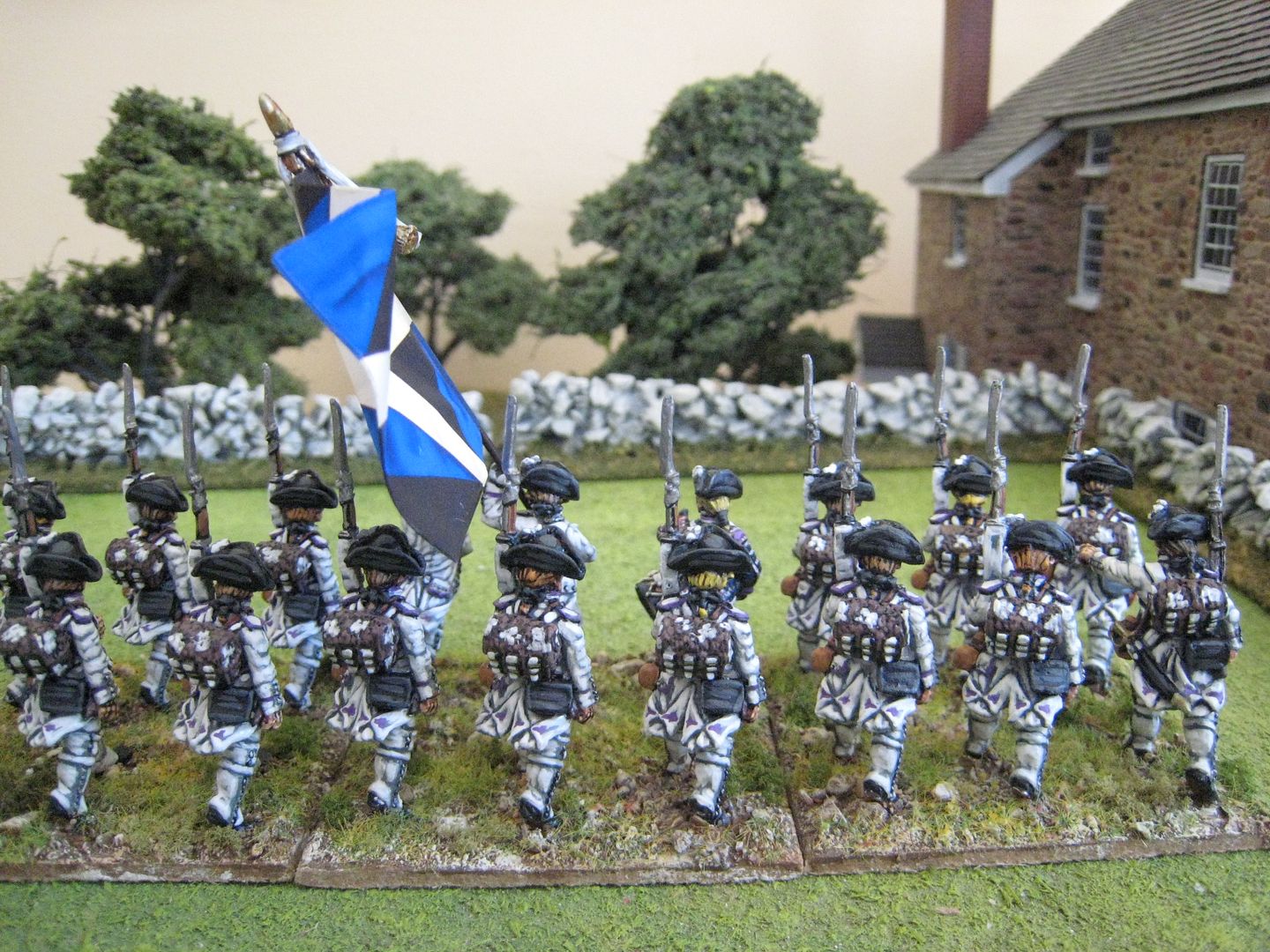
So here is a battalion from the Gatinais regiment. The flag is the more colourful second battalion flag. I understand that the regiment had been stationed in the Caribbean since 1775 and a detachment went to America in 1779 with d'Estaing. The chasseur company in particular distinguished itself at Savannah, with most of its officers becoming casualties. The remainder of the regiment arrived in 1781 with Saint-Simon. The regiment again distinguished itself in the attack on Redoubt 9 at Yorktown, which the regiment's grenadiers captured with men from the Royal Deux-Points regiment. Apparently, Washington expressed his admiration of and gratitude to the French units by presenting the two regiments with the cannon which they had captured from the redoubt.


The flag is from GMB. I have seen references to the Gatinais flag being black and violet rather than the black and blue as shown here. I gather that Richardson in his Standards and Colors of the American Revolution states that the colours were black and marine blue, and presumably GMB followed this source. The figures are in the 1779 ordonnance uniforms, which is certainly wrong for Savannah and probably still wrong for Yorktown. However, Perry Miniatures only offer standing figures in the 1776 dress and I wanted more active poses for Savannah and Yorktown.


18 figures. Painted February-May 2011. Flag from GMB.


Saturday, 16 July 2011

French chasseurs (1)


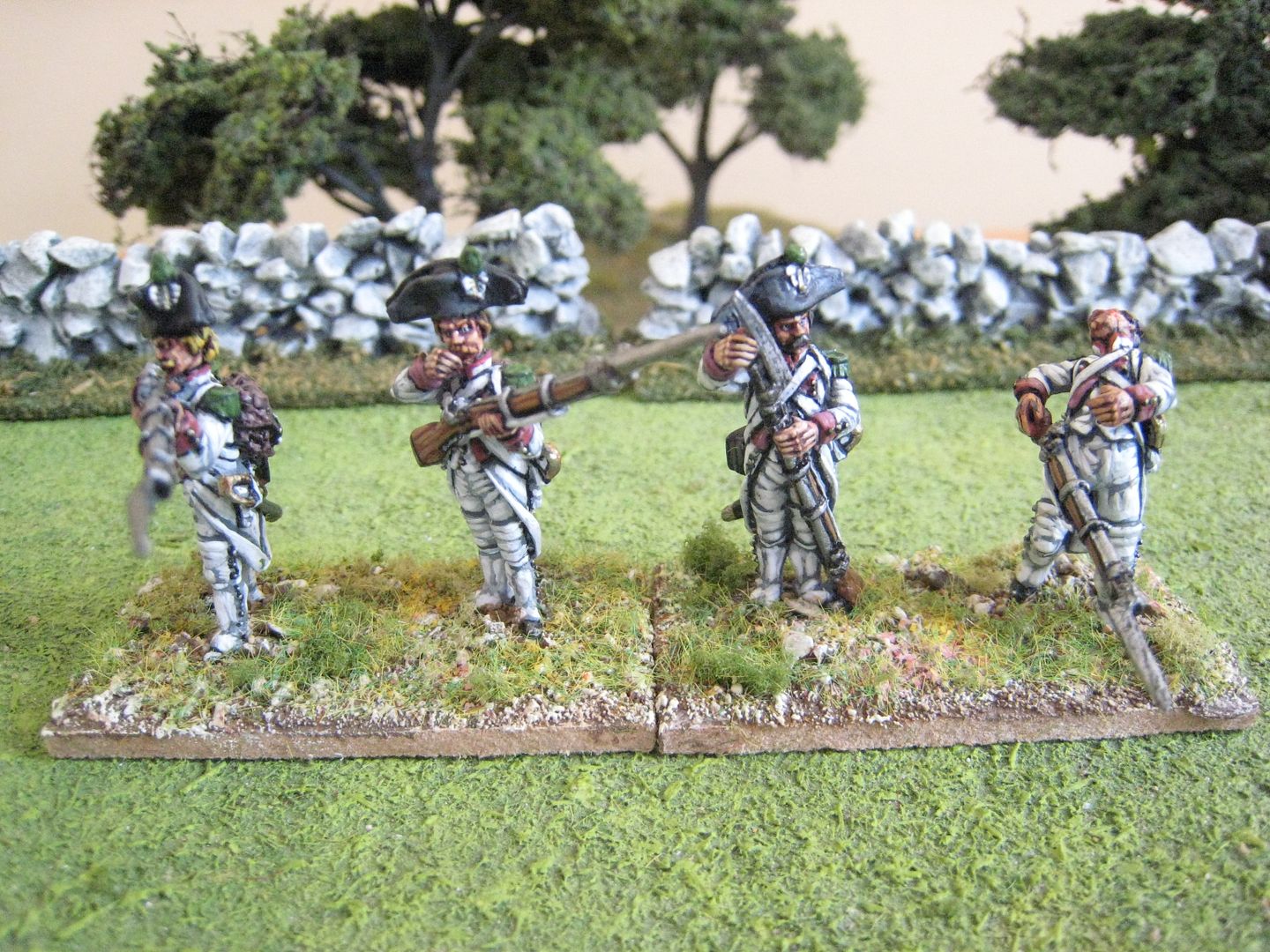
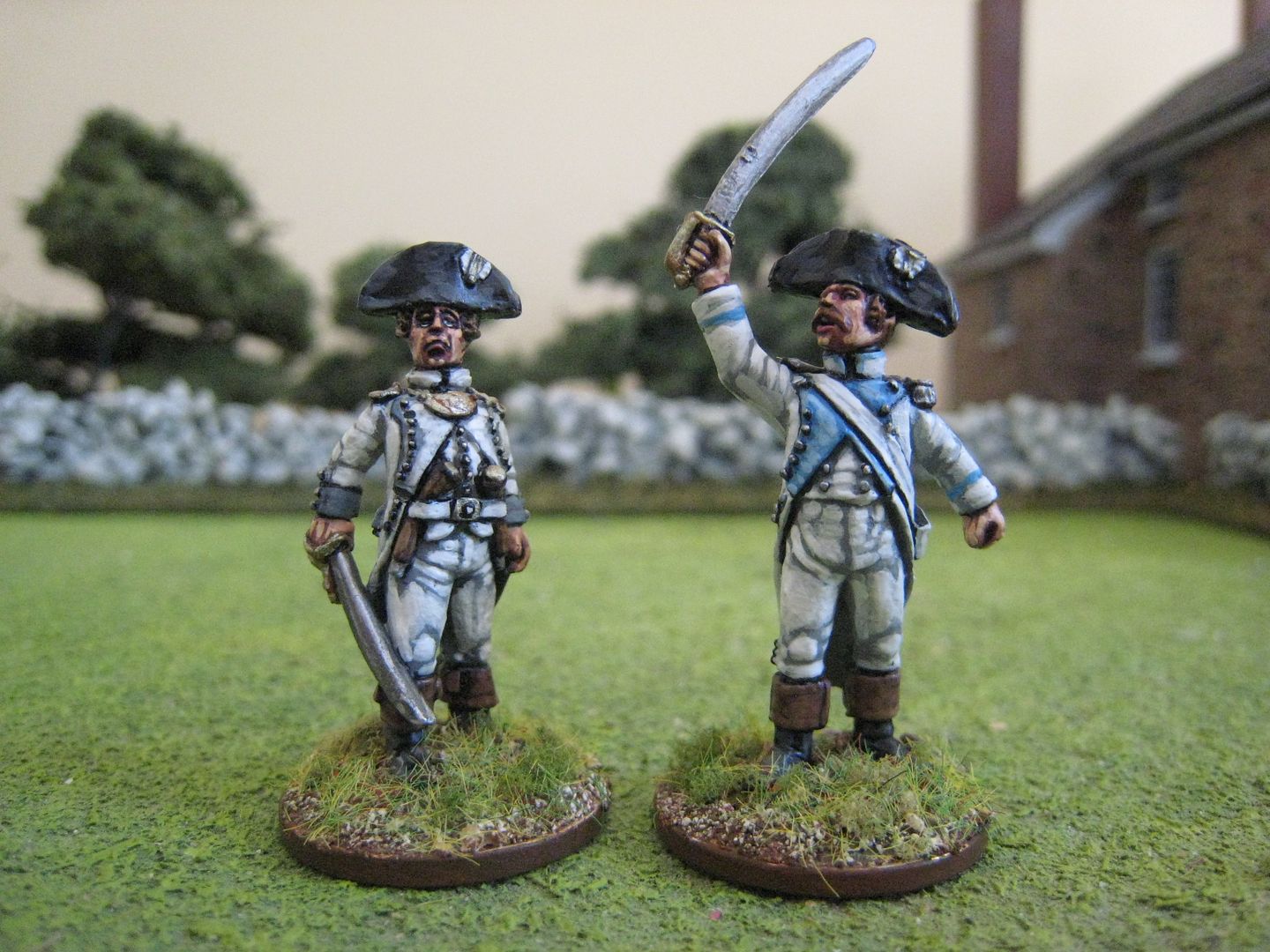
I promise to make more of an effort with this blog, which I have neglected of late. As an hors d'oeuvre to some more substantial posts on AWI French units I offer this trio of figures from Eureka Miniatures' Revolutionary Wars range. I think this range is useful to the 25mm AWI gamer, although there are issues with the uniforms, principally the shape of the hats and the absence of water bottles. The coats of the figures are long, but that suits the 1779 ordinance and Chartrand in his Osprey refers to the "ample and generous" cut of the 1779 coats; so this point isn't too much of a worry. The hats are another thing, although I think the hats here are ok and I will shortly post about some chasseur skirmishers which really do require a leap of faith re their headgear.


The two officer figures here are listed in the Eureka range as "officer encouraging skirmishers" (the chap brandishing the sword) and "artillery officer" (the chap with the brace of pistols). I think they are very characterful sculpts and look pretty good in AWI white rather than 1790s blue. I am working on a 24-figure unit of chasseurs which will have 4 bases of 6 figures, all of which will be rank and file (for reasons I'll explain when I do a post on the unit itself). The purpose of the two Eureka officer figures is to provide some visual command for this 24-figure unit, which otherwise will lack any command figures. I expect I'll place them in front of the unit or one figure at each end. They can also act as command for the 8-figure chasseur skirmish unit I've just finished. The chap waving the sword is from the Armagnac regiment and the other is from the Viennois regiment (in 1779 dress).


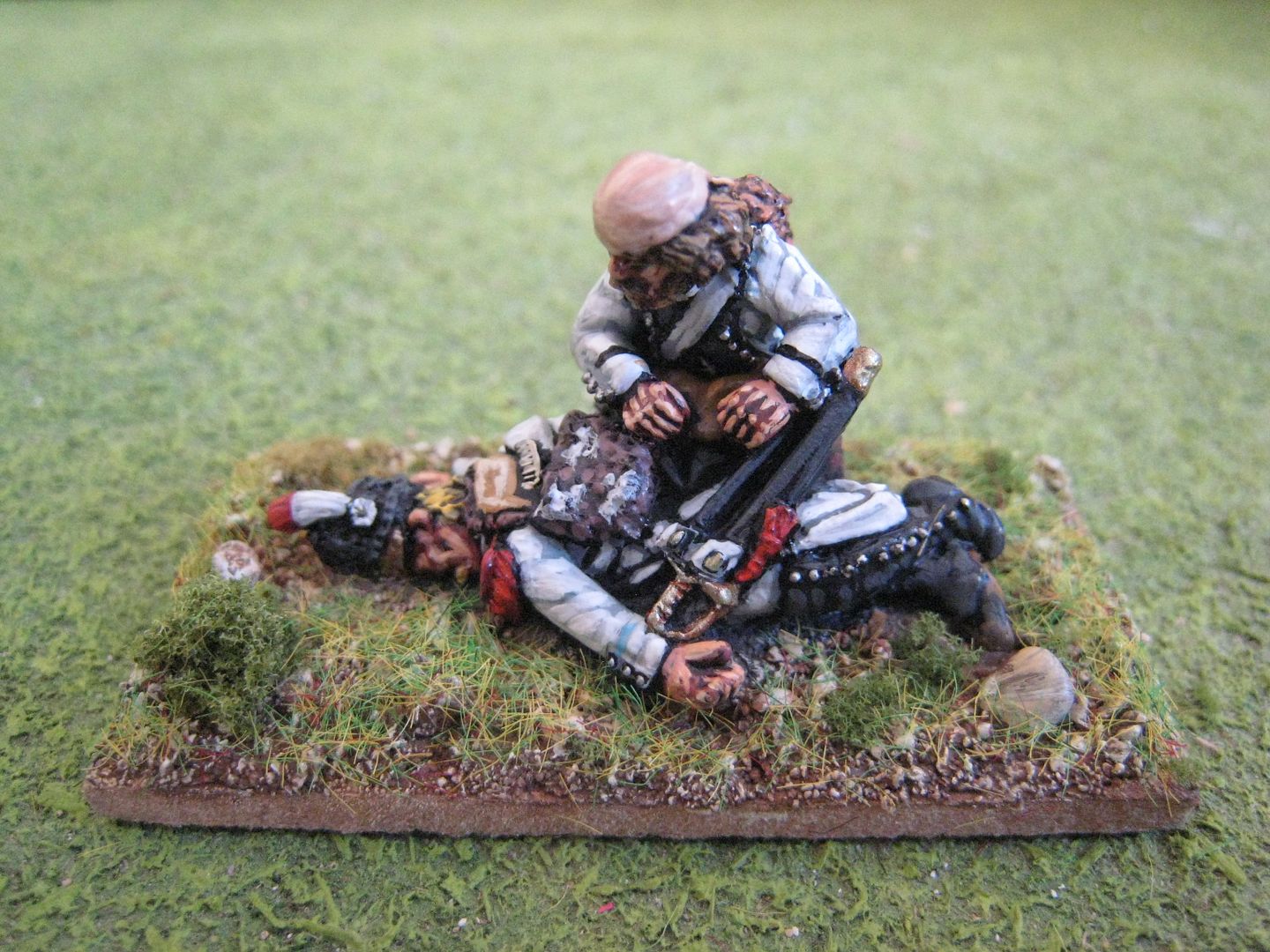
The looter vignette took some time to plan. My original idea was to have a Hessian plundering a Frenchman - as the plunderer has a moustache I couldn't paint him as a British soldier or an American. But then it occured to me that the uniform was wrong and it wouldn't make sense for a Hessian to be outside the lines (of, say, Savannah or Yorktown) nicking stuff off a dead Frenchman. But is also seemed odd that a French soldier, probably recently arrived, would be as badly dressed as the looter is here. In the end, I decided that the looter was a deserter in search of extra provisions, who is still wearing his uniform coat (from the Auxerrois regiment) but has found local trousers and is in search of other items. The dead grenadier is from the Armagnac regiment again. I filed off the grenade on the ammunition box but left the chain on the bearskin, simply not painting it black.


4 figures. Painted June 2011.