Tuesday, 27 August 2013

Camp Frenchmen (5)

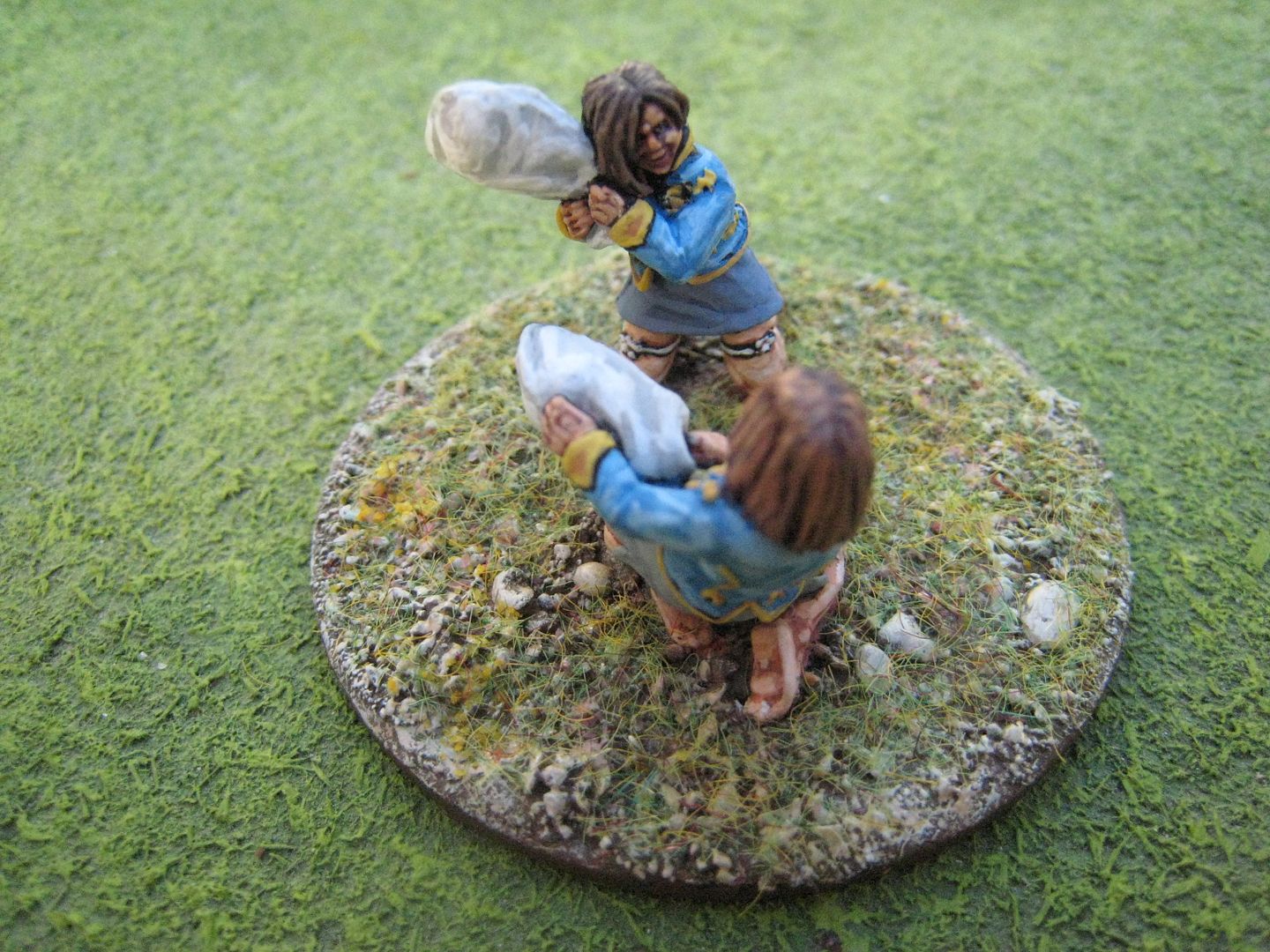
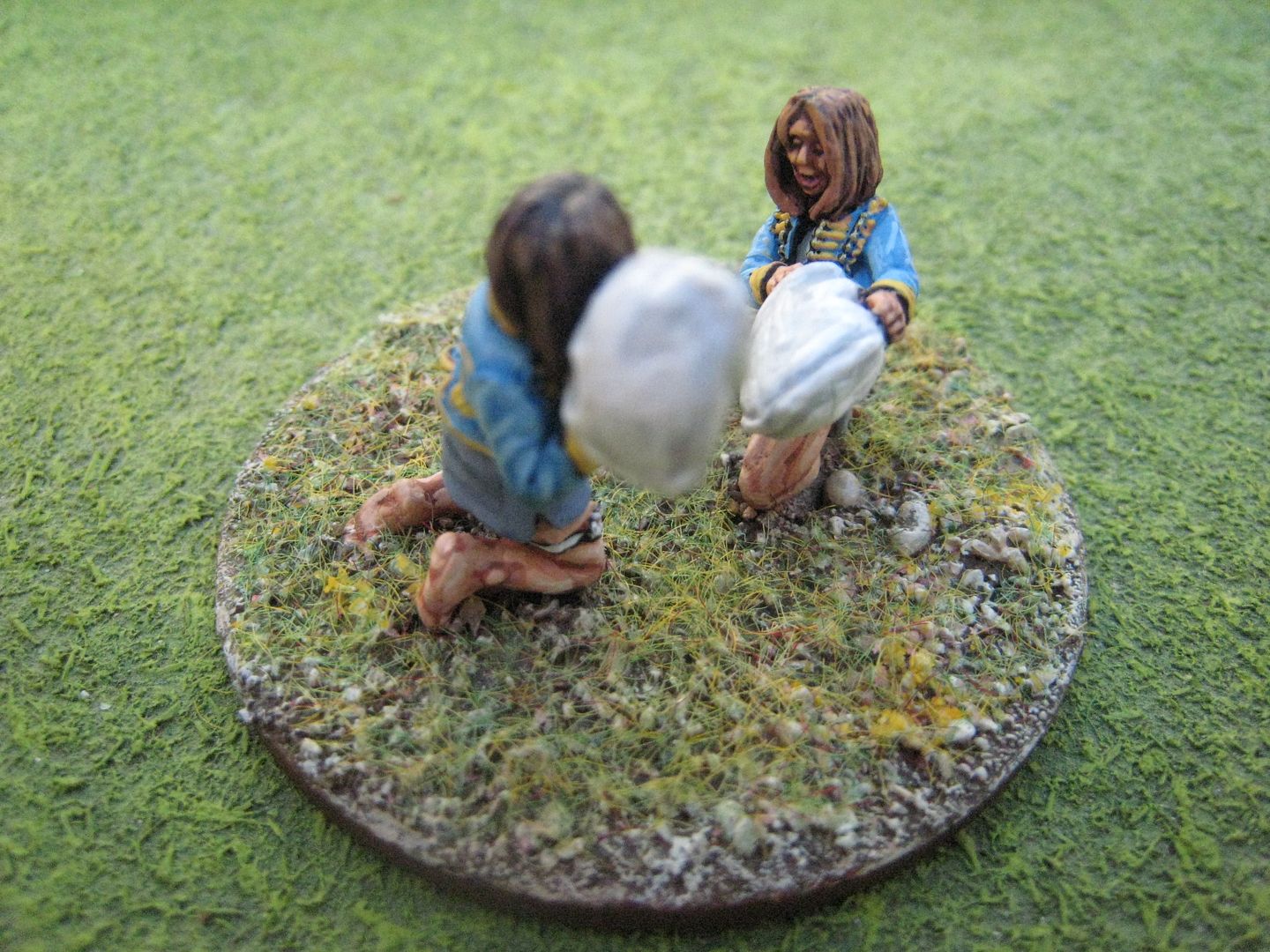
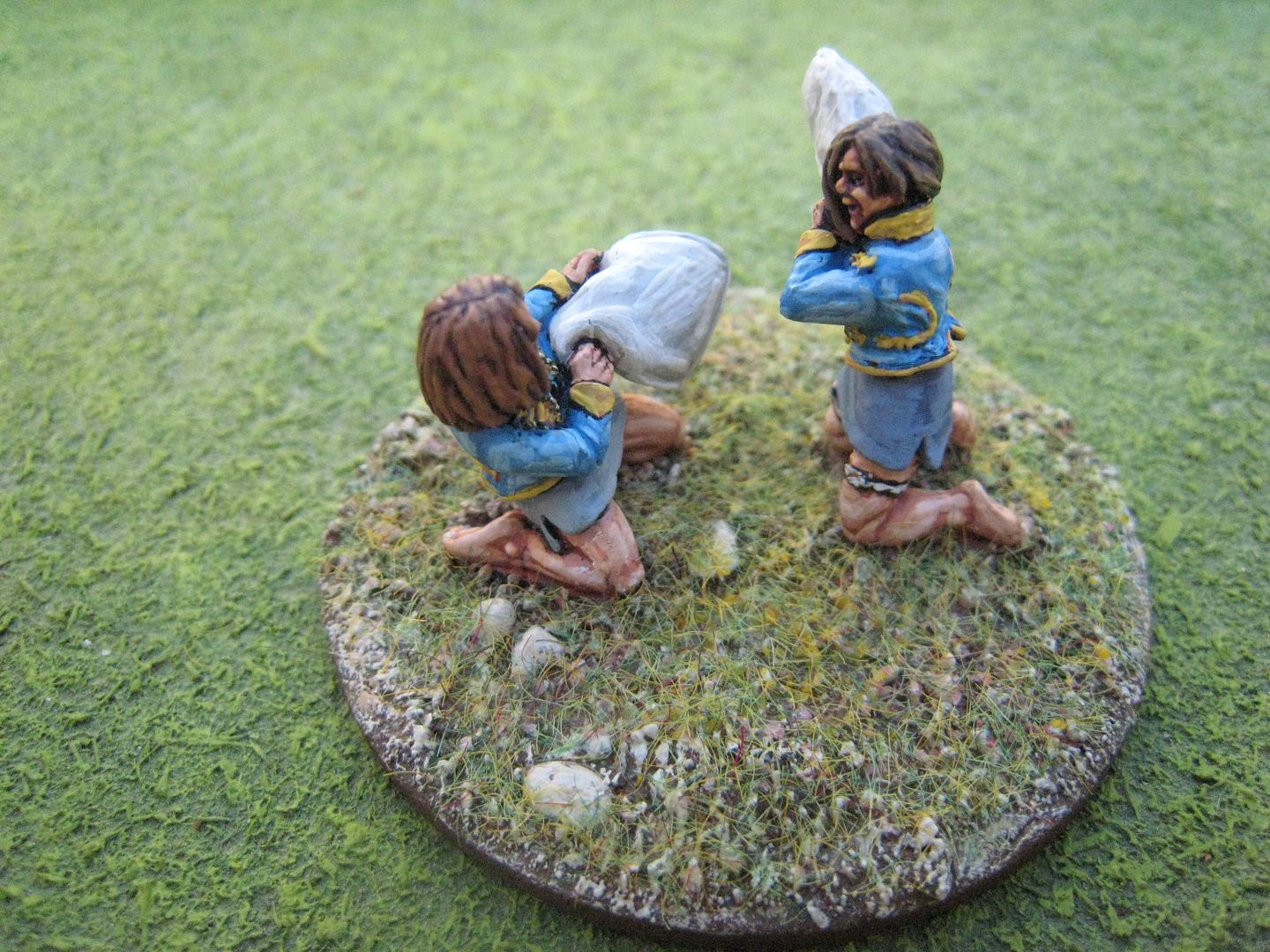
I had forgotten about this pair of figures, which I think comes with one of the other Eureka Miniatures Revolutionary camp vignette sets.  Sometimes I do wonder what goes through the minds of Eureka and/or their sculptors when I see the things they bring out.  For these two pillow-fighting ladies I continued the theme of painting the hussar-ish jackets in the sky blue and yellow of Lauzun's Legion.  I couldn't actually think of any alternative, as I don't think that the British Army had hussar cavalry units in the 1770s - no doubt someone will correct me if this is not correct.  I did think about doing a "Mrs Loring" vignette by adding a suitable officer figure to represent General Howe, but that sounded a bit silly and putting Mrs Loring into a hussar dolman and garters was stretching things a bit too far, I thought.  So instead we have a couple of "camp followers" for my AWI French army and maybe also some entertainment for my original 1815 camp Frenchmen.  I wasn't sure whether the "garters" on one of the women were supposed to be the tops of stockings; I decided the latter were too tricky to paint, anyway.  They are both brunettes because I thought blonde hair wouldn't look right with the yellow collars and cuffs (snigger) and I've never liked painting black hair (because I just think it looks a bit dull on 25mm figures).  No doubt one or both of these ladies resembles one of Legatus Hedlius' many special friends...

Nothing else to say on these, so perhaps a brief run-down on what's currently on the painting desk: final AWI highlander figures for Bill Nevins (I'll post some more pics of the 42nd Foot in a day or two); AWI northern militia; AWI southern militia; 3rd Chasseurs of the Guard for 1815; more Great Paraguayan War; ACW Bull Run Virginians; the Irish Legion of 1819 (another wave to the Legatus!).  I'm waiting for various figures to be released and/or purchased before all those units will be completed, but this list makes 7 units on the go at once.  I've also just received a parcel from Messrs Perry containing lots of AWI goodies, which should keep me going until Christmas. 

2 figures.  Painted August 2013.


Friday, 16 August 2013

Stono Ferry, 20 June 1779

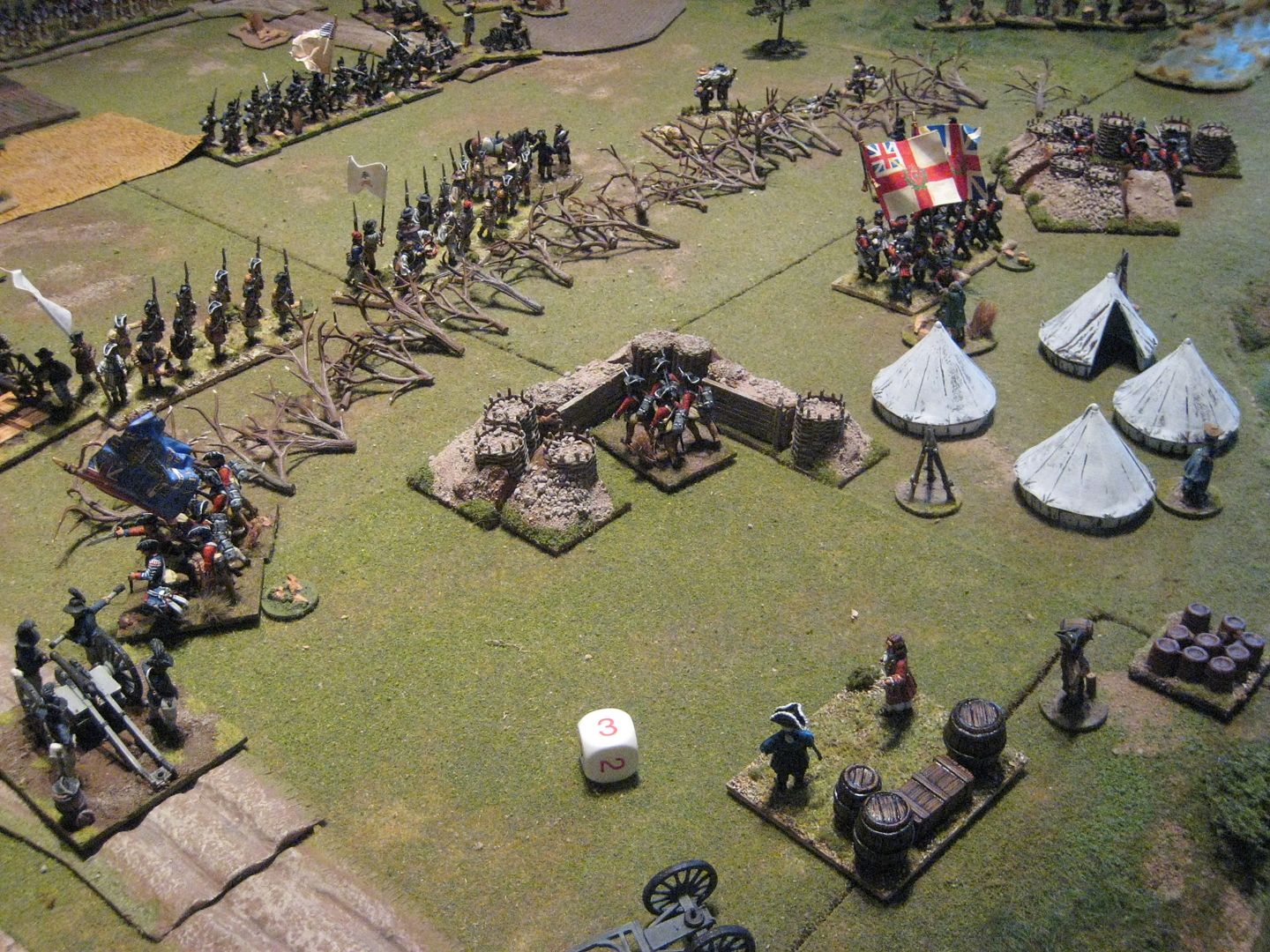
Some more AWI at last!  On Wednesday I took a day off work and met up with "Eclaireur" and "Supercilius Maximus" (aka "Ronan the Librarian") at the former's north London pad to have a go at Stono Ferry.  I brought along an American militia brigade, the 71st Foot and a couple of bits and bobs and the rest of the figures used were from EC's own collection.  The table was dressed with EC's sumptious Realistic Modelling terrain and some nifty home-made abatis (fashioned from those diy plastic model trees that you add clumps of foliage to) and redoubts made using Renedra gabions.  For rules we of course used EC's own "British Grenadier!".

Stono Ferry is not one of the AWI "biggies" and probably isn't that well known a battle.  It's one of those rare engagements that involves an American attack on a British defensive position.  After his attempt to invest Charleston in April 1779, Brigadier General Augustine Prévost decided to withdraw his British force back to its base at Savannah.  Stono Ferry was a crossing point at which the British built a supply camp.  A small force under the command of Lieutenant Colonel John Maitland of the 71st Foot was tasked with guarding the ferry. Brigadier General Benjamin Lincoln, commanding the American Southern Army, saw an opportunity to attack the British position.

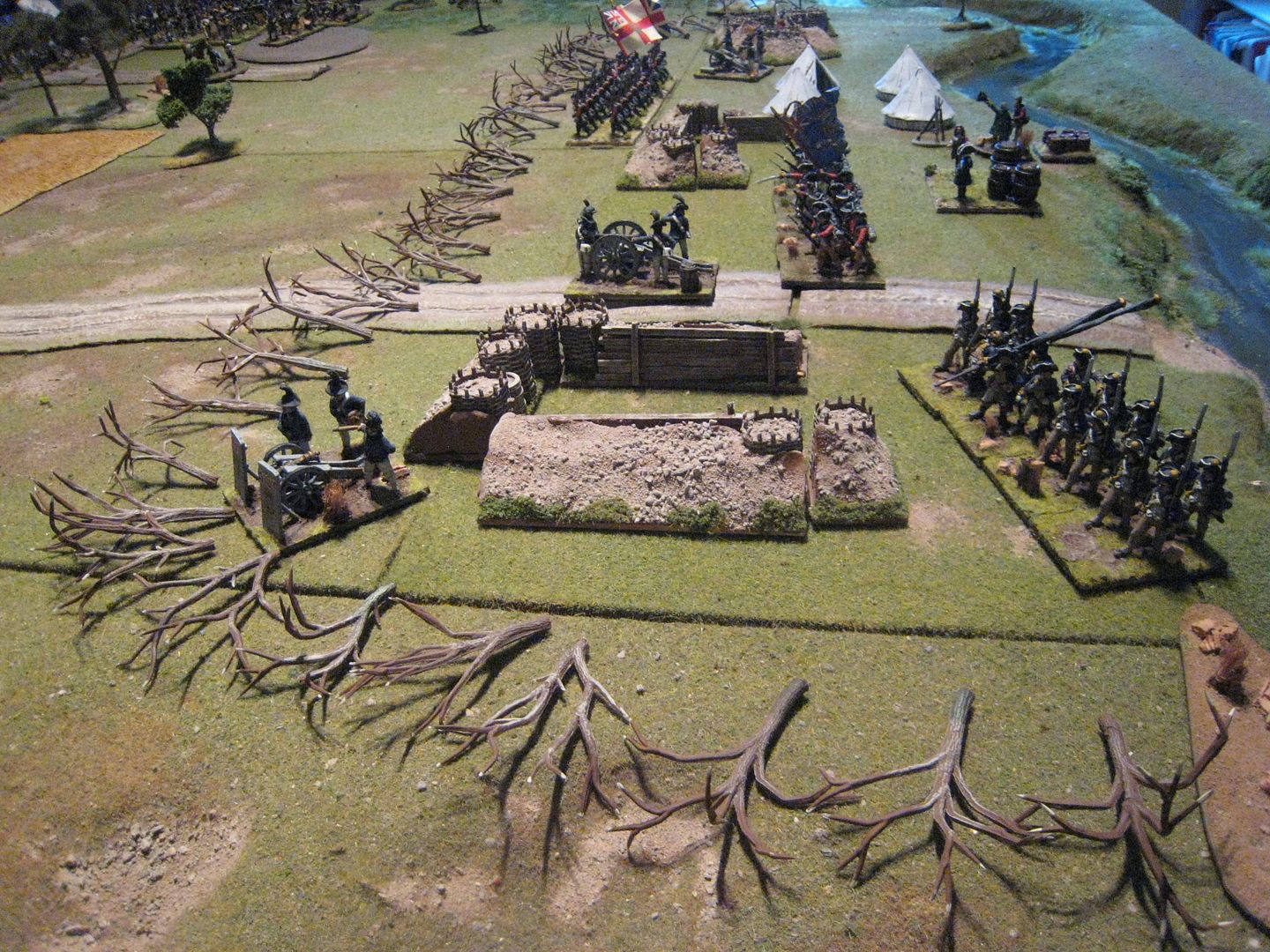
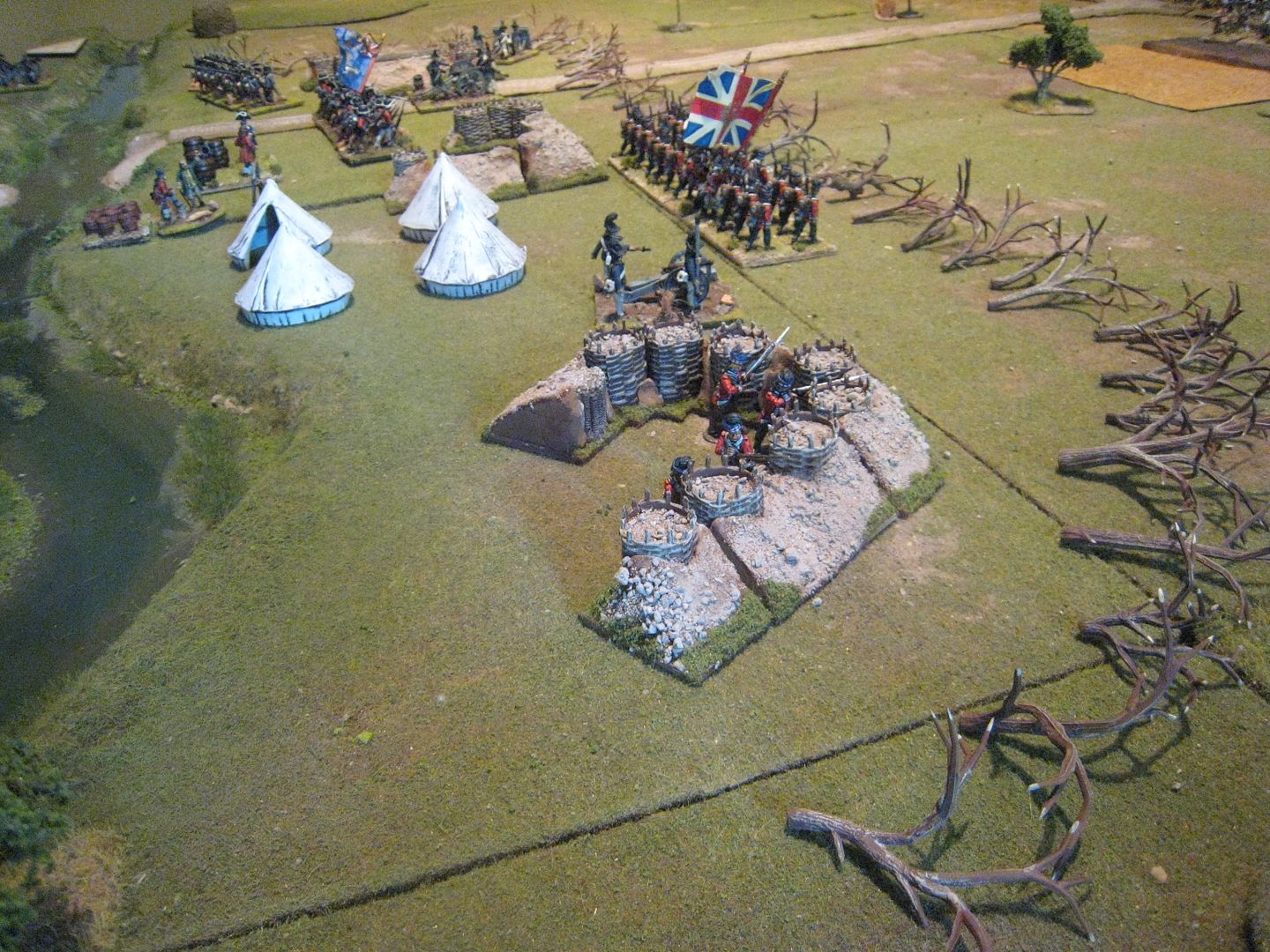
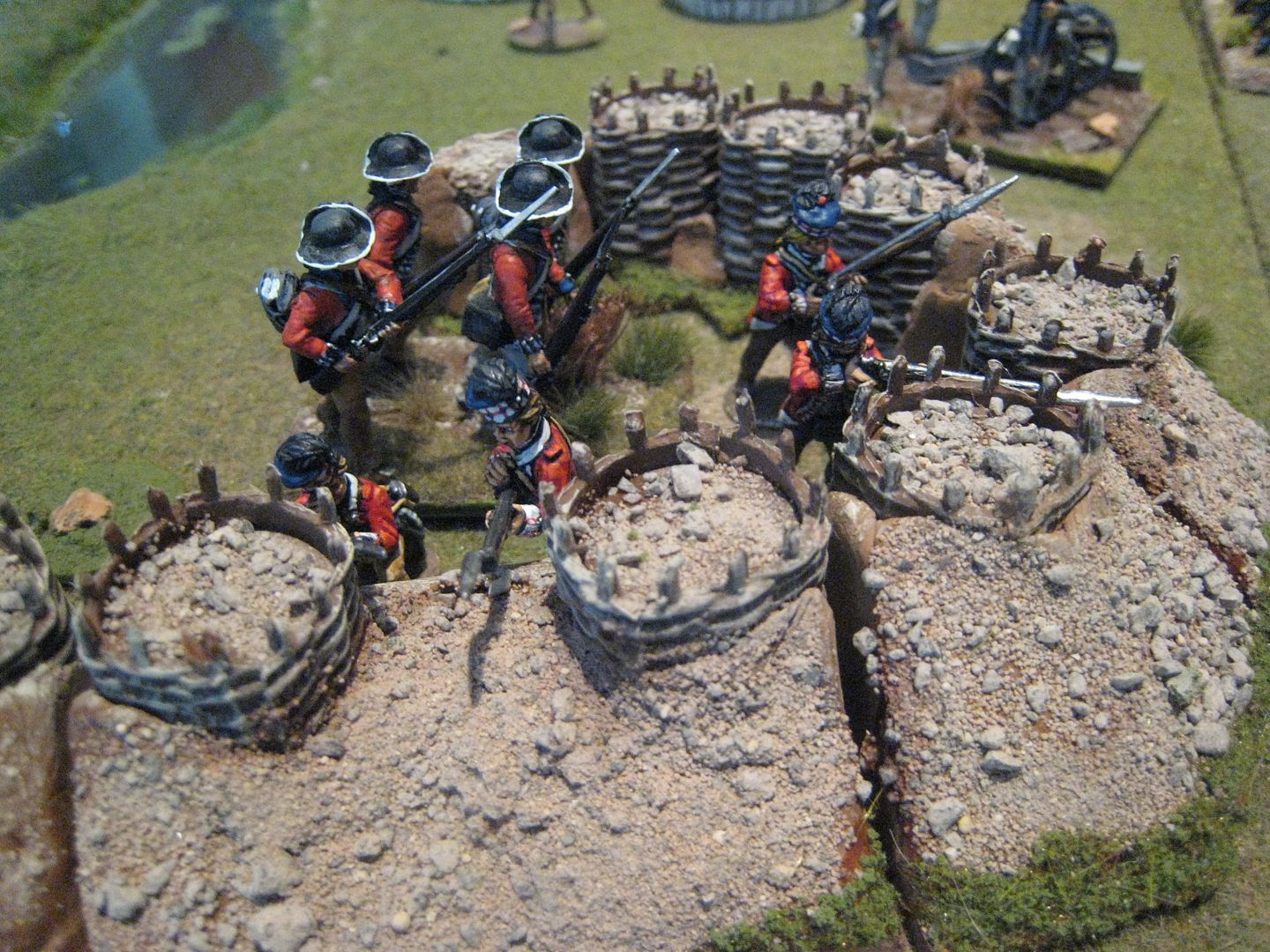
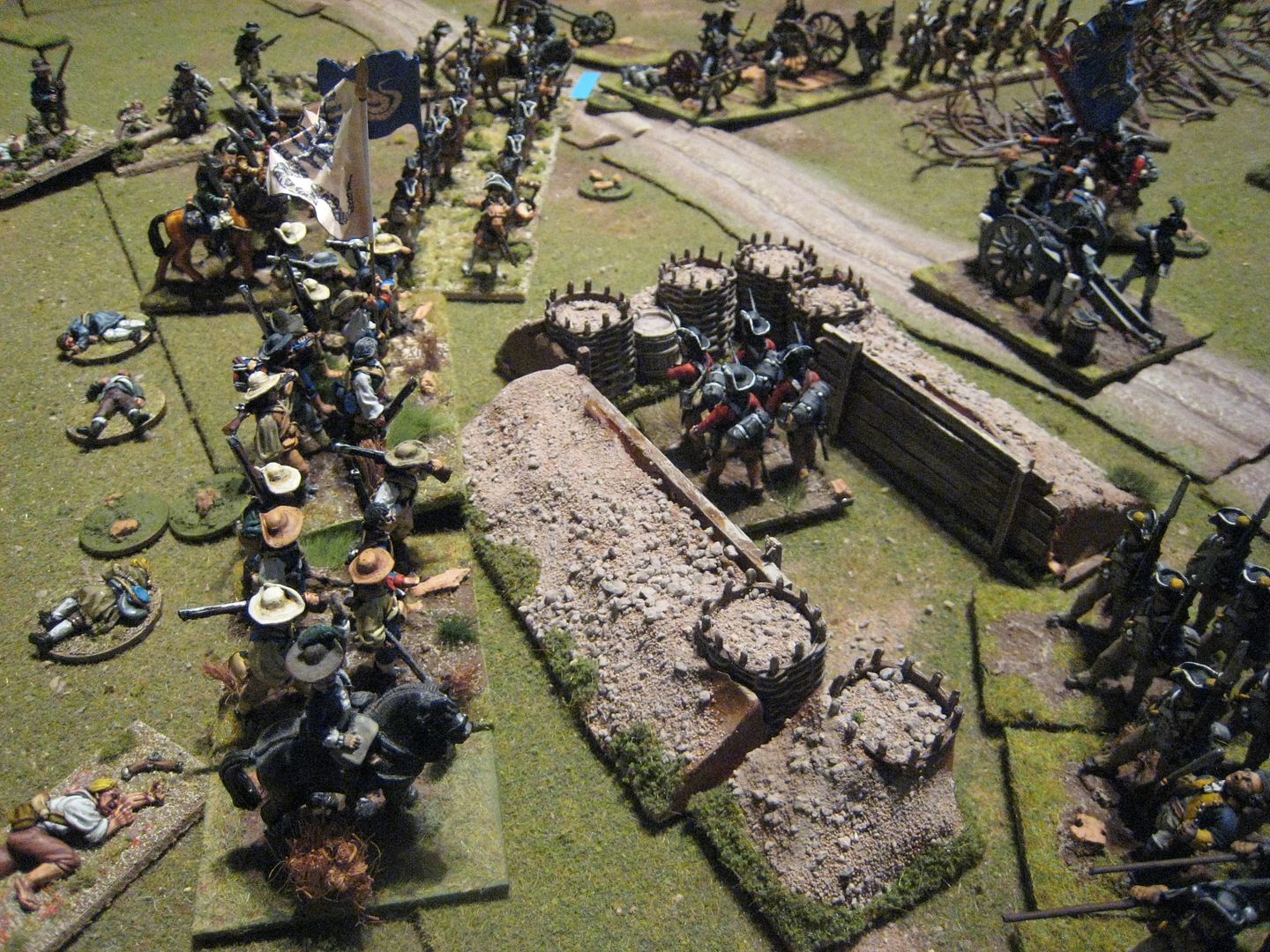
Here's the British camp.  The forces (at 1:10) consisted of: the 2nd battalion of the 71st Foot (24 figures); Hessian Regiment von Trumbach (24); South Carolina loyalists (24); one 6-pounder and two 3-pounders.  Protecting the camp are 3 redoubts, each of which has to contain 4 figures from the loyalist militia unit.  So with those reductions the British player basically has two decent-sized infantry units, one of which is graded "elite" (the 71st) and 3 pieces of artillery.  The 8-figure loyalist unit that remained after 3 bases had been detached for service in the redoubts didn't have much impact given its size. "Not much of a command for you", as Michael Caine said to Stanley Baker at Rourke's Drift, and clearly defending the entire perimeter would be difficult.  I had brought along the 4 figures from the King's Mountain Miniatures highlander range that I painted last year and these wee put in the redoubt on the right flank.  I don't think they were part of the official orbat, but we counted them for firing purposes.


The American forces greatly outnumber the British ones.  The American player has: two 12-figure skirmish units; four Continental infantry battalions (24 figures each); one Continental light infantry battalion (18); five militia battalions (of 16 and 18 figures); some militia cavalry and four guns.  That's three whole brigades, although the frontage of the British camp is such that the American player cannot bring everything to bear at once.

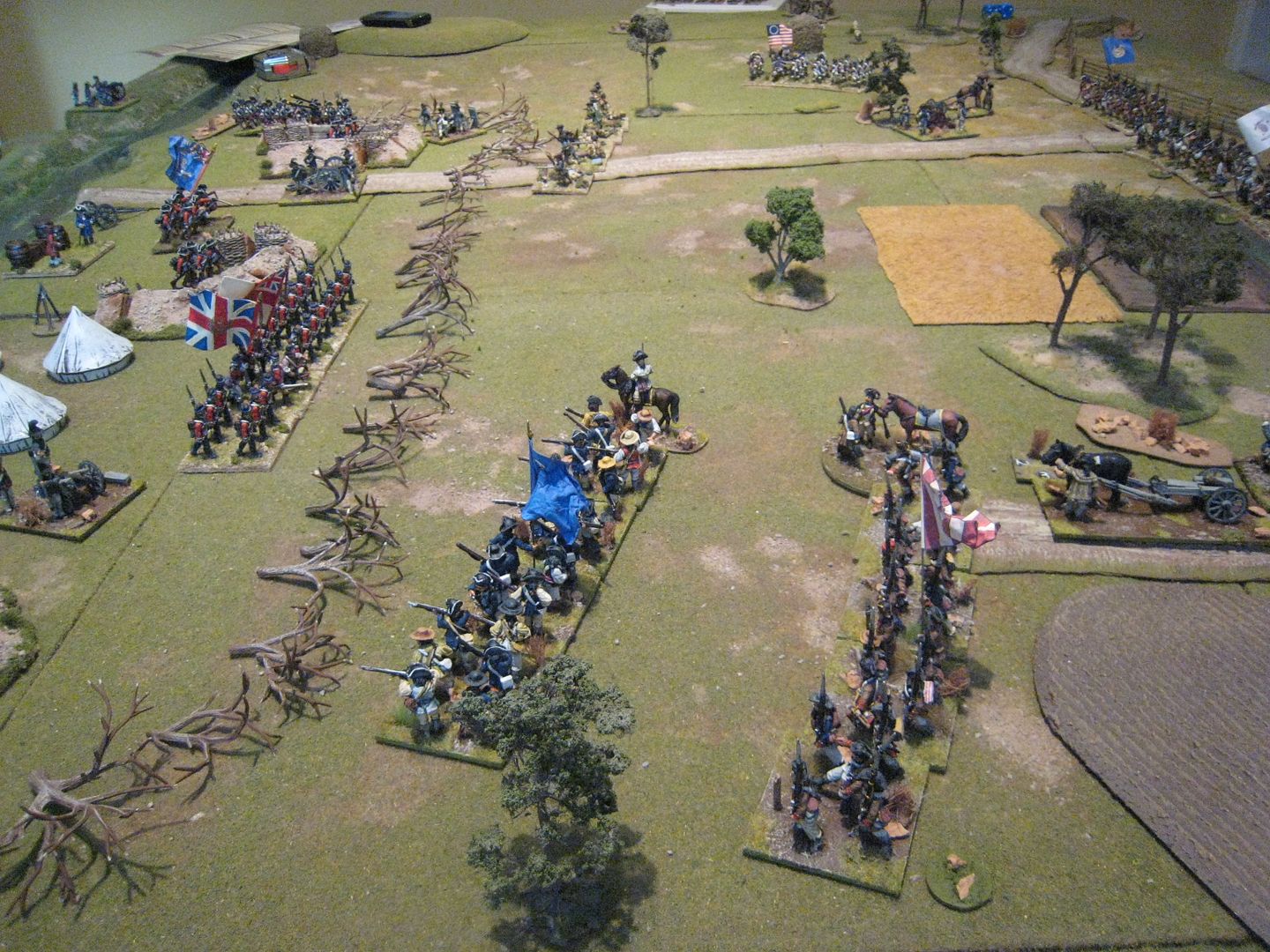
Ronan took the American side and I took the British, while EC umpired and generally threw in suggestions. The first three or so turns involved the Americans advancing into position.  On the American left the leading light infantry unit became bogged down in swampy terrain, but otherwise the units advanced steadily and Ronan began to move his militia brigade around to his right to attack the left flank of the British position.


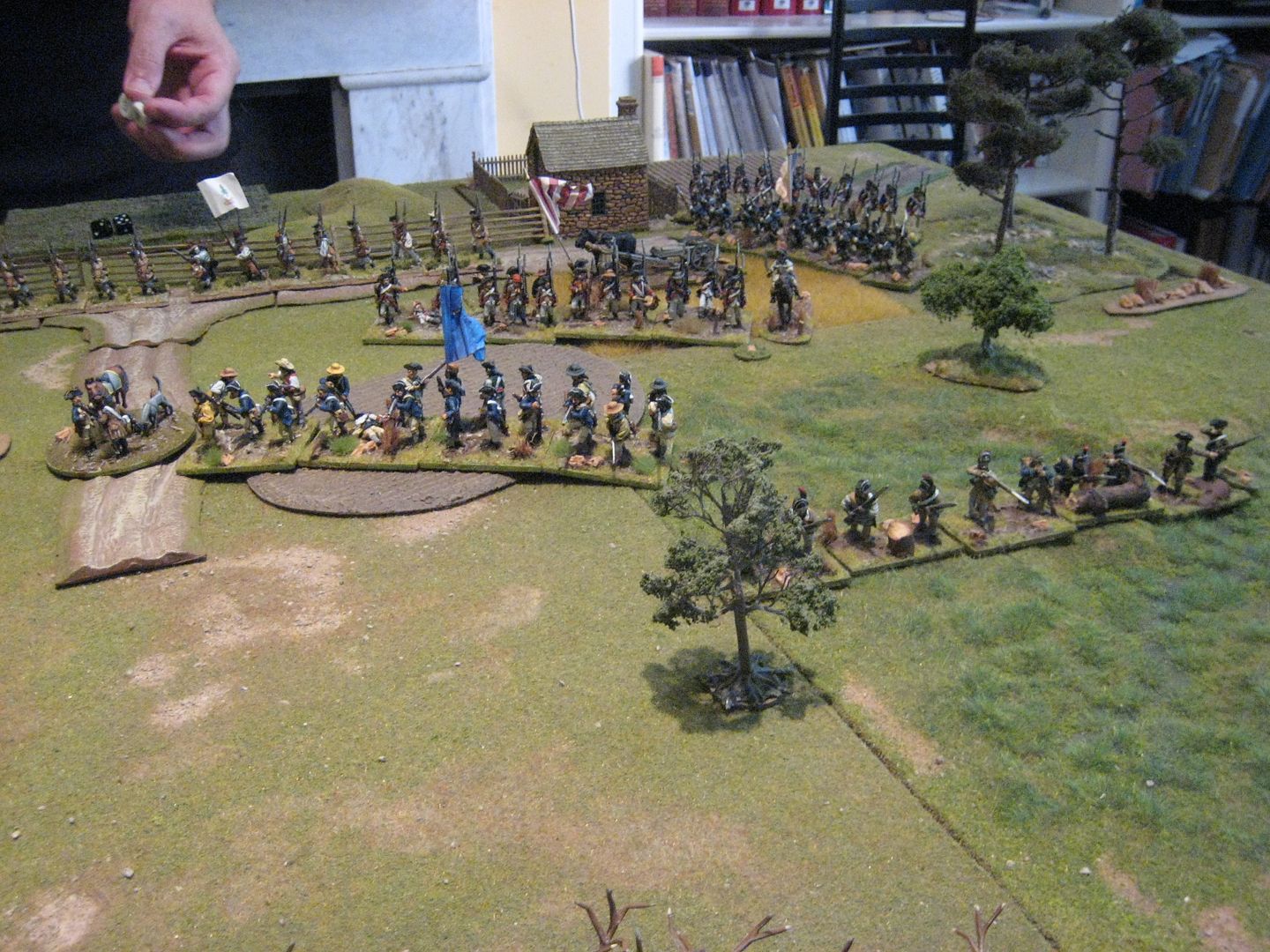
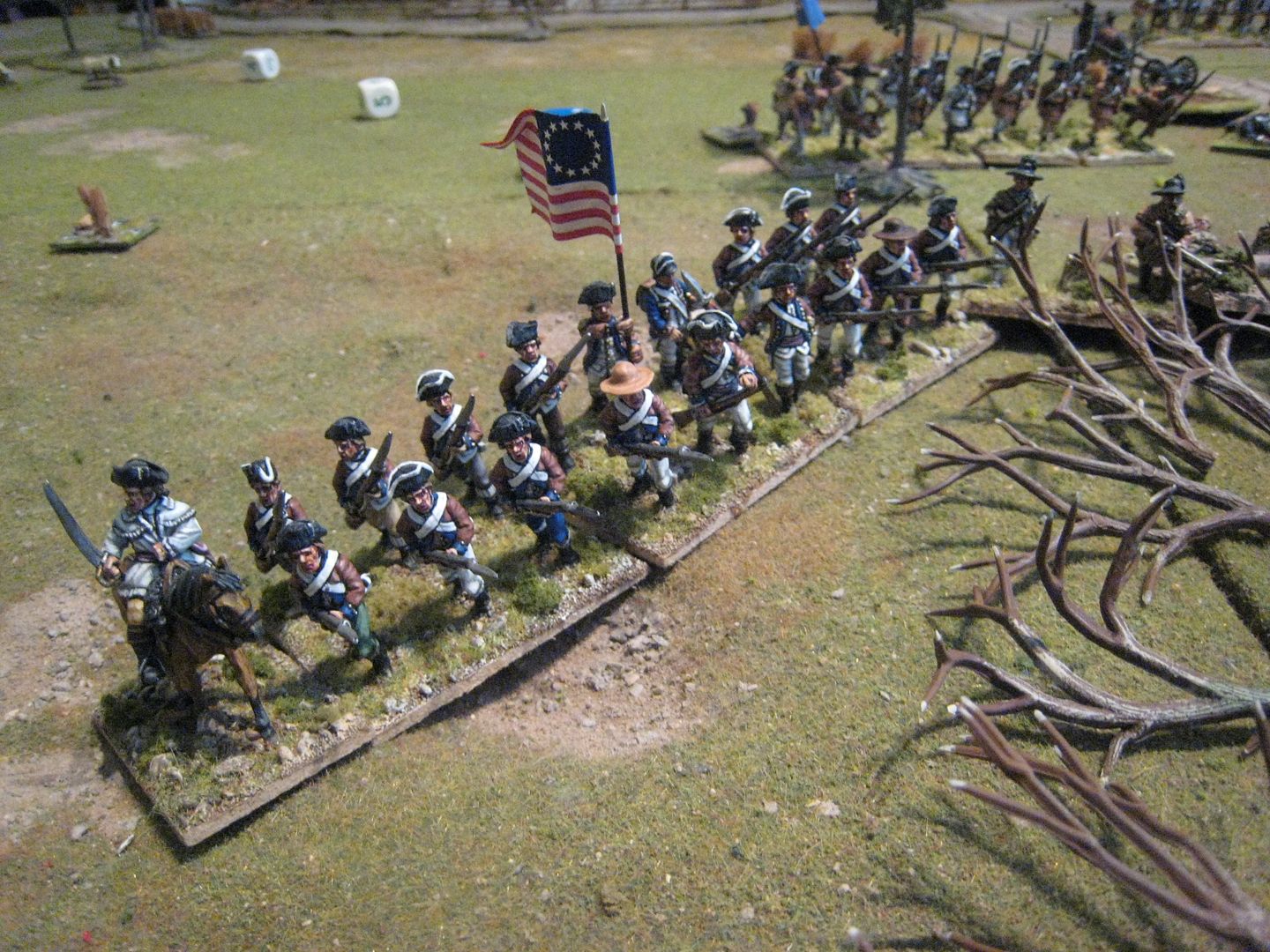
 I thought there was little point in moving my troops around.  EC had said that the 71st can be split into two units of 12.  However, I decided early on my strategy as the British player would be to resist running around the perimeter and instead concentrate fire on a couple of lead American units in the hope that this would cause some morale problems and provoke a couple of brigade retreats.  Most of the American units are graded "militia" so morale will be fragile under pressure.  That said, the brigade assaulting the British front-right, where the 71st was positioned, consisted of regular Continental infantry which would be harder to break.  Eventually the Continental brigade came into range, with a Georgia regiment in the lead and various battalions of militia in support:


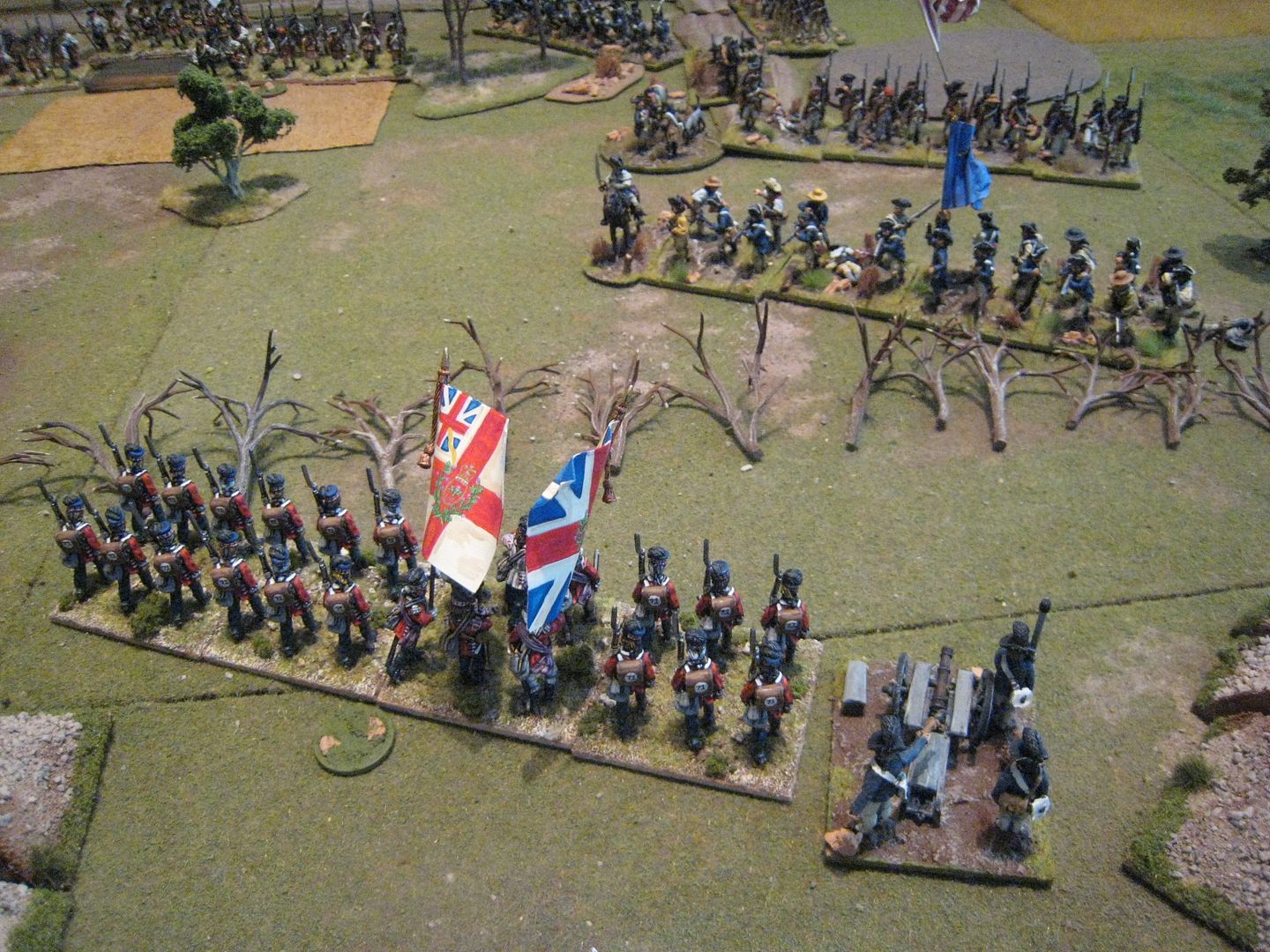
Over on the British left, the Hessians could see the American light infantry move around to the side of the position while riflemen skirmishers started probing the front of the abatis:


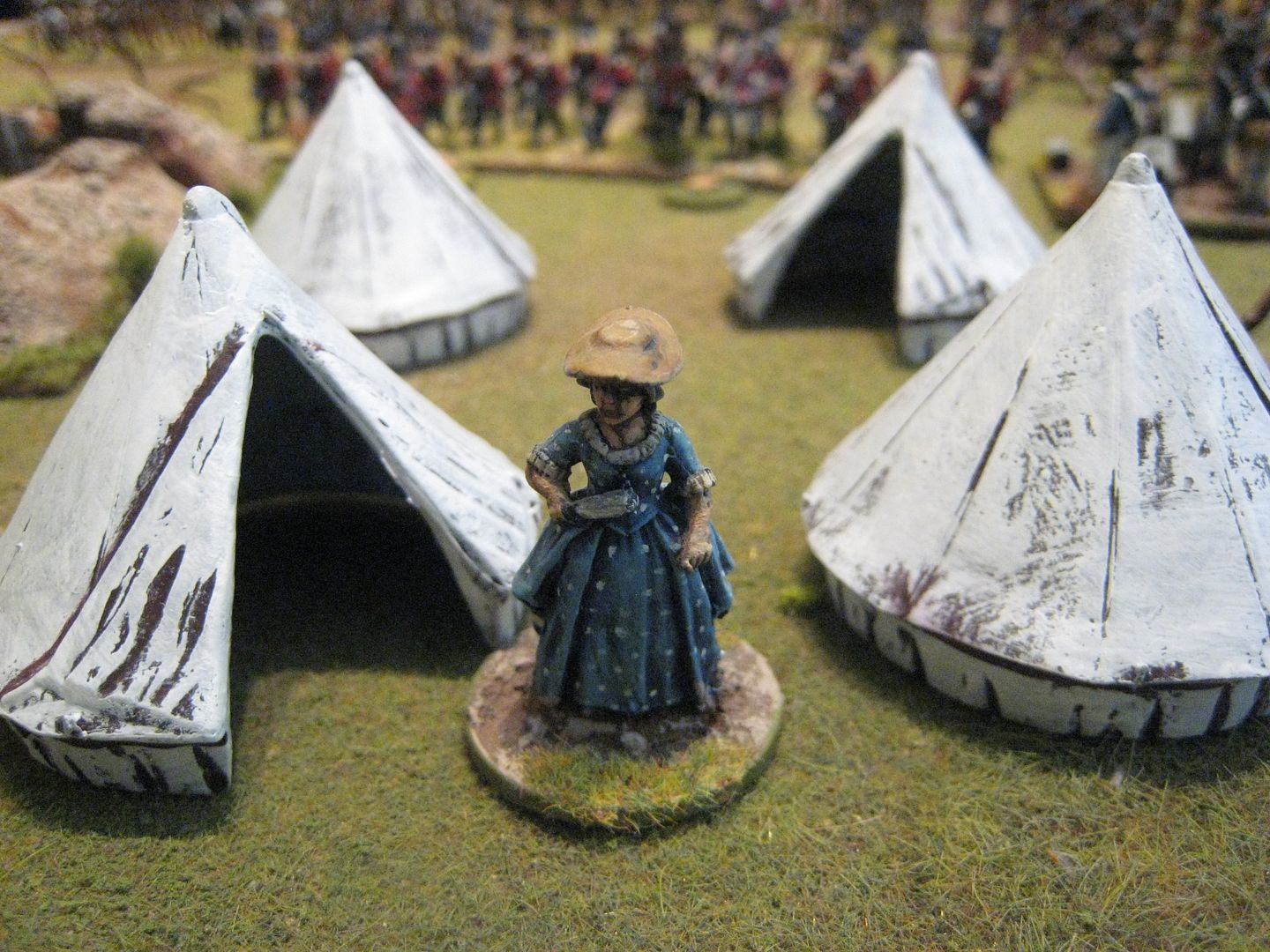
Maitland's mistress emerged from his tent to see what all the noise was, while fire-fights began and both ends of the British position:


Ronan found himself rolling low dice on his firing, while I was rolling reasonably high.  The American Continentals, opposite the 71st, survived a couple of morale throws resulting from high casualties being recieved.  But eventually the Georgians broke and took the rest of the brigade with them:


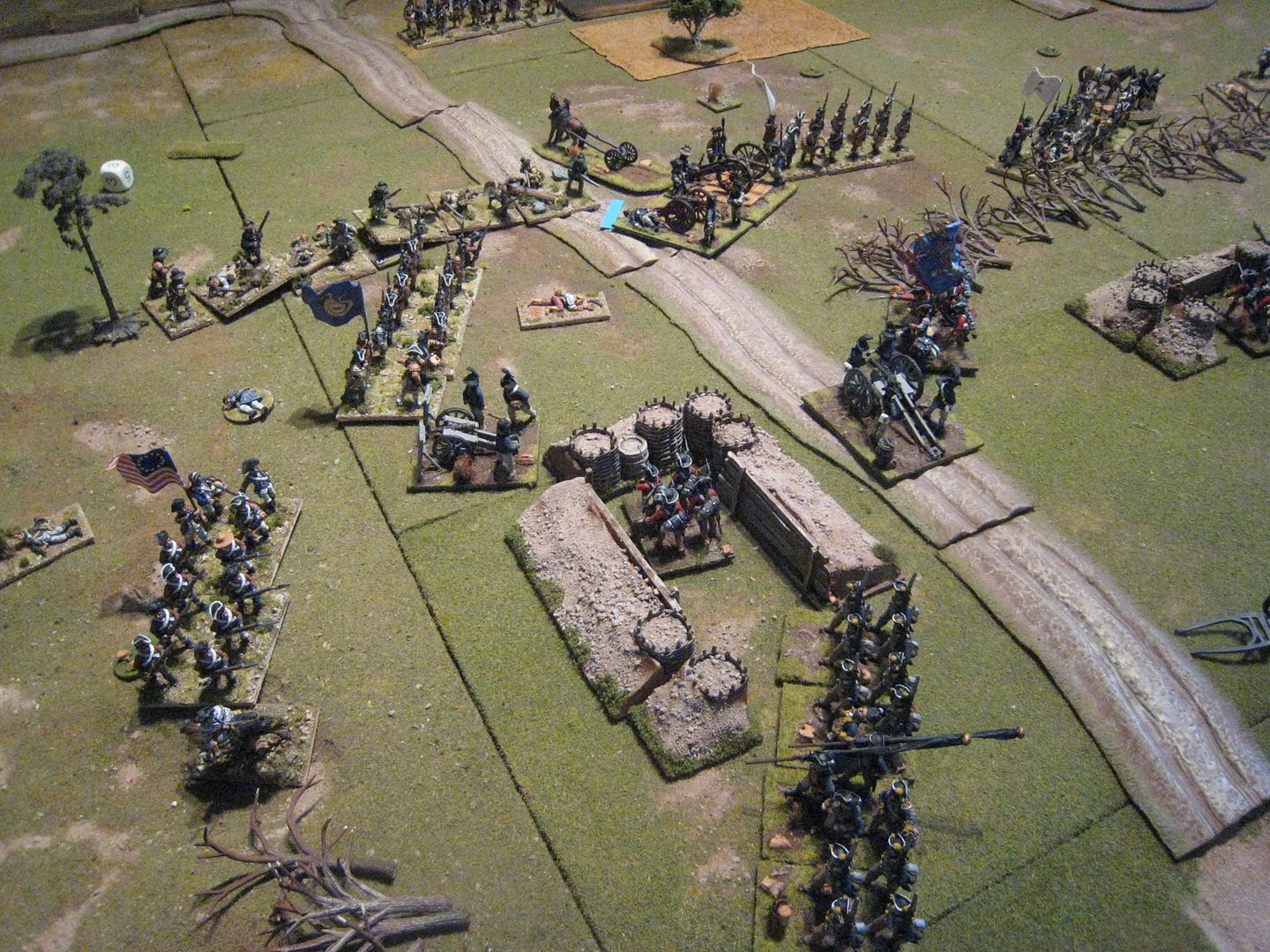
However, the Hessians came under increasing pressure when the skirmishing riflement to their right broke through the abatis.  The rule we used was that a unit had to remain at the abatis for one turn, representing work cutting through all the branches, and then took one DP (disruption point) going through it.  The British guns were firing canister at close range by this time, but I began rolling low scores and this swung things in favour of the Americans on the left.  Eventually, depiste taking casualties, the American light infantry broke through the abatis and overan the British 3-pounder battery at the corner of the position as more American militia approached the Hessian right.


Over on the British right, the 71st were now taking enfilade file from the guns that the Americans had brought up in support of their attack. The highlanders started taking heavy casualties and I realised that instead of a defence line I now had isolated pockets of troops that would not be able to deal with all the Americans now reaching the British camp.  As time was running out we accelrated the arrival of the third American brigade, which assaulted the redoubt in which the Hessians had now sought refuge.  Behind them, the 71st finally failed a morale throw and it was all over for Maitland.


This was a game where fortune seemed to ebb and flow very quickly.  When the Continental brigade retreated I thought "let's now do the same on the other side of the camp" but the dice failed me and the position was reversed.  Winning the initiative and so having the ability to fire first was crucial for the British player, and I lost that too in the later stages.  Another problem for the British is being able to move inside the camp.  What I probably should have done was to play a fighting retreat back away from the abatis and keep the units together, instead of allowing troops to get cut off.   The American player needs to control his dispositions carefully, as otherwise units are left in the middle of the table with nothing to do.  Getting into shooting contests is also unhelpful for the American player - I suspect the best thing is to get over the abatis as quickly as possible and try to overwhelm the British.  Of course if charges fail to go in, as happened with the Continentals, one is left stuck in a firefight.  We had thought that this game might be over very quickly, but in fact it kept going for about 10 turns and we weren't quite finished at the end.  

It's a neat little scenario.  You get the chance to have a British camp and lots of Southern militia types on the table and the American player has rather more thinking to do than in several other better-known battles.  I painted my 71st years ago using Perry marching figures, but I'll have to paint another battalion's worth using the King's Mountain Miniatures firing pose figures.       
Monday, 5 August 2013

Something completely different (2)

 
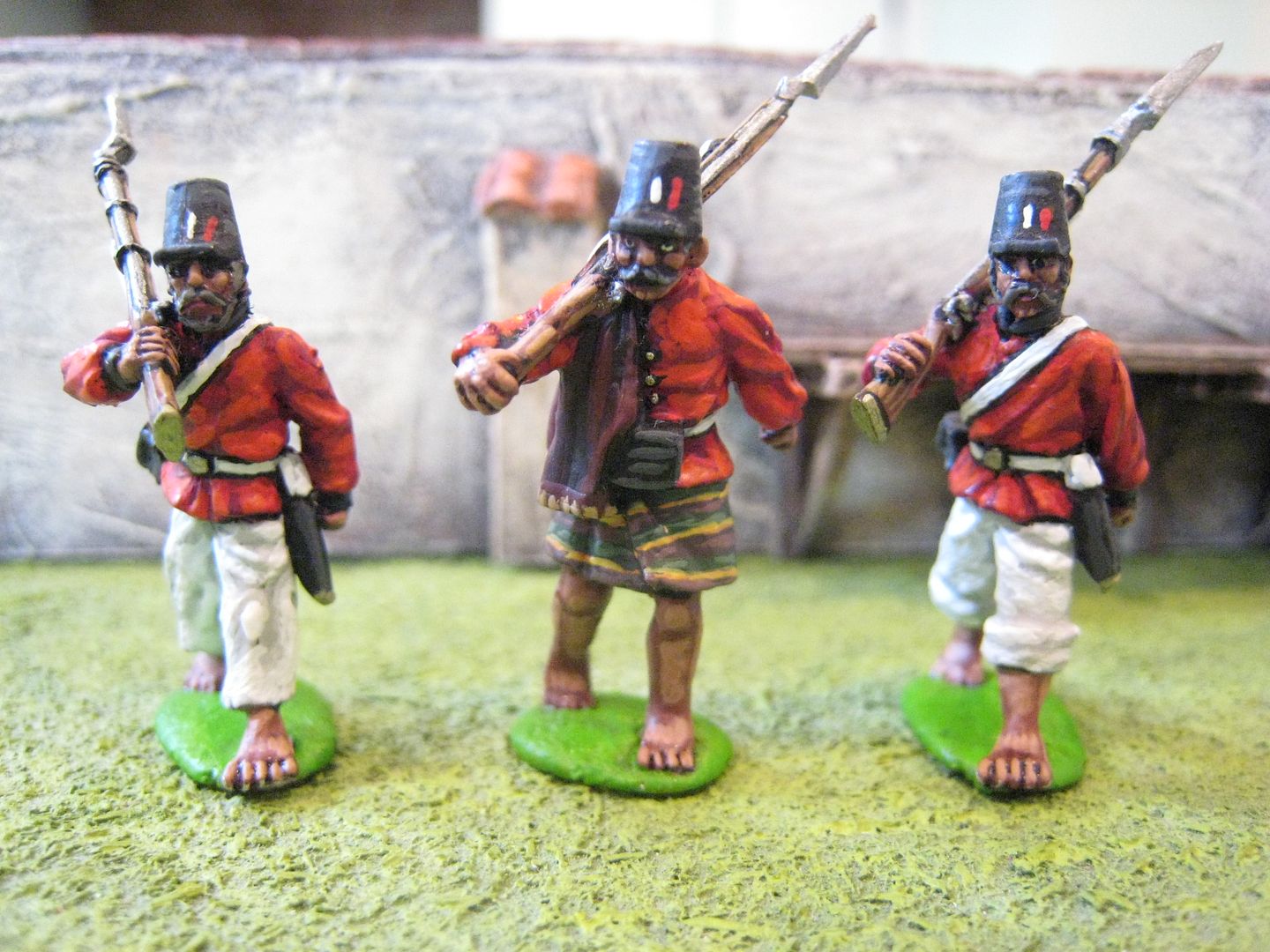
Here are 3 test figures from a new range in respect of a war that I hadn't even heard of until I saw the figures advertised.  Anyone like to hazard a guess as to the period?

You guys are way too clever - correct answer in the very first resposne!  Yes, these figures are for the Paraguayan War, aka the War of the Triple Alliance, which was fought from 1864 to 1870.  I've just finished reading a short synopsis of the war and it sounds a pretty horrid affair.  It was a diasaster for Paraguay as some 40% of its population died (including a large number of civilians who died from disease imported by its enemies' armies).  The destruction of Paraguay's male population resulted in its later armies consisting largely of children and old men.  The battles appear to include a few stand-up fights but lots of sieges and assaults on entrenched positions.  I'll have to do more reading to work out exactly what gaming opportunities are presented by this period, but it falls squarely within "my kind of thing": off beat period, nice figures, colourful uniforms (gaucho cavalry!).  I wonder what the terrain would look like; I'll have to do some digging on that too.

The figures are from a new company called Kingscarbine Miniatures.  Nuno, the proprietor, is well known to First Carlist War gamers.  He recently posted a proposed list of figures for this range on TMP - if the project continues this should be pretty comprehensive.  I just hope that the project is viable - there have been lots of new ranges recently that produce a handful of packs and then go quiet.  So whilst I have plenty on my painting plate at the moment (or should that be "palette"?), I'm happy to give this project some support.  I bought 1 each of the packs in the initial release and will aim to have those painted by the end of the month.  I seem to be butterflying quite badly at the moment; not sure why. 
Wednesday, 31 July 2013

French line foot artillery (6)

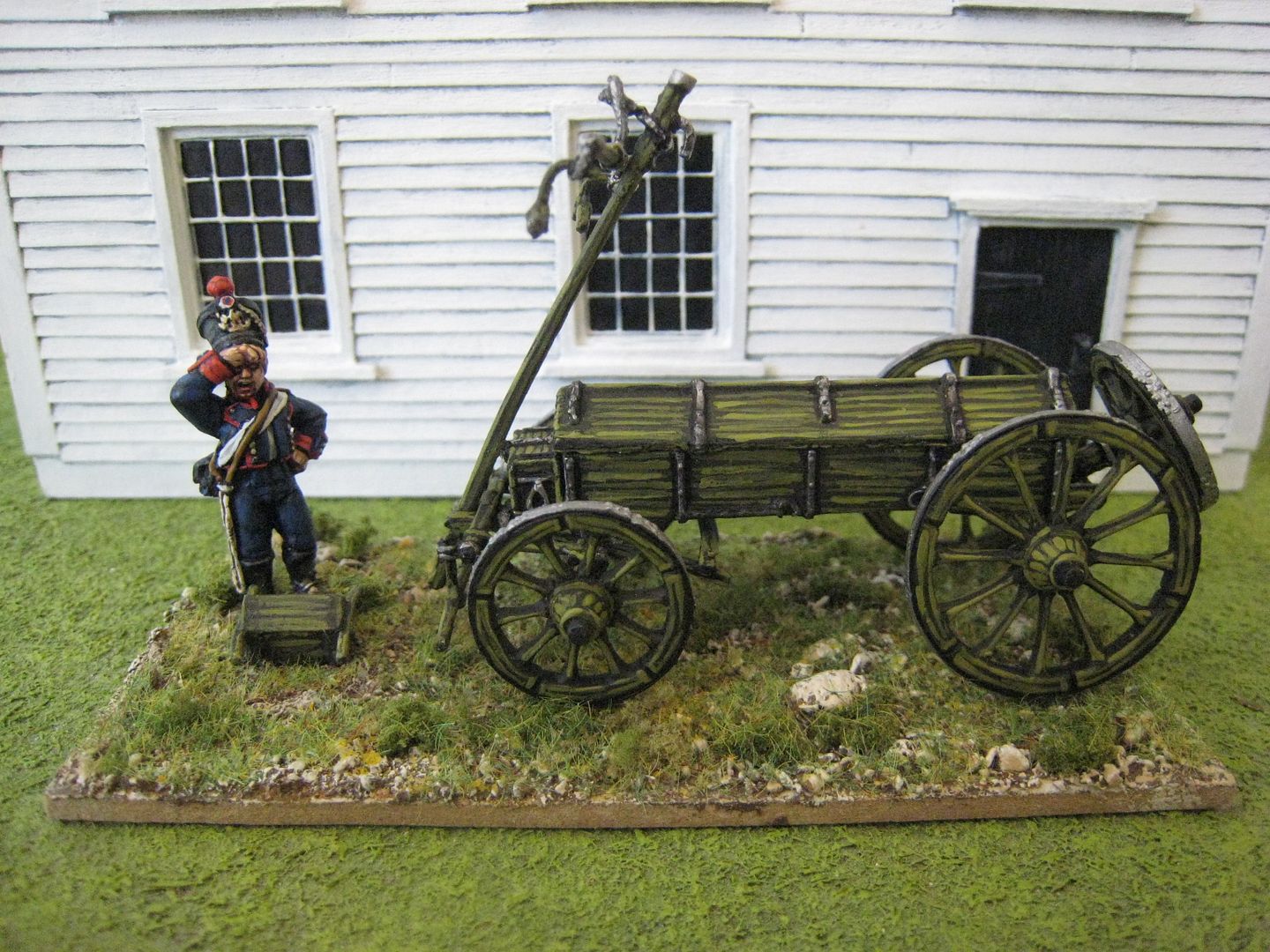
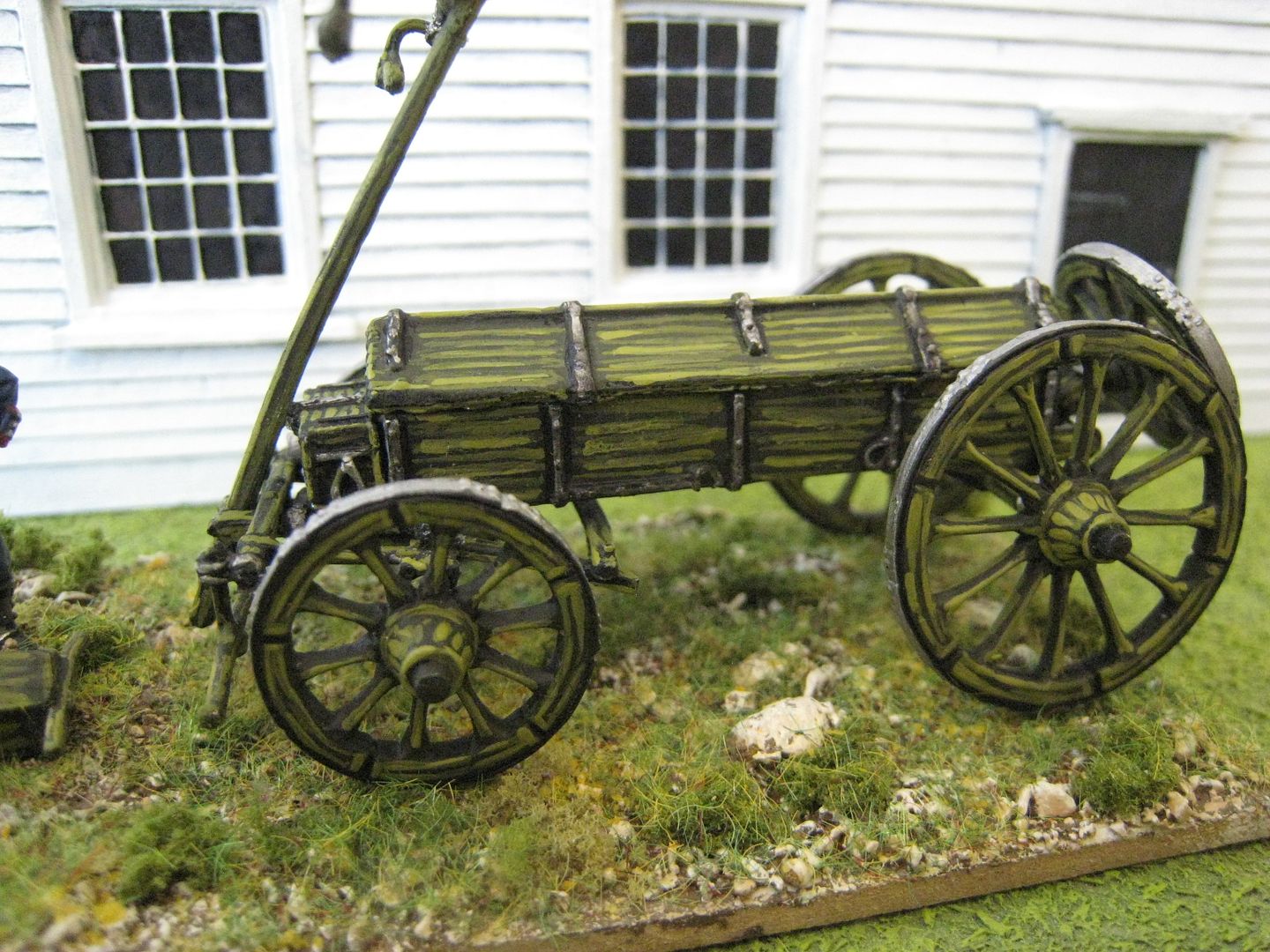
This the French Napoleonic caisson made by Westfalia Miniatures, with a Foundry artilleryman.  I've posted some stuff from Westfalia Miniatures before (which can be found with this new label).  They produce a variety of off-beat Napoleonic figures and equipment, including a new later-war Saxon range.  This caisson is just the thing to have behind a battery of French guns.  It comes in about 10 different metal bits and, in the absence of any diagram or instructions, is a bit fiddly to put together.  I had to rely on photos opf the completed model to work out where the bits went.  Even so, I still found two pieces left over which I cannot place at all.  That said, once you see where (almost) everything goes it doesn't take long to glue together.

I had a think about what figures, if any, to add to the caisson.  I originally thought about a couple of wounded Frenchmen, but then realised that a gunner fetching ammunition would be much more appropriate. So I used an artilleryman from a Foundry gun crew set I painted in August 2010.  I originally based this chap on his own separate base (the Foundry pack has 6 figures and I only base 4 with a gun).  I had meant to order another pack, but forgot and so decided just to plonk this figure into the base.  I like the way the pole on the caisson rather towers above him - it looks rather menacing.

I painted the caisson while on holiday in Norfolk for a week at the beginning of the month.  I had never taken painting stuff on holiday before, but I realised I wouldn't need more than 4 paints to do the caisson and a couple of other French cannon pieces.   To recap on the paints used:  for the artilleryman - Foundry palette "French Blue 65" with a final highlight of Foundry "Deep Blue 25B; for the woodwork of the caisson -  base coat of Vallejo "Yellow Green" mixed with plain black, then first highlight of  "Yellow Green" and second highlight of "Yellow Green" mixed equally with Vallejo "Dark Yellow".  I did actually paint the inside in a nice pale wood colour, but the top is glued shut so that was a total waste of time!  While we're discussing paints, in case anyone is interested, I paint my bases with an undercoat of GW "Steel Legion Drab" (formerly known as "Graveyard Earth") and then highlight first with Foundry "Base Sand 10B" and then with Foundry "Boneyard 9C".  I've always made my bases quite bright, for a couple of reasons.  First, I like my figures to "pop out" and brighter bases help that to happen.  Secondly, unless you're in a forest or mud, ground colours are always lighter than you think, especially when viewed from a distance.

Westfalia Miniatures are available in the UK from Empress Miniatures, although I placed an order with the company direct without any problem (that was when they were based in Europe - I think they've moved to Canada now, so postage may well be quite a lot more now).  This caisson costs £8.  Foundry do a very similar one for £12.  Easy decision!

A caisson and an artilleryman.  Painted August 2010 and July 2013.


Sunday, 28 July 2013

Camp Frenchmen (4)

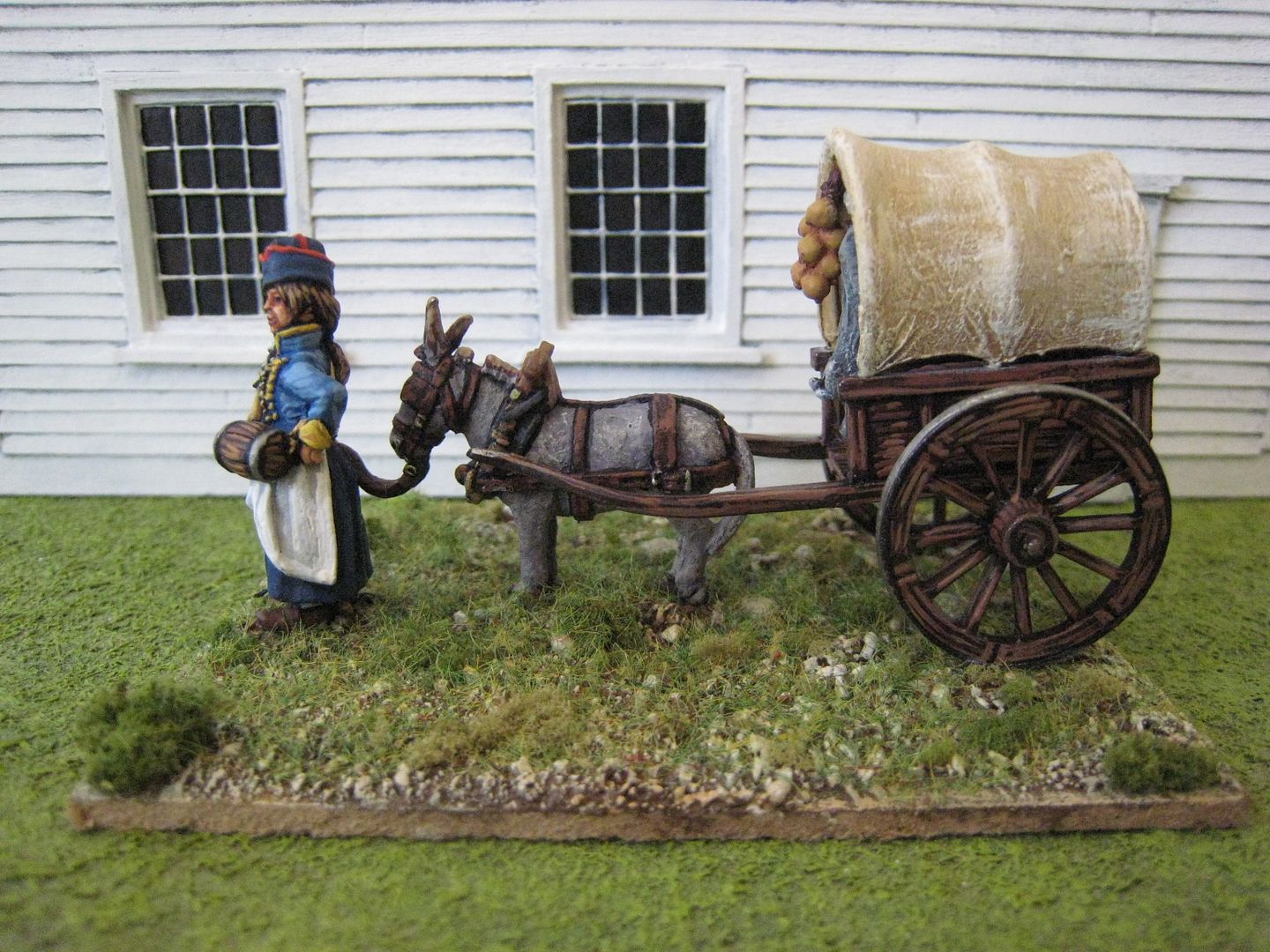
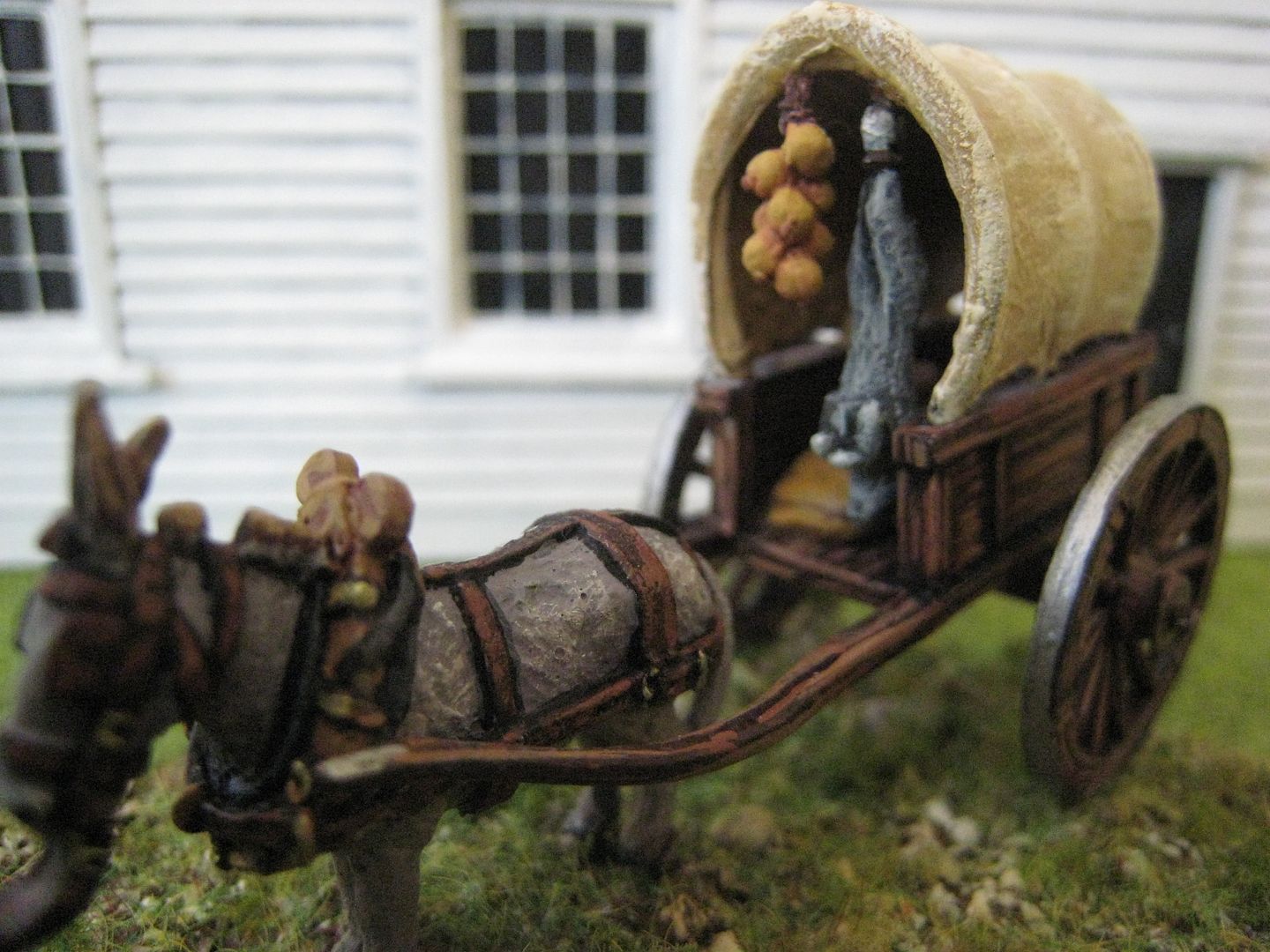
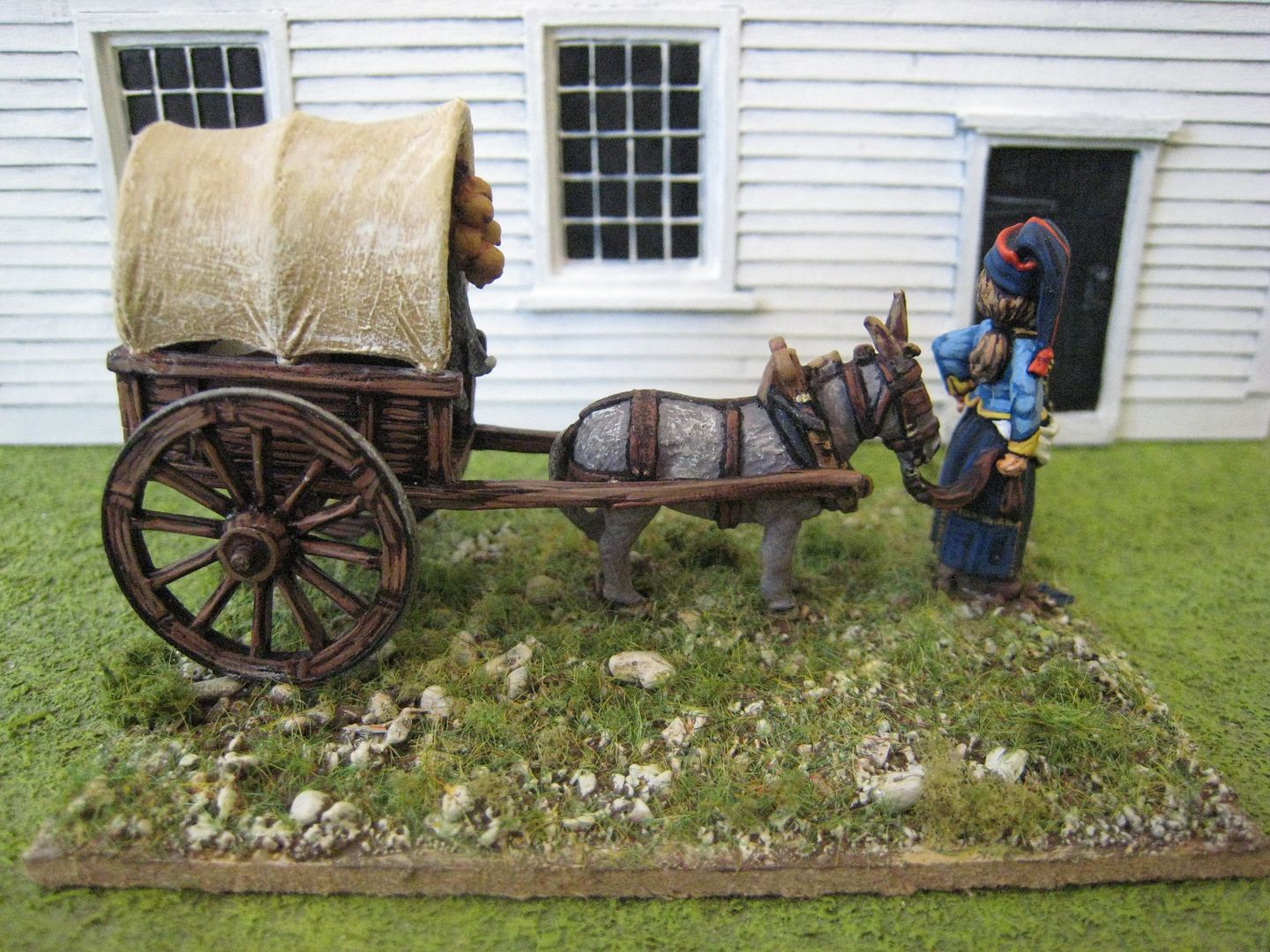
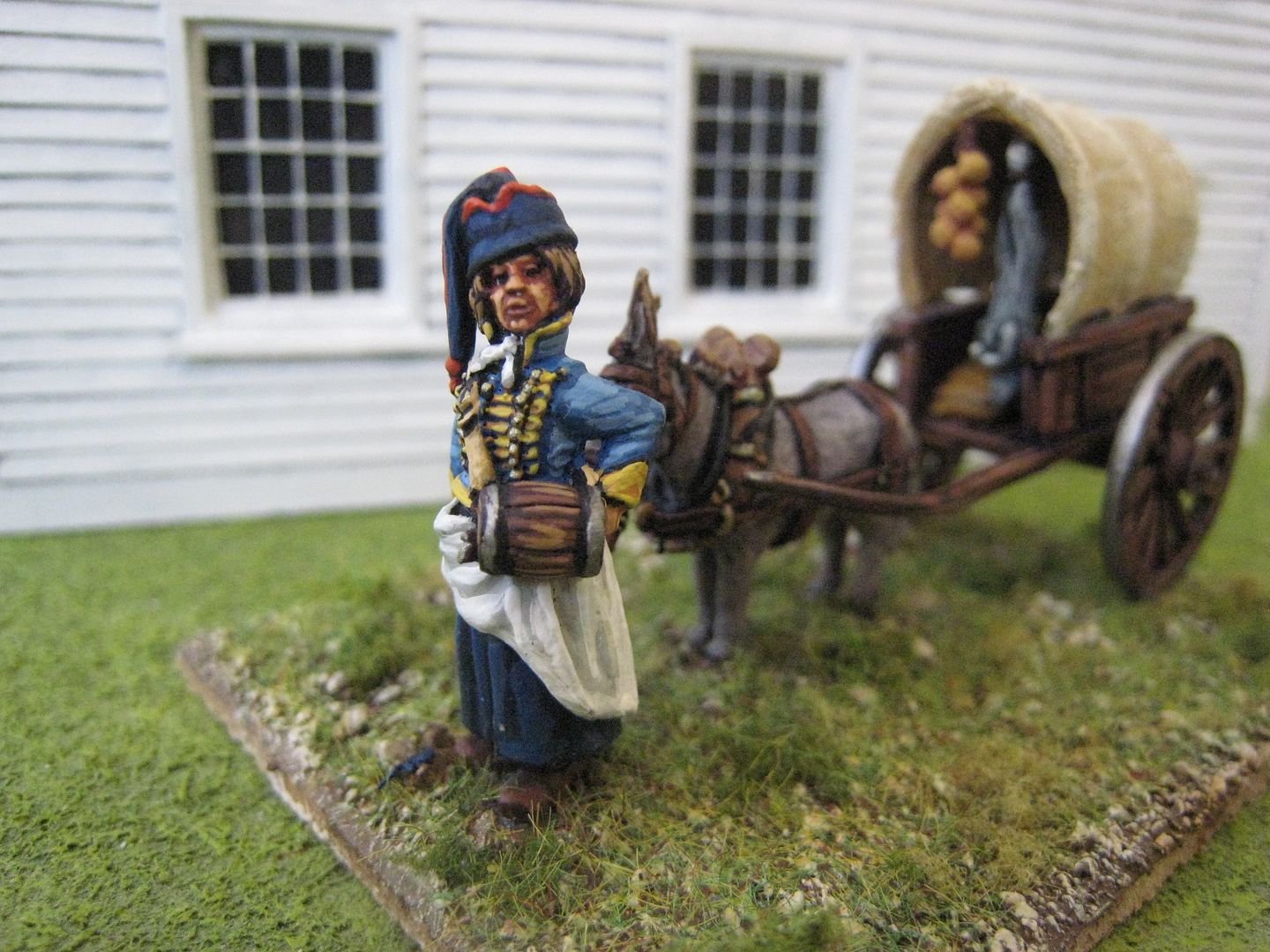
This is the last of the Eureka Miniatures French camp sets, a cantiniere with a provision cart.  This is an all metal set, with lots of different bits of "provision": loaves, sacks, boxes, fruit, hams and various things the identity of which I haven't worked out yet.  The cart is too small for all these items, which is handy because you can then use them for something else.  I intend to find a table, a couple of suitable figures and make some sort of camp rations vignette.  The canvas cover is separate so I suppose you could leave it off and just pile everything into the cart.   I followed the pictures on the Eureka website and hung a rabbit and a string of onions from the top of the cover. 

As with all these sets, I wanted this to stand muster for both the AWI and Napoleonics.  So with the AWI in mind I painted the cantiniere's jacket/dolman in the sky blue and yellow of Lauzun's Legion.  I don't know whether this matches the colours of any particular Napoleonic hussar regiment, but I would be surprised if it didn't.  I also painted the skirt in standard dark blue as opposed to any fancy tricolore stripes.  I decided to paint the cart in my normal wood colours rather than French artillery green.  The cover is just Foundry "Canvas A" dry-brushed with the B and C colours.    

1 figure, a donkey and a cart full of stuff. Painted June 2013. 


Sunday, 21 July 2013

Camp Frenchmen (3)

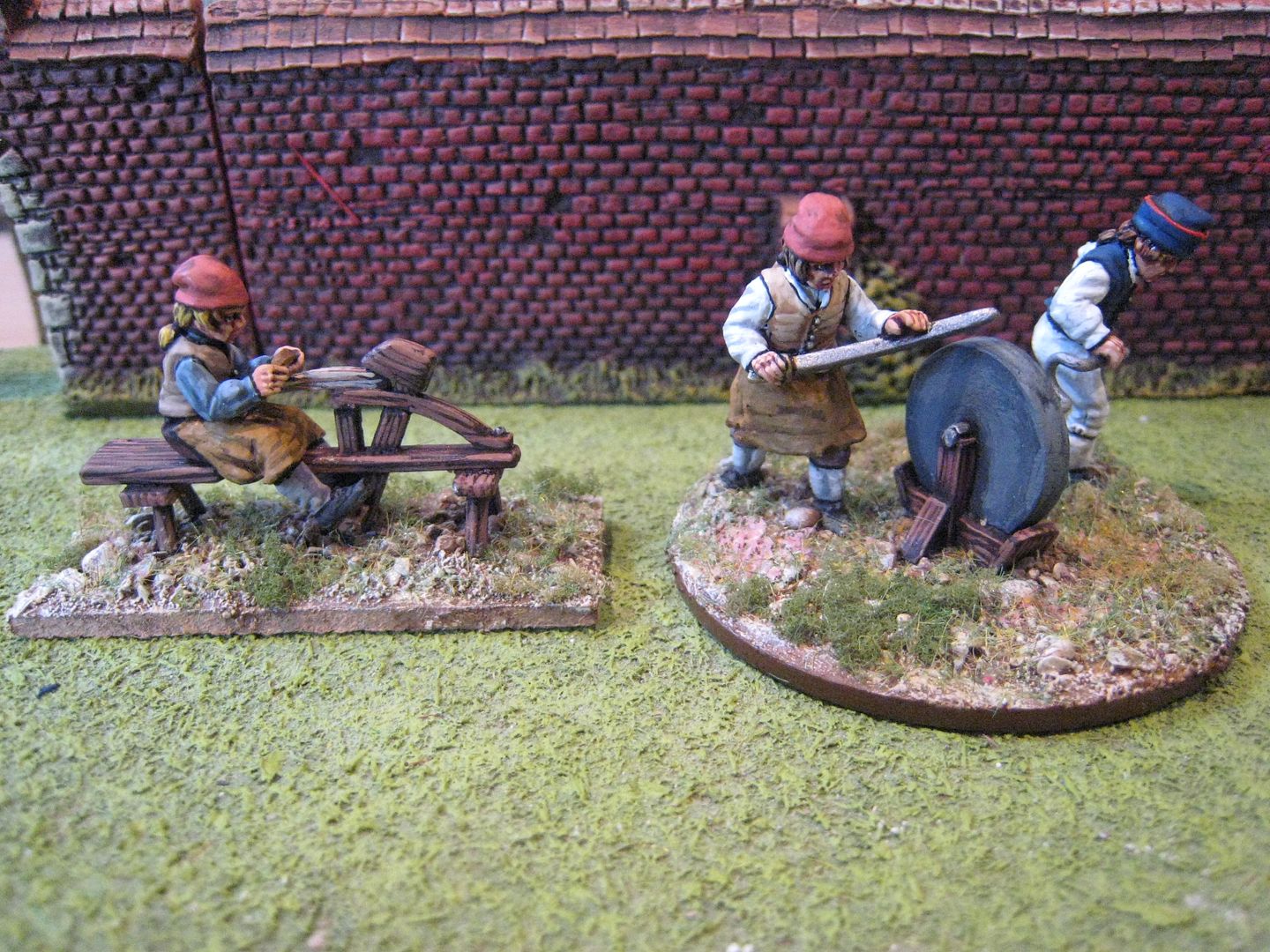
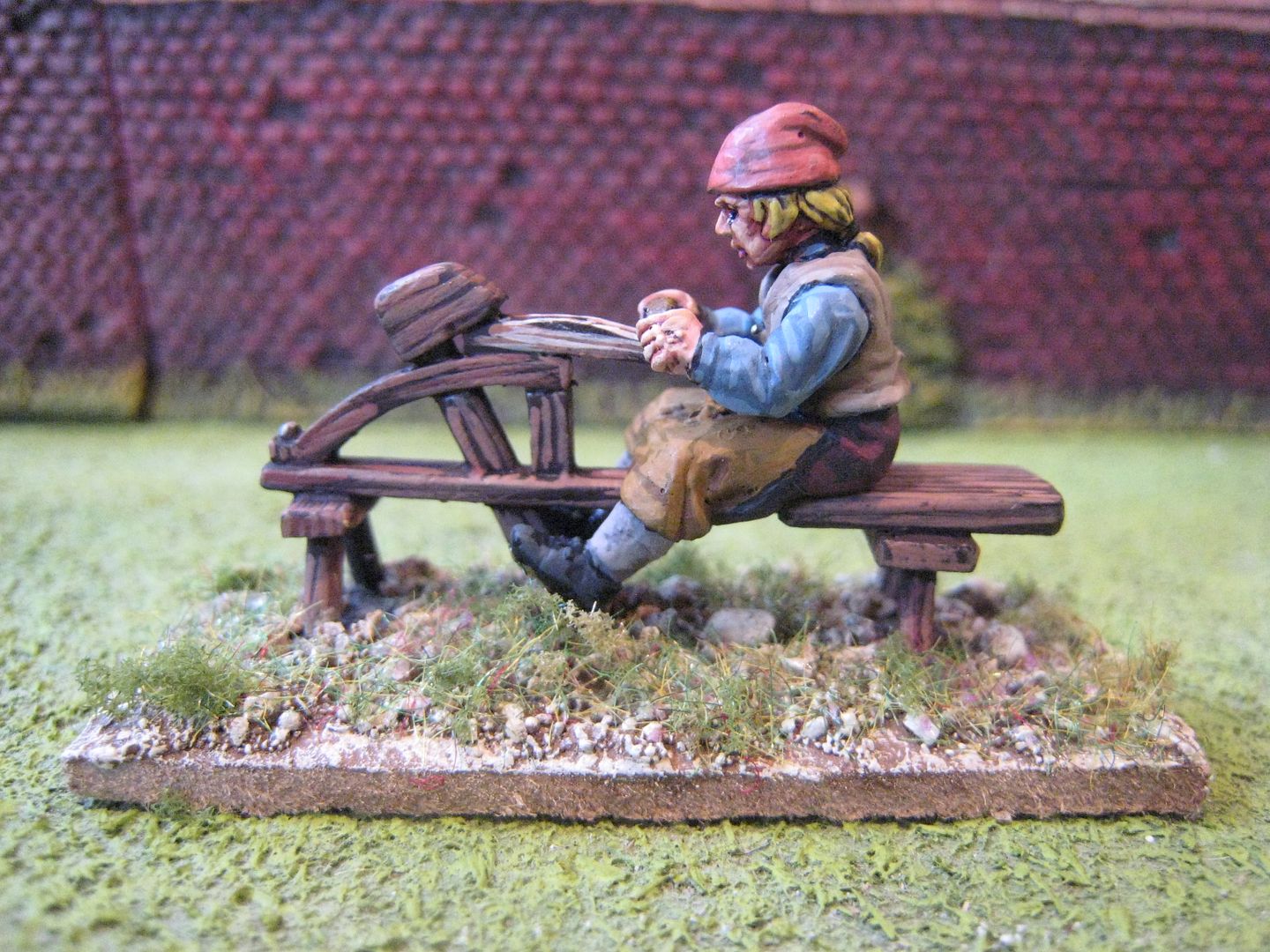
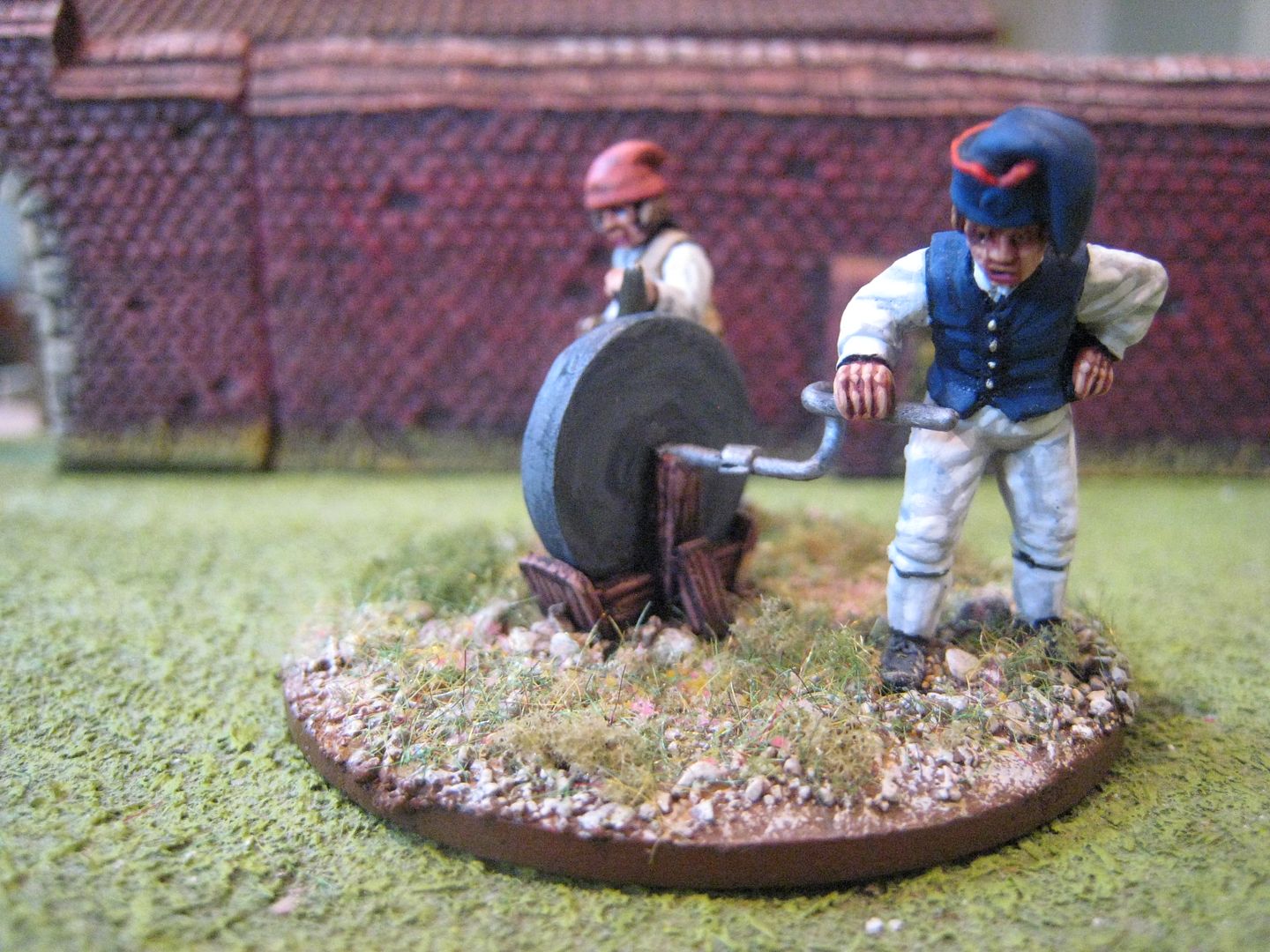
Here are the next two French camp vignettes from Eureka Miniatures: a sword sharpening team and a wheel wright.  Again, I tried to paint these sets with both AWI and late Napoleonic use in mind.  The chap turning the grindstone in the sword sharpening in supposed to be an artilleryman, which is why he has a dark blue waistcoat (unfortunately I forgot to give him dark blue breeches as well!).  The other 2 figures are just supposed to be dressed in civvie clothes.  There's not a huge amount more to say - the grindstone was painted with the Foundry "Stone" palette; the workers' aprons with Foundry "Leather"; the Phrygian hats with Foundry "Terracotta".  These are nice little pieces that don't take up much table space and, in you don't mind the hats, are probably usable for anything from 1750 onwards.  Next up is the cantiniere set, which I finished basing this morning.   

3 figures, painted February 2012.


Tuesday, 16 July 2013

Camp Frenchmen (2)

I've been working my way through the 3 Eureka Miniatures "Wars of the French Revolution Camp Sets", with a view to using them for both Napoleonic and AWI games.  It takes a bit of chronological fiddling to squeeze these figures within the AWI and the 1815 campaign,because most of the men are wearing hats that are closely identified with the French Revolution, notably the "Phrygian cap" (otherwise known as the "Liberty cap" and the Smurfs' hat).  In ancient times the cap was associated with the inhabitants of Asia Minor ("Phrygia" being part of what is now Asia-side Turkey) but was worn throughout the Greek and Roman empires.  It is thought that the style was adopted by freed slaves, and that is how its association with liberty and freedom began.  This of course reached its zenith wht the French Revolution.  Apparently Napoleon hated the phrygian cap, in which case it is probably unlikely that tradesmen working with the army in 1815 were still wearing them by the time of Waterloo.  Then again, who knows what they types of non-uniformed people wore.  There doesn't appear to be a consensus on how the Phrygian cap came to be adopted by the French revolutionaries.  It became a standard symbol or "revolution", and was worn by patriots in both America and France.  One argument is that the French saw it being used in the Americas prior to the revolution; another that its use began in France and the cap was then exported to America.  So there is some scope to argue that some people in America in 1781 might have worn this hat, perhaps early radicals whose ideas were flamed by the American cause for which they were fighting.  To be honest, though, it looks unlikely that the cap was worn with revolutionary purposes prior to 1790.
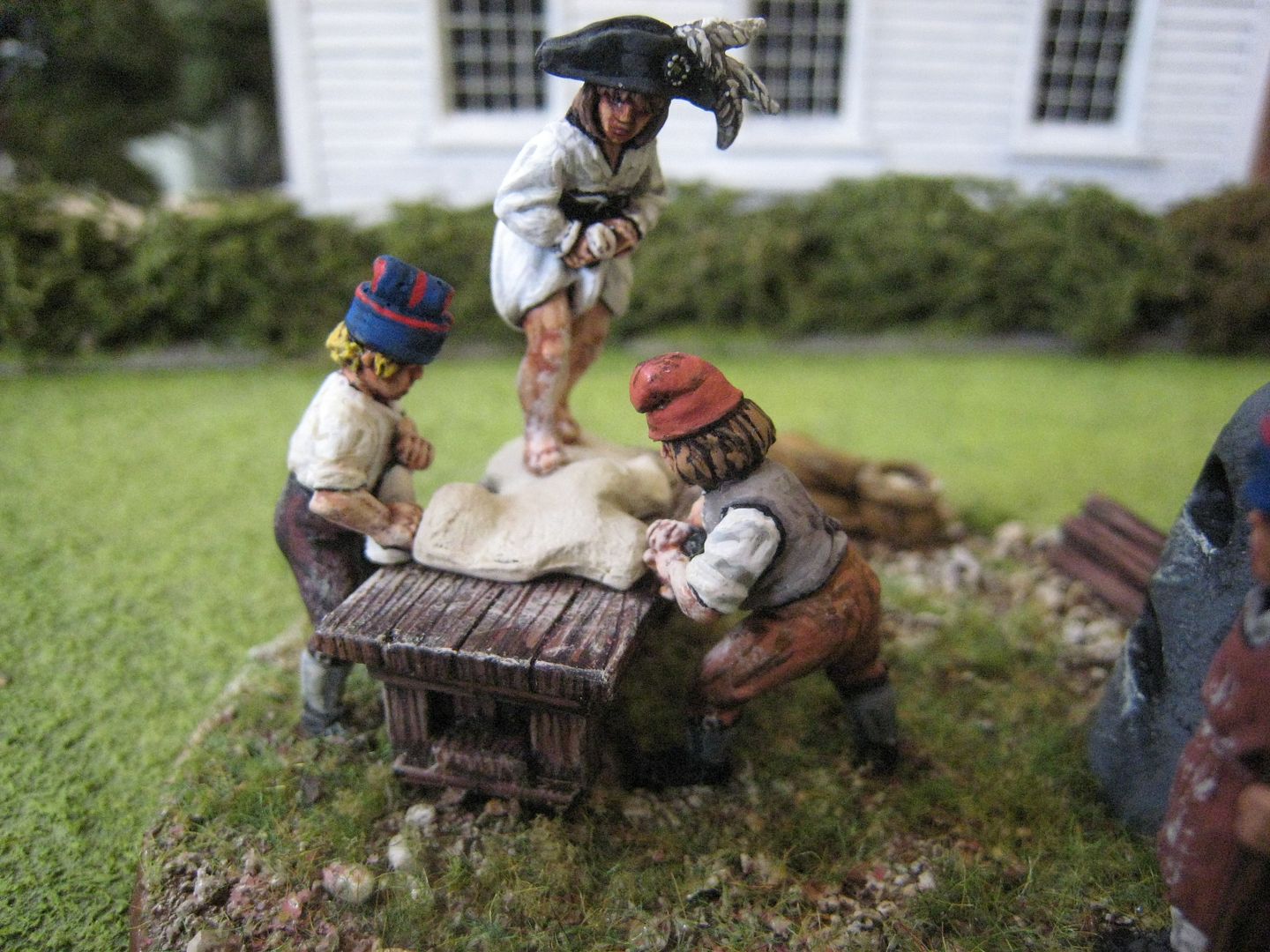
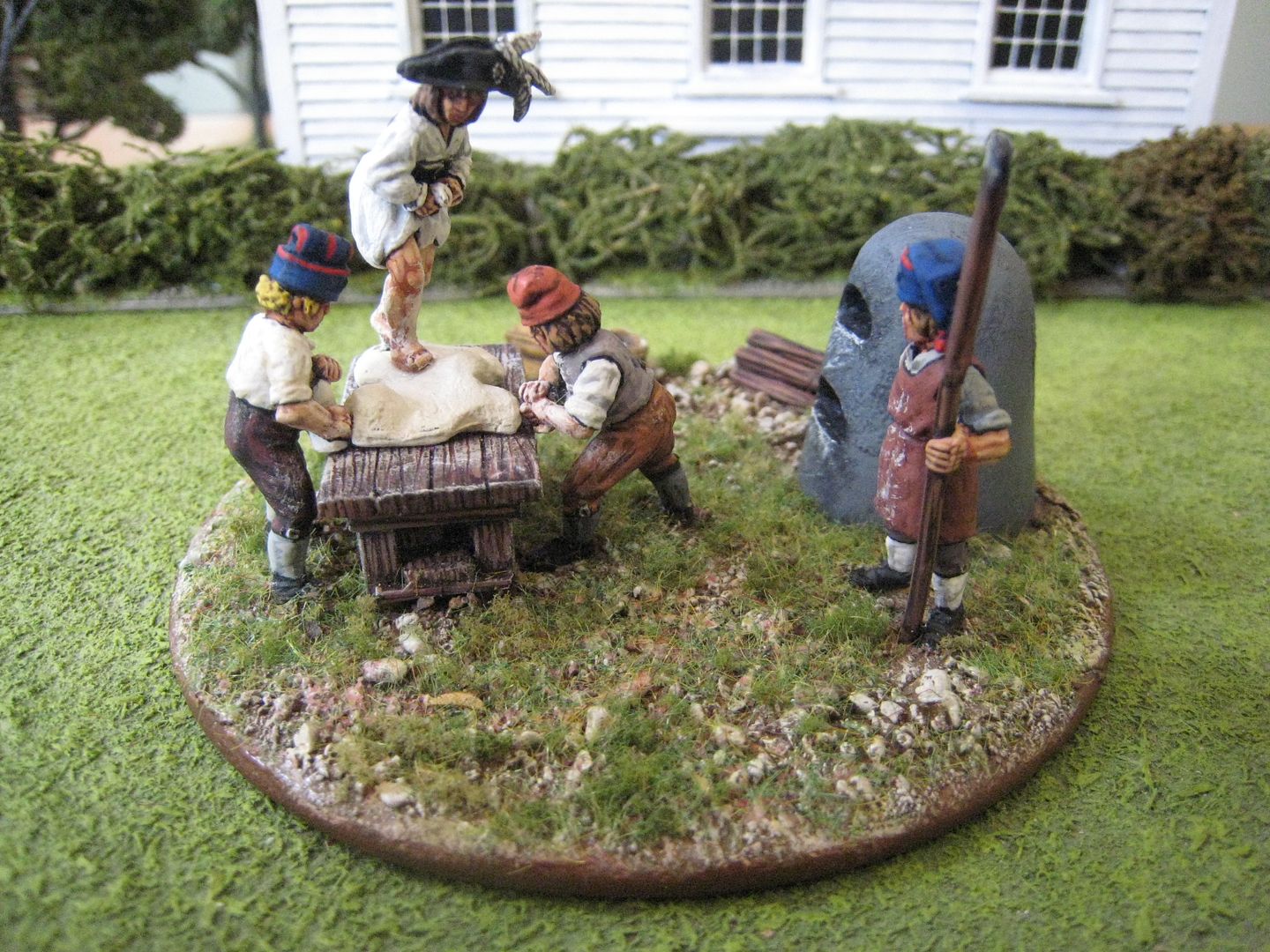
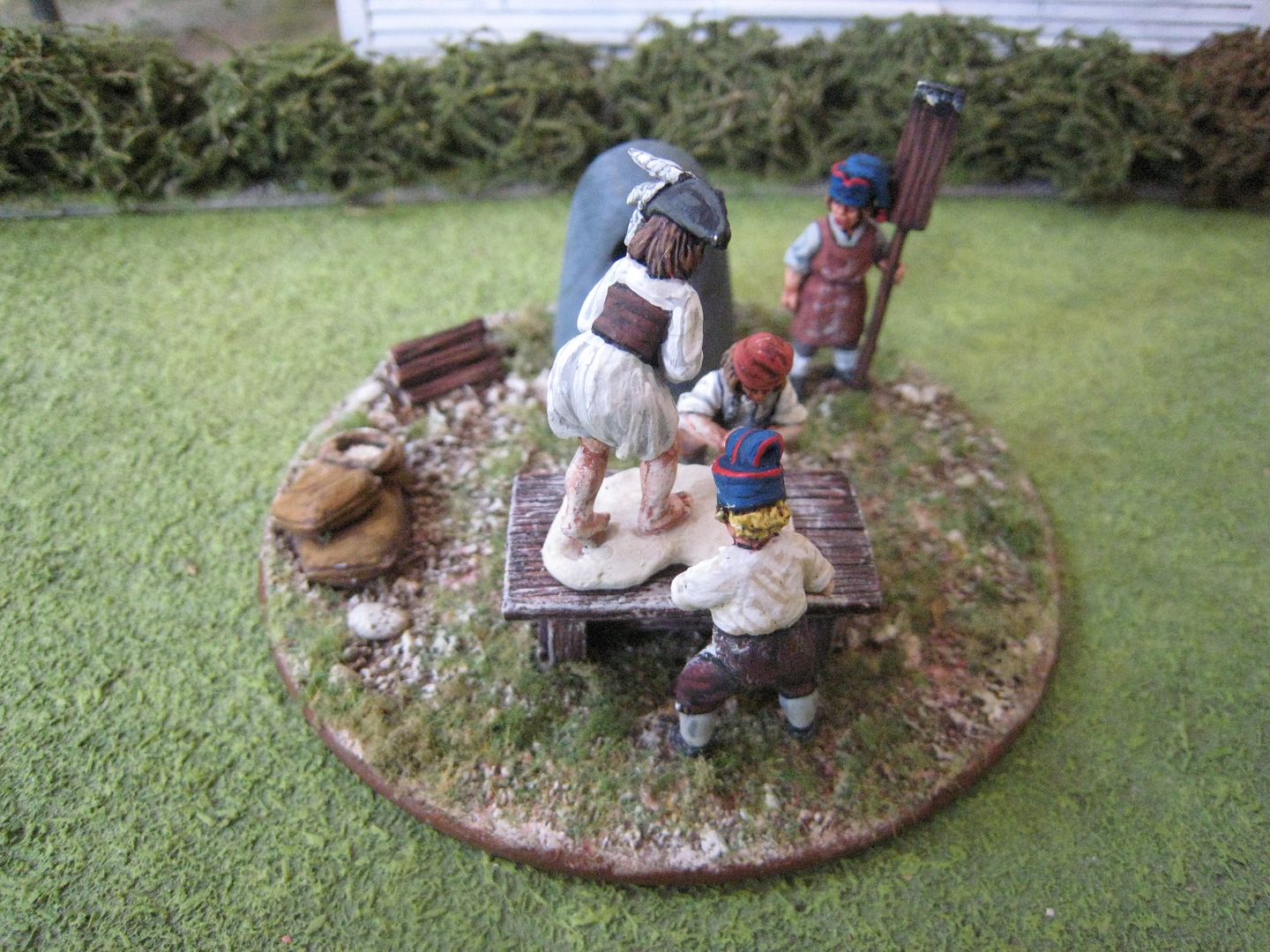
There are 3 vignettes in the range so far, with an indication that more will follow.  This first set is a field bakery, with 4 figures, a (resin) stone oven, a piles of logs andsome sacks of flour.  The lady kneading the flour has pins in her feet which go through holes in the flour to attach into the table - this makes positioning everything very easy.  It's clearly a well-thought out set.  I wanted the bakers to look scruffy and covered in flour, so dappled them with a slightly off-white colour.  I took inspiration for this from the excellent painted example on the Atelier Robin site here (I like his idea of another table with lots of loaves on it - might have to do one of those).  The table itseld was painted with my standard dark wood palette - base coat of GW "Scorched Brown" (or whatever it's called now), wash of dark brown ink, then highlights of Foundry "Spearshaft" A and B.  The oven was painted with the Foundry "Stone" palette - using the A base colour and then drybrushing with the B and C colours.  If you were painting this as a proper Revolutionary War set, you'd probably paint the feathers in the woman's hat as a tricolore, but I left them white, as being more of an AWI French colour.  The pokalems I decided to paint as normal - I don't know the extent to which this sort of hat was worn prior to the 1790s. 
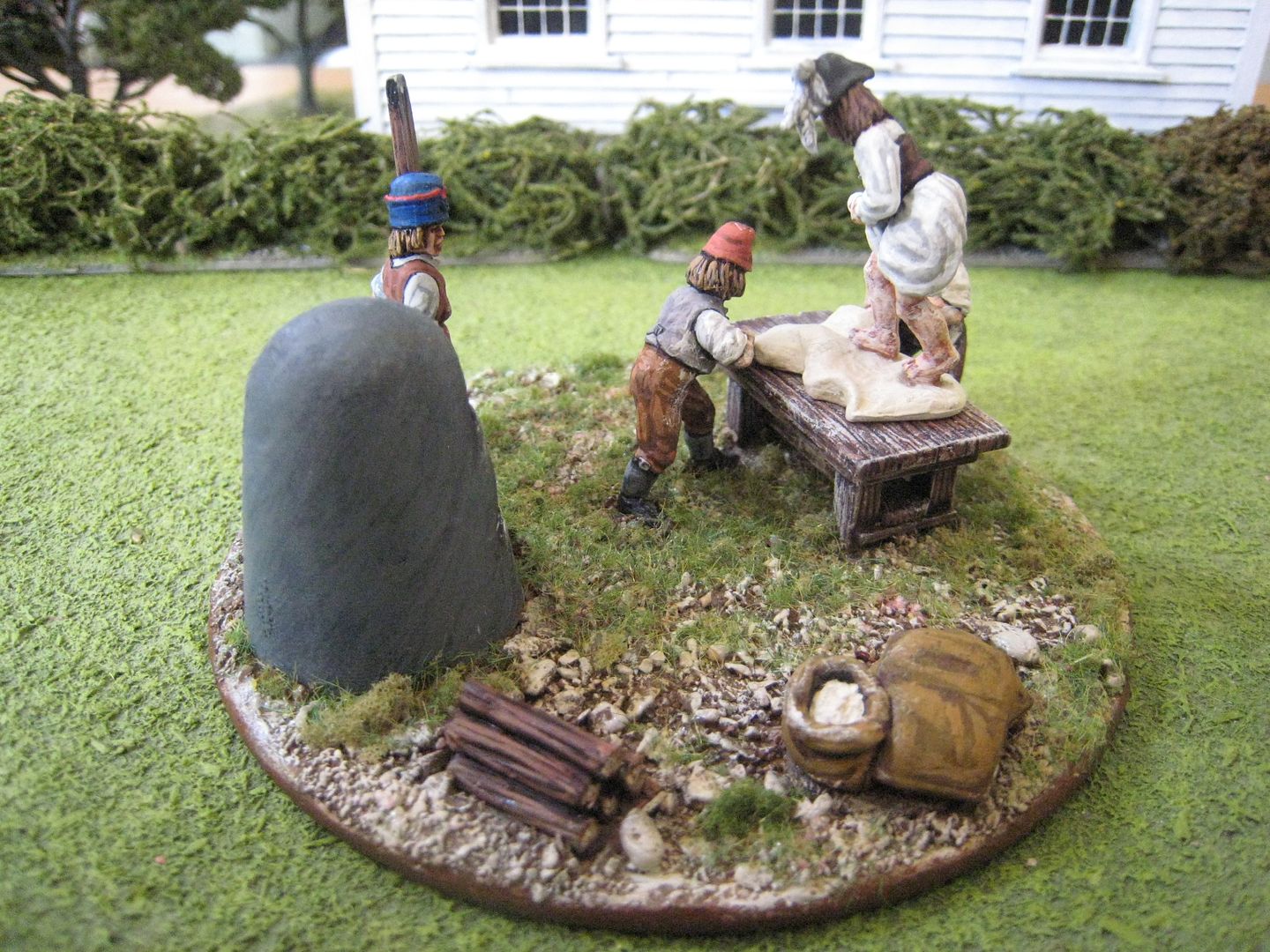
So hopefully this is something that could be used in games that feature French encampments, such as Savannah and Yorktown, and so this set receives AWI and Napolenic French labels.  There are two other vignettes which I'll post about soon.  I've been on holiday recently and been subsumed by work; hence the lack of posts the past 2 weeks.  I've enjoyed painting these sets and really hope that Eureka follow them up with more.

4 figures and various other bits.  Painted March 2013.