Friday, 7 November 2008

Long Island, 27 August 1776


I've found a way around Blogger's tinkering with photo uploads and so finally here is a report of last weekend's "British Grenadier!" mega-game. Many of the photos have already appeared on the web, but there are a couple of new ones . In all, we played 18 turns over some 10 hours. Apologies for the length of this post and feel free to skip to the end to see who won!
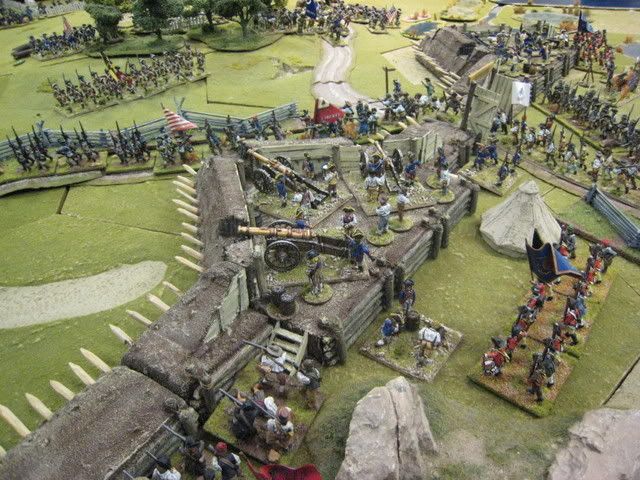
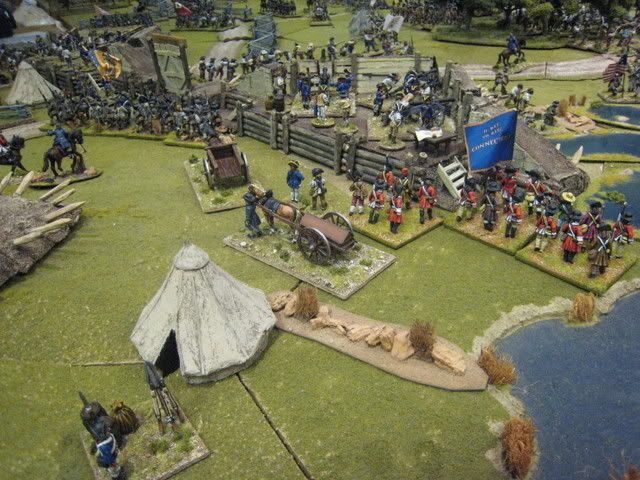
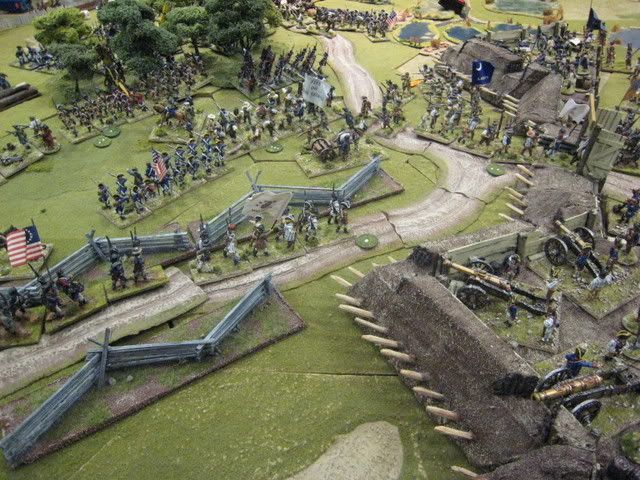
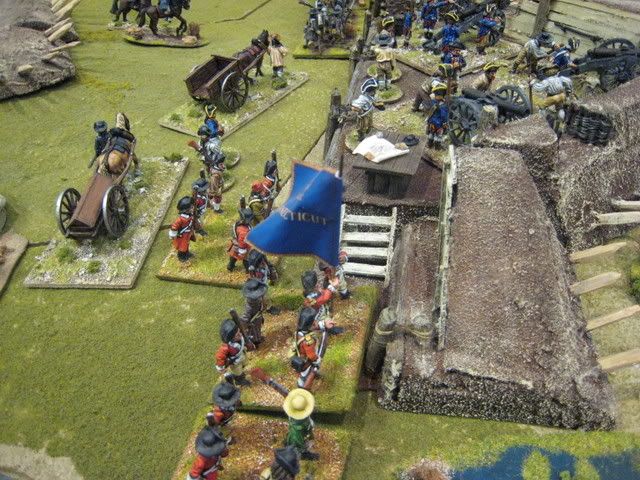

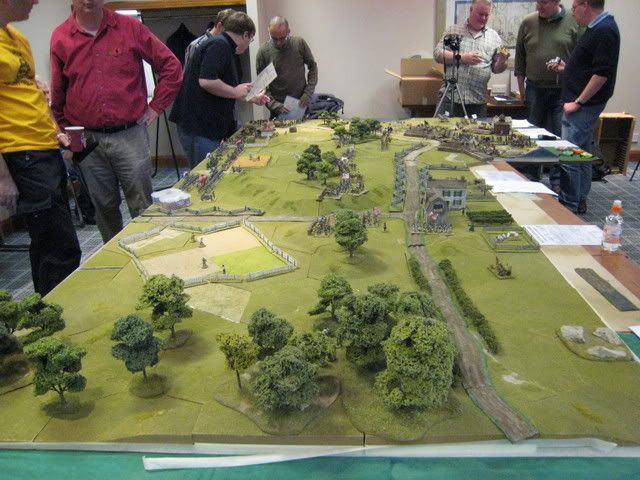
Long Island was the largest battle of the AWI and one of the best chances the British had to inflict upon Washington's army the kind of decisive defeat that may have ended the war. The British attack featured the wide flanking march that General Howe liked to use (cf also at Brandywine the following year), which aimed to catch the Americans in the flank whilst their front was pinned by another assault. The table, shown above at the start of the game, had the Brooklyn Lines at one end, with the left flank of the American position stretching down the Jamaica Road. The marshland of Gowanus Creek can be seen at the far end of the table to the right of the Brooklyn Lines. The lines themselves were specially made for the game by Martin Small. Eclaireur knocked up some nifty painted plasticard sections to represent the coastline and water. Below are a couple of early shots of Clinton's brigades beginning to advance.

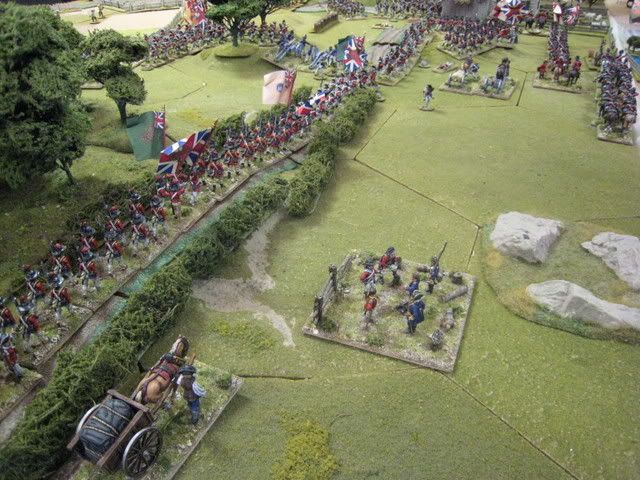
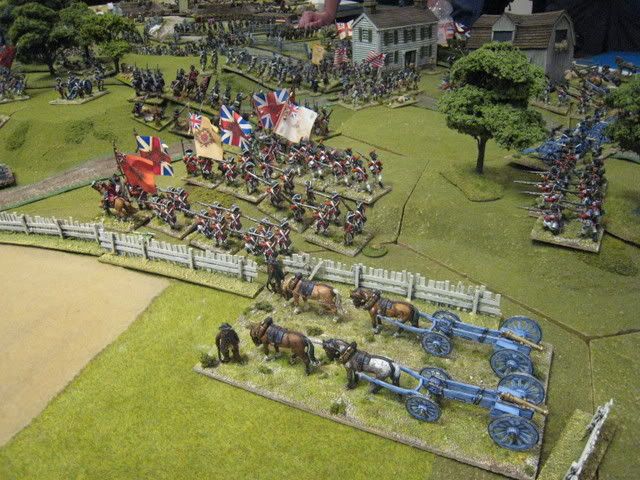


Long Island is a fairly one-sided game as the British, with an overwhelming superiority in both numbers and calibre of troops, can't really lose. Therefore, for the purposes of this scenario, and to make it interesting for the American players, the victory conditions required the British to actually storm the Brooklyn Lines: to win, the British had to have at least 3 battalions in the lines by the end of the game. This assault on the lines themselves is something that Howe refused to do on the day - whether he was doing his "gentleman thing" and giving Washington the chance to surrender, or was wary of the casualties that might arise from a frontal assault given his experience at Bunker Hill the year before, we don't know. But the purpose of this scenario was to see whether the Brits could do it and storm the lines without incurring disproportionate casualties as they did at Bunker Hill. So there were two sectors to the battle - the frontal assault led by the Hessian general von Heister and the flank assault led by Clinton. Von Heister had a brigade of Hessians and two brigades of British line (under the commands of Grant and Agnew). Clinton had much of the army's elite, namely Cornwallis' brigade of the 71st (in 3 battalions) and 33rd, together with light infantry and dragoons under the command of Brigadier Leslie (I took this brigade and the role of Clinton). The American army was a jumble of militia, Continentals and state troops, inferior in quality in theory but full of pluck, as the Brits were to discover.


There were some minor alterations to the historical orbats. The 4th grenadier battalion and one of the reserve brigades were detached from Clinton's command and given to the British centre (a shrewd move as it happened). The Americans had the benefit of additional brigades behind the Brooklyn Lines, which quickly moved out to bolster the lines of defence.
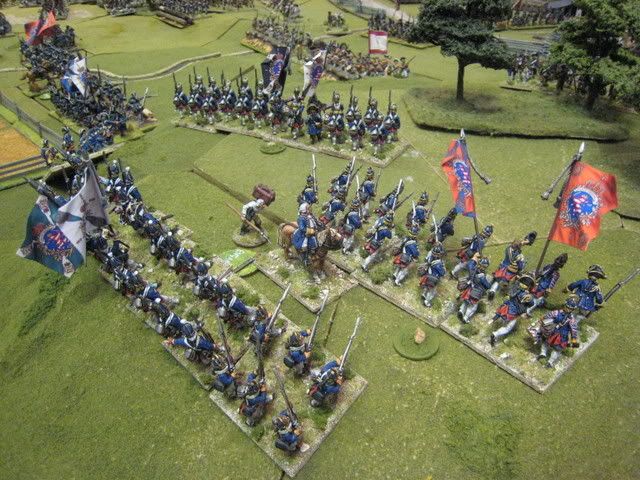
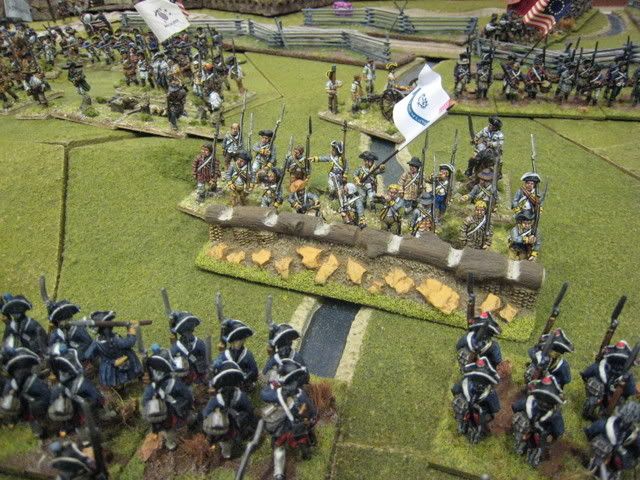

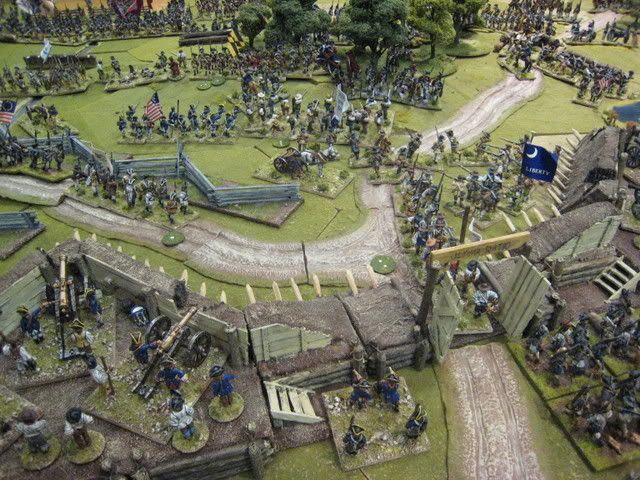

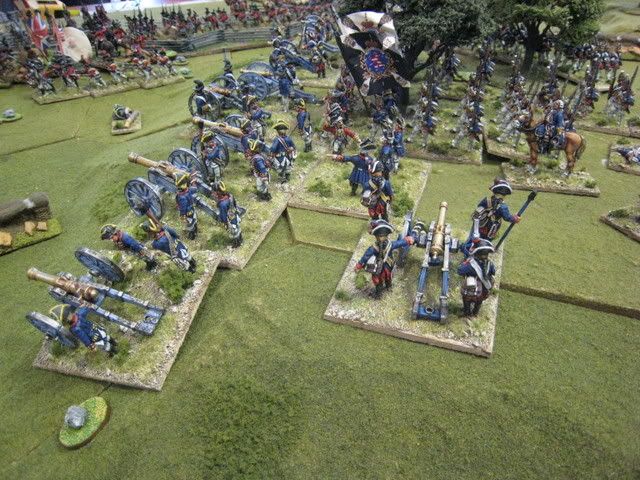
The first encounter was between von Heister's units (commanded by Jerry Taylor) and the American positions directly in front of the Brooklyn lines. The fighting was fierce and Brigadier Grant (Ally Morrison) was captured early on when his horse bolted straight into the Yank lines. The Hessians slowly made ground but took fairly heavy casualties. Meantime, Clinton's flanking attack quickly stalled due to poor dice rolling (i.e. accumulating "disruption points") and general congestion on the one road into Brooklyn. Clinton's reserve units never saw combat for the entire duration of the game, as they remained stuck behind the forward elements and couldn't get themselves into position. Clinton's attack was held up by an incredible rearguard defence by the Connecticut militia, which saw off numerous charges by the 71st and 33rd, one battalion of the former actually routing off the field. Cornwallis himself was hit and spent one turn off the field.
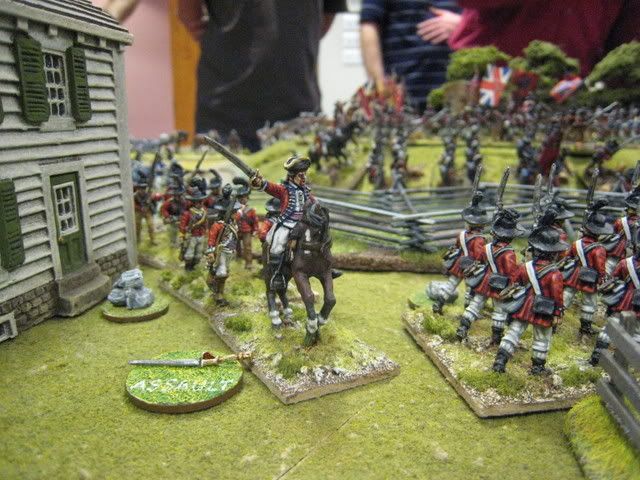


Von Heister's slow success in pushing back the Americans was not matched by Clinton and the American units blocking the road to Brooklyn soon found themselves with Von Heister's lead units to their rear. The situation became very messy and confused and one wonders whether the Americans' success on their left actually put them in a worse position strategically- instead of slowly contracting their line, the Americans found forward units surrounded or receiving fire from different directions. Von Heister was racing his regiments forward as fast and aggressively as he could, with the result that a couple of battalions reached the Brooklyn Lines whilst American units were still engaged in the passes.
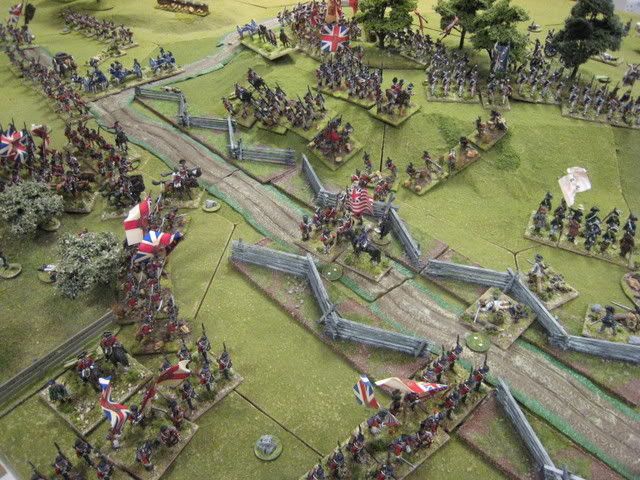

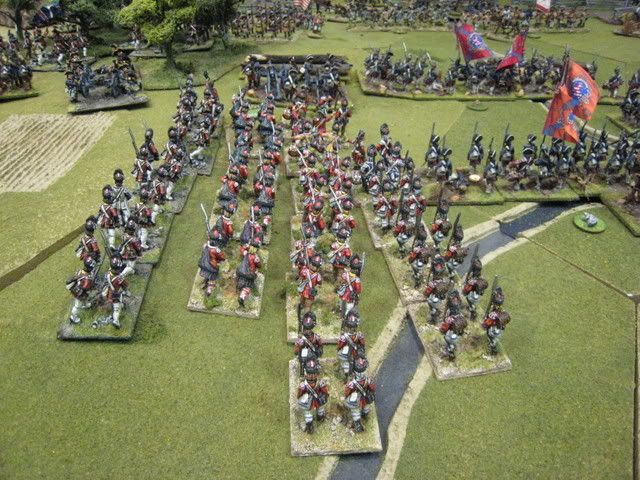


The Connecticut militia continued to withstand attacks by Cornwallis' finest (despite being largely cut off and having seen the rest of its brigade destroyed) . Eventually, in the second turn of the second day, a charge by the 17th Light Dragoons routed them and succeeded where the 71st had failed. This was my only moment of personal glory, when in the post-charge melee Martin Small rolled a double-six for the militia only for me to then roll the same for the 17th (so winning the melee thanks to the modifiers). In true "Scots Greys" style, the dragoons failed to rally and kept on charging into the American units behind the militia, which were already taking flanking fire from the British Guards brigade, now moving into position on the heights overlooking Brooklyn. The 17th charged on and their success resulted in the American brigade in the area collapsing and so freed up the entire left wing for Clinton to finally move forward. By this point, the American units in von Heister's sector were retreating back to the Brooklyn lines, with British regiments hot on their heels. The first British units to assault the lines were quickly thrown out. A second attack by the units on Vaughan's grenadiers brigades was initially more sucessful, but ultimately the grenadiers also had to withdraw. In the meantime, the British had concentrated their artillery into a grand battery that was pumelling the Brooklyn Lines.
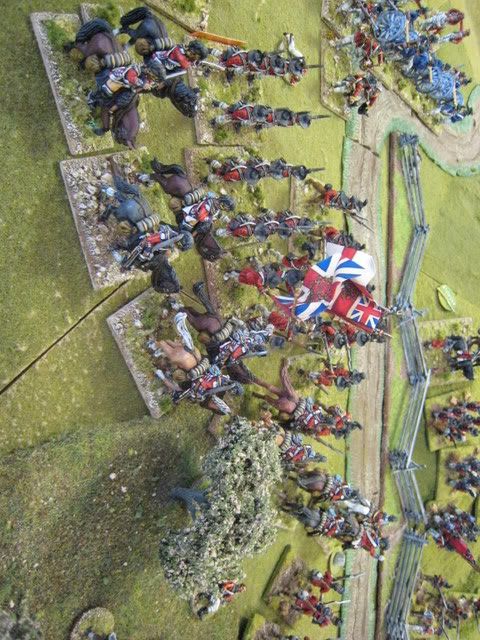
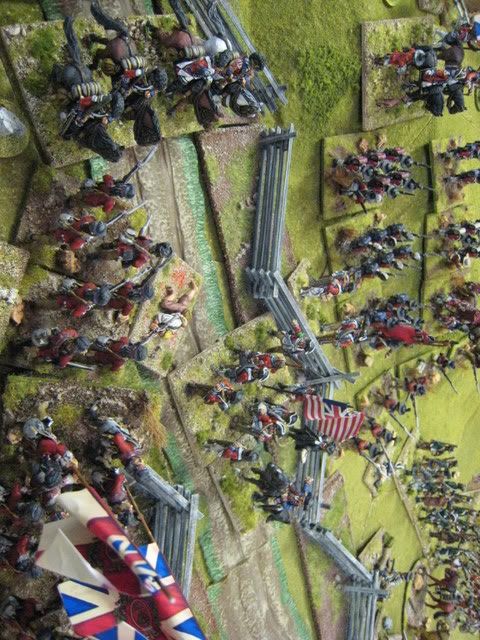
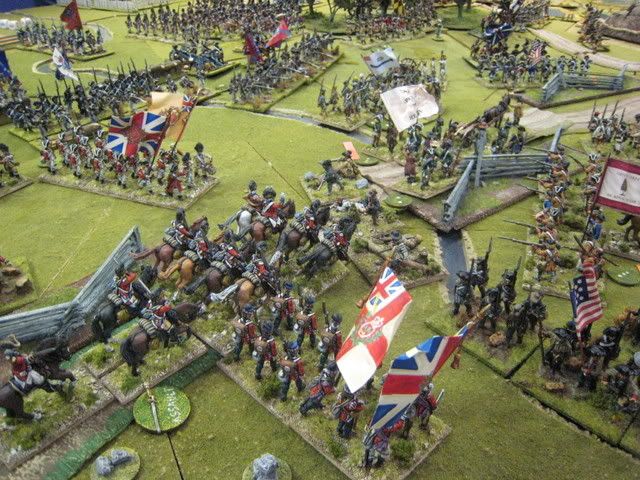
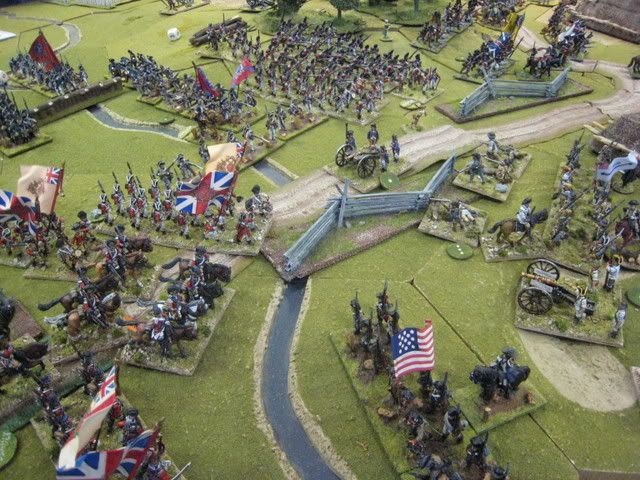

By this point, some 8 British battalions were poised to assault the lines and "time" was called. It seemed clear that the British would be able to satisfy their victory conditions and the game was concluded. The final reckoning was a victory for the British. British losses were about 1740, which would normally be about 500-600 dead and the rest wounded/missing.


American losses were twice that and using the same ratio were about 1300 dead and 2640 wounded/missing. Had the British continued storming the Brooklyn Lines the casualties would have been more even, but large numbers of American prisoners would have been taken. The Connecticut militia had held up the British flanking attack long enough for some American units to escape back to Brooklyn when they would otherwise have been caught in the British pincer, and had managed to rout a British battalion in the process. Would Howe have won the war in 1776 had he assaulted the Brooklyn lines? We will never know for sure, but maybe....

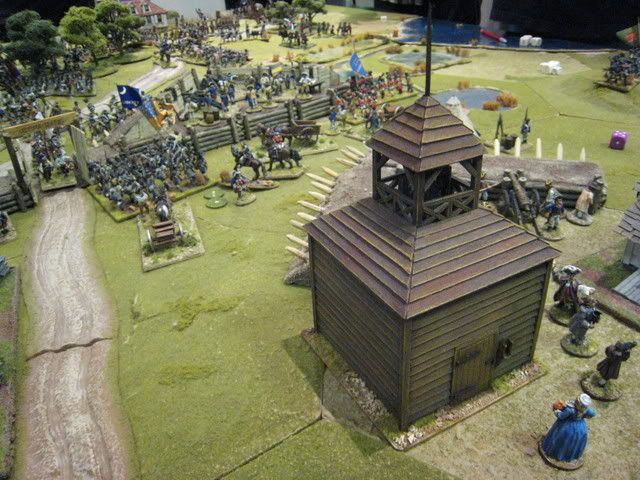
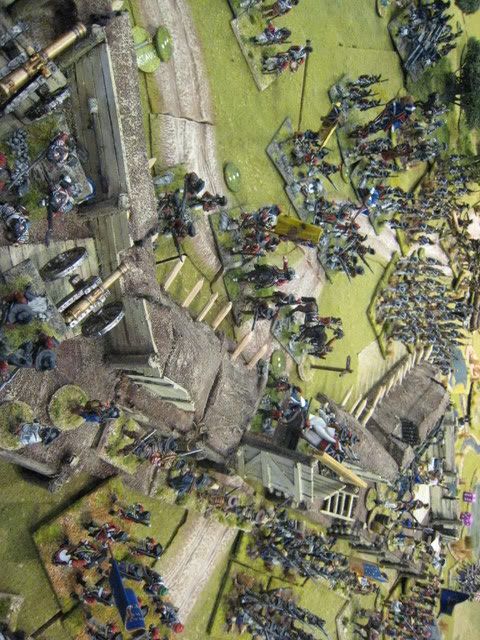
Some further random shots of the battle are below. People sometimes accuse "British Grenadier!" of being a slow and frustrating set to use. Certainly disruptions points slow down a brigade's ability to attack, but that's why they are there - you have to think hard and plan your attacks. We took on the largest battle of the war, involving some 60 battalions and reached a conclusion in about 10 hours of play. That ain't bad!



Tuesday, 4 November 2008

Blogger problems!


As readers will have seen from the previous post, there is something wrong with the Blogger images upload mechanism. No matter what instructions you feed into the window, the images just appear full size. I have tried uploading pics direct from my pc, but that is not an ideal solution because they go to mega-size when you click on them; I could resize them manually, I suppose, but it would take ages. Given that it seems that loads of other bloggers are experiencing the same problem, for the moment I will sit this out and hope that Blogger fix the problem shortly....


In the meantime, above is a mega-sized photo from last weekend's Long Island mega-sized game. I have posted various pics on the internet already; see here for some on the "British Grenadier!" forum. I have a battle report to post as soon as the images situation is resolved. The game was great fun, with hundreds of figures on the table and some surprising and exciting turns of events. It was very good to put some faces to names ("hi" to Simon, Pat, Clive, Dave and Paul) and everyone seemed to have a good time. Problems with Blogger and an excess of work have resulted in a backlog of posts on the units I painted up for Long Island - the Von Lossberg fusiliers, Hessian artillery, British light infantry and grenadiers (x 2) and more artillery are all waiting to be posted. I have also begun work on a box of Perry plastic Napoleonic infantry (like everyone else, I imagine), as a short break from AWI. Then I want to finish off the Saratoga British, do a couple more Hessian regiments, some northern militia and the 17th Light Dragoons.


Wednesday, 22 October 2008

Long Island prep (6)


The end is in sight now, so I have chosen the final items that I am going to paint up for the game. The light infantry and most of the grenadiers are finished. Any concern I had about not having the light infantry "doubled up" in both close- and skirmish-order bases has been dispelled by the fact that I, apparently, will be commanding the British light infantry at the game. I intend to use the brigade as elite shock troops, to keep them in close order and try to win the battle all by myself. Consequently, I don't need any lightbobs on skirmish bases...Problem solved. I just have 4 highland grenadiers to finish off and then all the things I had to paint for the game are done.


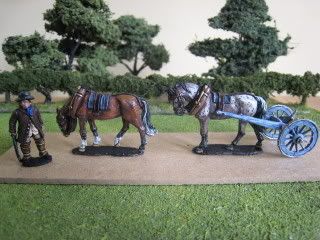
When I finished the last of the lightbobs last Sunday morning I thought about what I could usefully do for the remaining 2 weeks. Of course a game two weekends hence does not, in fact, give you 2 solid weeks of painting as you have to factor in varnishing and basing, which means that realistically I'm going to have to down tools next Tuesday. So whilst I toyed with the idea of trying to paint one of the 3 British line regiments that I don't as yet have, I rejected it as being too onerous. In any event, it will be good to give the substitute regiments an airing and ultimately A N Other British line battalion is not going to be noticed on the table; better to do something with more visual appeal. So instead, I decided upon a second limber for the British artillery (see the pic above) and having a crack at Smallwood's Marylanders, which was on my original list as something I'd wanted to do. Also, if I have time, there is a pack of Front Rank civilians with spades, picks etc which would be suitable to have working on the Brooklyn fortifications. But the focus will be on the Marylanders, and by using the hunting-shirted North Carolina troops I painted over the summer I only need to paint 12 figures - the command stand in red faced buff coats and some more hatmen in brown shirts and buff breeches. This unit should stand out because I'm going to paint a flag based on Lord Baltimore's coat of arms.

Monday, 20 October 2008

Lexington Belfry


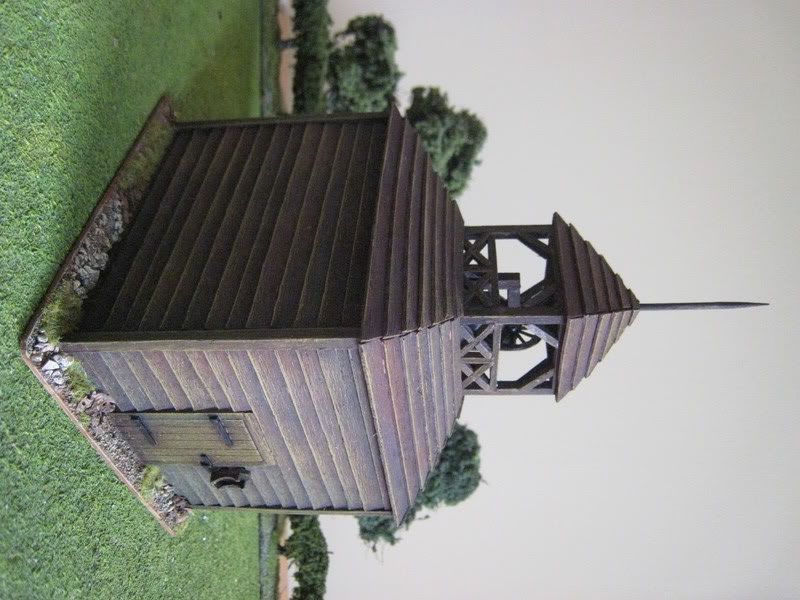
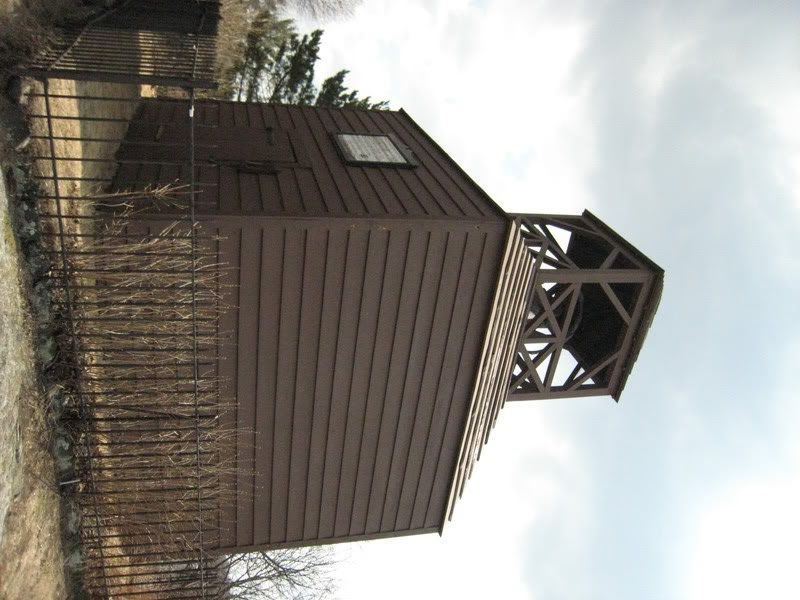
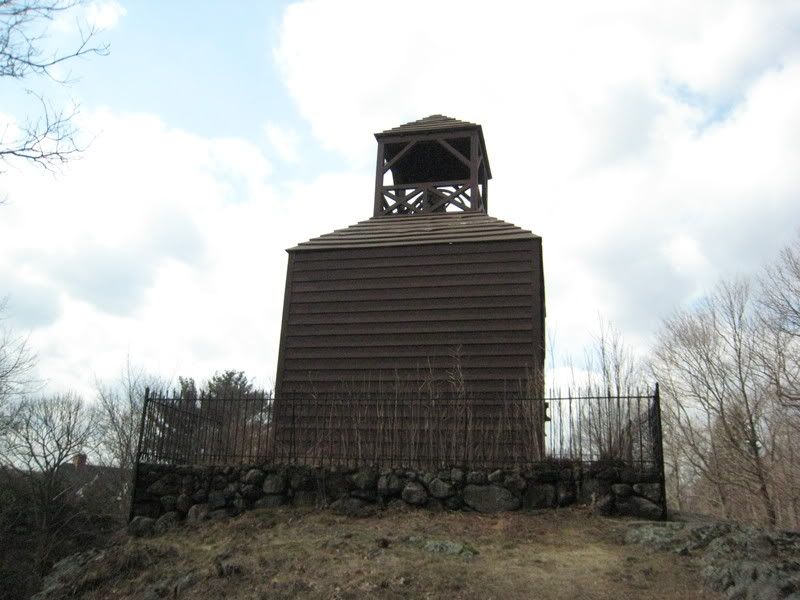
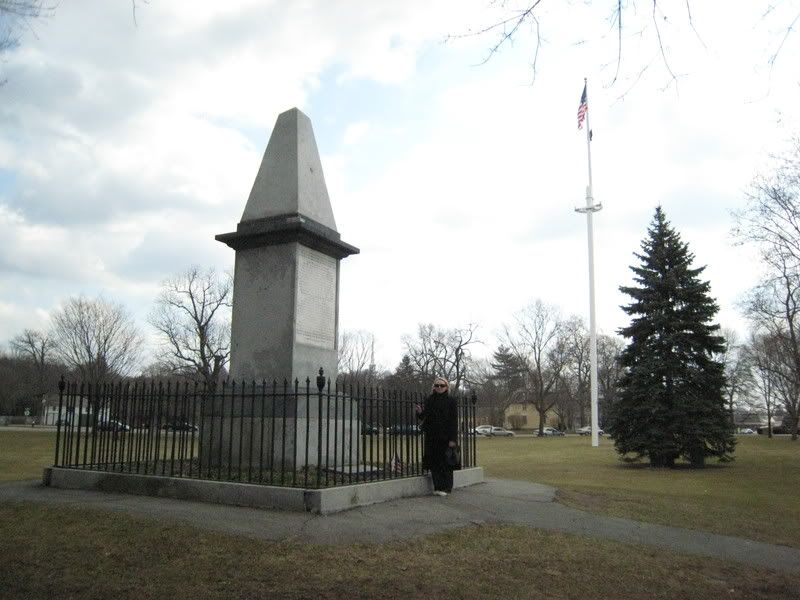
The Old Belfry in Lexington was built in 1762 and originally stood on a small hill adjacent to the village green, on land owned by one Lieutenant Jonas Munroe. In 1768 it was moved, apparently because Munroe was demanding increased payments for the Belfry being on his land, to a new position on the green itself. Between the hours of 1 and 2am on 19 April 1775 the bell was rung to summon the 75-odd men of the local militia, after Paul Revere and Willam Dawes had alerted the village that the regulars were on their way from Boston. In 1891 the Belfry was moved back to its original position on the hill. It was destroyed in 1909 (either in a gale or by fire) and an exact replica built a year later.

Wargaming chum and talented chap Richard Watts (aka "Eccles") made a couple of scale models of the Belfry and very kindly presented one to me. It's made of balsa wood and contains a bell hand-made from gree stuff. Eccles and I scoured the net (or, in my case, wedding cake decorations) to find a suitable bell, but in the end Eccles made them himself. I think the end result is outstanding. There are lovely touches of detail (not least the ropes on the bell) and the basing is very effective too, with a few leaves scattered around. From recollection, the size looks pretty much spot on. So I'm terribly pleased with this little gem and it will feature in the Long Island game. The "real life" photos were taken on my trip to Boston in March and include two of Battle Green.


Sunday, 12 October 2008

American Militia (5)


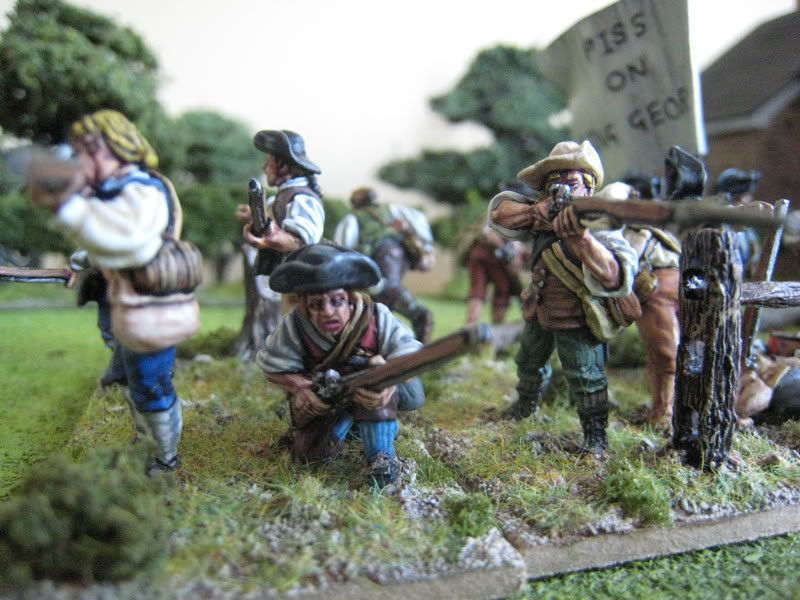
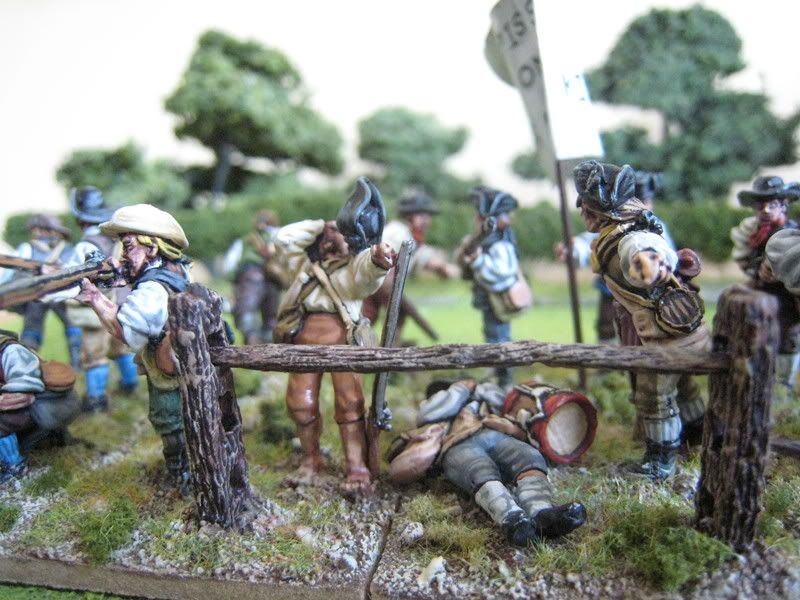
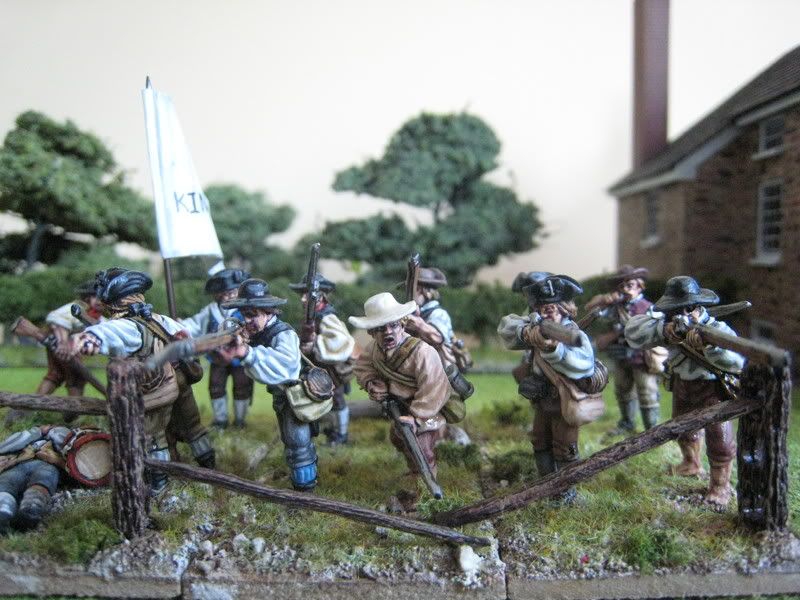
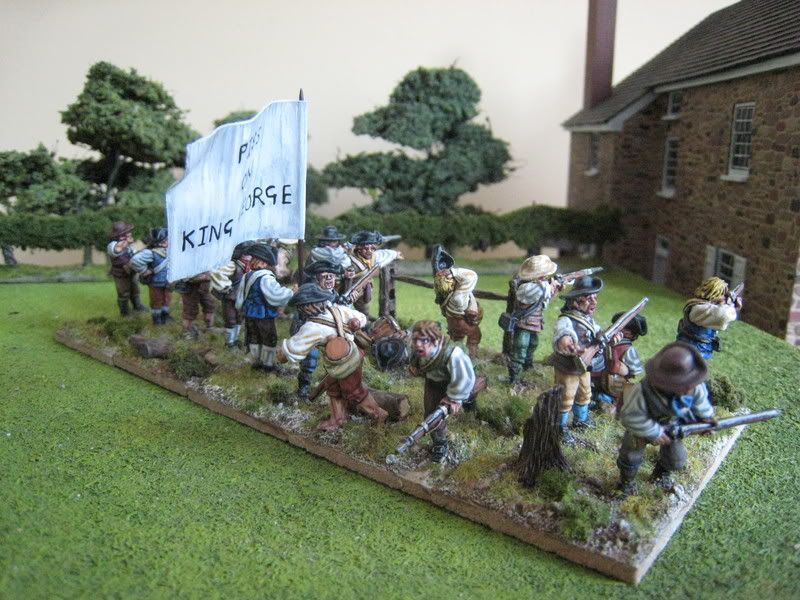
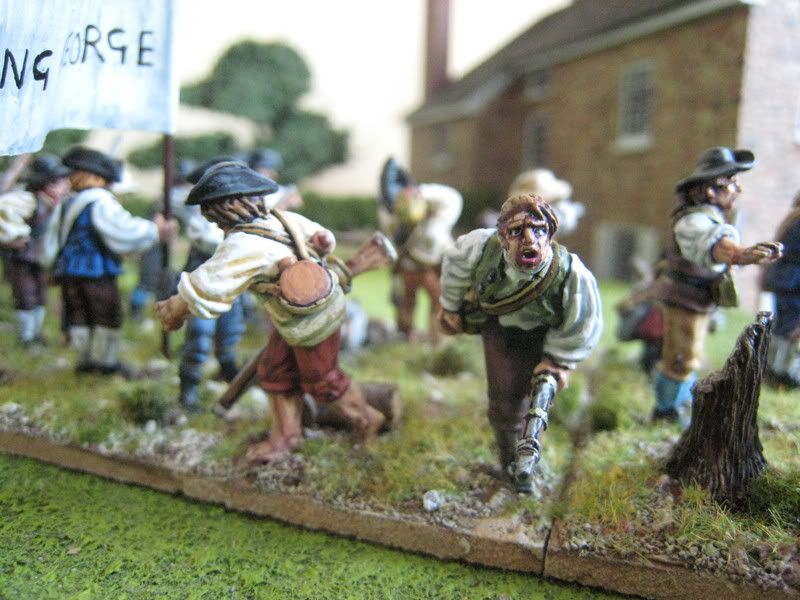
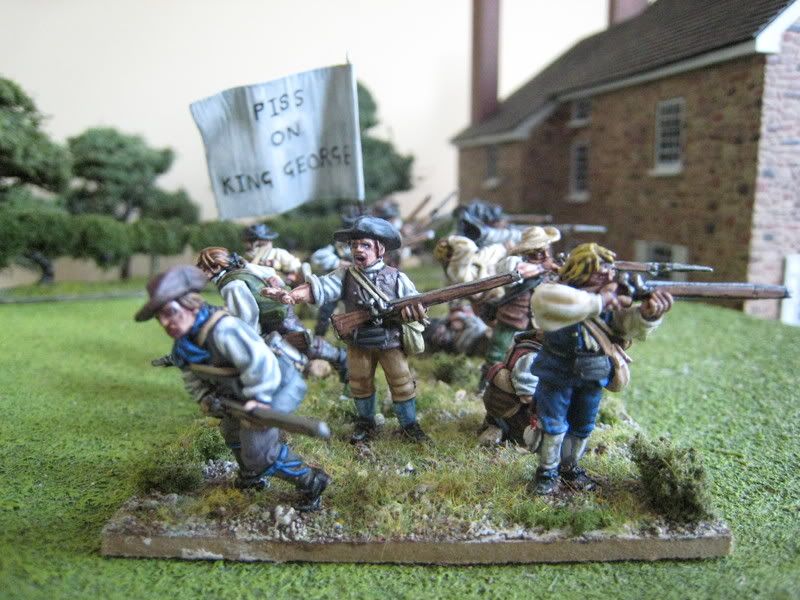
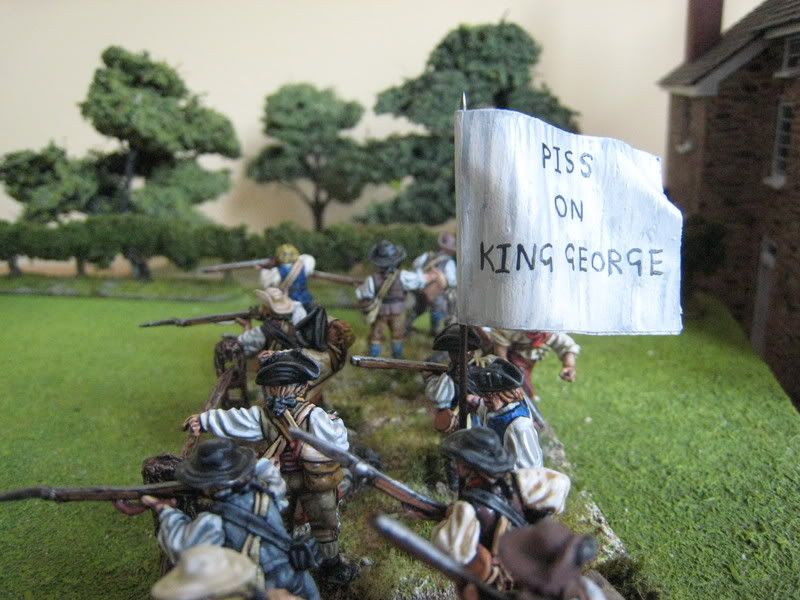
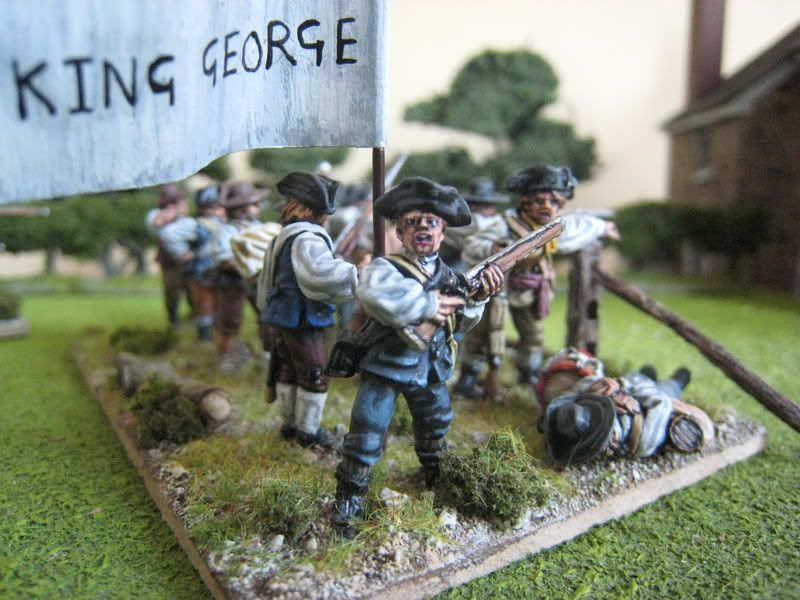
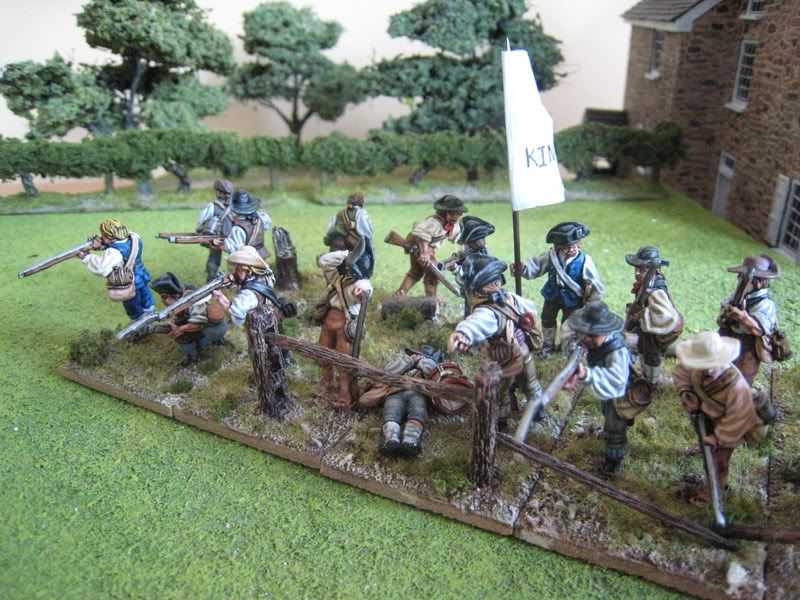
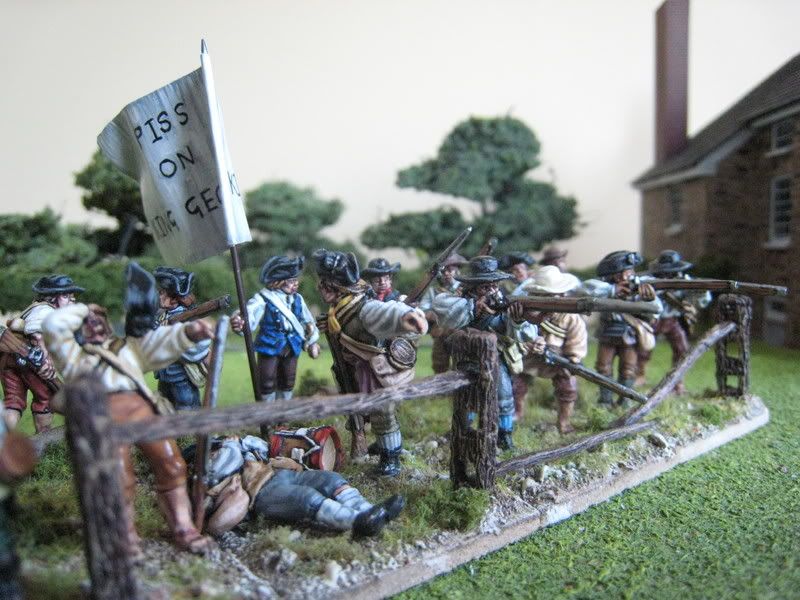
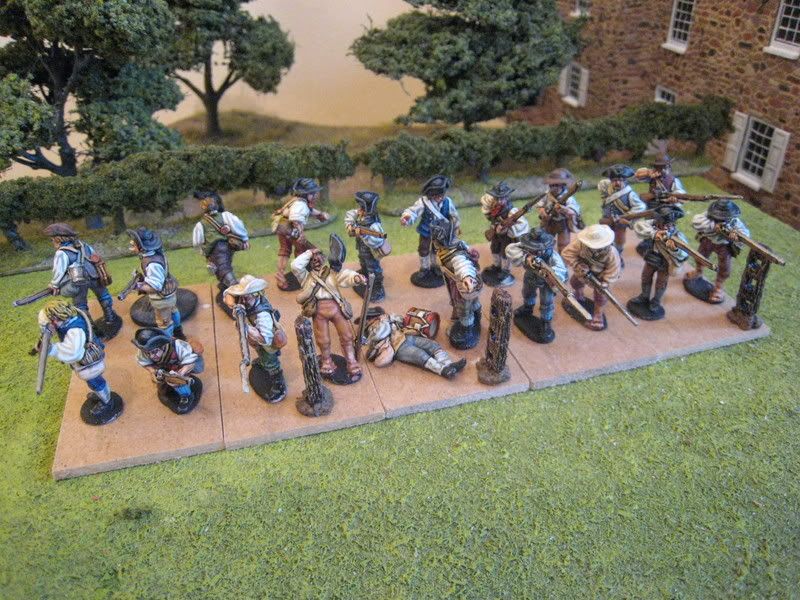
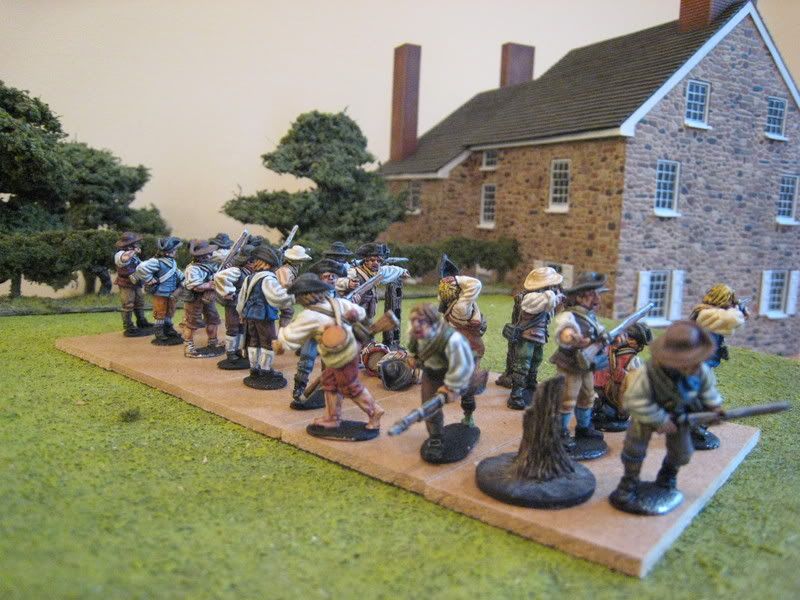
This unit has been "in development" for some weeks and was finally finished this afternoon. It uses the most recent Perry Miniatures Southern militia packs, particularly the "nervous militia" and second militia casualties packs. I painted most of the figures in August but did not finish the last two until the middle of September. Then I had trouble working out how to base them. I did think about having the retreating figures on single bases but I decided quite early on that I wanted to have a coherent unit that represented a collapsing militia firing line. In order to put some distance between the firing line and the retreating second rank, I based the figures on larger bases than the usual 36mm x 50mm. These bases keep the same forntage but the depth has increased to 70mm. This extra depth allowed me to build in some scenic features, such as logs, the odd tree trunk and a fence at the front. I had in mind a situation where the militia have taken up position at a a broken fence. The posts are glued onto the bases but the horizontal slats are (currently) loose, as they straddle the bases and so cannot be glued into place.


The idea for the flag came to me whilst driving in the Cotswolds some weeks ago. I was thinking about having a flag that said either "Piss on the British" or "Down with King George"; both are rather apocryphal but I'm sure variants existed somewhere during the war. I then thought it might be fun to combine the two slogans into something that said "Piss on King George"; I quite liked the idea of such an arrogant flag being carried by a militia unit that was beginning to run away and exercise the better part of valour. I finally got around to painting the flag this afternoon. The lettering is a bit wonky, although I suppose you could explain that away as being the result of a hastily made militia flag. Anyway, it makes a change from a rattlesnake flag. I'm pleased with the way this unit turned out, hence the large number of photos!

20 figures. Painted August/September 2008. Fence from Reboubt Enterprises.


Wednesday, 8 October 2008

Long Island prep (5)


After a rather disasterous end to September, I have picked up the pace a bit, managing to paint 8 figures over the weekend in addition to finally finishing off the Hessian artillery and my last unit of Southern militia, the collapsing firing line. Above are a couple of photo of the militia. I spent a good while trying out different basing combinations and eventually settled upon a 36mm x 70mm base - this keeps the standard "British Grenadier" frontage but adds more depth so that the figures running away are more detached from the main line. The extra depth also allows me to add a ruined fence to the front of the line and tree-stumps to the rear - the fence posts are glued in place but the other bits will be very discretely blue-tacked in so that they can move around a little as the bases are placed together. I am working on a hand-painted flag for this unit, which I hope to have photographed at some stage over the weekend.


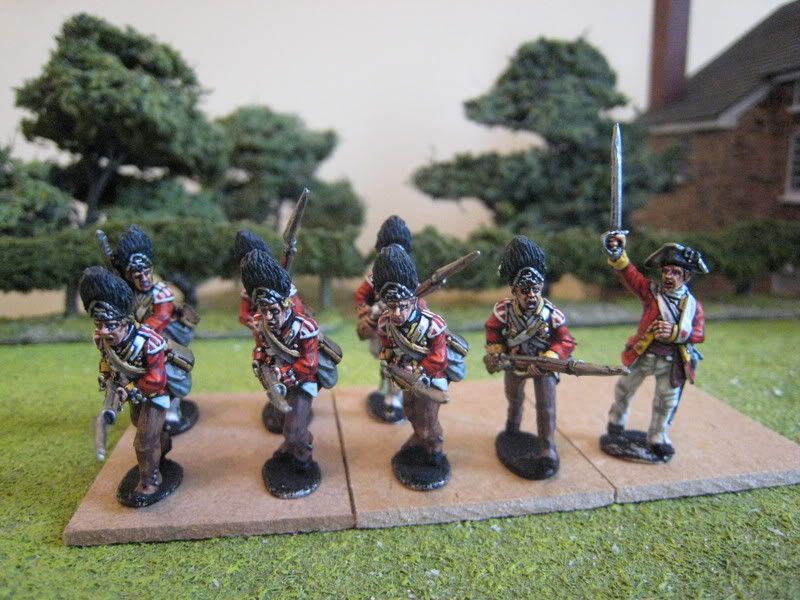
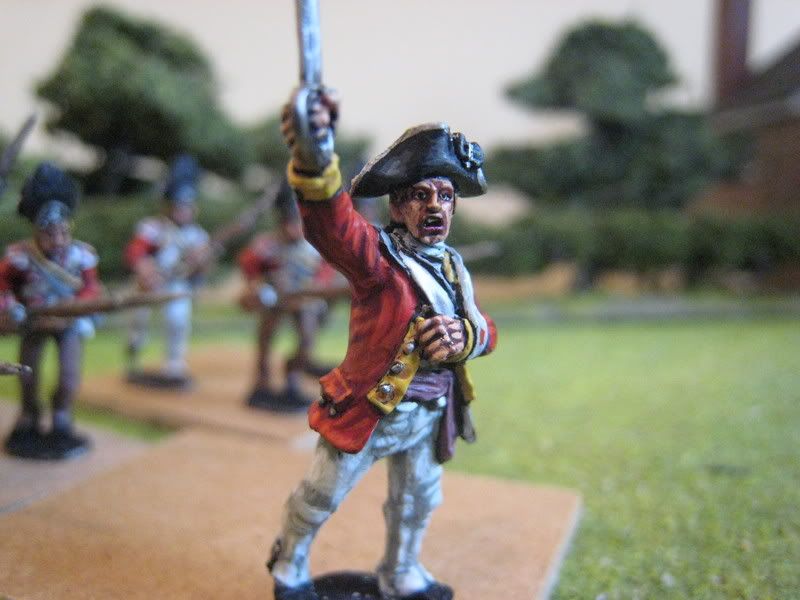
In the meantime, the British grenadiers are continuing apace and are, I think, turning out pretty well. Two wip shots are below; I have deliberately gone for a "campaign" look with different coloured trousers. This is the second of three grenadier battalions that I want to field at the game. Eclaireur may need to provide another one as I think we are going to need the full complement of four grenadier battlions for the British side. Once this second battalion is finished I will turn to the third, which consists of highland companies from the 42nd and 71st (which will require the touching up of existing figures and 2 brand new ones). In order to make up the time I lost the other week, I am now trying to paint 8 figures in one go rather than 6. The plan is to have the grenadiers finished by the start of next week and the British light infantry by the end of next week. That should then leave me with a week and a bit to do other stuff, which hopefully may allow Smallwood's Marylanders to get a look in and perhaps another limber for the British artillery. Oh, and I need to ensure I have enough British cavalry too - I keep forgetting about them....


Incidentally, I hope British readers are managing to see the television series "John Adams" on More 4 (Saturdays at 5.30pm). It concentrates on politics rather than military action, but is well acted, meticulously researched and altogether quite excellent.

Wednesday, 1 October 2008

Benjamin Ring House


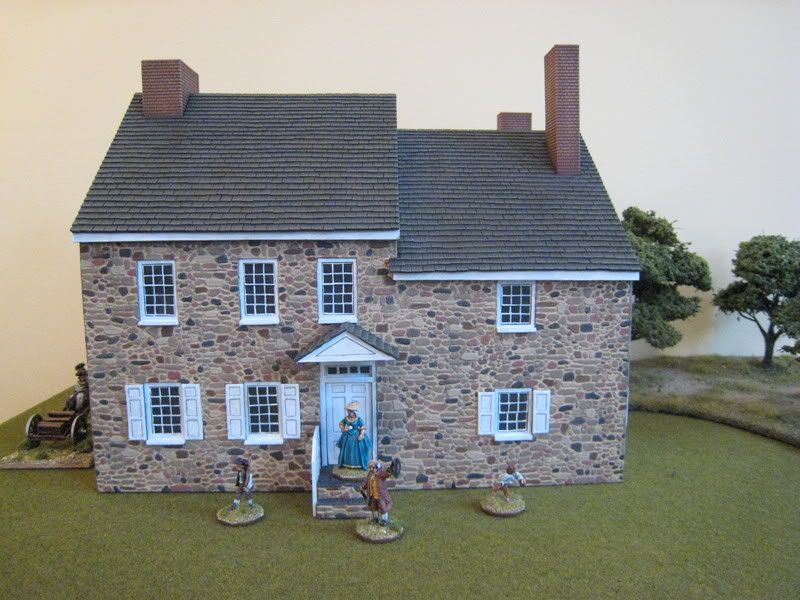
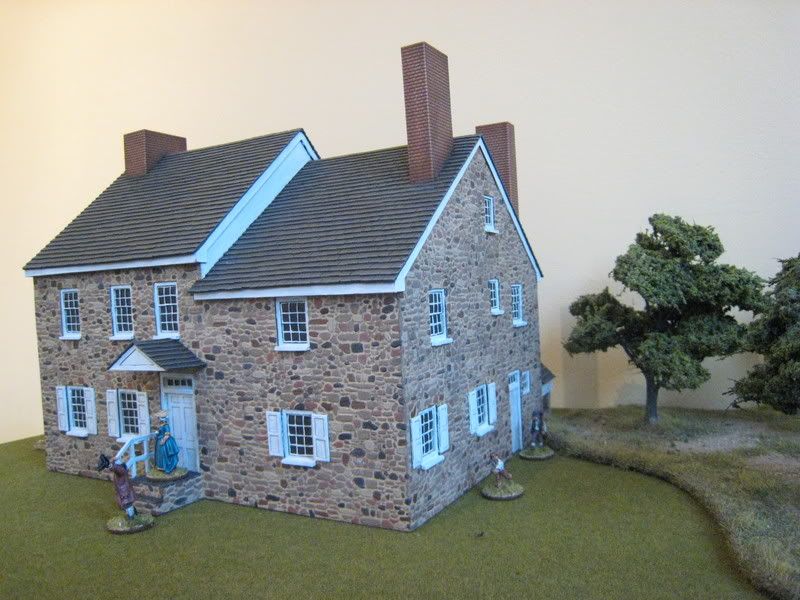
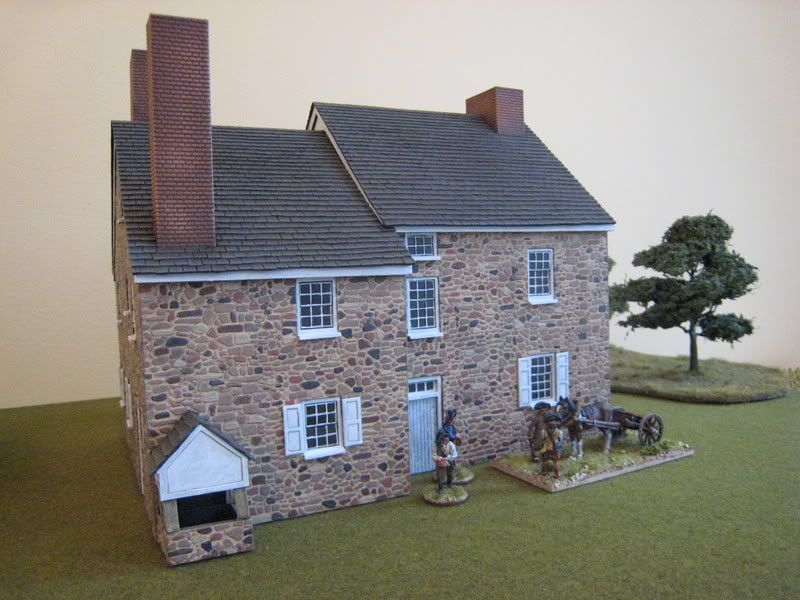
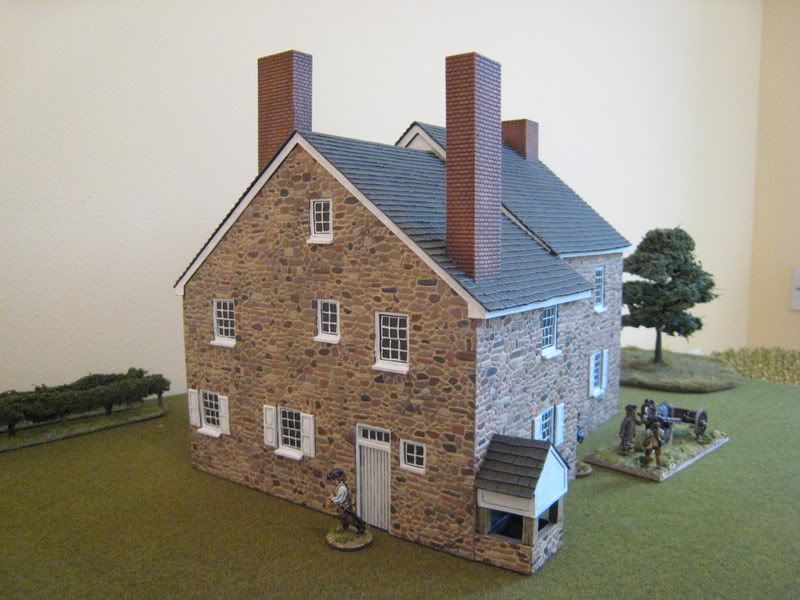
This is the model of the Benjaming Ring house from the Brandywine battlefield that Tablescape have made for me. I am incredibly pleased with it and the chaps put a huge amount of time and effort into the model. Whilst many resin models are smaller than they should be, this model gives you an idea of what these larger period houses look like "to scale". It measures about 25cm across and the same in height at the highest point on the left side. It gives you some idea of what a "to scale" Chew House would look like!


Benjamin Ring was a prominent Quaker farmer and miller in Birmingham Township in Chester County, Pennsylvania. The township is thought to have been named in the 1680s by William Brinton, the first white settler known to have settled in the area, after his former home in England. Ring owned two mills in the township and the wealth generated by these concerns allowed him to build a large house near Chadds Ford on the Brandywine. The house was built in 1731. It was all but destroyed by fire in the 1930s, resulting in a post-war reconstruction that was finished in 1952. I have not visited the battlefield and so do not know how close this house is to the river itself. Washington used the house as his headquarters on the night of 9 September 1777, two days before the battle. Some pictures of the inside of the house and some more information about Benjamin Ring are here. You can see that house (at least where it is situated now) is on a slope. We decided early on to ditch any attempts at replicating this and simply to have the house on an even level. The small piece at the back of the house on the left hand side is probably an outdoors oven, or something connected to the kitchen.

Benjamin Ring is said to have hung the Stars and Stripes from one of the house's window during the battle; rather apocryphal I'd have thought... A more believable story is that on 11 September 1777 Ring stood on the porch of his house watching the battle and when advised to head indoors replied “I always put my trust in the Lord.” At that moment a round shot landed at his feet and Ring fled to his wine cellar. Apparently he ran a tavern in his cellar (one wonders the extent to which Washington's staff made use of it) and the house became a hotel in the years after the AWI.


This model makes a change from the more common clapboard style of house. Stonework marked out the status and wealth of the owner, as I suspect did the large chimneys. The figures in the photos are Perry sculpts and the trees are Realistic Modelling "medium" sized 25mm trees. I appreciate the reasons why many wargaming buildings are often smaller than they would be in real life, but there is something to be said for an "in scale" building as a terrain centre-piece. The model cost £80 and 7 months to have made, although I think the amount of work that went into it would have justified a higher price. Please excuse the bright, artificially-lit photos - this morning was very grey and miserable here in London.


The lads are currently working on a generic barn and farm outhouse for me, and I have sent them photos of the old church at Harvard for the next "real life" project. In other news, I have had a total painting collapse since the end of last week, hence the lack of any Long Island updates this week. The Hessian artillery is still unfinished, so I am now officially 6 figures behind schedule. There are no photos of the von Lossberg fusiliers becuase I realised at the end of last week that I don't have their flags...So I'm relying on GMB to send them to me before the month is out!