Monday, 19 July 2010

A christening at the Temple


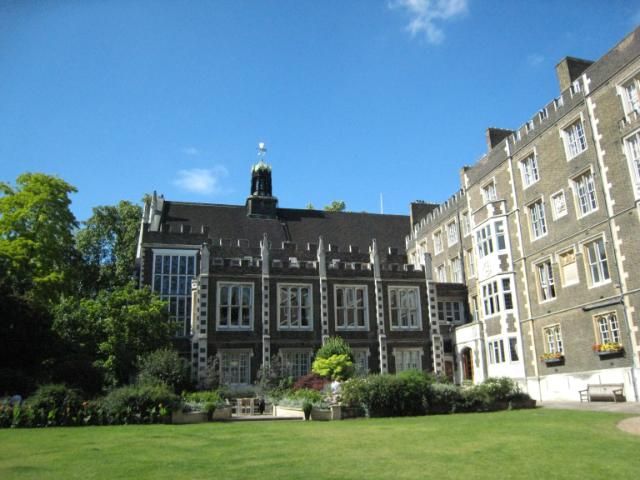
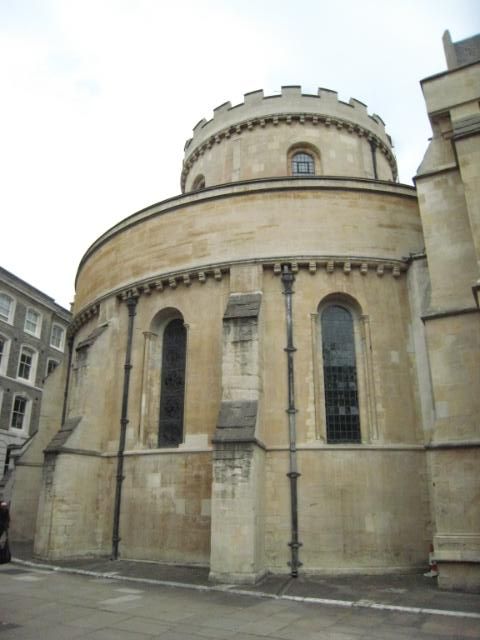
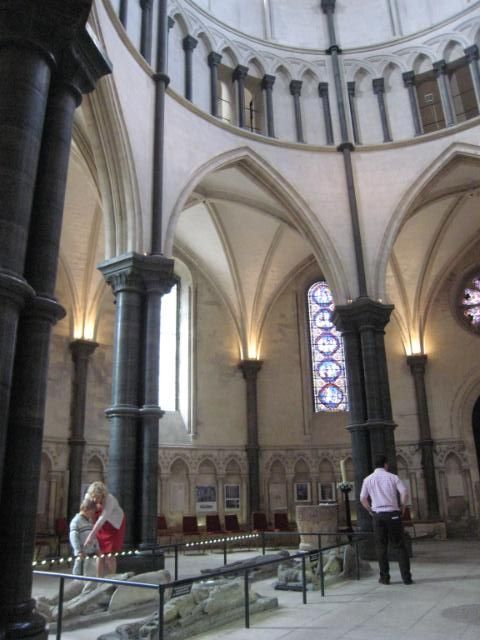
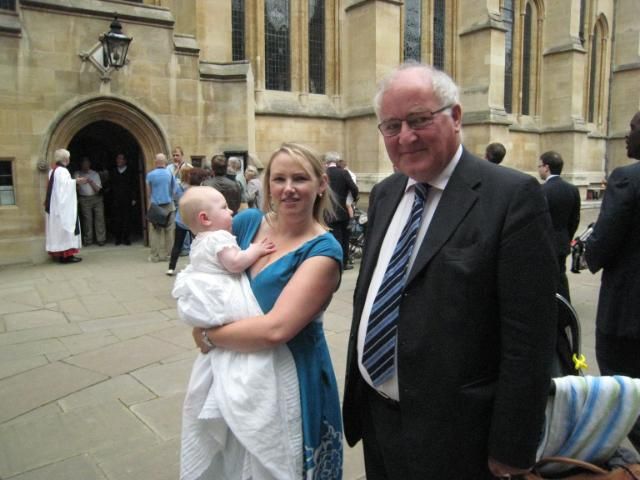
It was Hugo's christening yesterday, which gives me an excuse to post a couple of pictures of both the little fellow and the church and surroundings of the Temple in London. Nowadays, the Temple is best known as the collective noun for the Inner Temple and Middle Temple, two of England's four "Inns of Court" which, in practical terms, are collections of lawyers (specifically, barristers rather than solicitors). Lawyers set up shop in the area early in the 14th century, but the Temple began life as the English headquarters of the Knights Templar. Temple Church was consecrated in 1185 by Heraclius, Patriarch of Jerusalem in the presence of Henry II. The "Round Church", to which the rectangular Chancel was added some years later, was designed to be a replica of the Church of the Holy Sepulcre in Jerusalem. It was in the Round that Hugo was baptised and the church's Master (the priest of the church still bears the title of the head of the military order) explained how difficult it is for us today to imagine how people in the 12th century would have felt being in a near-replica of the place where Jesus was buried - it was the closest to being in Jerusalem that many would ever achieve. When the Templers fell in 1307 the Church and its adjoining monastic buildings were appropriated by King Edward II who then handed the Temple over to the Knights Hospitaller. The Hospitallers in turn rented out some of the area to the lawyers whose successors have remained ever since.


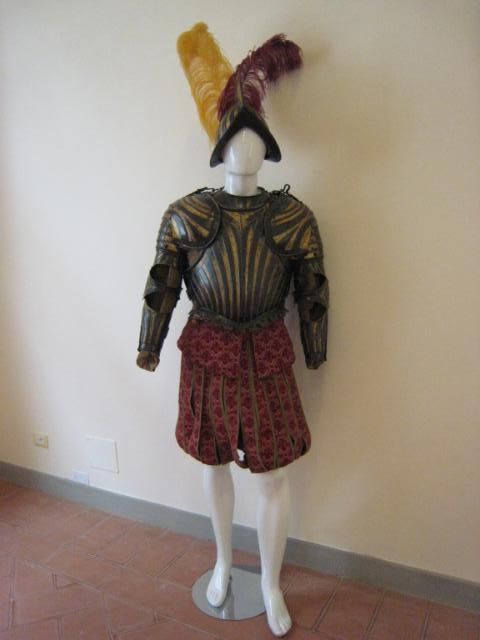
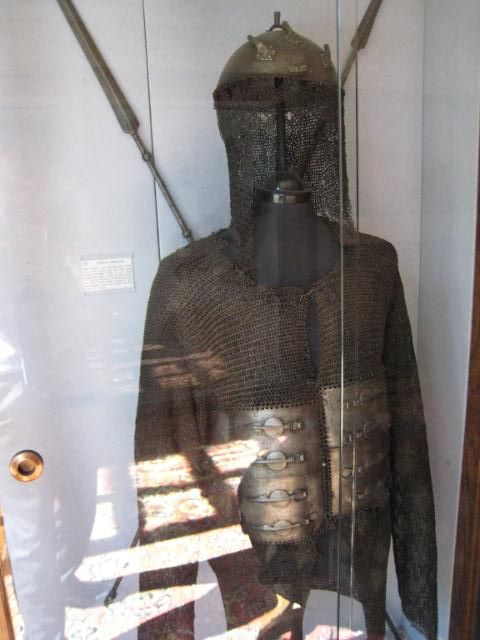
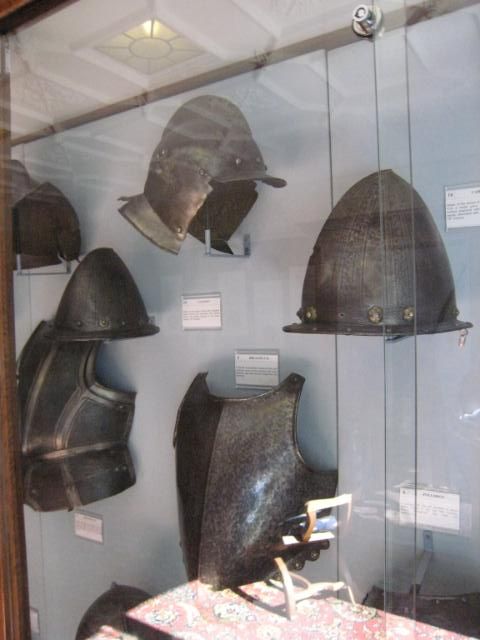
After the christening we stayed for the service of mattins and then held a reception for our guests in the rooms of Middle Temple Hall. The Hall was built between 1562 and 1573. It hosted the first performance of Shakespeare's "Twelfth Night" in 1602 and provides the dining rooms for members of the Middle Temple. After lunch we went out into the gardens to enjoy the sunshine and I found some displays of renaissance arms and armour at the foot of the main staircase.


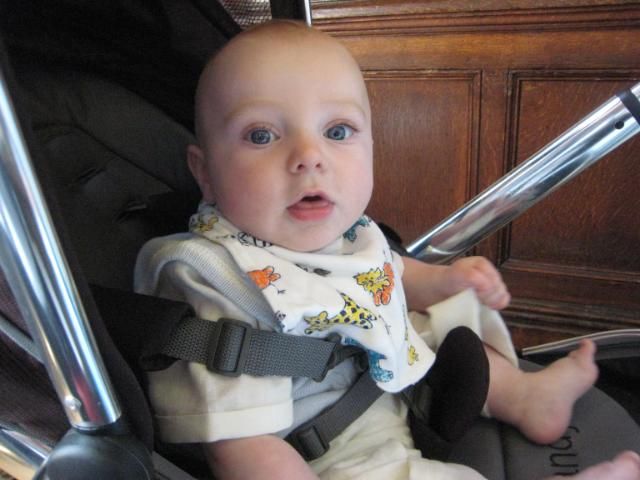
We all had a most enjoyable time and it was a privilege to spend the day in such historic surroundings. The Temple Church in fact has a strong connection to my family, as my parents were married there and my brother and I were both christened in it as well. My father practiced in the Middle Temple for many years and is now a Bencher. Hugo did very well yesterday, although he didn't care much for his 100 year-old family christening gown and we had to remove him from the Church when he started blowing raspberries during the Lord's Prayer at mattins. I imagine I behaved in similar fashion when in the same church 37 years ago...


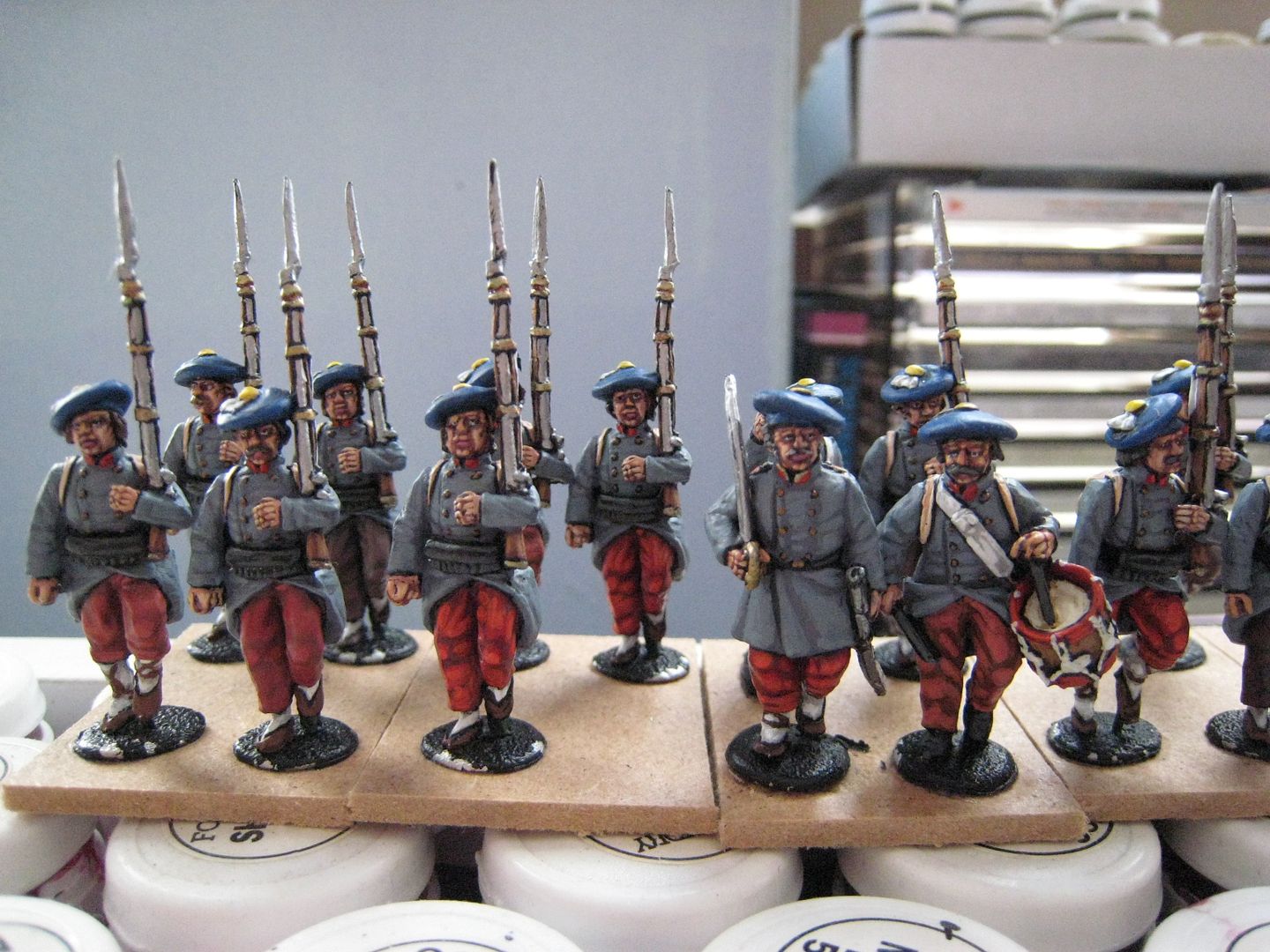
On the painting front, I'm pleased to say that the Carlists are finally finished and going through the basing process. The 108th Ligne has 5 companies completed and should be finished this week. Not sure what to do next - perhaps some French artillery. I'm feeling a bit of an itch to paint some more AWI British line, although that would necessitate an order to Messrs Perry.
Friday, 9 July 2010

Current wip

. .
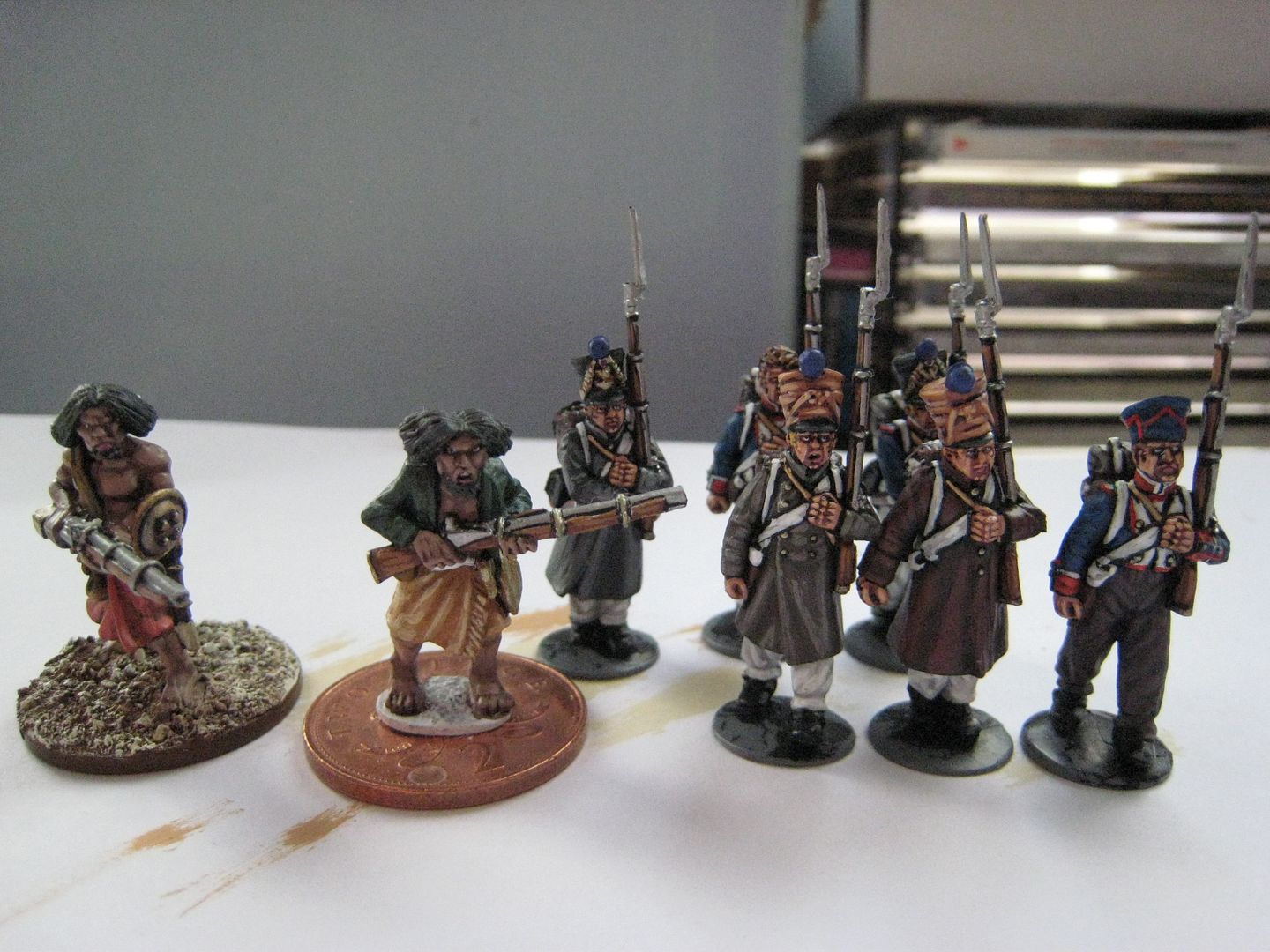
Apologies for the lack of post of late. Work and Hugo have both intervened heavily to prevent painting, and whilst I do have some photos of recent stuff I am not satisfied with them and need to take some more. Here are a couple of pics of what I am working on - Carlist infantry and French 1815 infantry. I find that sometimes I suddenly experience a burning desire to do something and last weekend I decided I wanted to paint more Napoleonic infantry. I have no idea where this came from, but when this sort of thing happens you just have to go with it....Perhaps at the back of my mind was the realisation that now there is a plastics pile alongside my leadpile and that I need to begin to seriously grapple with both. Perhaps I just fancied a change of scene. Production has certainly picked up as I painted the 6 French figures above in 5 days and should have the grenadier company finished by the end of the weekend - this will be the first time since Hugo was born that I have returned to my old 12 figures a week pace! I'm sure that much of the reason for that is the quality of the Perry plastic figures; as I've said before, they almost paint themselves. As the Carlists and Frenchies are in quite large units I will not have them finished for another week or so. I'm tempted to mount another Fourth of July parade tomorrow if I can find some time in the garden - perhaps early war Americans or even a review of my Isabelino force for the First Carlist War.


Other bloggers have noted the sad death of Paddy Griffith a couple of weeks ago. I met Paddy a few times because he was my brother's godfather. Our families lost regular touch over the years, but I have fond memories of Paddy visiting us with his family when my brother and I were young. His gifts to my brother and I were always of a military nature, and I recall him umpiring a chariot race game on the living room carpet using some plastic Roman chariots that he had given us. I was fortunate that Paddy's realisation that I was far more interested in military history than my brother led to the occasional gift of a signed book. From what others have written, such generosity was very typical of Paddy. My schooling also benefited from his perceptive analysis of military history. I once asked him why the French lost at Waterloo. Expecting (and hoping for) a detailed exposition of the battle he said "it's simple - our men were better than theirs". I used that line when asked the same question at my secondary school interview a year or so later; it prompted a laugh and I like to think helped me secure my place. He was a lovely man and will be much missed.

Monday, 28 June 2010

Civilians (11)


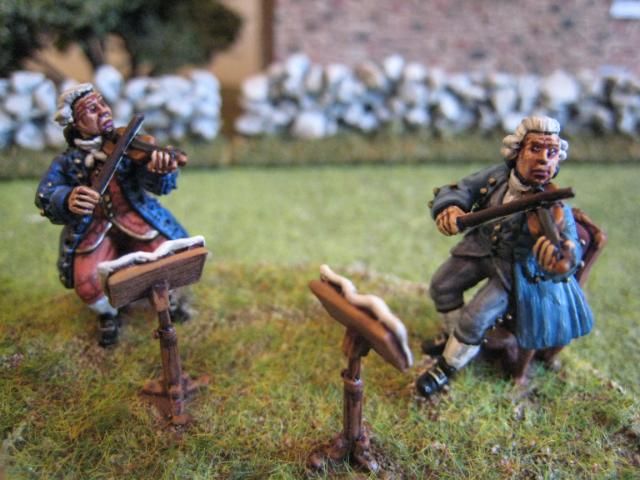
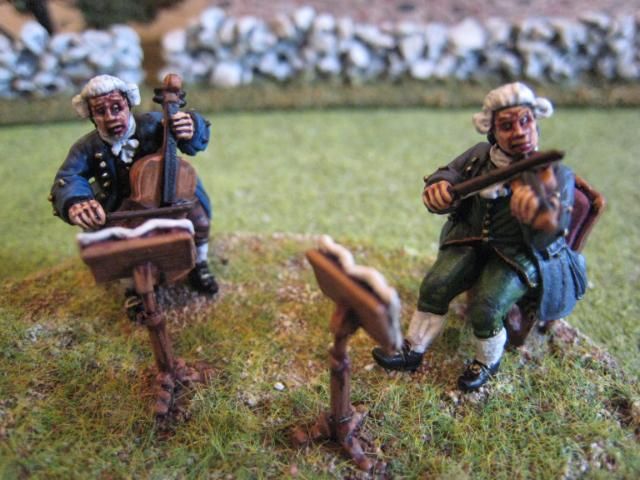
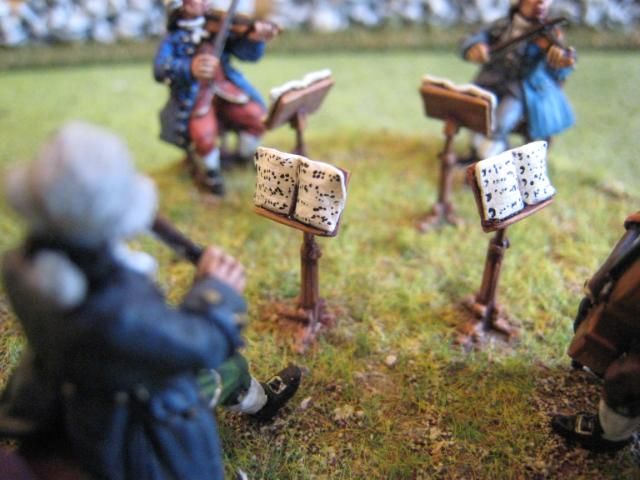
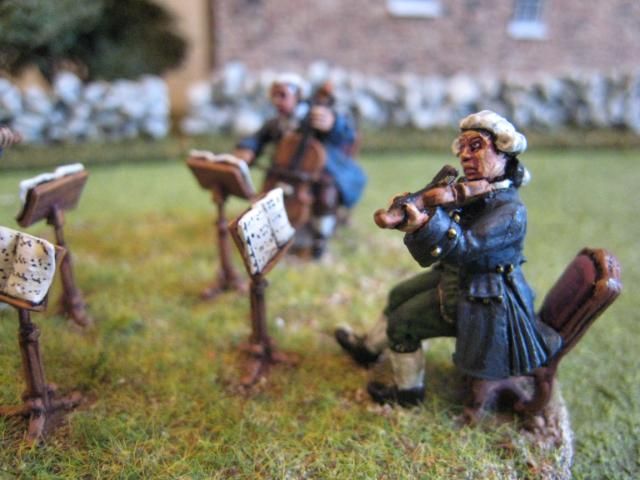
I thought I'd put these figures under the "Civilians" label but this is the first post of 3 on Eureka Miniatures' 18th century musicians and perhaps they deserve a separate label. Anyway, Eureka have done a fantastic job in releasing this string quartet and "personality" figures of Frederick the Great playing his flute and CPE Bach playing his keyboard (I've finished Frederick but haven't started Bach yet). These are all equisite figures and I recommend them to all 18th century gamers - you can never have enough musicians on the tabletop. The sculpting of the instruments and the way they are being played is very good. I was delighted to see that the viola (my own instrument) is noticeably a bit larger than the violins and I like the way that the players are leaning forward as they play. My only niggle is the positioning of the heads - only the cellist is actually looking at the music. But I suppose you could think of the others as (quite validly) either looking at their finger-work or at each other; on that basis I tried to position the figures so that they are looking at each other.


One option with these figures is to paint them all in the same outfits to represent a court or house band. Given that these are for use in 1770s America I decided against the livery look but tried to create some uniformity by giving each player a powdered wig and a blue coat. I wanted to suggest a group of professionals who are wearing their own clothes but are ensuring that they co-ordinate in some fashion. One of the two violin players has a more elaborate coat than the other and so I decided he should be the leading first violin. For the instruments themselves I found that the Foundry "Tan 14" palette was perfect. The seating of the figures is not quite right, which is a bit annoying because I did some research to see whether is was (and is) more common for the viola or cello to sit on the outside. There is no "correct" answer to that point and I put the viola player on the outside. However, in front of an audience the viola is supposed to be opposite the first violin with the other two forming a semi-circle behind them; this is so that none of the players' backs are presented to the audience. With my figures, even though there is a nice symmetry in the way they sit on the base the backs of two of the players will always be towards the audience. I'm not sure how that happened.... and perhaps it would have been better to have based each player separately, but never mind.


The quartet is playing the opening of Quintet No.6, Op.57 by Luigi Boccherini (the fifth part is piano). When painting the music I wanted to work from an actual score rather than just make up the annotation, and this was one of the few suitable pieces I could print off online. The quintet was probably composed in 1780 and it has a suitable nickname, "The Military Night Watch in Madrid". Trying to fit a full 10 staves on each page would have been ridiculous, so I settled for 4 staves per page and I did try to ensure that what I painted followed the music and thereby captured the various intruments' roles. So, for example, the music for the first violin is busier than for the other players and the viola player (as usual) has some long rests and a part that is not particularly exciting; hopefully the clefs look a bit different too. These figures are part of Eureka's "100 Club" system, whereby you put your name down for figures in advance of their being sculpted. Consequently I don't think they are on general release just yet.


Recordings of suitable period music are easy to find. Some of my favourites are Haydn's Op.17 quartets (1771), Boccherini's Op.19 flute quintets (1774-6) and Antonio Rosetti's Op.6 quartets (1787).


4 figures. Painted June 2010.


Sunday, 20 June 2010

Pisa


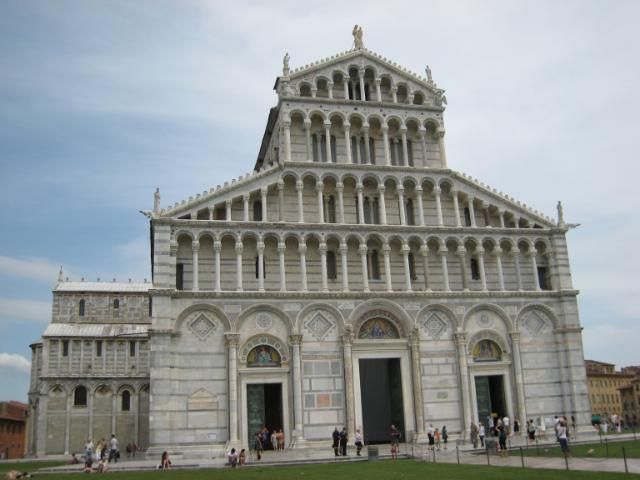
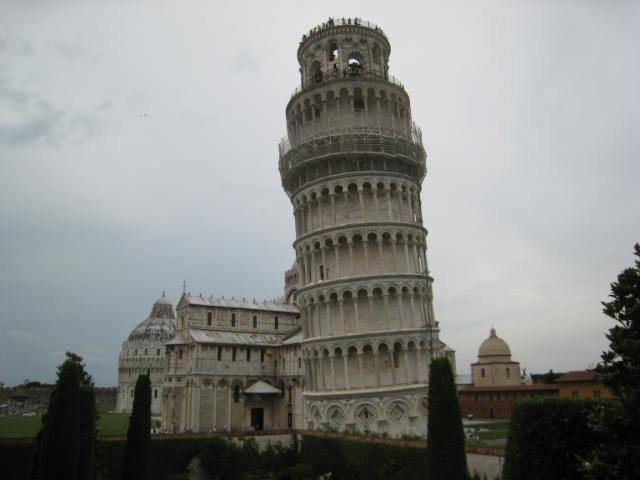
The whanau and I have just returned from a week in Tuscany. We spent a few days in Pisa and then a few more in a villa outside of the town of Lucca, which we shared with some of the Kiwi's friends. We had some lovely weather but also 3 days of heavy storms, the last of which caused a complete meltdown at Pisa aircraft as too many delayed planes arrived at once, producing scenes of chaos I haven't experienced since Athens airport in the mid-80s. Hugo attracted much attention from the bambino-loving Italians; one lunchtime he was passed around a resturant from one female admirer to another, which he much enjoyed being the awful flirt that he is. Whilst Lucca is a stunningly beautiful Tuscan town, I thought I would just post about Pisa as that is where we saw the most immediately "military" things. Pisa is not quite so appealing; it lacks the narrow cobbled streets and timelessness of Lucca.

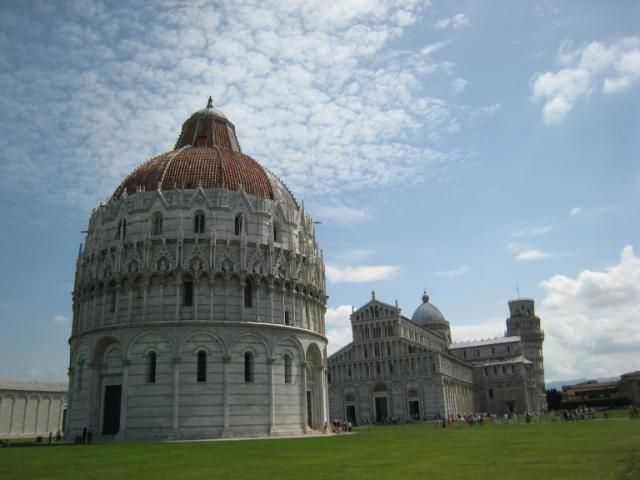
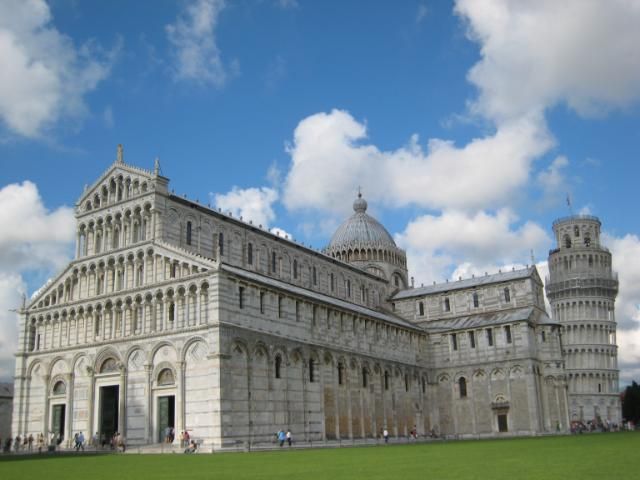
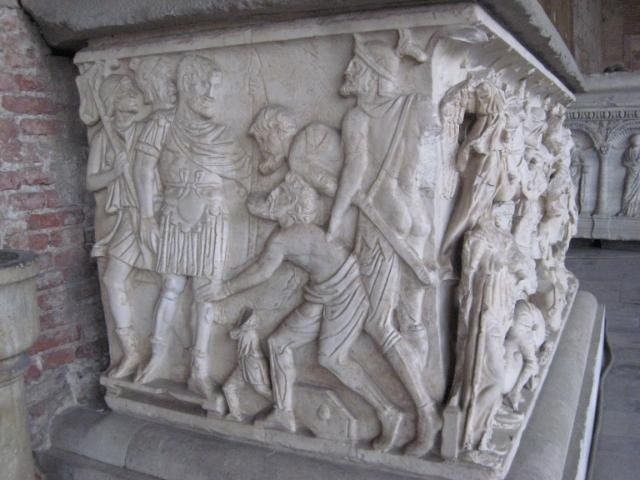
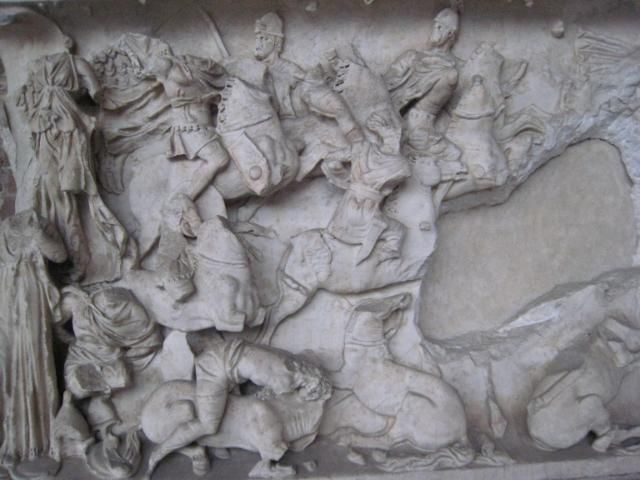
Above are two photos of the famous "campo dei miracoli", where the leaning tower stands alongside the main cathedral, baptistry and other buildings. The tower is a bit like the London Assembly building (otherwise known as "the testicle") - to fully appreciate the lean you have to view it from a particular angle. The reason why the tower, and to a much lesser extent the other buildings, leans is the soggy mix of sand and silt on which they were built. The tower's final form was completed around 1350. Below are scenes from one of the sarcophagi in the "Camposanto", another building in the campo which is essentially a cloistered cemetary. No dates seemed to be provided for any of the stone objects in this building, but the guidebooks refer to "late Roman" sarcophagi and that seems to fit the bill for this one and its Romans v barbarians relief work.


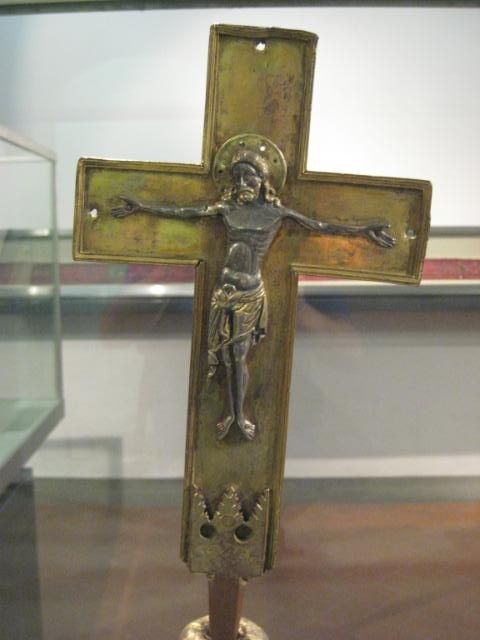
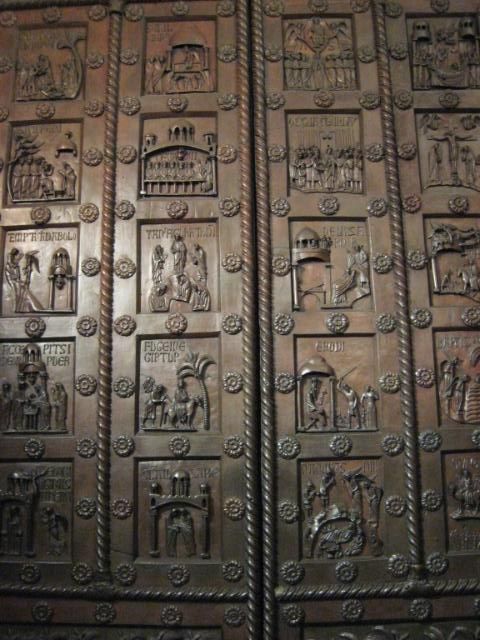
The campo's museums have some interesting things. On the left is the "Pisa Cross", allegedly carried by the First Crusade's Pisan contingent. On the right are the cathedral's original bronze doors, made in 1180 and which depict the life of Christ in their various panels.


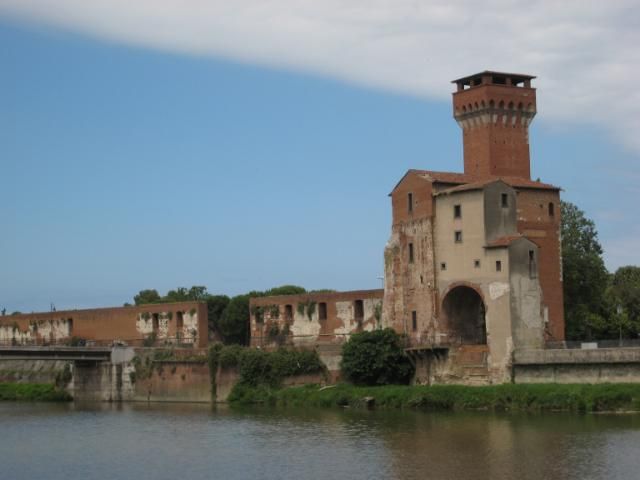
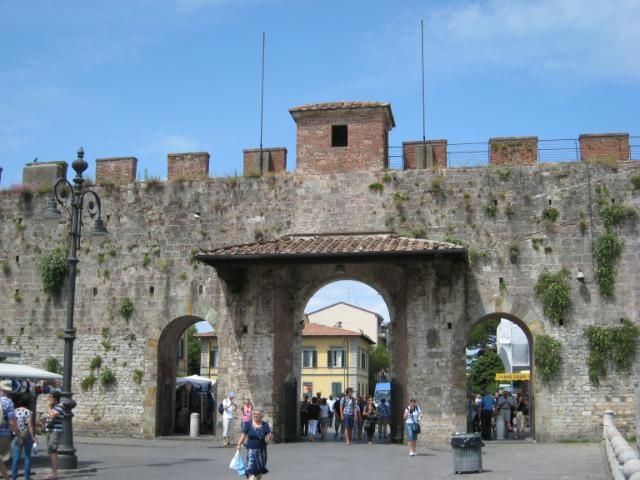
The city's walls date to the thirteenth century. Below are a view of the Fortezza Vecchia, which used to guard Pisa's harbour (long silted up) and a section of wall with one of the gates.


Lastly, some militaria from the Palazzon Reale, a grand house that belonged to the various ruling families of Pisa. The lack of exhibit information here was even more frustrating that in the Campsanto. I have no idea when the drums below date to or whether they are ceremonial or were carried in battle. Ditto for the suits of armour and costumes. I assume they are 16th or 17th century but have no further clarity than that. Pisa has a "push of war" event that dates back to the late 16th century called the "Gioco del Ponte" or "Joust of the Bridge", in which teams from either side of the River Arno that runs through the city competed for control of one of its bridges. It may be that the drums belong to various teams in that event rather than any "proper" military units. That said, I would certainly incorporate some of the motifs into drums for Italian Wars units...


On the waragming front I have just finished Eureka Miniatures' 18th century musicians and have started work on my first full Carlist unit for the FCW. More Sudan is also in the pipeline.

Wednesday, 9 June 2010

16th Light Dragoons (2)


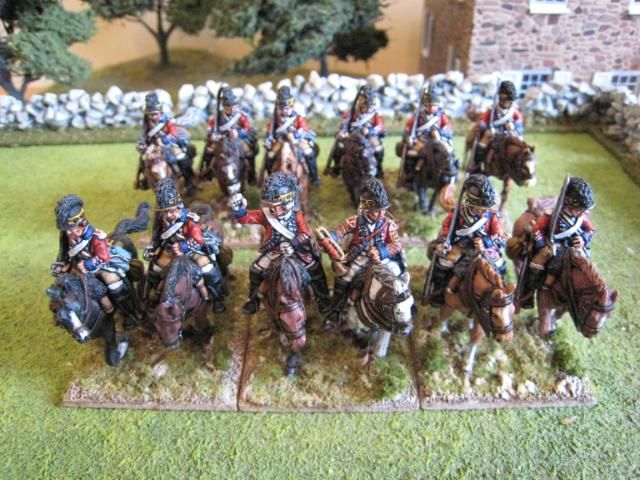
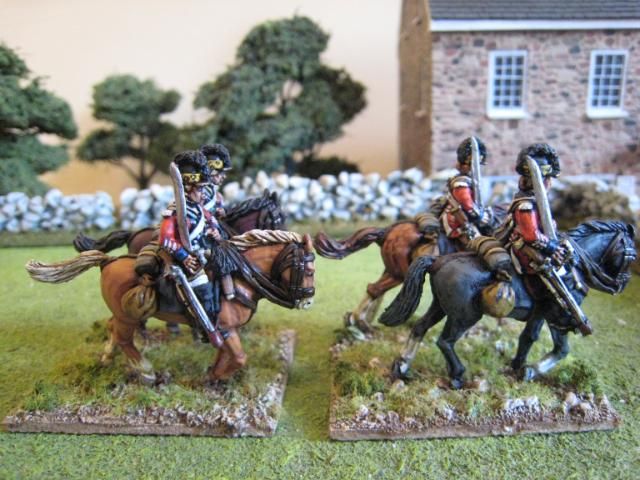
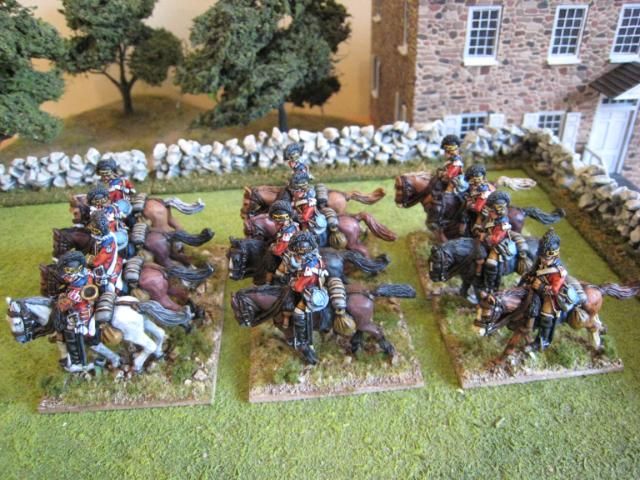
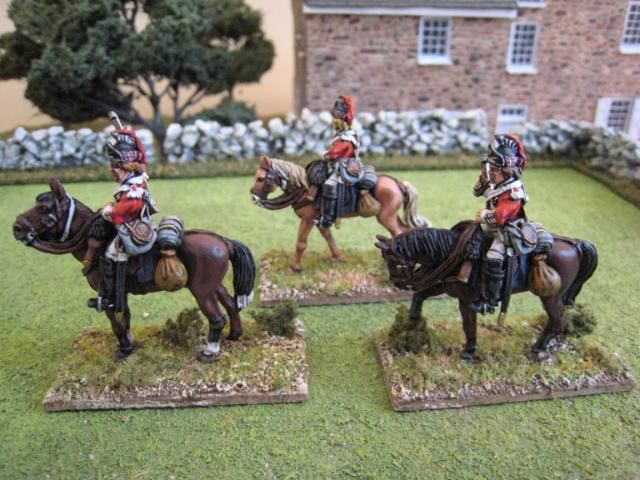
The 16th Light Dragoons was raised in 1759 by John Burgoyne (then a colonel). The regiment became a royal regiment in 1766 following its service against the Spanish. For a few years it was known as the Queen's Dragoons. The regiment was posted to Nova Scotia in October 1776 and immediately joined the main British army in New York. It fought throughout the New York and Philadelphia campaigns. By 1778 the regiment was badly understrength and its men were transferred into the 17th Light Dragoons, the officers returning home. The regiment's modern day successor is the Queen's Royal Lancers.

The 16th tends to appear en masse in the large northern theatre battles: Long Island (12 figures), Brandywine (14 - 6 in Knyphausen's sector and 8 in Cornwallis') and Monmouth (10). So the largest number of figure you need for the regiment is 14 for Brandywine, but in the event that I ever try to stage the whole of that battle myself I'll just add a couple of figures from the Perry skirmishing pack.

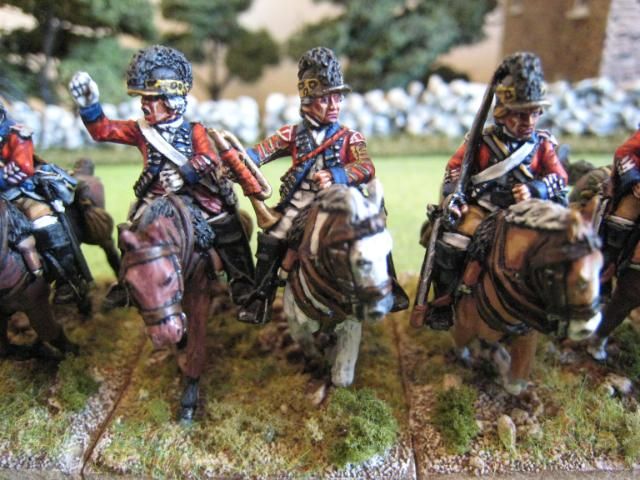
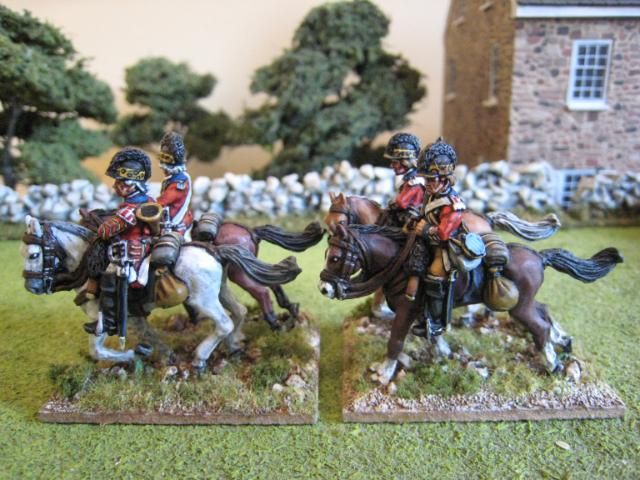
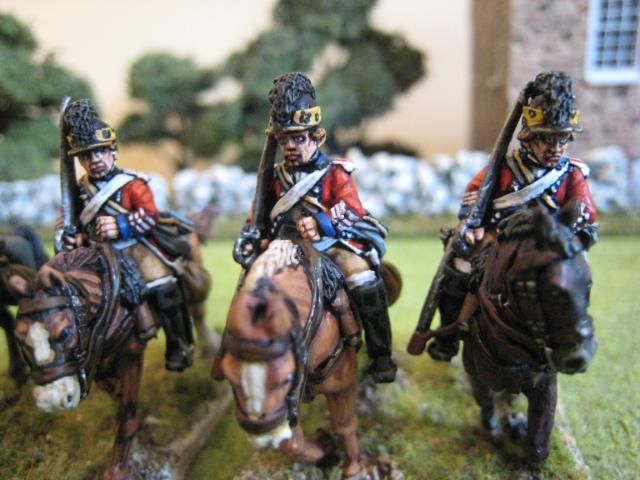
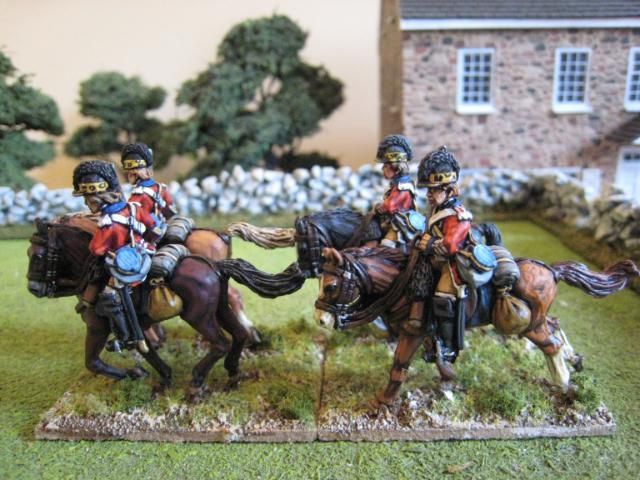
Most of these figures were painted in 2005. They appear now because I have been meaning for ages to add another 3 figures to bring the total unit strength up to 12 and finally managed to do so last month. I had planned to paint these extra figures for the 2008 Long Island game, but I ran out of time. My painting style had developed substantially since 2005 and there is much in these figures that I would do differently now; principally the faces (which had a yucky GW flesh wash) and the horses (which are dry-brushed). That said, from "normal wargaming distance" it is probably difficult to spot the new figures and I think the unit gels together ok. In the pics below, the new figures are in the bottom row. The light blue colour on the water bottles is something I took from the Perry Miniatures website. I have since been told that painting water canteens this colour was a Napoleonic practice and would not have been done at the time of the AWI - the canteens would mosy likely be of natural wood or covered with canvas to keep them cool. Another mistake on the Perry website is the dressing of the trumpeter in a coat with reversed colours. The 16th was a Royal regiment and so musicians' coats were not reversed in this way.


12 figures. Painted 2005 and May 2010.


Tuesday, 1 June 2010

17th Light Dragoons (2)


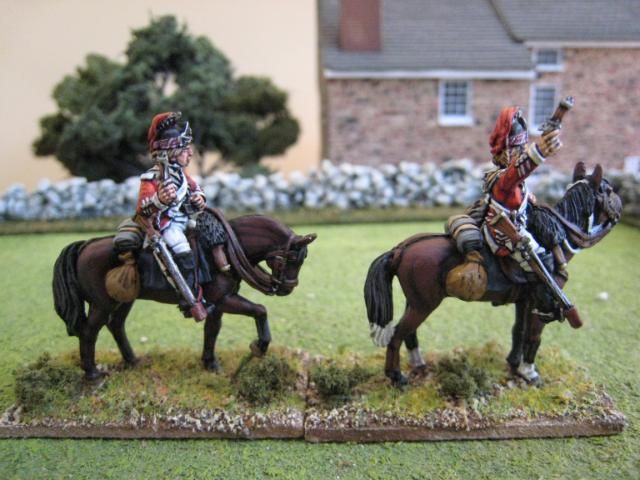
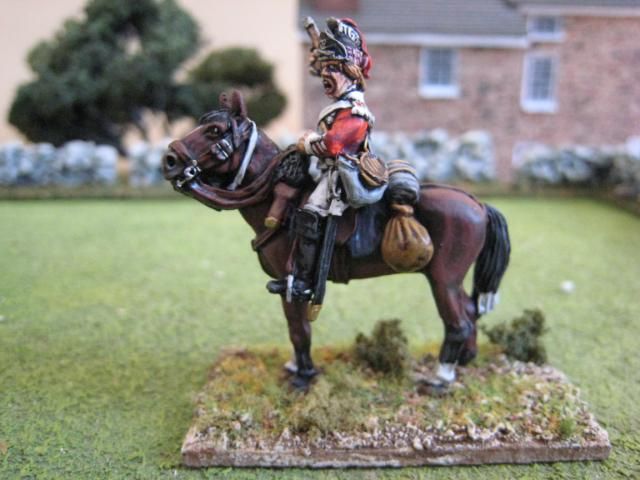
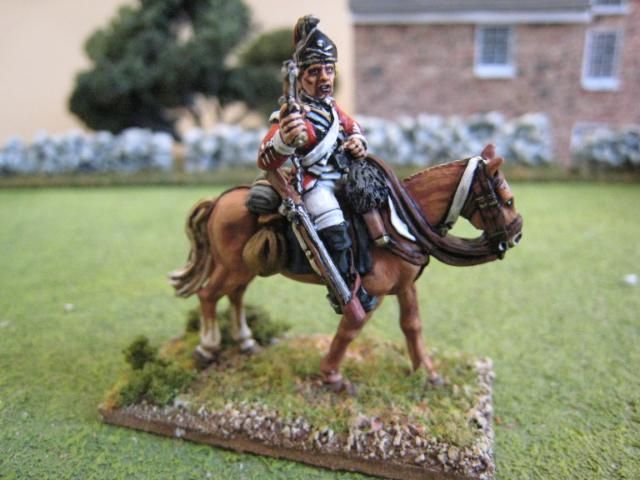
My second unit of figures for the 17th is the Perry pack of dragoons "on picket duty". These are lovely figures, although to be honest probably of limited use for the kind of large battles I'm interested in. That said, I can see them patrolling the edges of the British lines, perhaps on duty in camp or even hovering around General Knyphausen who had a couple of dragoons attached to his staff (presumably as bodyguards or messengers). The figures' suitability for skirmish games is obvious and, to be honest,the figures are too nicely sculpted to be hidden away.


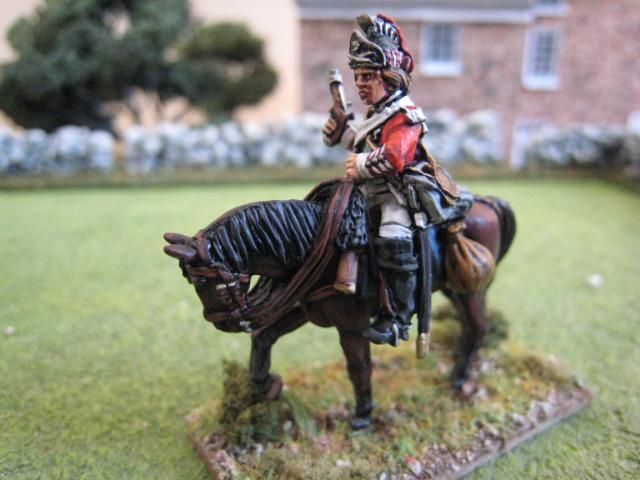
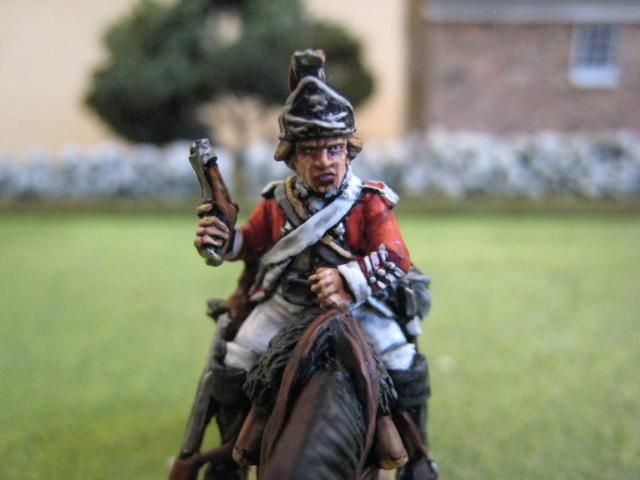
As these are "early war" troops I deliberately painted the horses in more traditional colours and not as palominos, tobianos or any of the more fanciful breeds that I enjoy doing. Paintings of dragoons in Mollo and on the Don Troiani website show the horses carrying white head bridles. These bridles have quite clearly been sculpted on most (if not all) of the Perry Miniatures cavalry, but I hadn't noticed until now; consequently, I painted white harnesses where applicable. Veterans of the Foundry and Perry Miniatures AWI ranges will know that throughout the packs are various figures that have faces very similar to that of Alan Perry. These figures are affectionately referred to by my London gaming companions as "Alans". A classic example can be seen in the close-up in the last pair below, although I would emphasise that I have never seen Alan looking so mean! This is a face that appears in each of the rank-and-file cavalry packs in the Perry range. I'm quite pleased with the way this figure turned out - as someone said elsewhere, he looks as if he's going to shoot every rebel he comes across.
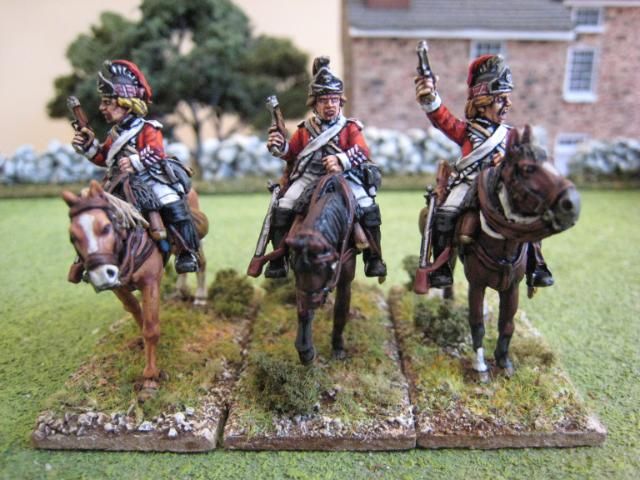

3 figures. Painted May 2010.


Wednesday, 26 May 2010

Baluchis (1)


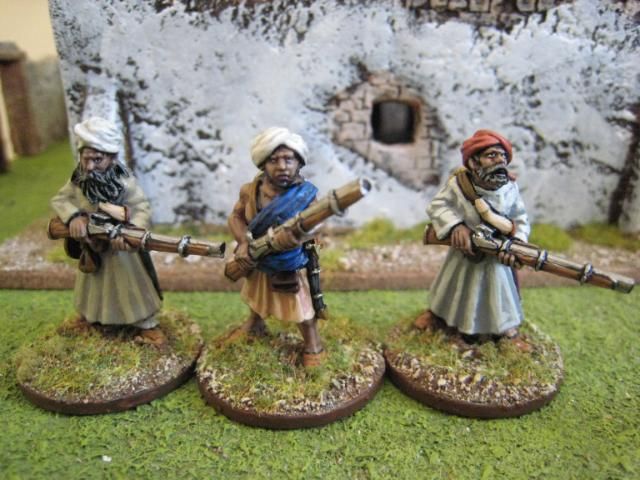
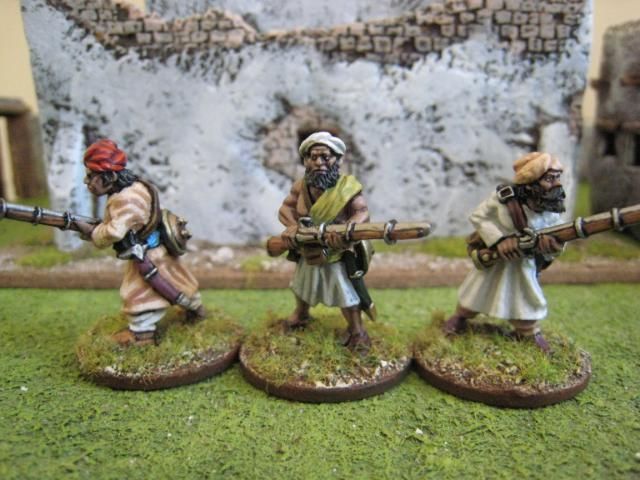
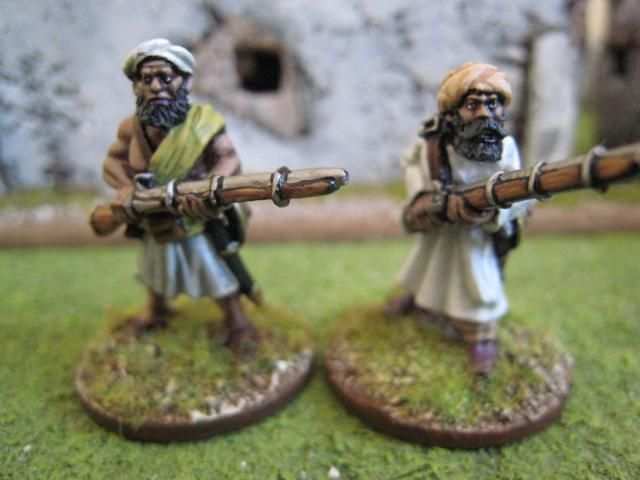
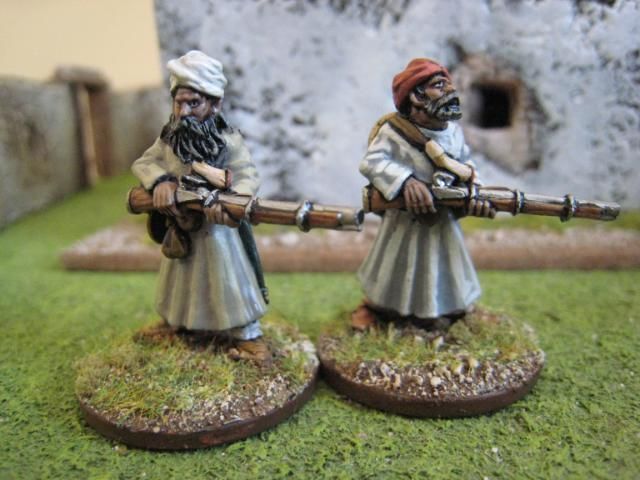
I'm sure that many wargamers sometimes get the urge to set aside their current projects for a time and paint something completely different. This happened to me a couple of weeks ago. I was up in the loft and started looking in the sets of drawers that house my "non-core" leadpile (i.e. all those figures that don't directly fit into the projects I have been working on over the past 2 years). I came across 3 packs of Foundry Baluchis and decided to paint them up over the next couple of weeks. At the back of my mind was the idea that I could use them as mercenaries or volunteers for the Sudan (although these figures are substantially larger and chunkier than those in the Perry Sudan range). I already have 2 packs painted up so eventually I will have a decent sized skirmish force.


I avidly collected the Darkest Africa figures that Mark Copplestone made for Foundry when they first came out, some 10 years ago. This was Foundry's golden age, when every month they released lovely sculpts from the hobby's best sculptors. You could sign up to a standing order system for their new ranges, whereby each month you'd receive a long box with between 6 and 8 packs at a 10% discount. I quickly signed up for the Caesarean Romans, Macedonians and Darkest Africa ranges (back in those days I wasn't the least bit interested in the AWI range, which was being released at the same time!). Of course Foundry then imploded, its sculptors left to start their own businesses and the rest is history. I managed to paint a good few packs of Darkest Africa figures but didn't base any of them. I began doing so a couple of years ago and one of my aims this year is to finish basing the remainder. In the meantime, several of the later packs have not been painted at all and I intend to paint a couple of them every now and then as a change of paint from horse and musket.

These figures form one old pack - nowadays the figures are split over a couple of packs, as Foundry meanly reduced the number of figures in their packs from 8 to 6 a few years ago (which was a disaster for the AWI range as it meant that the British command packs only had 1 standard bearer - useless!). The skin is painted with one of the newish Foundry flesh palettes - "Near Eastern Flesh 123". Painting people from Asia is always tricky; some are almost caucasian in colour whilst others can be quite dark. This palette seems to me to be a good compromise and I've also been using it for my First Crusade arabs. I'm currently painting a second pack of Baluchis so they should appear on the blog next week some time. The main building is a tomb from Hovels, bought ready painted and based at Salute. The walls and other bits are by Paul Darnell of Touching History.

8 figures. Painted May 2010.