Wednesday, 14 October 2026

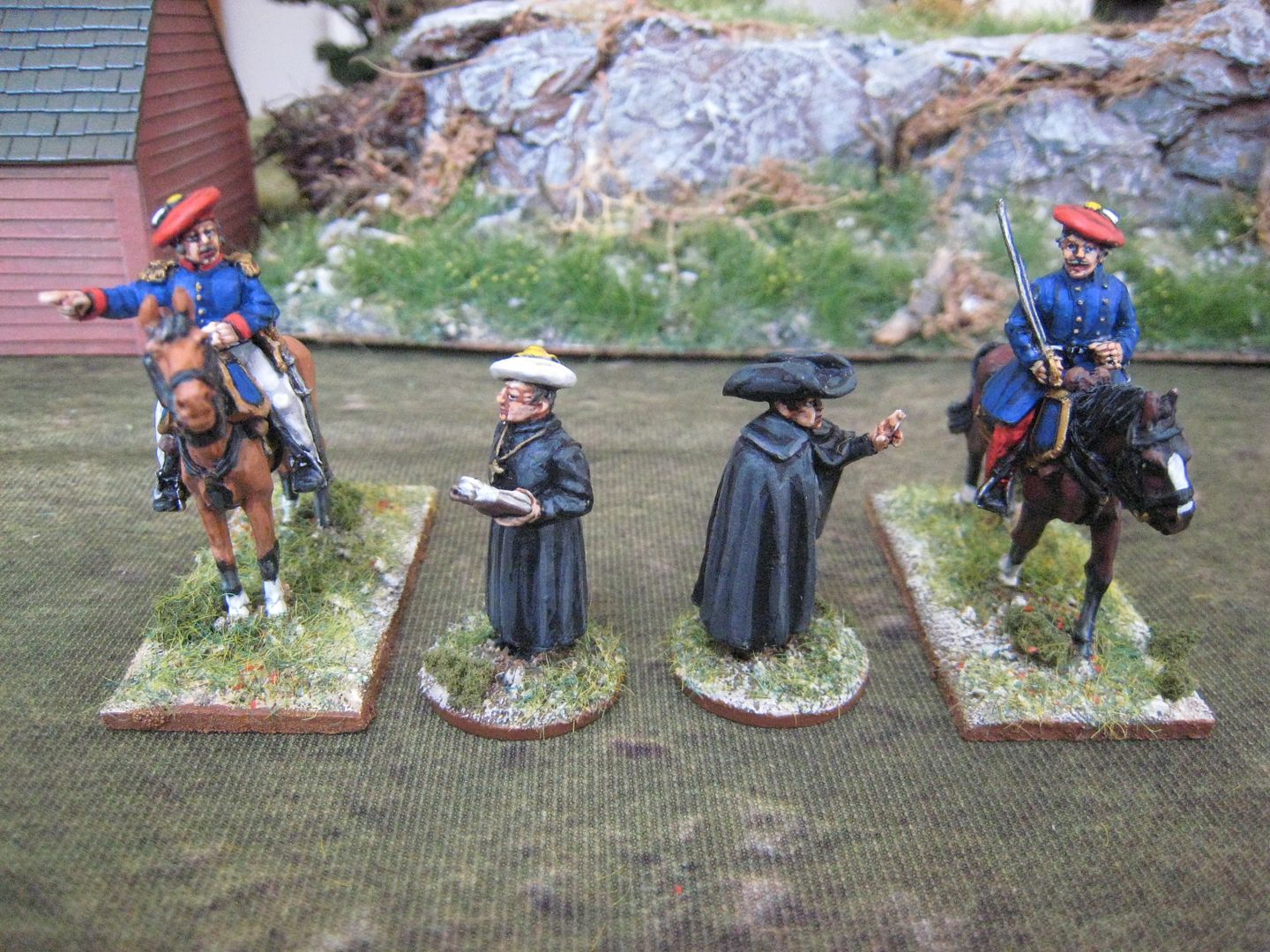
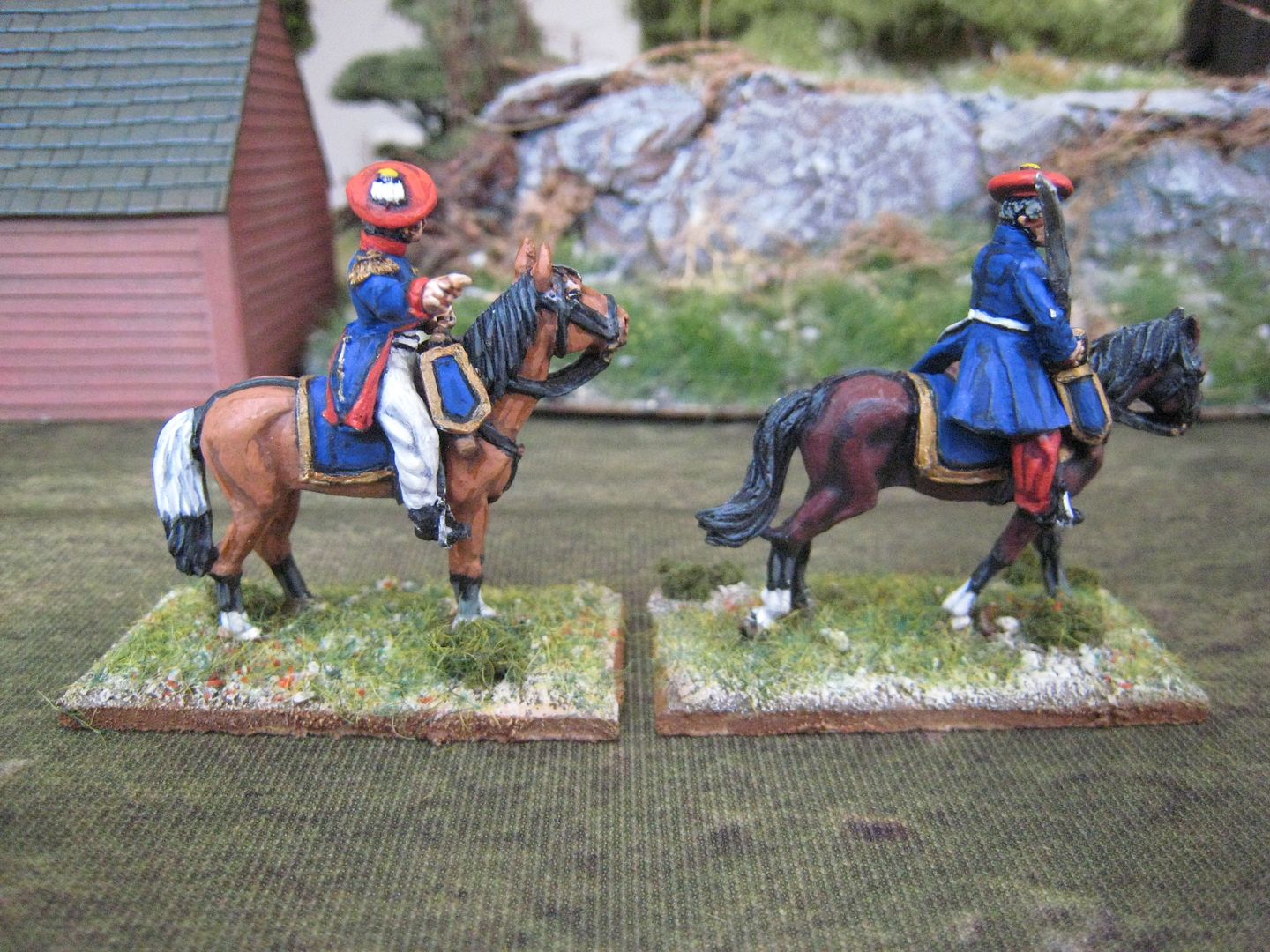
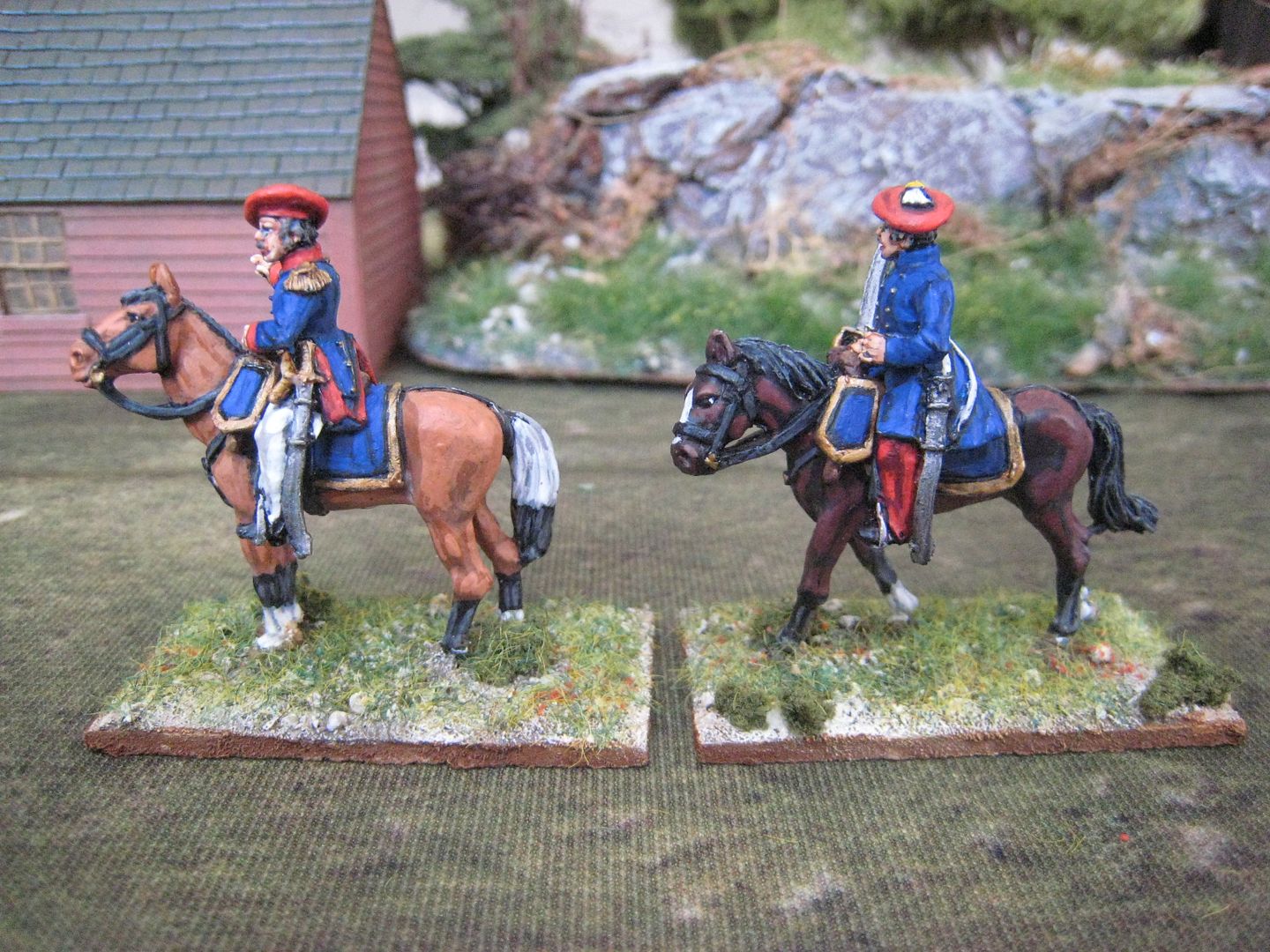
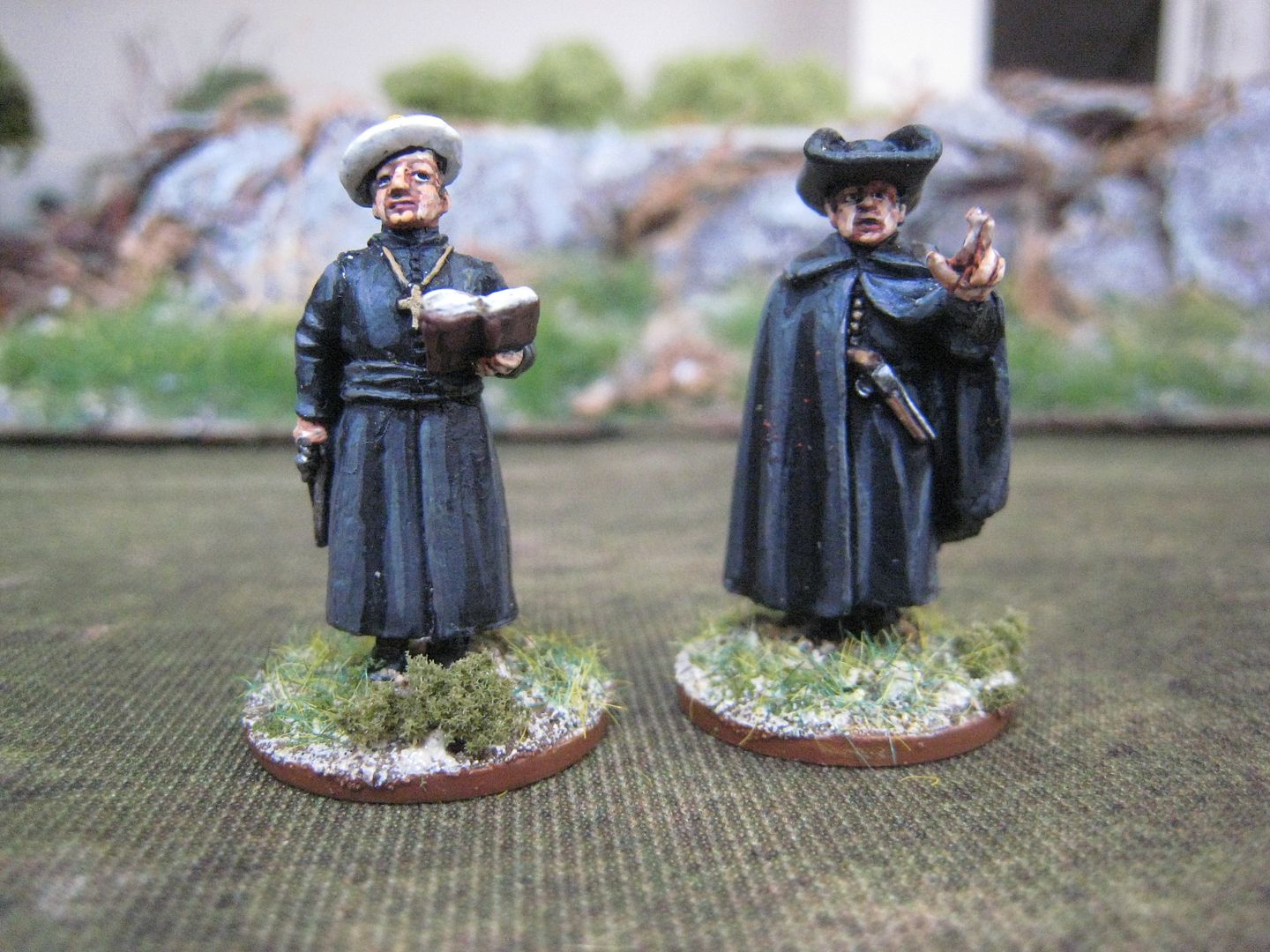
Carlist commanders

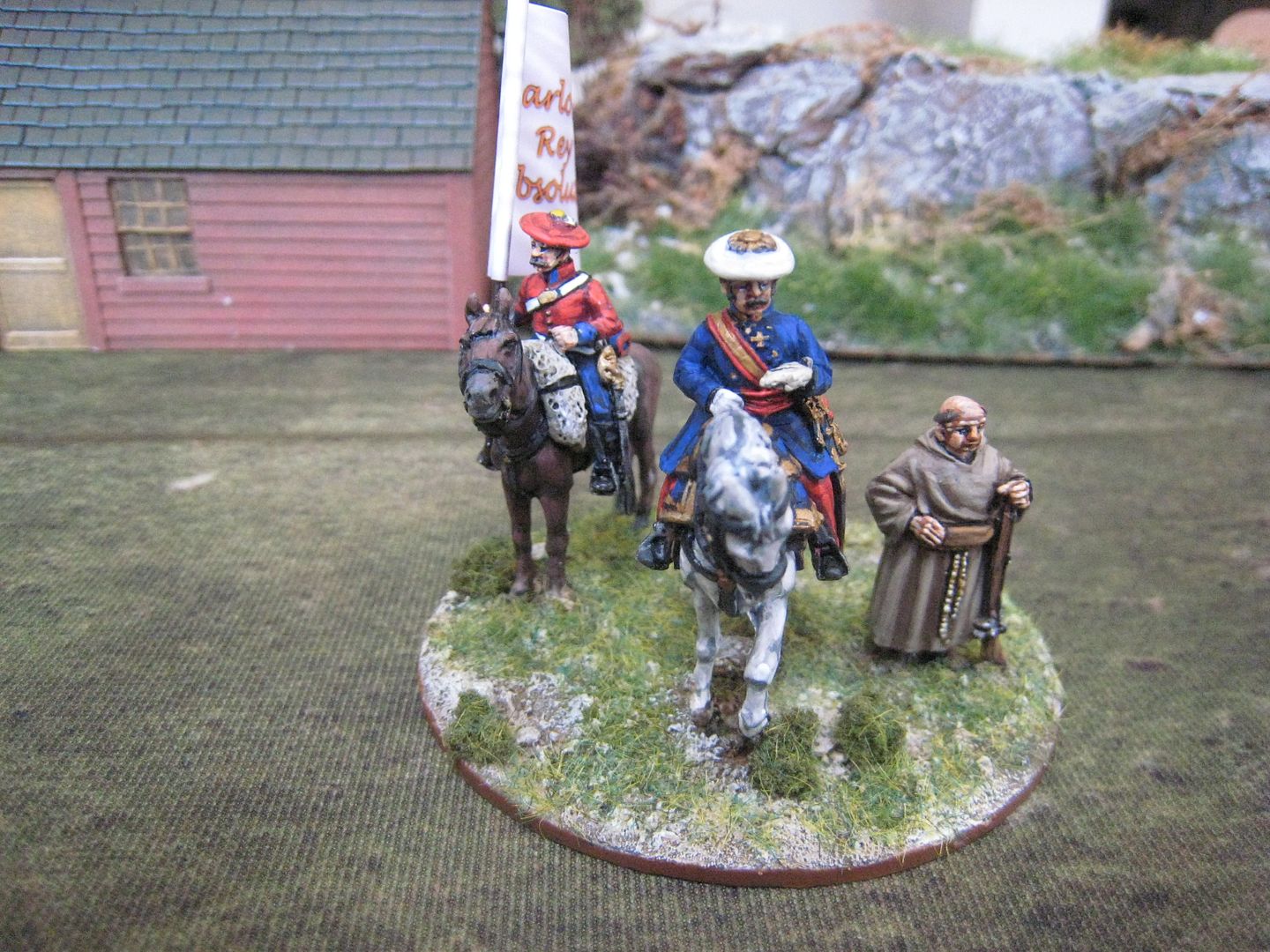
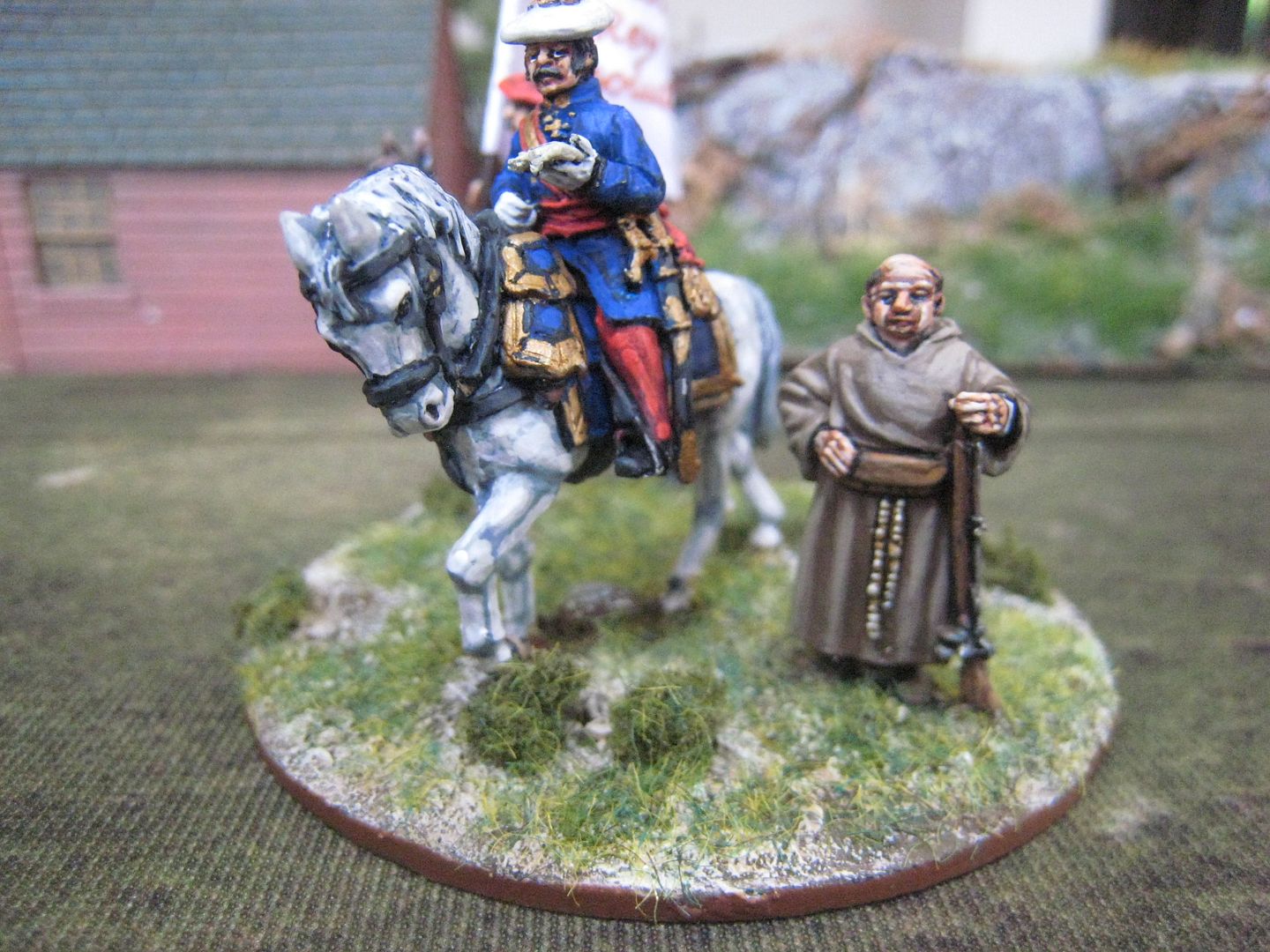
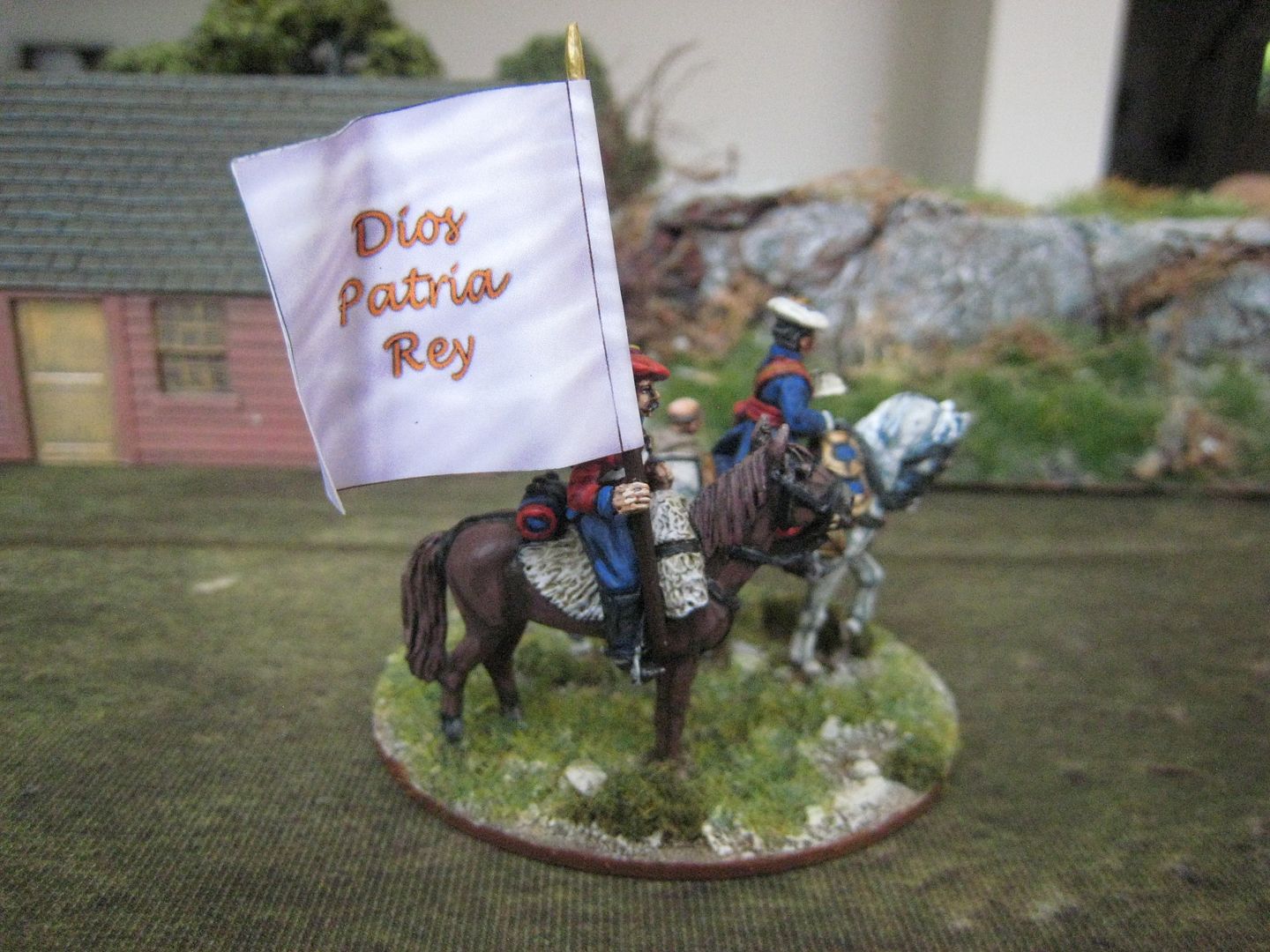
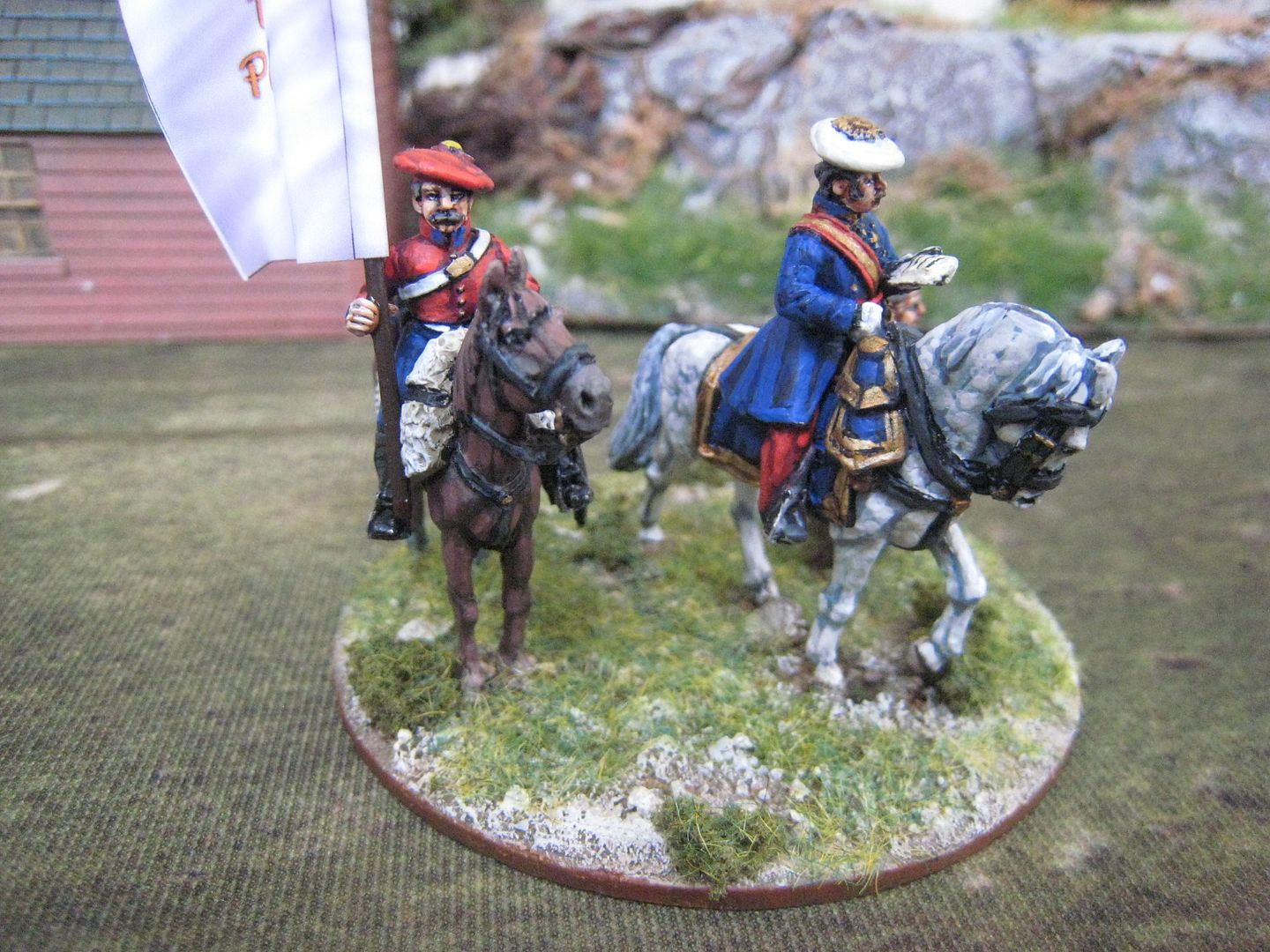
As a coda to my trio of Carlist personalities, here are the remaining mounted officers and a couple of priests. I thought these two priests would look good standing in front of Carlist units.  I have a further 3 priests left - one will go on the Don Carlos command stand (in addition to his special mounted, carbine-armed escort) and I'm not sure what to do with the others; I might insert them into a unit of irregulars. I painted all these figures over Christmas 2025/26, as part of an attempt to erase my First Carlist War lead-pile. Of course that meant painting the few remaining infantry figures, which in turn led to an order to Perry Miniatures earlier this year to buy the figures I needed to finish the units - you know how it goes...What's left includes another Carlist infantry battalion and a unit of Isabelino light infantry. I might see if I can get those finished off over the next week or so, to keep the FCW posts coming. And Don Carlos himself, of course. There's also a regiment of cavalry I did back in 2020 but I never got around to making up the lances.

Because I've been so remiss with this blog over the past few years, I now have quite a historical backlog as well as a sci-fi/fantasy one. I have several Napoleonic Wars units, for both the Waterloo and Egyptian campaigns, lots of Great Paraguayan War stuff and even a trio of AWI battalions. I am determined this time to get up to date, so please bear with me and many thanks for all the comments and encouragement.

4 figures. Painted December 2025. Background cliff face by Bill Nevins (more on that in due course).


Thursday, 8 October 2026

Don Sebastião Gabriel of Bourbon and Braganza

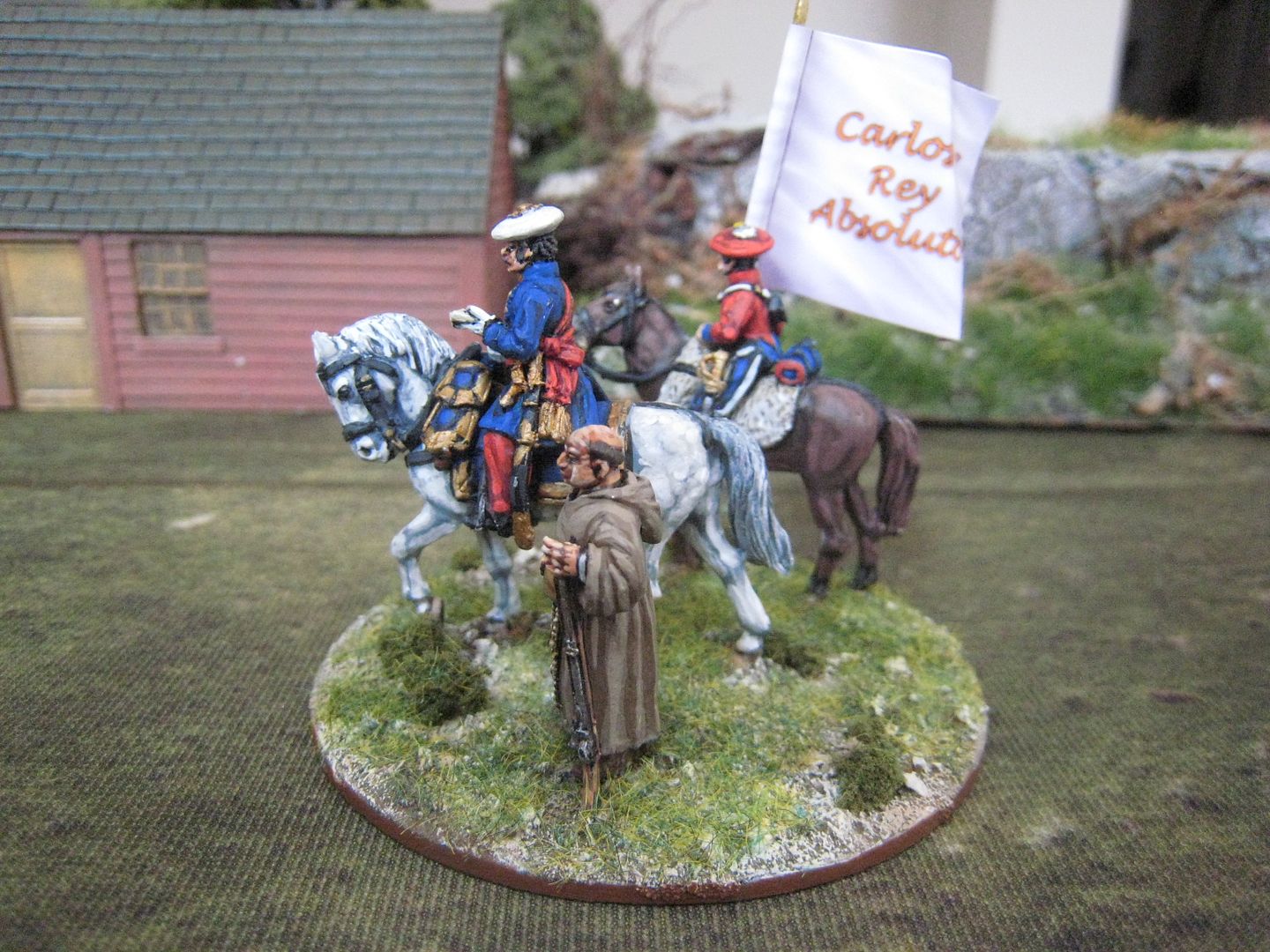
This is the third of my Carlist general vignettes. I have Don Carlos himself still to do, but unfortunately one of his arms snapped off during undercoating, so he's going to have to wait a bit. In the meantime, we have this chap, who I'm just going to call "Don Sebastian" for short (as per the Perries' website). He was born in 1811, the only child of Maria Teresa of Portugal, the daughter of King John VI. His father, Don Pedro Carlos, was a the grandson of King Charles III of Spain and Queen Maria I of Portugal. His mother was a fervent believer in the Carlist cause, as Don Carlos himself was her uncle. The young Don Sebastian no doubt saw an opportunity for adventure and, presumably as a result of his grand-uncle's patronage, took command of the Carlist Army of the North in December 1836. 

He won a famous victory over combined Isabelino and British Auxiliary Legion forces at Oriamendi on 16 March 1837. However, he consequently led his army on an expedition down to Madrid, which was not a success. He appears to have been removed from command in 1837 and it's difficult to find out what he got up to subsequently. Having been stripped of all his titles as a result of joining Don Carlos, he was reinstated as a Spanish prince in 1859. He died in 1875.

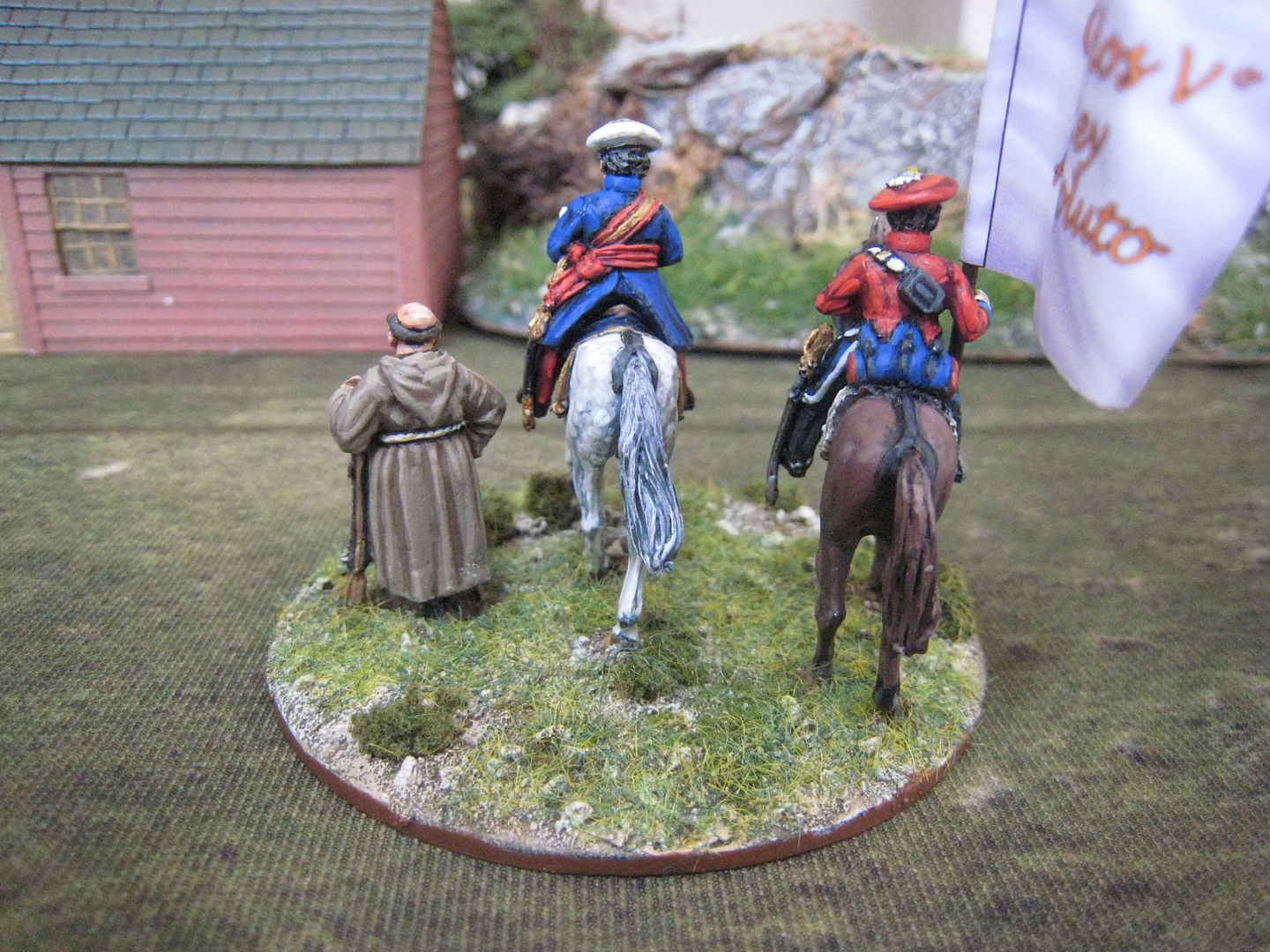
In this vignettes, Don Sebastian is accompanied by an ensign in the uniform of what Conrad Cairns' book describes as a "volunteer lancer" and a priest (all Perry figures). I think the Don Sebastian figure looks a bit old for the 25 year old who won the Battle of Oriamendi; or maybe that's just the result of my painting! The pack of priests is a good source of figures to add to vignettes; I've saved a couple to add to Don Carlos' stand when I get around to it.      

Three figures. Painted December 2025. Flag from Adolfo Ramos.


Monday, 5 October 2026

General Tomás de Zumalacárregui

Tomas de Zumalacarregui (1788-1835) was born in the Basque region of Spain. When the French invaded in 1808 he joined the guerillas and fought in the sieges of Saragossa. He decided that the guerilla life was not for him and he joined the regular army for the duration of the war. The military life clearly appealed as he remained in the army after Spain was liberated. What he didn't like, however, were the liberal ideals of the Spanish government and it seems that his political views prevented him advancing from the rank of captain that he had achieved during the Napoleonic Wars. However, these issues were ironed out and by 1825 he was a lieutenant-colonel in the early 1830s became military governor of the port city of Ferrol in Galicia.

When the Carlist War broke out, Zumalacarregui was a natural supporter of Don Carlos and accepted command of the forces in Navarre. Those "forces" consisted of a few units of guerillas and irregulars, but by 1835 Zumalacarregui had raised and trained up a decent army of some 30,000. He won several victories but was ordered to secure Bilbao went he wanted to march on Madrid. It was during the siege of Bilbao that Zumalacarregui was hit in the leg by a musket ball and this led to his death in June 1835.  

Zumalacarregui appears here with two soldiers from the Navarre Lancers as his bodyguard, in their rather fetching dark green and ren uniforms. Unlike General Cabrera, he doesn't have his own flag and I've given him a generic Carlist one.  I'm going to finish catching up on my First Carlist War pieces and will then probably try to get to grips with my Frostgrave stuff. Also recently finished are more French Napoleonics for 1815. 

Three figures. Painted December 2025. Flag from Adolfo Ramos.   


Thursday, 1 October 2026

A day at Eureka (2)


Things have been very busy since I returned from Australia 5 weeks ago, but I'm hoping regular blogging will resume. Before my recent holiday, it had been over 15 years ago that I was last in Melbourne. A highlight was visiting Eureka Miniatures (which I blogged about here) and meeting Nic and his team. Well, I couldn't go to Melbourne again without saying hello again (and also meeting up with local wargaming chums John Baxter and Mark Spackman). Mark picked me up from the local Melbourne suburb station and Nic then showed us around his new premises. Nic doesn't have a shop anymore, which he had in 2011, rather an office and factory space where everything happens. The photos show the various parts of the operation and seeing all the moulds and casting equipment shows how much effort goes into making model soldiers.   

All the Eureka Miniatures I have painted, largely for the AWI, can be found on this label. Highlights include the cavalry range with separate hats, the "ragged" Continental infantry and the various mounted command figures from other ranges that I have used as Hessian generals. Non-AWI stuff I have painted includes a lovely set of Maori warriors (pics coming soon). One major range in the Eureka catalogue is the French Revolutionary Wars. I have already used figures from that range as AWI French, and my purchase on this trip was largely confined to more figures from the French range that I intend to use for my "Napoleon in Egypt" project. These are command/officer types which I use for command stands. I also bought the mdf Maori waka, or war canoe, which is going to be fun to paint and build. I don't know how much my haul cost, because Mark Spackman gave Nic a box of metal shavings he'd collected over the years and asked if that covered the cost of my figures; to which Nic agreed! So many thanks to both Mark and Nic for allowing me to scam these figures for free! [I had a bit of a drama at Hong Kong airport, when the guy at security threatened to confiscate them, saying "no metal allowed" - but I showed him that the bayonets were not going to harm anyone, and he waived them through. So note to others: if you acquire figures abroad, stick them in your hold luggage just to be safe.] Mark also presented me with a beautifully painted Perry AWI Indian as a present (see pic below). Mark is a superb painter, pretty much exclusively of 25mm (like me) and you can see more of his work on the Perry Miniatures website.  

It was interesting discussing the hobby with Nic. He confirmed what other UK-based companies have been saying recently about the challenges of running a model soldier business today. It's not just the price of metal, but energy costs, customers perhaps not spending as much as they used to, the rise of 3D-printing and various other factors. As the photos show, a company like Eureka needs substantial "office space", and keeping the company going is clearly a huge amount of work to fall on Nic's shoulders. Anyway, let's how Nic keeps the plates spinning for a good while yet, as the Eureka catalogue is full of goodies and I'm sure there are more in the pipeline. Mark and I then had and excellent lunch in the "little Athens" quarter of Melbourne and in the late afternoon/evening John Baxter took me on a tour of central Melbourne's wine bars before our respective spouses joined us for a terrific Asian dinner. I love Melbourne - it's huge, and the outskirts are rapidly filling up with new housing; but it's such a vibrant, buzzing place.  

I'll be posting some more photos from my trip as we saw a lot of historical and military stuff. In the meantime, here are some shots of Eureka's premises.       

Mark surveys the stock room

The mould storage room

The casting room

A set that I wish I'd bought!

But here's what I did "buy"

Mark's lovely present.