Sunday, 23 April 2017

Salute 2017

So another Salute has come and gone.  I arrived at about 10.15am and entered the show about 20 minutes later, so the Warlords have really sorted out the queuing issues with their e-ticket system; and queuing up inside the adjacent room rather than all down the main concourse is better too.  The show remains dark - coming out for lunch I felt almost blinded by the afternoon sunshine.  The Perries had their "3-ups" of plastic Zulus and French Napoleonic chasseurs-a-cheval and Eureka had various goodies in green to show.  That and a couple of new rulesets aside, it seemed there wasn't really any big launch of new wargaming products this year. 

My own feelings about this year show are:

- Whilst the standard of historical games was high, there weren't that many that had, for me at least, "wow" factor.  That's not failing to appreciate that putting on any game at a show like this requires a lot of care, skill and preparation; I'm just saying that my gob was smacked a bit less than I was expecting.  I suppose it also reflects my own interests in more unusual periods.   
- The majority of games seemed to be small, single table ones, largely sci-fi/fantasy/"weird" historical ones.  I joked that this was "the Salute that history forgot" because of the ratio between historical and other games.  However, this may be because I paid much more attention to non-historical games this year, as the boys are beginning to get interested in sci-fi stuff.  Is it time to cut the floor in half, so that all historical games are kept together and everything else occupies the rest of the hall?  Or does that defeat the solidarity behind the show?
- Skirmish games have completely overtaken more "traditional" large-table games.
- The number of traders'/advert games is growing.  There's nothing wrong with that in itself, but some sections of the floor just felt and looked like shop areas (i.e. more akin to the other shows that Excel host).
- To me it felt a lot more crowded, possibly more due to the layout rather than numbers - a couple of thoroughfares were very narrow and I found myself on one occasion literally stuck between two large gentlemen of "modern steam-punk" appearance; our rucksacks had caught and we were stuck.
- "The shopping's better than the games" was something else I heard more than once - see below.
- If laser-MDF terrain was the big thing last year, gaming mats were the big thing this year.

I bought more stuff than usual - subs for WI and MW (I should have done WSS whilst I was at it); some palm trees; AWI cavalry from Perry and Eureka; books on some Napoleonic "sideshow" operations (Walcheren and Buenos Aires) and a pricey Caliver uniform guide to Dutch troops 1789-1806; figures from various manufacturers for two future projects (1801 in Egypt and 1806 in South Africa).  I'm beginning to think seriously about Life After the AWI now and I've accepted that I'm basically a horse and musket man who is attracted to smaller, "off the beaten track" types of things.  So that's what's coming up on TQ over the net few years.  I also managed to lose a bag of stuff whilst perusing the latter stages of the show (luckily it didn't contain much).  A good natter in the Fox with Brendan Morrissey and Malcolm "Little Armies" Rose was extended by the Perries arriving at the table next to us.  No secrets to divulge, I'm afraid - by this time we'd all had sufficient booze to simply harangue the twins on what we'd personally like them to do.   

The following are the photos I took.  As always, I missed some games entirely and others I meant to return to in order to take some photos, but just forgot.  So apologies to all those whose hard work I missed.

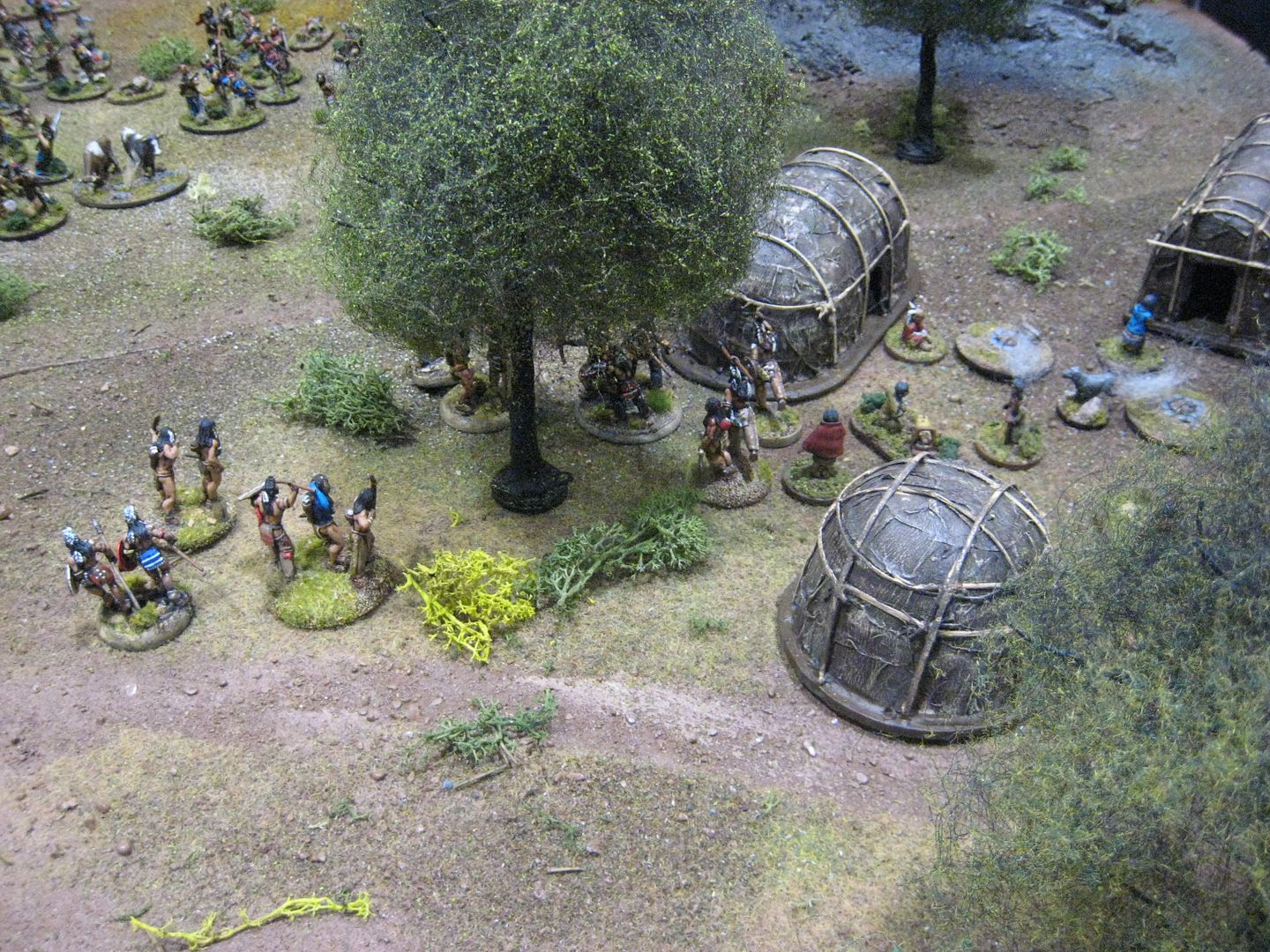
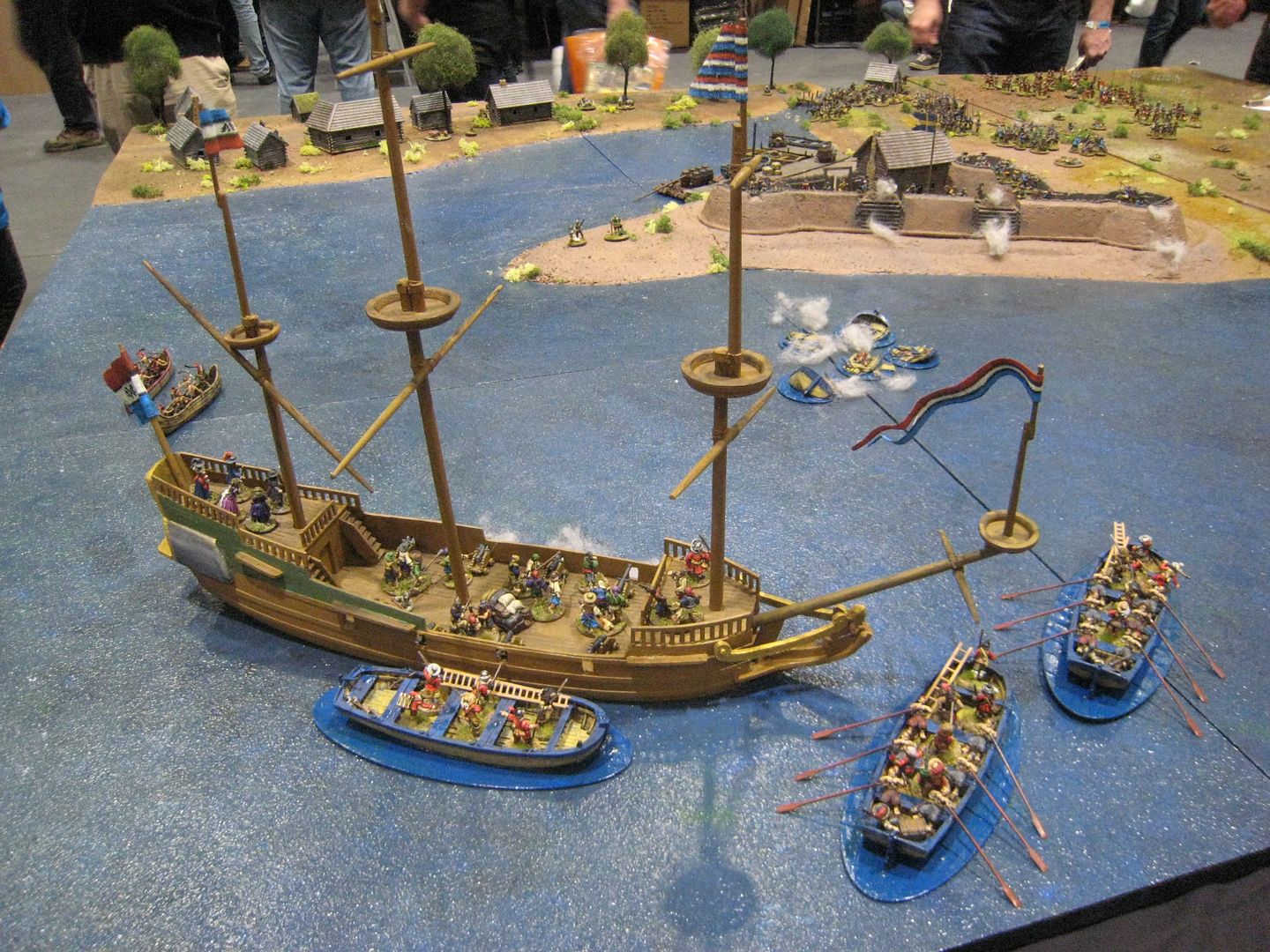
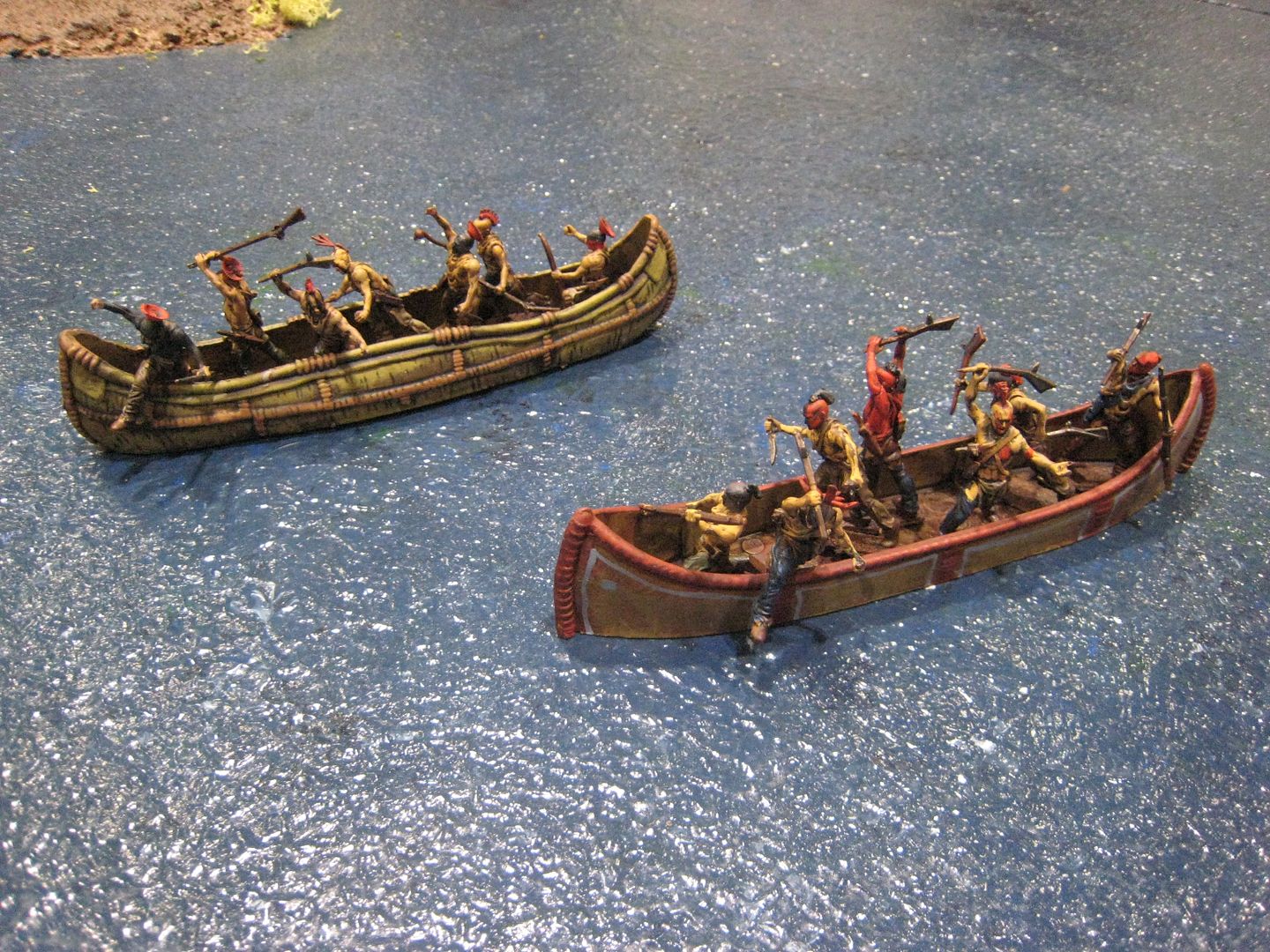
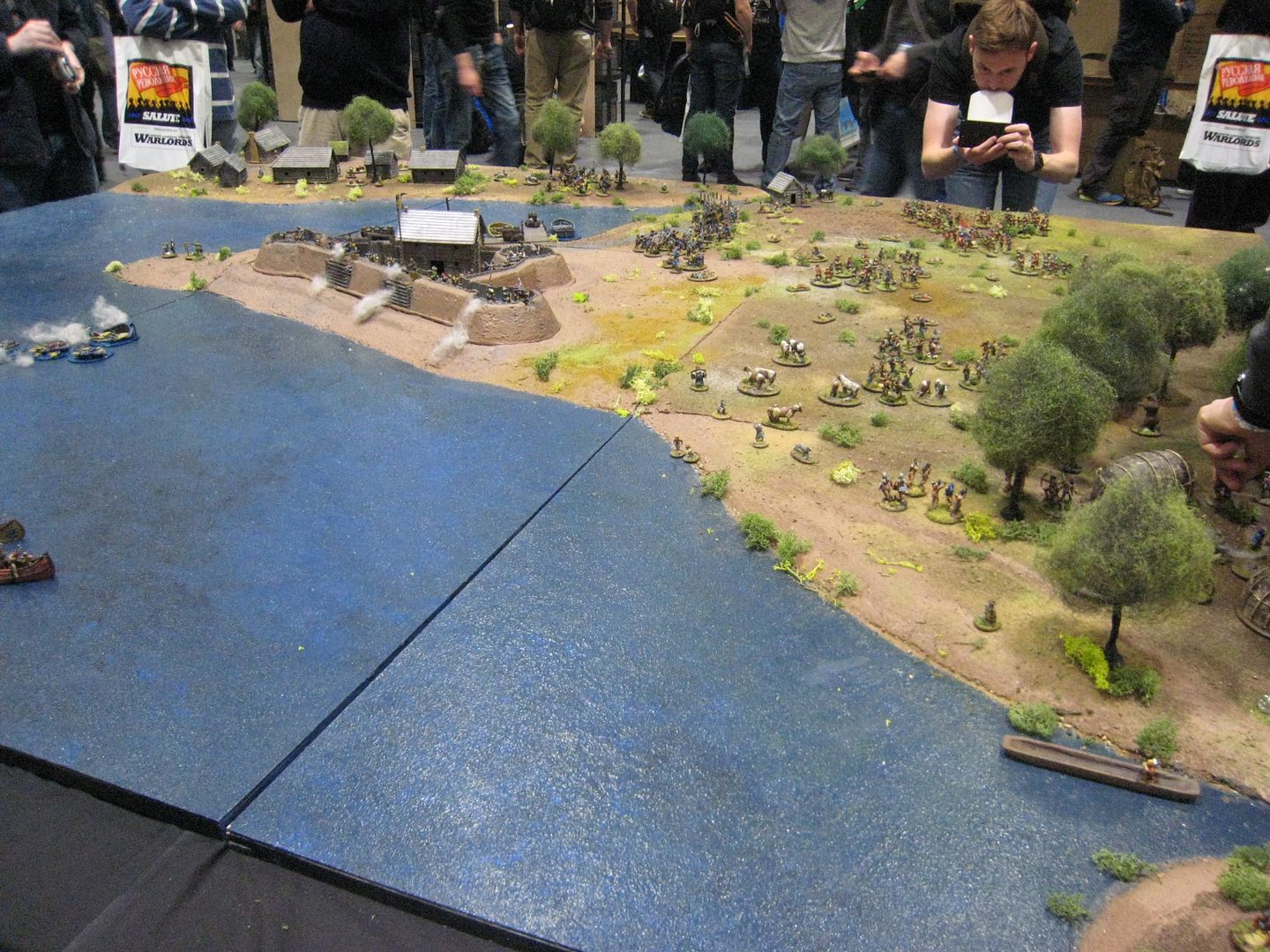
Dalauppror's Fort Mosquito was a Dutch v Swedes game set on the Delaware River in 1654. This was my personal "Best in show" for me, not least because of the innovative subject-matter and stunning scenery.
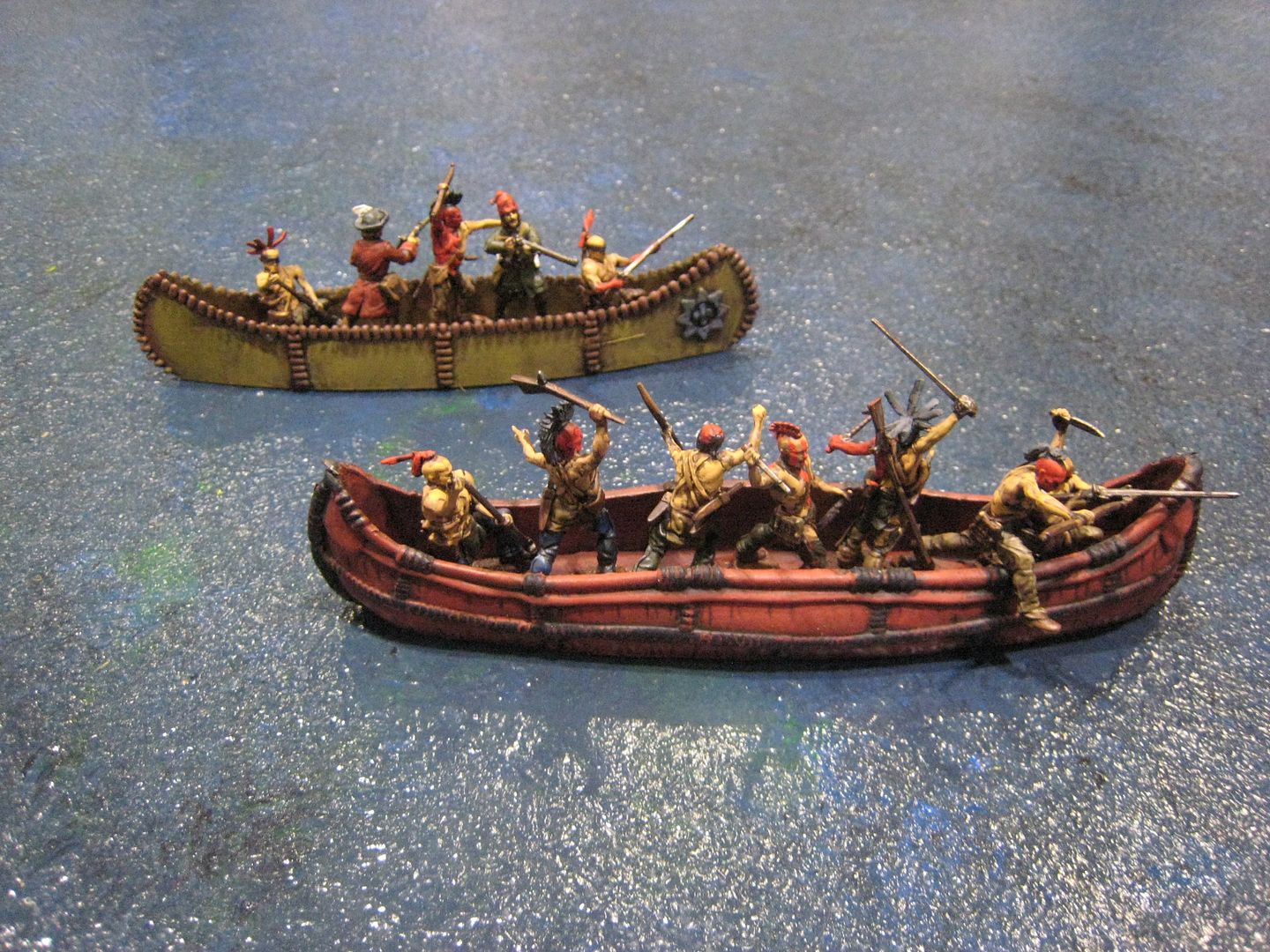


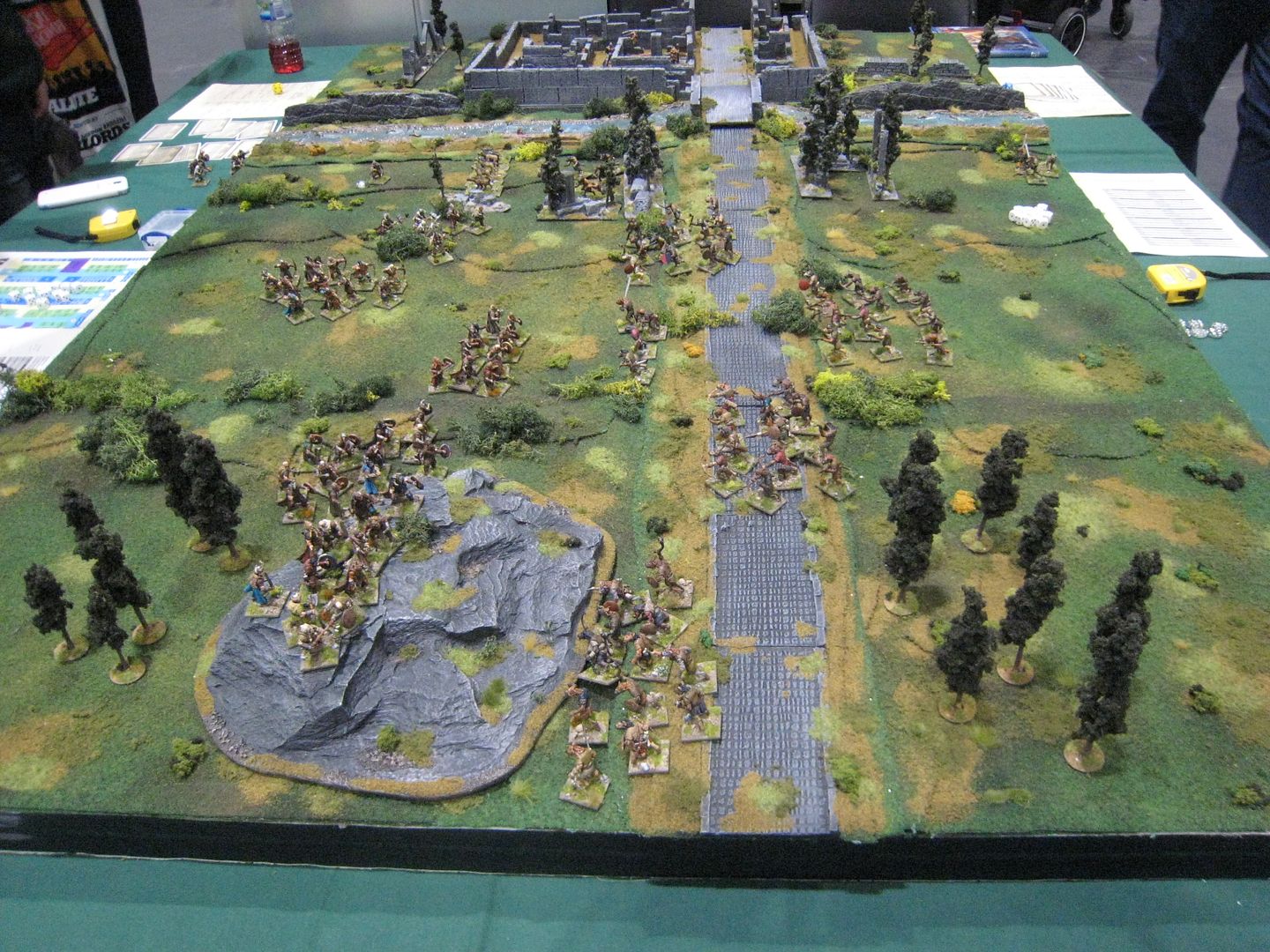
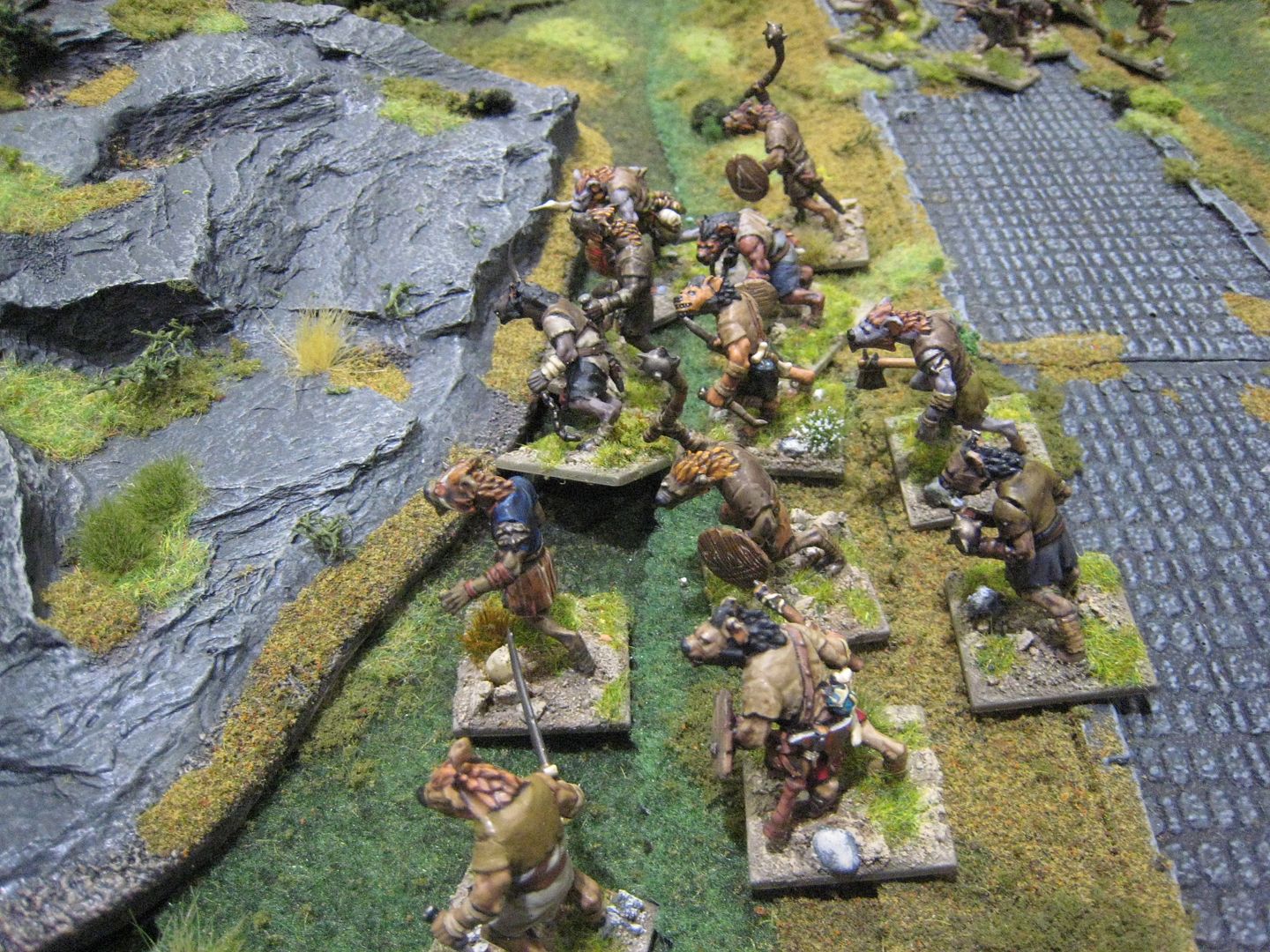
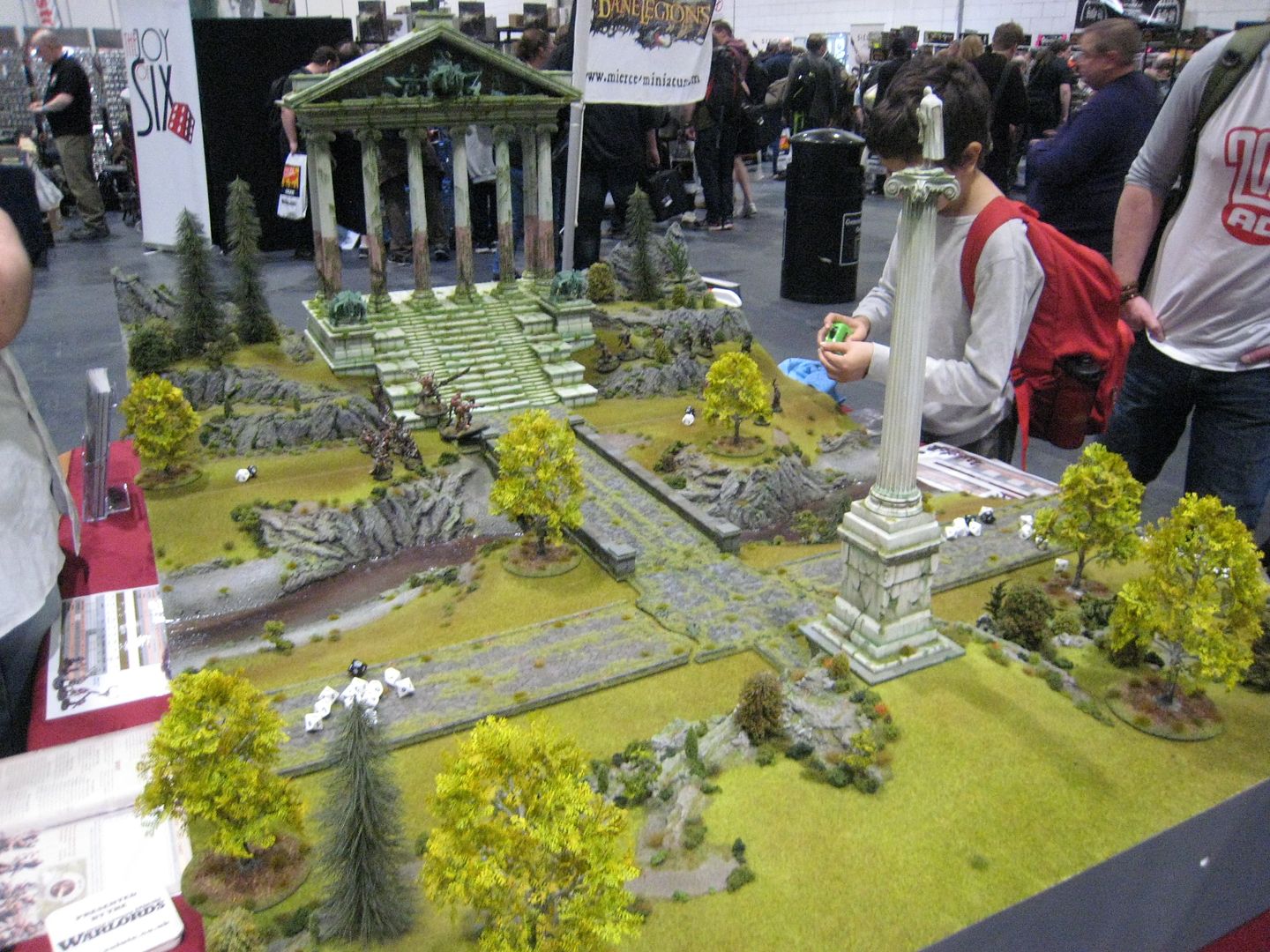
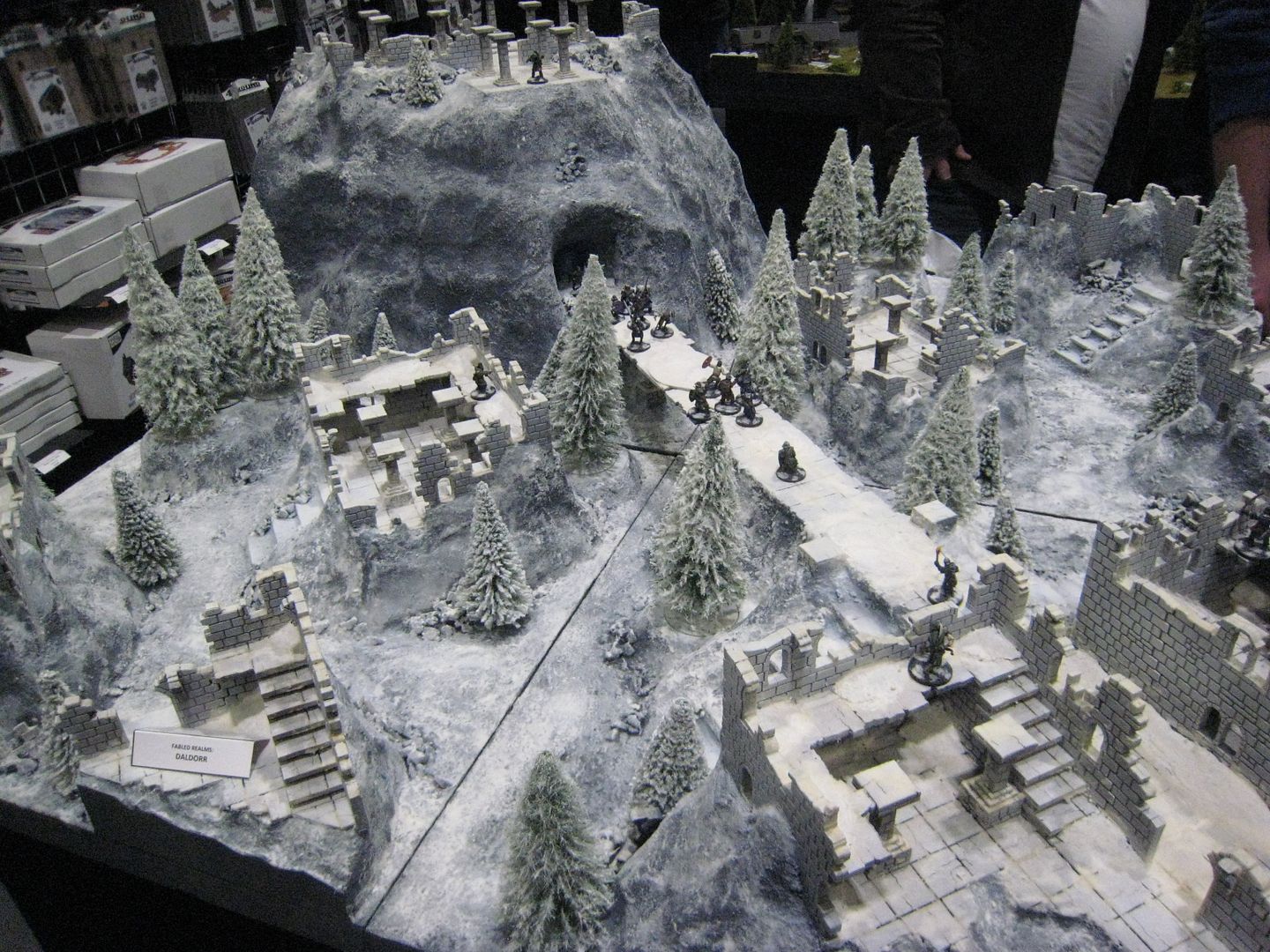
This was a Frostgrave game, I think from Chesterfield Open Gaming Society, or maybe Osprey - they both had Frostgrave games:


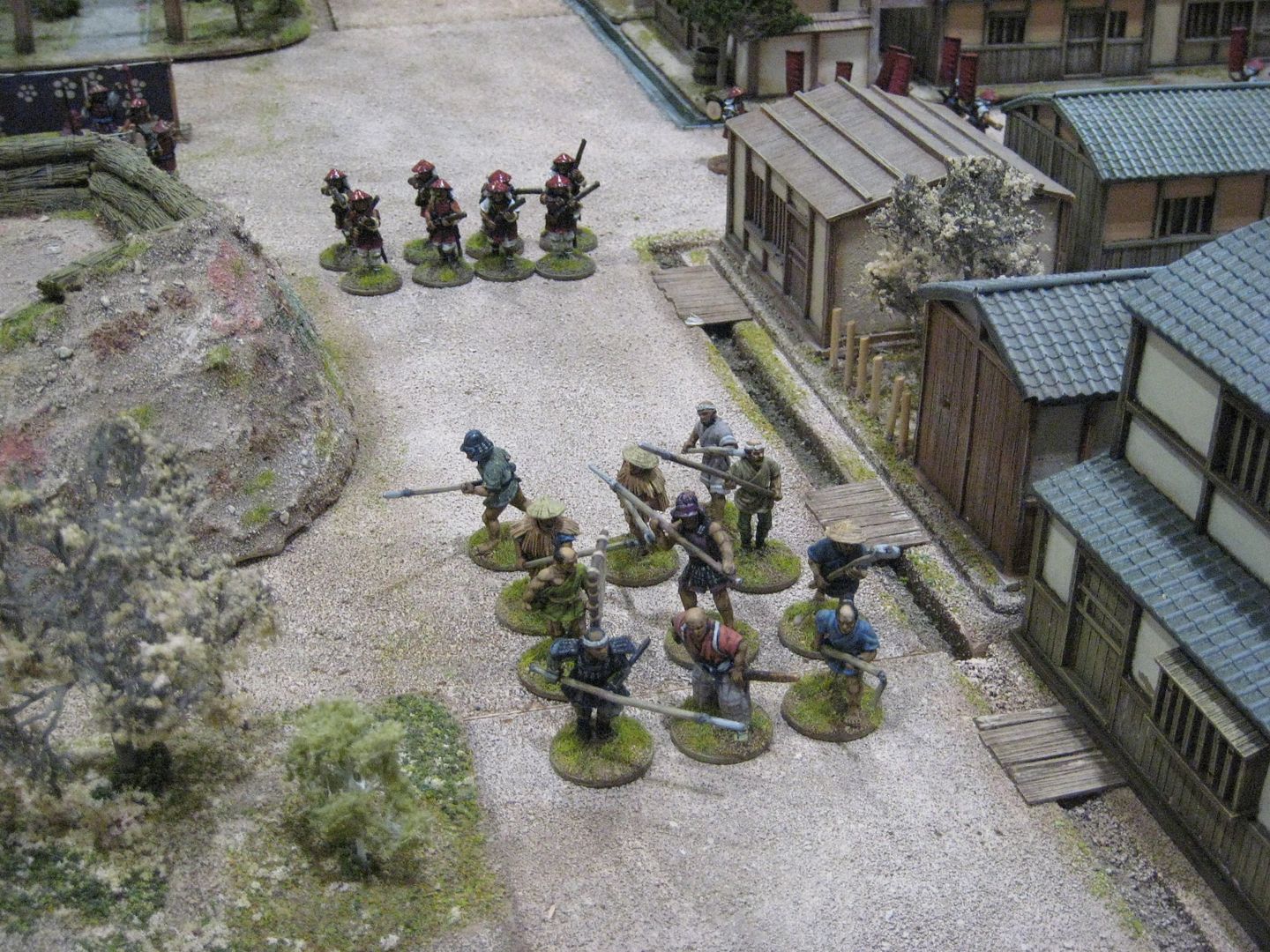
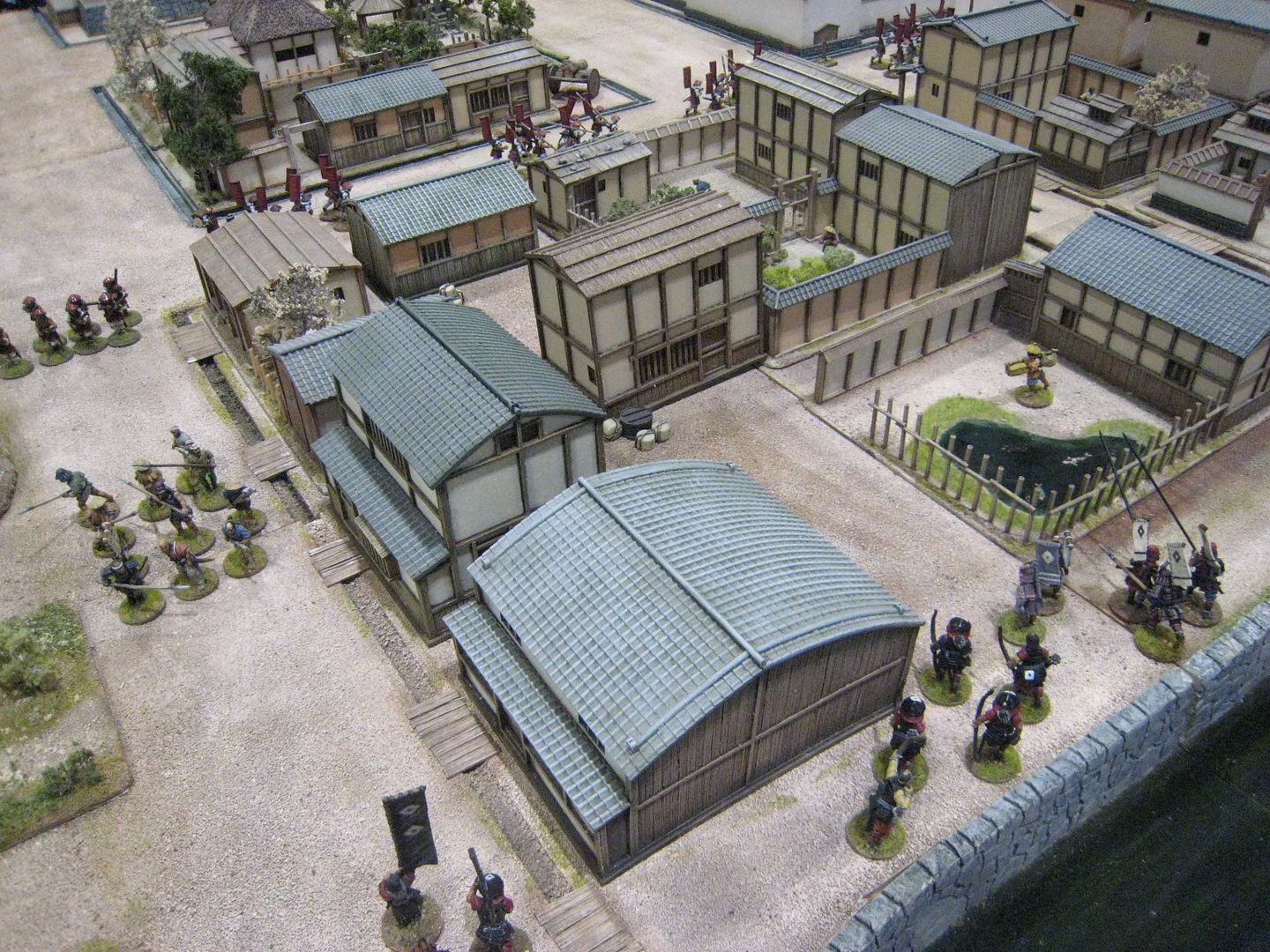
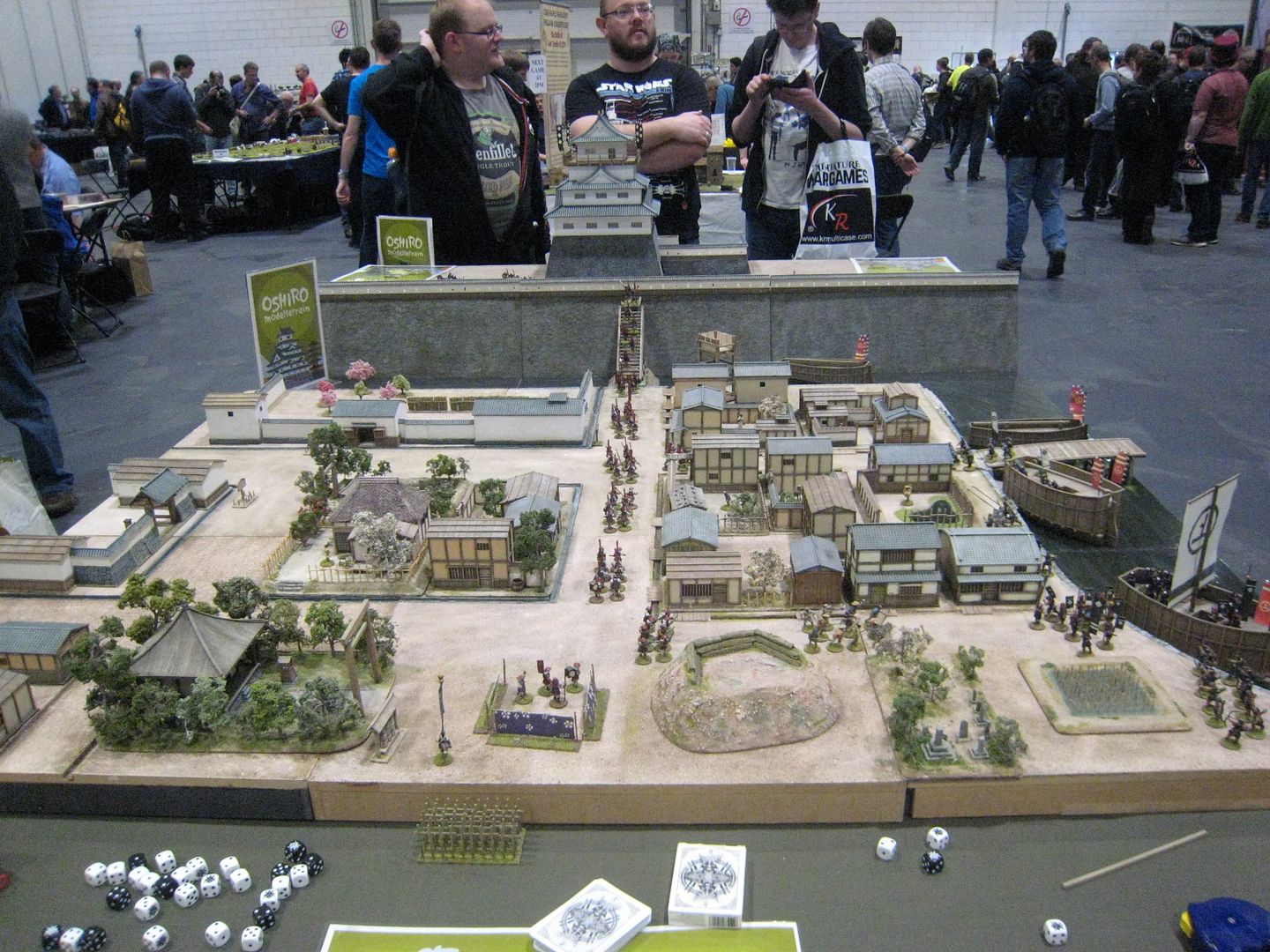
The Oshiro Samurai siege - I'm sure this has been at previous Salutes, but the terrain and buildings remain spectacular:


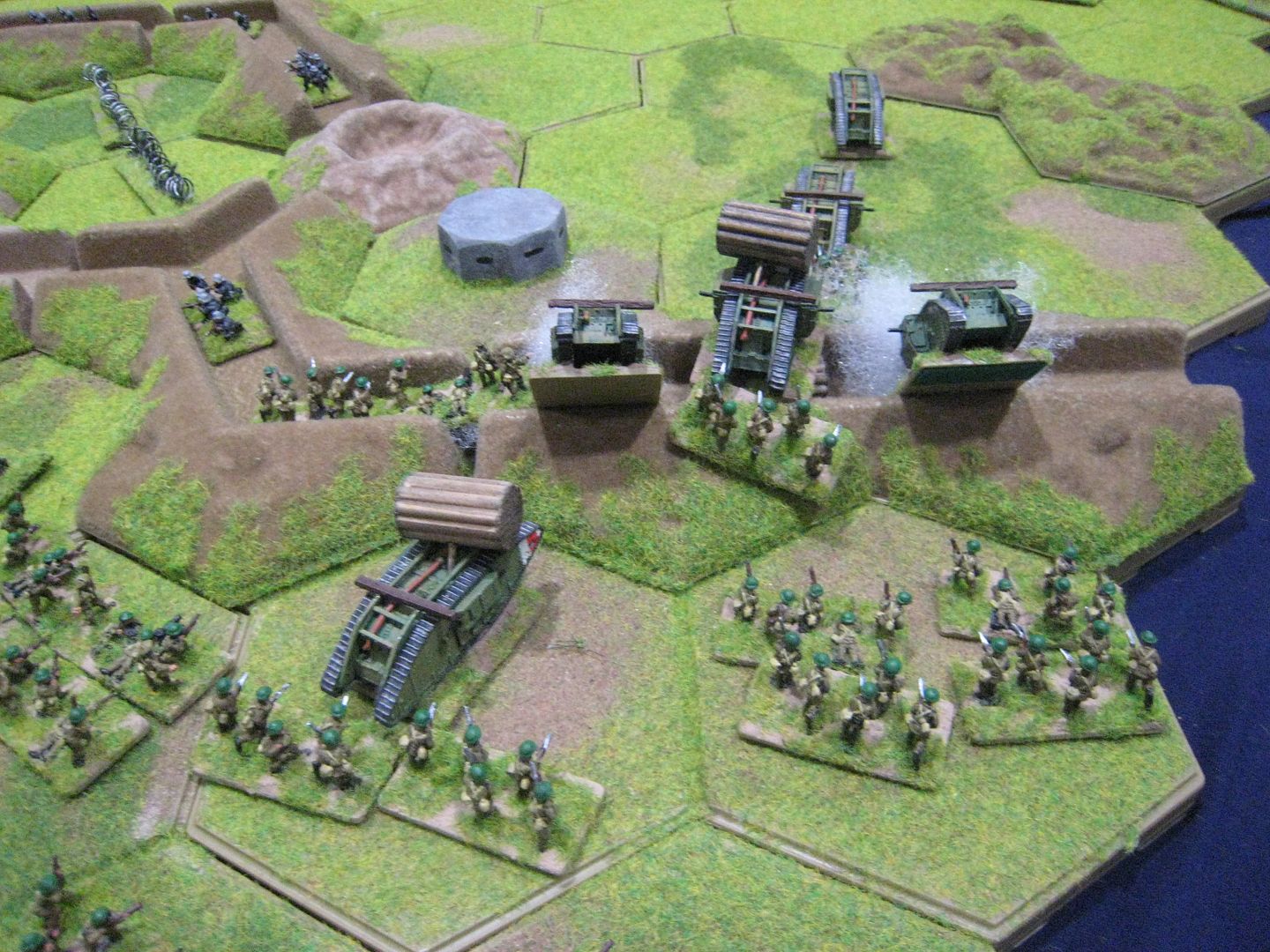
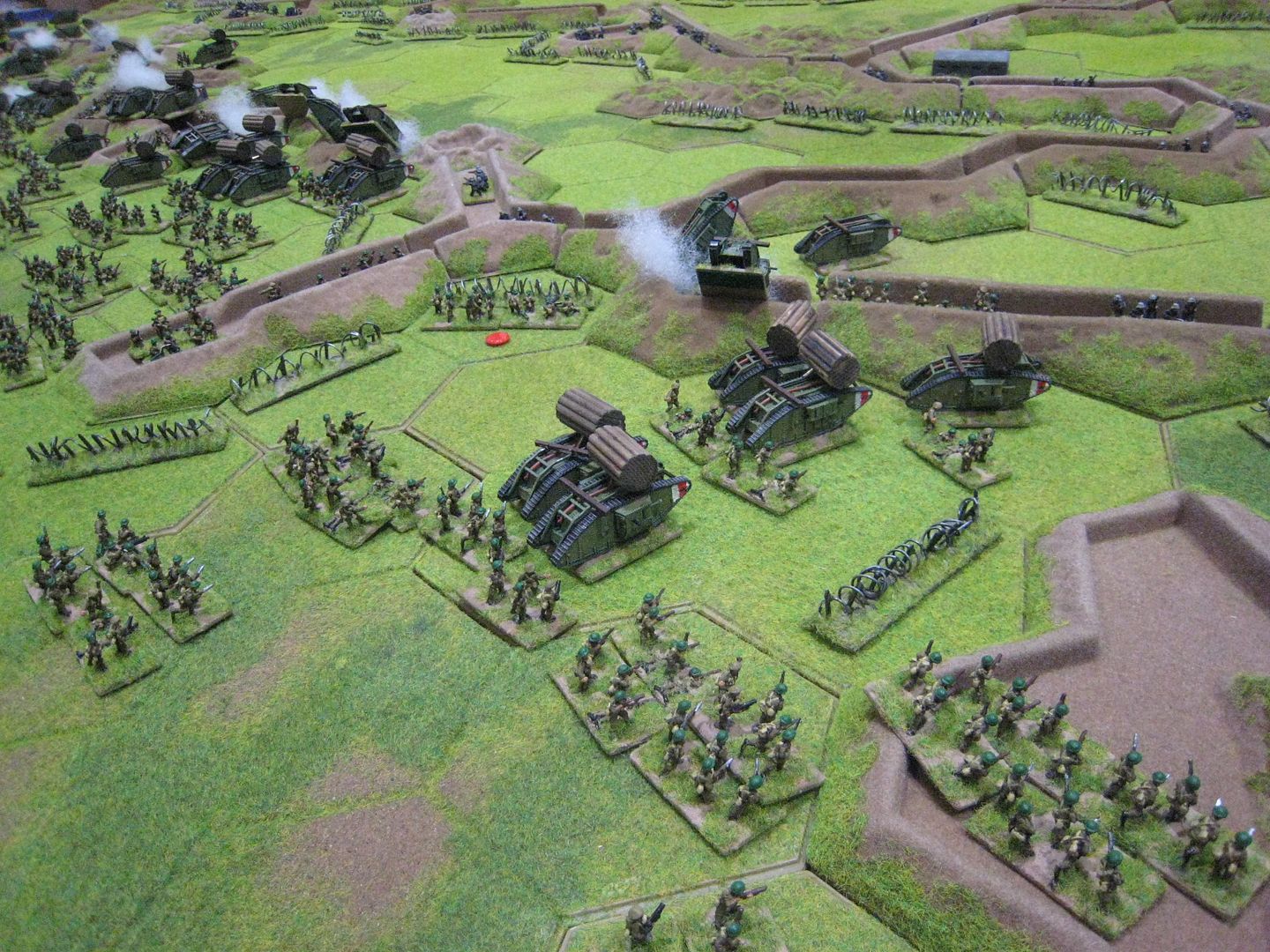
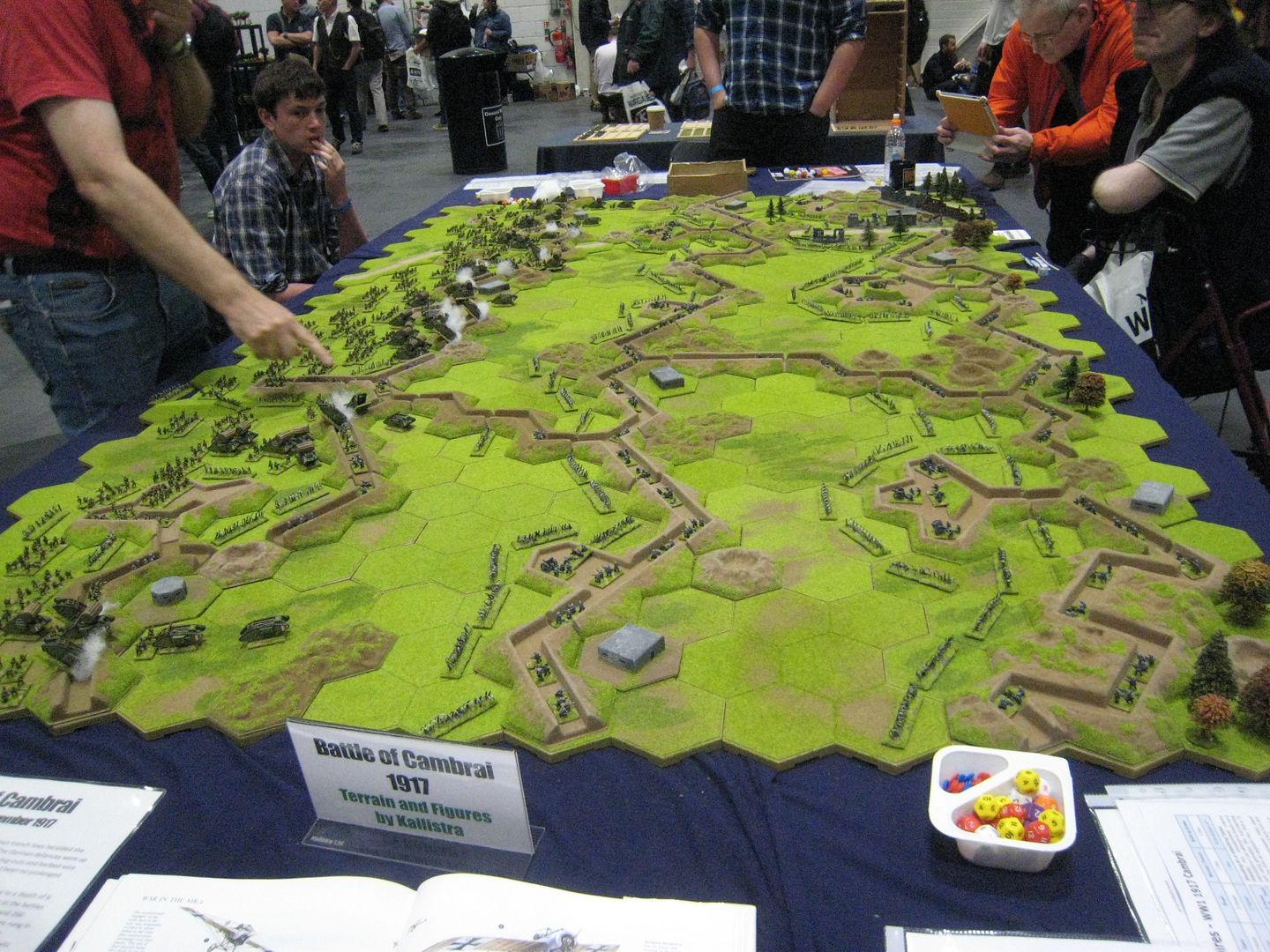
Cambrai 1917 in 12mm from Wyvern Wargamers:


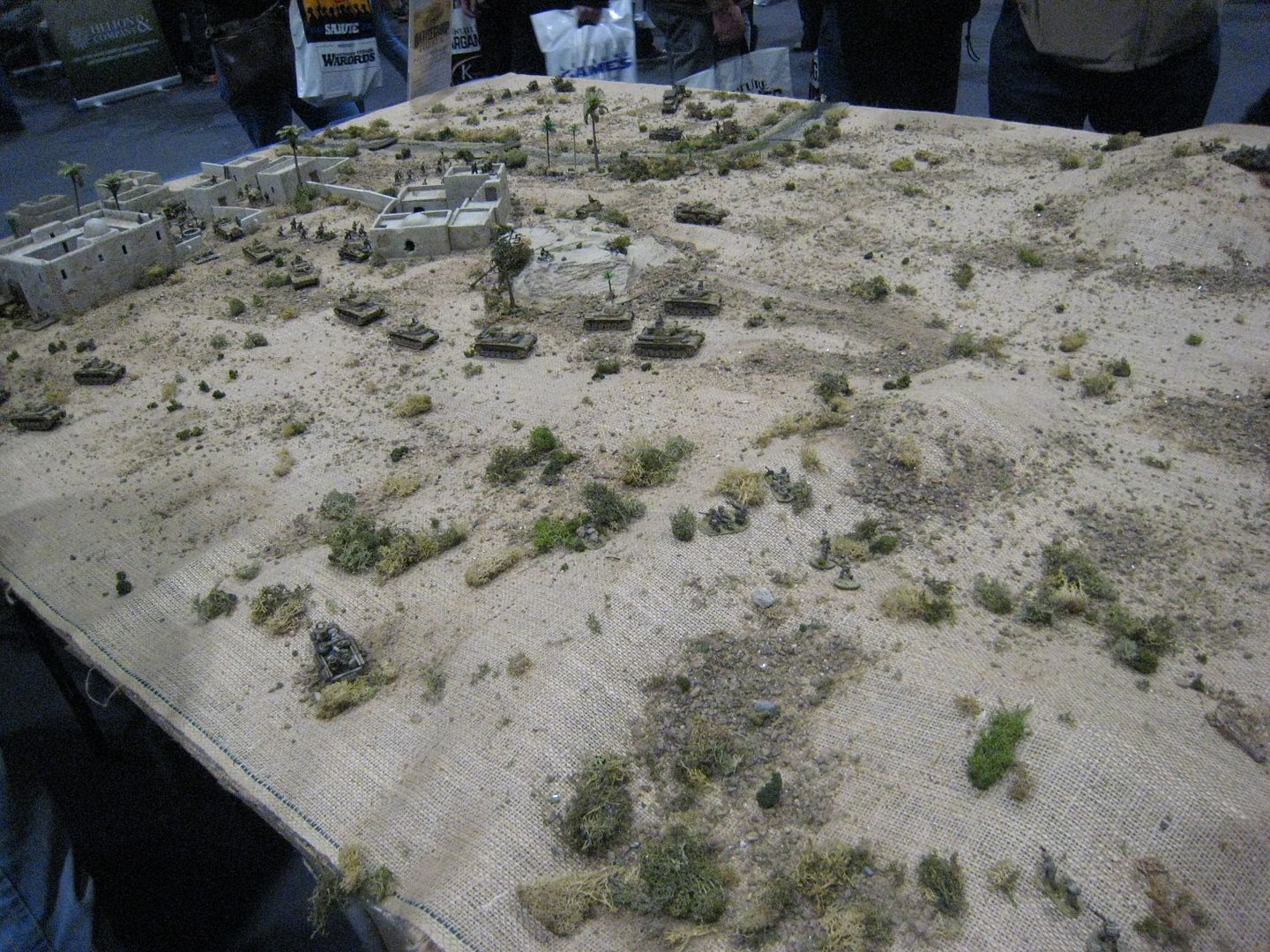
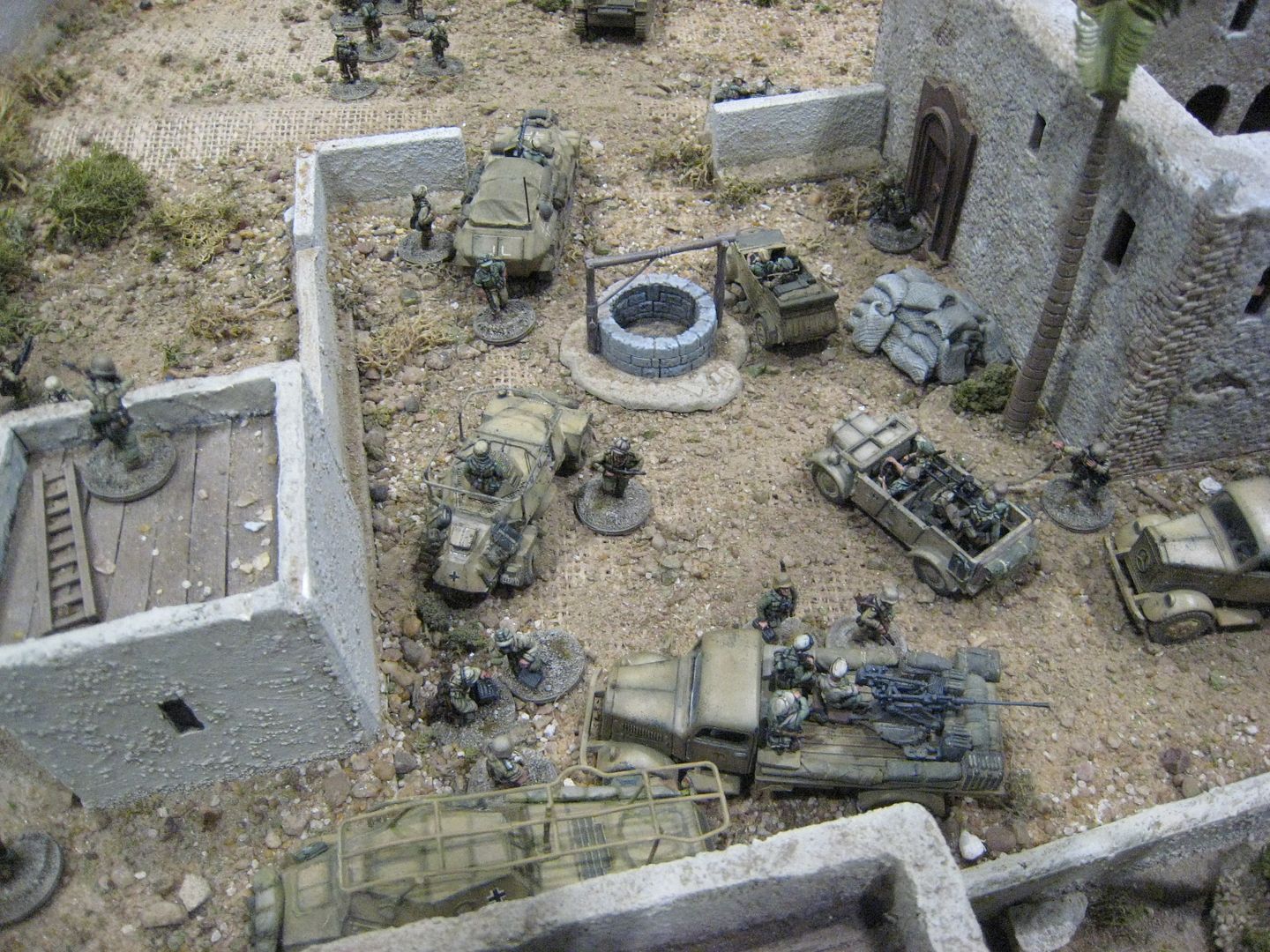
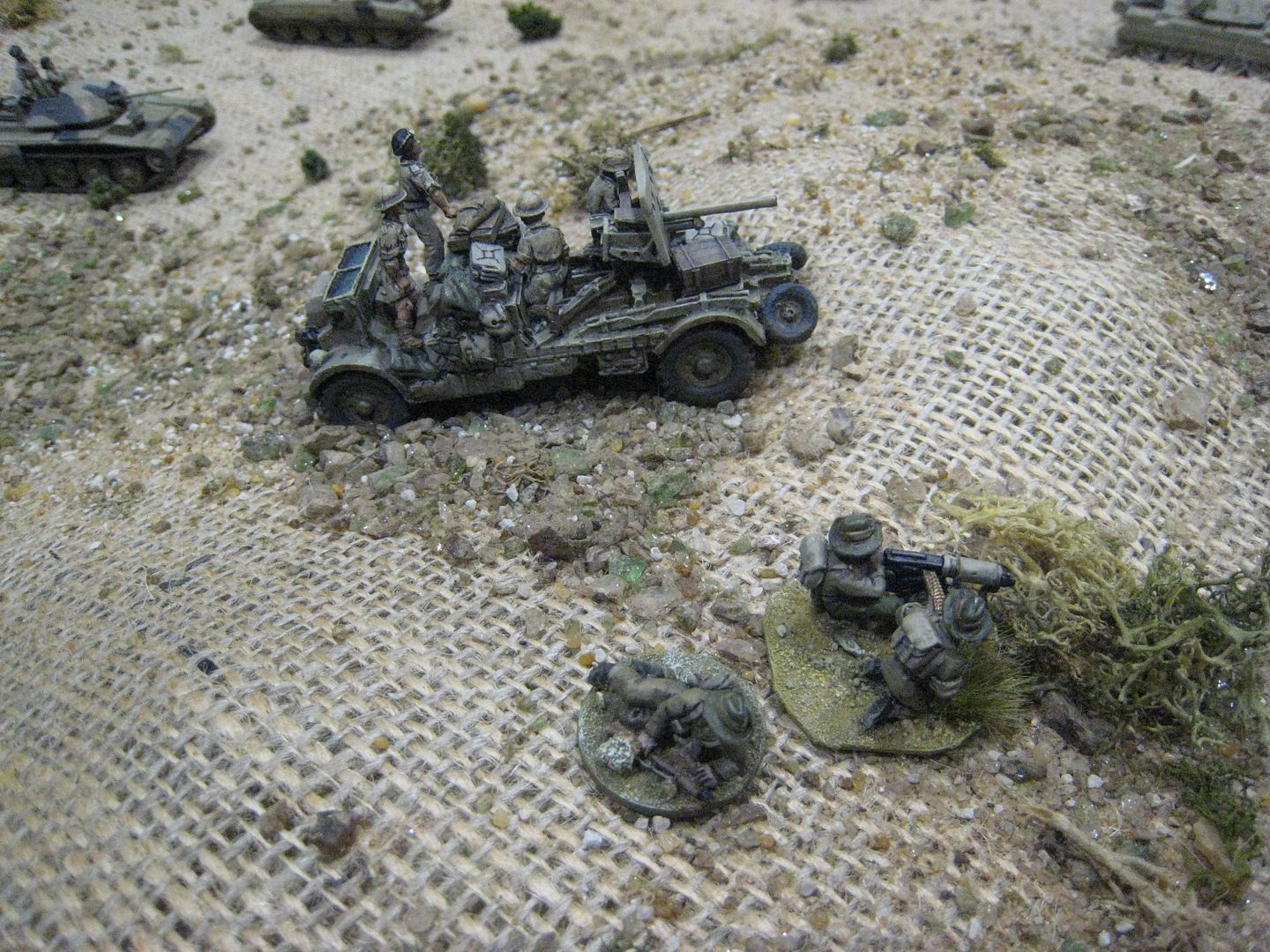
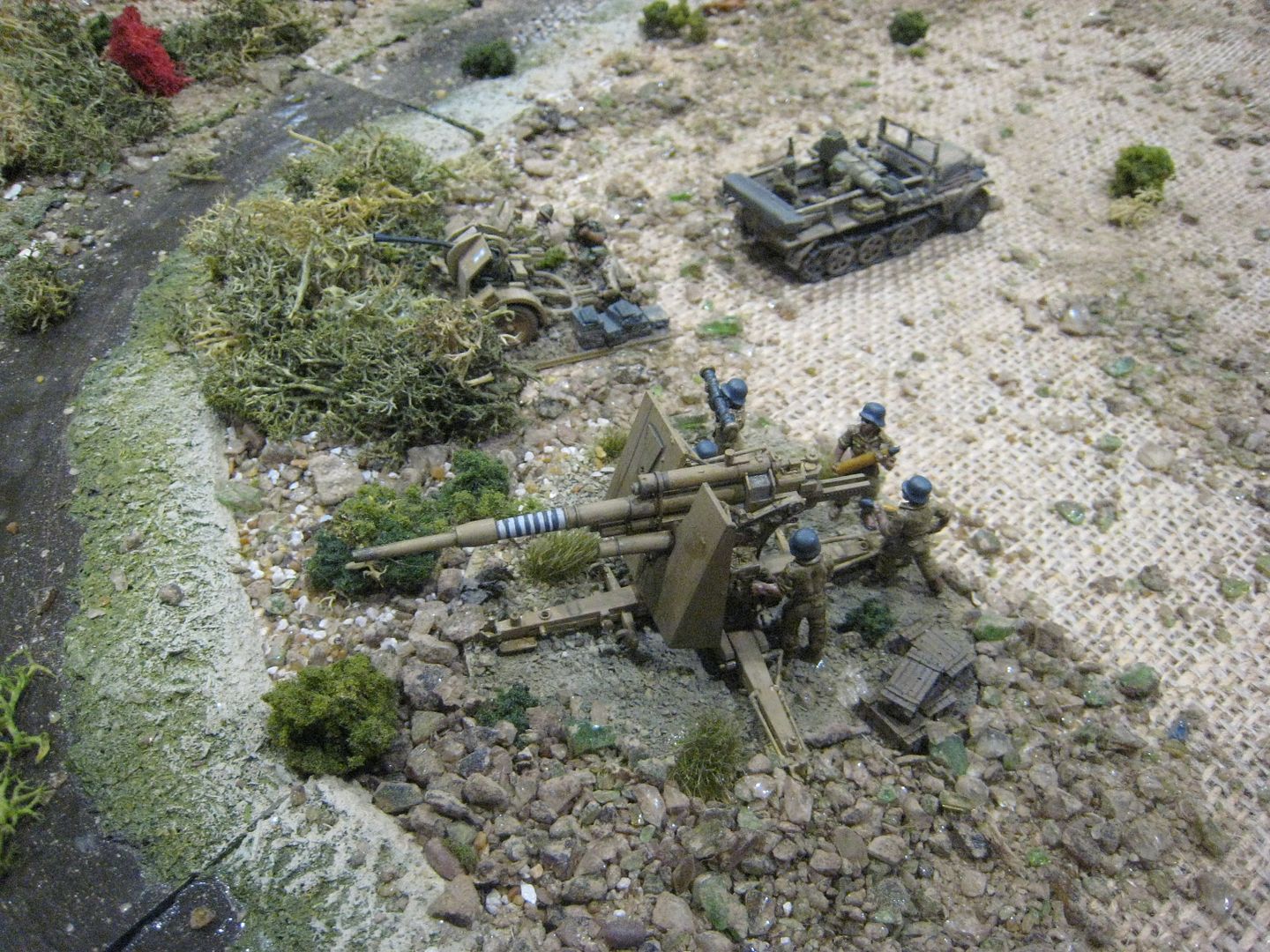
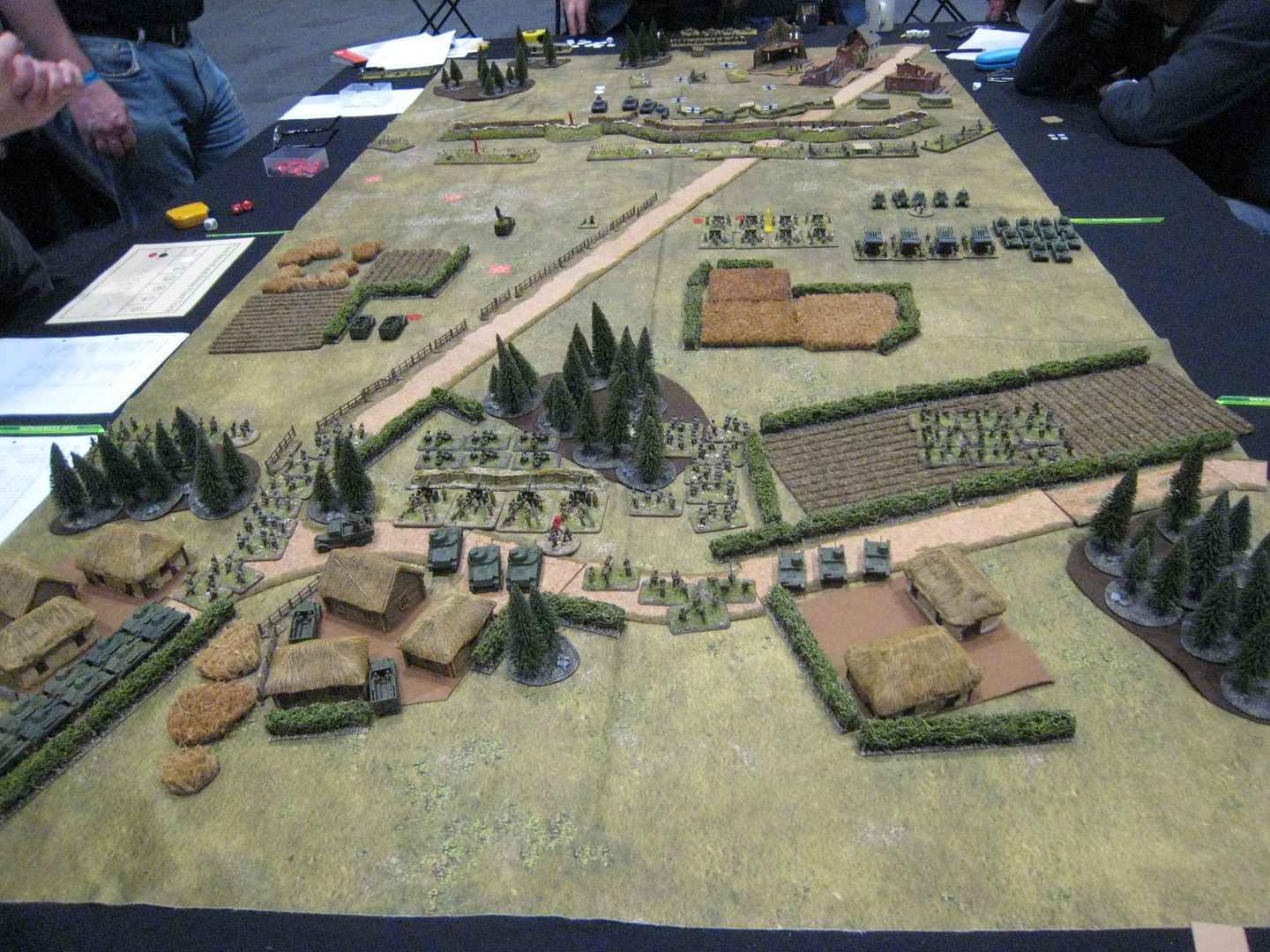
This "Battlegroup Tobruk" game was pretty impressive; very simple, but effective cloth terrain:


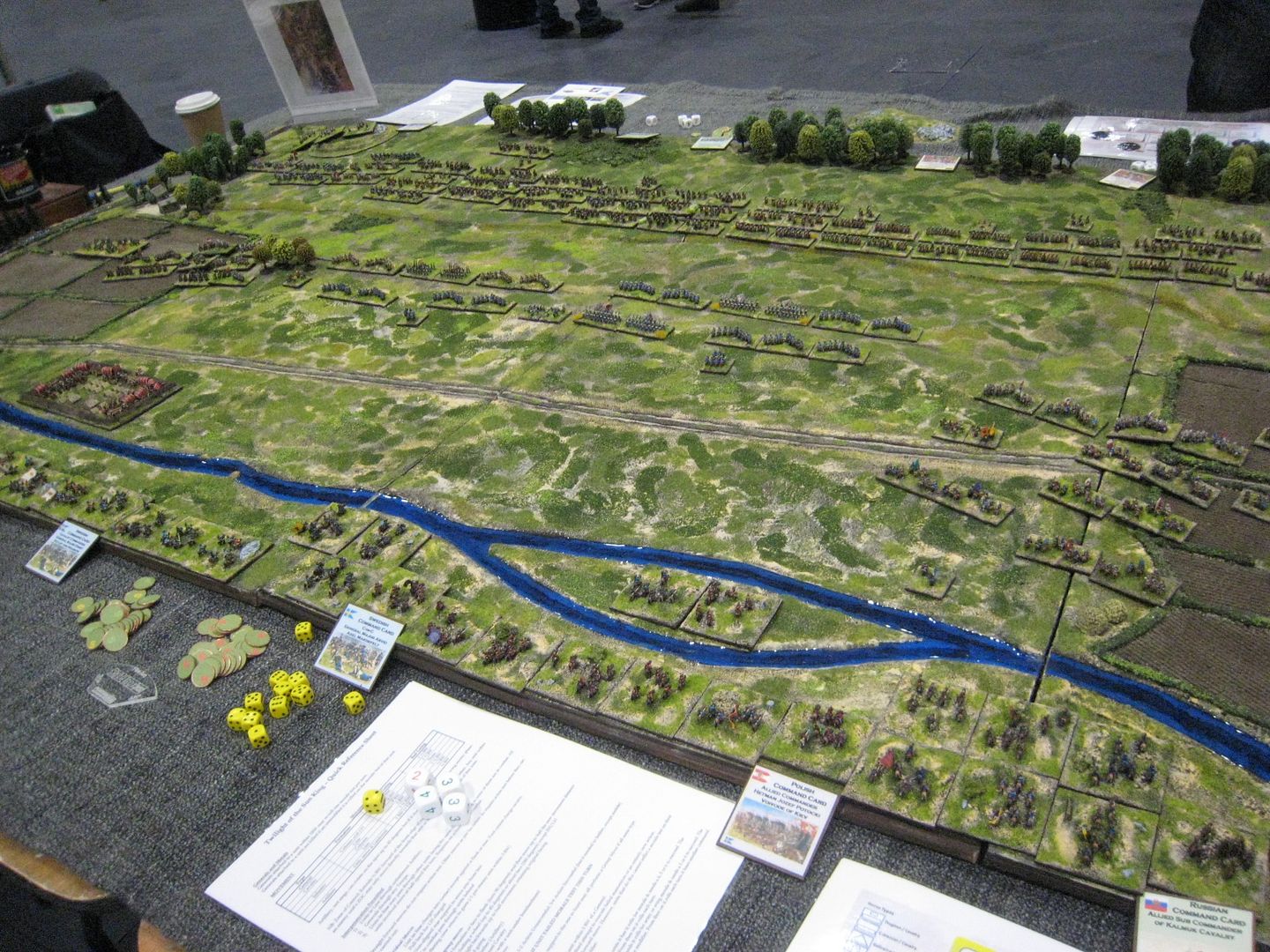
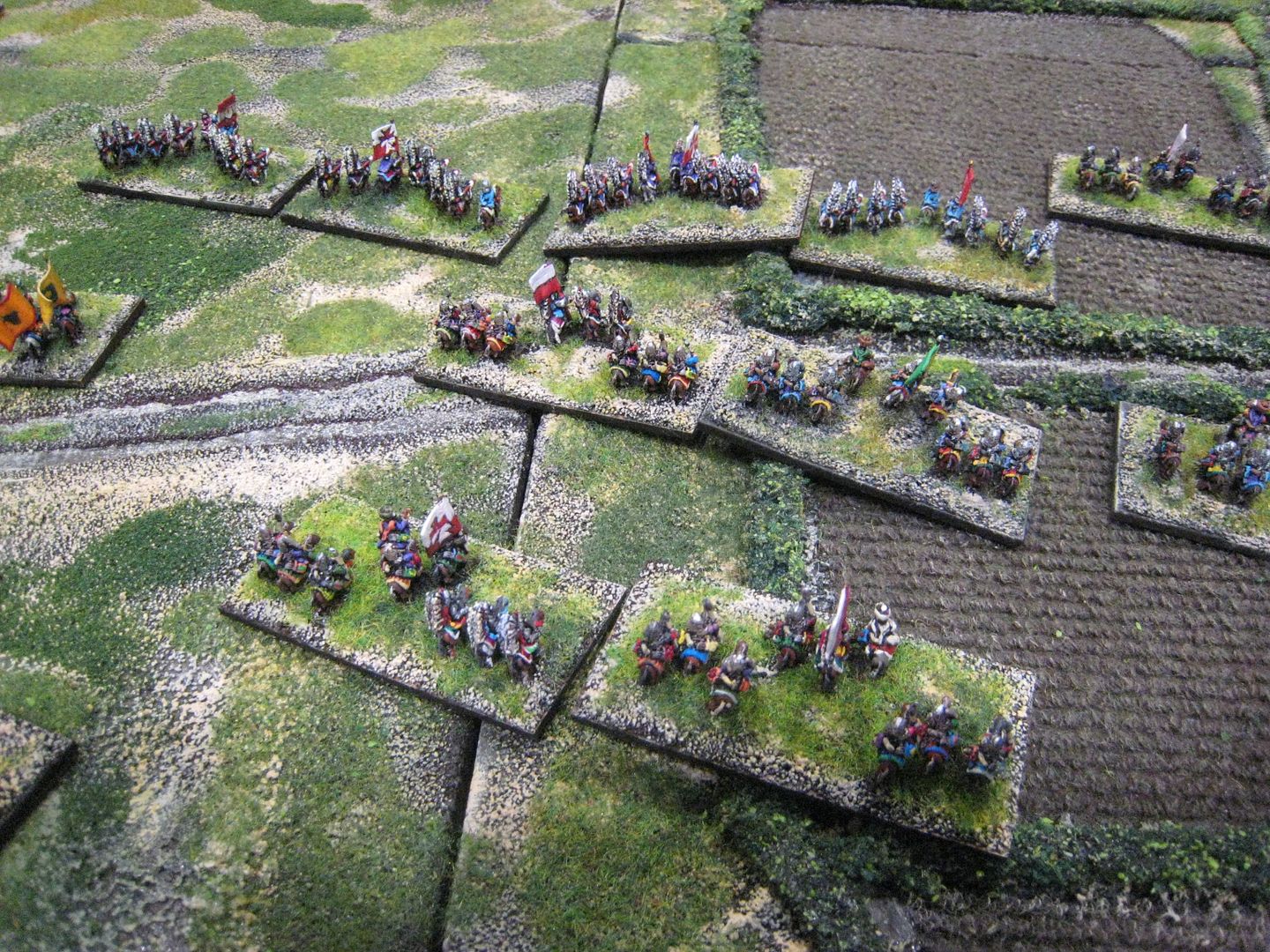
The Battle of Kalisz, 1706, in 6mm from Wyre Forest:


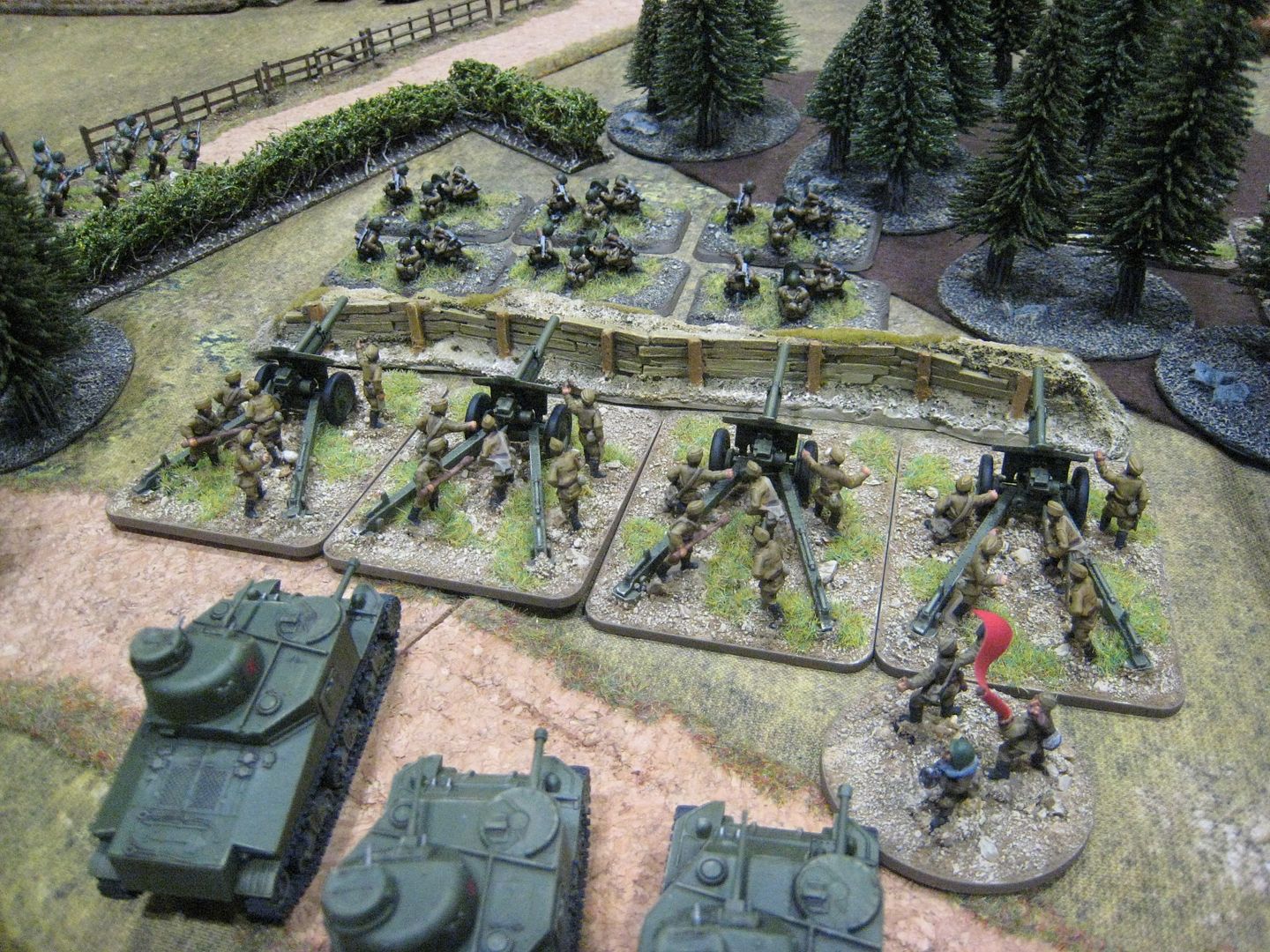
Tunbridge Wells Wargaming Society had a Eastern Front 1942 game in 15mm:


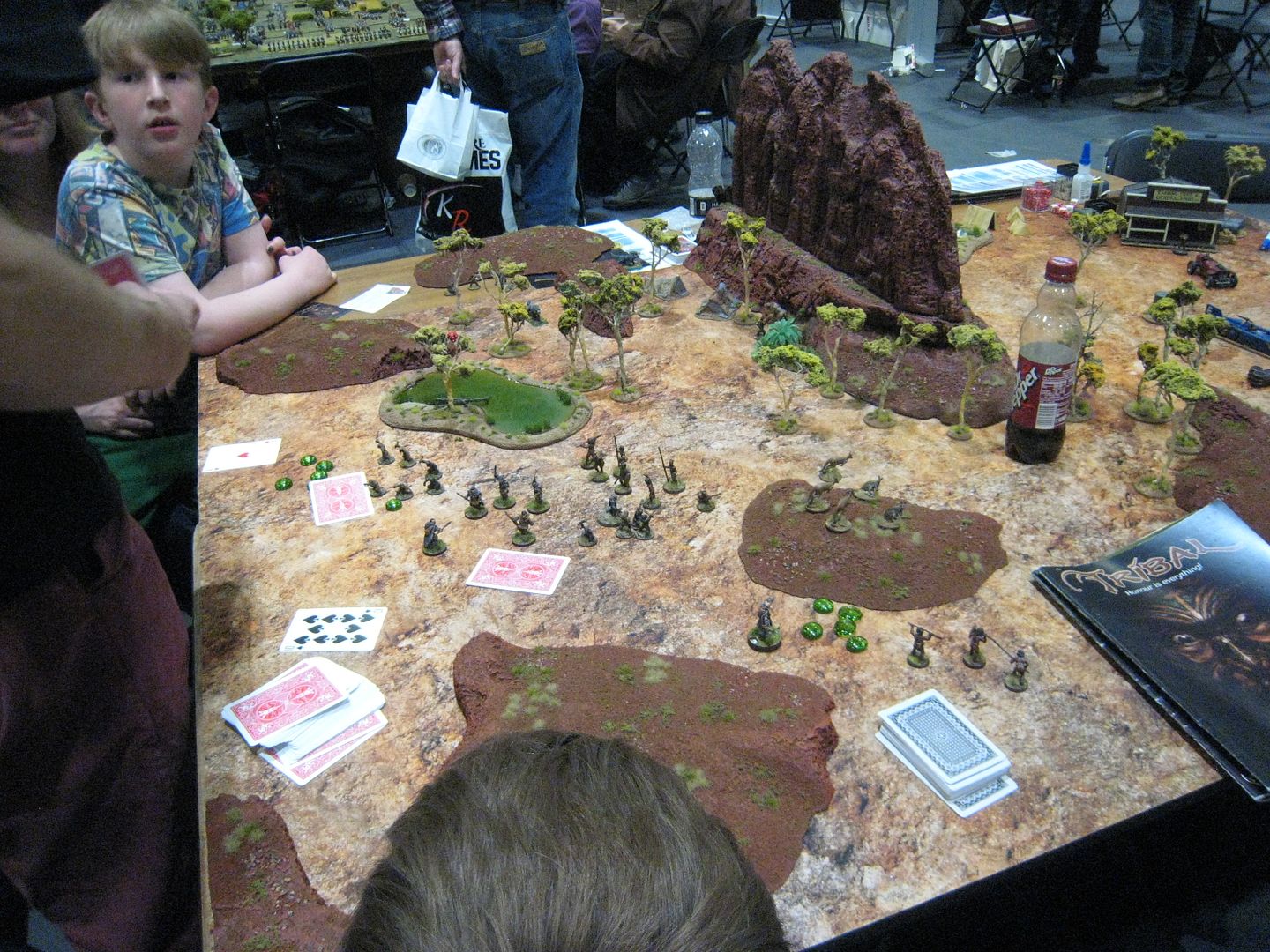
Little Wars Australia were showcasing their "Tribal" and (forthcoming) "Mad Maximilian" skirmish rules; what I really liked here were authentically Australian-looking trees and the 25mm kangaroos (from Eureka, of course):


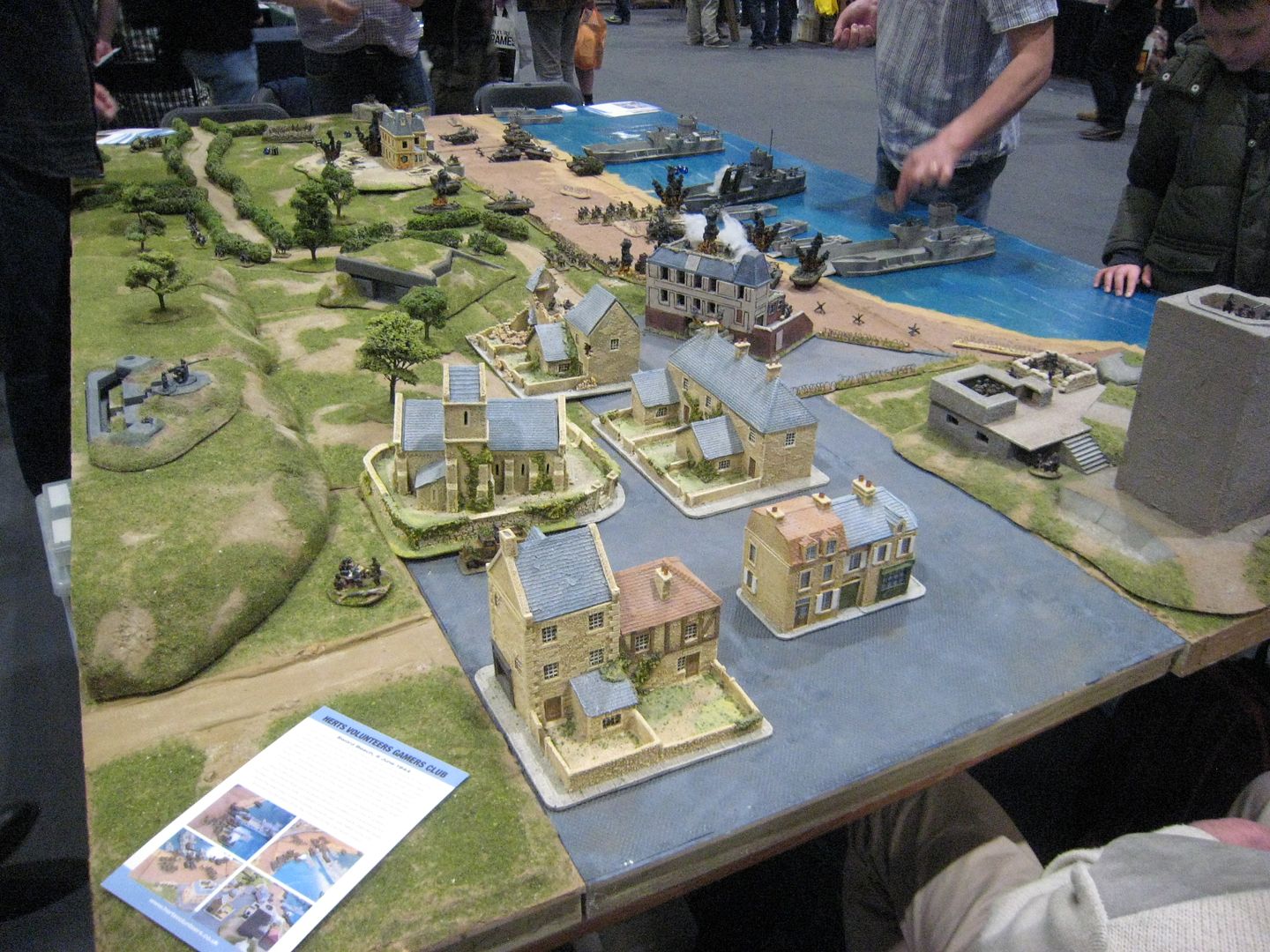
 Herts Volunteers had a terrific Sword Beach 1944 20mm set-up:


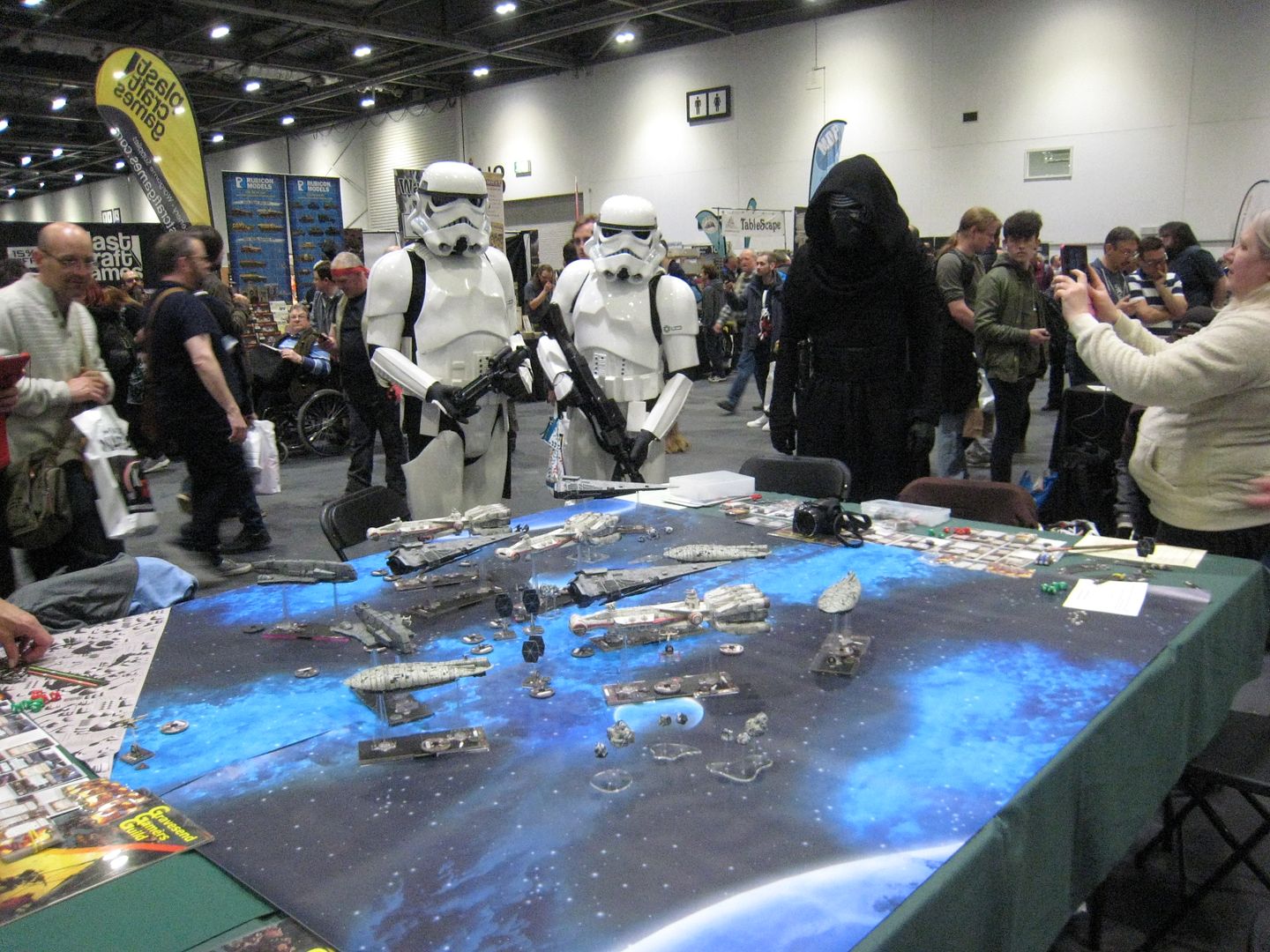
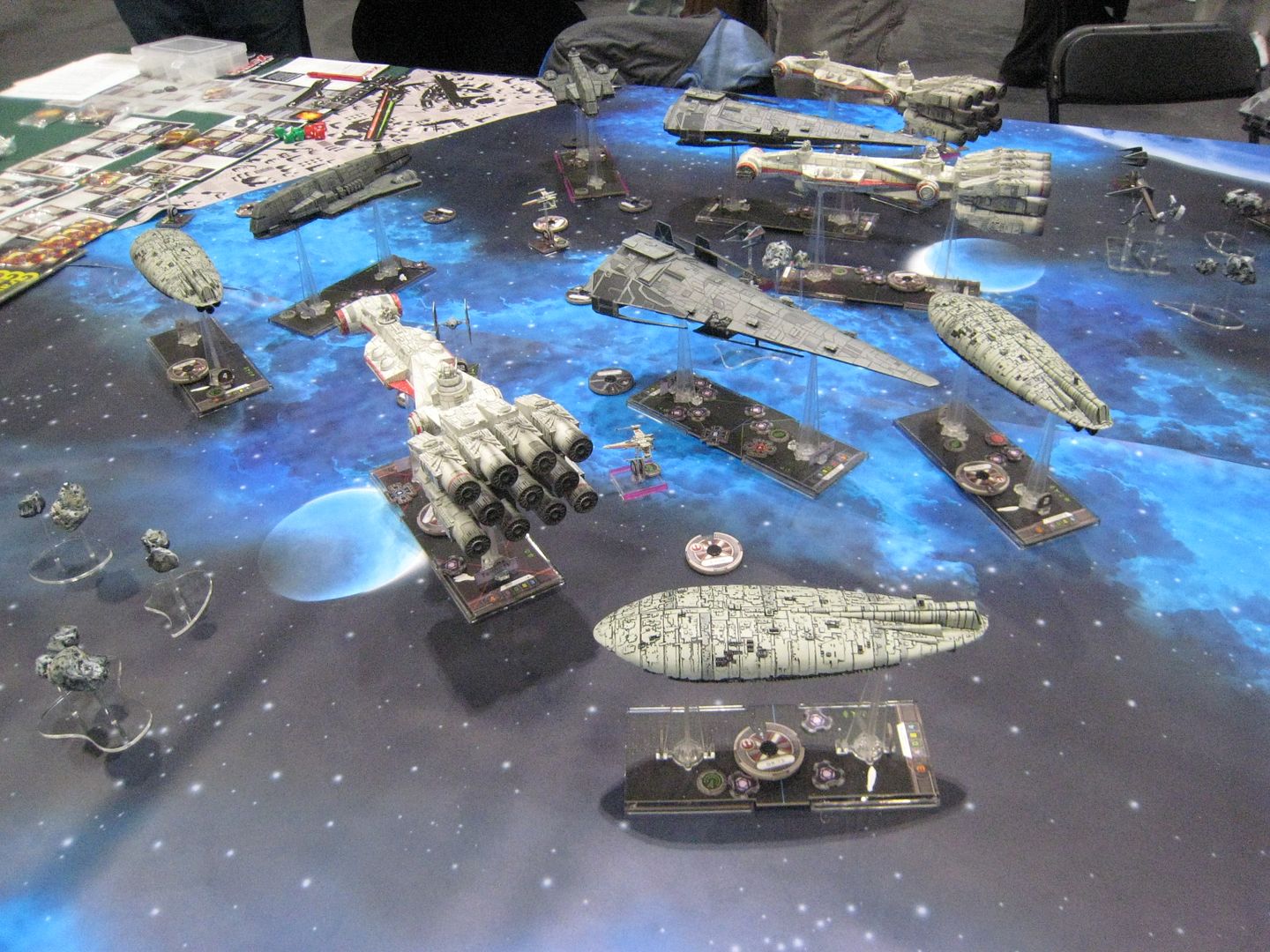
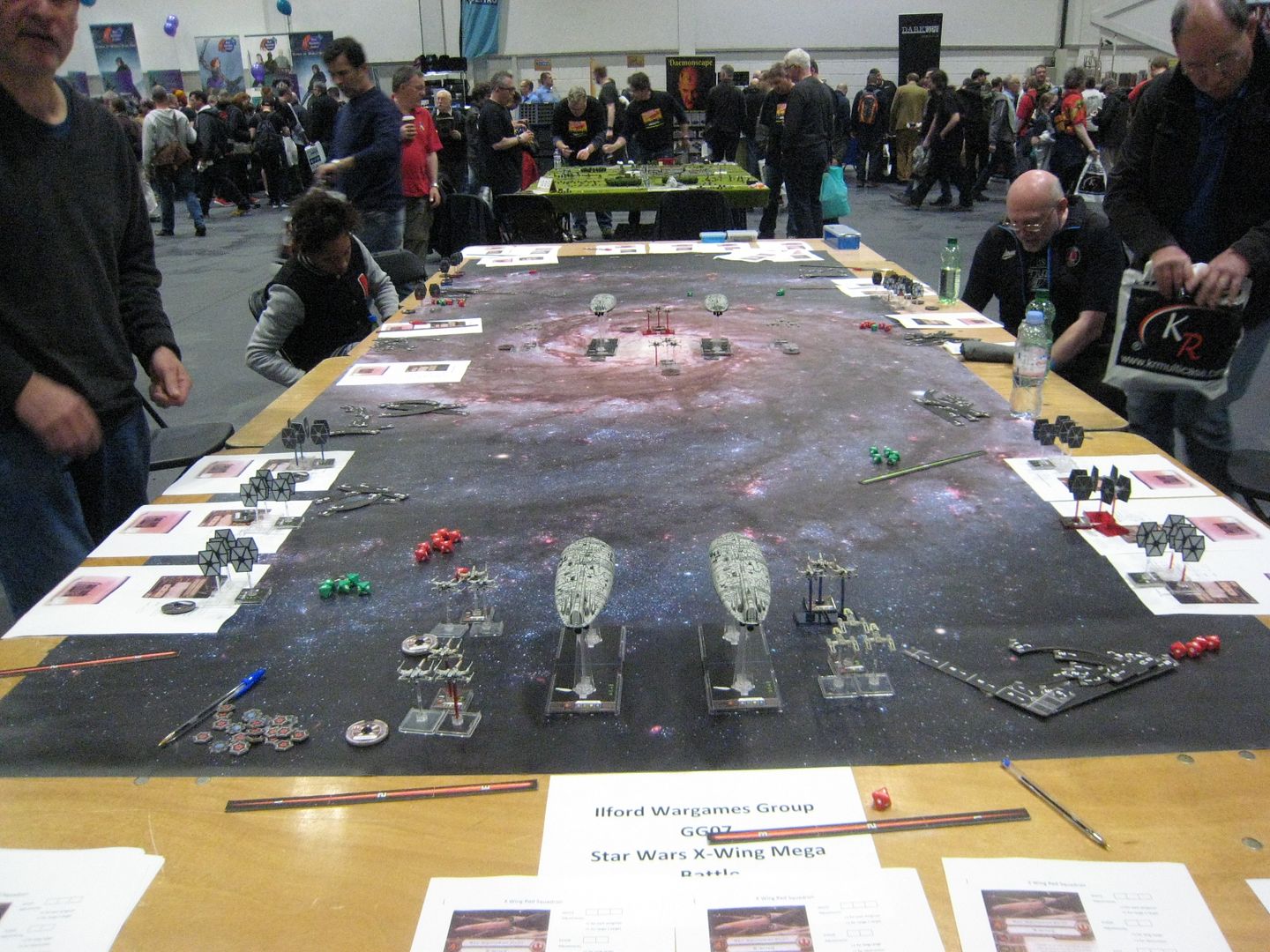
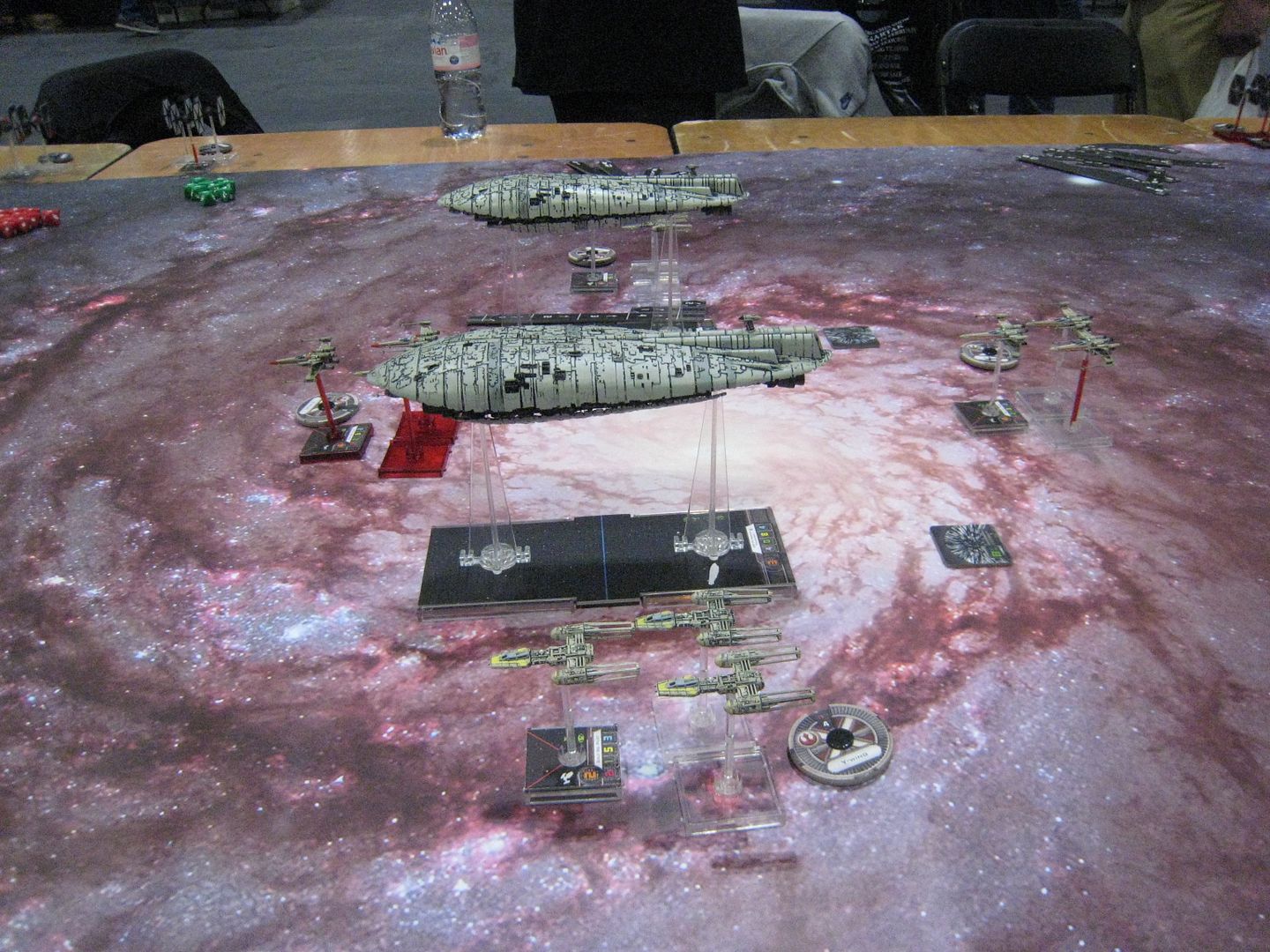
There were two mega/epic/cinematic play X-Wing games from Gravesend Games Guild and Ilford Wargames Group, with the Gravesend Imperial forces receiving an unexpected morale boost at a critical moment:


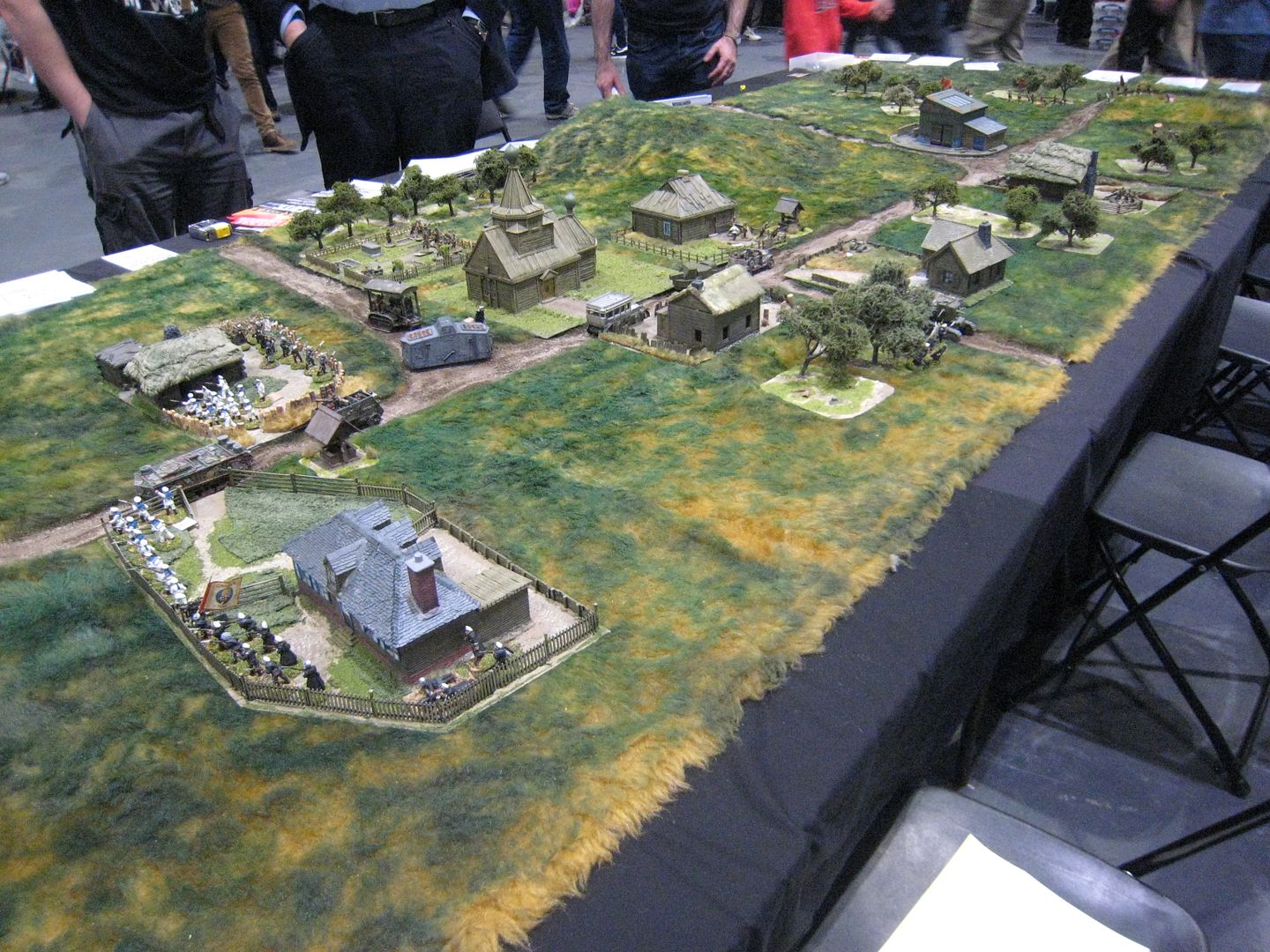
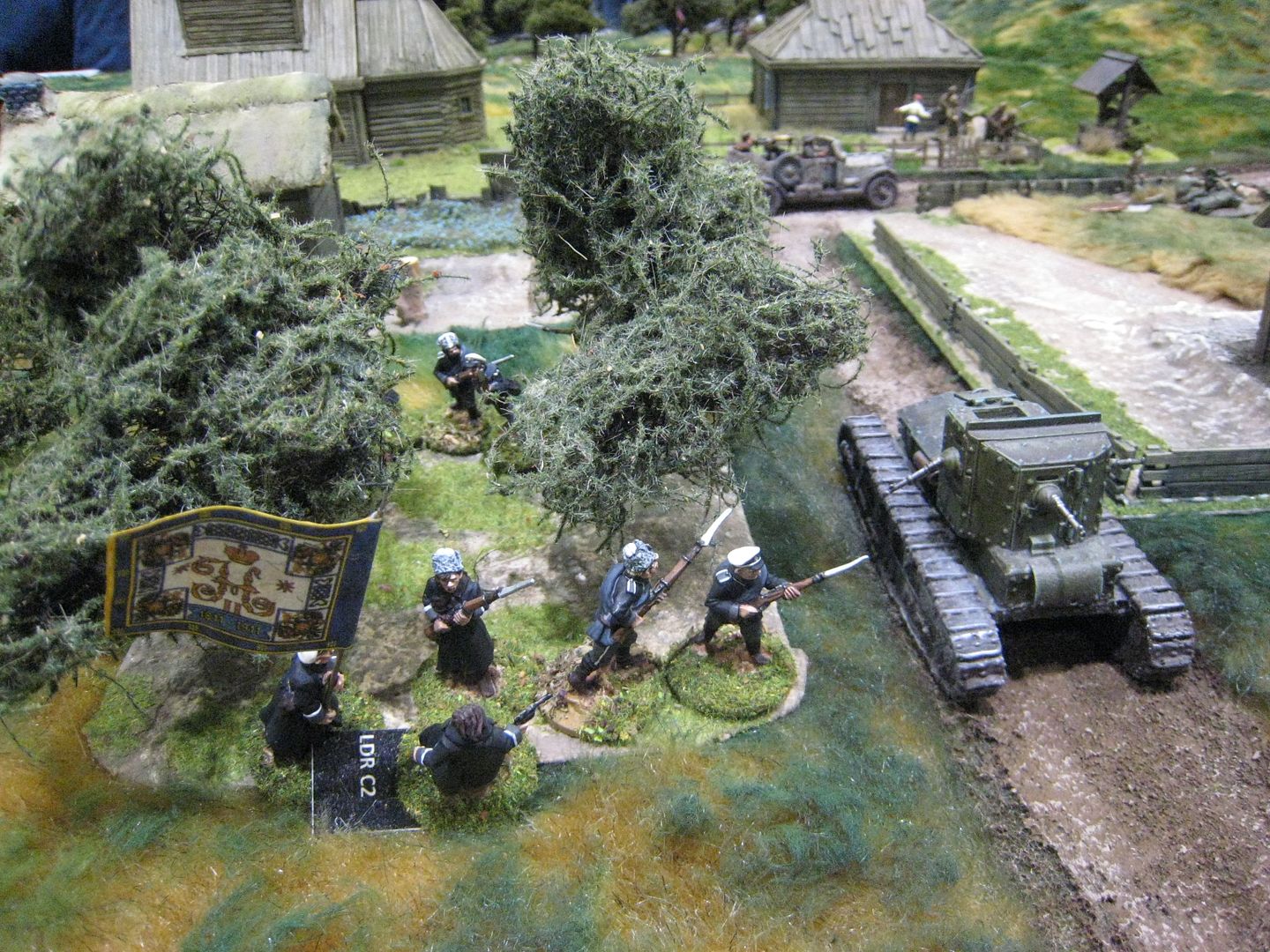
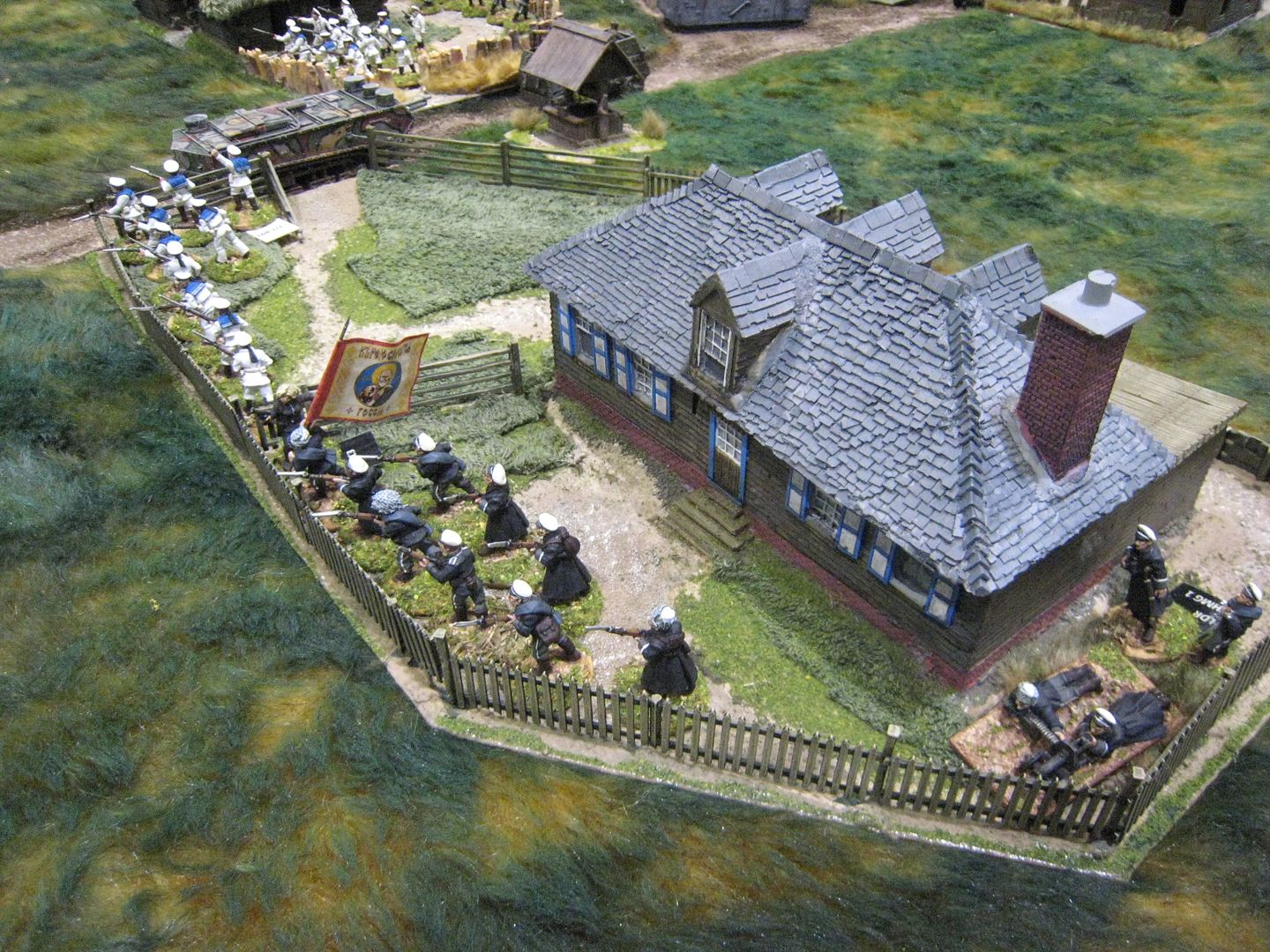
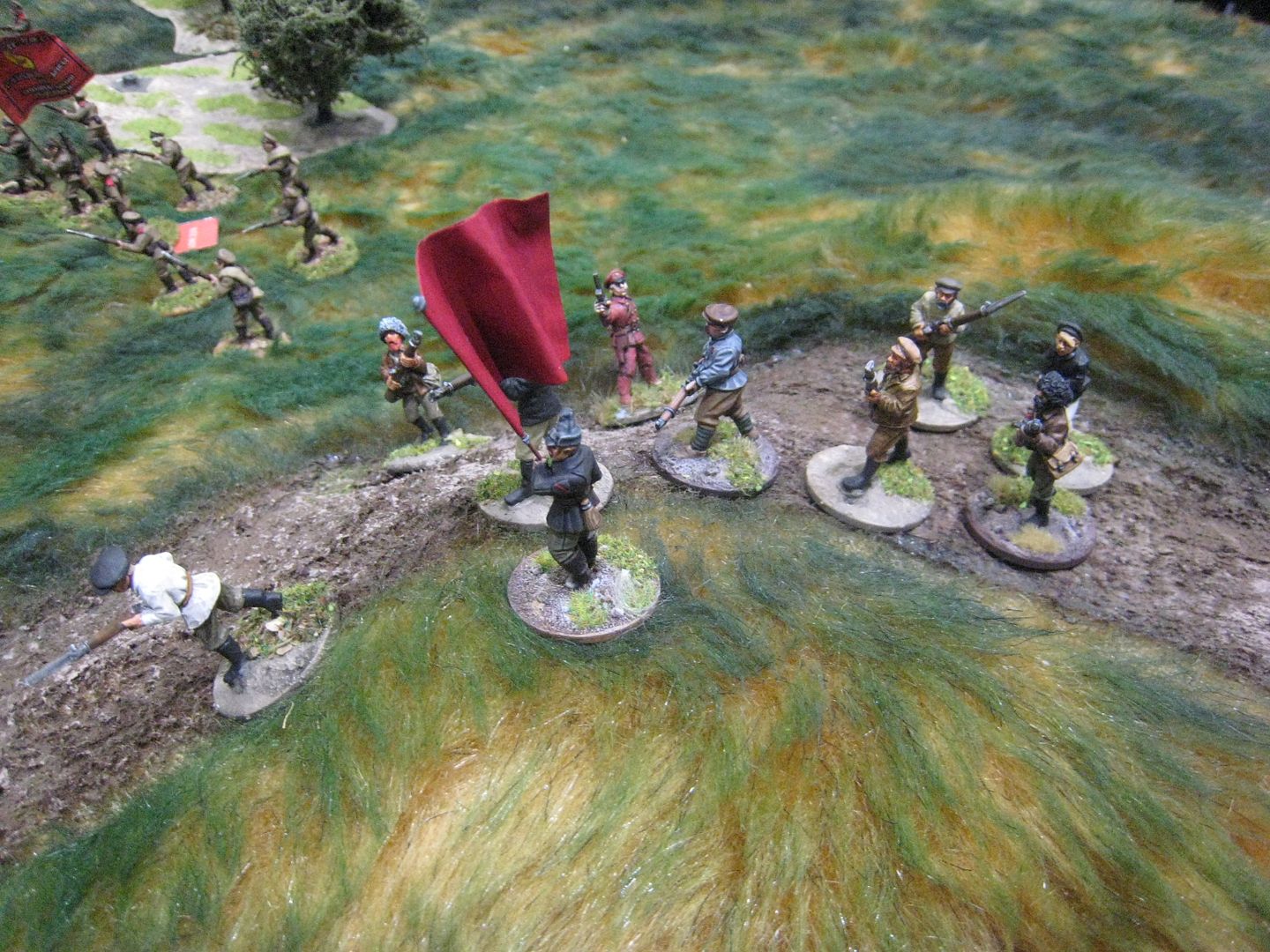
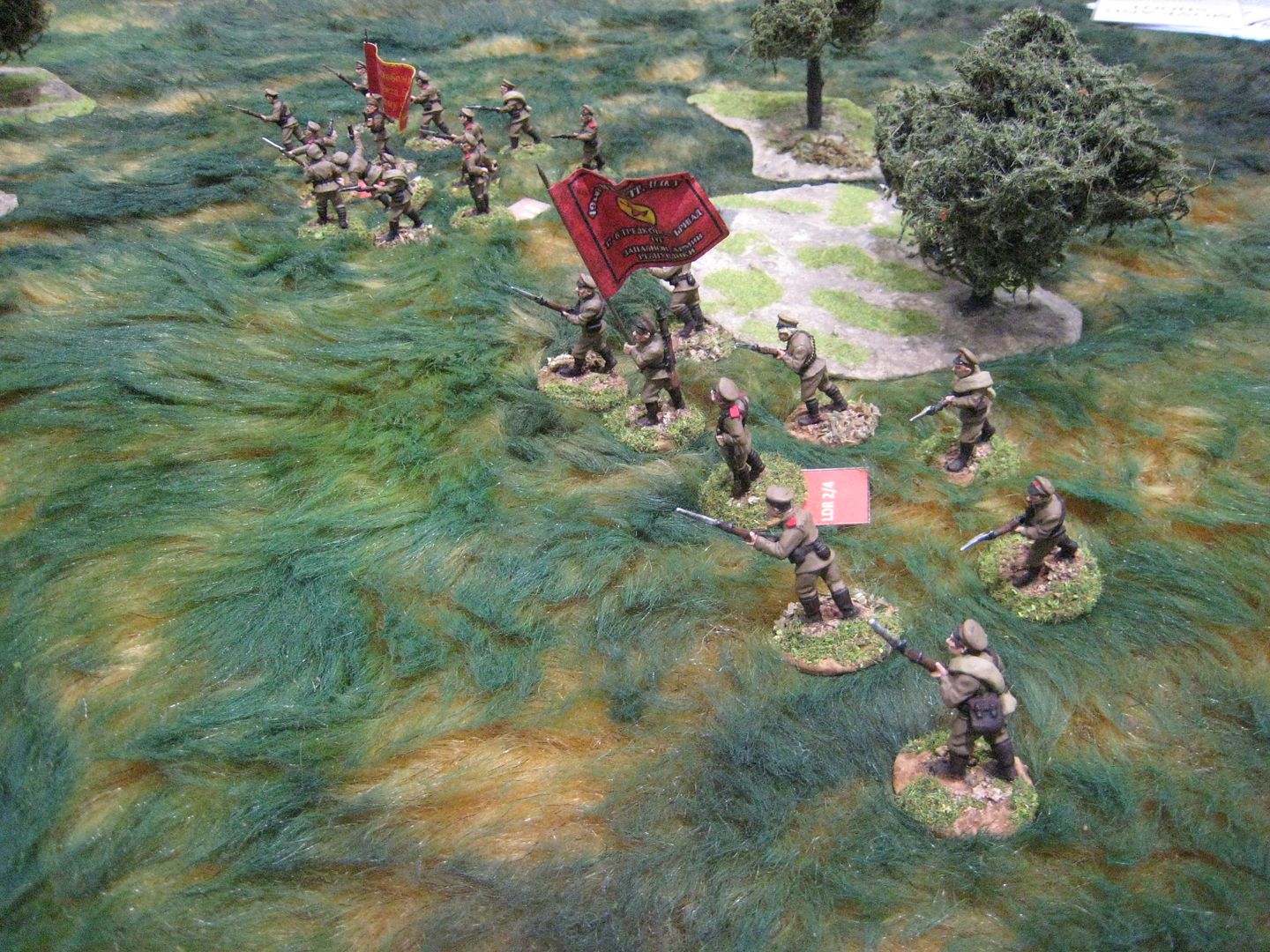
Skirmish Wargames' "Carry on up the Volga" game, the Russian Civil War in 25mm - another highlight:




This Falklands War game from Jersey Privateers Gaming Club was another boutique effort, but the terrain was pretty spectacular; the historical engagement above San Carlos Bay took place at night - but how can you do a nocturnal battle effectively on the tabletop?:


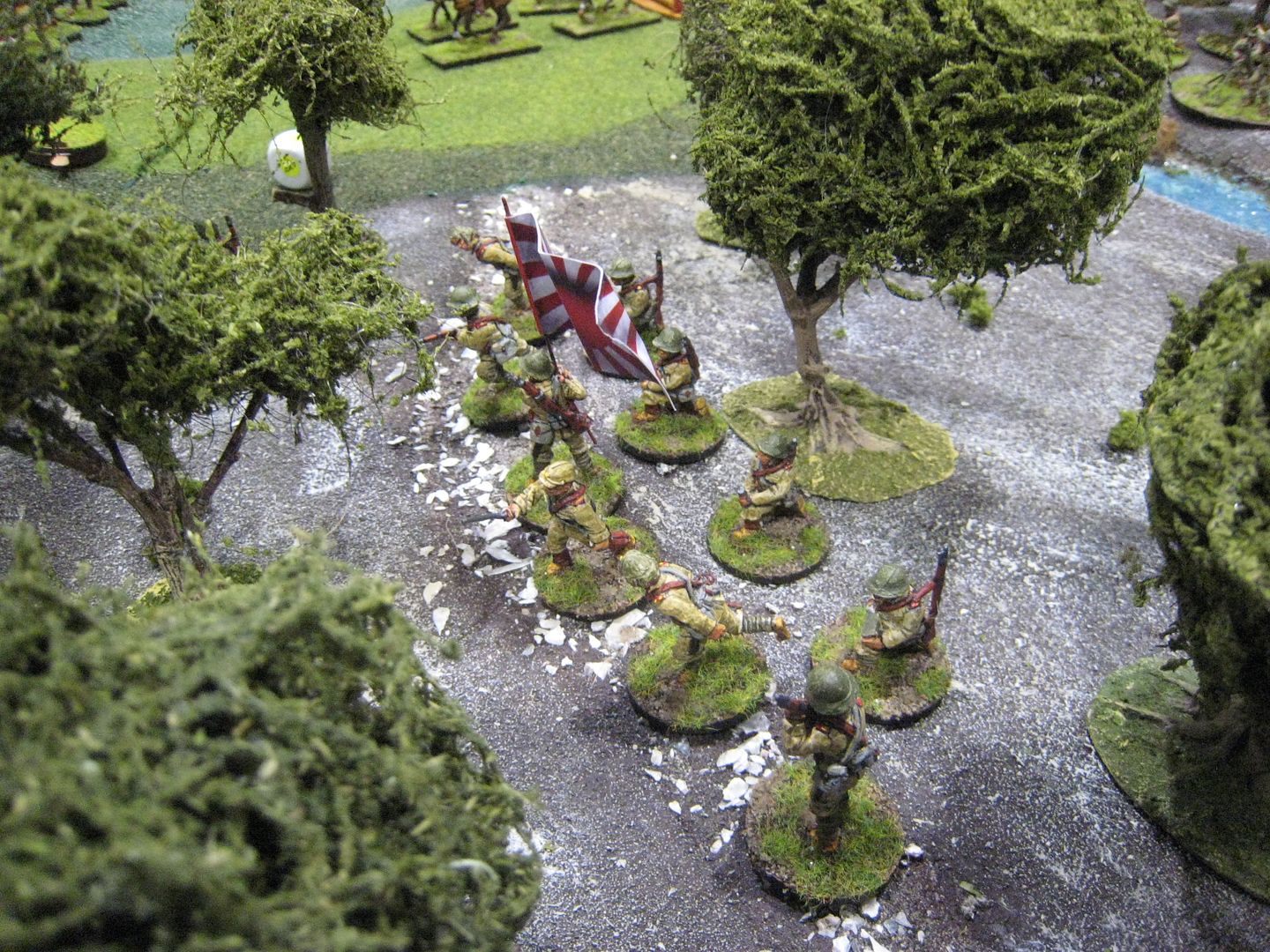
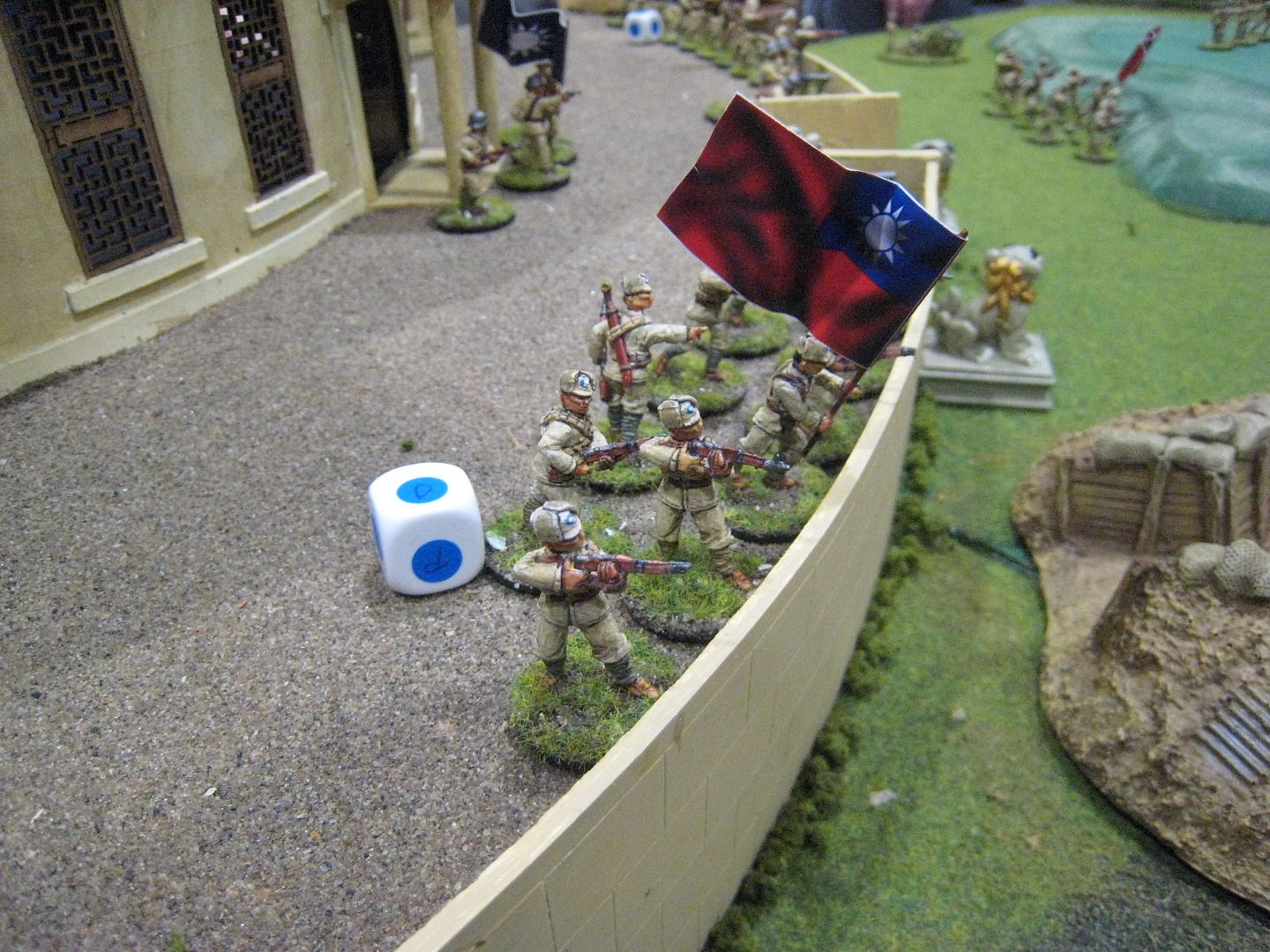
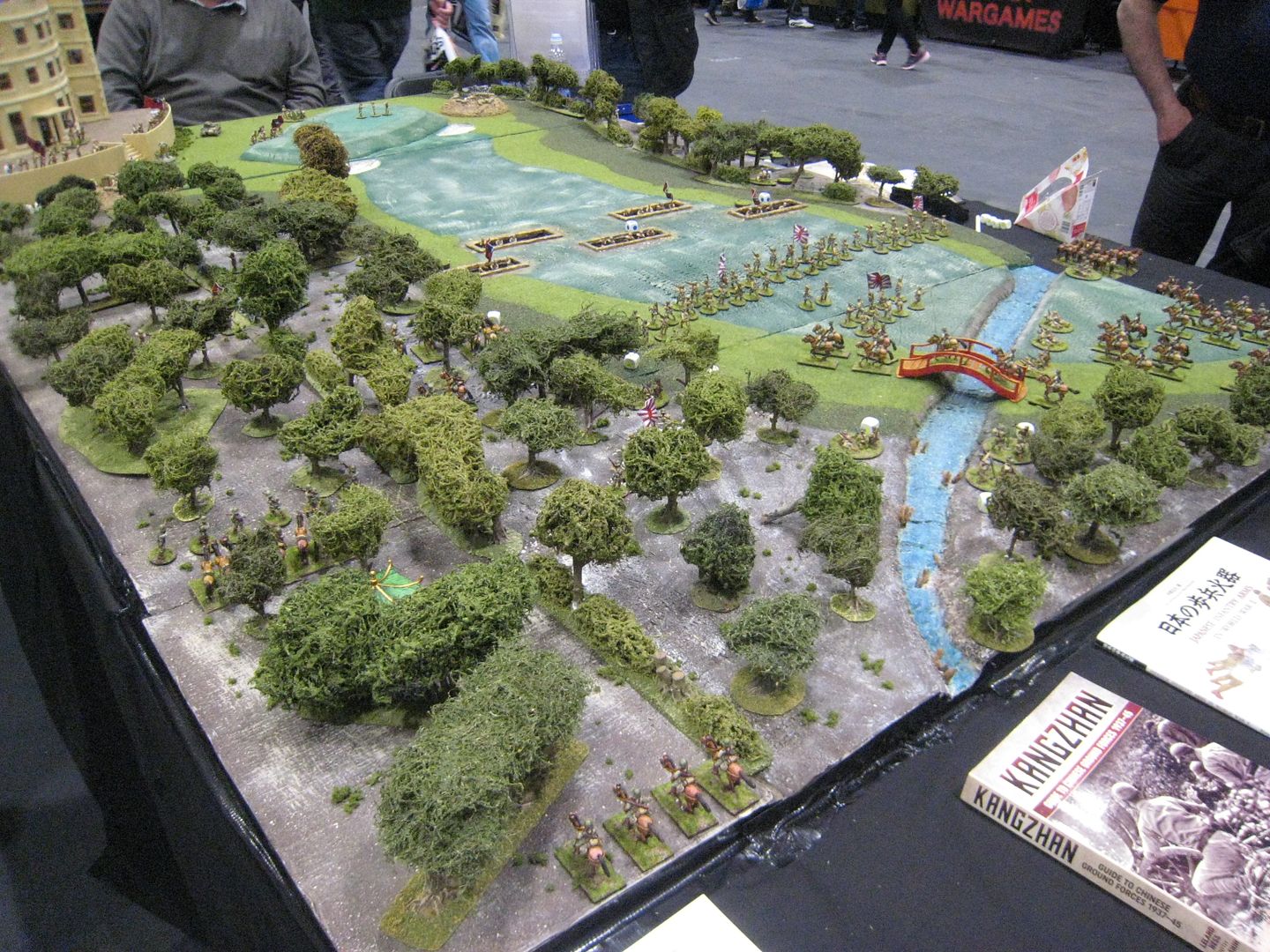
Ard Hamma had another off-beat period, the 2nd Sino-Japanese War (the green areas look a bit funny because this represents a golf course):


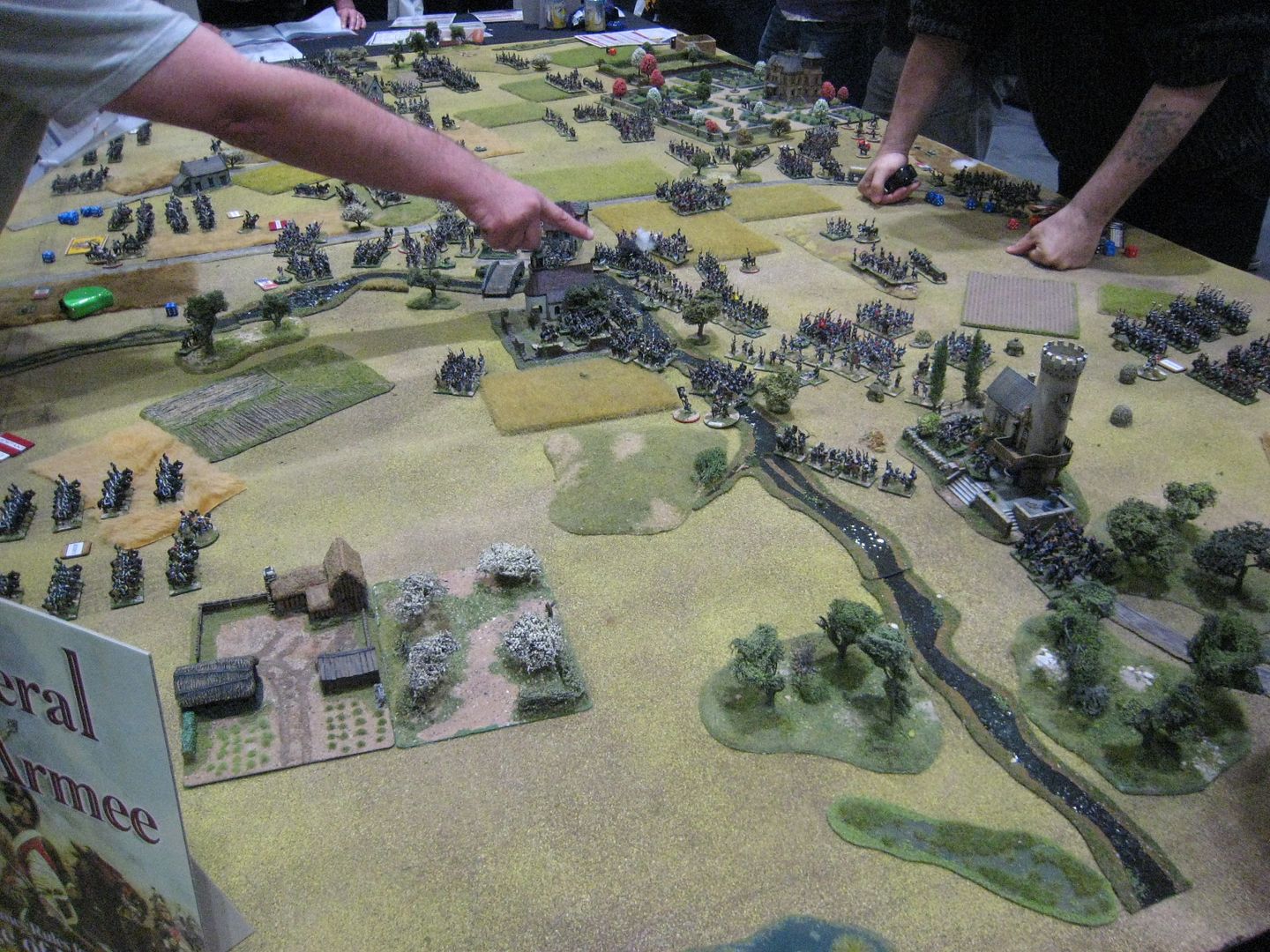
Dave Brown and Loughton Strike Force had a typical 15mm Napoleonic slugfest showcasing Dave's new Nap rules:


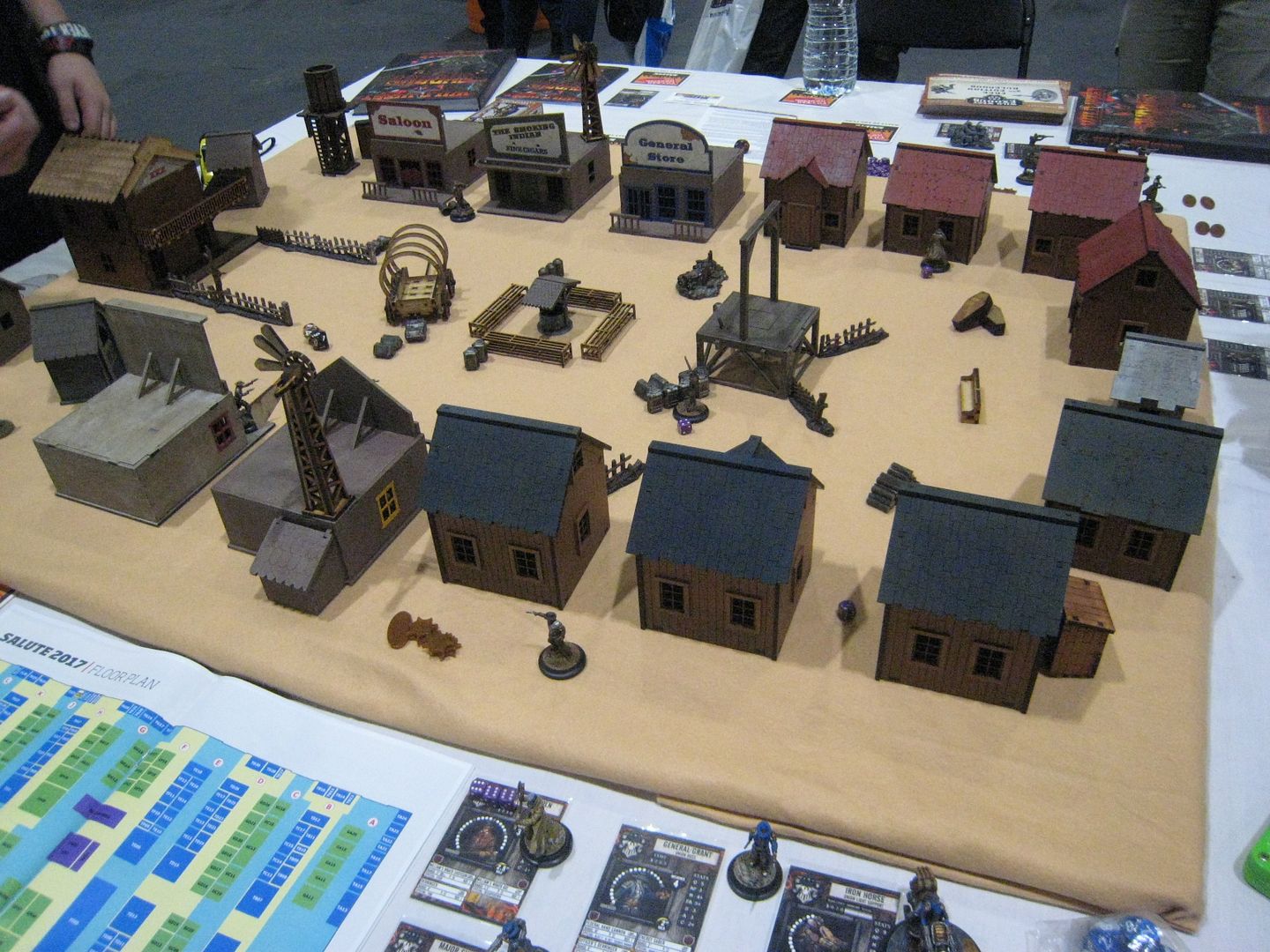
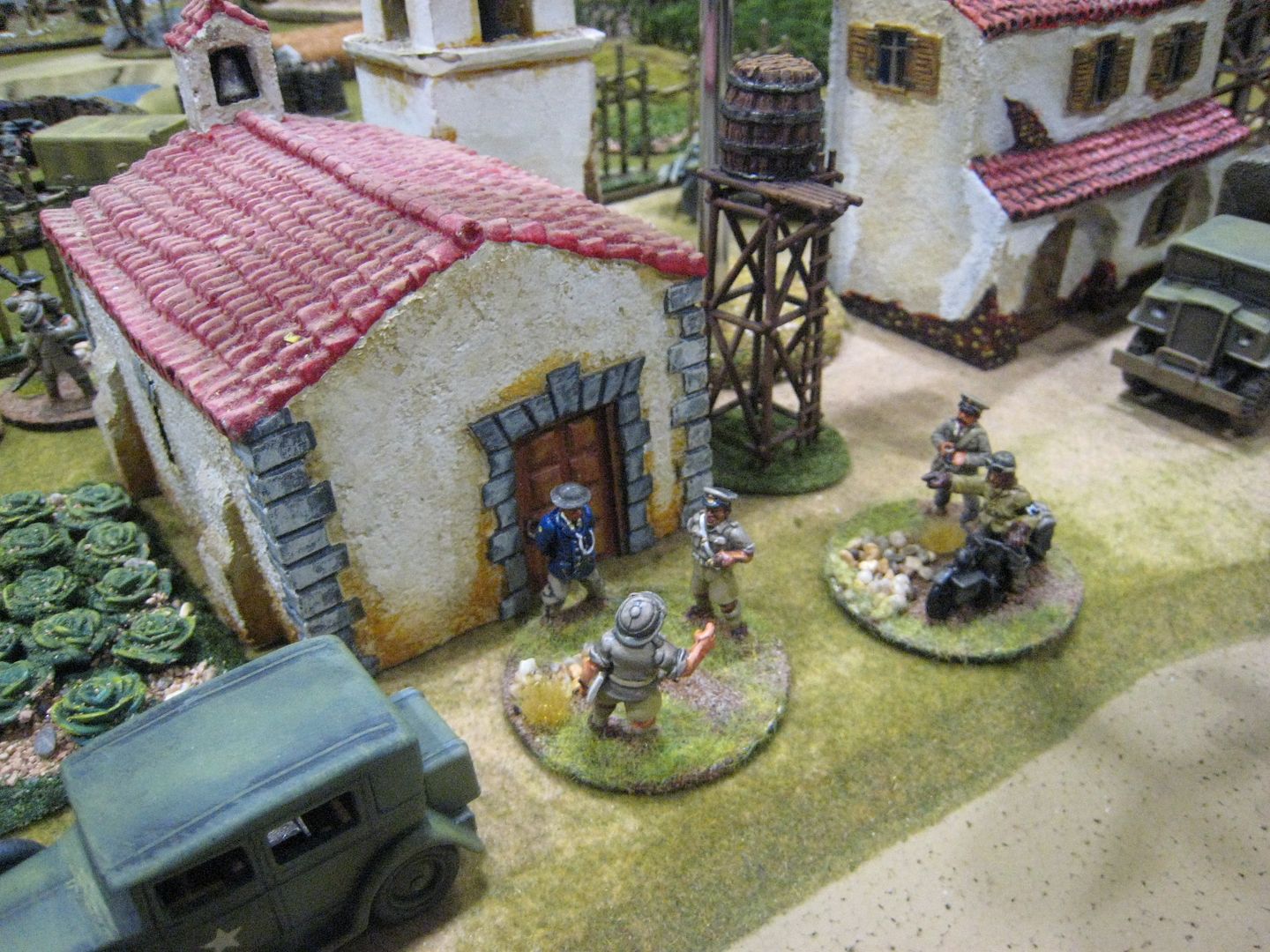
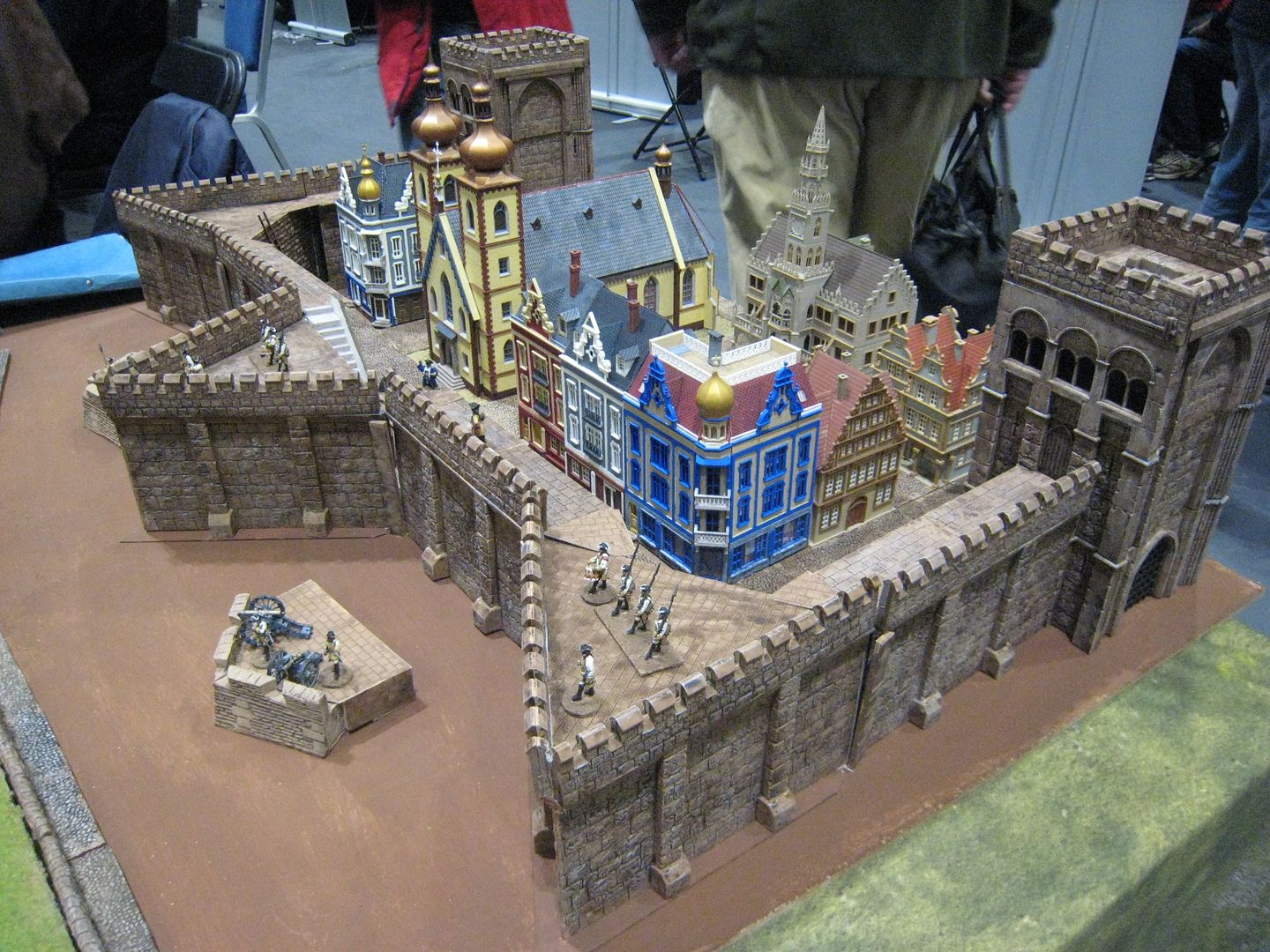
Here are other games I didn't catch the names of or can't work out with 100% confidence from the show guide; some are "trader" games:

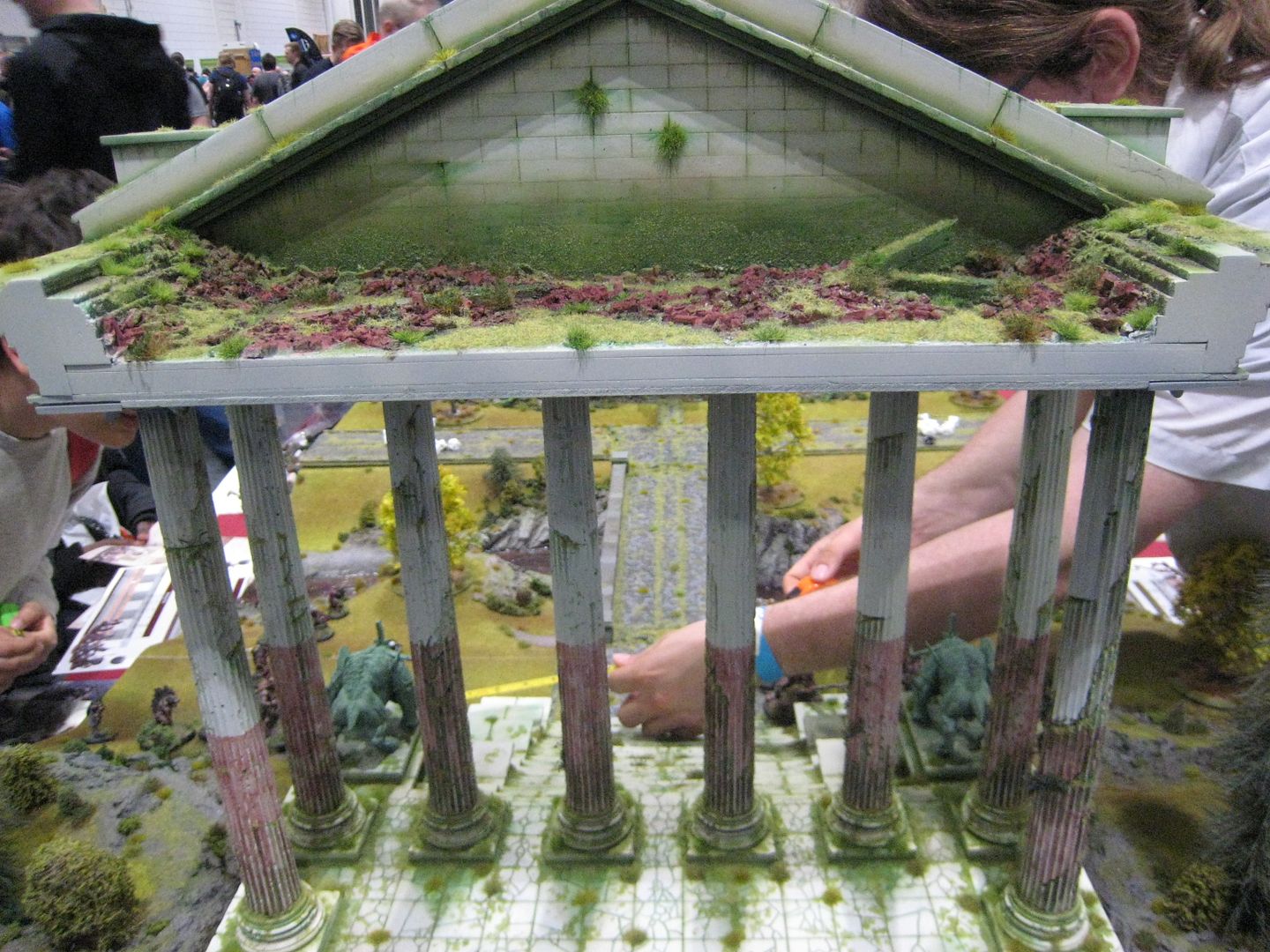
Stunning terrain on this game.

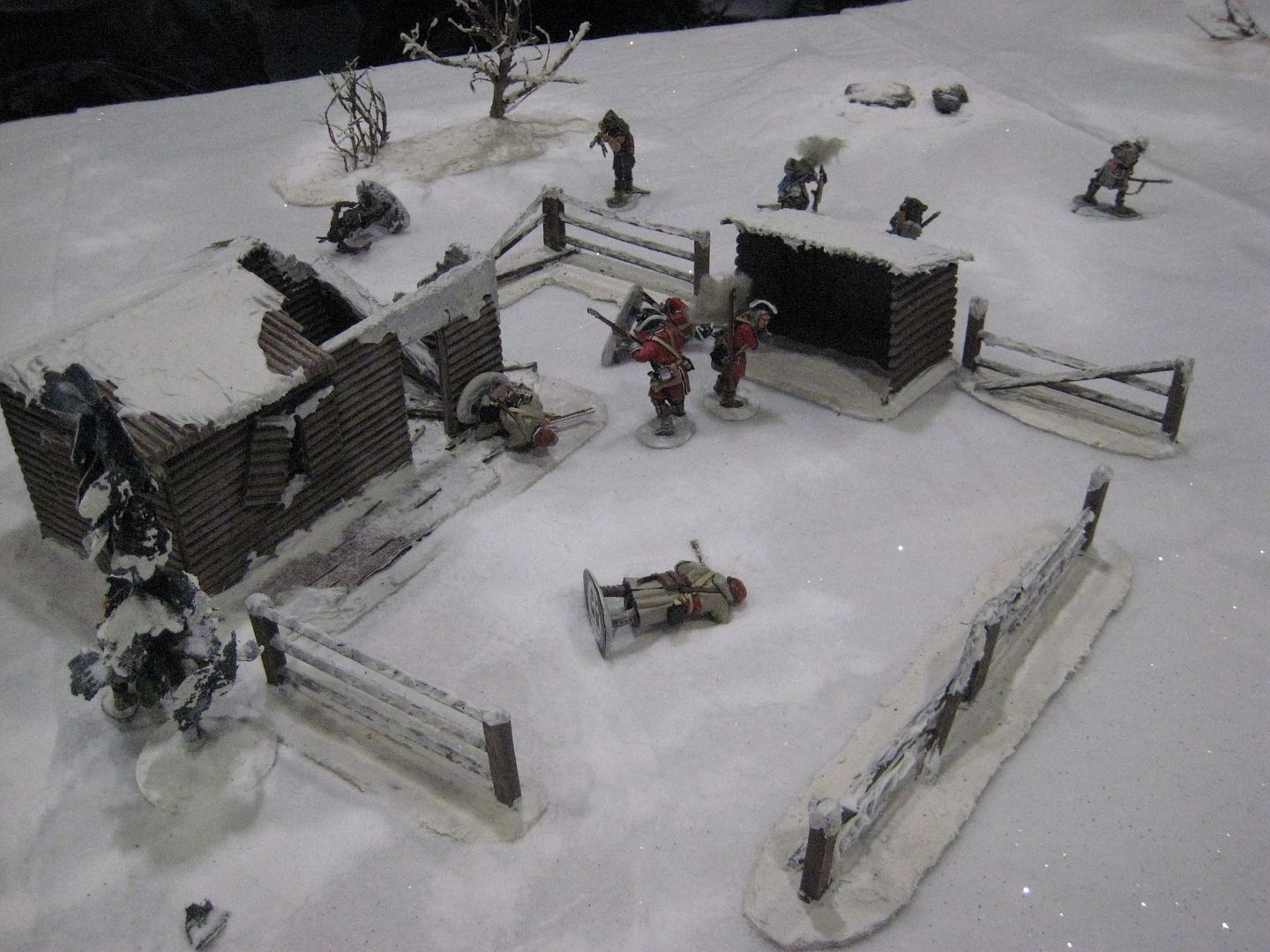
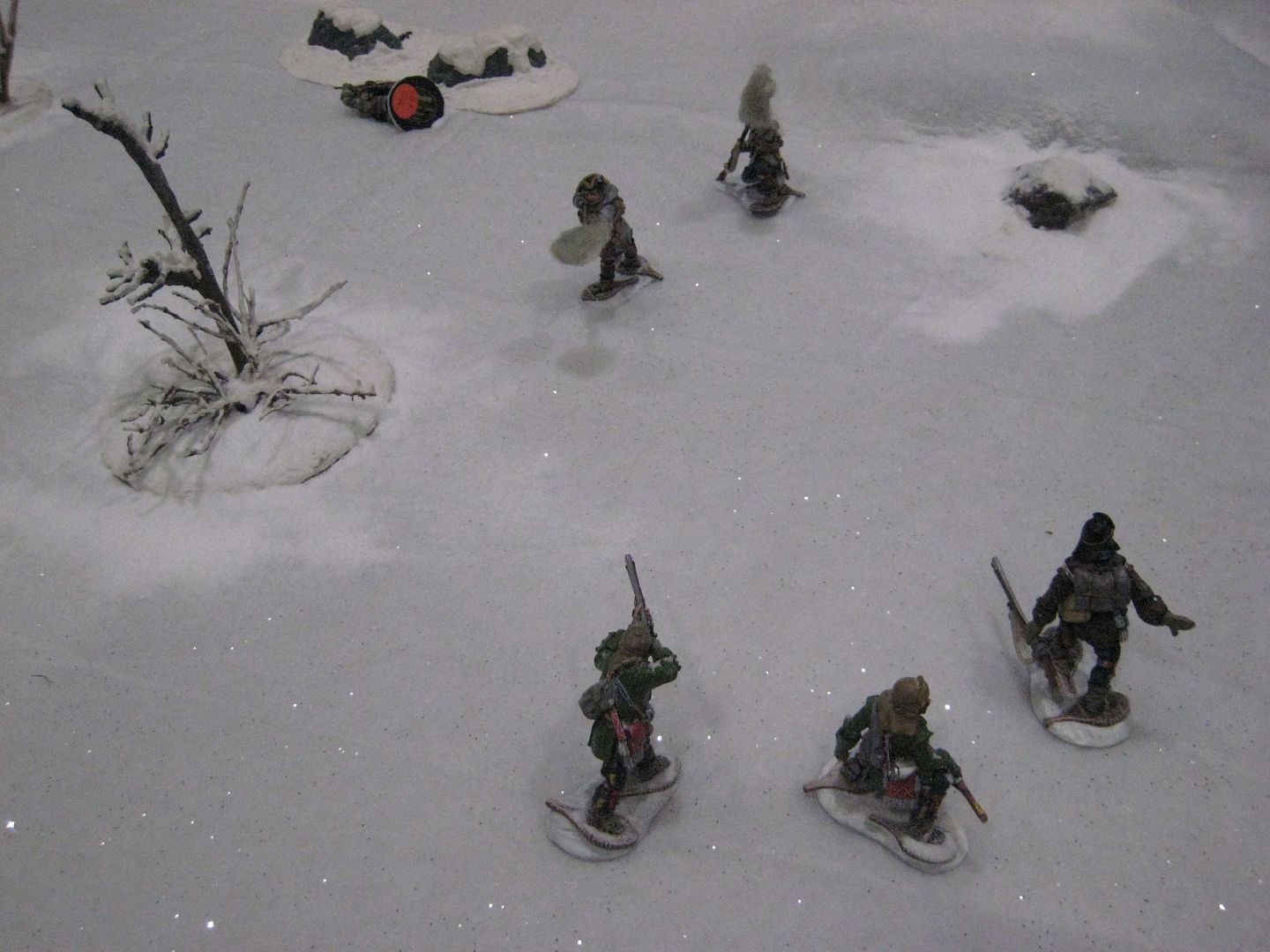
F&IW skirmish.


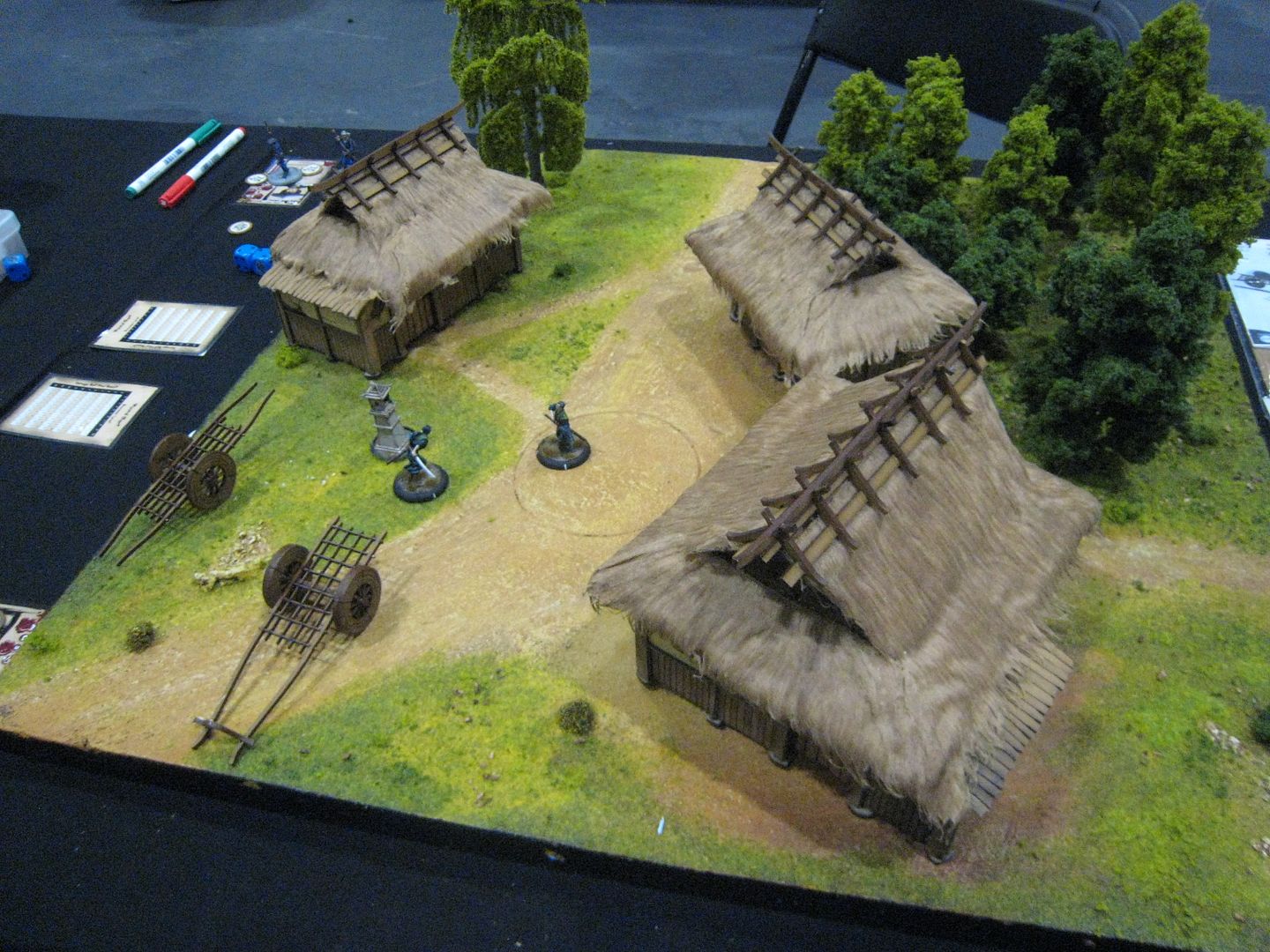
Samurai skirmish - Bushido?
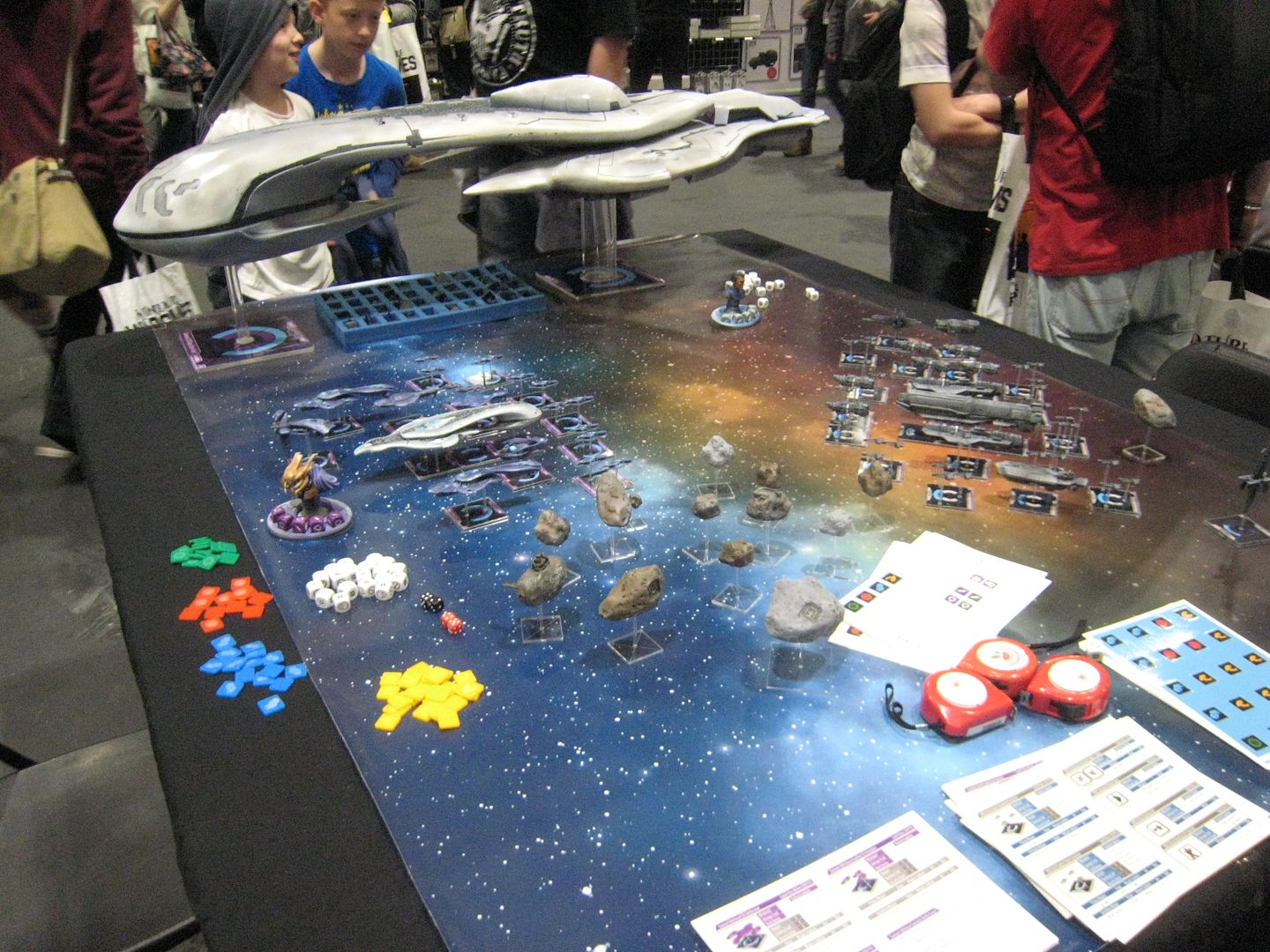
The boys loved this photo - is anyone knows the game system please let me know!
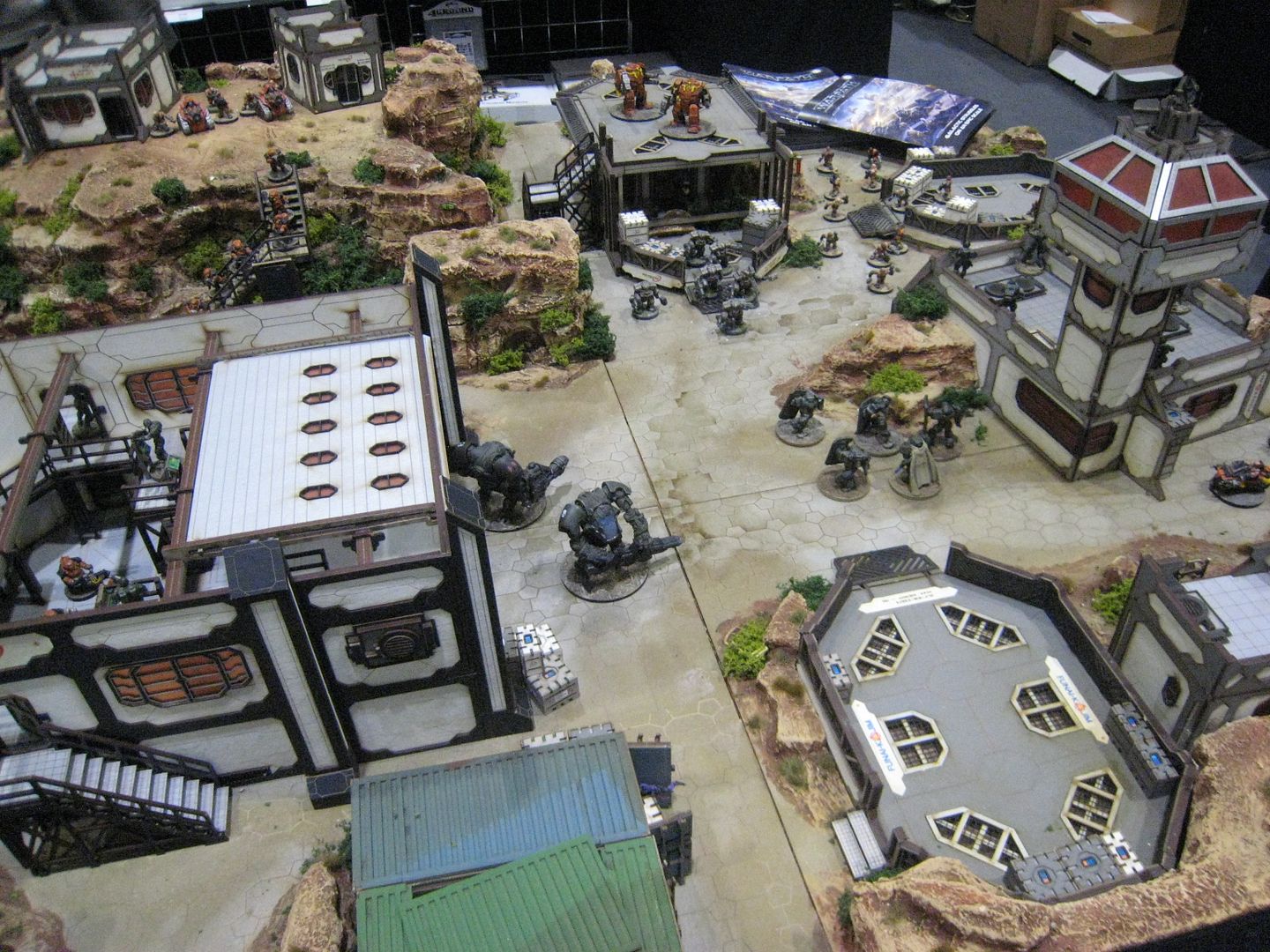
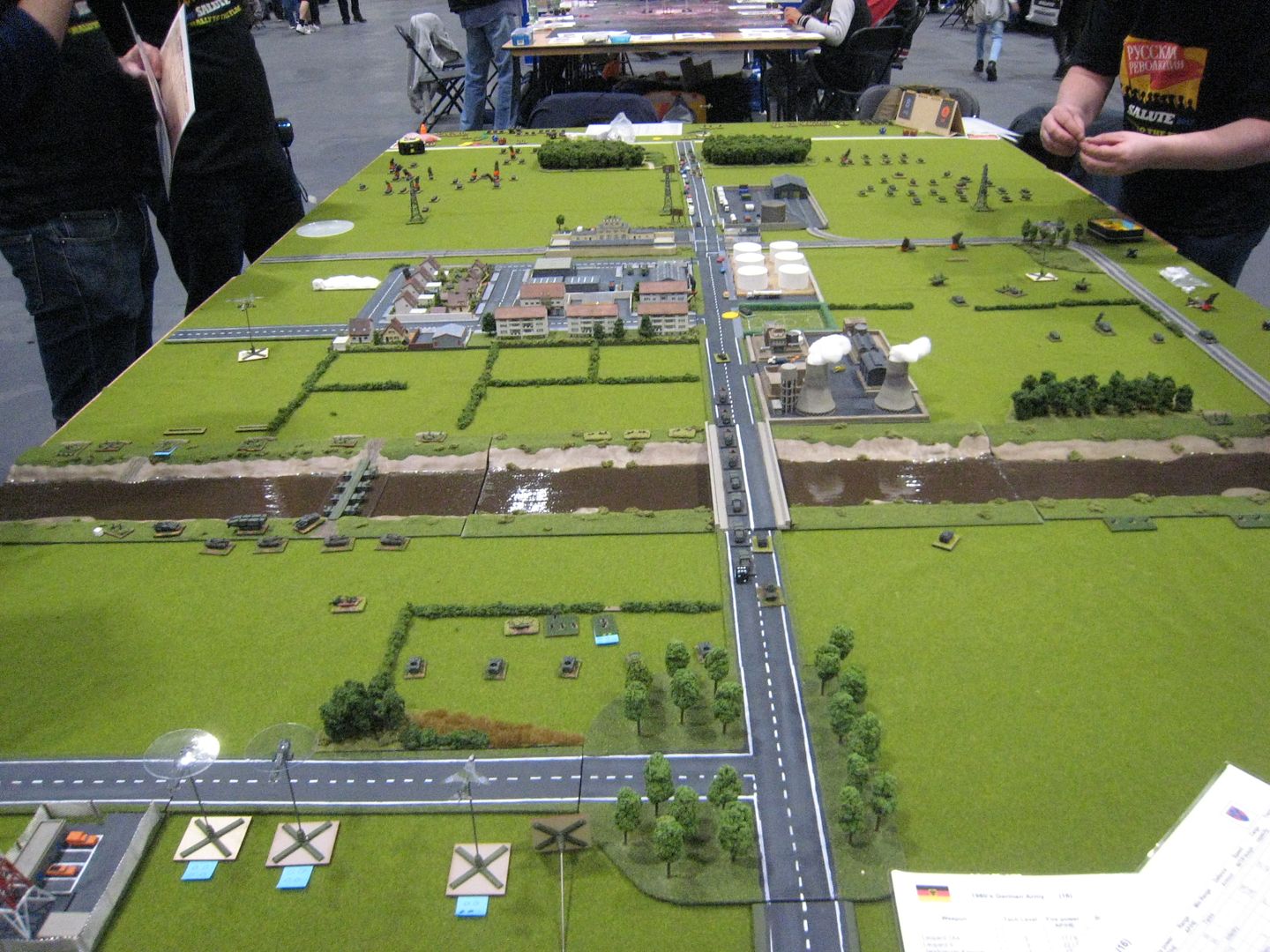
I think this was a "Cold War gone hot" sort of game.
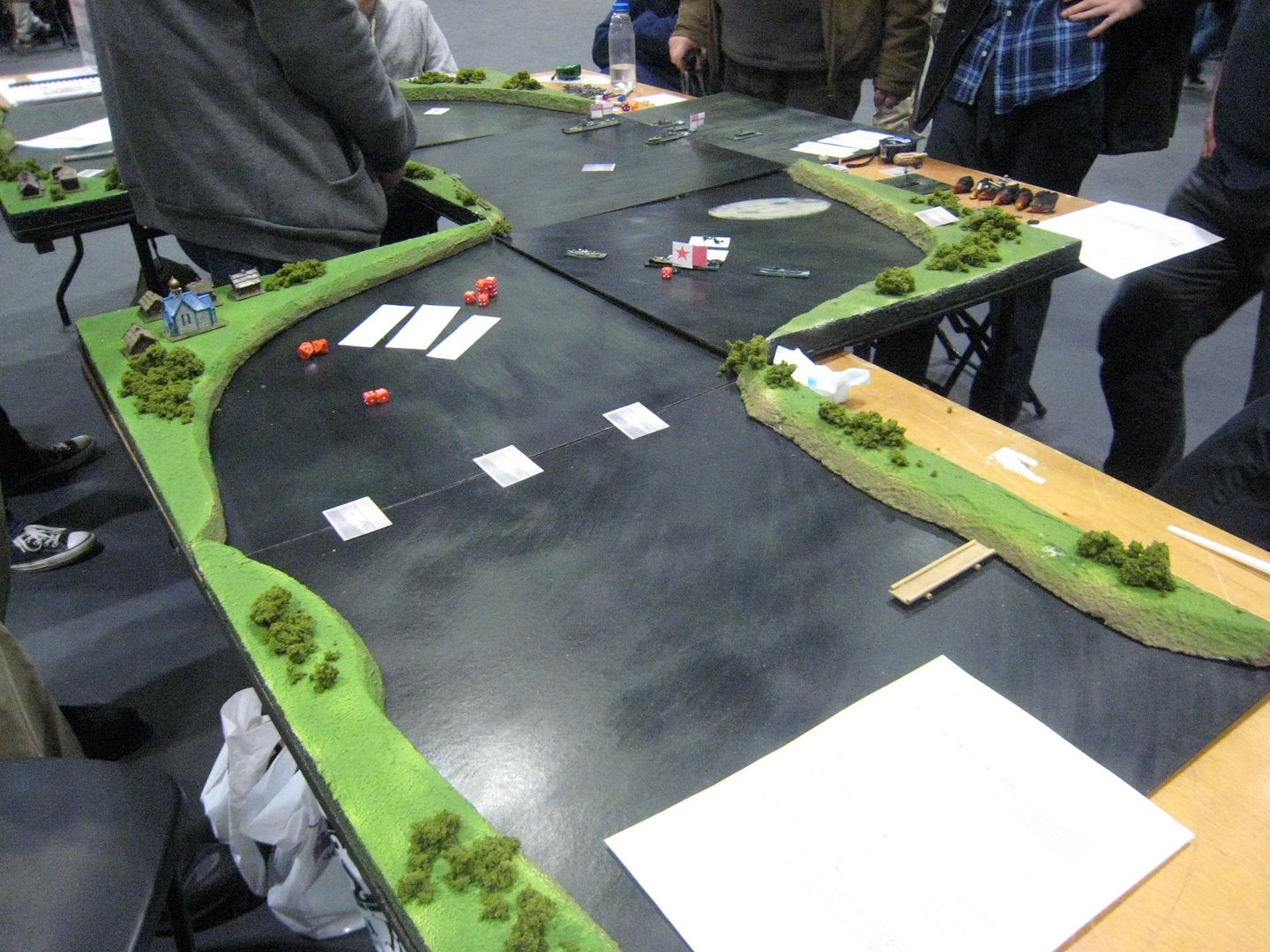
I think this was another RCW themed game - nice to see something fully naval.
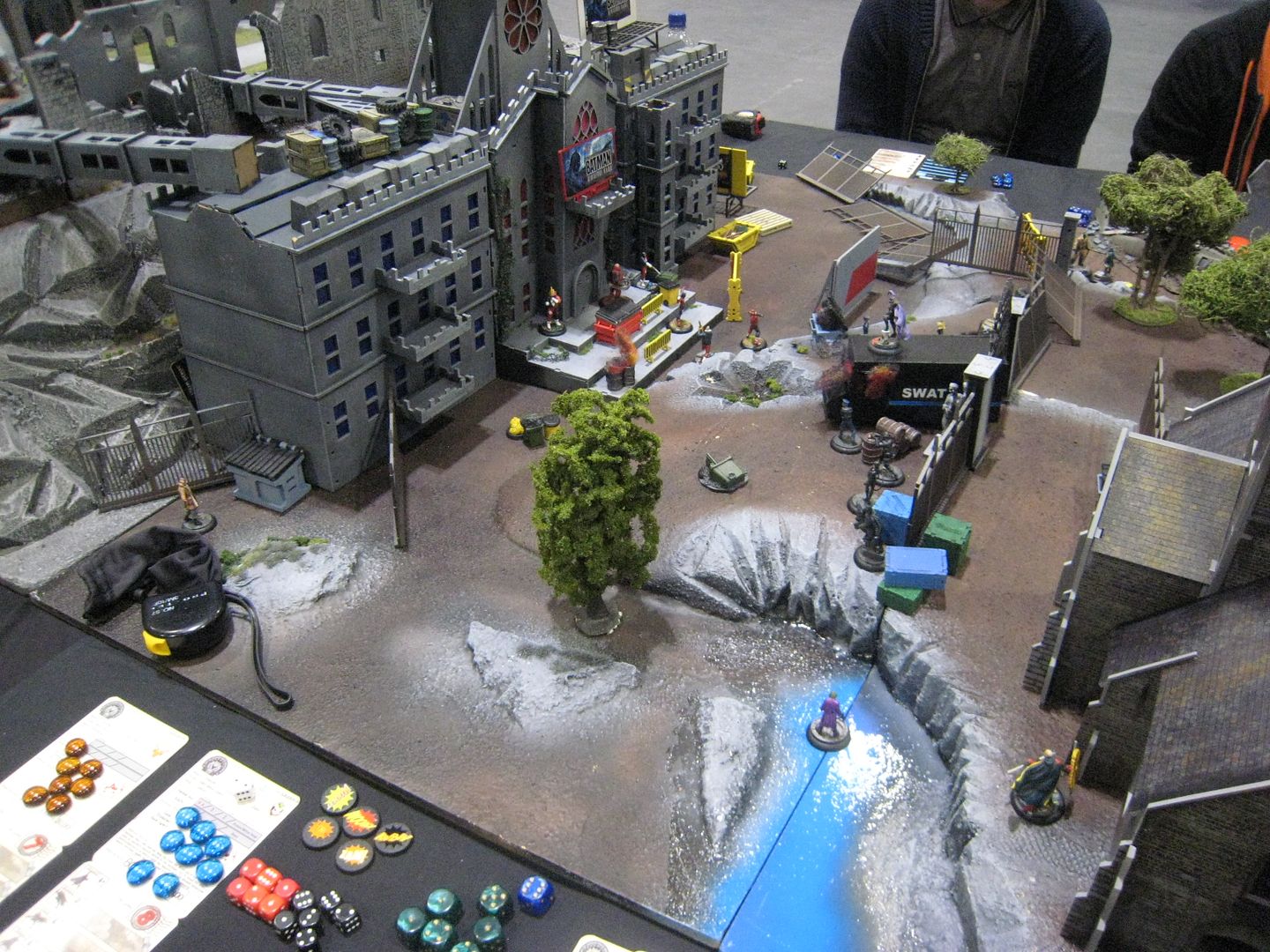
Batman perhaps?
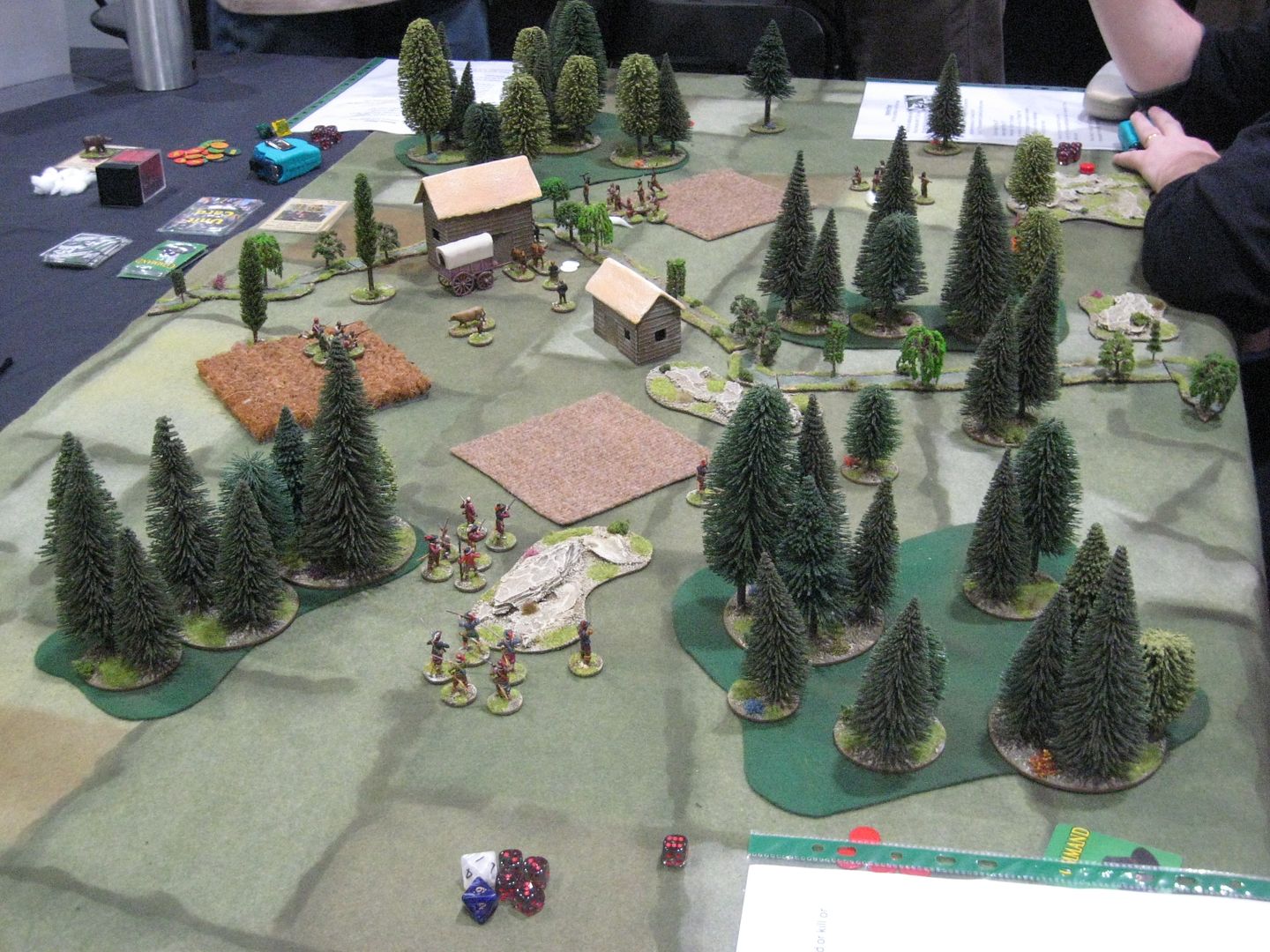
Another American Indians v settlers skirmish
 game.
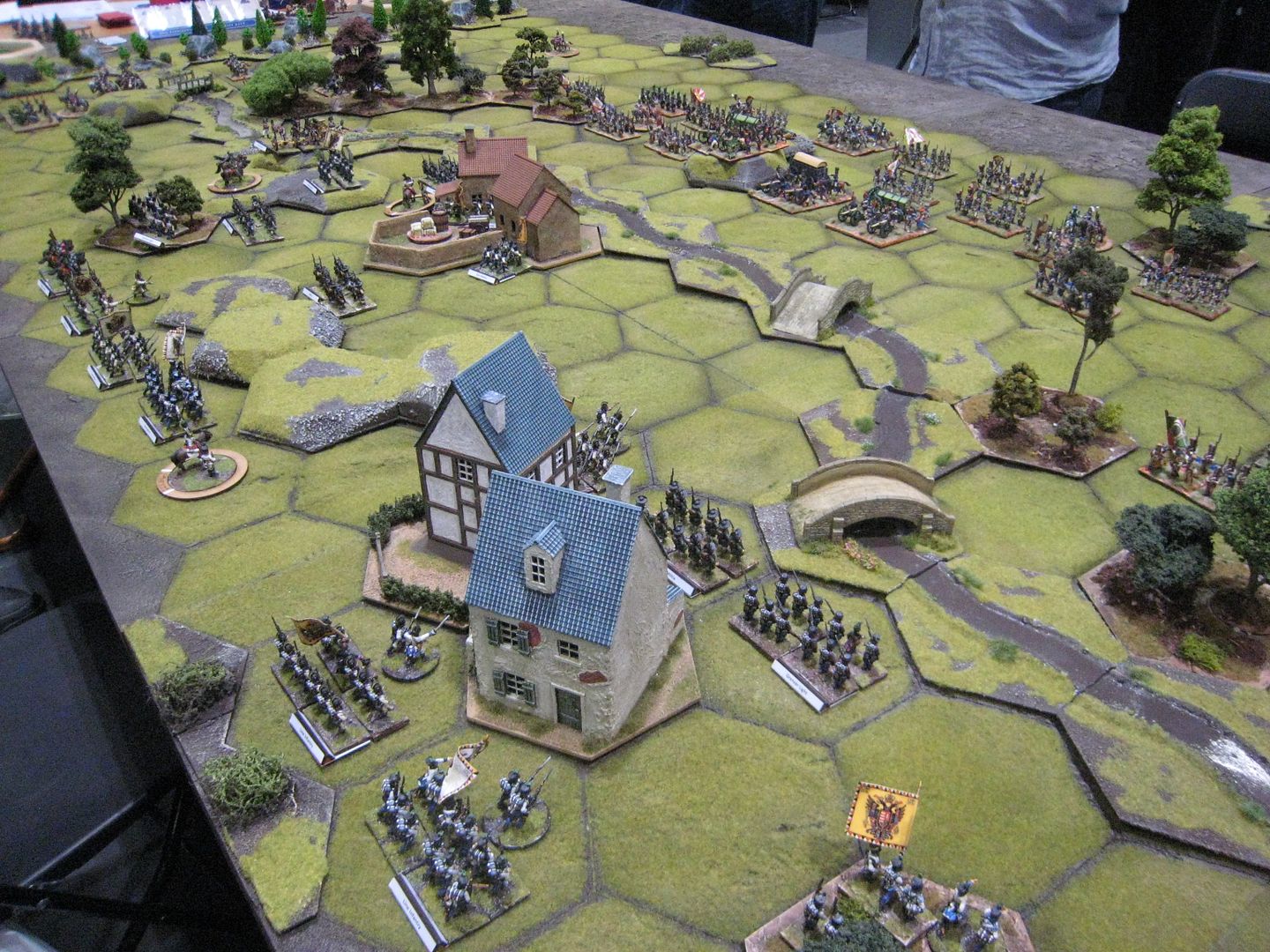
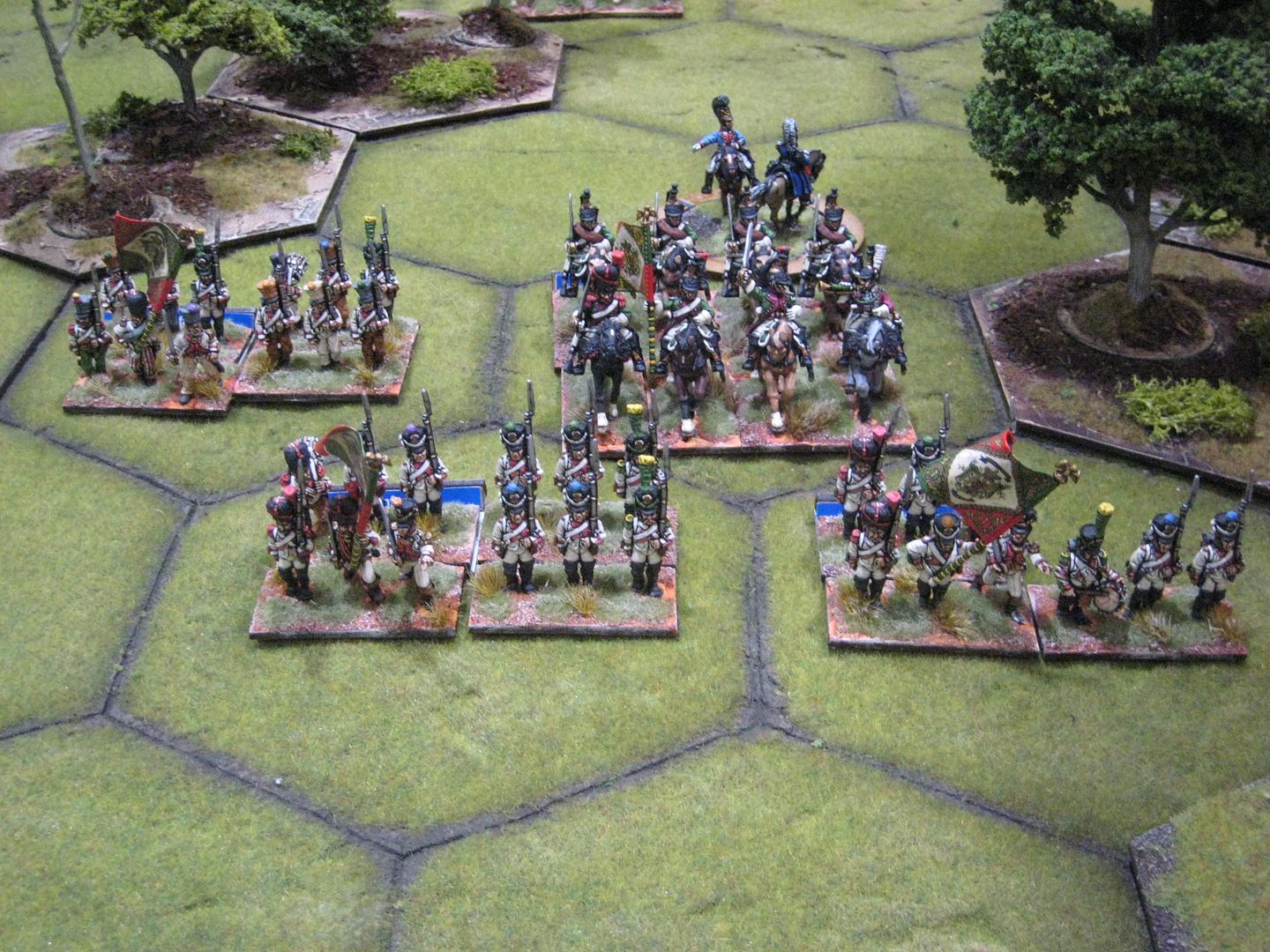
This was a large 1809 French v Austrians game in 25mm.  By The Old Guard, perhaps?
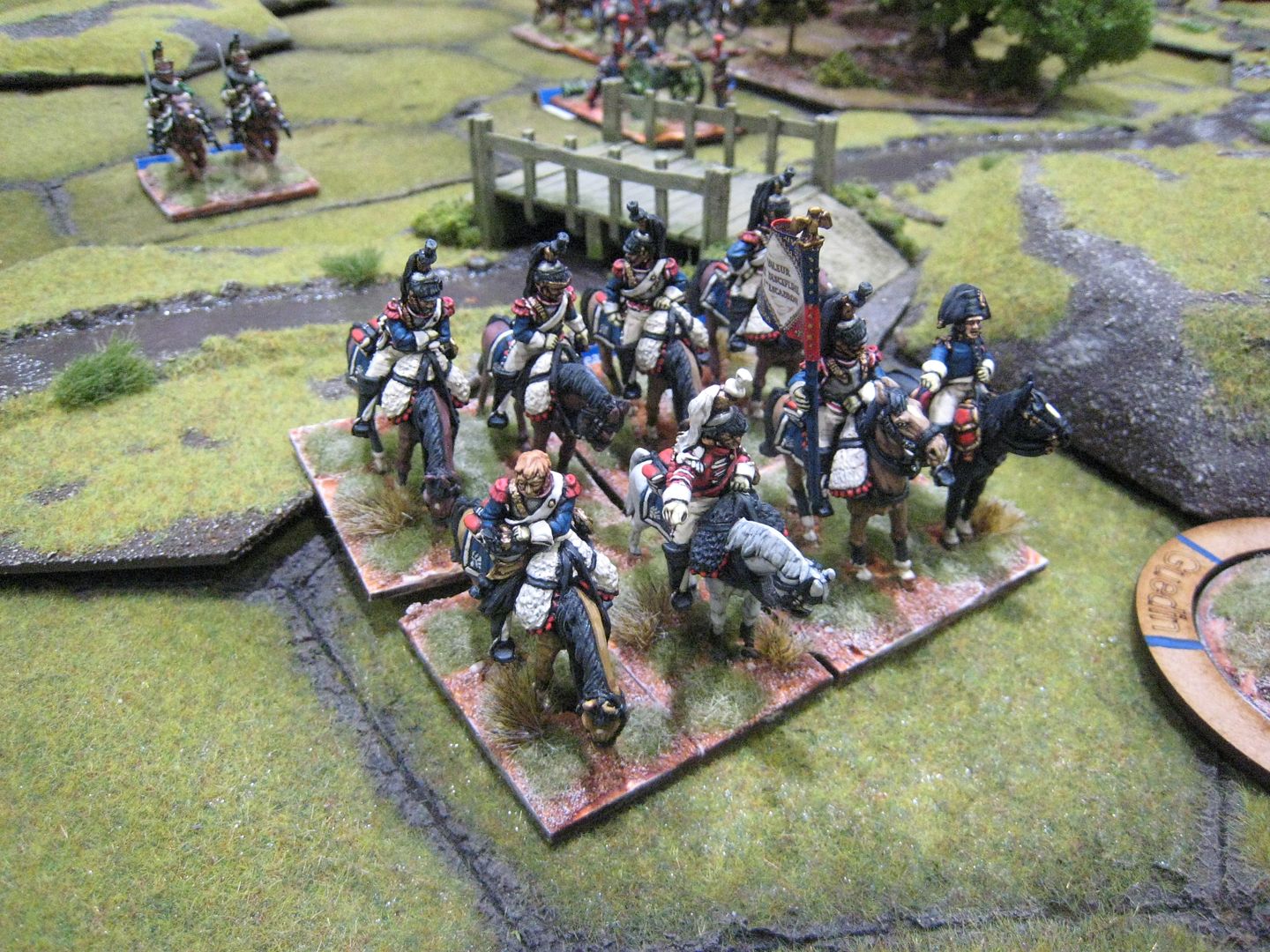

Nice to seeing Neapolitan/Italian troops.

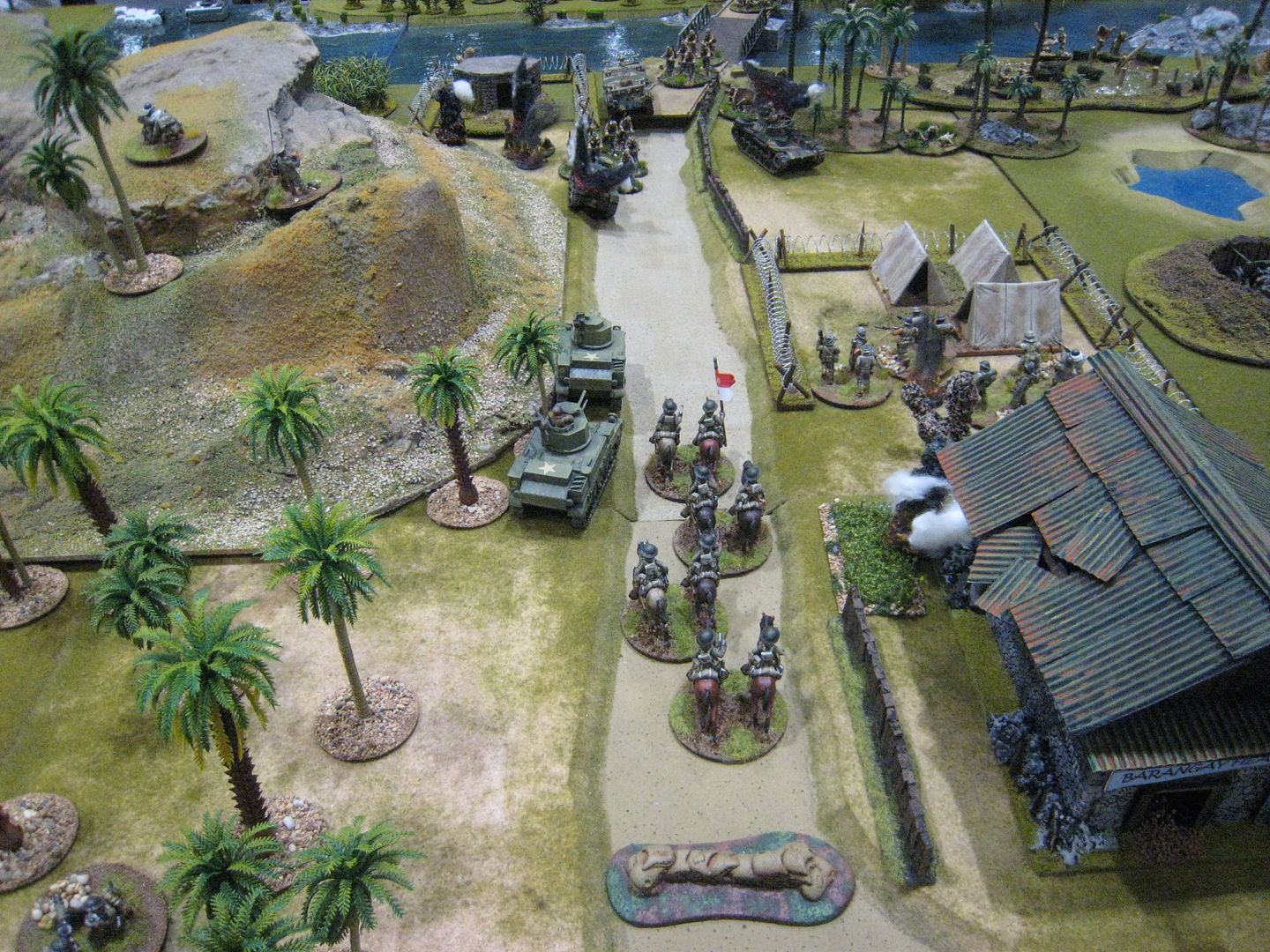
Another highlight, WW2 in the Philippines by the Crewe and Nantwich club:


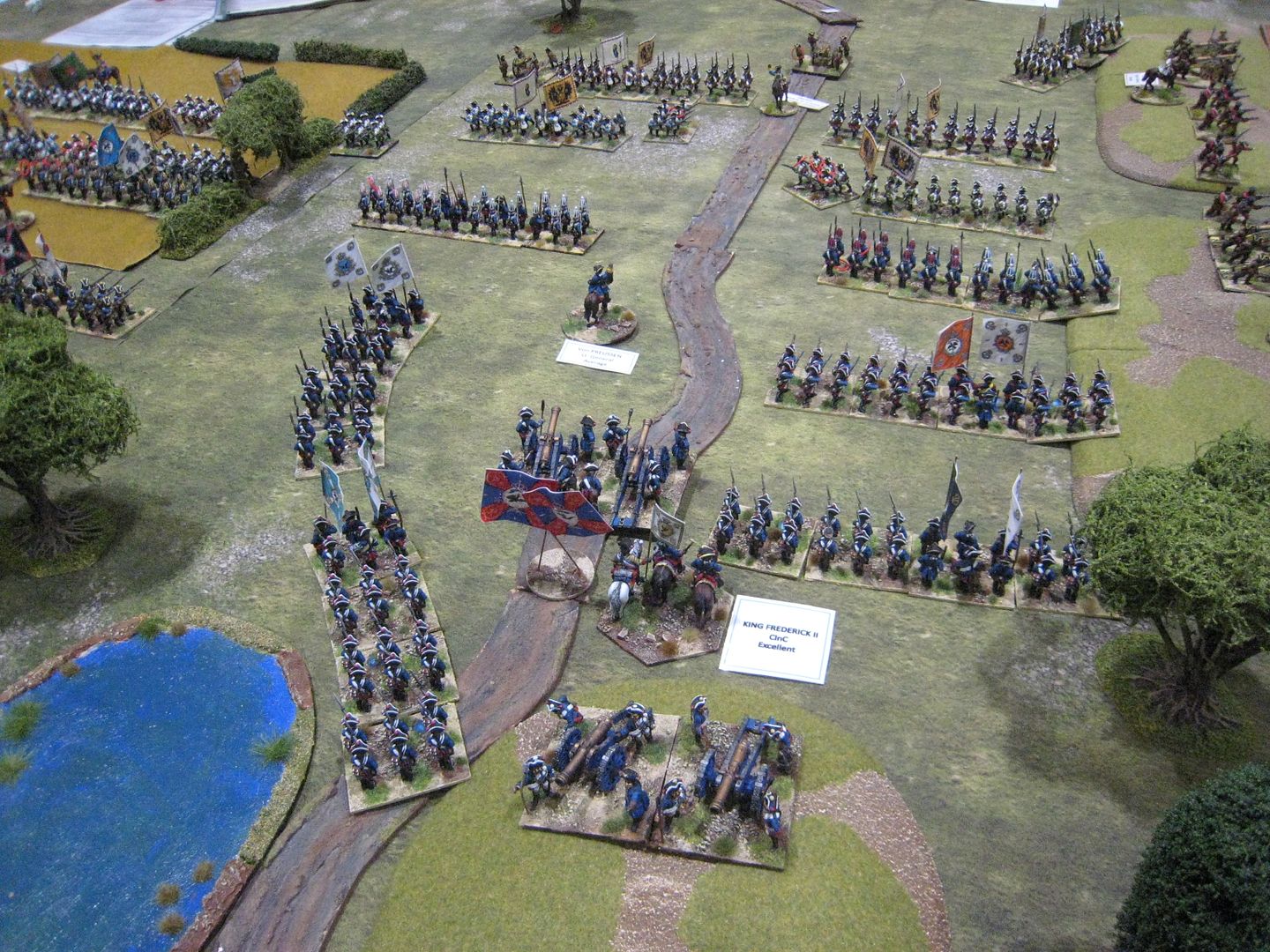
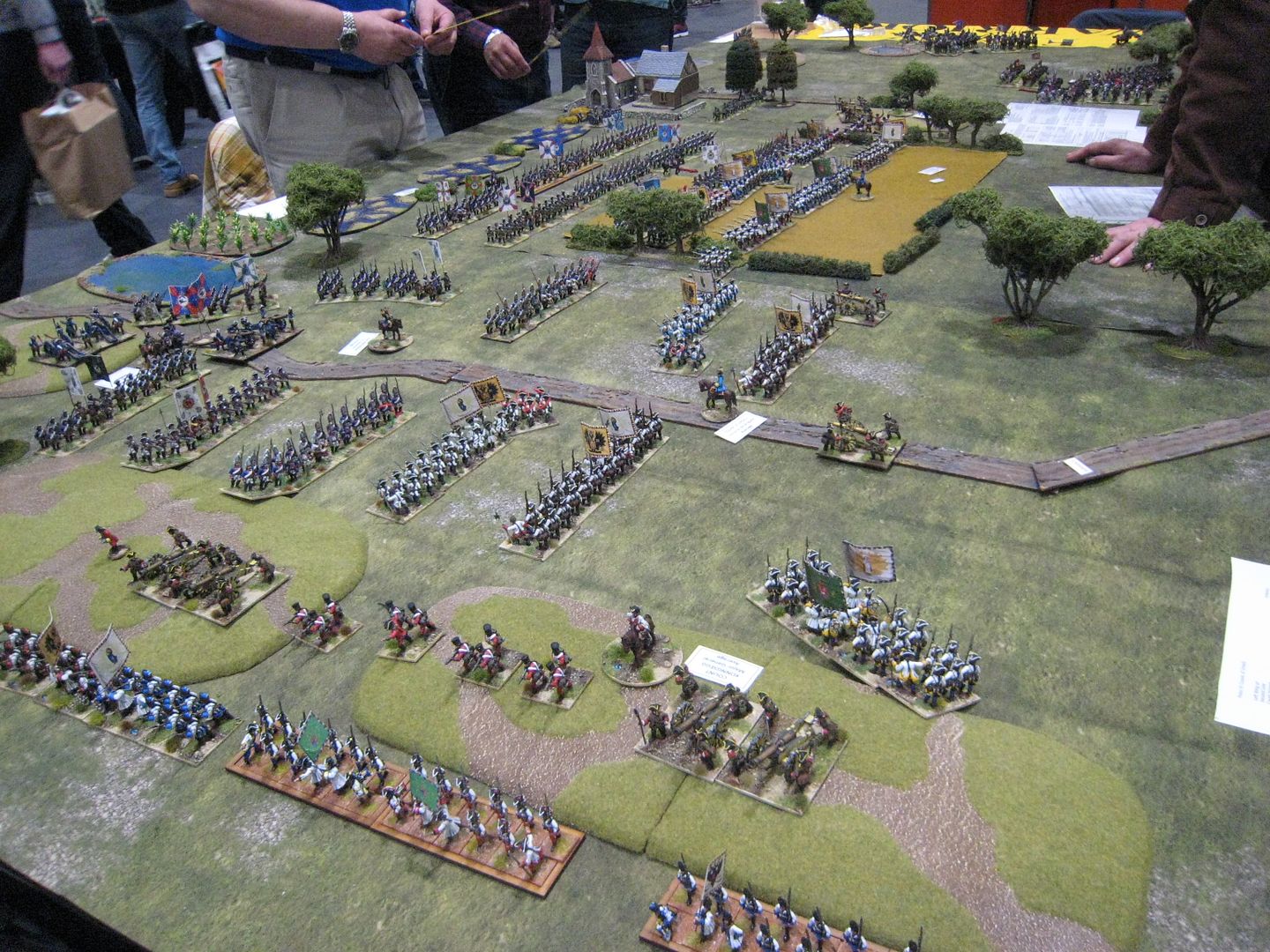
There was one large 25mm SYW game, the Battle of Prague, 1757 from the Essex Warriors:


Friday, 21 April 2017

Captain Sir James Baird

The 71st Foot was one of several regiments raised specifically to serve in the AWI, raised in 1775 by Colonel Simon Fraser (a previous incarnation of "Fraser's Highlanders", numbered the 78th Foot, was raised in 1757 and disbanded in 1763).  I've now painted 3 battalions' worth - see here and here) - and last year I worked on some mounted officers for this regiment and the 42nd.  This is the first of a trilogy of posts on those figures, using what little information I've been able to find about the men involved (this research has delayed these posts by some months!).  I don't generally use mounted officers for anything less than brigade commanders, so I've looked through the various "British Grenadier!" scenarios to see where highland regiment officers appear in this role.  Something you learn quickly about the AWI is that there were many "battlefield commissions" whereby regimental officers took command at general level, some very successfully (Lieutenant-Colonel James Webster of the 33rd being an excellent example).  Simon Fraser did not accompany his new regiment to America.  Lieutenant-Colonel Archibald Campbell took command, but he was captured in 1776 (along with many others from the 71st while on board troop ships) and not released until two years later.

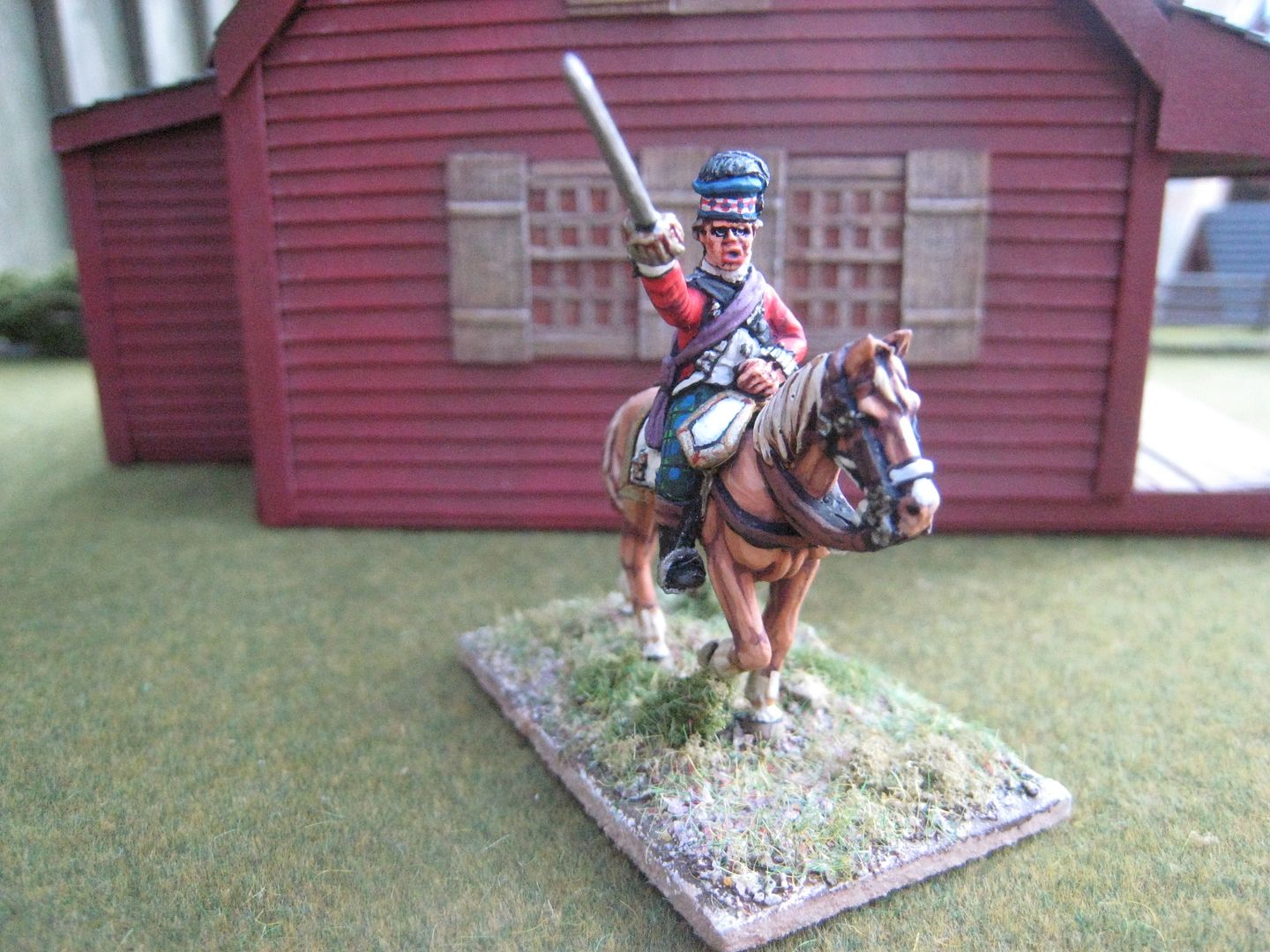
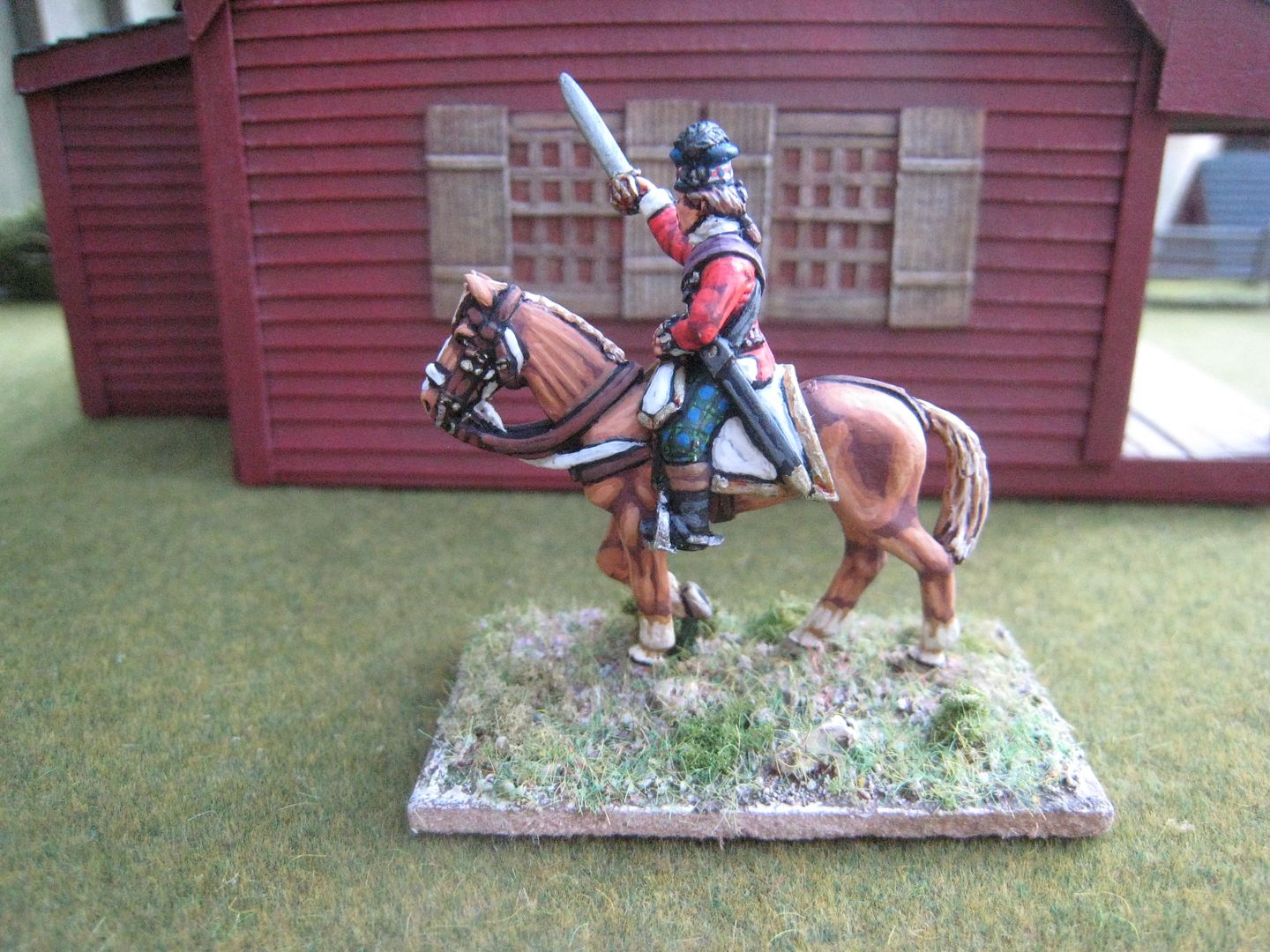
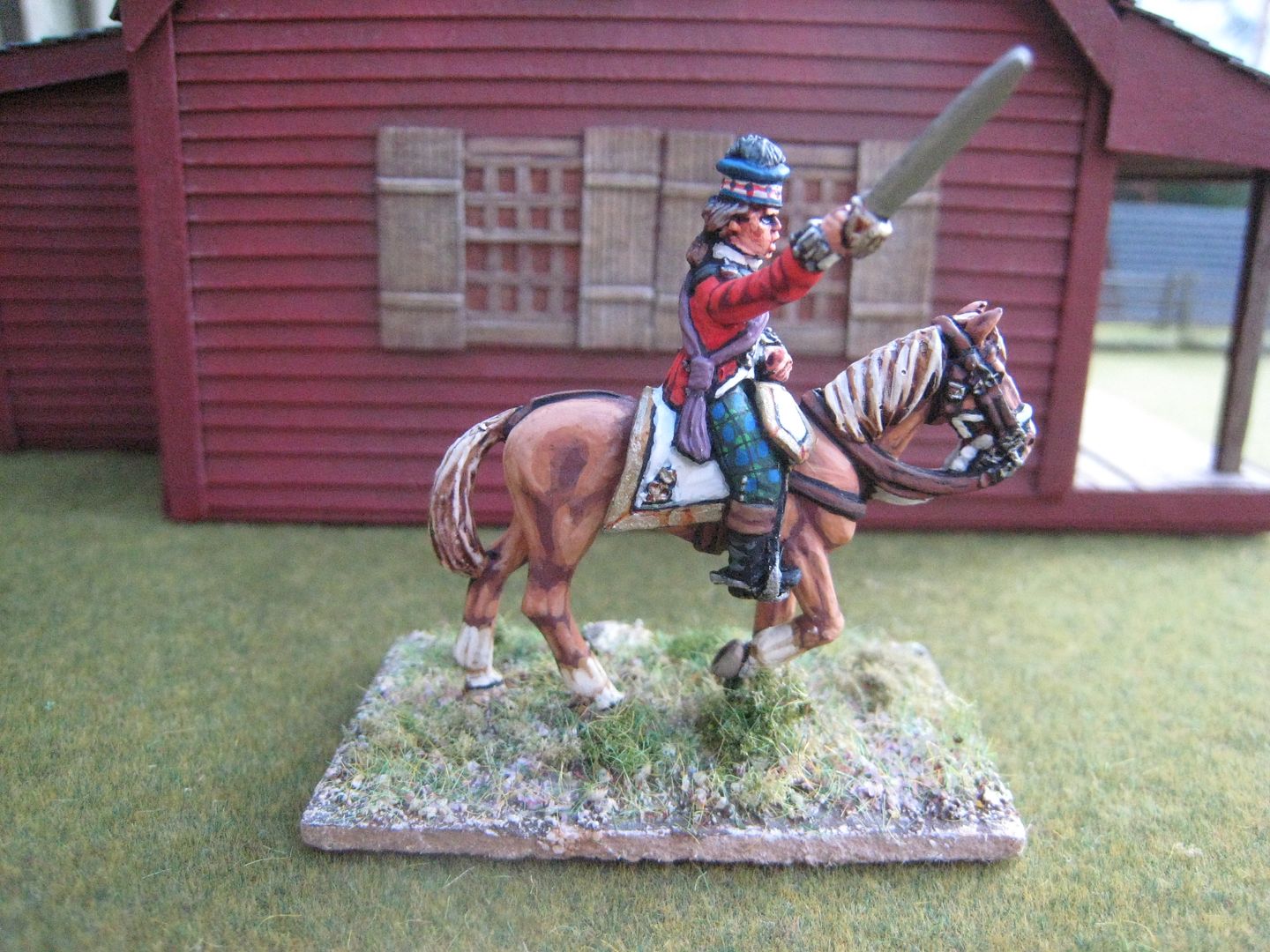
This figure represents James Baird, who appears as a "Major" and a brigade commander in the "British Grenadier!" Briar Creek scenario. He was the son of Sir William Baird of Saughtonhall, the 5th Baronet of the Baird Baronetcy of Saughtonhall.  It's not clear when James was born, but he succeeded his father as the 6th Baronet in August 1771.  The following year he joined the army as an Ensign in the 17th Foot.  He became a Lieutenant in 1776 and appears to have purchased a Captaincy in the 71st Foot in 1777.  At some point after the American war he must have transferred to the cavalry, as in 1796 he became the Lieutenant-Colonel of the 28th Light Dragoons.  Sir James Baird died in 1830.

Baird led one of the light companies of the 71st (which had multiple battalions) in the attack on Savannah in December 1778.  He then seems to have been given command, or at least commanded one of its two constituent companies, of what sources refer to as "the Light Infantry Corps", which consisted of the light companies of the first and second battalions together with some Loyalist troops from the New York Volunteers and De Lancey's Brigade.  This command may have resulted in a temporary battlefield commission to Major, as I can find no confirmation that Baird received a formal commission to this rank within the 71st Foot.  It was the Light Infantry Corps that Baird is thought to have commanded at Briar Creek, fought on 3 March 1779.

There are currently two mounted highland officer figures available in 25mm.  One is a Brigadier-General Simon Fraser personality figure in one of the Old Glory command packs.  He's a different Simon Fraser to the Colonel of the 71st.  Colonel Fraser was from the prominent, formerly Jacobite-supporting, Clan Fraser of Lovat  - he eventually became the 19th chief of the clan.  The Brigadier seems to have part of a less exalted branch of the Frasers.  The other mounted figure is from King's Mountain Miniatures.  This figure comes with two choices of right arm - one holding a sword and the other pointing straight ahead.  I was told by chum Brendan Morrissey that the saddlecloths used by British officers were usually in the colour of the regimental facings, so Baird's has the white facings of the 71st Foot.  As a light infantry officer it may have been unlikely that Baird would have mounted on a horse in battle, but I like to have my brigade commanders easily identifiable and I think this KMM figure suits him very well.  Now I had originally intended to use this figure for Lieutenant-Colonel John Maitland, who commanded the 71st's 1st battalion at Stono Ferry in 1779; but I then discovered that Maitland lost his right arm in the Seven Years' War and so I'll need to do something special for him....      

1 figure.  Painted April 2016.


Tuesday, 18 April 2017

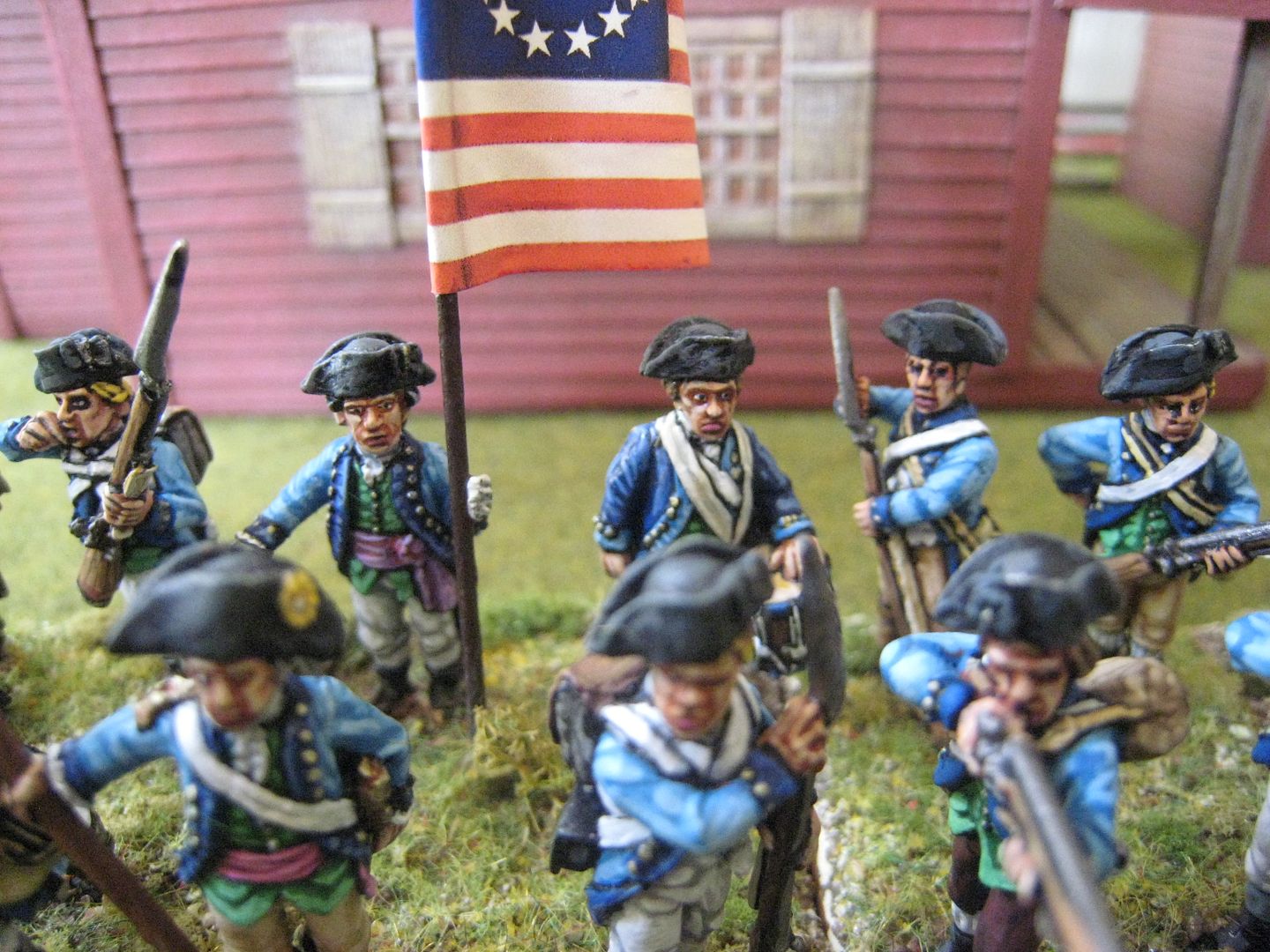
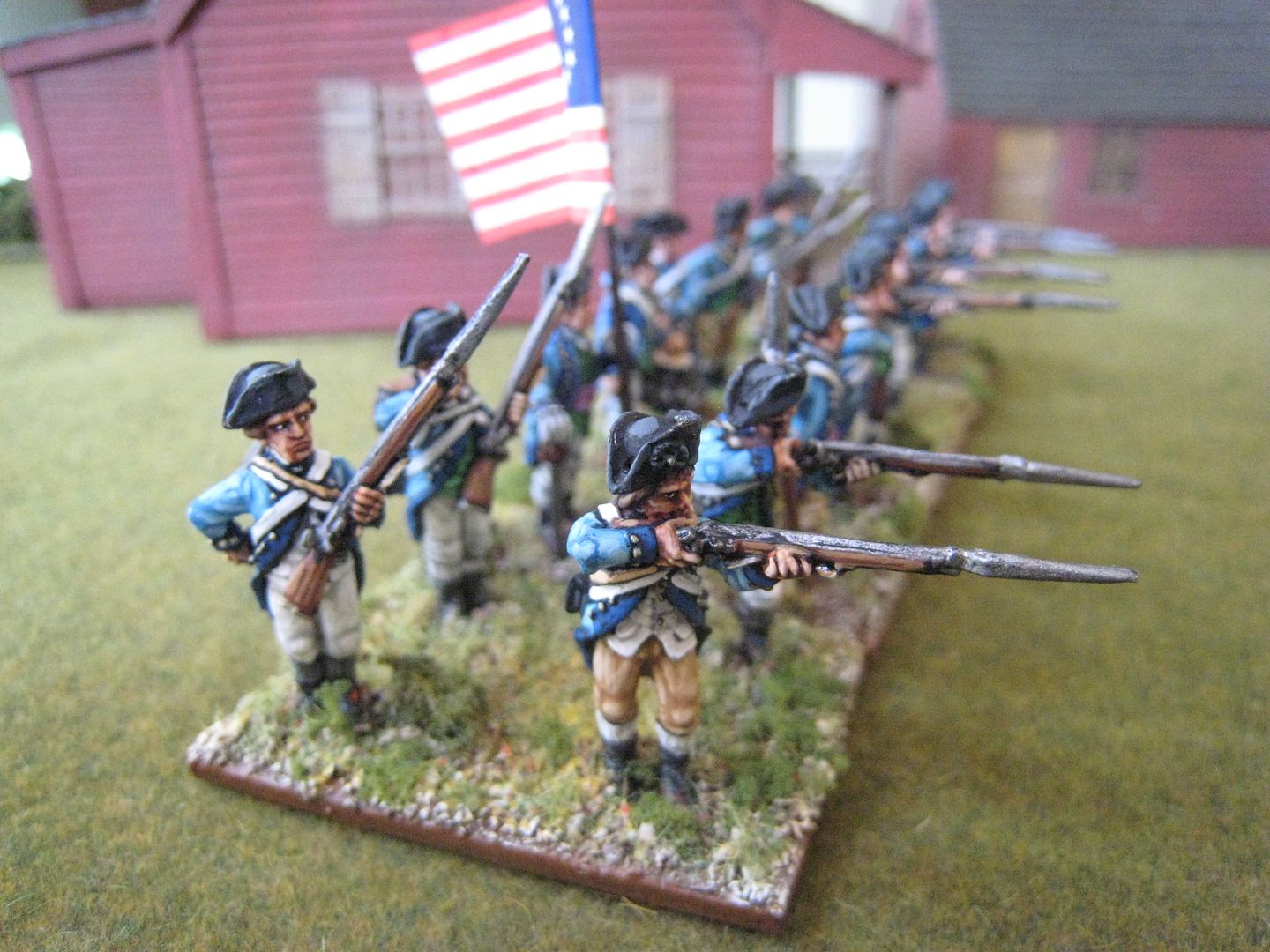
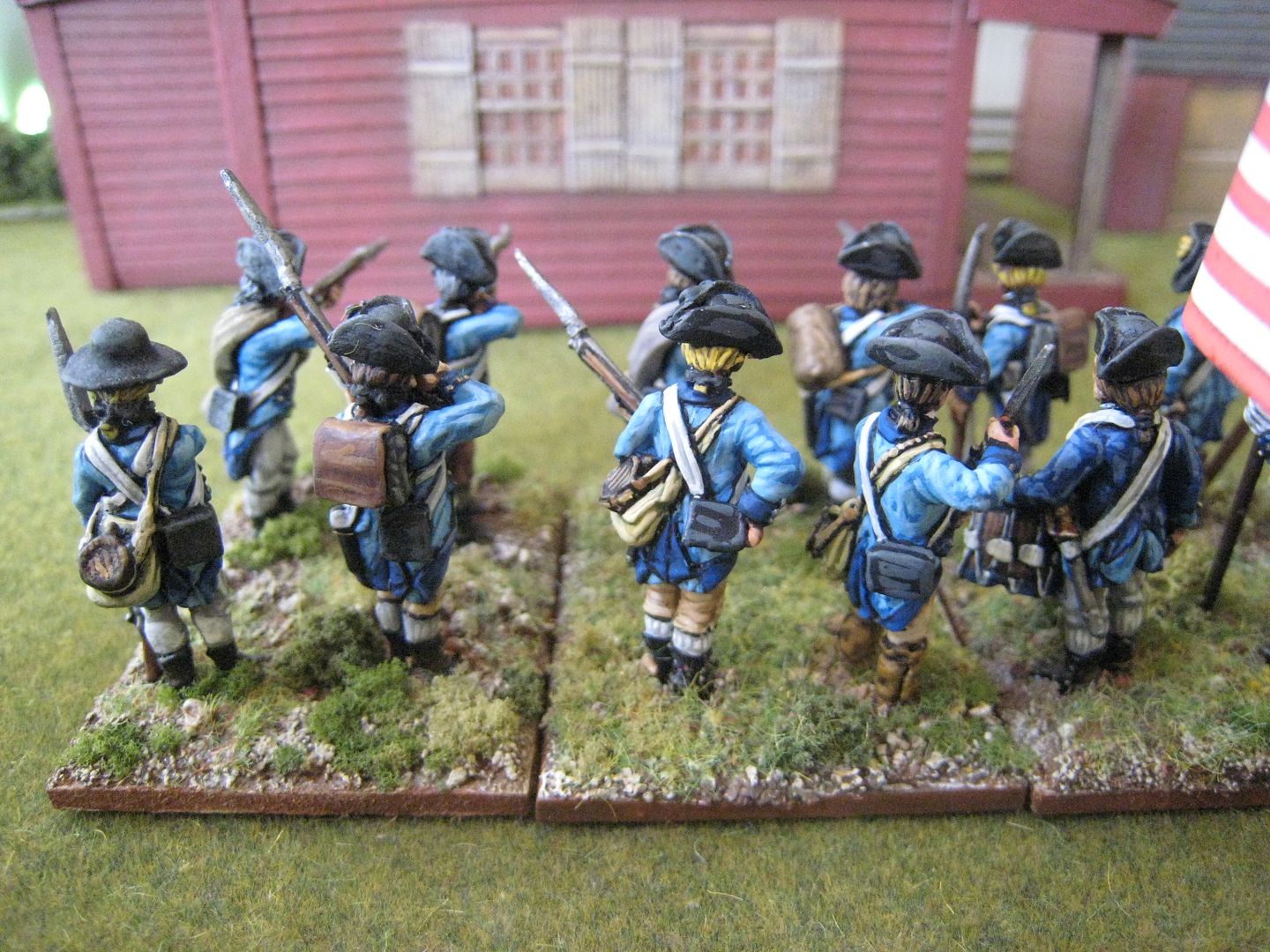
3rd Virginia

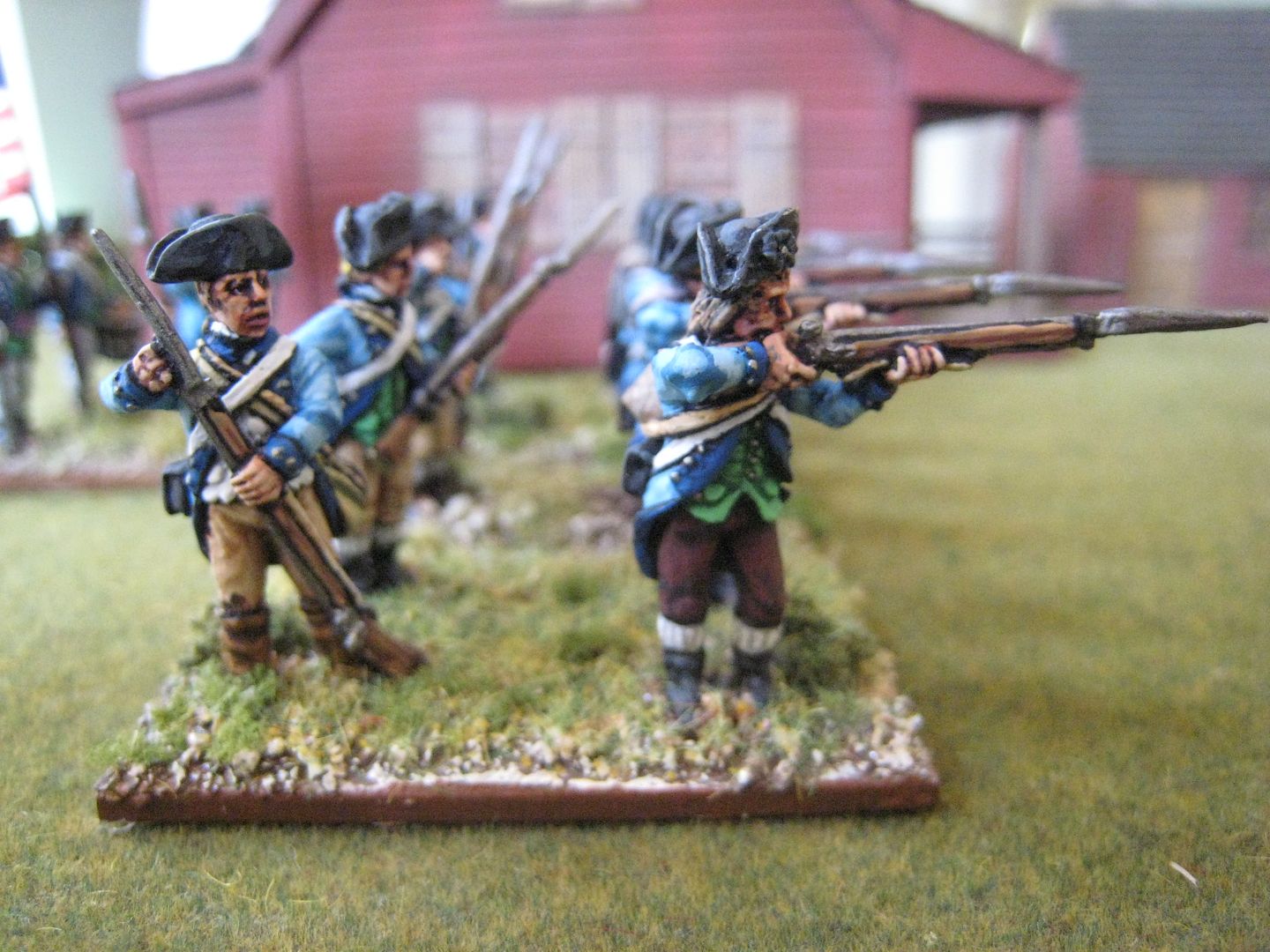
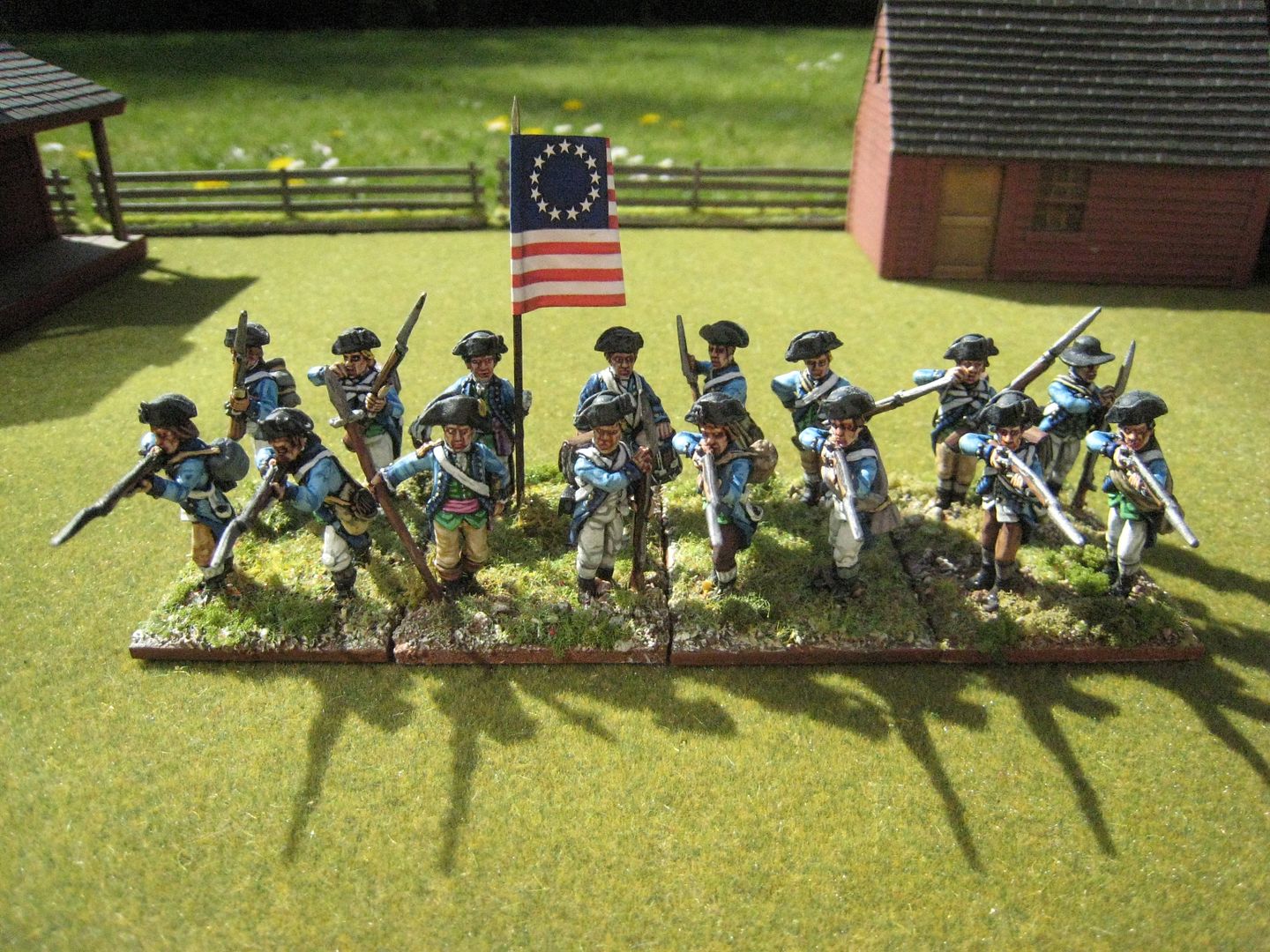
The 3rd Virginia was raised in December 1775 as a Continental Army unit.  It lost its initial colonels, Hugh Mercer and George Weedon, to promotion within a couple of months and was then commanded for by Thomas Marshall.  William Heth then led the regiment from early 1778 until 1781.  The regiment was engaged at Trenton, Princeton, Brandywine, Germantown and Monmouth.  By 1780 it had been posted to South Carolina, and most of the regiment was captured when the British took Charleston in May of that year.  Captain John Chilton left a number of letters and a diary of his time in the regiment, which were published a few years ago.

I painted two bases for this regiment in 2004.  I then completely forgot about it until earlier this year, when I was deciding what to do with my remaining "firing line" figures; there's not much you can do with an 8-figure unit, so bringing it up to strength was an obvious use for my odds 'n sods.  These are largely Foundry figures, with a couple of Perries and one Eureka ragged Continental.  The uniform colours are from the Zlatich Osprey MAAs - light blue coats faced blue with green waistcoats.  That sounds pretty outlandish, and I think it was initial scepticism about the colour scheme that led to my initial downing tools on this unit.  So for most of the new figures I dropped the green waistcoats.  So I don't really know how accurate this portrayal is; but it's colourful at least and other regiments certainly wore light blue coats (such as the 2nd New Hampshire).  My painting style and the paints I use have changed since 2004 - the dark blues on the earlier figures, for example, were highlighted with a long-vanished Citadel colour, which is different to the Foundry "Deep Blue" triad that I use nowadays.     

16 figures.  Painted 2004 and January 2017.  Flag by GMB.